
Chapter 19 Notes Earthquakes Stress and Strain Earthquakes
- Slides: 16
Chapter 19 Notes Earthquakes
Stress and Strain • Earthquakes occur when stress builds up and causes movement in the Earth’s crust • Compression: squeezing forces • Tension: pulling forces • Shear: opposing parallel forces/twisting • Elastic deformation: initial response to stress • plastic deformation occurs under high stress just before breaking
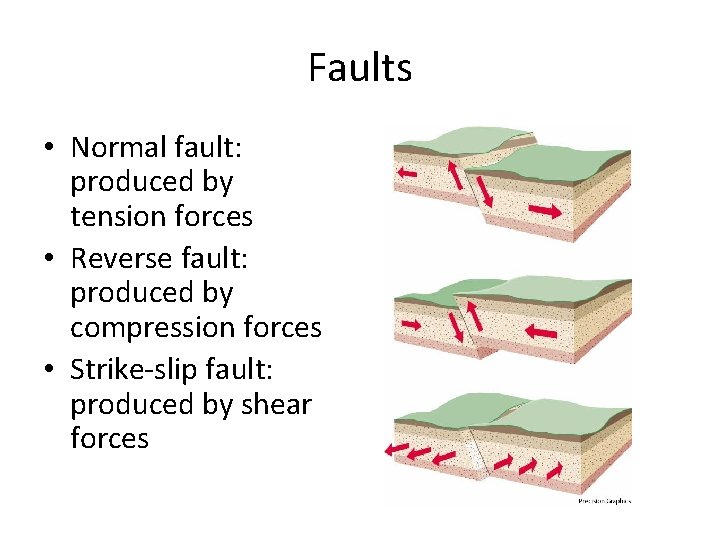
Faults • Normal fault: produced by tension forces • Reverse fault: produced by compression forces • Strike-slip fault: produced by shear forces
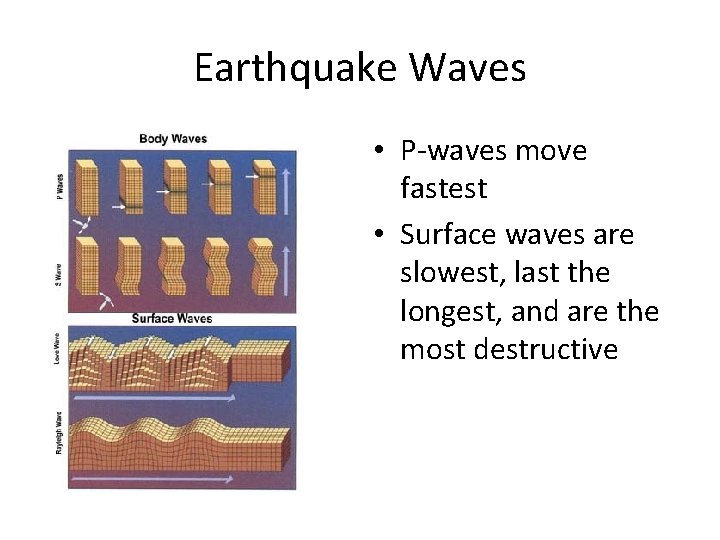
Earthquake Waves • Body Waves – Primary (P-waves): compression waves; move parallel to the direction of wave motion – Secondary (S-waves): transverse waves; move at right angles to the direction of wave motion • Surface waves: move sideways and up and down
Earthquake Waves • P-waves move fastest • Surface waves are slowest, last the longest, and are the most destructive
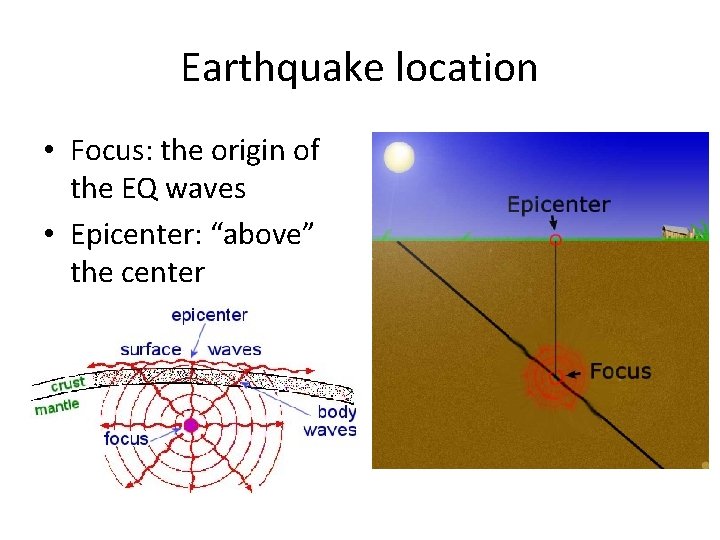
Earthquake location • Focus: the origin of the EQ waves • Epicenter: “above” the center
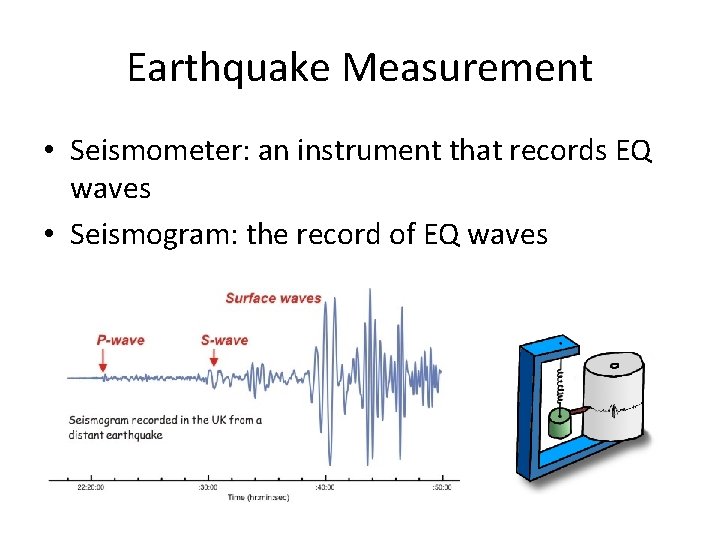
Earthquake Measurement • Seismometer: an instrument that records EQ waves • Seismogram: the record of EQ waves
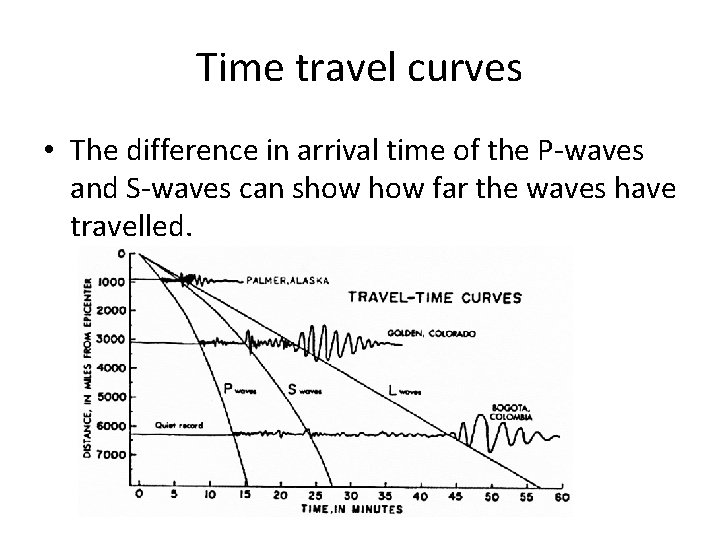
Time travel curves • The difference in arrival time of the P-waves and S-waves can show far the waves have travelled.
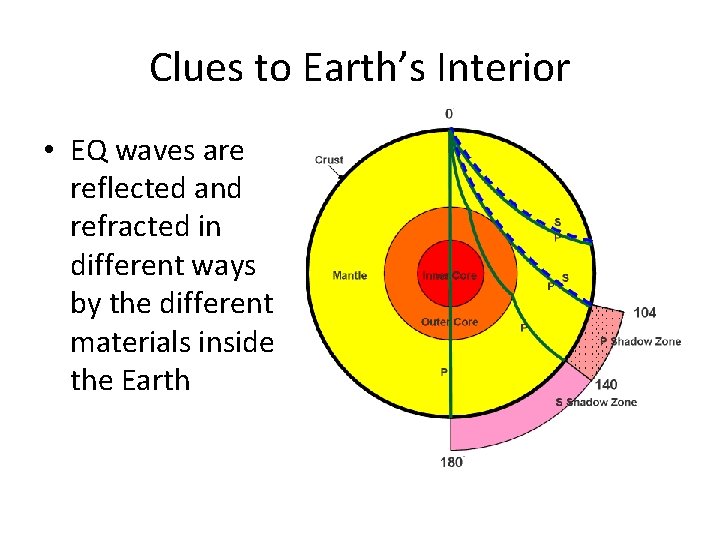
Clues to Earth’s Interior • EQ waves are reflected and refracted in different ways by the different materials inside the Earth
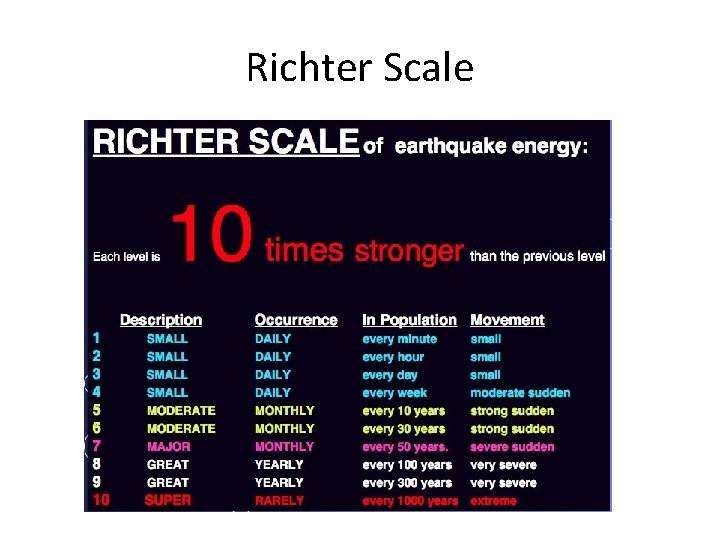
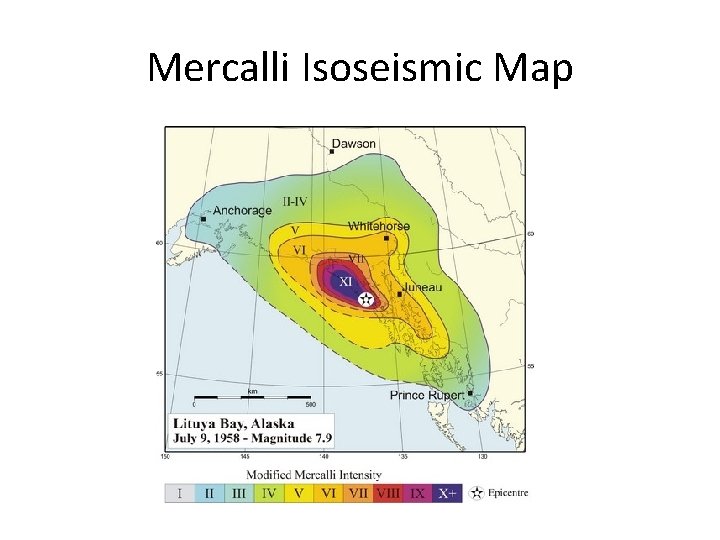
Measuring Earthquakes • Richter Scale: – measures magnitude – energy released – numeric scale (no true upper limit) • Modified Mercalli Scale: – measures intensity – based on the amount of damage – Roman numerals I to XII
Richter Scale
Mercalli Isoseismic Map
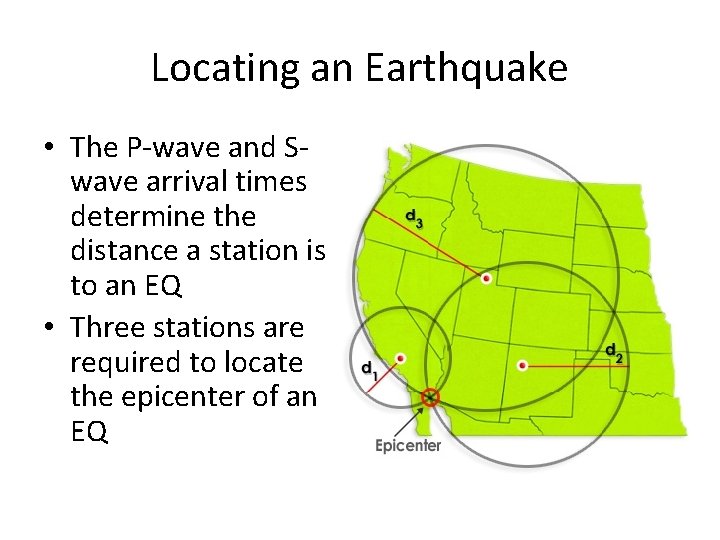
Locating an Earthquake • The P-wave and Swave arrival times determine the distance a station is to an EQ • Three stations are required to locate the epicenter of an EQ
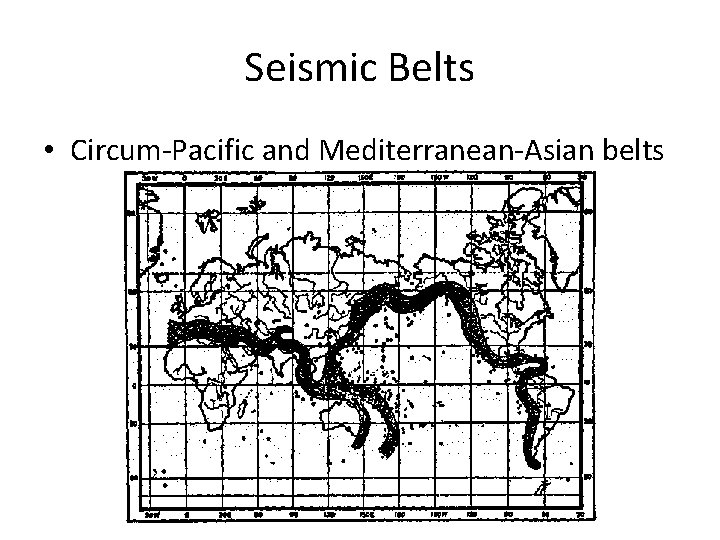
Seismic Belts • Circum-Pacific and Mediterranean-Asian belts
Earthquake Hazards • “Earthquakes don’t kill people, buildings do. ” • Structural failures – Brittle building materials cause more damage – Building height oscillations • Land soil failure – Soil liquefaction • Tsunami – Ocean wave generated by sea floor movement
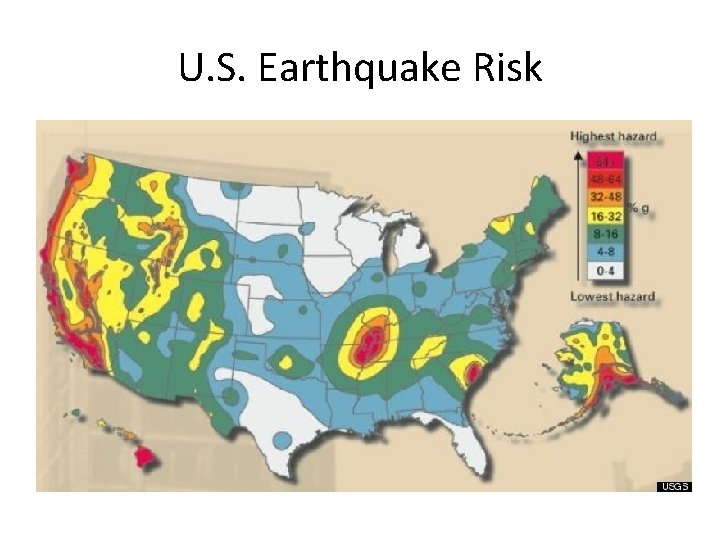
U. S. Earthquake Risk