
Chapter 19 Lesson 1 The Beginning of the
Chapter 19 Lesson 1 The Beginning of the Life Cycle
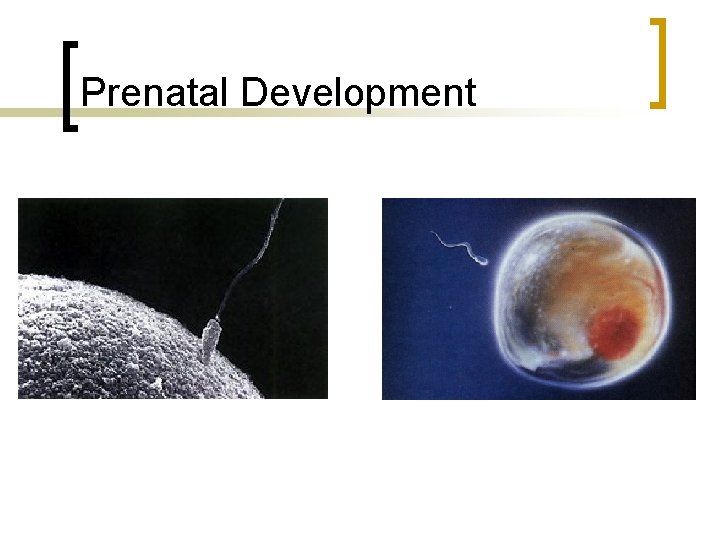
Prenatal Development Our bodies begin as one cell That cell is formed by the union of the female & male sex cell Ovum & Sperm This is called Fertilization
Prenatal Development
Prenatal Development As soon as the ovum is fertilized it is called a zygote Once the zygote is formed a protective membrane forms By time zygote reaches uterus it becomes a blastocyst Divided zygote w/ hollow space in center
Implantation As cells divide they implant or attach to the lining of the uterus This is implantation
Implantation The lining of the uterus is made of layers of tissue They protect and nourish the egg
Implantation o o The cluster of developing cells following implantation is called Embryo The cluster of cells will remain an embryo until the 8 th week of pregnancy
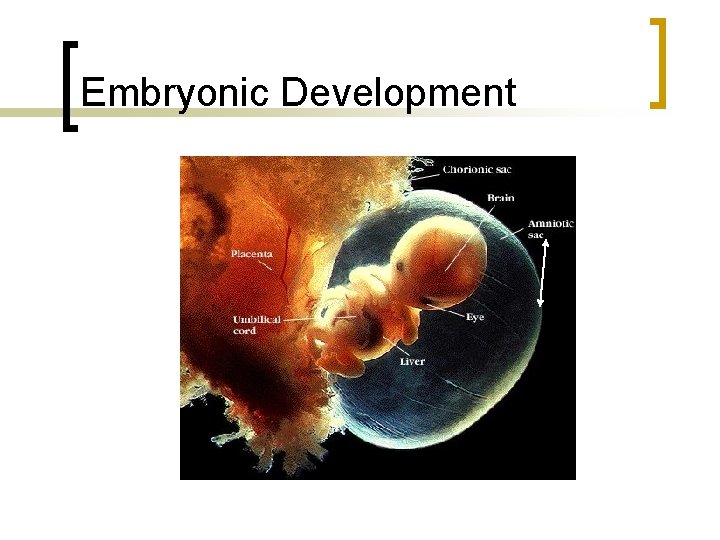
Embryonic Development Amniotic sac forms Thin membrane around embryo Fluid in the sac acts as a shock absorber Also insulates the embryo Amniocentesis What is this? http: //www. webmd. com/baby/guide/amniocentesis
Embryonic Development
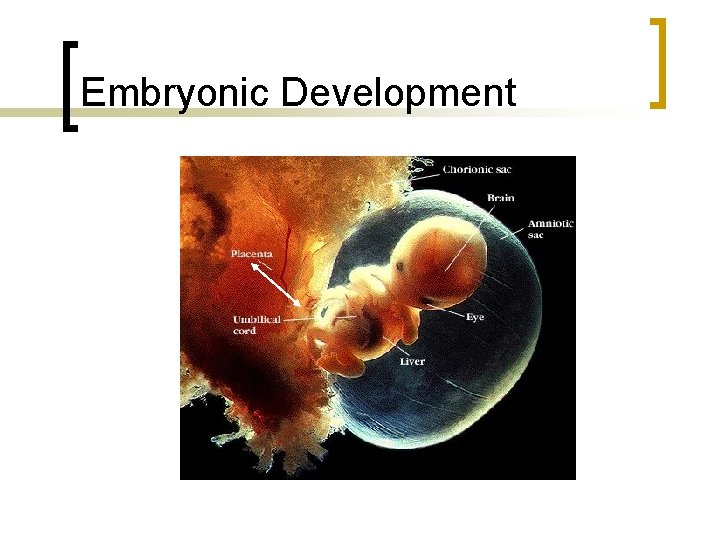
Embryonic Development Placenta Blood-rich tissue made from cells from the embryo and tissue from the mother Connected to placenta via umbilical cord Tube through which nutrients and oxygen pass from the mother’s blood into the embryo’s blood. Also carries waste back to mother Mother excretes waste of embryo with her own
Embryonic Development
Embryonic Development The cells divide into 3 layers Respiratory and Digestive system Muscles, bone, blood vessels, and skin Nervous system, sense organs and mouth
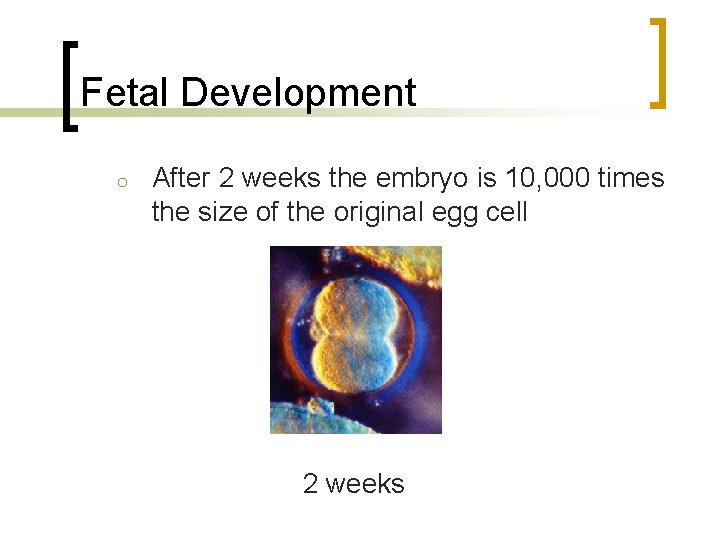
Fetal Development o After 2 weeks the embryo is 10, 000 times the size of the original egg cell 2 weeks
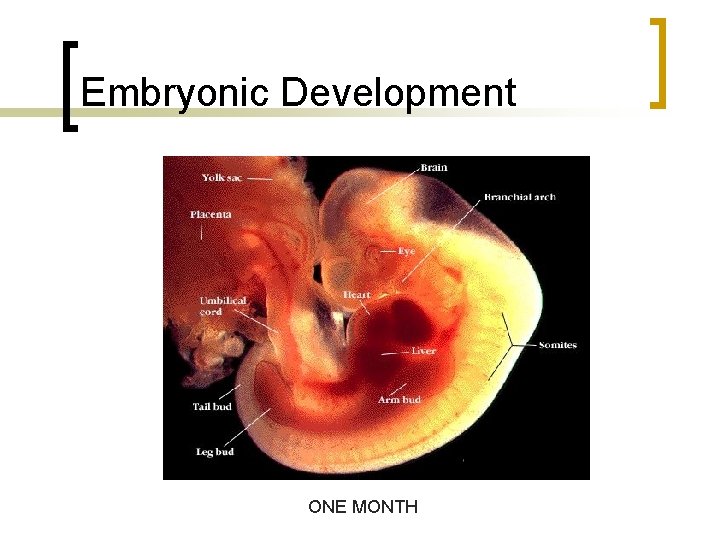
Embryonic Development ONE MONTH
Fetal Development- 1 st Trimester At 8 weeks the embryo measures about 1 inch in length. After 8 weeks embryo is called a fetus until birth Also at this time: the mouth, nostrils, eyelids, hands, fingers, feet, and toes begin to form The nervous system can respond to stimuli The cardiovascular system is fully functional
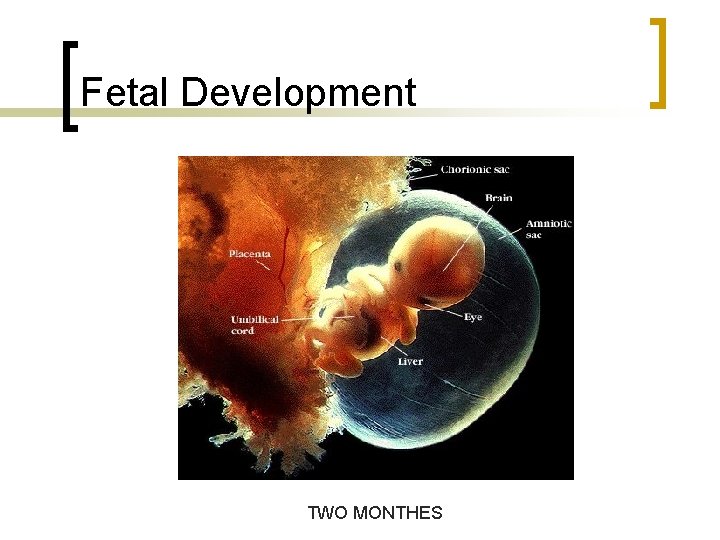
Fetal Development TWO MONTHES
Fetal Development- 1 st Trimester From 9 -14 weeks the head develops and all the body system are present Sex organs start to develop Makes crying motions, but no sound May suck it’s thumb
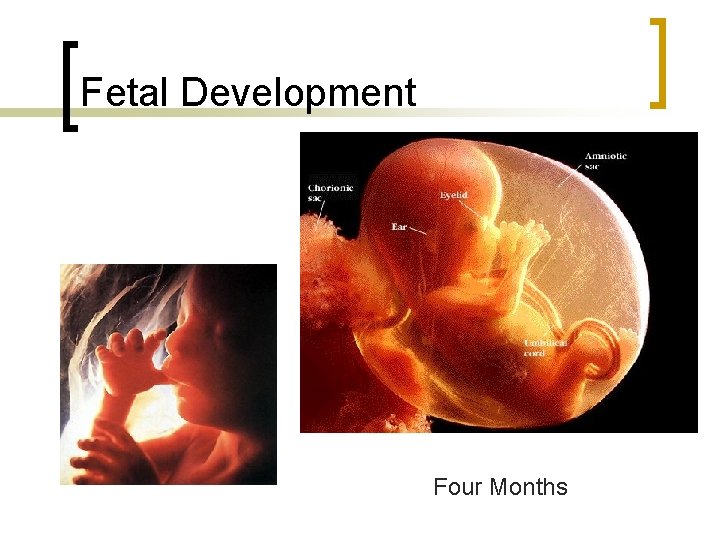
Fetal Development Four Months
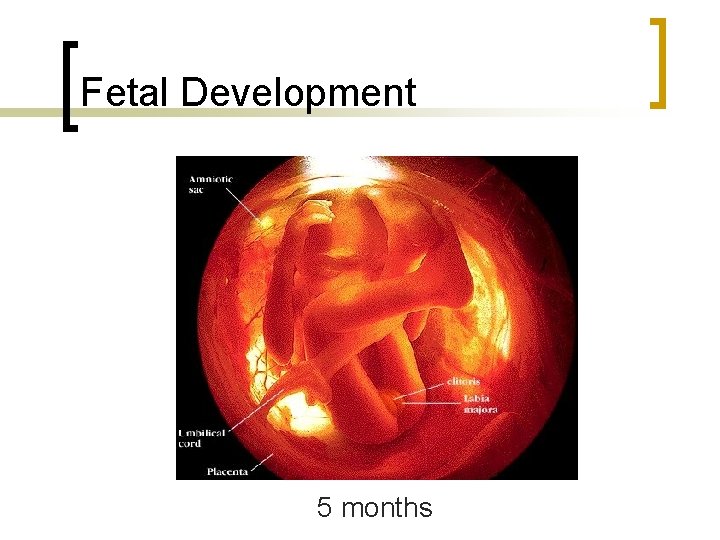
Fetal Development 5 months
Fetal Development- 2 nd Trimester The fetus can: Blink it’s eyes Head growth slows Eyebrows and eyelashes develop Grasp and kick
Fetal Development During the 9 th month fetus usually moves into head down position and is now ready for birth Fetus usually 7 to 9 lbs.
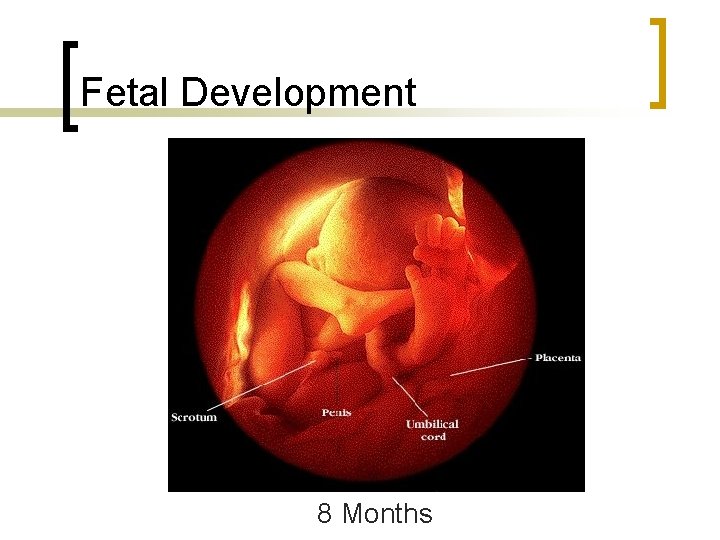
Fetal Development 8 Months
Prenatal Care Regularly visit obstetrician or nurse midwife Possibly identify problems to correct the early Chance to ask questions Address nutrition concerns Monitor mothers health
Prenatal Care Medicines Any and all meds should be taken only with MD approval Prescription Natural supplements over-the-counter meds
Prenatal Care Illegal drugs Can cause drug dependent baby Can cause birth defects including retardation
Prenatal Care Alcohol Can cause FAS- Fetal Alcohol Syndrome Symptoms Mental retardation Low birth weight Physical deformities Yet many pregnant women do drink alcohol. It's estimated that each year in the United States, 1 in every 750 infants is born with a pattern of physical, developmental, and functional problems referred to as fetal alcohol syndrome (FAS), while another 40, 000 are born with fetal alcohol effects (FAE).
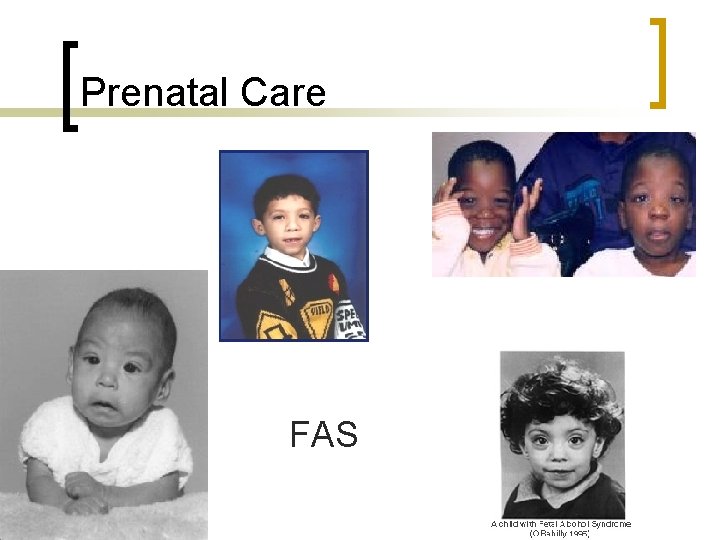
Prenatal Care FAS
Prenatal Care Tobacco Greater chance of premature birth with low birth weight Risk Factors Low birth weight is leading cause of death in a baby’s first year life Can effect growth, mental development, and behavior Lower the amount of oxygen available to you and your growing baby. Increase your baby's heart rate. Increase the chances of miscarriage and stillbirth. Increase the risk that your baby is born prematurely and/or born with low birth weight. Increase your baby's risk of developing respiratory (lung) problems. The more cigarettes you smoke per day, the greater your baby's chances of developing these and other health problems. There is no "safe" level of smoking while pregnant.
Prenatal Care Environmental Hazards Lead Smog Radiation Cat litter Toxoplasmosis Cats are carriers of the parasite that causes toxoplasmosis. The parasite lives inside of the cat’s intestines and is passed into their feces. It is more commonly found in cats that are allowed outside that might eat contaminated rats or mice. Changing cat litter may expose you to the parasite that causes toxoplasmosis. It is also found in raw meats or unwashed root vegetables.
Stages of Birth 3 stages Dilation Stretching of the cervix due to mild contractions called labor Passage though the birth canal Caused by contractions that shorten the uterus Afterbirth Once the baby is born contractions continue for 10 -15 minutes pushing the placenta (afterbirth) out.
Complications Miscarriage Stillbirth A spontaneous abortion Birth of a dead fetus Ectopic Pregnancy When the zygote implants in the fallopian tube Sometime can happen when the fertilized egg can’t pass to the uterus Sometimes because of inflammation or scar tissue that has developed from sexually transmitted diseases # 1 cause of death of females in the 1 st trimester
- Slides: 31