
Chapter 19 Cost Management Systems Activity Based JustIn
Chapter 19 Cost Management Systems: Activity -Based, Just-In. Time, and Quality Management Systems
Learning Objectives 1. Assign direct costs and allocate indirect costs using predetermined overhead allocation rates with single and multiple allocation bases © 2016 Pearson Education, Inc. 19 -2
Learning Objectives 2. Use activity-based costing (ABC) to compute predetermined overhead allocation rates and allocate indirect costs 3. Use activity-based management (ABM) to make decisions 4. Use activity-based management (ABM) in a service company © 2016 Pearson Education, Inc. 19 -3
Learning Objectives 5. Describe a just-in-time (JIT) management system and record its transactions 6. Describe quality management systems (QMS) and use the four types of quality costs to make decisions © 2016 Pearson Education, Inc. 19 -4
Learning Objective 1 Assign direct costs and allocate indirect costs using predetermined overhead allocation rates with single and multiple allocation bases © 2016 Pearson Education, Inc. 19 -5
How Do Companies Assign and Allocate Costs? • Product costs consist of direct materials, direct labor, and manufacturing overhead. – Easily traced and assigned to the product: • Direct materials costs • Direct labor costs – Allocated to the product: • Manufacturing overhead costs © 2016 Pearson Education, Inc. 19 -6

Single Plantwide Rate • A single plantwide rate is called the predetermined overhead allocation rate and is calculated before the period begins. – Traditional approach of allocating manufacturing overhead – Simplest method – One allocation base is used and applied to all units © 2016 Pearson Education, Inc. 19 -7
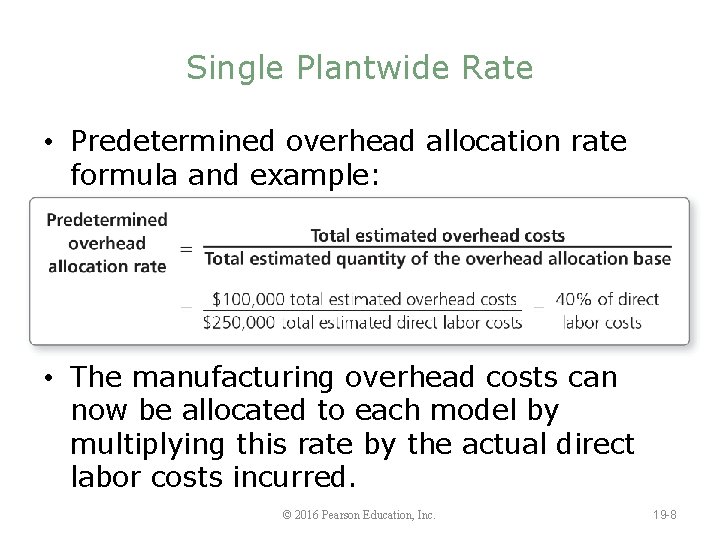
Single Plantwide Rate • Predetermined overhead allocation rate formula and example: • The manufacturing overhead costs can now be allocated to each model by multiplying this rate by the actual direct labor costs incurred. © 2016 Pearson Education, Inc. 19 -8
Multiple Department Rates • What if there are two departments with different allocation bases? • For example: – The overhead allocation base for the Production Department is machine hours. – The overhead allocation base for the Software Department is direct labor costs. © 2016 Pearson Education, Inc. 19 -9
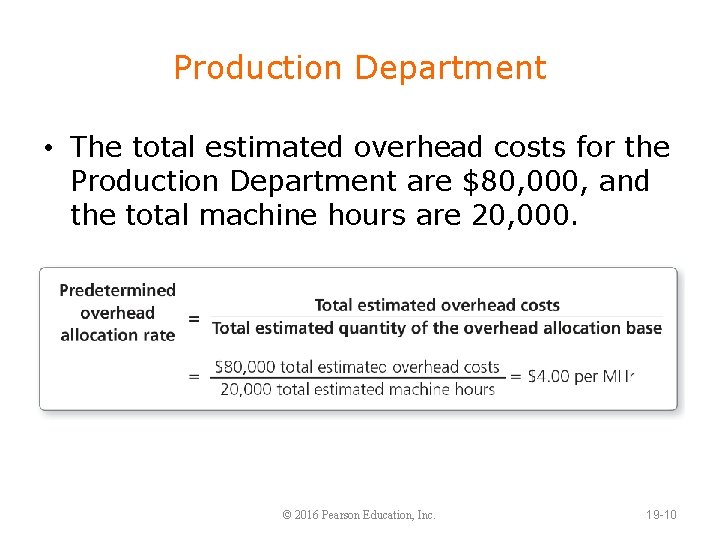
Production Department • The total estimated overhead costs for the Production Department are $80, 000, and the total machine hours are 20, 000. © 2016 Pearson Education, Inc. 19 -10
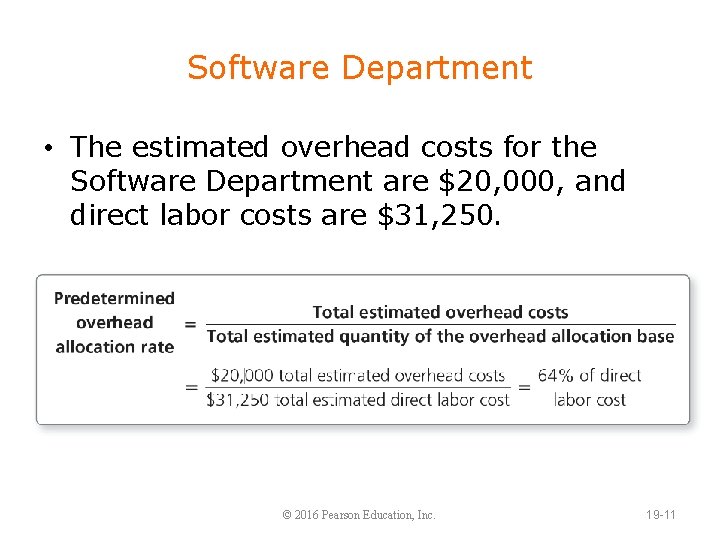
Software Department • The estimated overhead costs for the Software Department are $20, 000, and direct labor costs are $31, 250. © 2016 Pearson Education, Inc. 19 -11
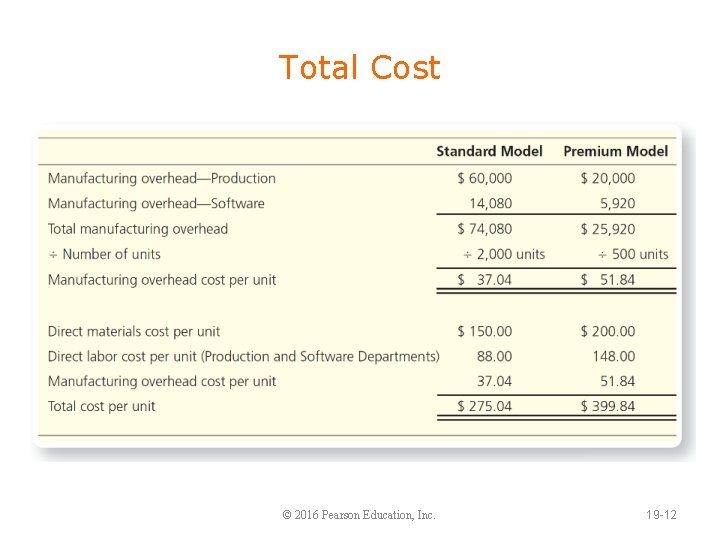
Total Cost © 2016 Pearson Education, Inc. 19 -12
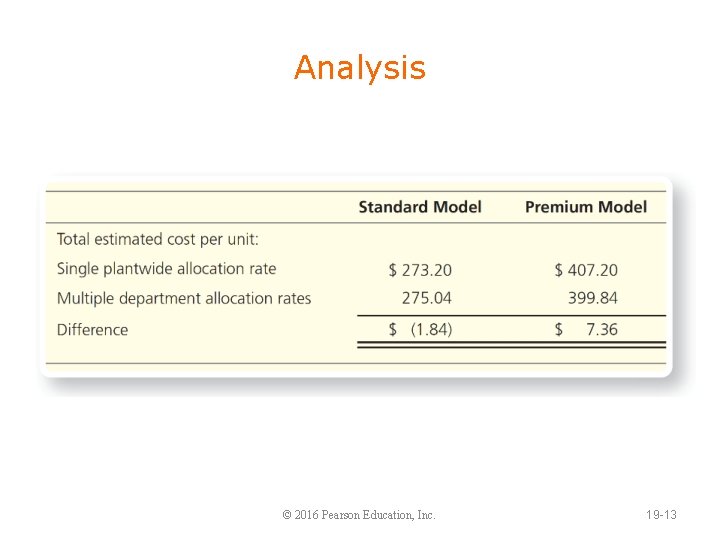
Analysis © 2016 Pearson Education, Inc. 19 -13
Learning Objective 2 Use activity-based costing (ABC) to compute predetermined overhead allocation rates and allocate indirect costs © 2016 Pearson Education, Inc. 19 -14
How Is an Activity-Based Costing System Developed? • Activity based-management (ABM) – Focuses on the primary activities the business performs – Uses cost information to make decisions that lead to greater profits • Activity-based costing (ABC) is the process of determining the cost of the activities as building blocks for allocating indirect costs to products and services. © 2016 Pearson Education, Inc. 19 -15
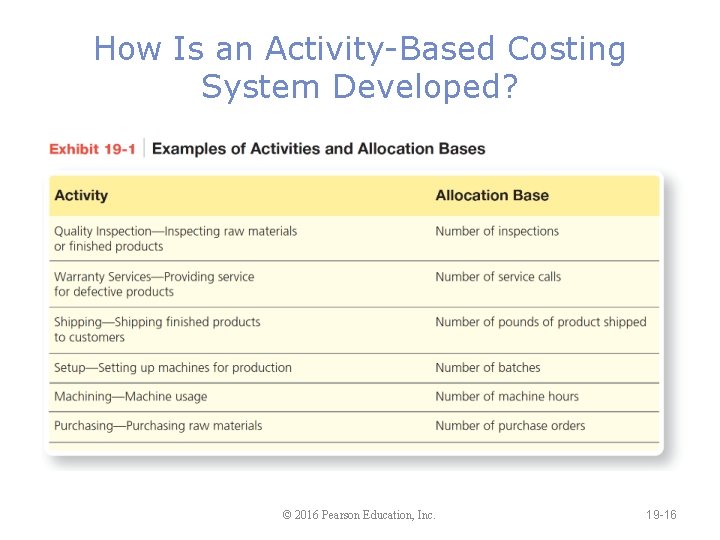
How Is an Activity-Based Costing System Developed? © 2016 Pearson Education, Inc. 19 -16
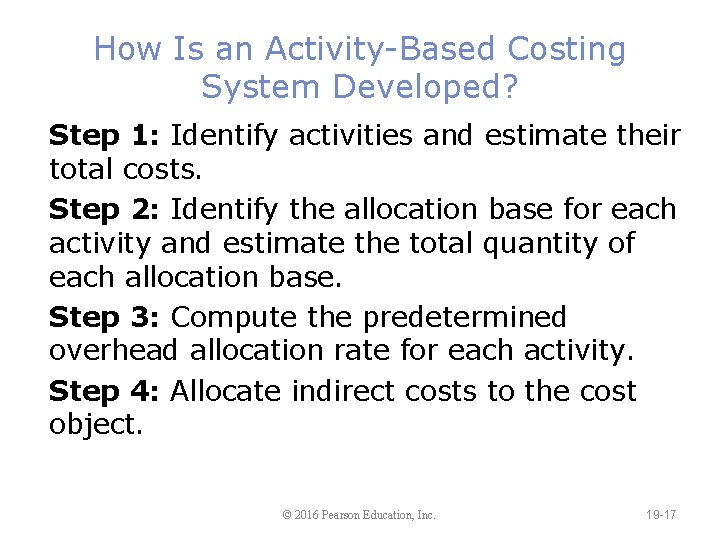
How Is an Activity-Based Costing System Developed? Step 1: Identify activities and estimate their total costs. Step 2: Identify the allocation base for each activity and estimate the total quantity of each allocation base. Step 3: Compute the predetermined overhead allocation rate for each activity. Step 4: Allocate indirect costs to the cost object. © 2016 Pearson Education, Inc. 19 -17
Step 1: Identify Activities and Estimate Their Total Costs • Identify activities used to allocate manufacturing overhead. • Examples of activities include: – Quality inspections—inspecting raw materials or finished products. – Shipping—shipping finished products to customers – Setups—setting up machines for production – Purchasing—purchasing raw materials © 2016 Pearson Education, Inc. 19 -18
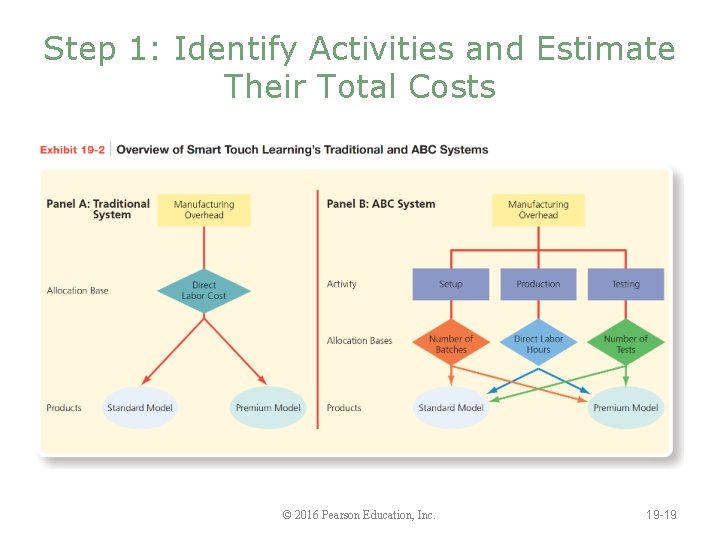
Step 1: Identify Activities and Estimate Their Total Costs © 2016 Pearson Education, Inc. 19 -19
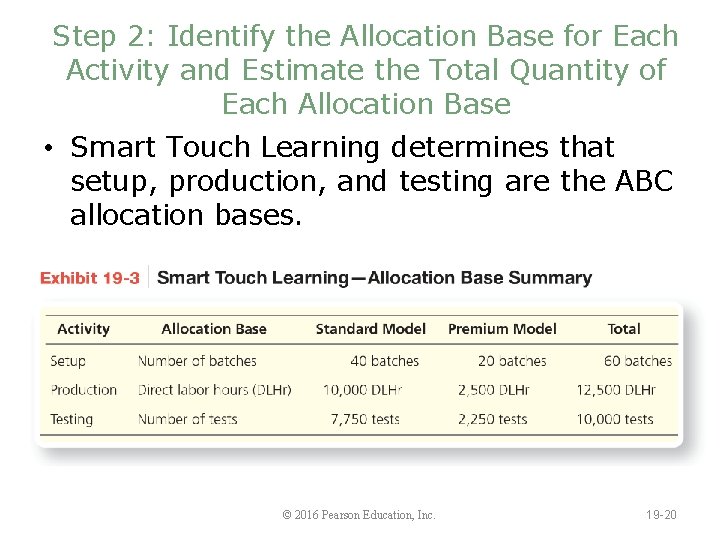
Step 2: Identify the Allocation Base for Each Activity and Estimate the Total Quantity of Each Allocation Base • Smart Touch Learning determines that setup, production, and testing are the ABC allocation bases. © 2016 Pearson Education, Inc. 19 -20
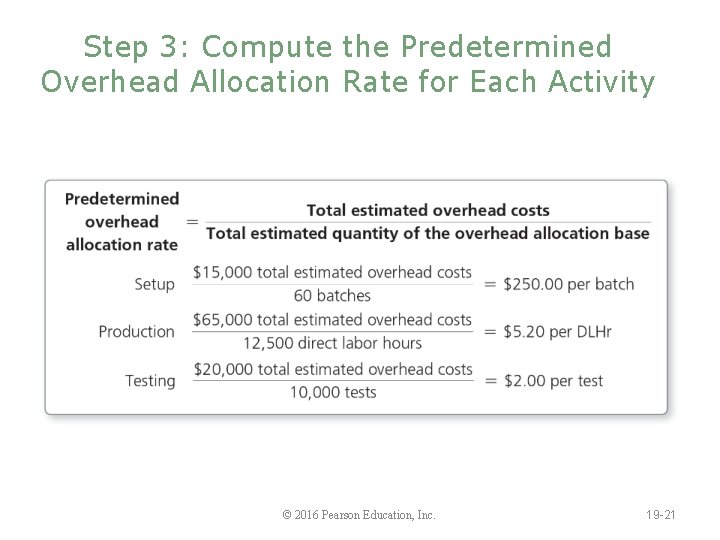
Step 3: Compute the Predetermined Overhead Allocation Rate for Each Activity © 2016 Pearson Education, Inc. 19 -21
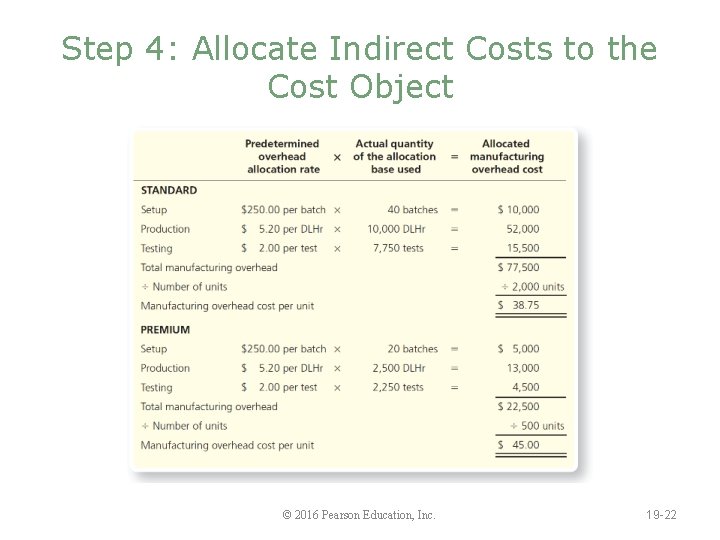
Step 4: Allocate Indirect Costs to the Cost Object © 2016 Pearson Education, Inc. 19 -22
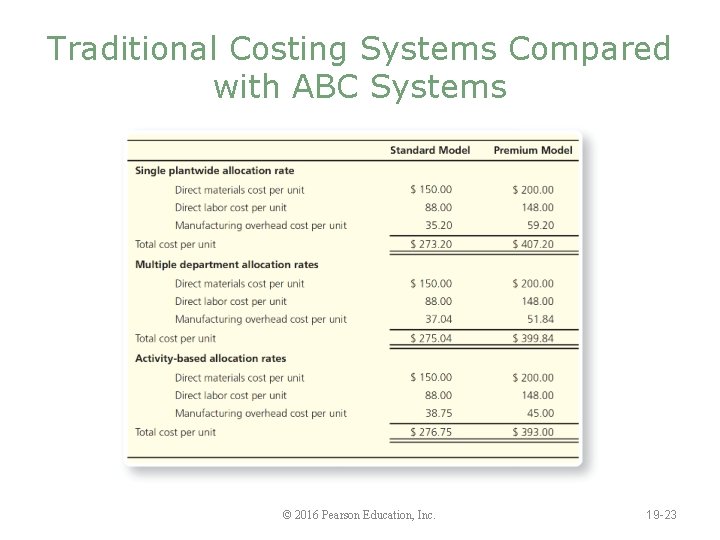
Traditional Costing Systems Compared with ABC Systems © 2016 Pearson Education, Inc. 19 -23
Learning Objective 3 Use activity-based management (ABM) to make decisions © 2016 Pearson Education, Inc. 19 -24
How Can Companies Use Activity-Based Management to Make Decisions? • Activity-based management (ABM) uses activity-based costs to make decisions that increase profits while meeting customer needs. • ABM decisions include: – Pricing and product mix – Cost management © 2016 Pearson Education, Inc. 19 -25
Pricing and Product Mix Decisions • Pricing decision: • If the cost per unit changes, should the selling price also change? • Product mix decision: • Compare the gross profit of two products and sell the product with the greatest gross profit to maximize total gross profit, considering limited production capabilities. © 2016 Pearson Education, Inc. 19 -26
Cost Management Decisions • Companies adopt ABC to get more accurate product costs for pricing and product mix decisions. • Value engineering reevaluates activities to reduce costs while satisfying customer needs. – Cross-functional teams work together, including marketers, engineers, production personnel, and accountants. © 2016 Pearson Education, Inc. 19 -27
Cost Management Decisions • Target pricing: – The target price is the amount customers are willing to pay for a product or service. – The target cost is the maximum cost to develop, produce, and deliver the product or service and earn the desired profit. • Cost-based pricing: – The full product cost is the cost to develop, produce, and deliver the product or service. – Desired profit is added to this full product cost to determine sales price. © 2016 Pearson Education, Inc. 19 -28
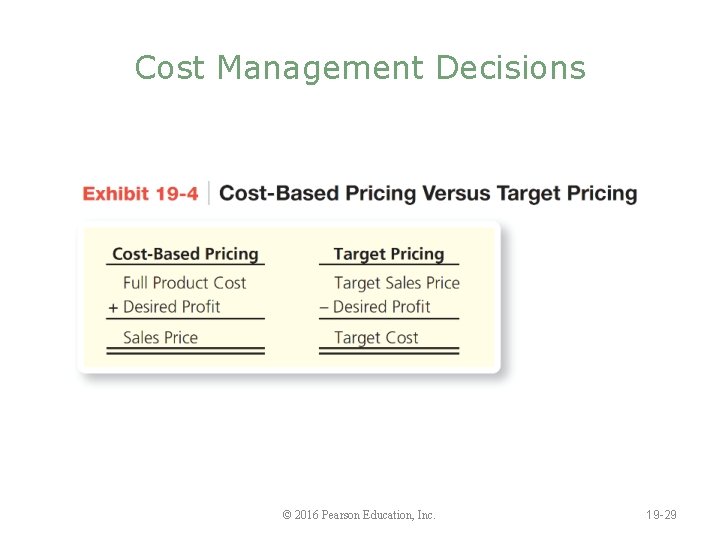
Cost Management Decisions © 2016 Pearson Education, Inc. 19 -29
Learning Objective 4 Use activity-based management (ABM) in a service company © 2016 Pearson Education, Inc. 19 -30
Can Activity-Based Management Be Used in Service Companies? Use the same steps to develop overhead rates used for manufacturing companies: Step 1: Identify activities and estimate their total costs. Step 2: Identify the allocation base for each activity and estimate the total quantity of each allocation base. Step 3: Compute the predetermined overhead allocation rate for each activity. Step 4: Allocate indirect costs to the cost object. © 2016 Pearson Education, Inc. 19 -31
Learning Objective 5 Describe a just-in-time (JIT) management system and record its transactions © 2016 Pearson Education, Inc. 19 -32

How Do Just-In-Time Management Systems Work? • A just-in-time management system reduces inventory costs. – Raw materials and finished goods are completed just in time for delivery to customers. – The cost of buying, storing, and moving inventory can be significant for companies. © 2016 Pearson Education, Inc. 19 -33
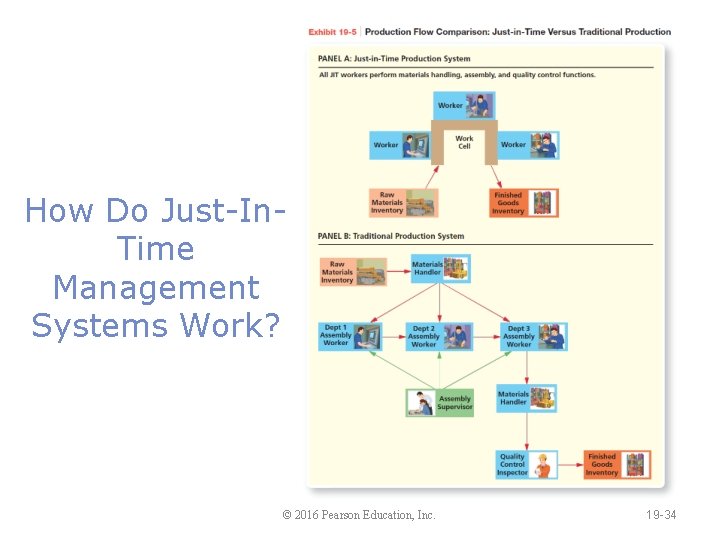
How Do Just-In. Time Management Systems Work? © 2016 Pearson Education, Inc. 19 -34
Just-in-Time Costing • Just-in-time costing is a costing system that simplifies accounting for companies. – Tracks costs after the units are completed – Combines Raw Materials Inventory and Work-in -Process Inventory into Raw and In-Process Inventory – The Conversion Costs account combines direct labor and manufacturing overhead costs. © 2016 Pearson Education, Inc. 19 -35
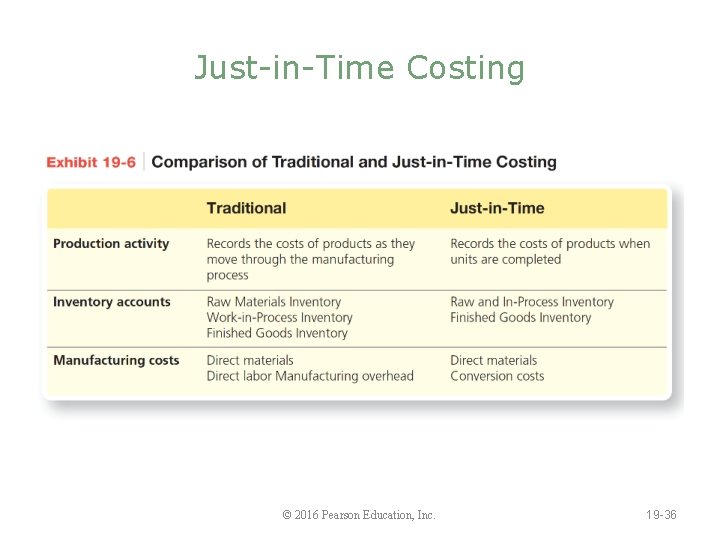
Just-in-Time Costing © 2016 Pearson Education, Inc. 19 -36
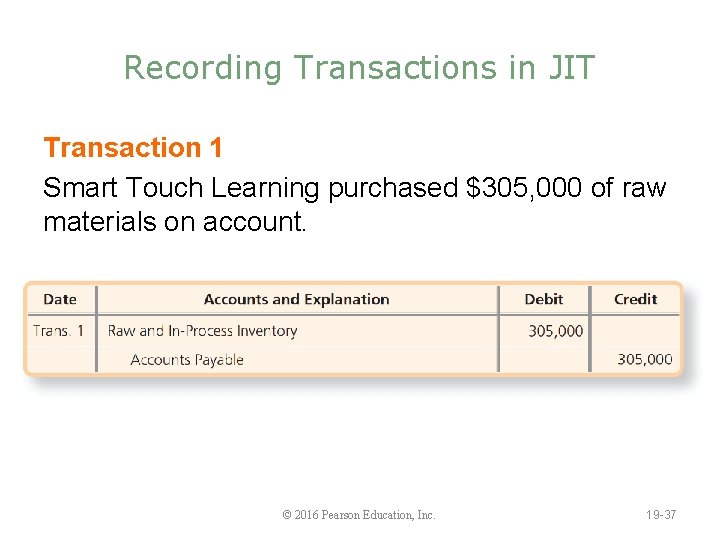
Recording Transactions in JIT Transaction 1 Smart Touch Learning purchased $305, 000 of raw materials on account. © 2016 Pearson Education, Inc. 19 -37
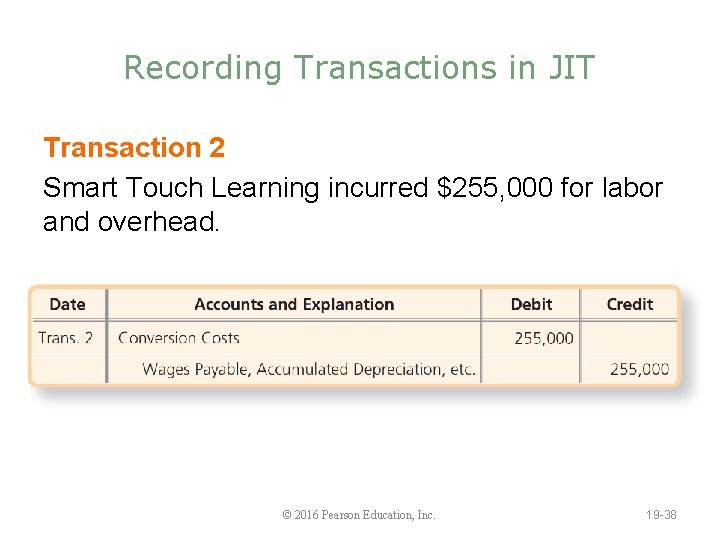
Recording Transactions in JIT Transaction 2 Smart Touch Learning incurred $255, 000 for labor and overhead. © 2016 Pearson Education, Inc. 19 -38
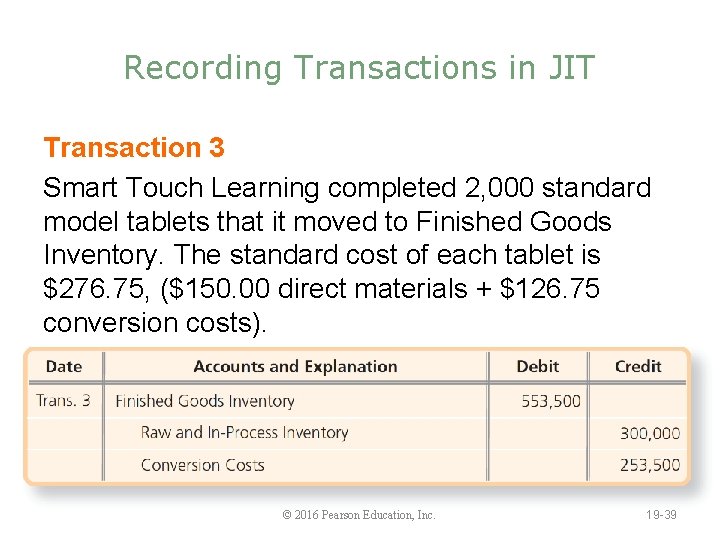
Recording Transactions in JIT Transaction 3 Smart Touch Learning completed 2, 000 standard model tablets that it moved to Finished Goods Inventory. The standard cost of each tablet is $276. 75, ($150. 00 direct materials + $126. 75 conversion costs). © 2016 Pearson Education, Inc. 19 -39
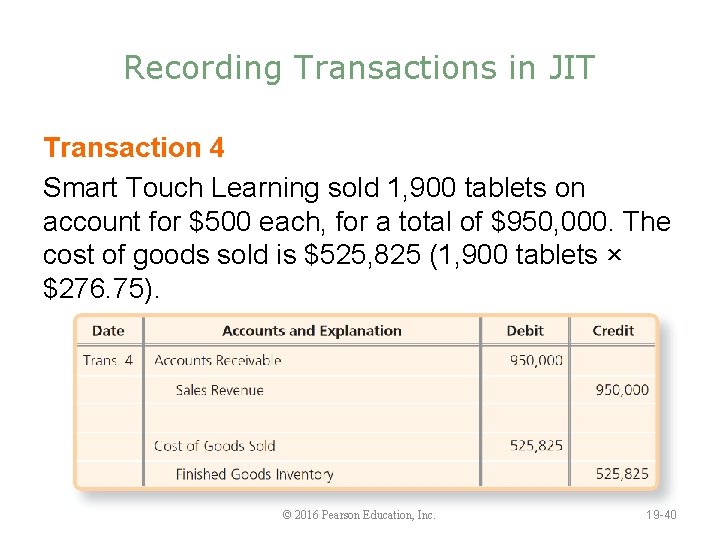
Recording Transactions in JIT Transaction 4 Smart Touch Learning sold 1, 900 tablets on account for $500 each, for a total of $950, 000. The cost of goods sold is $525, 825 (1, 900 tablets × $276. 75). © 2016 Pearson Education, Inc. 19 -40
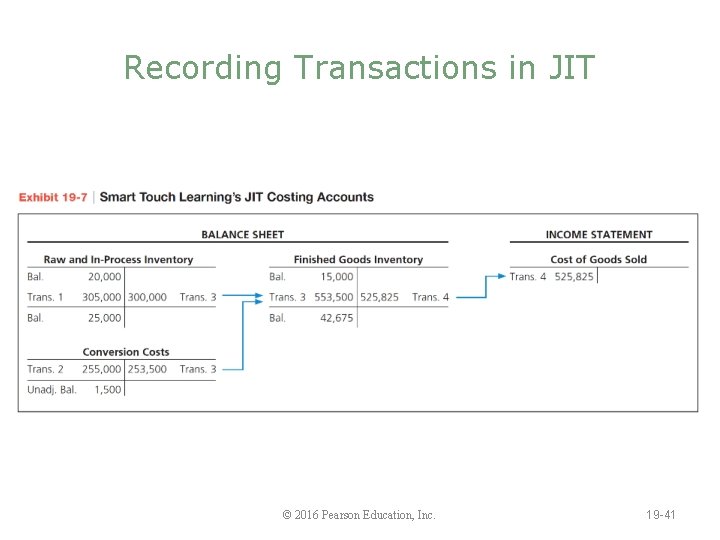
Recording Transactions in JIT © 2016 Pearson Education, Inc. 19 -41
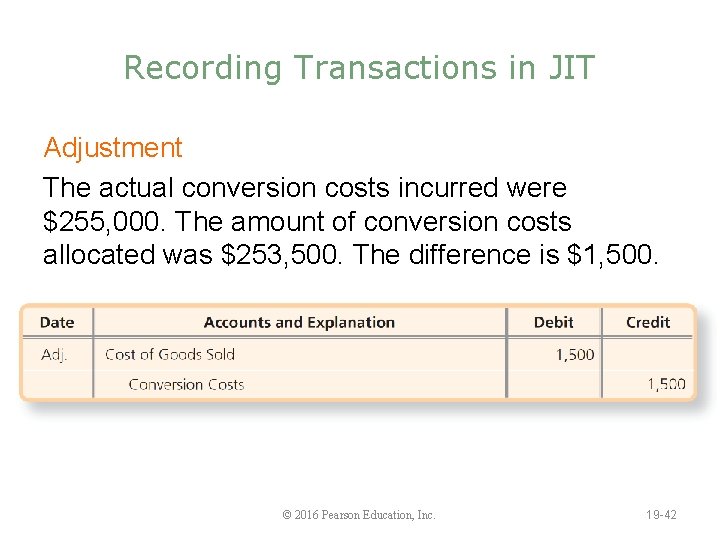
Recording Transactions in JIT Adjustment The actual conversion costs incurred were $255, 000. The amount of conversion costs allocated was $253, 500. The difference is $1, 500. © 2016 Pearson Education, Inc. 19 -42
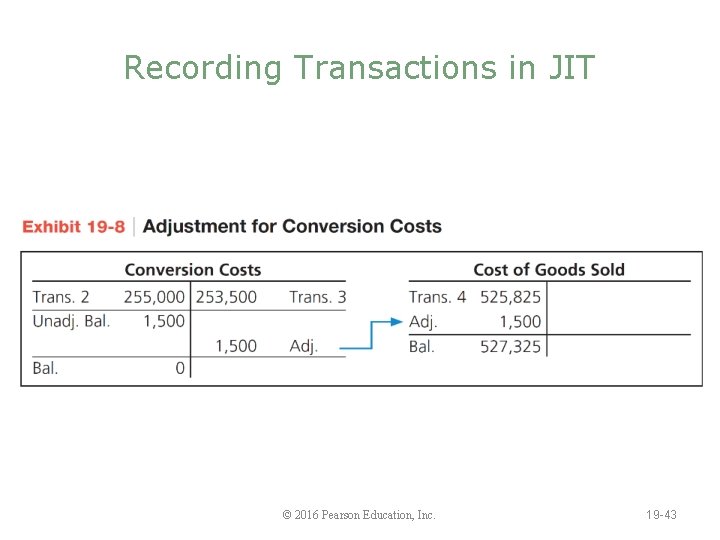
Recording Transactions in JIT © 2016 Pearson Education, Inc. 19 -43
Learning Objective 6 Describe quality management systems (QMS) and use the four types of quality costs to make decisions © 2016 Pearson Education, Inc. 19 -44
How Do Companies Manage Quality Using a Quality Management System? • A system that help managers improve the business’s performance by providing quality products and services is called a quality management system. • The goals of quality management systems are to: – Improve performance – Increase customer satisfaction – Increase profits © 2016 Pearson Education, Inc. 19 -45
The Four Types of Quality Costs • Prevention costs: Costs incurred to avoid poor-quality goods or services. • Appraisal costs: Costs incurred to detect poor-quality materials, goods, or services. • Internal failure costs: Costs incurred to correct goods or services before delivery to customers. • External failure costs: Costs incurred after delivery to the customer has occurred. © 2016 Pearson Education, Inc. 19 -46
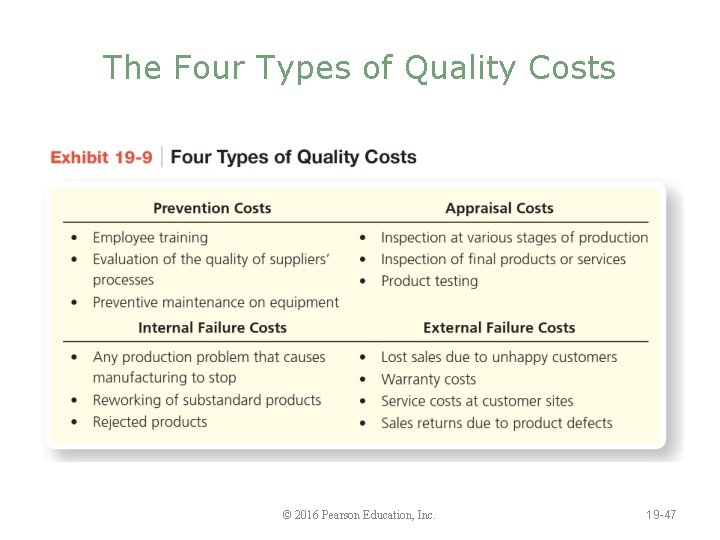
The Four Types of Quality Costs © 2016 Pearson Education, Inc. 19 -47
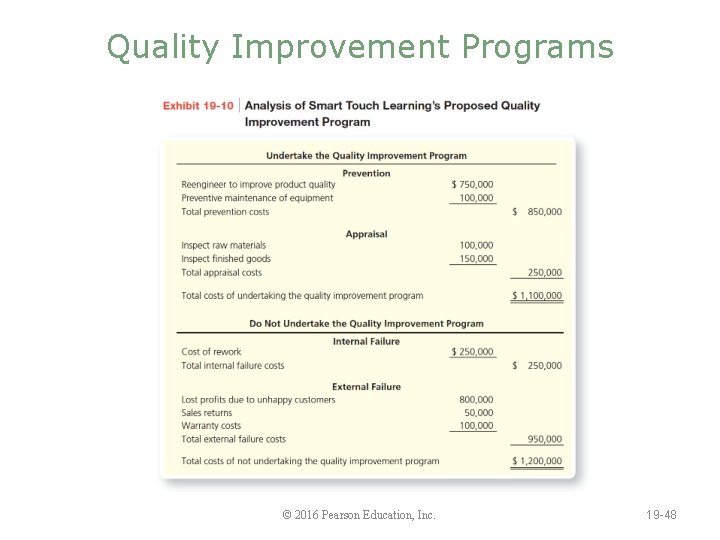
Quality Improvement Programs © 2016 Pearson Education, Inc. 19 -48
© 2016 Pearson Education, Inc. 19 -49
- Slides: 49