
CHAPTER 19 Civilizations Inferno The Rise and Reform




- Slides: 22
CHAPTER 19 “Civilization’s Inferno”: The Rise and Reform of Industrial Cities 1880– 1917 Copyright © 2014 by Bedford/St. Martin’s
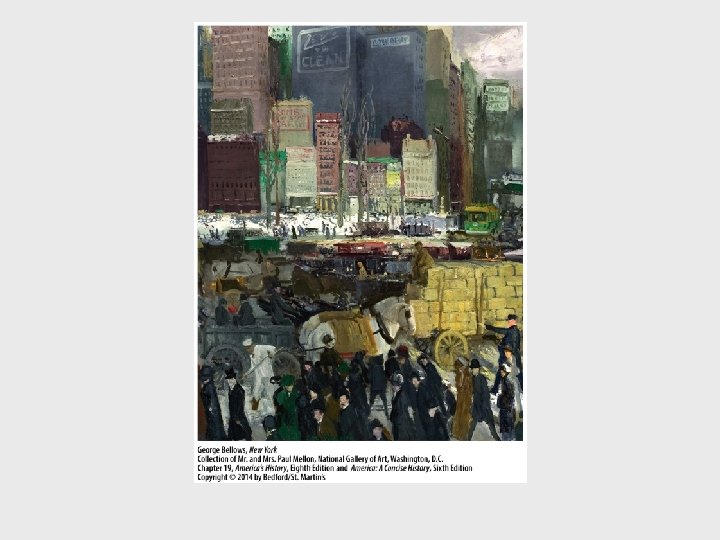
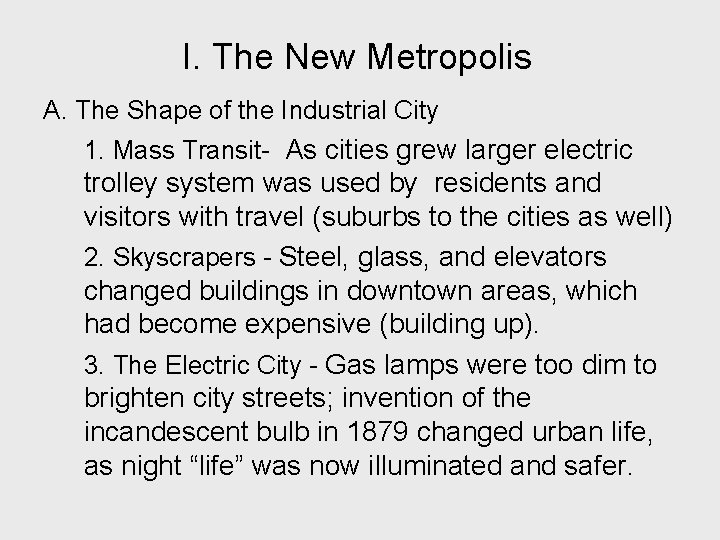
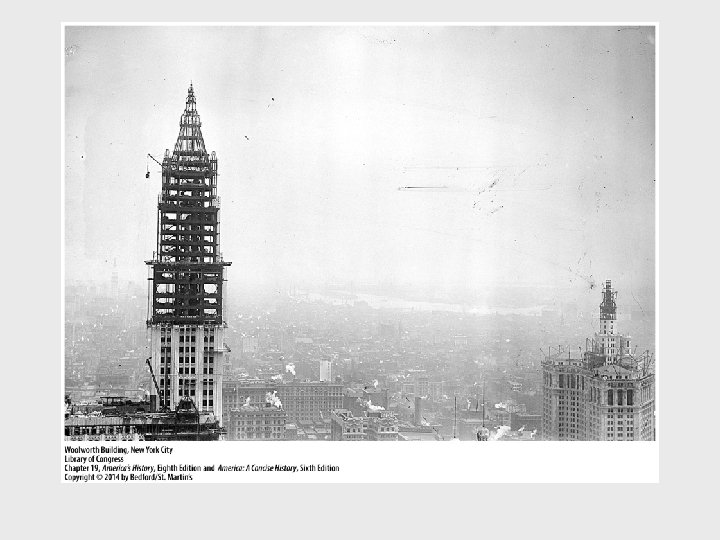
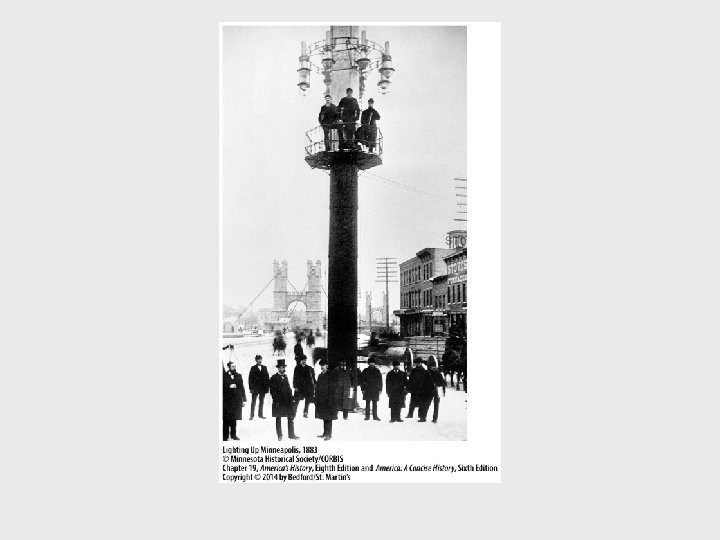
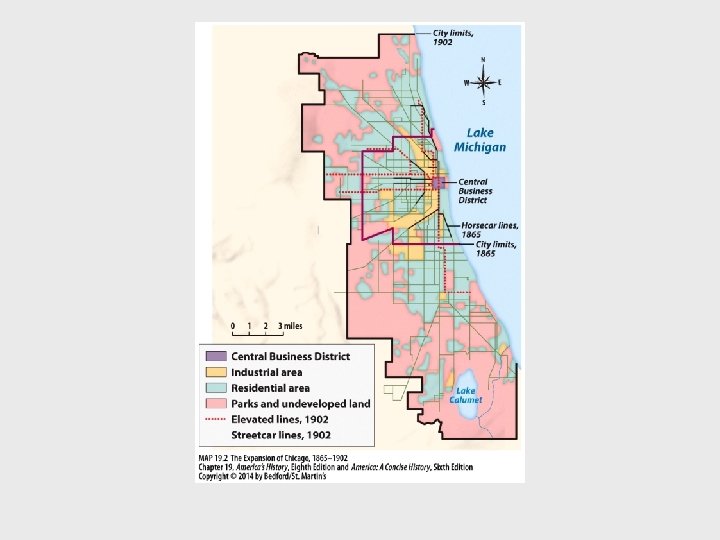
I. The New Metropolis A. The Shape of the Industrial City 1. Mass Transit- As cities grew larger electric trolley system was used by residents and visitors with travel (suburbs to the cities as well) 2. Skyscrapers - Steel, glass, and elevators changed buildings in downtown areas, which had become expensive (building up). 3. The Electric City - Gas lamps were too dim to brighten city streets; invention of the incandescent bulb in 1879 changed urban life, as night “life” was now illuminated and safer.
I. The New Metropolis B. Newcomers and Neighborhoods 1. Ethnic neighborhoods -Immigrants generally lived among people of shared ethnicity: Irish in Boston, Swedes in Minneapolis, and Italians in northeastern and Mid. Atlantic cities—places that met cultural needs. 2. African Americans - At the turn of the century, 90 percent of black Americans lived in the South, but many were moving from rural to urban areas; in northern cities, they faced discrimination and violence 3. Tenements - Five- or six-story buildings that provided cheap housing for twenty or more families in cramped, airless apartments; fostered rampant disease and horrific infant mortality; New York’s Tenement House Law of 1901 required indoor toilets, and fire safety for new buildings.
I. The New Metropolis C. City Cultures 1. Urban Amusements - One enticing attraction was vaudeville theater, which arose in the 1880 s and 1890 s. People paid a nickel for movies at the early movie theaters; more spectacular were the amusement parks (ex: Coney Island, NY). 2. Ragtime and City Blues - Ragtime music by African American artists with a “ragged rhythm” became extremely popular; Scott Joplin was most famous performer. 3. Sex and the City- Amusement parks and theaters provided opportunities for dating that had not existed in previous generations; with less parental supervision-sex in the city was more frequent.
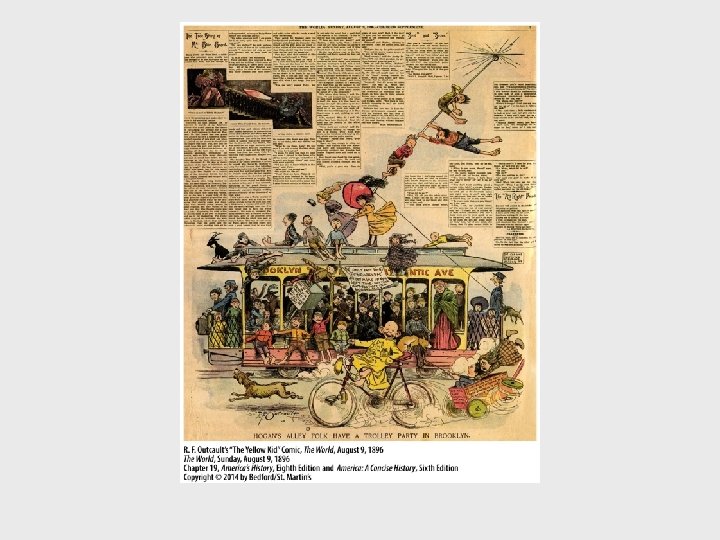
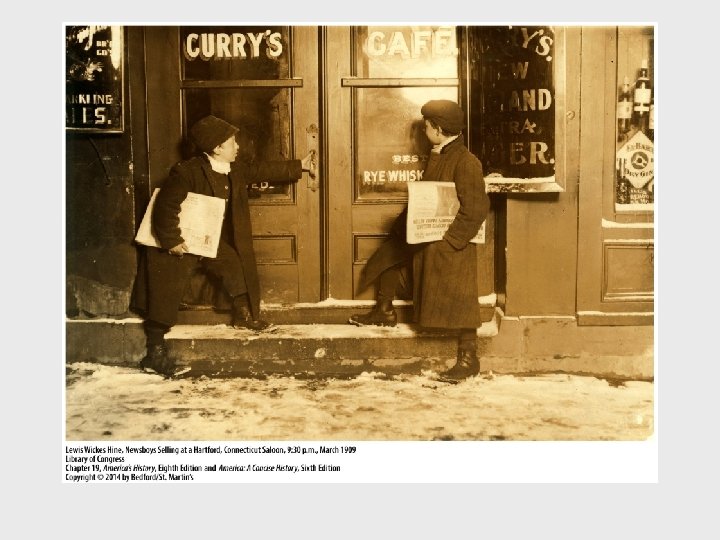
I. The New Metropolis C. City Cultures (cont. ) 4. High Culture - Art and natural history museums, libraries, and symphonies grew out of wealthy patrons’ interests and donations; Andrew Carnegie spent more than $32. 7 million to establish over a thousand libraries nationwide. 5. Urban Journalism - Interest increased in reading about current events, human-interest stories, sports, fashion, and high society; the name yellow journalism, a derogatory term for mass-market newspapers; sensationalism grew as owners competed for sales (Joseph Pulitzer and William Randolph Hearst); papers played an increasing role in investigating corruption in government; newspaper reporters accused of drawing too much attention to negative stories were “muckrakers. ”
II. Governing the Great City A. Urban Machines 1. Tammany Hall - Well-organized political party organizations were referred to as “political machines”; viewed by the middle class as corrupt; New York’s infamous Tammany Society—known by the name of its meeting place, Tammany Hall—was led by George Washington Plunket, who made deals for city contracts and services. – 2. Successes and failures – Local machine run governments achieved some notable successes; paved streets, brought clean water and gaslight, and removed garbage; however, machines were limited in what the “boss” could do to stop widespread poverty and they generally took more from the tax payers then they gave. For example, 13 million spent on a courthouse that only cost 3 million to build—Where did the missing money go?
II. Governing the Great City B. The Limits of Machine Government 1. The Depression of the 1890 s Cities struggled to deal with the extreme growth in population; during 1890 s, unemployment reached 25 percent in some urban areas; homelessness and hunger increased; middle-class reformers encouraged private charity rather than public assistance; urban voters became radicalized by the poverty, forcing politicians to make changes to their programs. 2. Programs – Some American mayors began to model programs after European successes: public baths, gyms, swimming pools, playgrounds, free public concerts, lowering fares for street car travel, and efforts to reduce crime and increase municipal ownership of gas and electricity.
II. City and State level Reforms • City Level- Middle Class businessmen began to challenge the corruption of political machines such as the Tweed Ring in New York. Political cartoonist Thomas Nast exposed corruption in political machines and help bring down Boss Tweed. Because the vote was often subject to being vied by work bosses who supported political machines, the Australian Ballot was (secret ballot) was introduced. As political machines lost power, city tax money was used to more efficiently for public parks, schools, hospitals, sanitation, building codes, etc. • State Level- Progressive governors like Woodrow Wilson of NJ, Robert Lafollette of WI, and Tasker Oddie of NV pushed reforms. These reforms included things such as the Australian Ballot, Women’s Suffrage, Direct Primary, State Income Tax, Initiative (people propose laws), Referendum (people challenge laws), and Recall (people call for a remove a public official). The idea was to make society more democratic by giving “power to the people. ”
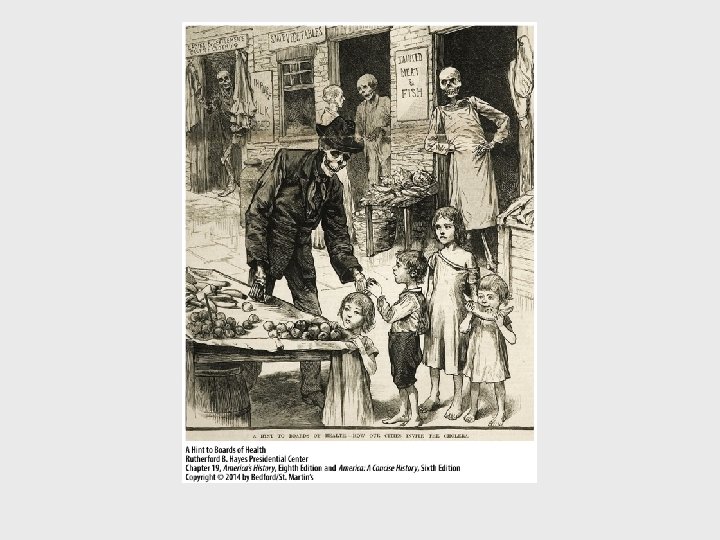
III. Crucibles of Progressive Reform A. Fighting Dirt and Vice 1. Cleaning Up Urban Environments - Late nineteenthcentury Europeans began to understand how to prevent disease; hygiene reformers made efforts to teach handwashing to urban residents to fight tuberculosis; public health movement also worked to clean up pollution, “City Beautiful” movement advocated more and better urban park spaces, gardens, skating rinks, playgrounds, etc. 2. Closing Red Light Districts - Concerns about the threat of white slavery (allegations that white women were being kidnapped into sex industry) were overstated but, investigations found a complex reality: women entered prostitution as a result of many factors, including low-wage jobs, economic desperation, abandonment, and often sexual and domestic abuse. The crusade closed brothels, but then street walkers emerged.
III. Crucibles of Progressive Reform B. The Movement for Social Settlements 1. Hull House - Settlement houses were viewed as one of the most successful reforms of the Progressive Era; most famous settlement was in Chicago, started by Jane Addams and Ellen Gates Starr. It provided a community center to aid immigrants and women in gaining the resources they needed to survive in the city. It offered a bathhouse, playground, kindergarten, and day care center; worked with colleges to offer education to these people in need.
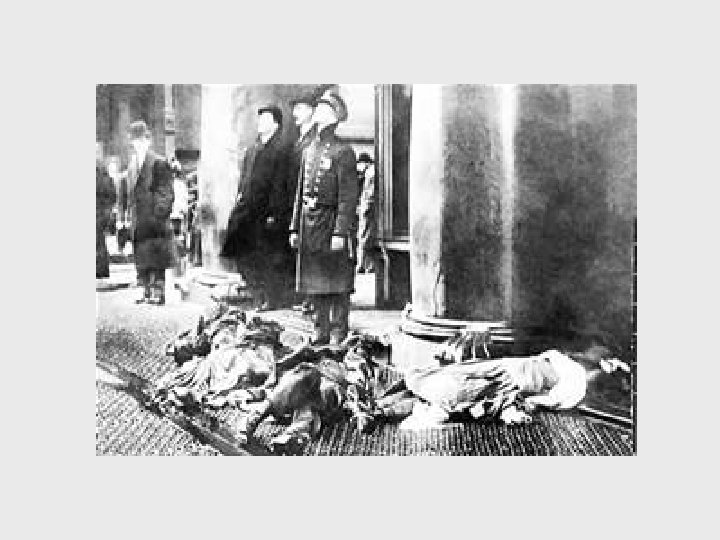
III. Crucibles of Progressive Reform C. Cities and National Politics 1. Triangle Shirt Fire - On March 25, 1911, in New York City, fire spread quickly through the Triangle Shirtwaist textile factory; panicked workers discovered that employers had locked the emergency doors to prevent theft (in violation of city fire laws); dozens of workers were trapped in flames; 146 people died. Most were just nineteen year old women. 2. Resulting reforms – New York State appointed a factory commission that created fifty-six laws dealing with such issues as fire hazards, unsafe machinery, and wages and working hours for women and children; the labor code that resulted was the most advanced in the United States.