
Chapter 19 Cardiovascular System Blood Vessels tienneJules Marey

Chapter 19: Cardiovascular System: Blood Vessels
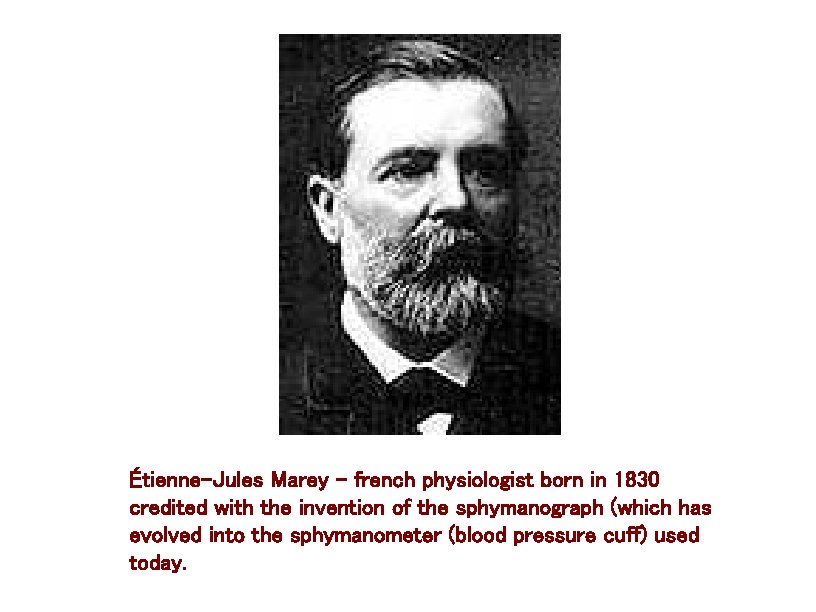
Étienne-Jules Marey – french physiologist born in 1830 credited with the invention of the sphymanograph (which has evolved into the sphymanometer (blood pressure cuff) used today.
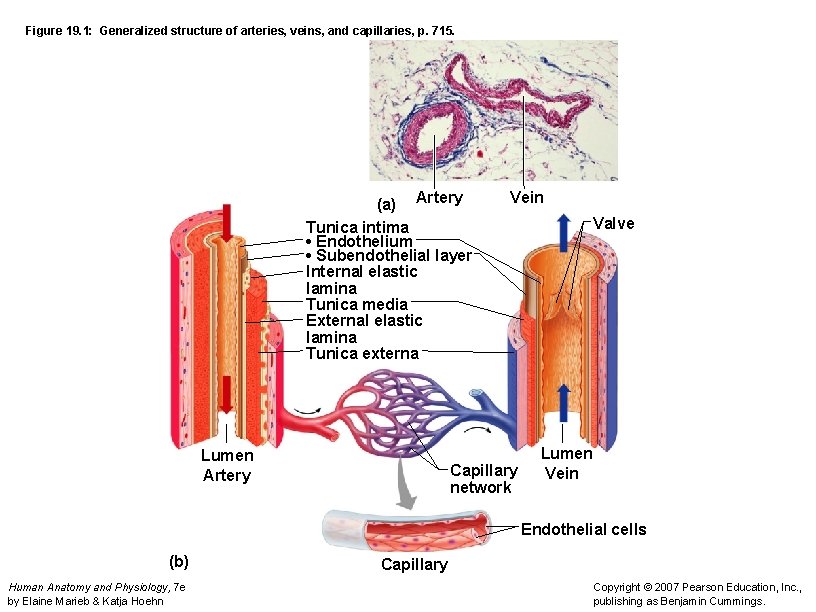
Figure 19. 1: Generalized structure of arteries, veins, and capillaries, p. 715. (a) Artery Tunica intima • Endothelium • Subendothelial layer Internal elastic lamina Tunica media External elastic lamina Tunica externa Lumen Artery Vein Capillary network Valve Lumen Vein Endothelial cells (b) Human Anatomy and Physiology, 7 e by Elaine Marieb & Katja Hoehn Capillary Copyright © 2007 Pearson Education, Inc. , publishing as Benjamin Cummings.
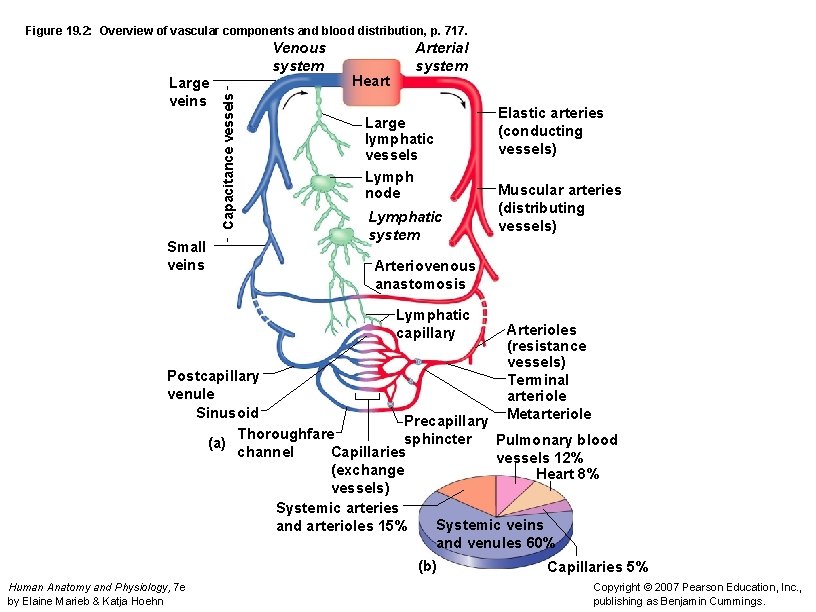
Figure 19. 2: Overview of vascular components and blood distribution, p. 717. Large veins Small veins Capacitance vessels Venous system Heart Arterial system Large lymphatic vessels Lymph node Lymphatic system Elastic arteries (conducting vessels) Muscular arteries (distributing vessels) Arteriovenous anastomosis Lymphatic capillary Arterioles (resistance vessels) Terminal arteriole Metarteriole Postcapillary venule Sinusoid Precapillary Thoroughfare sphincter Pulmonary blood (a) Capillaries channel vessels 12% (exchange Heart 8% vessels) Systemic arteries Systemic veins and arterioles 15% and venules 60% (b) Human Anatomy and Physiology, 7 e by Elaine Marieb & Katja Hoehn Capillaries 5% Copyright © 2007 Pearson Education, Inc. , publishing as Benjamin Cummings.
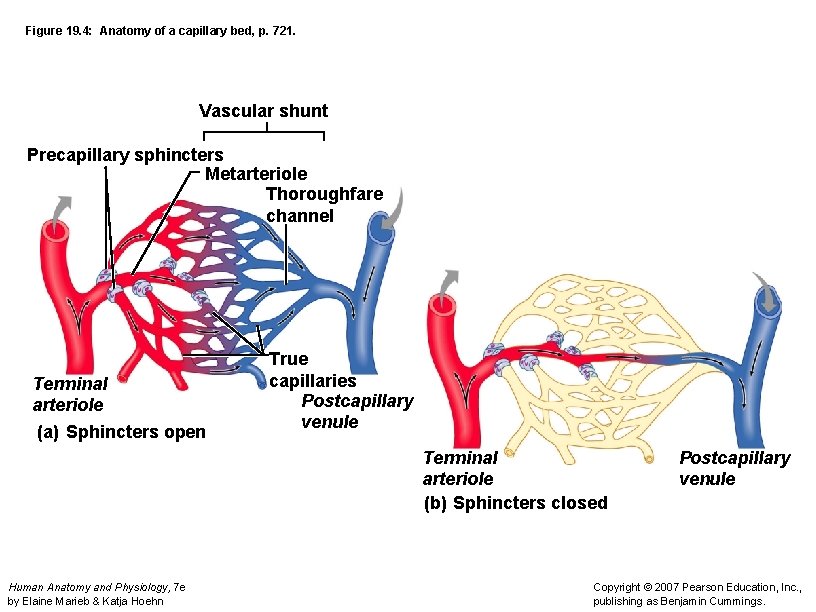
Figure 19. 4: Anatomy of a capillary bed, p. 721. Vascular shunt Precapillary sphincters Metarteriole Thoroughfare channel Terminal arteriole (a) Sphincters open True capillaries Postcapillary venule Terminal arteriole (b) Sphincters closed Human Anatomy and Physiology, 7 e by Elaine Marieb & Katja Hoehn Postcapillary venule Copyright © 2007 Pearson Education, Inc. , publishing as Benjamin Cummings.
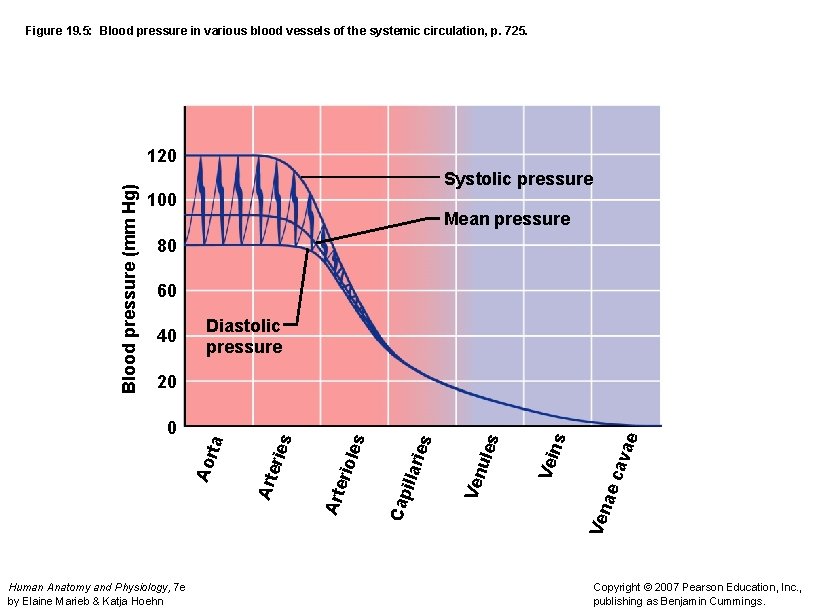
Figure 19. 5: Blood pressure in various blood vessels of the systemic circulation, p. 725. Systolic pressure 100 Mean pressure 80 60 40 Diastolic pressure Human Anatomy and Physiology, 7 e by Elaine Marieb & Katja Hoehn ava e ae c Ven ns Vei ules Ven ies illar Cap iole s Arte r Aor ta 0 ies 20 Arte r Blood pressure (mm Hg) 120 Copyright © 2007 Pearson Education, Inc. , publishing as Benjamin Cummings.
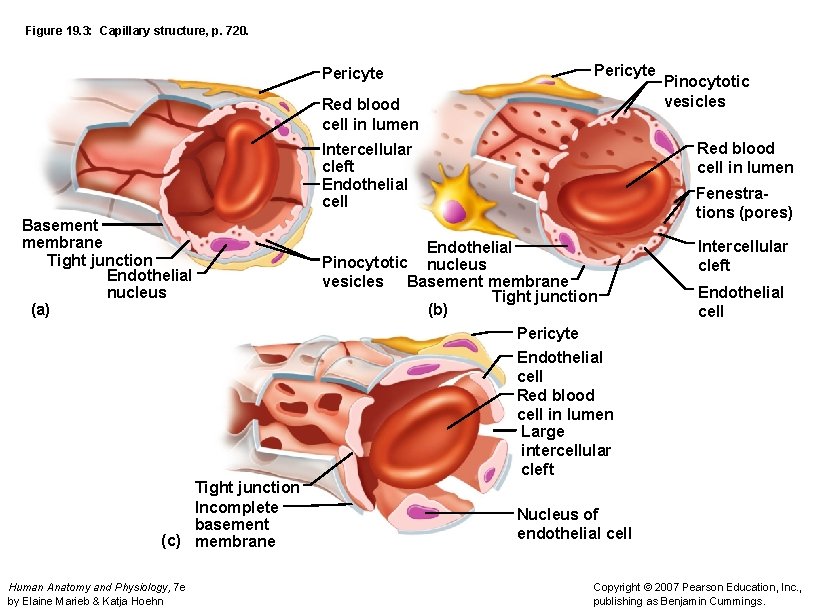
Figure 19. 3: Capillary structure, p. 720. Pericyte Red blood cell in lumen Intercellular cleft Endothelial cell Basement membrane Tight junction Endothelial nucleus (a) Pinocytotic vesicles Fenestrations (pores) Endothelial Pinocytotic nucleus vesicles Basement membrane Tight junction (b) Intercellular cleft Endothelial cell Pericyte Endothelial cell Red blood cell in lumen Large intercellular cleft Tight junction Incomplete basement (c) membrane Human Anatomy and Physiology, 7 e by Elaine Marieb & Katja Hoehn Nucleus of endothelial cell Copyright © 2007 Pearson Education, Inc. , publishing as Benjamin Cummings.
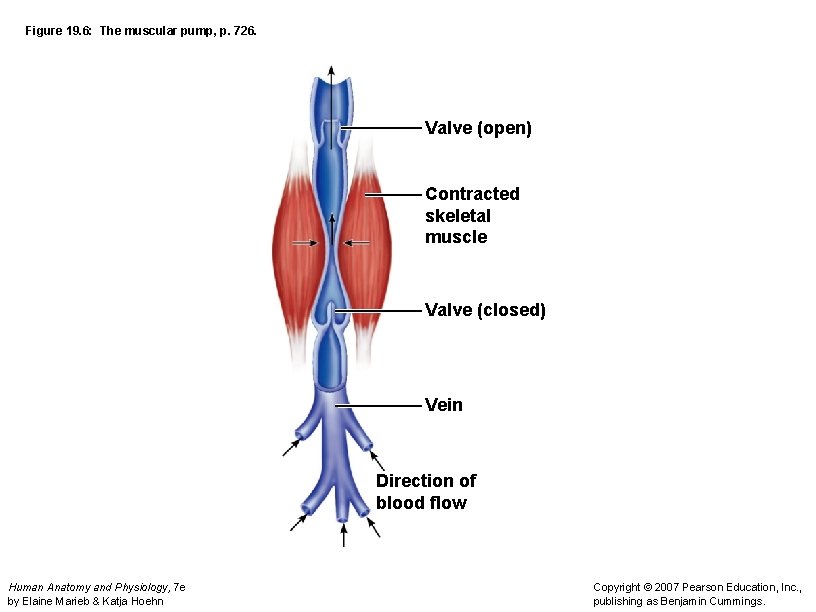
Figure 19. 6: The muscular pump, p. 726. Valve (open) Contracted skeletal muscle Valve (closed) Vein Direction of blood flow Human Anatomy and Physiology, 7 e by Elaine Marieb & Katja Hoehn Copyright © 2007 Pearson Education, Inc. , publishing as Benjamin Cummings.
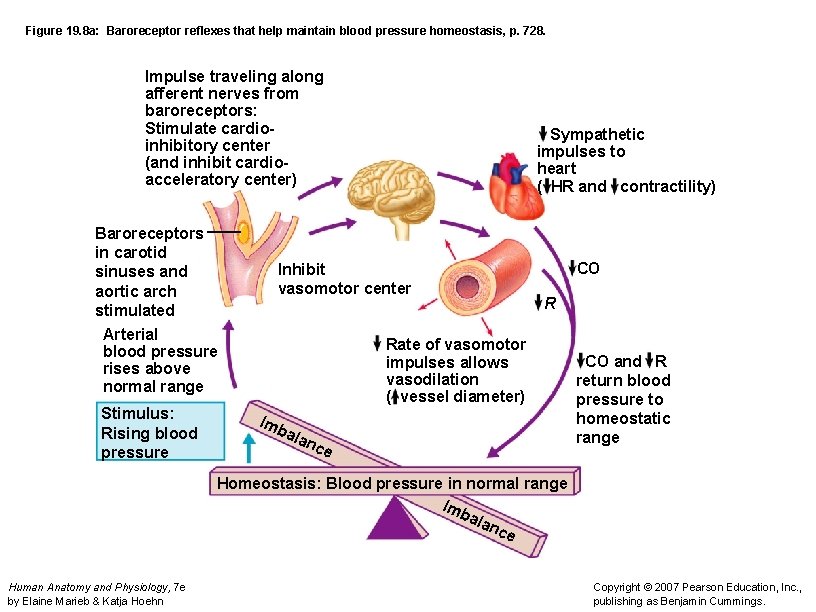
Figure 19. 8 a: Baroreceptor reflexes that help maintain blood pressure homeostasis, p. 728. Impulse traveling along afferent nerves from baroreceptors: Stimulate cardioinhibitory center (and inhibit cardioacceleratory center) Baroreceptors in carotid sinuses and aortic arch stimulated Arterial blood pressure rises above normal range Stimulus: Rising blood pressure Sympathetic impulses to heart ( HR and contractility) Inhibit vasomotor center CO R Rate of vasomotor impulses allows vasodilation ( vessel diameter) Imb ala nce CO and R return blood pressure to homeostatic range Homeostasis: Blood pressure in normal range Imb ala nce Human Anatomy and Physiology, 7 e by Elaine Marieb & Katja Hoehn Copyright © 2007 Pearson Education, Inc. , publishing as Benjamin Cummings.
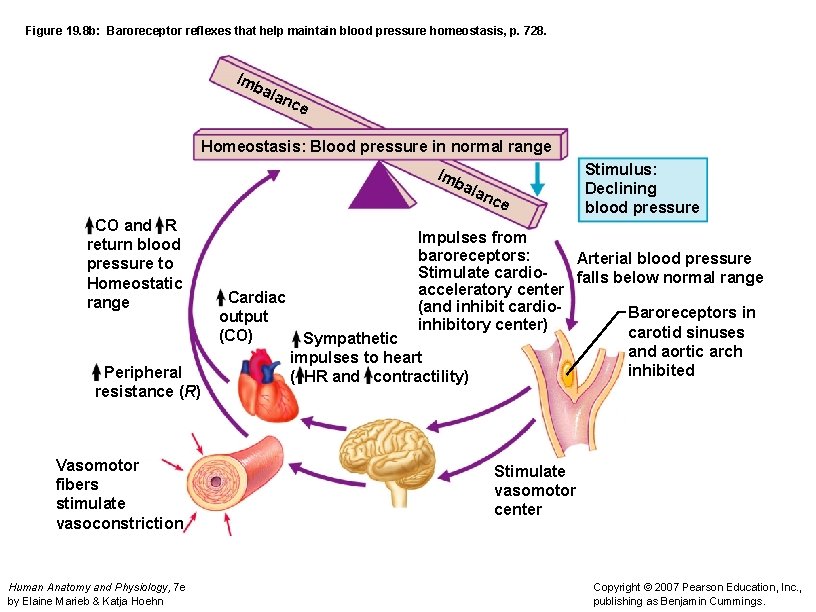
Figure 19. 8 b: Baroreceptor reflexes that help maintain blood pressure homeostasis, p. 728. Imb ala nce Homeostasis: Blood pressure in normal range Imb ala CO and R return blood pressure to Homeostatic range Peripheral resistance (R) Vasomotor fibers stimulate vasoconstriction Human Anatomy and Physiology, 7 e by Elaine Marieb & Katja Hoehn nce Stimulus: Declining blood pressure Impulses from baroreceptors: Arterial blood pressure Stimulate cardiofalls below normal range acceleratory center Cardiac (and inhibit cardio. Baroreceptors in output inhibitory center) carotid sinuses (CO) Sympathetic and aortic arch impulses to heart inhibited ( HR and contractility) Stimulate vasomotor center Copyright © 2007 Pearson Education, Inc. , publishing as Benjamin Cummings.
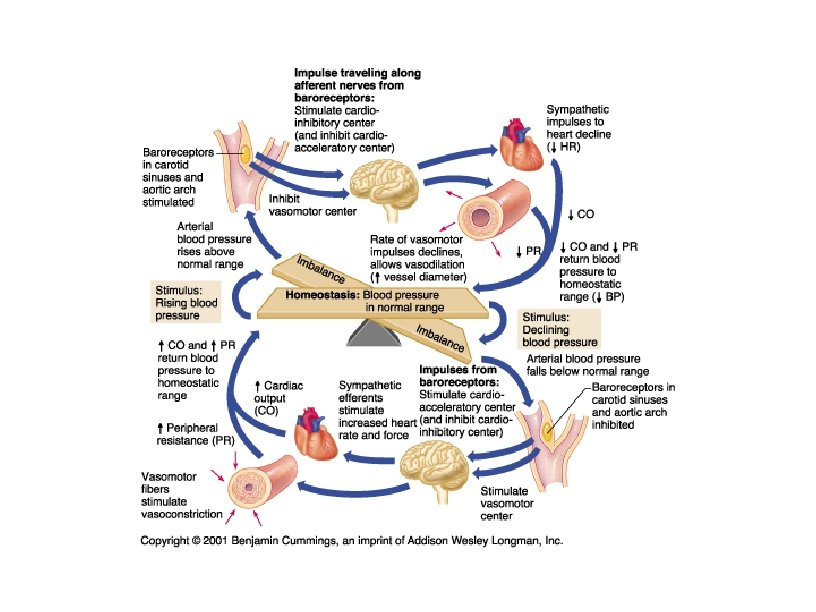
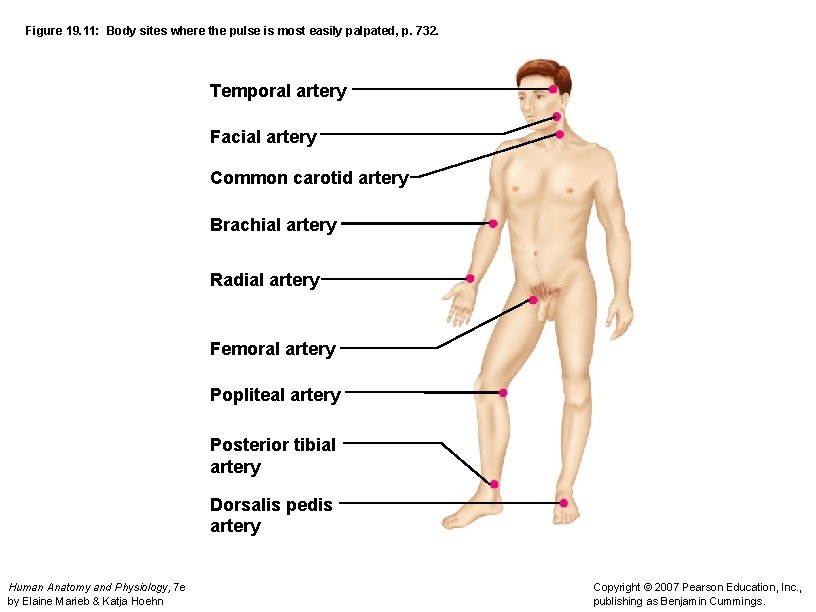
Figure 19. 11: Body sites where the pulse is most easily palpated, p. 732. Temporal artery Facial artery Common carotid artery Brachial artery Radial artery Femoral artery Popliteal artery Posterior tibial artery Dorsalis pedis artery Human Anatomy and Physiology, 7 e by Elaine Marieb & Katja Hoehn Copyright © 2007 Pearson Education, Inc. , publishing as Benjamin Cummings.
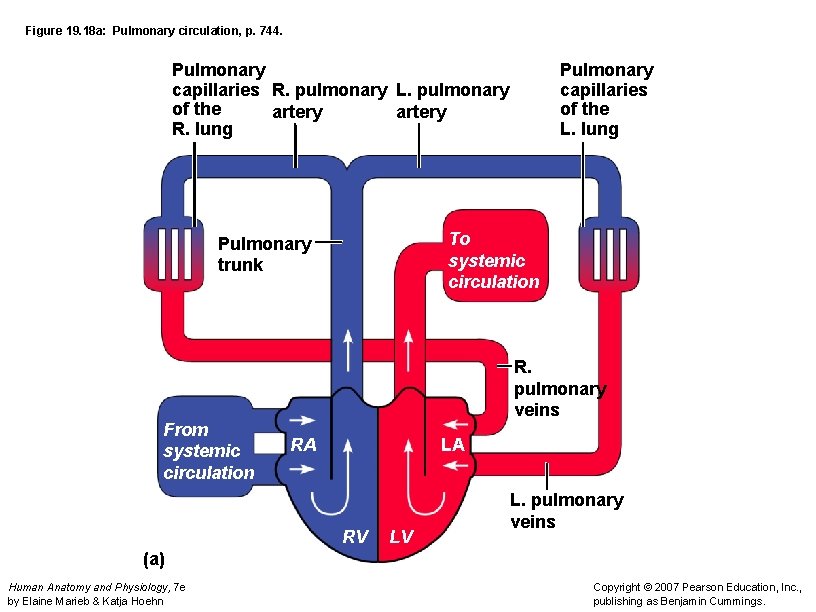
Figure 19. 18 a: Pulmonary circulation, p. 744. Pulmonary capillaries R. pulmonary L. pulmonary of the artery R. lung To systemic circulation Pulmonary trunk From systemic circulation Pulmonary capillaries of the L. lung R. pulmonary veins RA LA RV LV L. pulmonary veins (a) Human Anatomy and Physiology, 7 e by Elaine Marieb & Katja Hoehn Copyright © 2007 Pearson Education, Inc. , publishing as Benjamin Cummings.
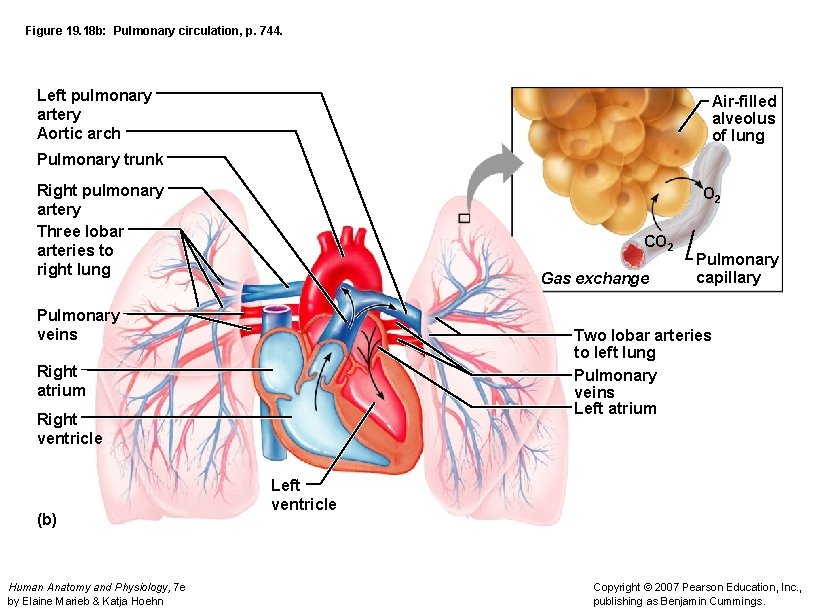
Figure 19. 18 b: Pulmonary circulation, p. 744. Left pulmonary artery Aortic arch Air-filled alveolus of lung Pulmonary trunk Right pulmonary artery Three lobar arteries to right lung O 2 CO 2 Gas exchange Pulmonary veins Two lobar arteries to left lung Pulmonary veins Left atrium Right ventricle (b) Human Anatomy and Physiology, 7 e by Elaine Marieb & Katja Hoehn Pulmonary capillary Left ventricle Copyright © 2007 Pearson Education, Inc. , publishing as Benjamin Cummings.
- Slides: 17