
Chapter 19 Carboxylic Acid Derivatives Nucleophilic Acyl Substitution
Chapter 19 Carboxylic Acid Derivatives: Nucleophilic Acyl Substitution Copyright © The Mc. Graw-Hill Companies, Inc. Permission required for reproduction or display.
Nomenclature of Carboxylic Acid Derivatives
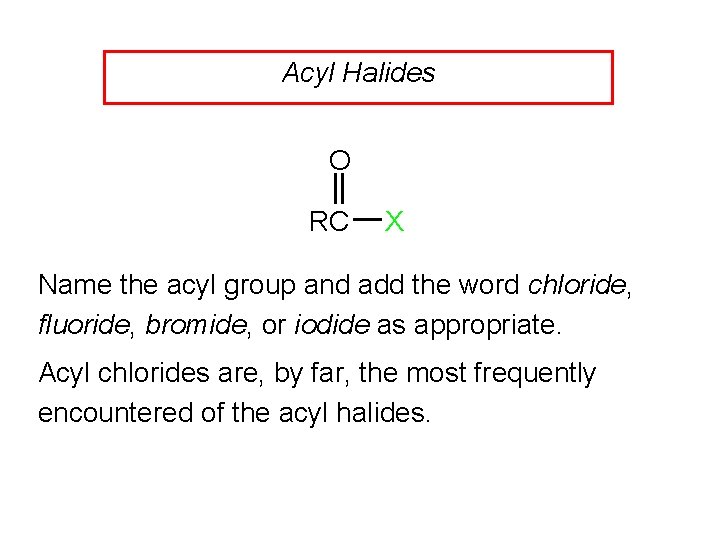
Acyl Halides O RC X Name the acyl group and add the word chloride, fluoride, bromide, or iodide as appropriate. Acyl chlorides are, by far, the most frequently encountered of the acyl halides.
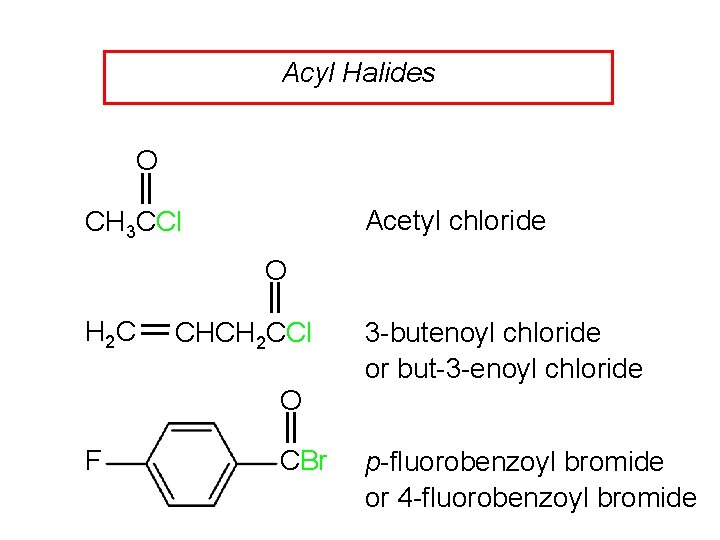
Acyl Halides O Acetyl chloride CH 3 CCl O H 2 C CHCH 2 CCl 3 -butenoyl chloride or but-3 -enoyl chloride O F CBr p-fluorobenzoyl bromide or 4 -fluorobenzoyl bromide
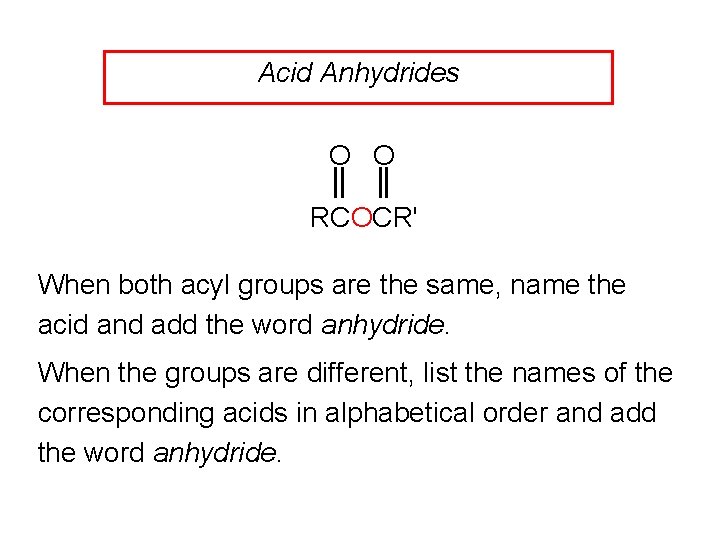
Acid Anhydrides O O RCOCR' When both acyl groups are the same, name the acid and add the word anhydride. When the groups are different, list the names of the corresponding acids in alphabetical order and add the word anhydride.
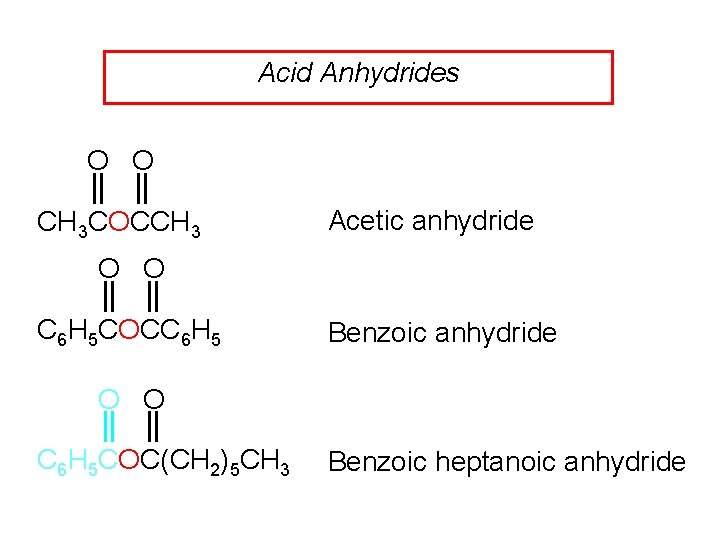
Acid Anhydrides O O CH 3 COCCH 3 Acetic anhydride O O C 6 H 5 COCC 6 H 5 Benzoic anhydride O O C 6 H 5 COC(CH 2)5 CH 3 Benzoic heptanoic anhydride
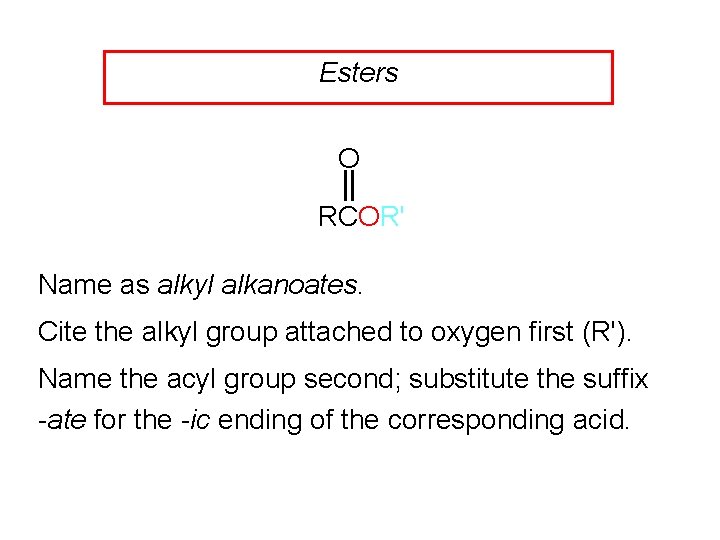
Esters O RCOR' Name as alkyl alkanoates. Cite the alkyl group attached to oxygen first (R'). Name the acyl group second; substitute the suffix -ate for the -ic ending of the corresponding acid.
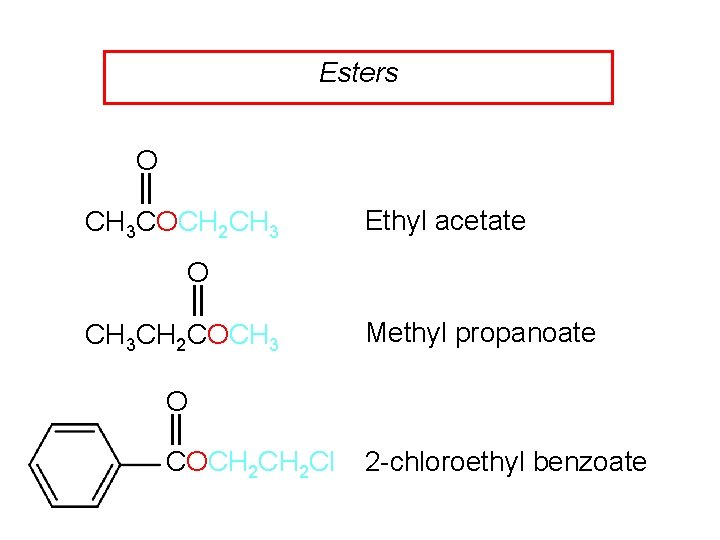
Esters O CH 3 COCH 2 CH 3 Ethyl acetate O CH 3 CH 2 COCH 3 Methyl propanoate O COCH 2 Cl 2 -chloroethyl benzoate
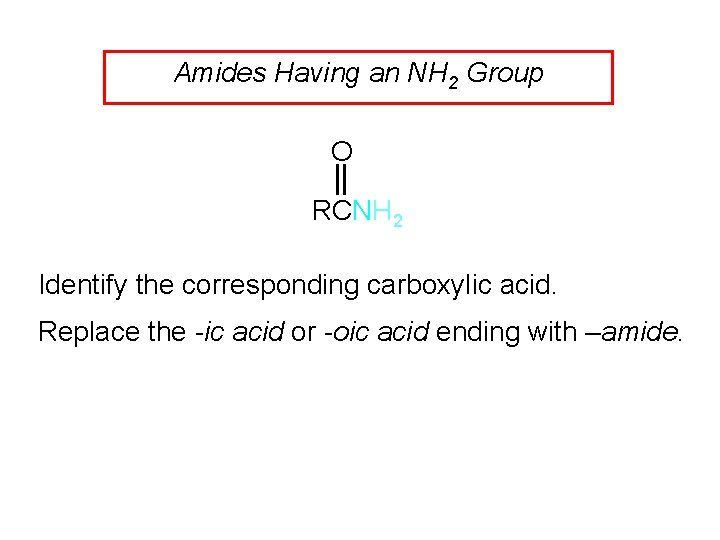
Amides Having an NH 2 Group O RCNH 2 Identify the corresponding carboxylic acid. Replace the -ic acid or -oic acid ending with –amide.
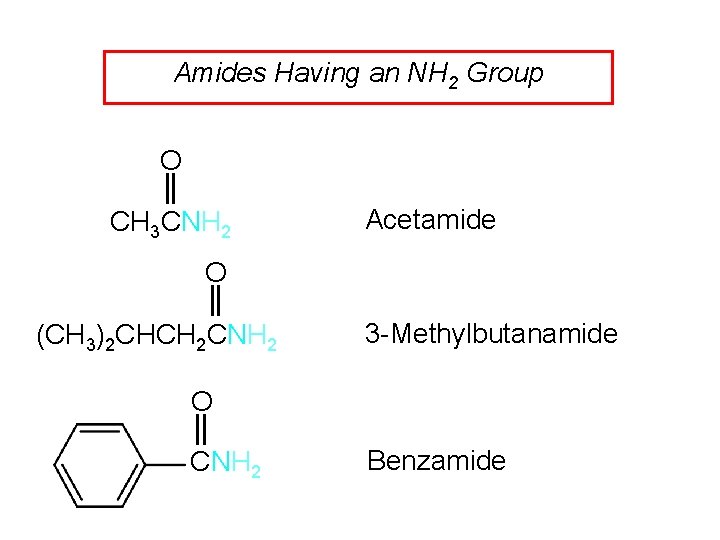
Amides Having an NH 2 Group O CH 3 CNH 2 Acetamide O (CH 3)2 CHCH 2 CNH 2 3 -Methylbutanamide O CNH 2 Benzamide
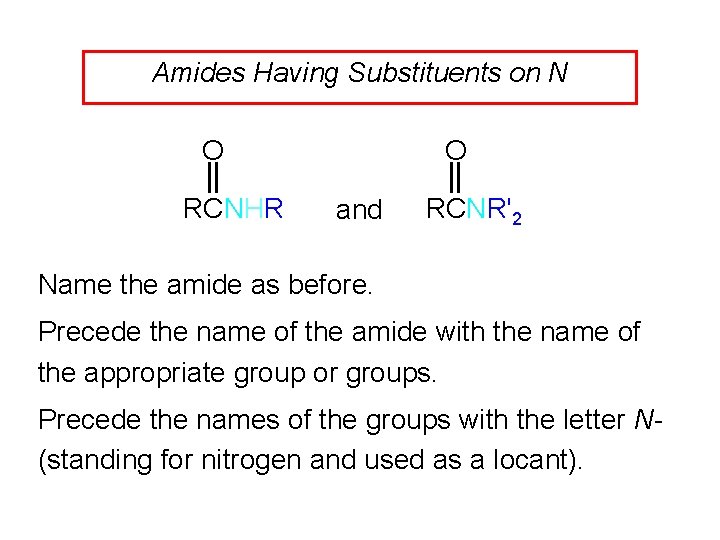
Amides Having Substituents on N O RCNHR' O and RCNR'2 Name the amide as before. Precede the name of the amide with the name of the appropriate group or groups. Precede the names of the groups with the letter N(standing for nitrogen and used as a locant).
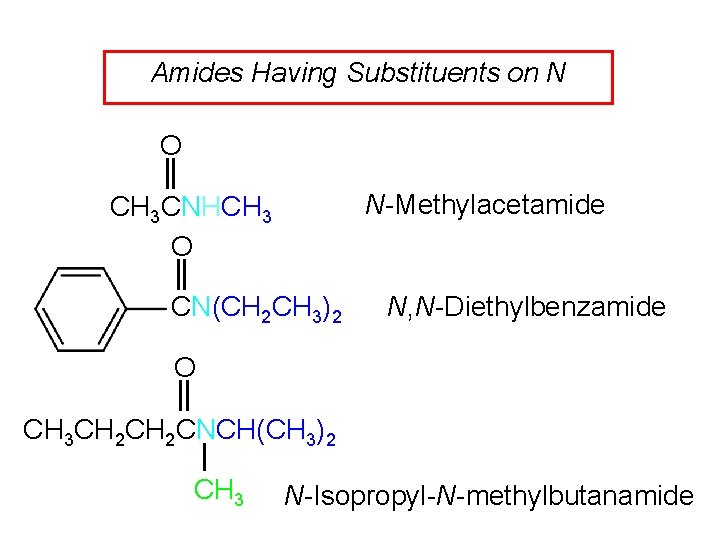
Amides Having Substituents on N O N-Methylacetamide CH 3 CNHCH 3 O CN(CH 2 CH 3)2 N, N-Diethylbenzamide O CH 3 CH 2 CNCH(CH 3)2 CH 3 N-Isopropyl-N-methylbutanamide
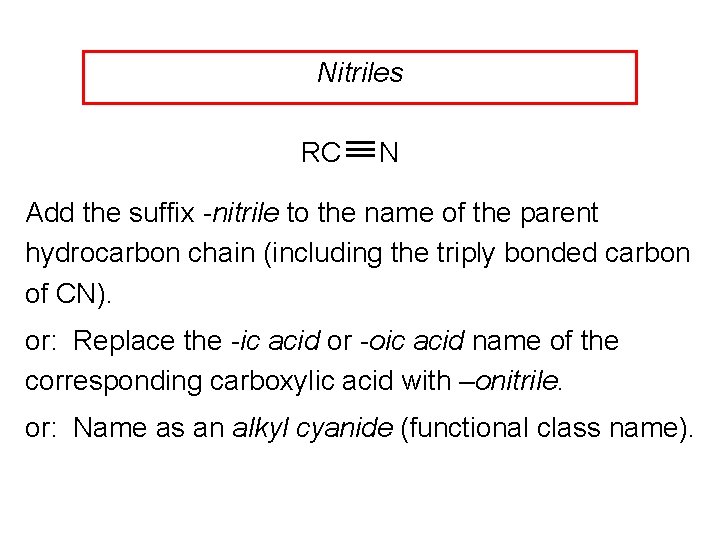
Nitriles RC N Add the suffix -nitrile to the name of the parent hydrocarbon chain (including the triply bonded carbon of CN). or: Replace the -ic acid or -oic acid name of the corresponding carboxylic acid with –onitrile. or: Name as an alkyl cyanide (functional class name).
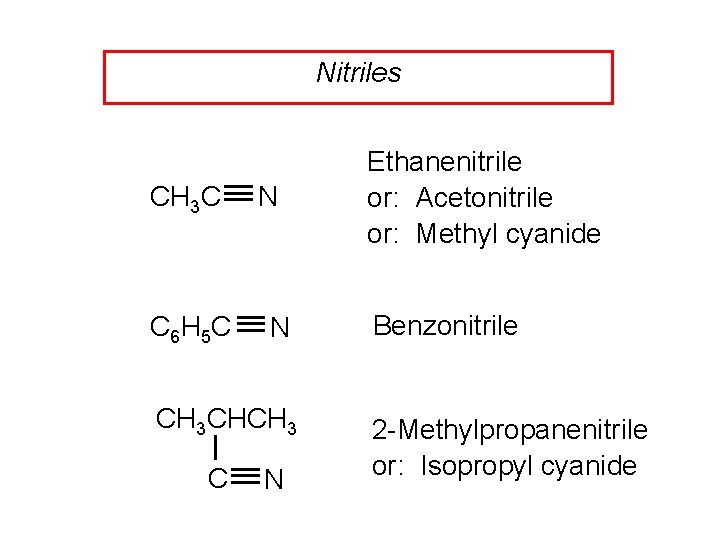
Nitriles CH 3 C C 6 H 5 C N N CH 3 CHCH 3 C N Ethanenitrile or: Acetonitrile or: Methyl cyanide Benzonitrile 2 -Methylpropanenitrile or: Isopropyl cyanide
Structure and Reactivity of Carboxylic Acid Derivatives
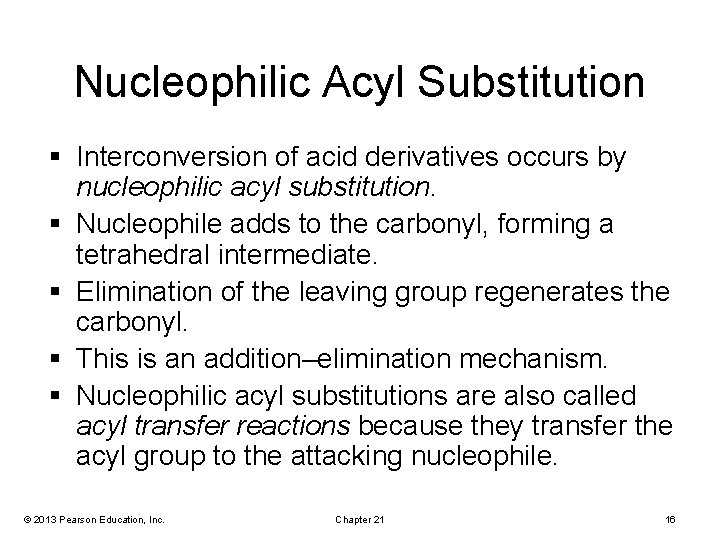
Nucleophilic Acyl Substitution § Interconversion of acid derivatives occurs by nucleophilic acyl substitution. § Nucleophile adds to the carbonyl, forming a tetrahedral intermediate. § Elimination of the leaving group regenerates the carbonyl. § This is an addition–elimination mechanism. § Nucleophilic acyl substitutions are also called acyl transfer reactions because they transfer the acyl group to the attacking nucleophile. © 2013 Pearson Education, Inc. Chapter 21 16
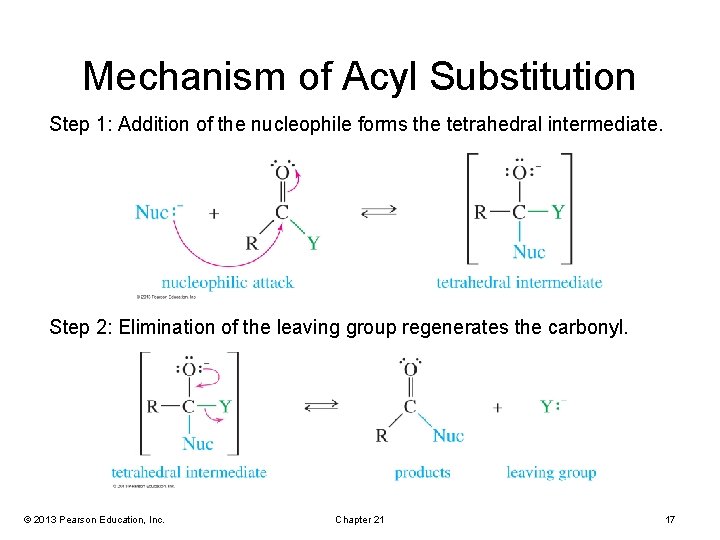
Mechanism of Acyl Substitution Step 1: Addition of the nucleophile forms the tetrahedral intermediate. File Name: AAALCMJ 0 Step 2: Elimination of the leaving group regenerates the carbonyl. File Name: AAERSTX 0 © 2013 Pearson Education, Inc. Chapter 21 17
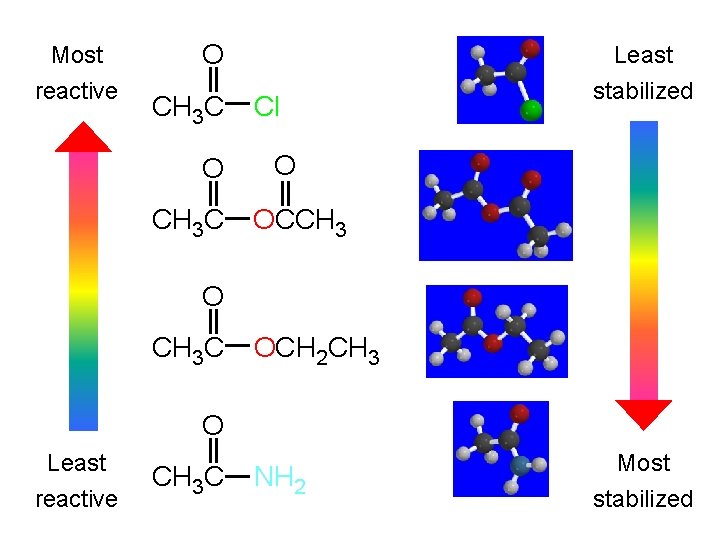
Most reactive O CH 3 C Cl Least stabilized O OCCH 3 O CH 3 C OCH 2 CH 3 O Least reactive CH 3 C NH 2 Most stabilized
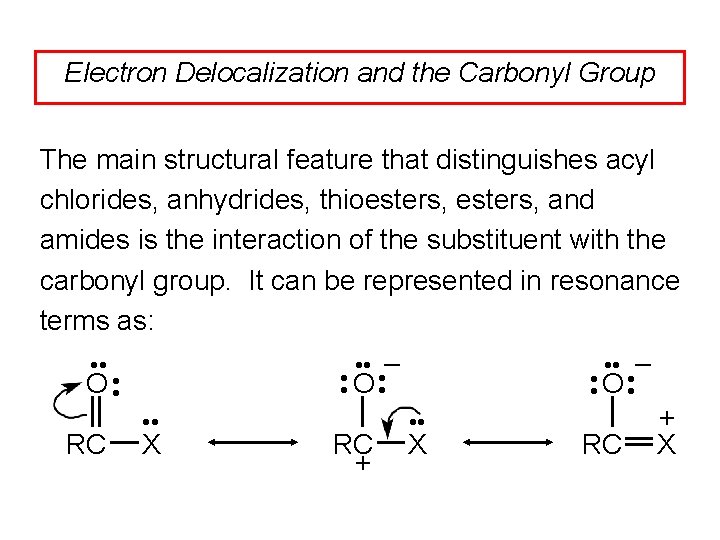
Electron Delocalization and the Carbonyl Group The main structural feature that distinguishes acyl chlorides, anhydrides, thioesters, and amides is the interaction of the substituent with the carbonyl group. It can be represented in resonance terms as: O • • RC • • – • • O • • X RC + • • X RC + X
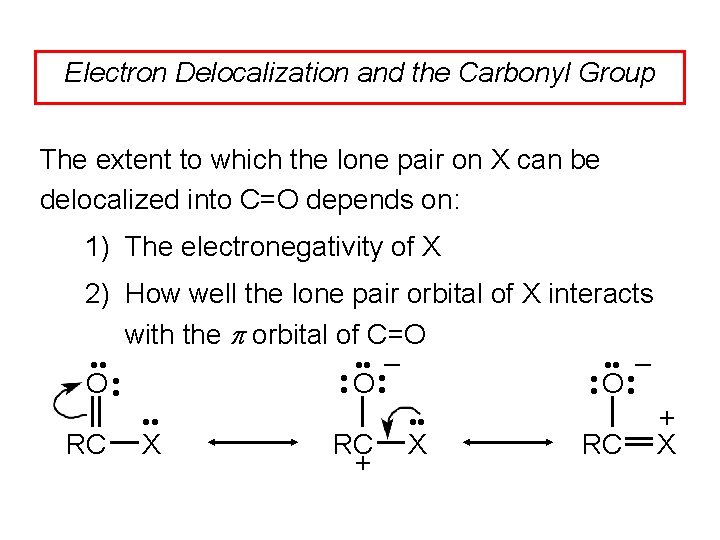
Electron Delocalization and the Carbonyl Group The extent to which the lone pair on X can be delocalized into C=O depends on: 1) The electronegativity of X 2) How well the lone pair orbital of X interacts with the orbital of C=O • • – • • • O • • RC • • X RC + X
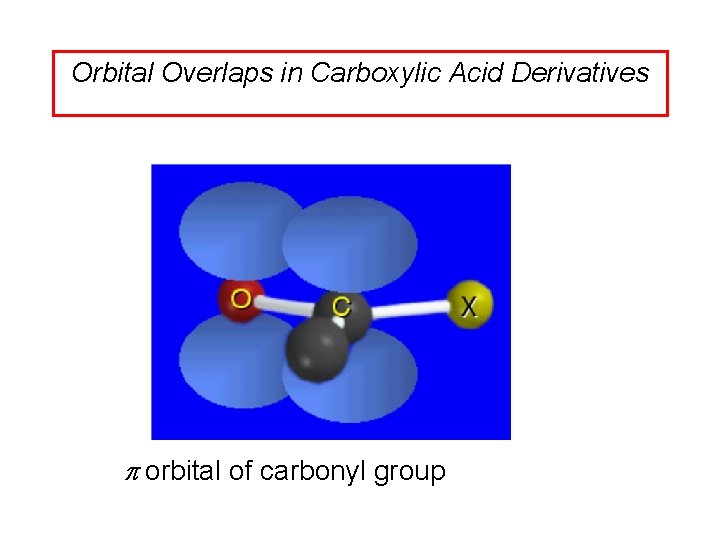
Orbital Overlaps in Carboxylic Acid Derivatives orbital of carbonyl group
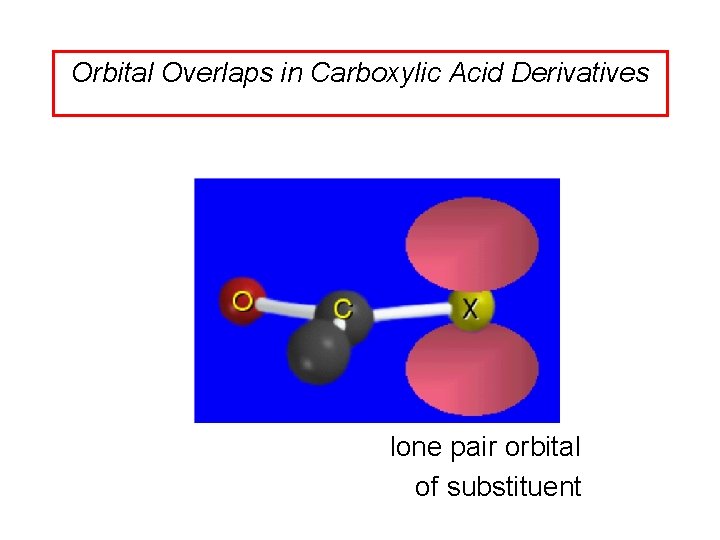
Orbital Overlaps in Carboxylic Acid Derivatives lone pair orbital of substituent
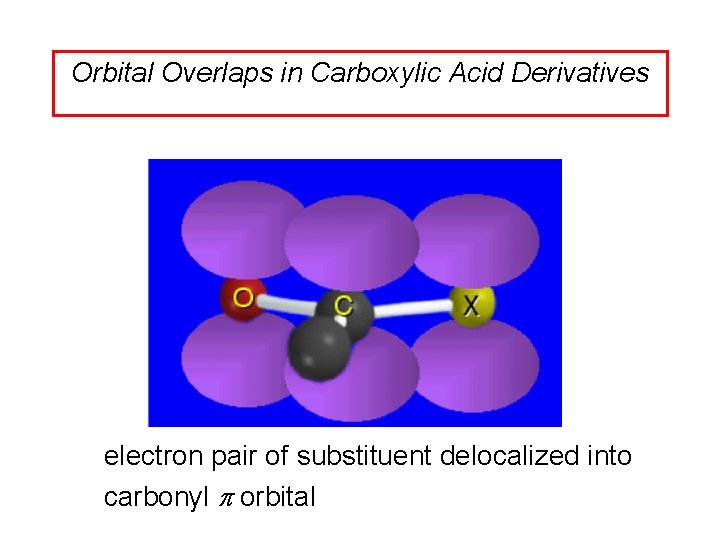
Orbital Overlaps in Carboxylic Acid Derivatives electron pair of substituent delocalized into carbonyl orbital
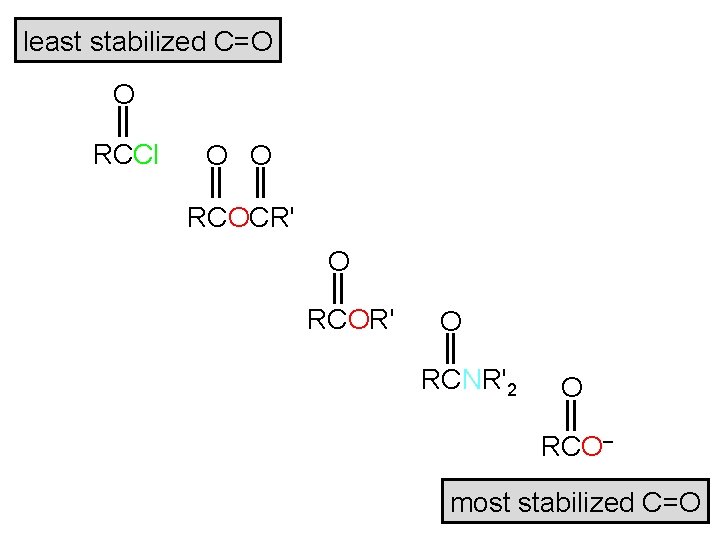
least stabilized C=O O RCCl O O RCOCR' O RCOR' O RCNR'2 O RCO– most stabilized C=O
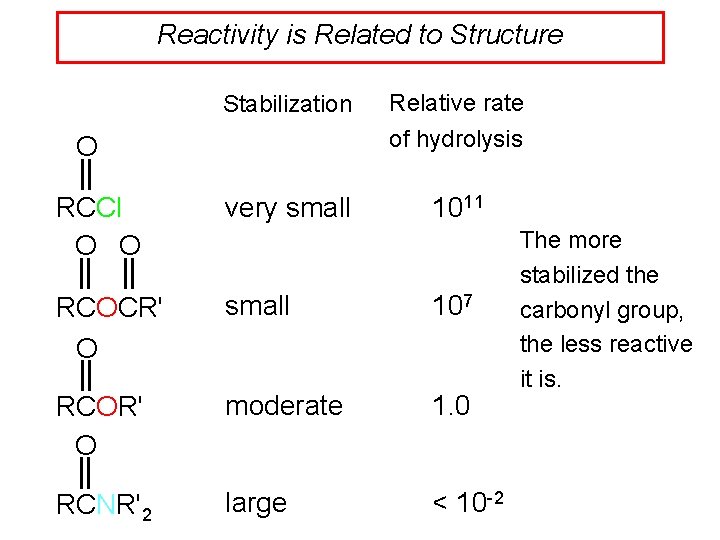
Reactivity is Related to Structure Stabilization Relative rate of hydrolysis RCCl O O very small 1011 RCOCR' O small 107 RCOR' O moderate 1. 0 RCNR'2 large < 10 -2 O The more stabilized the carbonyl group, the less reactive it is.
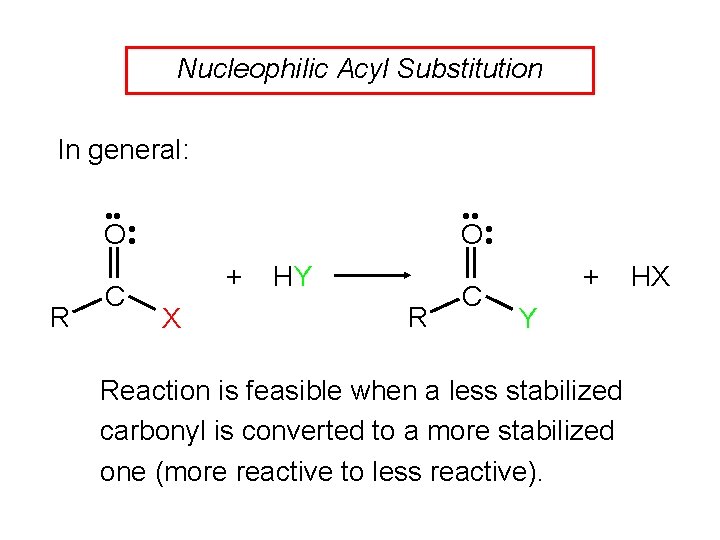
Nucleophilic Acyl Substitution In general: • • O • • R C O • • + X HY R C + Y Reaction is feasible when a less stabilized carbonyl is converted to a more stabilized one (more reactive to less reactive). HX
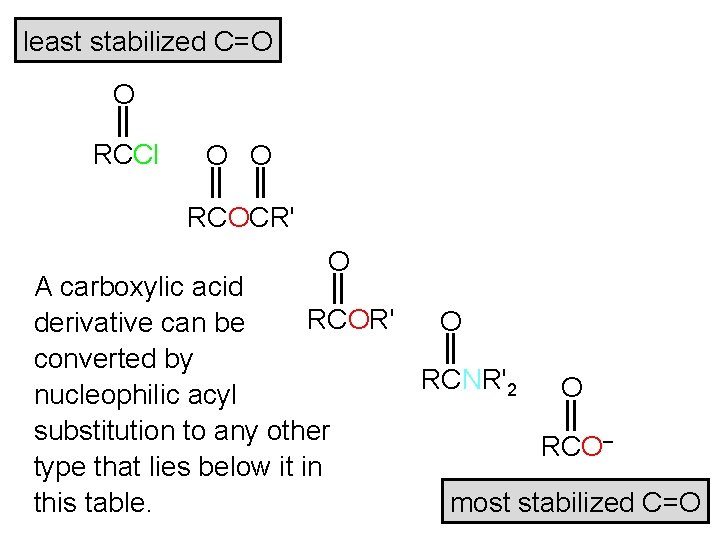
least stabilized C=O O RCCl O O RCOCR' O A carboxylic acid RCOR' O derivative can be converted by RCNR'2 O nucleophilic acyl substitution to any other RCO– type that lies below it in this table. most stabilized C=O
Nucleophilic Acyl Substitution in Acyl Chlorides
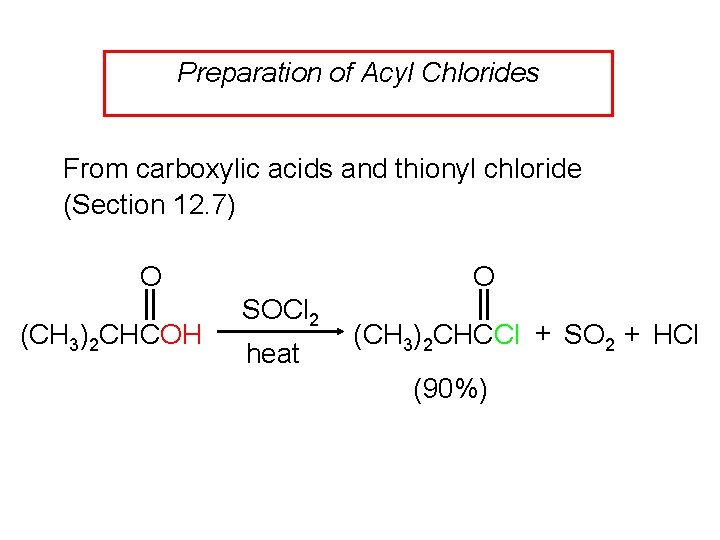
Preparation of Acyl Chlorides From carboxylic acids and thionyl chloride (Section 12. 7) O (CH 3)2 CHCOH O SOCl 2 heat (CH 3)2 CHCCl + SO 2 + HCl (90%)
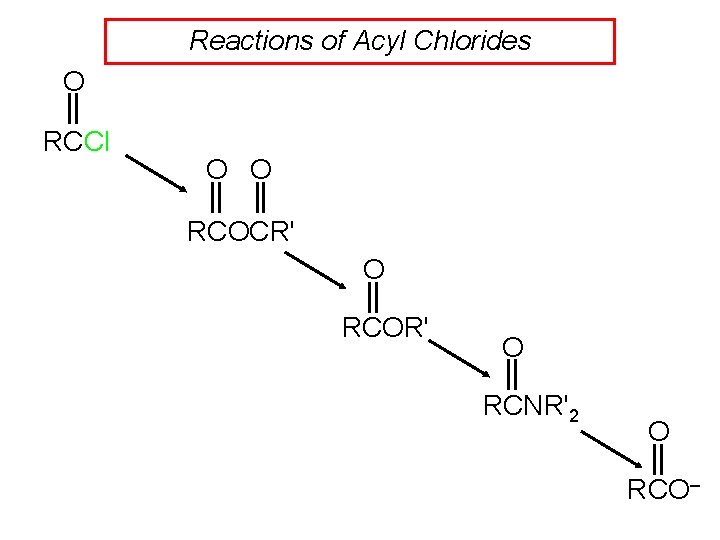
Reactions of Acyl Chlorides O RCCl O O RCOCR' O RCOR' O RCNR'2 O RCO–
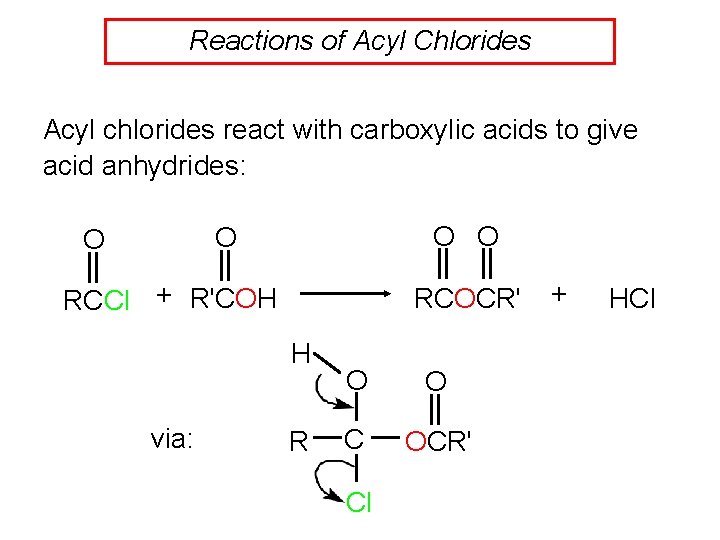
Reactions of Acyl Chlorides Acyl chlorides react with carboxylic acids to give acid anhydrides: O O RCCl + R'COH RCOCR' H via: R O O C OCR' Cl + HCl
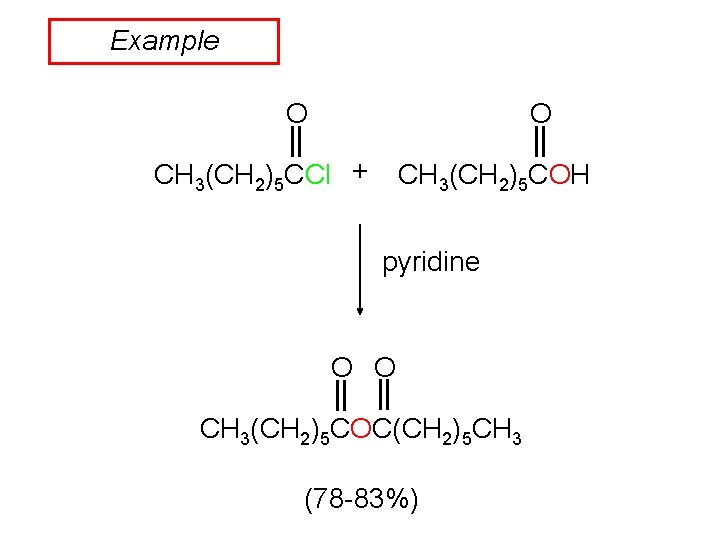
Example O O CH 3(CH 2)5 CCl + CH 3(CH 2)5 COH pyridine O O CH 3(CH 2)5 COC(CH 2)5 CH 3 (78 -83%)
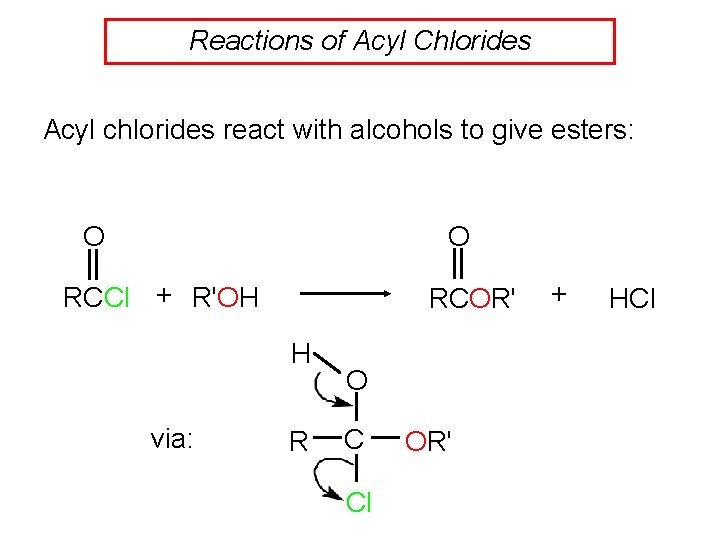
Reactions of Acyl Chlorides Acyl chlorides react with alcohols to give esters: O O RCCl + R'OH RCOR' H via: R O C Cl OR' + HCl
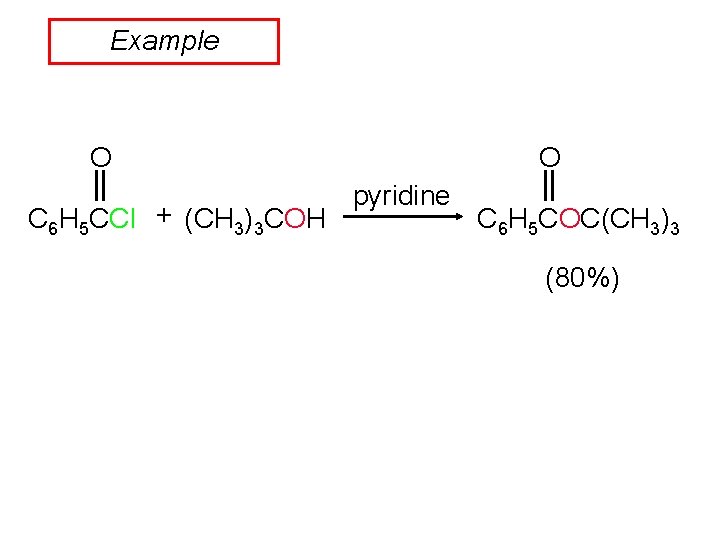
Example O O C 6 H 5 CCl + (CH 3)3 COH pyridine C 6 H 5 COC(CH 3)3 (80%)
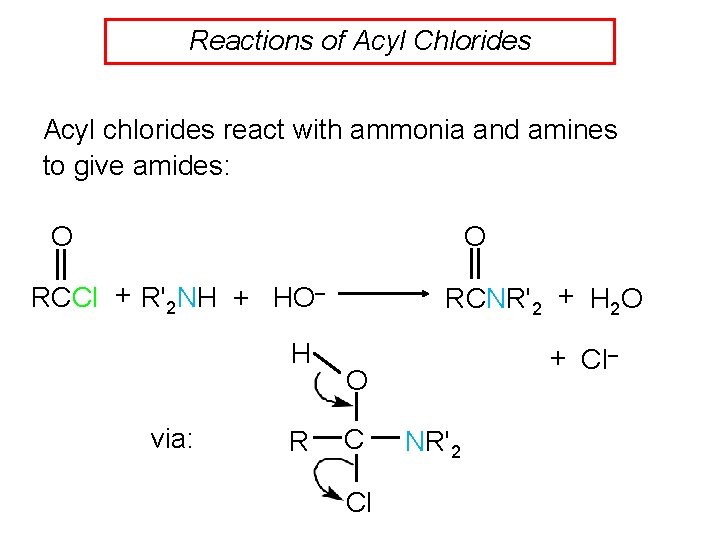
Reactions of Acyl Chlorides Acyl chlorides react with ammonia and amines to give amides: O O RCCl + R'2 NH + HO– H via: R RCNR'2 + H 2 O + Cl– O C Cl NR'2
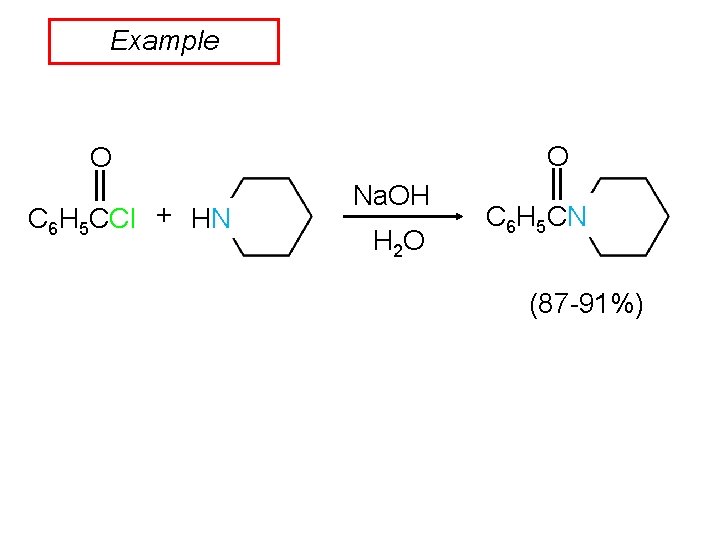
Example O O C 6 H 5 CCl + HN Na. OH H 2 O C 6 H 5 CN (87 -91%)
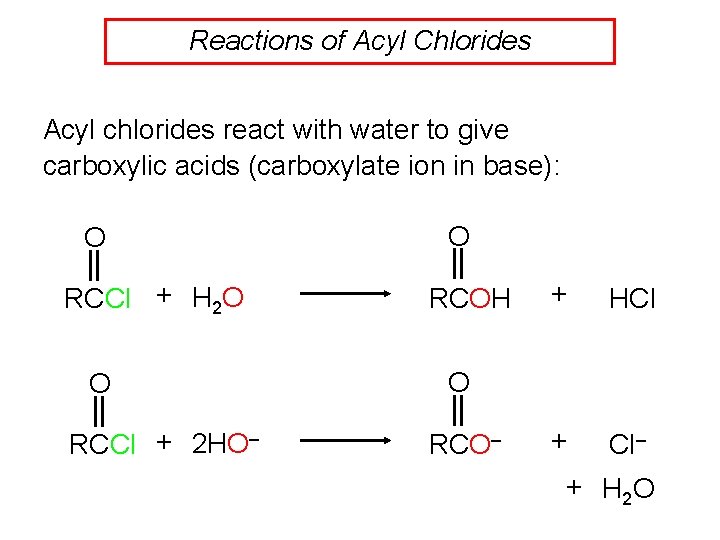
Reactions of Acyl Chlorides Acyl chlorides react with water to give carboxylic acids (carboxylate ion in base): O RCCl + H 2 O O RCCl + 2 HO– O RCOH + HCl + Cl– O RCO– + H 2 O
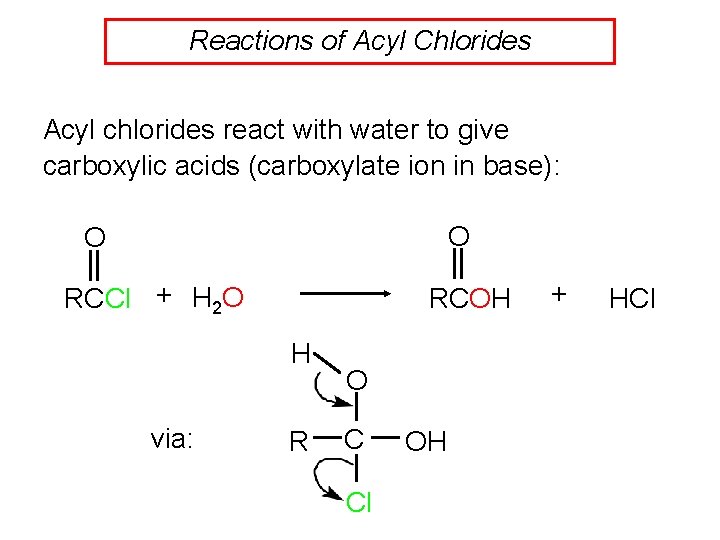
Reactions of Acyl Chlorides Acyl chlorides react with water to give carboxylic acids (carboxylate ion in base): O O RCCl + H 2 O RCOH H via: R O C Cl OH + HCl
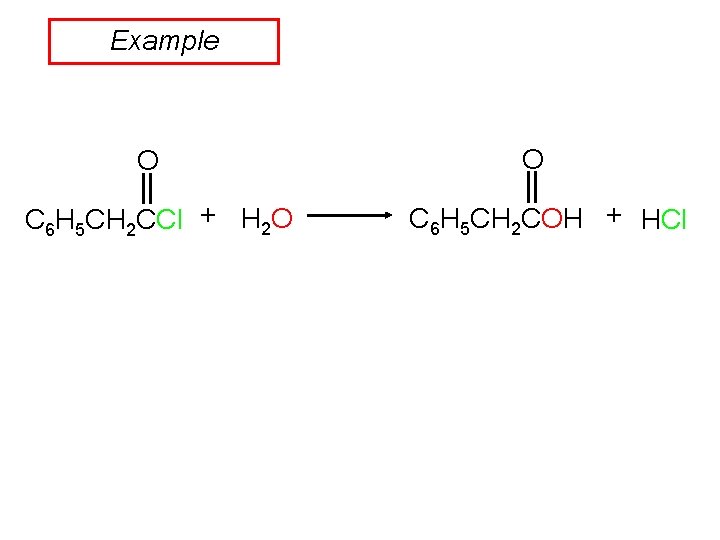
Example O C 6 H 5 CH 2 CCl + H 2 O O C 6 H 5 CH 2 COH + HCl
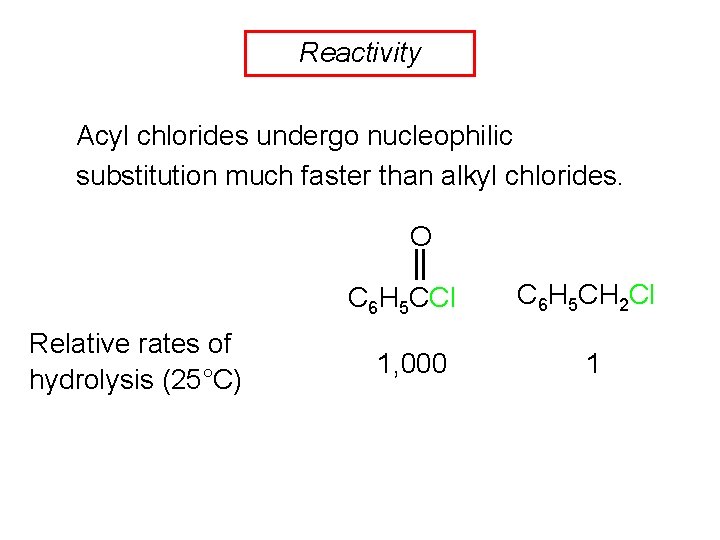
Reactivity Acyl chlorides undergo nucleophilic substitution much faster than alkyl chlorides. O C 6 H 5 CCl Relative rates of hydrolysis (25°C) 1, 000 C 6 H 5 CH 2 Cl 1
Nucleophilic Acyl Substitution in Acid Anhydrides can be prepared from acyl chlorides as described in previous slides
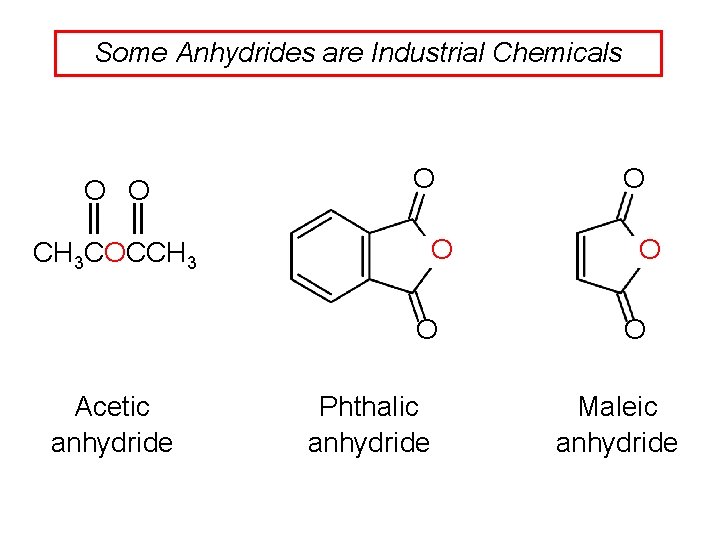
Some Anhydrides are Industrial Chemicals O O CH 3 COCCH 3 O Acetic anhydride Phthalic anhydride O O O Maleic anhydride
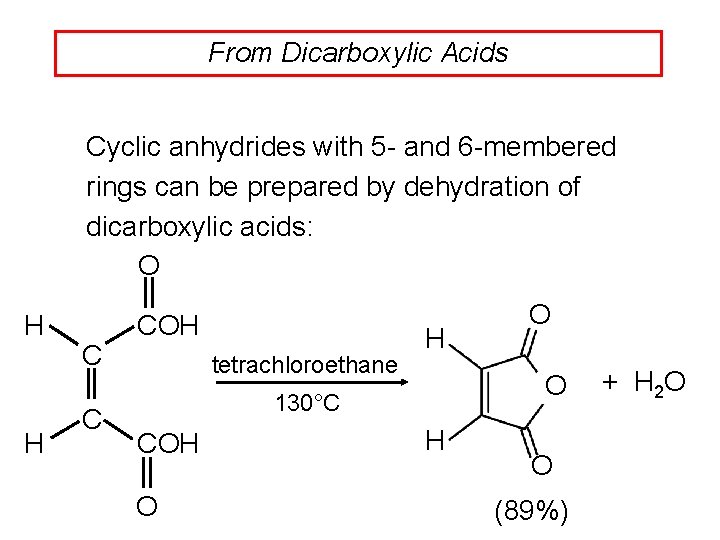
From Dicarboxylic Acids Cyclic anhydrides with 5 - and 6 -membered rings can be prepared by dehydration of dicarboxylic acids: O H H C C COH tetrachloroethane H O 130°C COH O O H O (89%) + H 2 O
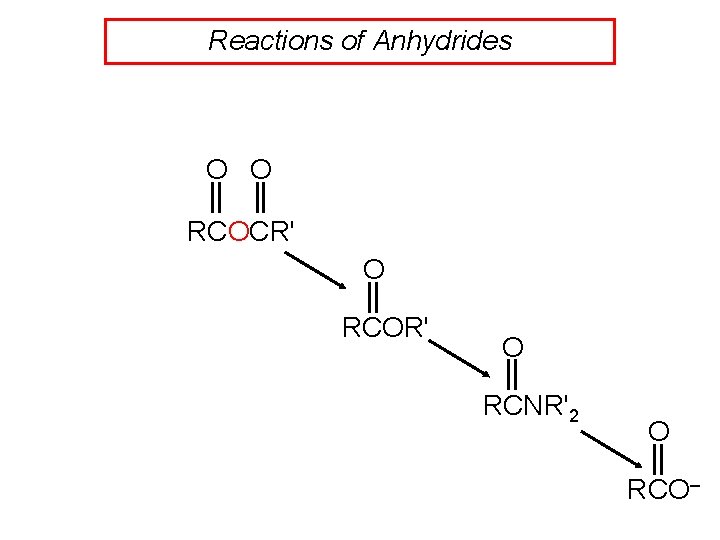
Reactions of Anhydrides O O RCOCR' O RCOR' O RCNR'2 O RCO–
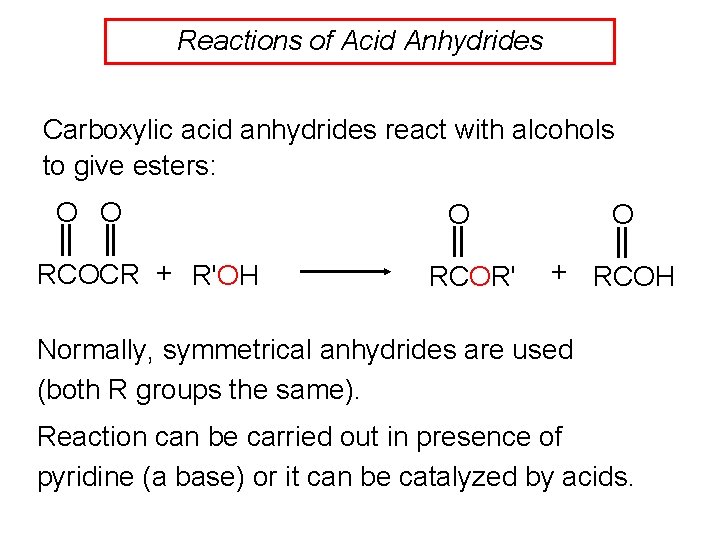
Reactions of Acid Anhydrides Carboxylic acid anhydrides react with alcohols to give esters: O O RCOCR + R'OH O RCOR' O + RCOH Normally, symmetrical anhydrides are used (both R groups the same). Reaction can be carried out in presence of pyridine (a base) or it can be catalyzed by acids.
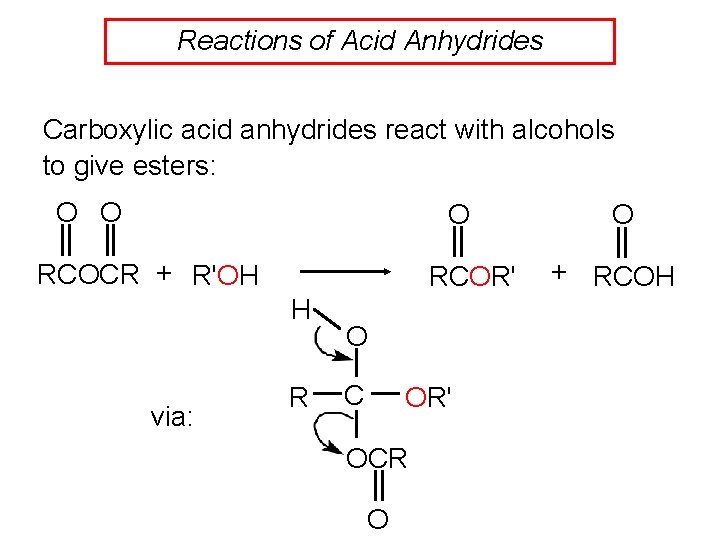
Reactions of Acid Anhydrides Carboxylic acid anhydrides react with alcohols to give esters: O O O RCOCR + R'OH RCOR' H via: R O C OR' OCR O O + RCOH
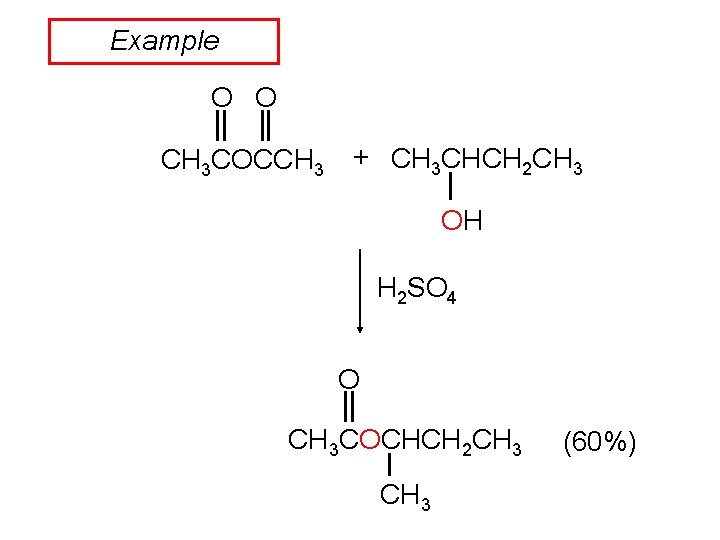
Example O O CH 3 COCCH 3 + CH 3 CHCH 2 CH 3 OH H 2 SO 4 O CH 3 COCHCH 2 CH 3 (60%)
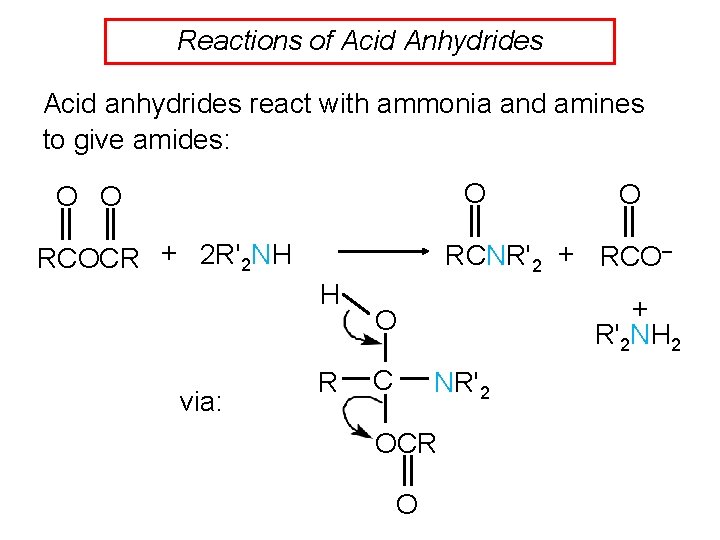
Reactions of Acid Anhydrides Acid anhydrides react with ammonia and amines to give amides: O O O RCOCR + 2 R'2 NH RCNR'2 + RCO– H via: O R + R'2 NH 2 O C NR'2 OCR O
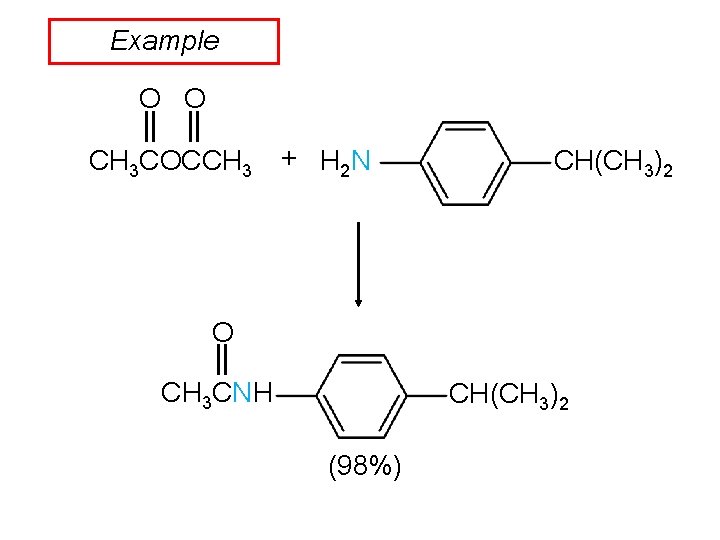
Example O O CH 3 COCCH 3 + H 2 N CH(CH 3)2 O CH 3 CNH CH(CH 3)2 (98%)
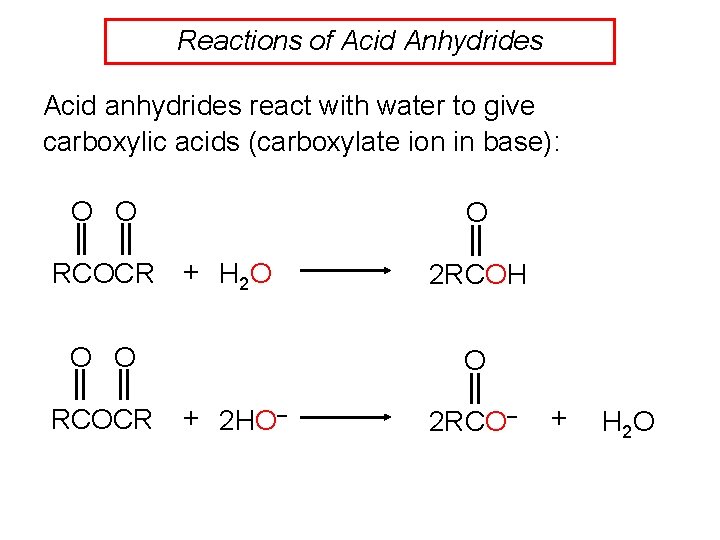
Reactions of Acid Anhydrides Acid anhydrides react with water to give carboxylic acids (carboxylate ion in base): O O RCOCR O + H 2 O O O RCOCR 2 RCOH O + 2 HO– 2 RCO– + H 2 O
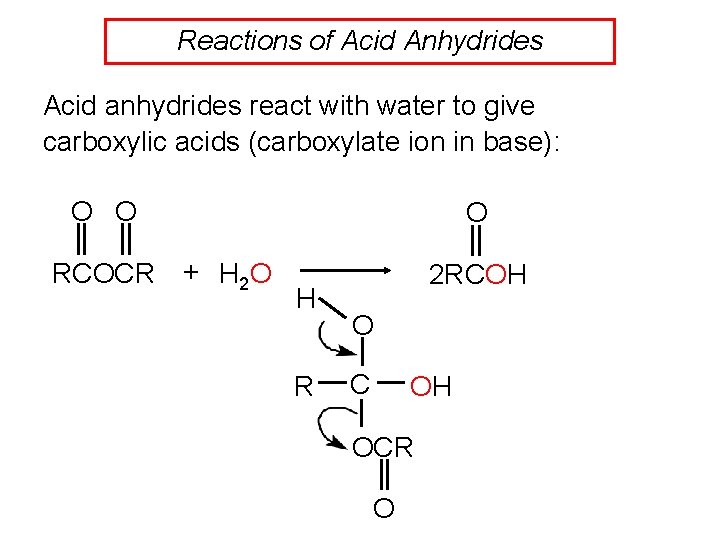
Reactions of Acid Anhydrides Acid anhydrides react with water to give carboxylic acids (carboxylate ion in base): O O RCOCR O + H 2 O H R 2 RCOH O C OH OCR O
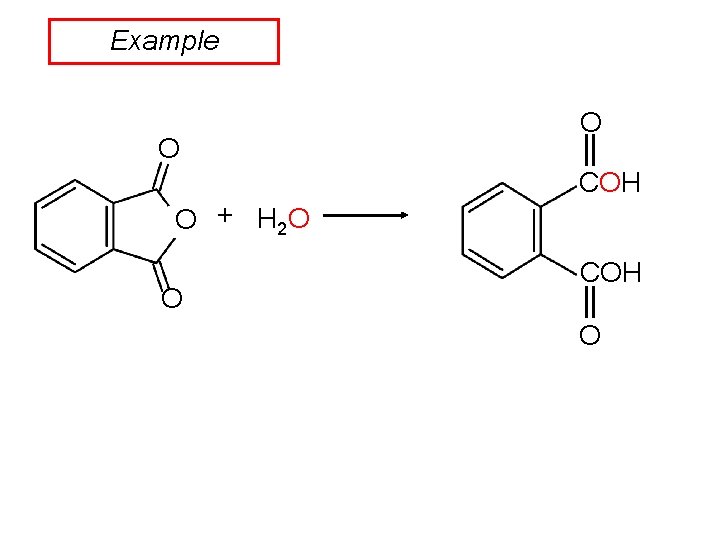
Example O O COH O + H 2 O O COH O
Sources of Esters Copyright © The Mc. Graw-Hill Companies, Inc. Permission required for reproduction or display.
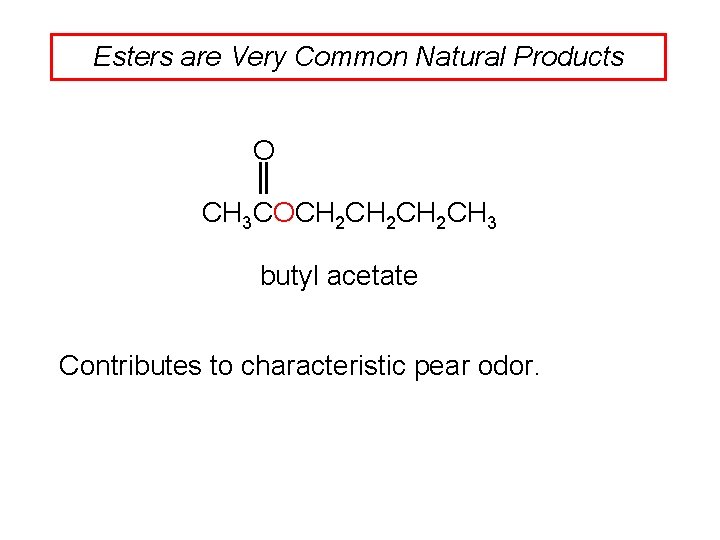
Esters are Very Common Natural Products O CH 3 COCH 2 CH 2 CH 3 butyl acetate Contributes to characteristic pear odor.
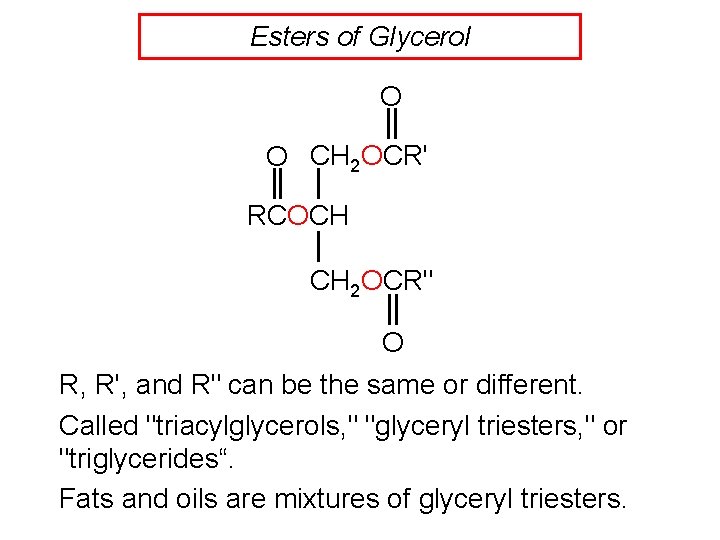
Esters of Glycerol O O CH 2 OCR' RCOCH CH 2 OCR" O R, R', and R" can be the same or different. Called "triacylglycerols, " "glyceryl triesters, " or "triglycerides“. Fats and oils are mixtures of glyceryl triesters.
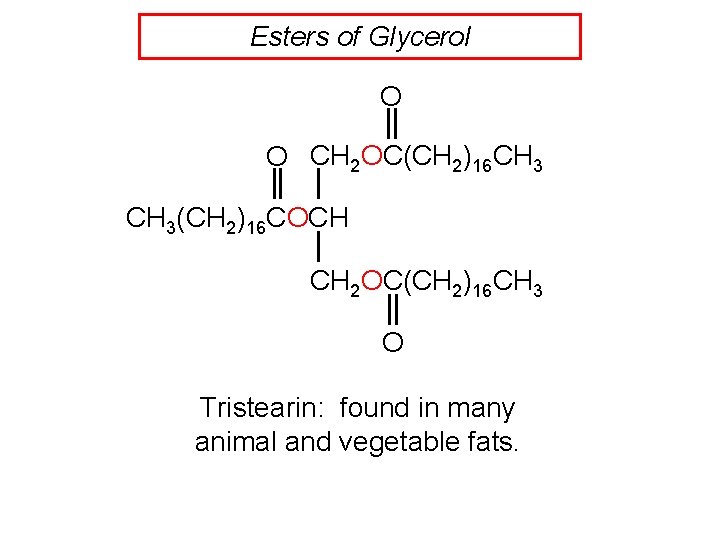
Esters of Glycerol O O CH 2 OC(CH 2)16 CH 3(CH 2)16 COCH CH 2 OC(CH 2)16 CH 3 O Tristearin: found in many animal and vegetable fats.
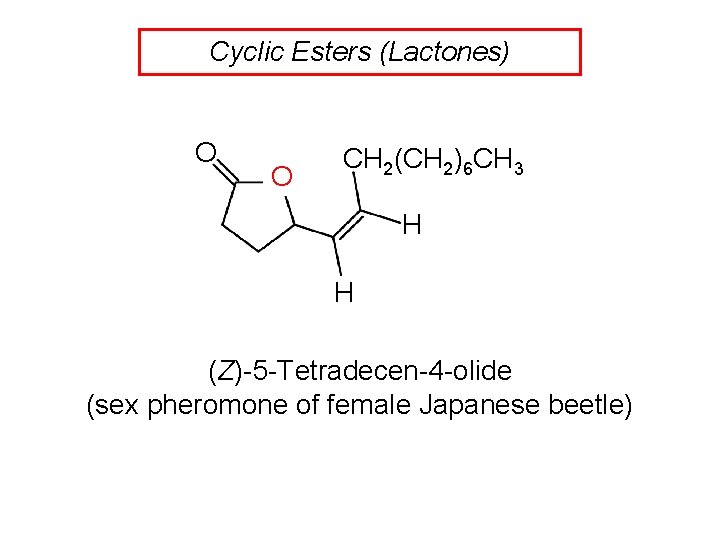
Cyclic Esters (Lactones) O O CH 2(CH 2)6 CH 3 H H (Z)-5 -Tetradecen-4 -olide (sex pheromone of female Japanese beetle)
Preparation of Esters Fischer esterification (Sections 15. 8 and 18. 14) From acyl chlorides (Sections 15. 8 and 19. 4) From acid anhydrides (Sections 15. 8 and 19. 5) Baeyer-Villiger oxidation of ketones
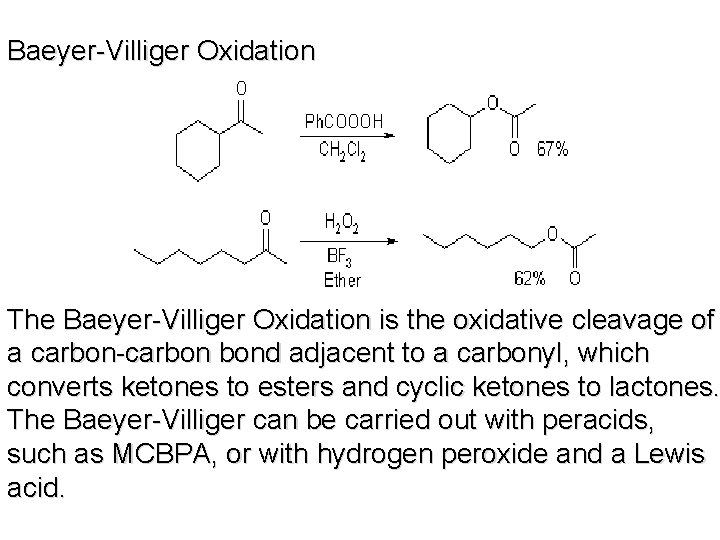
Baeyer-Villiger Oxidation The Baeyer-Villiger Oxidation is the oxidative cleavage of a carbon-carbon bond adjacent to a carbonyl, which converts ketones to esters and cyclic ketones to lactones. The Baeyer-Villiger can be carried out with peracids, such as MCBPA, or with hydrogen peroxide and a Lewis acid.
Physical Properties of Esters
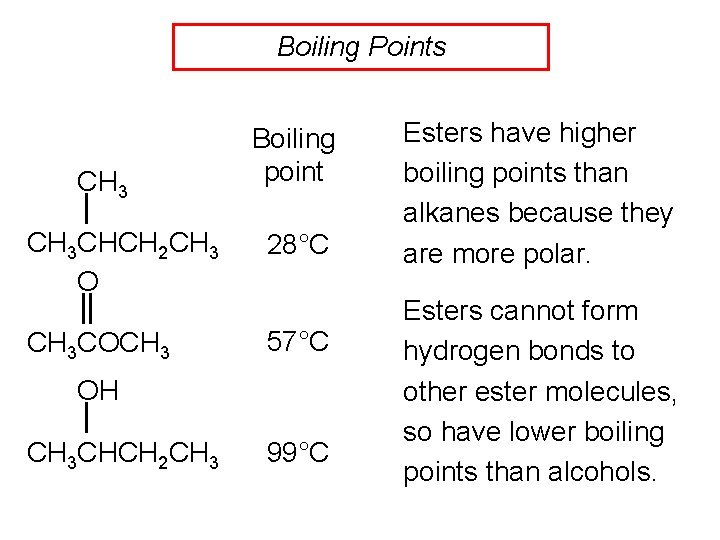
Boiling Points CH 3 Boiling point CH 3 CHCH 2 CH 3 O 28°C CH 3 COCH 3 57°C OH CH 3 CHCH 2 CH 3 99°C Esters have higher boiling points than alkanes because they are more polar. Esters cannot form hydrogen bonds to other ester molecules, so have lower boiling points than alcohols.
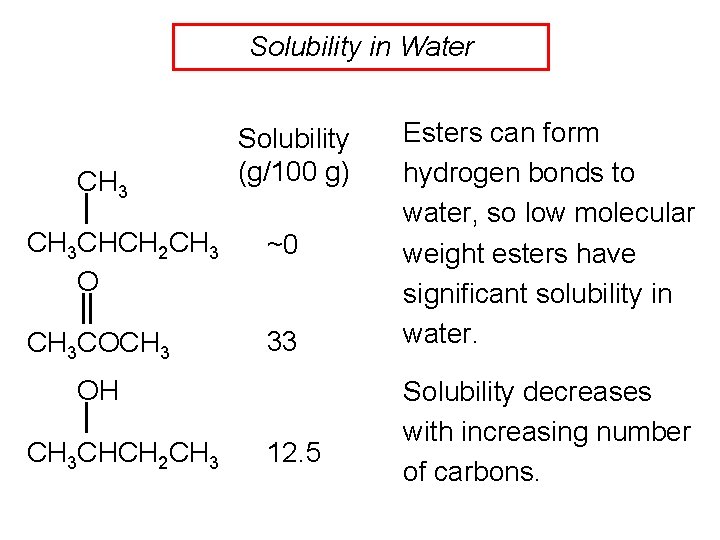
Solubility in Water CH 3 Solubility (g/100 g) CH 3 CHCH 2 CH 3 O ~0 CH 3 COCH 3 33 OH CH 3 CHCH 2 CH 3 12. 5 Esters can form hydrogen bonds to water, so low molecular weight esters have significant solubility in water. Solubility decreases with increasing number of carbons.

Reactions of Esters: A Preview
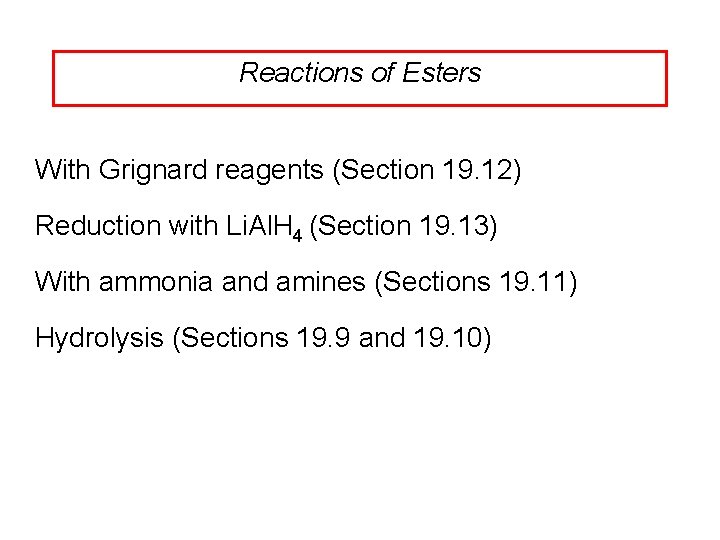
Reactions of Esters With Grignard reagents (Section 19. 12) Reduction with Li. Al. H 4 (Section 19. 13) With ammonia and amines (Sections 19. 11) Hydrolysis (Sections 19. 9 and 19. 10)
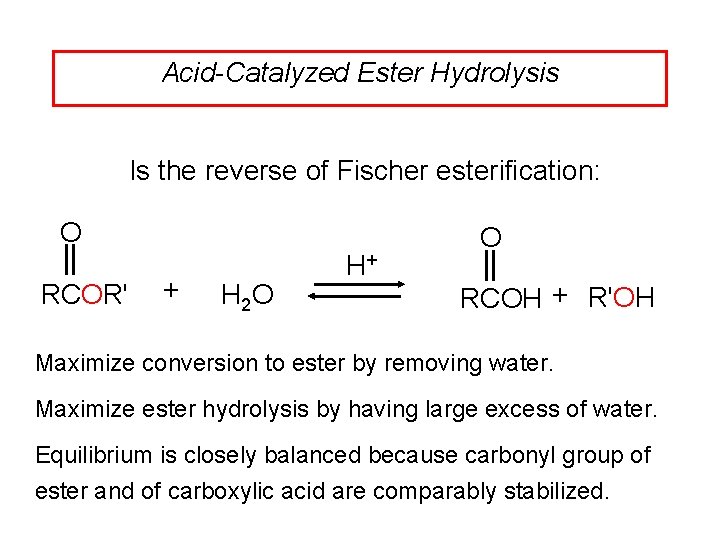
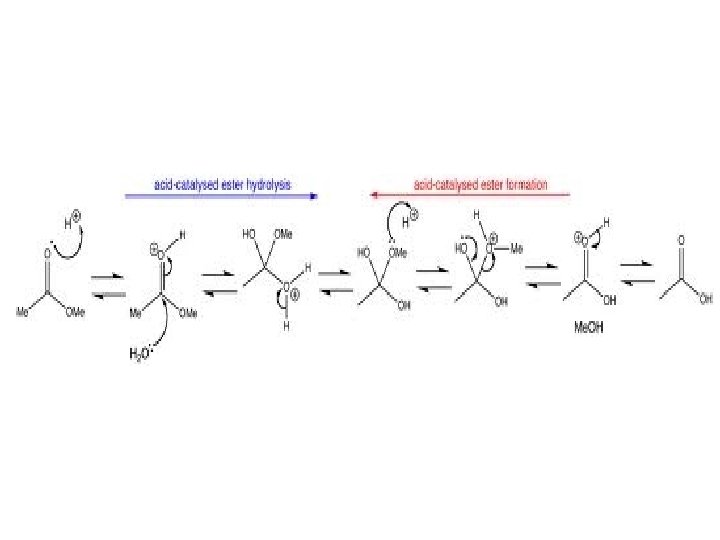
Acid-Catalyzed Ester Hydrolysis Is the reverse of Fischer esterification: O RCOR' + H 2 O H+ O RCOH + R'OH Maximize conversion to ester by removing water. Maximize ester hydrolysis by having large excess of water. Equilibrium is closely balanced because carbonyl group of ester and of carboxylic acid are comparably stabilized.
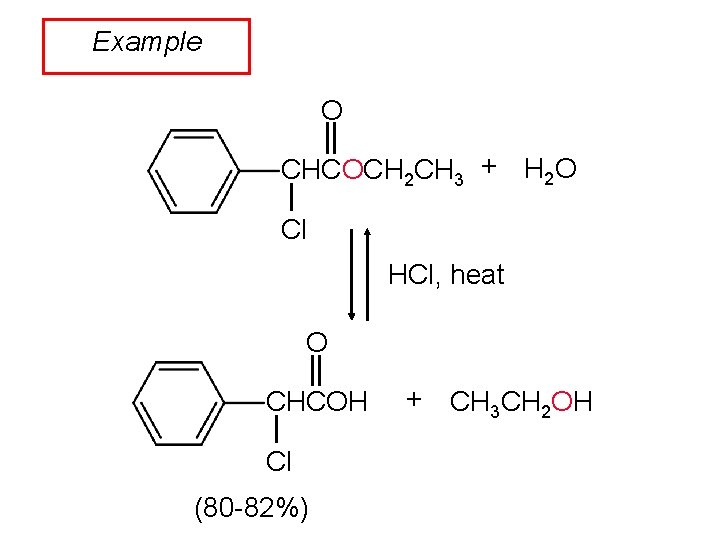
Example O CHCOCH 2 CH 3 + H 2 O Cl HCl, heat O CHCOH Cl (80 -82%) + CH 3 CH 2 OH
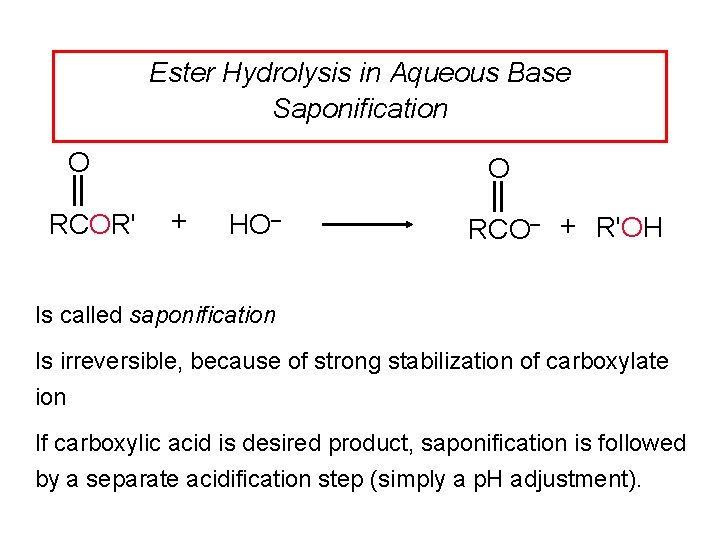
Ester Hydrolysis in Aqueous Base Saponification O RCOR' O + HO– RCO– + R'OH Is called saponification Is irreversible, because of strong stabilization of carboxylate ion If carboxylic acid is desired product, saponification is followed by a separate acidification step (simply a p. H adjustment).
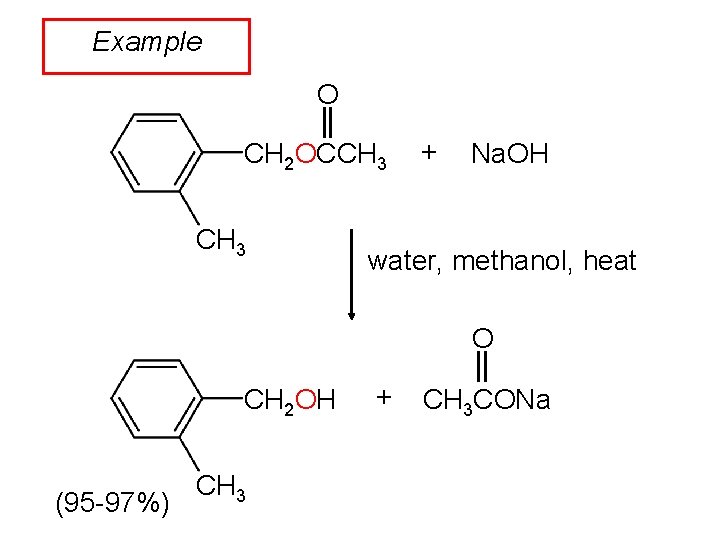
Example O CH 2 OCCH 3 + Na. OH water, methanol, heat O CH 2 OH (95 -97%) CH 3 + CH 3 CONa
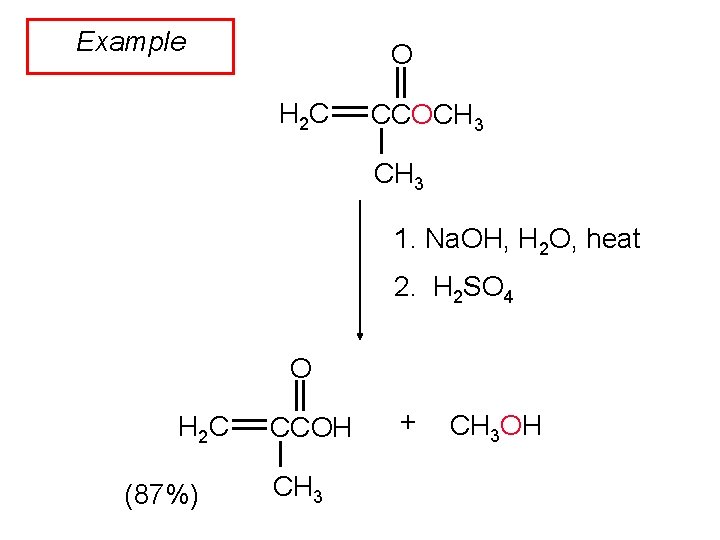
Example O H 2 C CCOCH 3 1. Na. OH, H 2 O, heat 2. H 2 SO 4 O H 2 C (87%) CCOH CH 3 + CH 3 OH
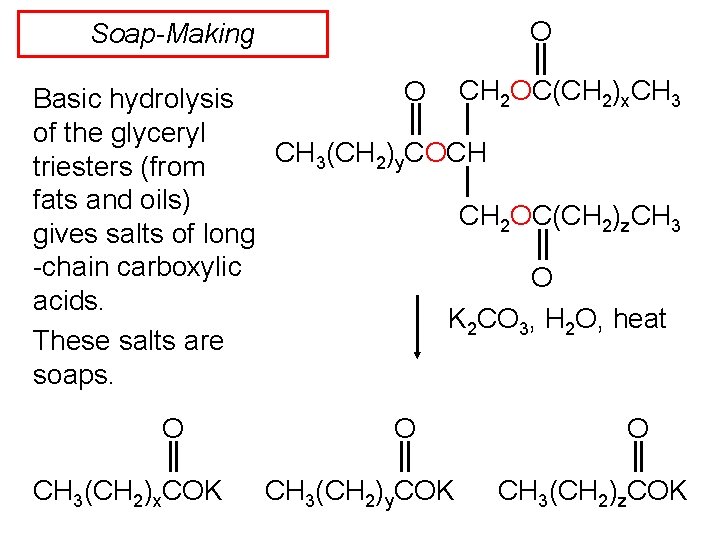
O Soap-Making O CH 2 OC(CH 2)x. CH 3 Basic hydrolysis of the glyceryl CH 3(CH 2)y. COCH triesters (from fats and oils) CH 2 OC(CH 2)z. CH 3 gives salts of long -chain carboxylic O acids. K 2 CO 3, H 2 O, heat These salts are soaps. O CH 3(CH 2)x. COK O CH 3(CH 2)y. COK O CH 3(CH 2)z. COK
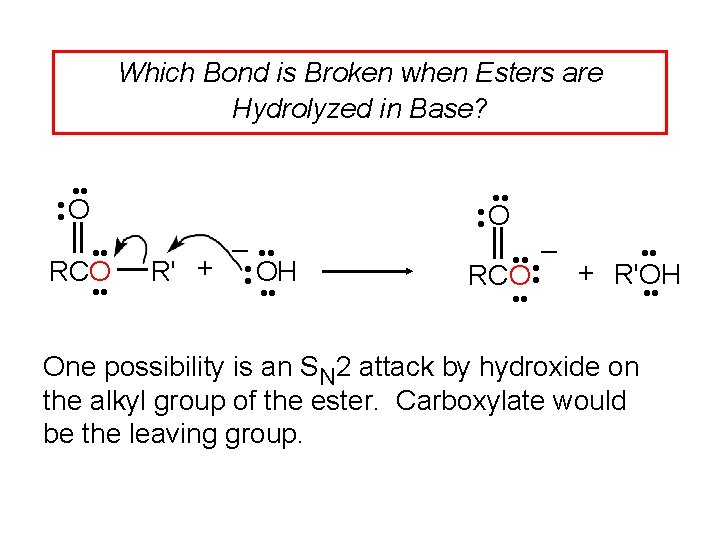
Which Bond is Broken when Esters are Hydrolyzed in Base? • • O • • RCO • • – • • R' + • • OH • • O • • • – RCO • + R'OH • • One possibility is an SN 2 attack by hydroxide on the alkyl group of the ester. Carboxylate would be the leaving group.
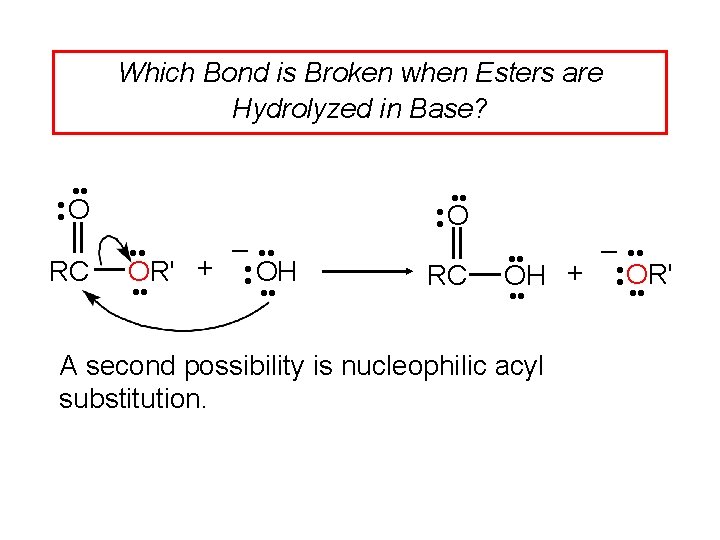
Which Bond is Broken when Esters are Hydrolyzed in Base? • • O RC – • • OR' + • • OH • • • • O RC – • • OH + • • OR' • • A second possibility is nucleophilic acyl substitution. • •
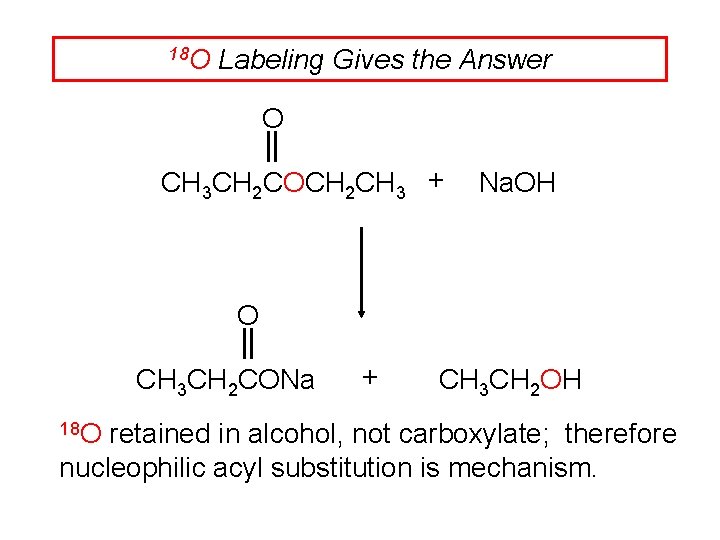
18 O Labeling Gives the Answer O CH 3 CH 2 COCH 2 CH 3 + Na. OH O CH 3 CH 2 CONa 18 O + CH 3 CH 2 OH retained in alcohol, not carboxylate; therefore nucleophilic acyl substitution is mechanism.
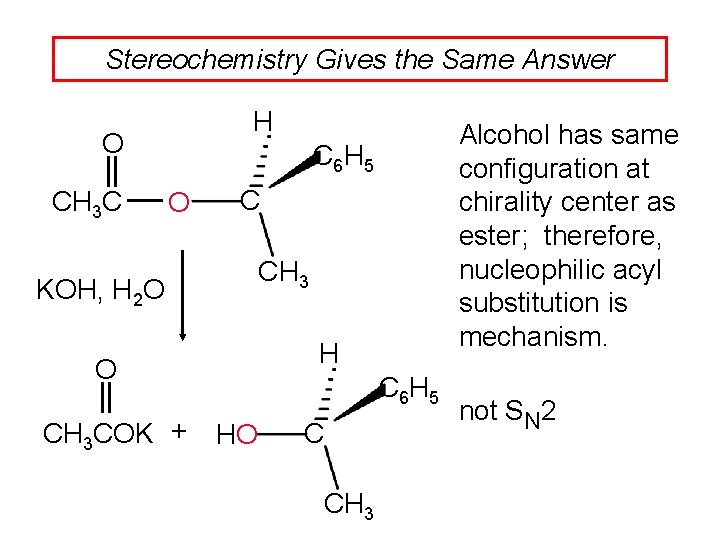
Stereochemistry Gives the Same Answer H O CH 3 C Alcohol has same configuration at chirality center as ester; therefore, nucleophilic acyl substitution is mechanism. C 6 H 5 O C KOH, H 2 O O CH 3 COK + HO CH 3 H C 6 H 5 C CH 3 not SN 2
Reactions of Esters with Ammonia and Amines
Reactions of Esters O RCOR' O RCNR'2 O RCO–
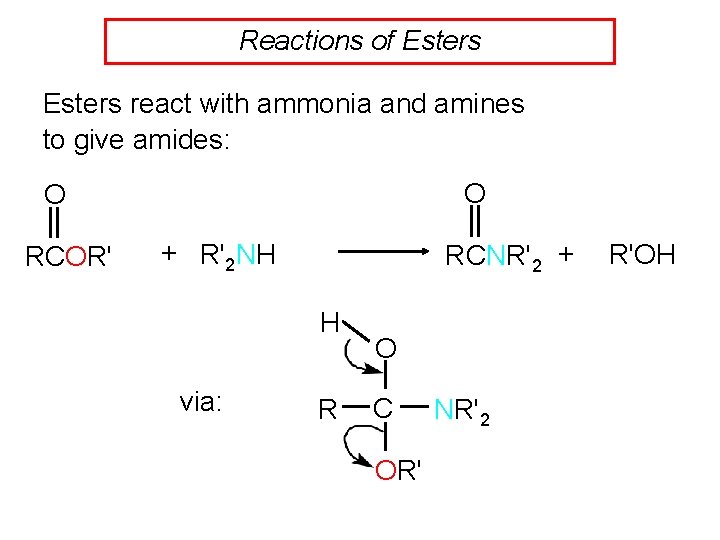
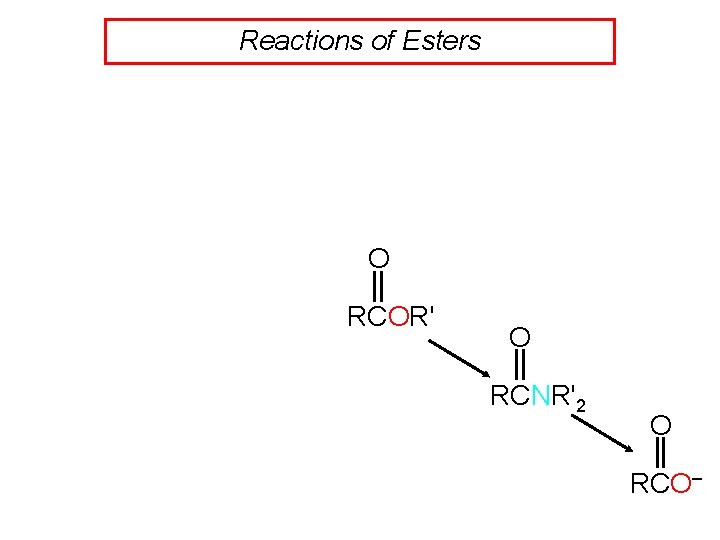
Reactions of Esters react with ammonia and amines to give amides: O O RCOR' + R'2 NH RCNR'2 + H via: R O C OR' NR'2 R'OH
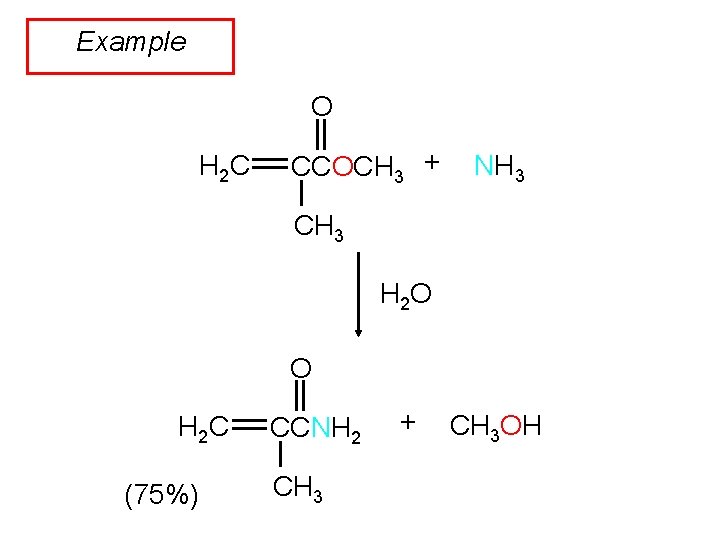
Example O H 2 C CCOCH 3 + NH 3 CH 3 H 2 O O H 2 C (75%) CCNH 2 CH 3 + CH 3 OH
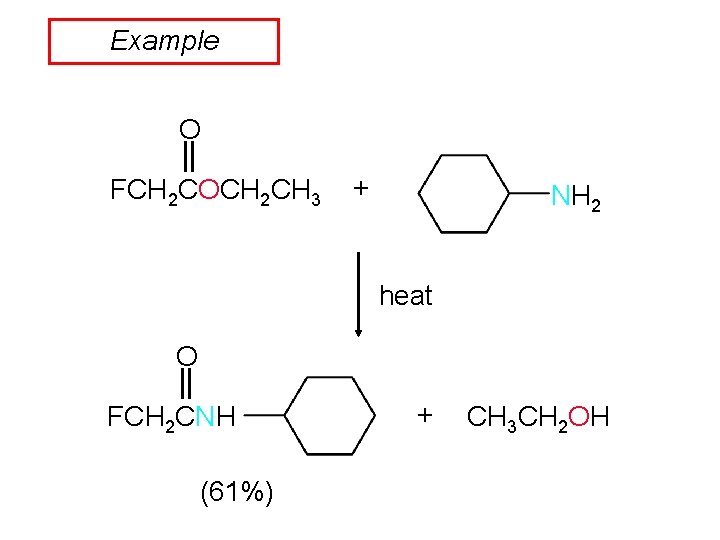
Example O FCH 2 COCH 2 CH 3 + NH 2 heat O FCH 2 CNH (61%) + CH 3 CH 2 OH
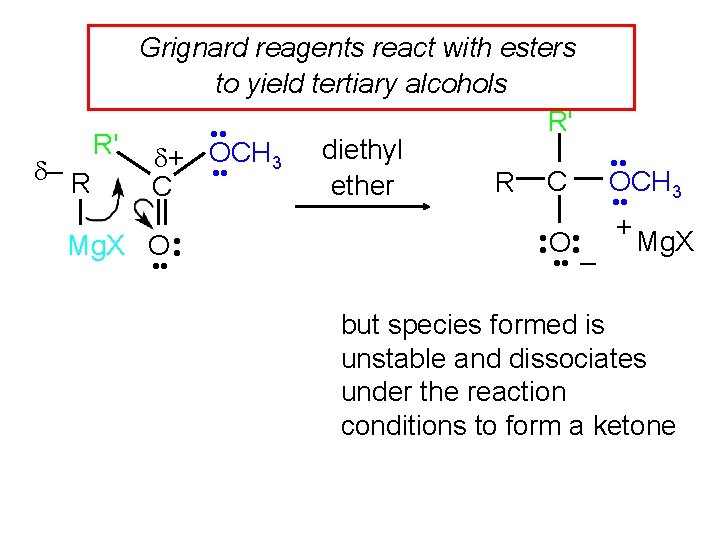
Grignard reagents react with esters to yield tertiary alcohols R' • • R' + OCH diethyl 3 – R • • R C ether C Mg. X O • • OCH 3 • • O • • + Mg. X • • – but species formed is unstable and dissociates under the reaction conditions to form a ketone
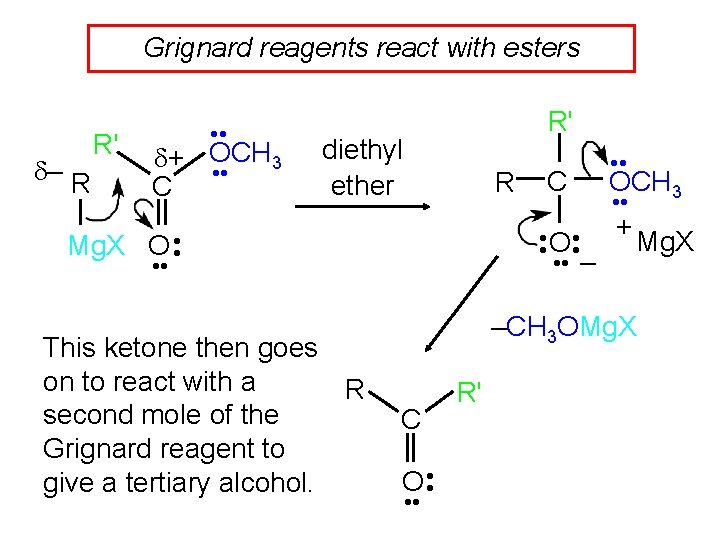
Grignard reagents react with esters – R R' • • + OCH 3 • • C R' diethyl ether R OCH 3 • • O • • + Mg. X • • – Mg. X O • • This ketone then goes on to react with a R second mole of the Grignard reagent to give a tertiary alcohol. C • • –CH 3 OMg. X C O • • R'
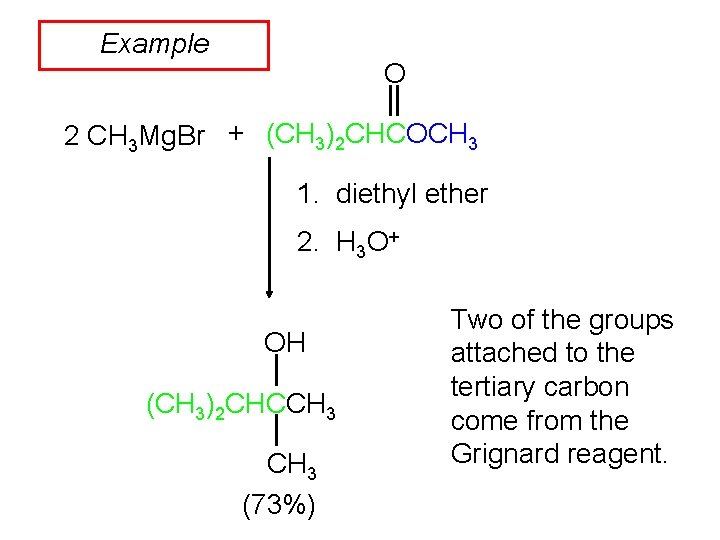
Example O 2 CH 3 Mg. Br + (CH 3)2 CHCOCH 3 1. diethyl ether 2. H 3 O+ OH (CH 3)2 CHCCH 3 (73%) Two of the groups attached to the tertiary carbon come from the Grignard reagent.
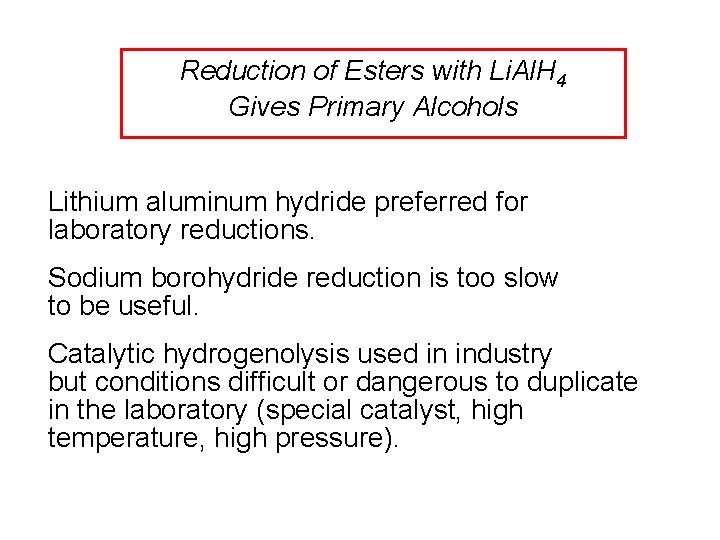
Reduction of Esters with Li. Al. H 4 Gives Primary Alcohols Lithium aluminum hydride preferred for laboratory reductions. Sodium borohydride reduction is too slow to be useful. Catalytic hydrogenolysis used in industry but conditions difficult or dangerous to duplicate in the laboratory (special catalyst, high temperature, high pressure).
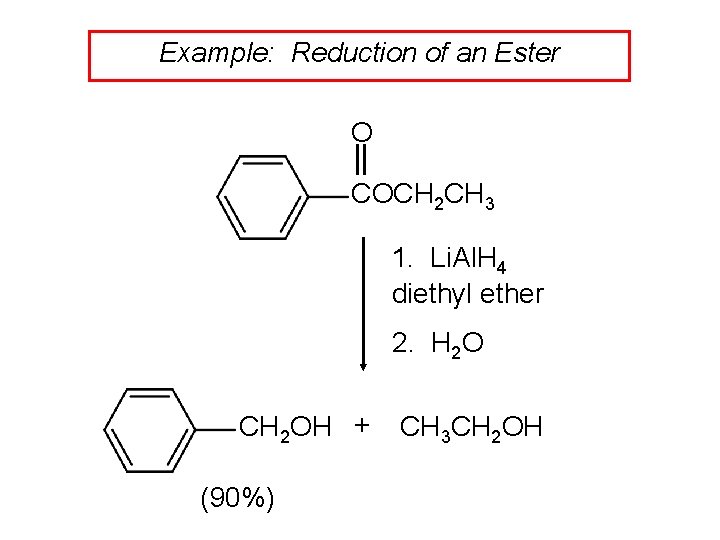
Example: Reduction of an Ester O COCH 2 CH 3 1. Li. Al. H 4 diethyl ether 2. H 2 O CH 2 OH + (90%) CH 3 CH 2 OH
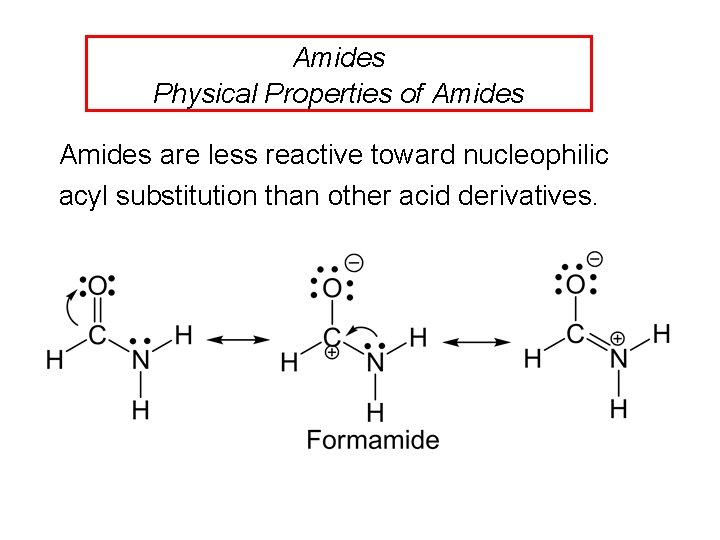
Amides Physical Properties of Amides are less reactive toward nucleophilic acyl substitution than other acid derivatives.
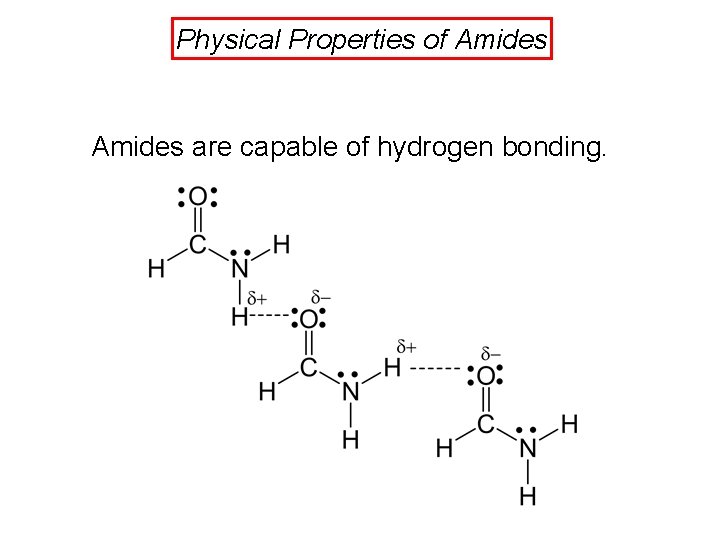
Physical Properties of Amides are capable of hydrogen bonding.
Preparation of Amides are prepared from amines by acylation with: Acyl chlorides (Table 19. 1) Anhydrides (Table 19. 2) Esters (Table 19. 4)
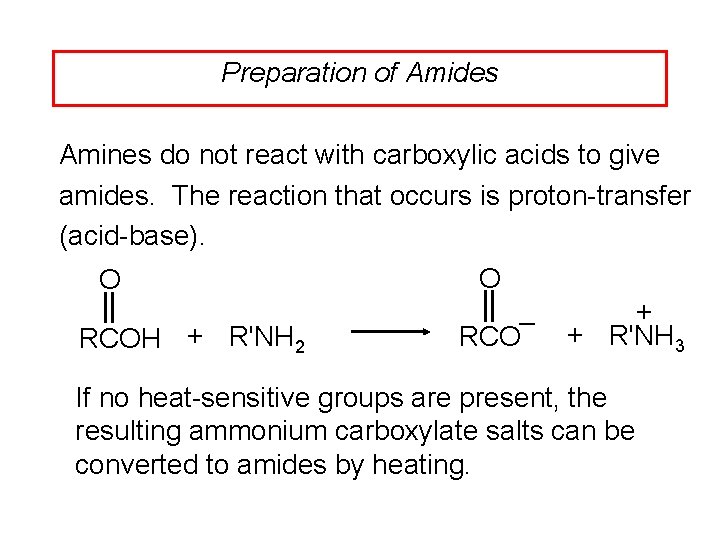
Preparation of Amides Amines do not react with carboxylic acids to give amides. The reaction that occurs is proton-transfer (acid-base). O RCOH + R'NH 2 O – RCO + + R'NH 3 If no heat-sensitive groups are present, the resulting ammonium carboxylate salts can be converted to amides by heating.
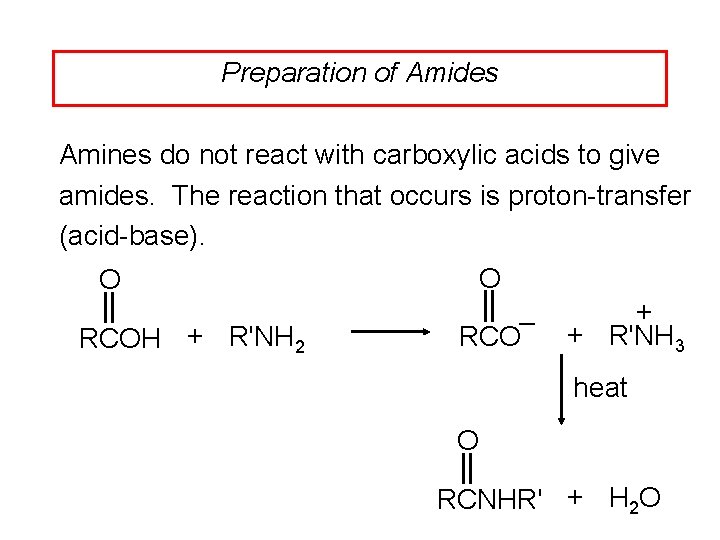
Preparation of Amides Amines do not react with carboxylic acids to give amides. The reaction that occurs is proton-transfer (acid-base). O O RCOH + R'NH 2 – RCO + + R'NH 3 heat O RCNHR' + H 2 O
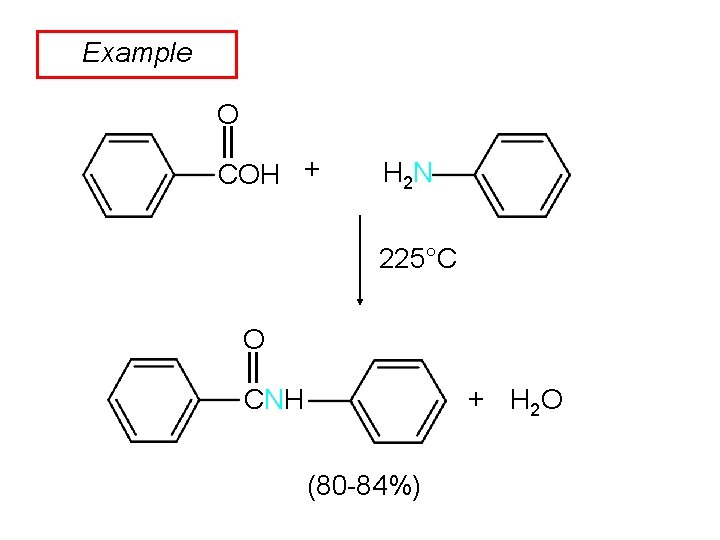
Example O COH + H 2 N 225°C O + H 2 O CNH (80 -84%)
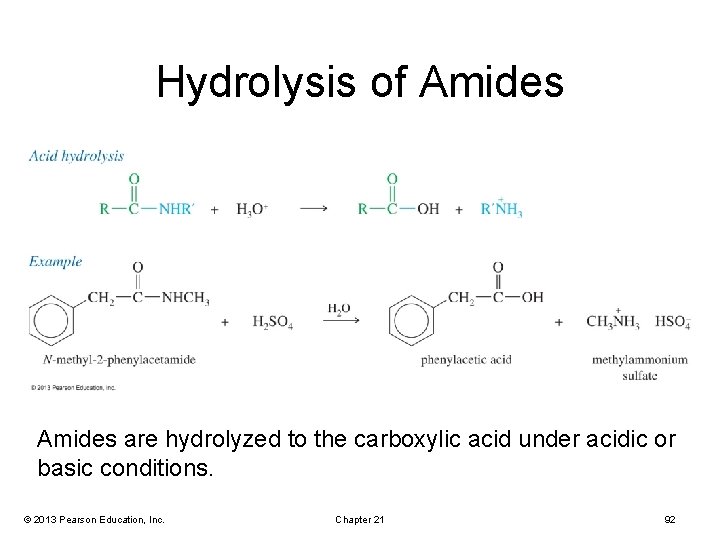
Hydrolysis of Amides File Name: AAALCNU 0 Amides are hydrolyzed to the carboxylic acid under acidic or basic conditions. © 2013 Pearson Education, Inc. Chapter 21 92
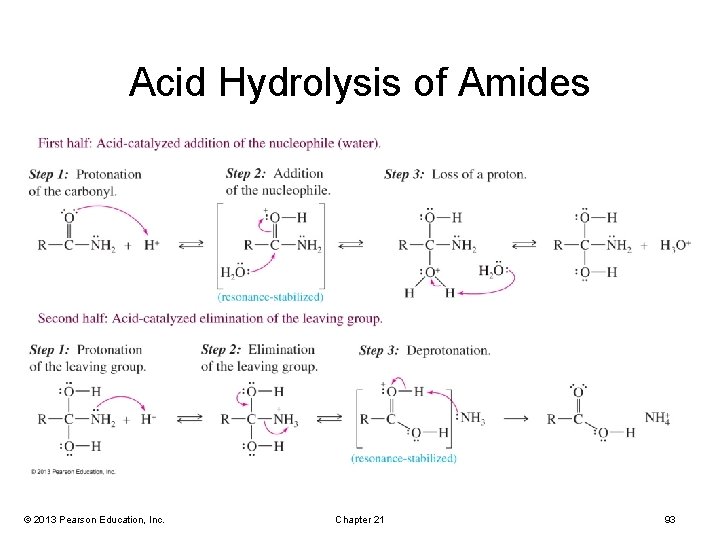
Acid Hydrolysis of Amides File Name: AAALCNW 0 © 2013 Pearson Education, Inc. Chapter 21 93
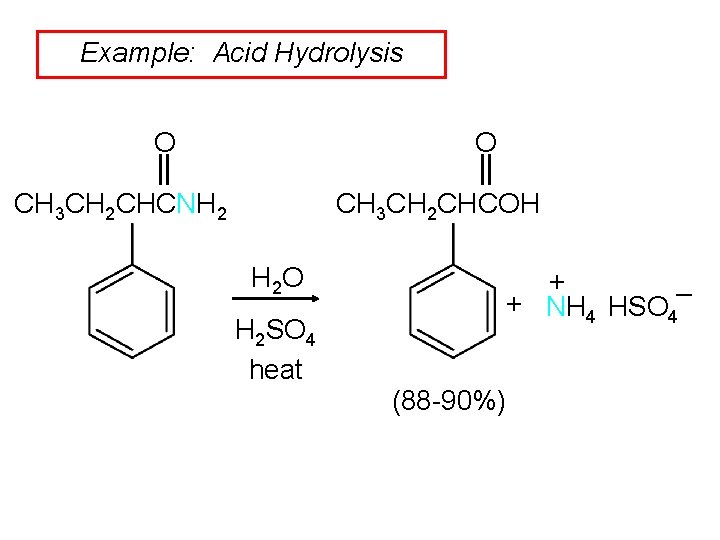
Example: Acid Hydrolysis O O CH 3 CH 2 CHCNH 2 CH 3 CH 2 CHCOH H 2 O H 2 SO 4 heat + + NH 4 HSO 4– (88 -90%)
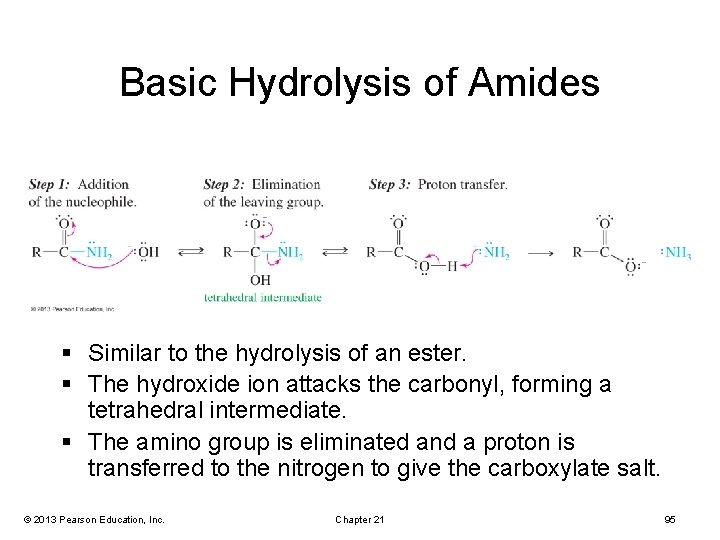
Basic Hydrolysis of Amides File Name: AAALCNV 0 § Similar to the hydrolysis of an ester. § The hydroxide ion attacks the carbonyl, forming a tetrahedral intermediate. § The amino group is eliminated and a proton is transferred to the nitrogen to give the carboxylate salt. © 2013 Pearson Education, Inc. Chapter 21 95
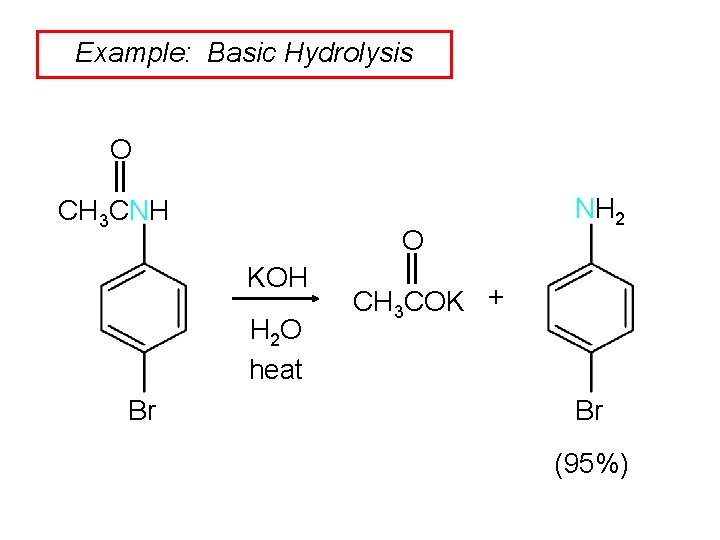
Example: Basic Hydrolysis O CH 3 CNH O KOH H 2 O heat Br NH 2 CH 3 COK + Br (95%)
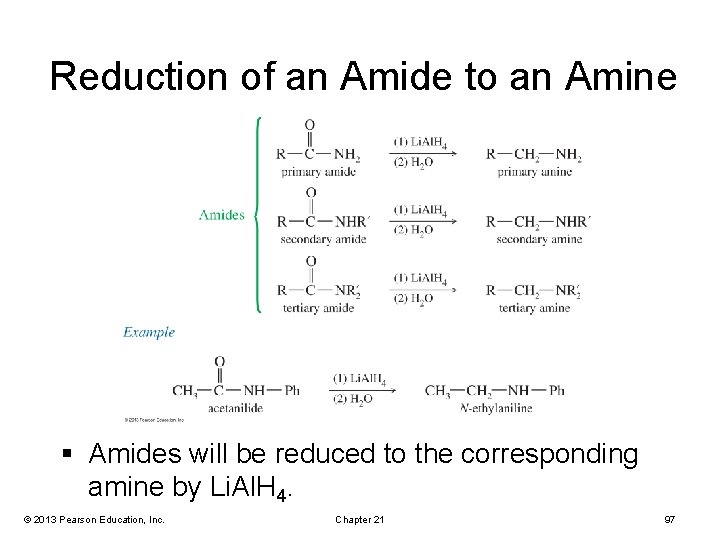
Reduction of an Amide to an Amine File Name: AAALCOE 0 § Amides will be reduced to the corresponding amine by Li. Al. H 4. © 2013 Pearson Education, Inc. Chapter 21 97
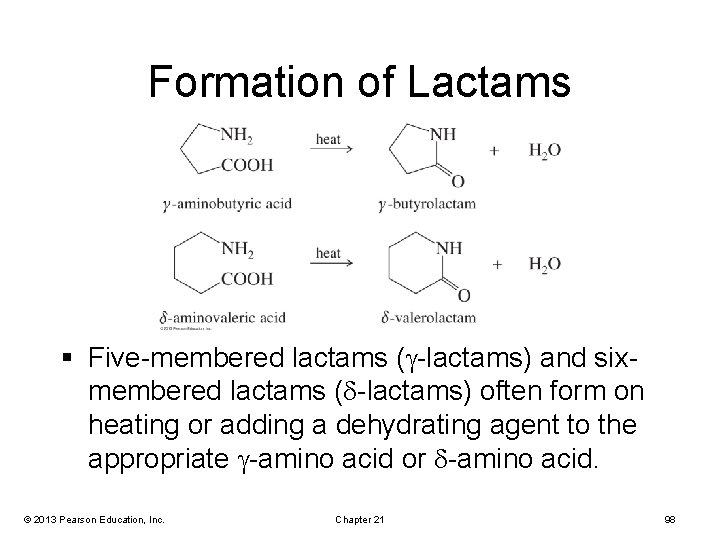
Formation of Lactams File Name: AAALCPQ 0 § Five-membered lactams (g-lactams) and sixmembered lactams ( -lactams) often form on heating or adding a dehydrating agent to the appropriate g-amino acid or -amino acid. © 2013 Pearson Education, Inc. Chapter 21 98
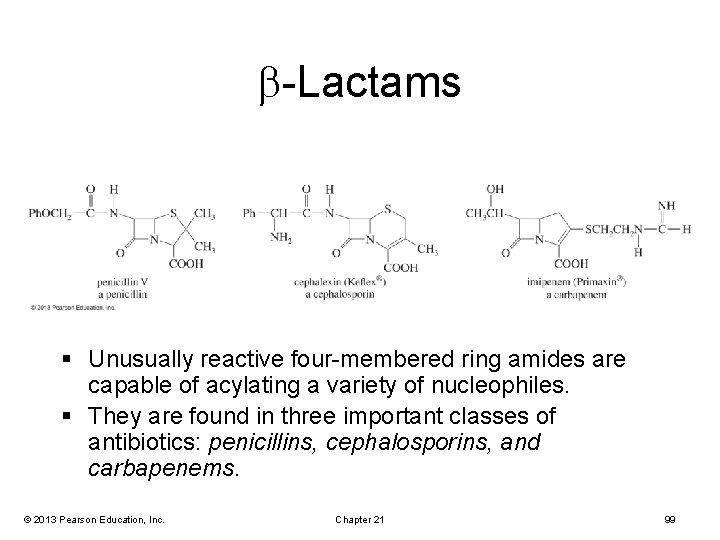
b-Lactams File Name: AAALCPS 0 § Unusually reactive four-membered ring amides are capable of acylating a variety of nucleophiles. § They are found in three important classes of antibiotics: penicillins, cephalosporins, and carbapenems. © 2013 Pearson Education, Inc. Chapter 21 99
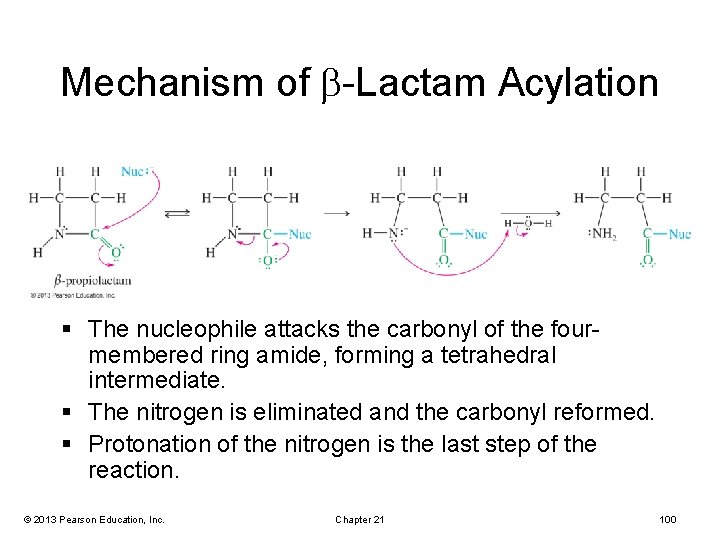
Mechanism of b-Lactam Acylation File Name: AAALCPR 0 § The nucleophile attacks the carbonyl of the fourmembered ring amide, forming a tetrahedral intermediate. § The nitrogen is eliminated and the carbonyl reformed. § Protonation of the nitrogen is the last step of the reaction. © 2013 Pearson Education, Inc. Chapter 21 100
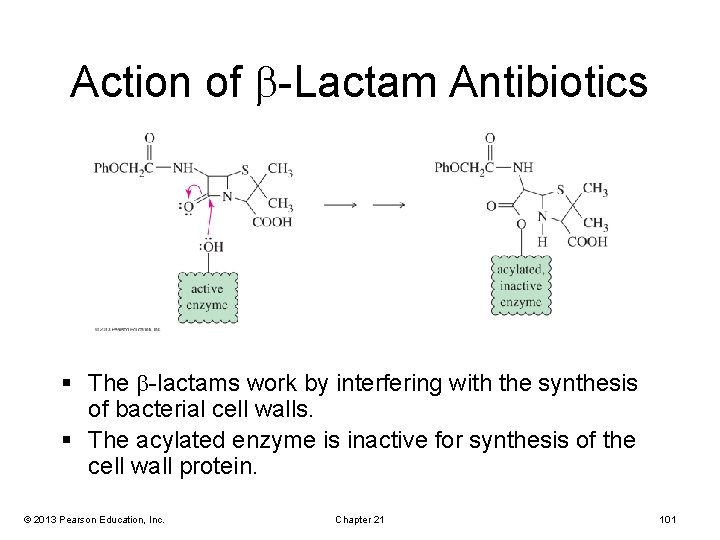
Action of b-Lactam Antibiotics File Name: AAALCPT 0 § The b-lactams work by interfering with the synthesis of bacterial cell walls. § The acylated enzyme is inactive for synthesis of the cell wall protein. © 2013 Pearson Education, Inc. Chapter 21 101
Preparation of Nitriles are prepared by: Nucleophilic substitution by cyanide on alkyl halides (Sections 8. 1 and 8. 11) Cyanohydrin formation (Section 17. 7) Dehydration of amides
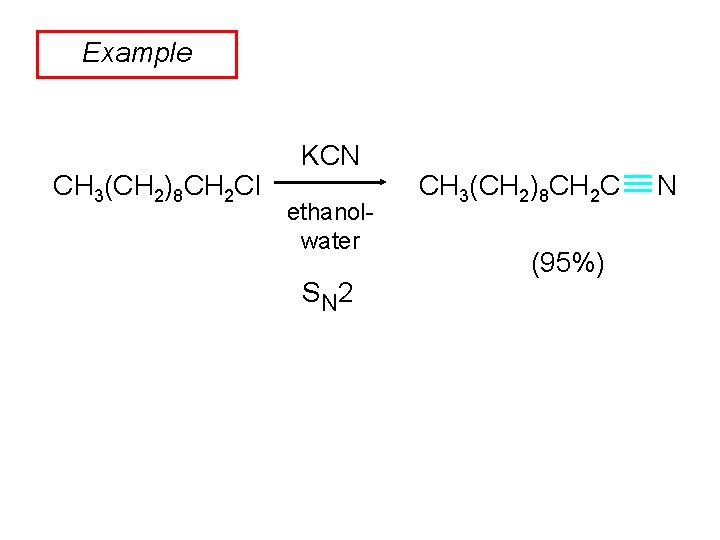
Example CH 3(CH 2)8 CH 2 Cl KCN ethanolwater S N 2 CH 3(CH 2)8 CH 2 C (95%) N
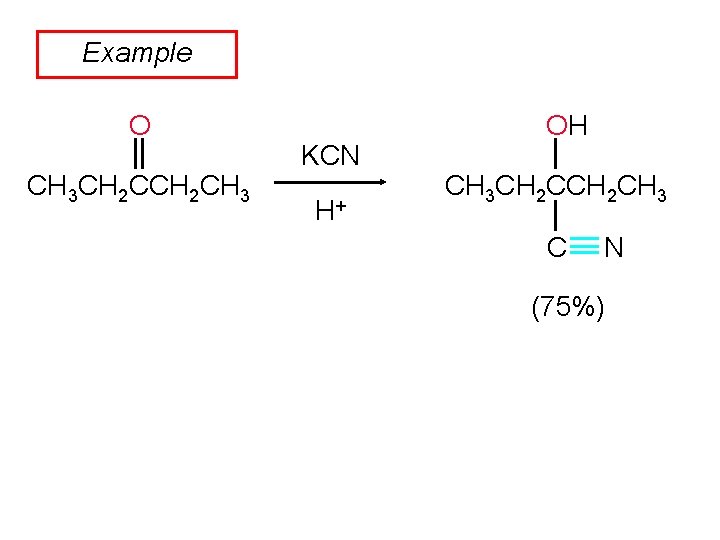
Example O CH 3 CH 2 CH 3 KCN H+ OH CH 3 CH 2 CH 3 C N (75%)
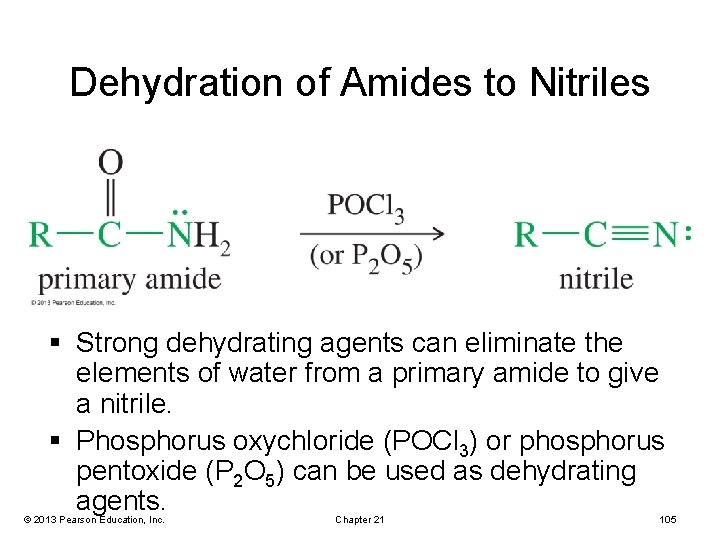
Dehydration of Amides to Nitriles File Name: AAALCPO 0 § Strong dehydrating agents can eliminate the elements of water from a primary amide to give a nitrile. § Phosphorus oxychloride (POCl 3) or phosphorus pentoxide (P 2 O 5) can be used as dehydrating agents. © 2013 Pearson Education, Inc. Chapter 21 105
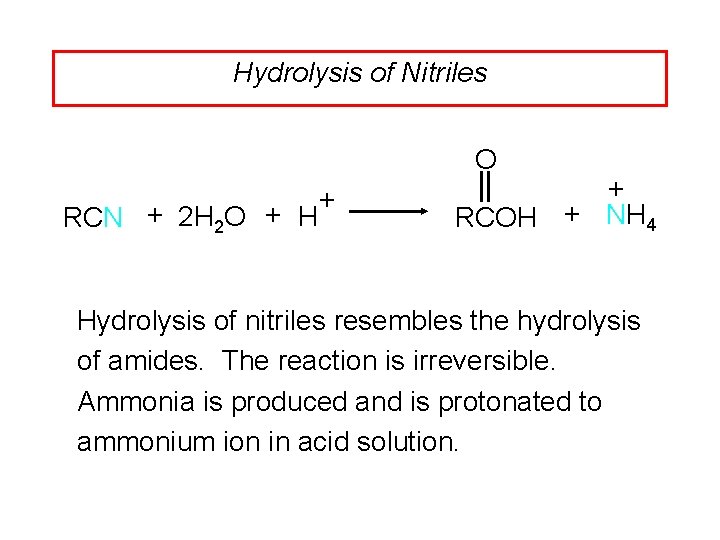
Hydrolysis of Nitriles O RCN + 2 H 2 O + H + + RCOH + NH 4 Hydrolysis of nitriles resembles the hydrolysis of amides. The reaction is irreversible. Ammonia is produced and is protonated to ammonium ion in acid solution.
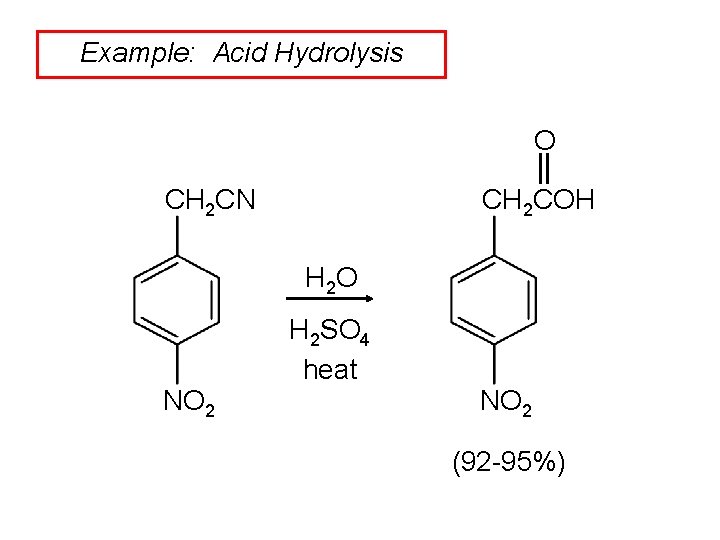
Example: Acid Hydrolysis O CH 2 CN CH 2 COH H 2 O NO 2 H 2 SO 4 heat NO 2 (92 -95%)
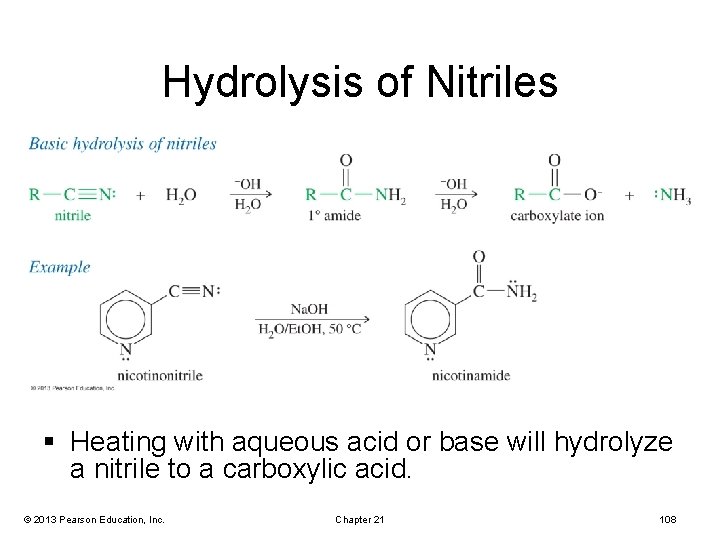
Hydrolysis of Nitriles File Name: AAALCNX 0 § Heating with aqueous acid or base will hydrolyze a nitrile to a carboxylic acid. © 2013 Pearson Education, Inc. Chapter 21 108
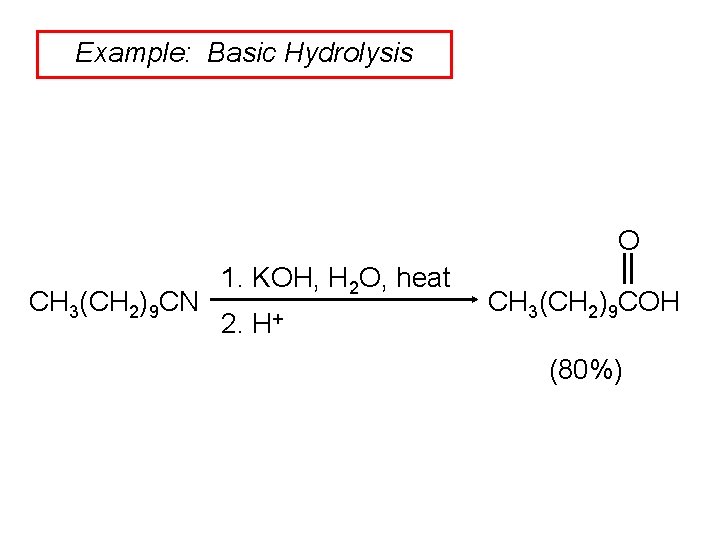
Example: Basic Hydrolysis O CH 3(CH 2)9 CN 1. KOH, H 2 O, heat 2. H+ CH 3(CH 2)9 COH (80%)
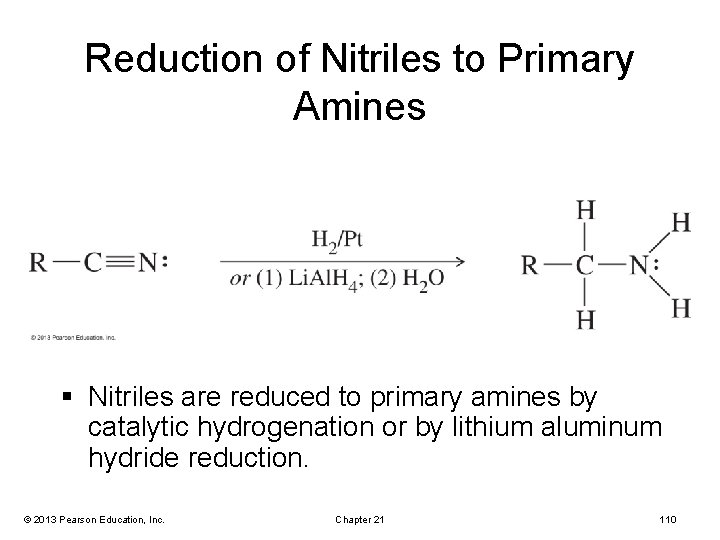
Reduction of Nitriles to Primary Amines File Name: AAALCOG 0 § Nitriles are reduced to primary amines by catalytic hydrogenation or by lithium aluminum hydride reduction. © 2013 Pearson Education, Inc. Chapter 21 110
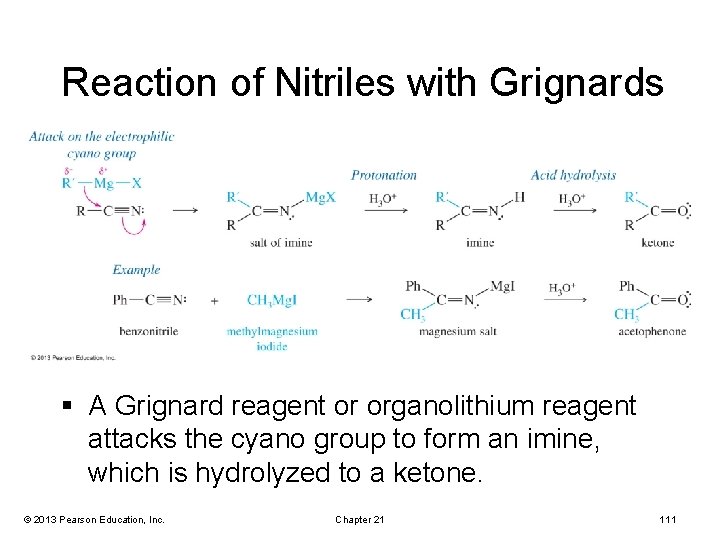
Reaction of Nitriles with Grignards File Name: AAALCON 0 § A Grignard reagent or organolithium reagent attacks the cyano group to form an imine, which is hydrolyzed to a ketone. © 2013 Pearson Education, Inc. Chapter 21 111
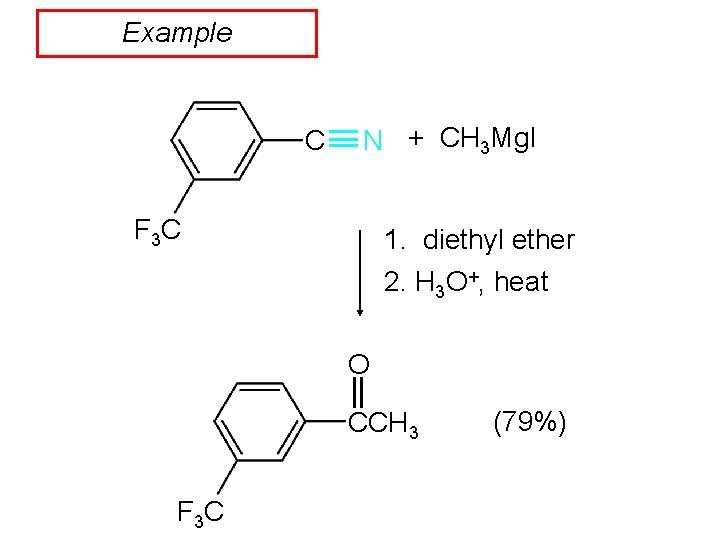
Example C N + CH 3 Mg. I F 3 C 1. diethyl ether 2. H 3 O+, heat O CCH 3 F 3 C (79%)
- Slides: 112