
Chapter 19 Air Pressure and Wind Standards Concept
- Slides: 26
Chapter 19 Air Pressure and Wind Standards: Concept 2: PO 10, 11, 12
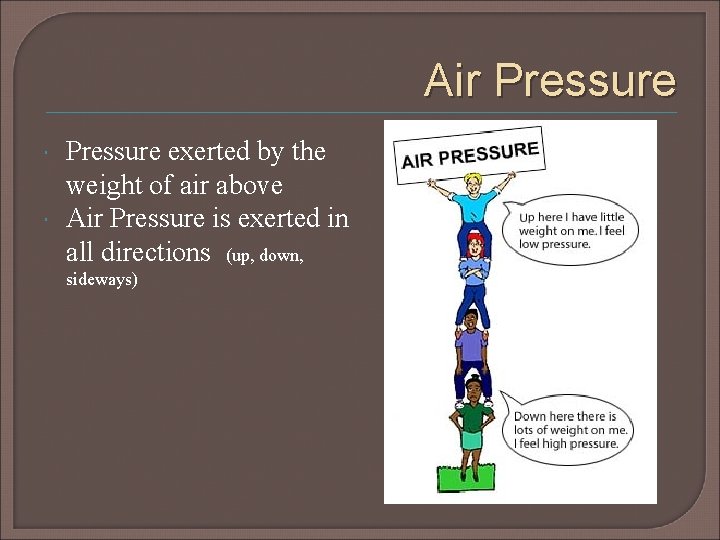
Air Pressure exerted by the weight of air above Air Pressure is exerted in all directions (up, down, sideways)
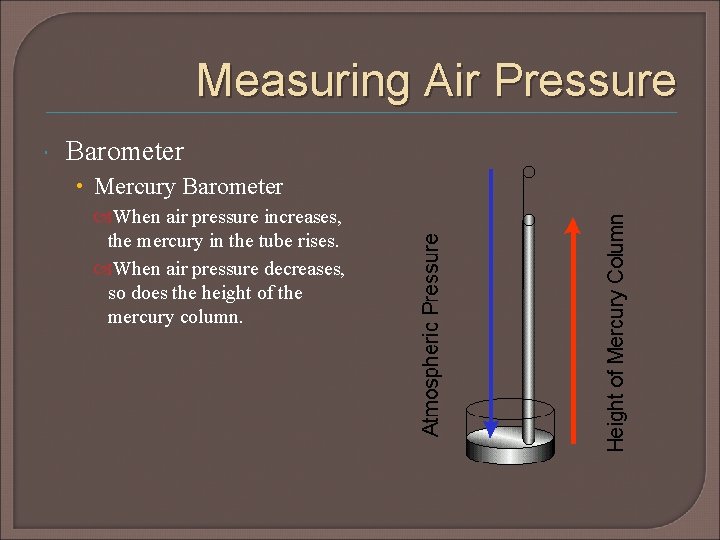
Measuring Air Pressure Barometer • Mercury Barometer When air pressure increases, the mercury in the tube rises. When air pressure decreases, so does the height of the mercury column.
Wind �The result of horizontal differences in air pressure. �Travels from High to Low pressure �Unequal heating of Earth’s surface causes pressure differences �Solar radiation is the ultimate energy source of most wind
Factors Affecting Wind �Pressure Differences �Coriolis Effect �Friction
Pressure Differences �Greater difference in high and low pressure the greater the wind speed �Pressure Gradient is the driving force of wind. �Steep gradient high winds �Less steep gradient low winds
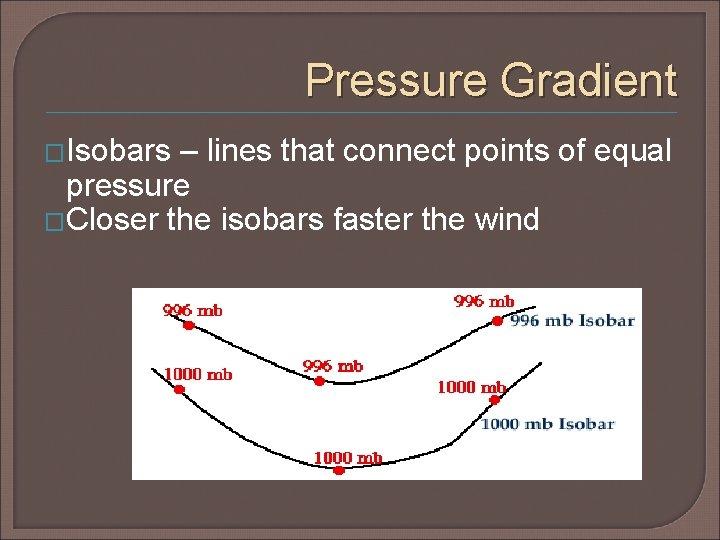
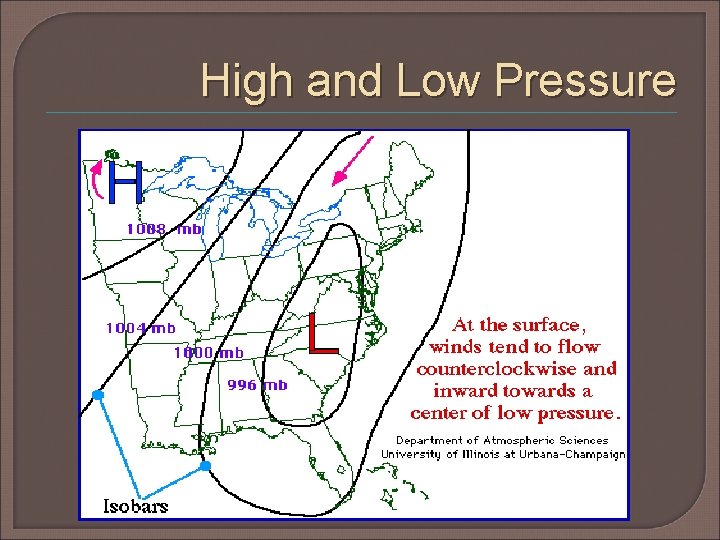
Pressure Gradient �Isobars – lines that connect points of equal pressure �Closer the isobars faster the wind
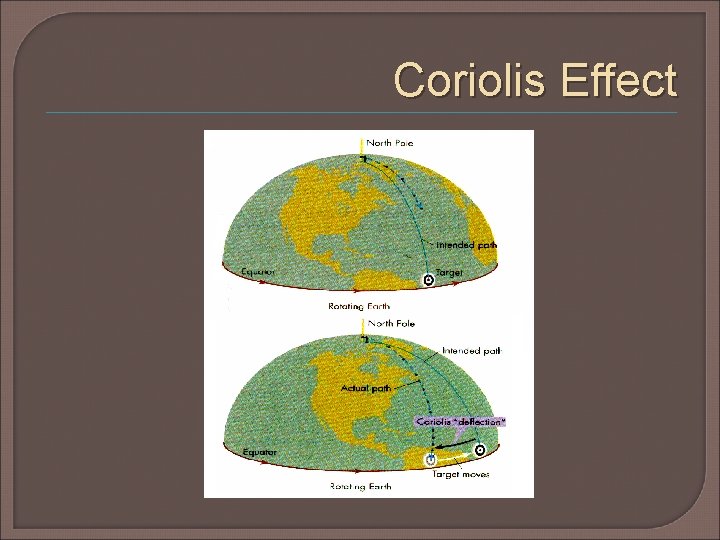
Coriolis Effect �Caused by Earth’s rotation �Winds do not travel in straight lines �Winds in North Hemisphere- spin clockwise or turn to the right �Winds in South Hemisphere- spin counterclockwise or to the left �Effect increases with wind speed
Coriolis Effect
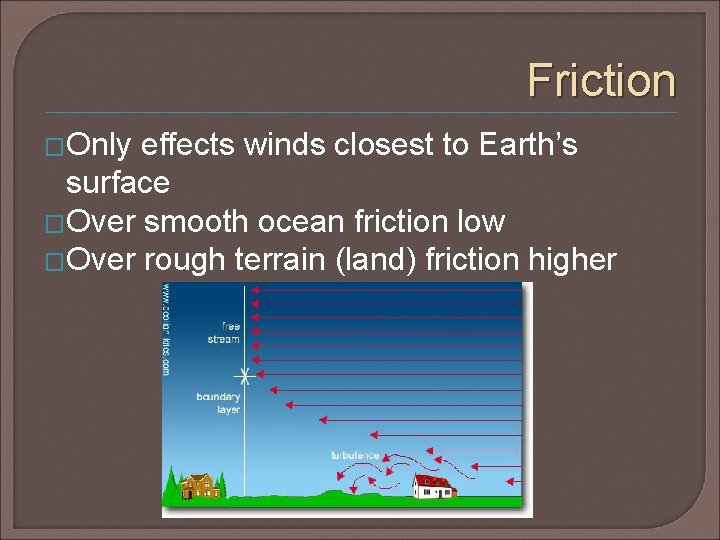
Friction �Only effects winds closest to Earth’s surface �Over smooth ocean friction low �Over rough terrain (land) friction higher
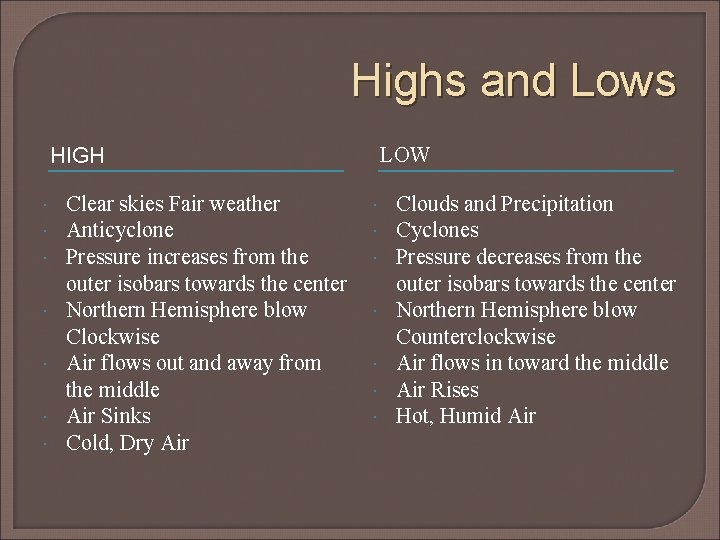
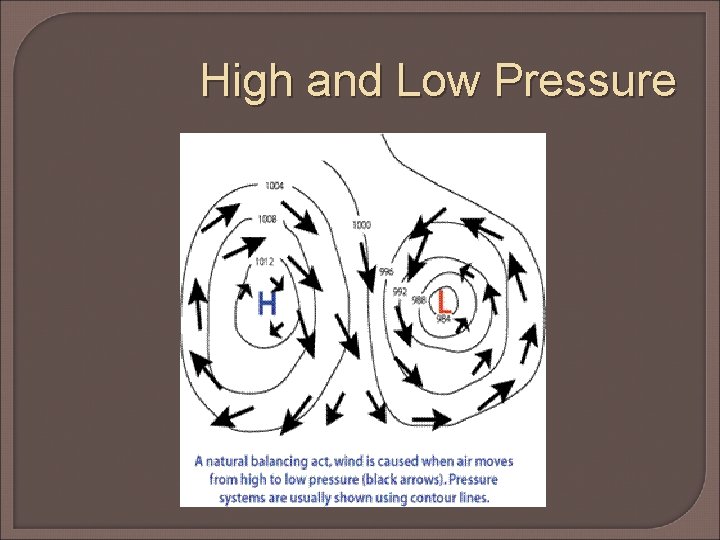
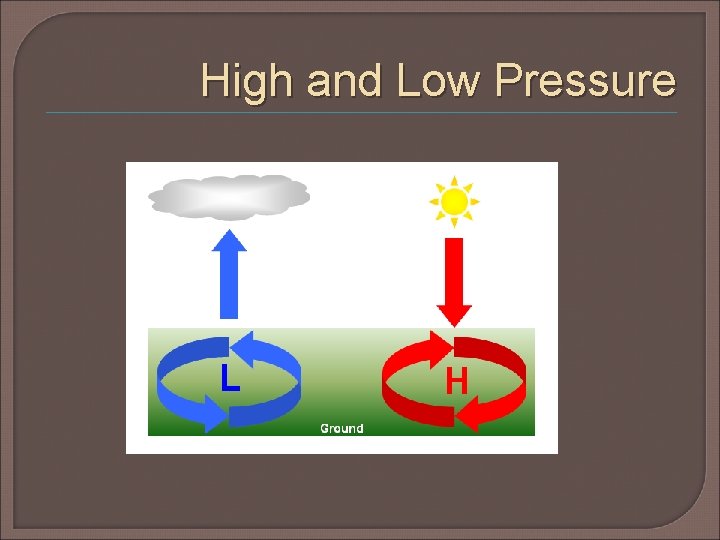
Highs and Lows HIGH Clear skies Fair weather Anticyclone Pressure increases from the outer isobars towards the center Northern Hemisphere blow Clockwise Air flows out and away from the middle Air Sinks Cold, Dry Air LOW Clouds and Precipitation Cyclones Pressure decreases from the outer isobars towards the center Northern Hemisphere blow Counterclockwise Air flows in toward the middle Air Rises Hot, Humid Air
High and Low Pressure
High and Low Pressure
High and Low Pressure
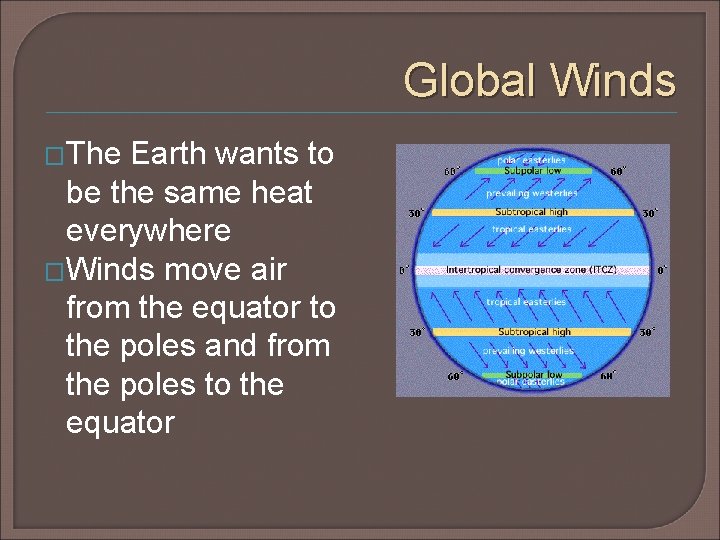
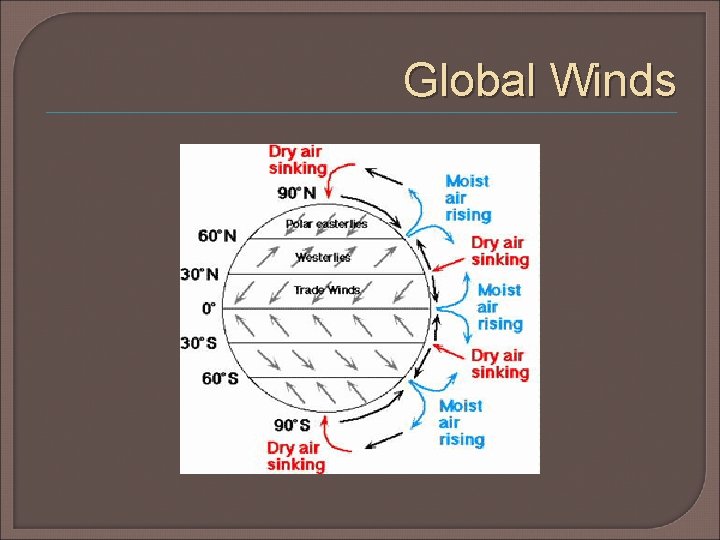
Global Winds �The Earth wants to be the same heat everywhere �Winds move air from the equator to the poles and from the poles to the equator
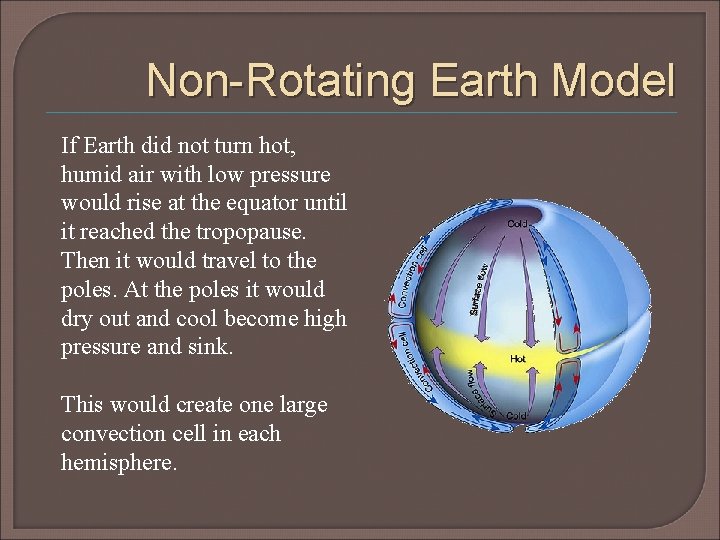
Non-Rotating Earth Model If Earth did not turn hot, humid air with low pressure would rise at the equator until it reached the tropopause. Then it would travel to the poles. At the poles it would dry out and cool become high pressure and sink. This would create one large convection cell in each hemisphere.
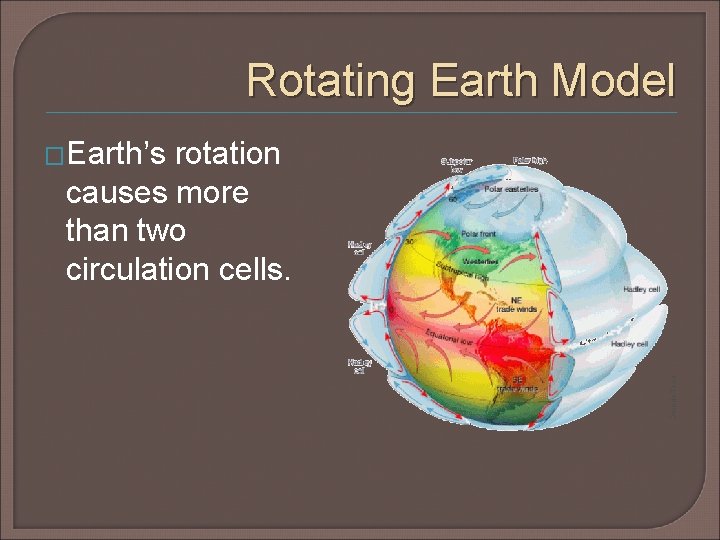
Rotating Earth Model �Earth’s rotation causes more than two circulation cells.
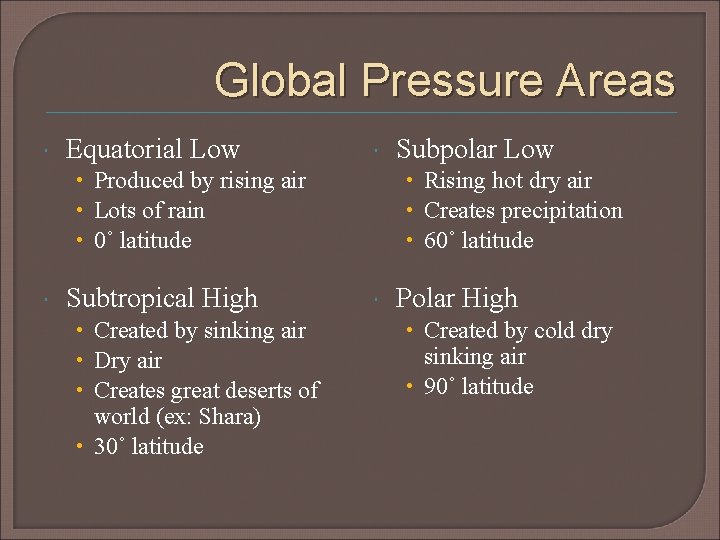
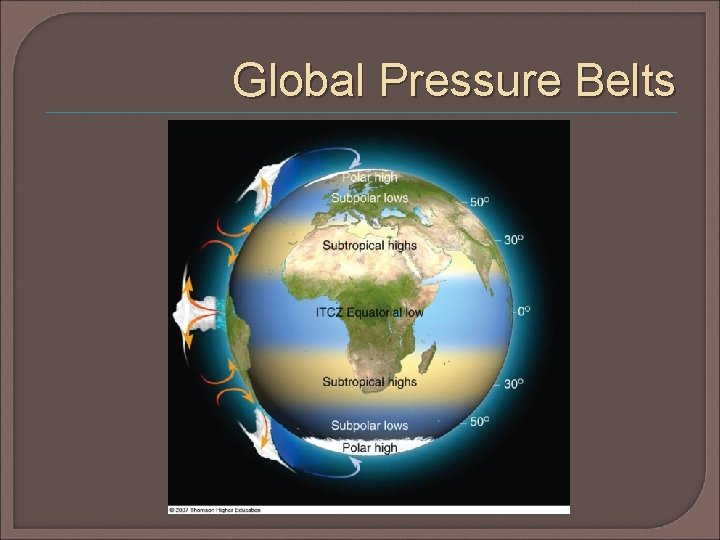
Global Pressure Areas Equatorial Low • Produced by rising air • Lots of rain • 0˚ latitude Subtropical High • Created by sinking air • Dry air • Creates great deserts of world (ex: Shara) • 30˚ latitude Subpolar Low • Rising hot dry air • Creates precipitation • 60˚ latitude Polar High • Created by cold dry sinking air • 90˚ latitude
Global Pressure Belts
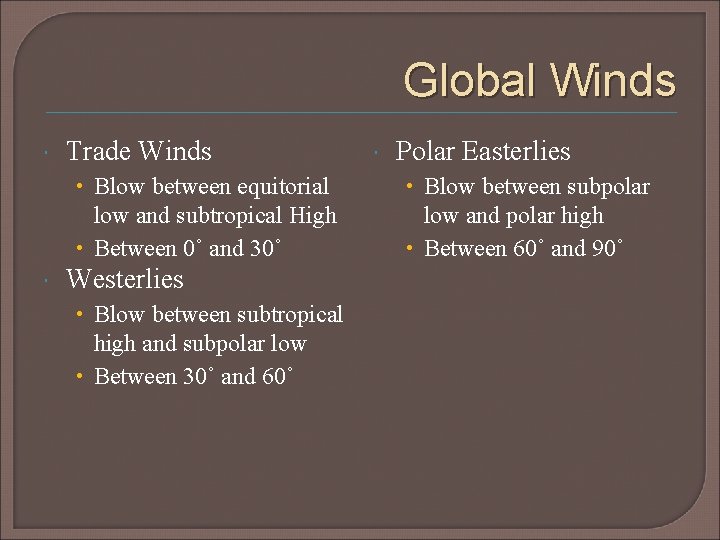
Global Winds Trade Winds Polar Easterlies • Blow between equitorial • Blow between subpolar low and subtropical High • Between 0˚ and 30˚ low and polar high • Between 60˚ and 90˚ Westerlies • Blow between subtropical high and subpolar low • Between 30˚ and 60˚
Global Winds
Local Winds �Caused by either topographic effects or by variation in surface composition-land or water- in the immediate area
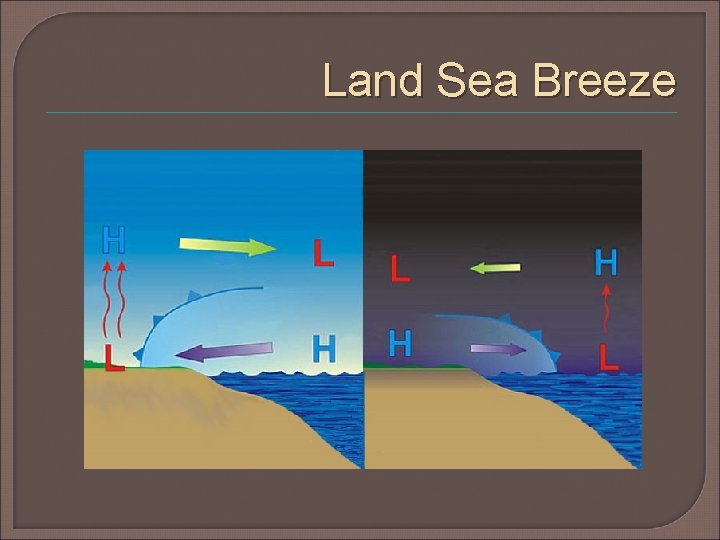
Land Sea Breeze
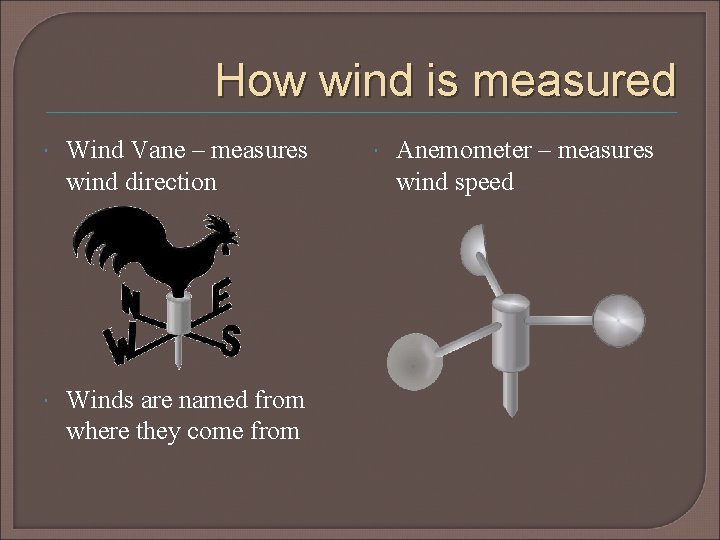
How wind is measured Wind Vane – measures wind direction Winds are named from where they come from Anemometer – measures wind speed
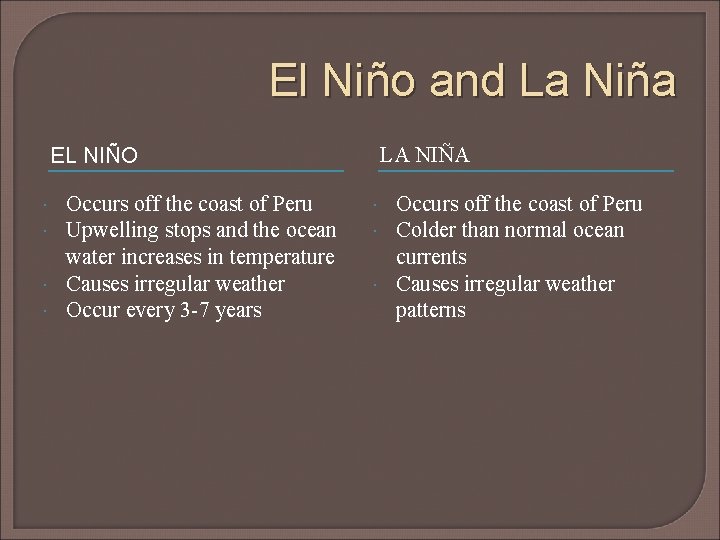
El Niño and La Niña EL NIÑO Occurs off the coast of Peru Upwelling stops and the ocean water increases in temperature Causes irregular weather Occur every 3 -7 years LA NIÑA Occurs off the coast of Peru Colder than normal ocean currents Causes irregular weather patterns
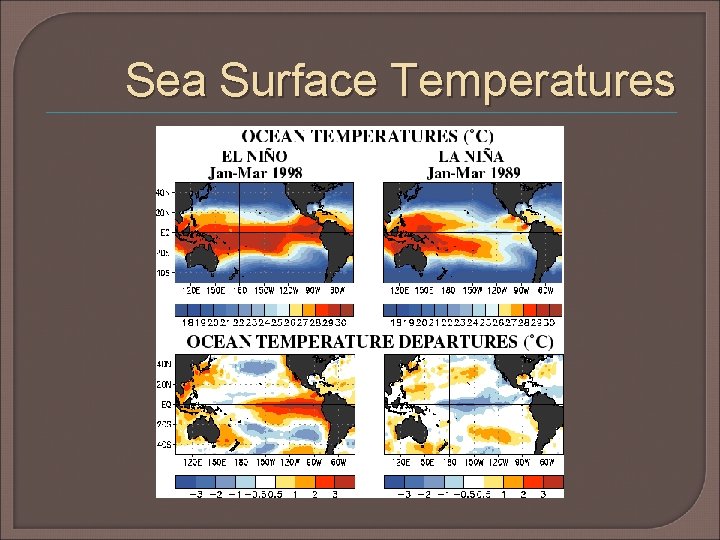
Sea Surface Temperatures