
Chapter 18 World War One goes badly for
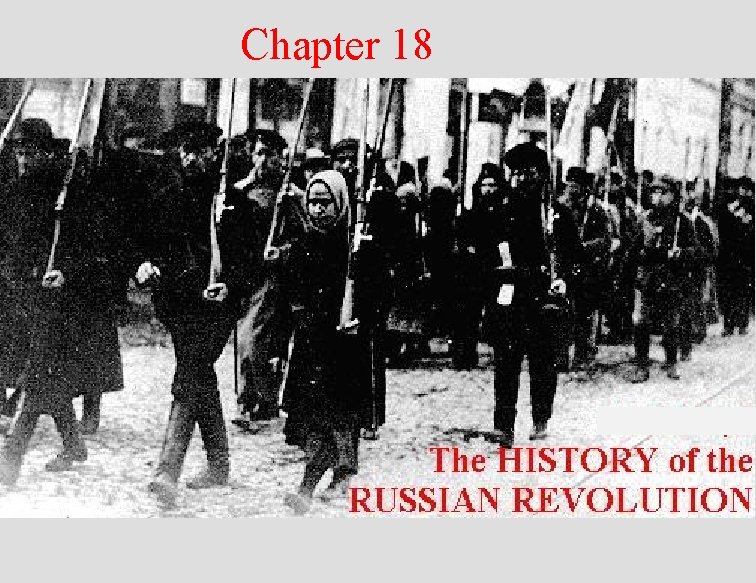
Chapter 18
World War One goes badly for Russia *two major losses the first months of the war *2 million casualties in 1915 * 7 million by 1917
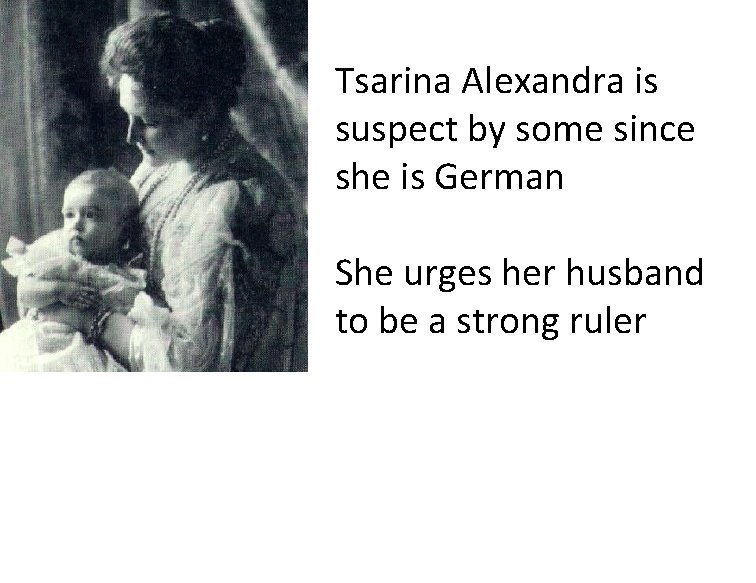
Tsarina Alexandra is suspect by some since she is German She urges her husband to be a strong ruler
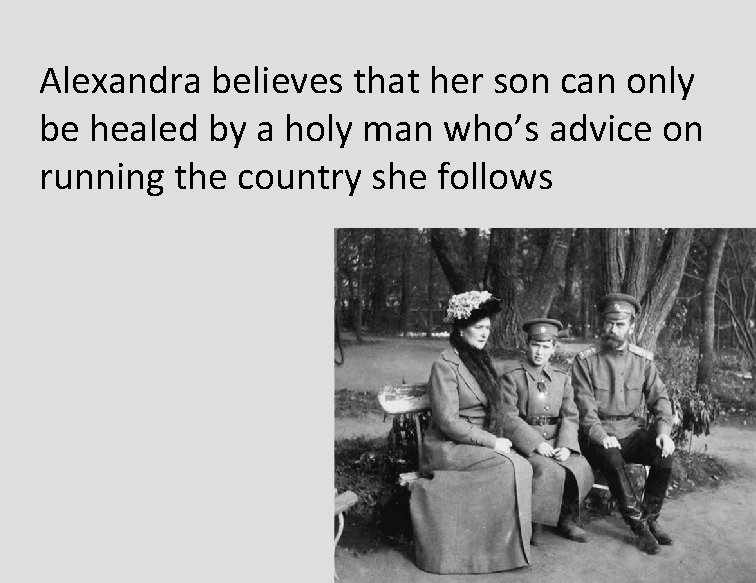
Alexandra believes that her son can only be healed by a holy man who’s advice on running the country she follows

Gregory Rasputin
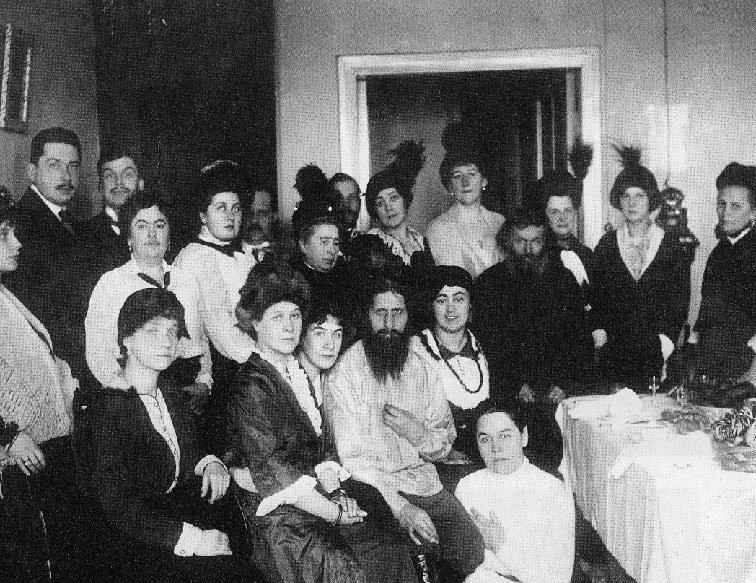
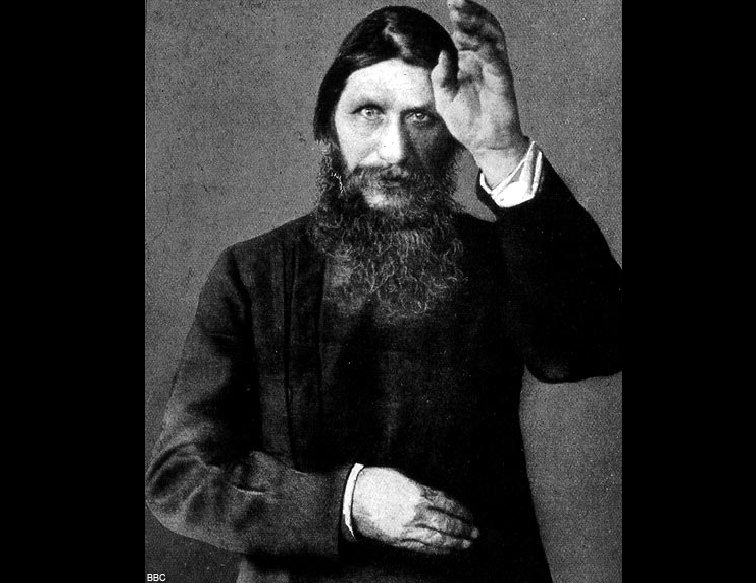
Those loyal to the Tsar get rid of Rasputin He is : poisoned shot beaten tossed into a river He drowns!
In November of 1916 a new Duma is assembled-the old one was suspended in 1915 -and feels that steps need to be taken to save Russia from reactionaries and radicals
March 12 March 8, 1917 - Food riots in Petrograd (St. Petersburg) Troops refused to shoot the people The Duma with pressure from the Petrograd Soviet-a workers councilsets up a provisional government They demand the abdication of the tsar
The Petrograd Soviet does not feel the government is going far enough and wants greater changes In an attempt to gain popular support the Provisional government names a socialist, Alexander Kerensky as head of the government
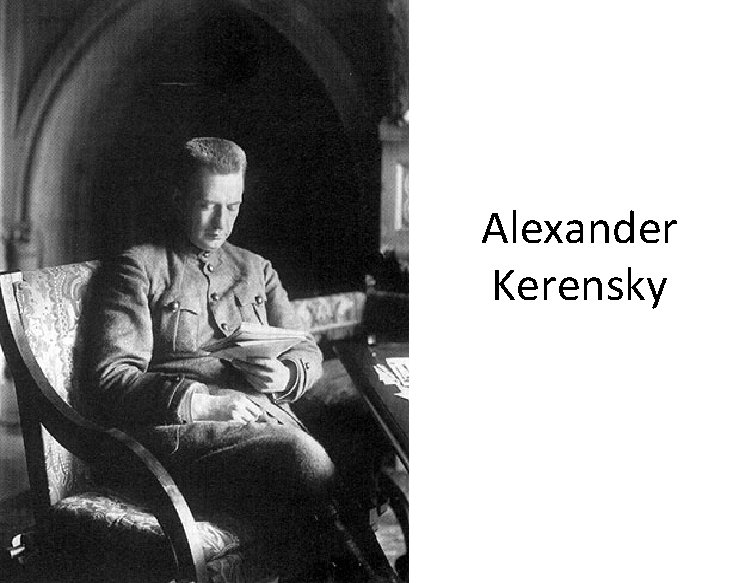
Alexander Kerensky
Kerensky government faces serious problems: • Soviets working against him • Food shortages • Continues the war
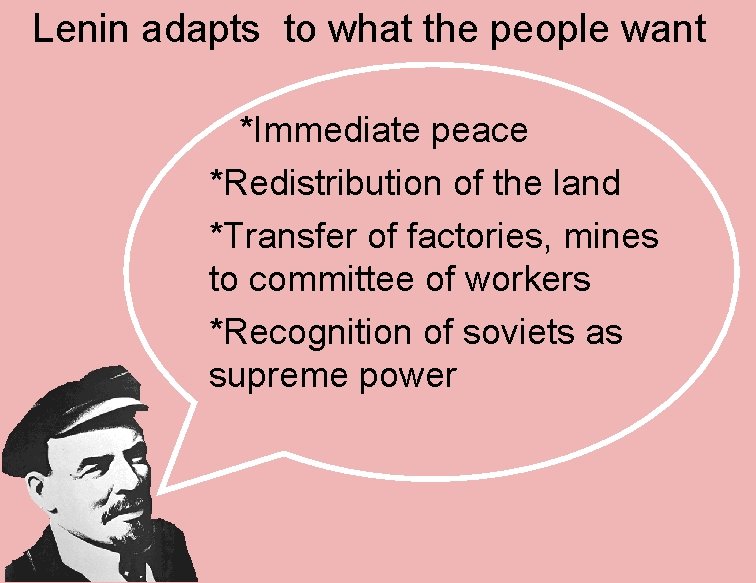
Lenin adapts to what the people want *Immediate peace *Redistribution of the land *Transfer of factories, mines to committee of workers *Recognition of soviets as supreme power
Through these steps the Bolsheviks gain the support of most of the soviets in the country
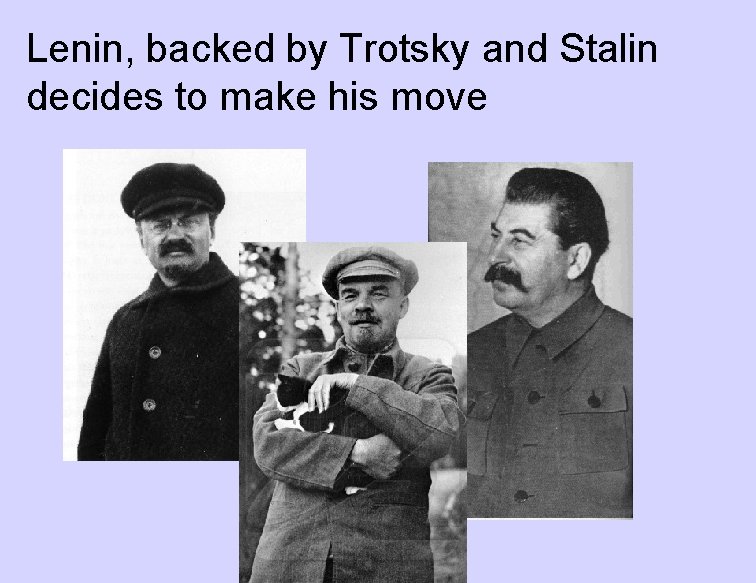
Lenin, backed by Trotsky and Stalin decides to make his move
The night of November 6 -7 1917 the Bolsheviks take over telephone exchanges, railroad stations, and electric power plants A warship aims its guns at the winter palace where the government is housed
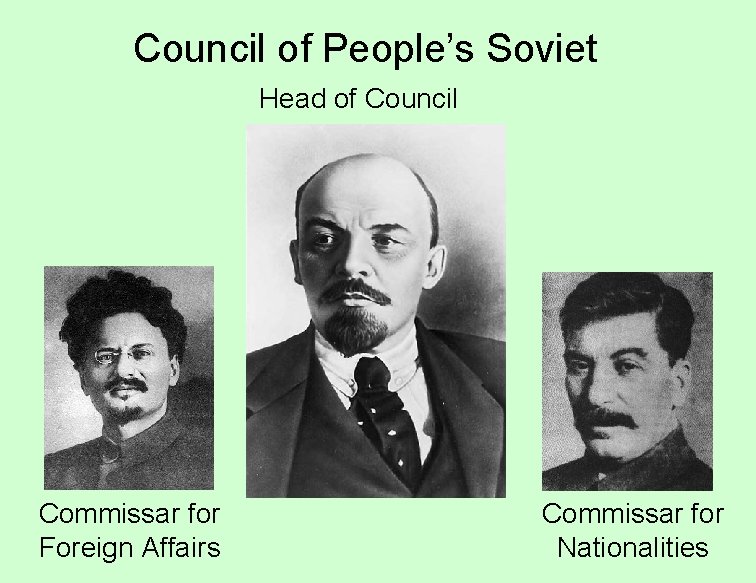
Council of People’s Soviet Head of Council Commissar for Foreign Affairs Commissar for Nationalities
Early actions by the Council: Set up Cheka-secret police later NKVD then KGB Sent worker into countryside to find food hidden by large landowners
War Communism A short term system to begin to implement some to the communist system within the reality of conditions • Some industries are nationalized • Others left in control of workers councils
There is much opposition to the Bolsheviks Pro-tsarist forces Liberals Various nationalities Allied forces-Japan & US send troops to Vladivostok
How do the Bolsheviks/Communists win? Opposition too fragmented * from left and right * the right or Whites have a counter terror which drives the peasants to the commies * Red Army-Trotsky
Red Terror Led by the Cheka, estimates run at 200, 000 executed
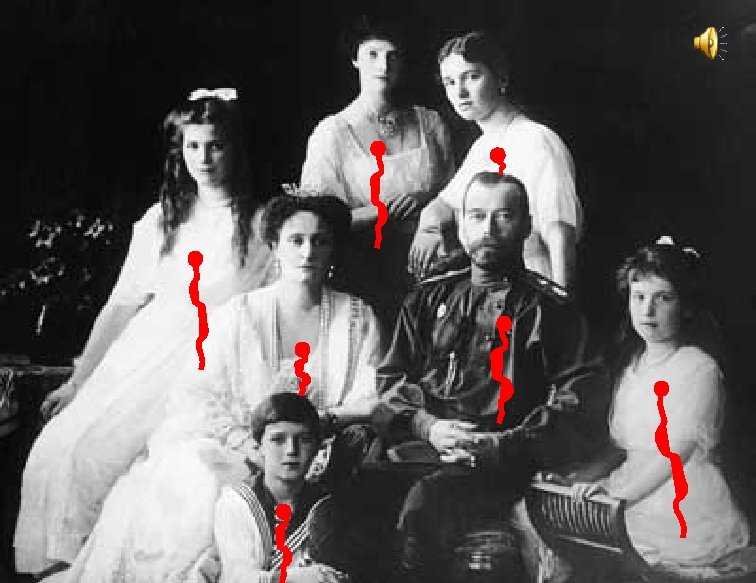
The purpose of the terror is to eliminate opponents of the new regime and frighten the rest into compliance Among the victims. . .
1922 Union of Soviet Socialist Republics is established Starts with 4 Republics Will become 15 by the start of WWII
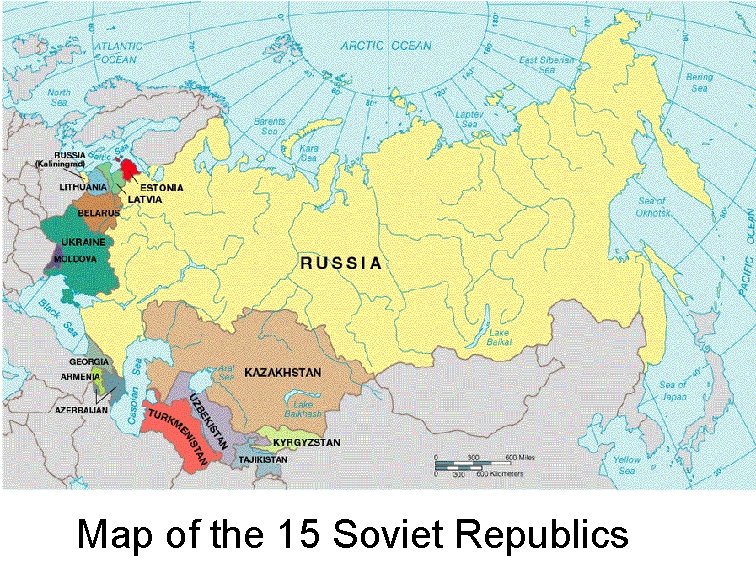
Map of the 15 Soviet Republics
Thought to be the start of the world wide revolution and a World Soviet Socialist Republic Kumbaya, my Lord, kumbaya
The basic governmental institution was the council or soviet They existed on local, republic and national levels with authority starting at the bottom and moving up
Alongside the government was the Party Authority was at the top and flowed down The Central Committee was theoretically at the top-70 members to guide the party
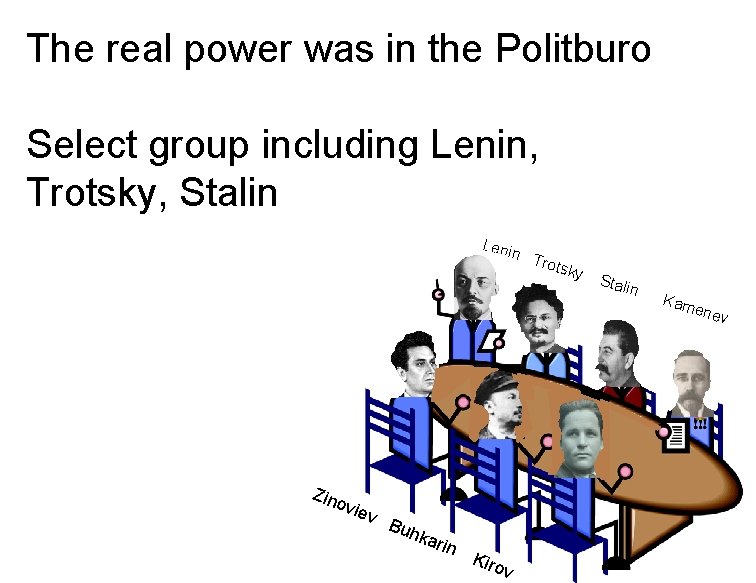
The real power was in the Politburo Select group including Lenin, Trotsky, Stalin Leni n T rotsk y Stal in Kam enev Zin ovie v B uhk arin Kiro v
Lack of cultivation-due to war communism- plus drought and a breakdown of the transportation system lead to a famine in 1920 Millions die
Lenin feels that socialism has moved too fast and starts the New Economic Policy (NEP) Allow peasants to exchange surplus for manufactured goods as a motivation to increase production
Communists want to do more than reorganize the state – they want to revolutionize the lives of the people
Women get the following rights: *Vote(? ) *divorce *birth control *Abortion

Culturally, writers and artists rally to the revolution as a rejection of traditional forms and a chance at new artistic ideas
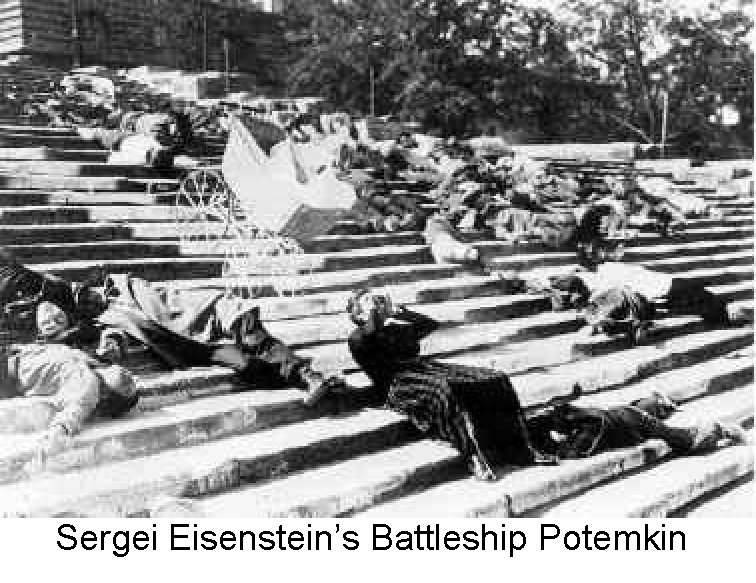
Sergei Eisenstein’s Battleship Potemkin
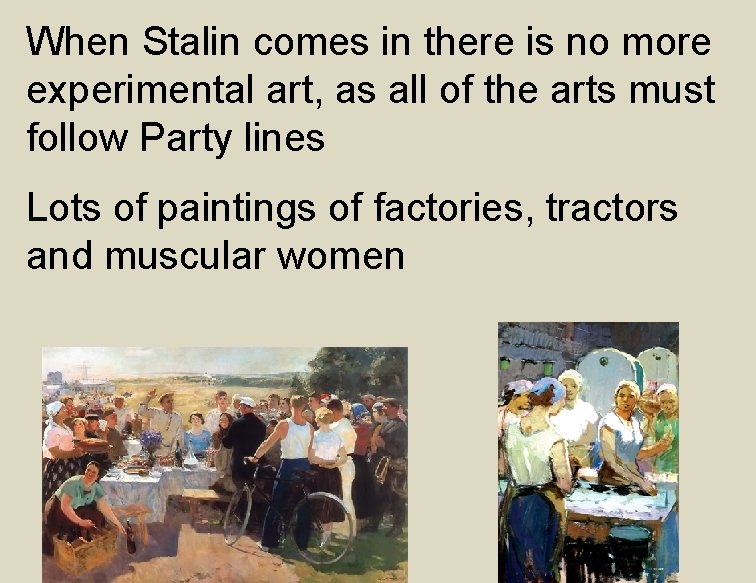
When Stalin comes in there is no more experimental art, as all of the arts must follow Party lines Lots of paintings of factories, tractors and muscular women
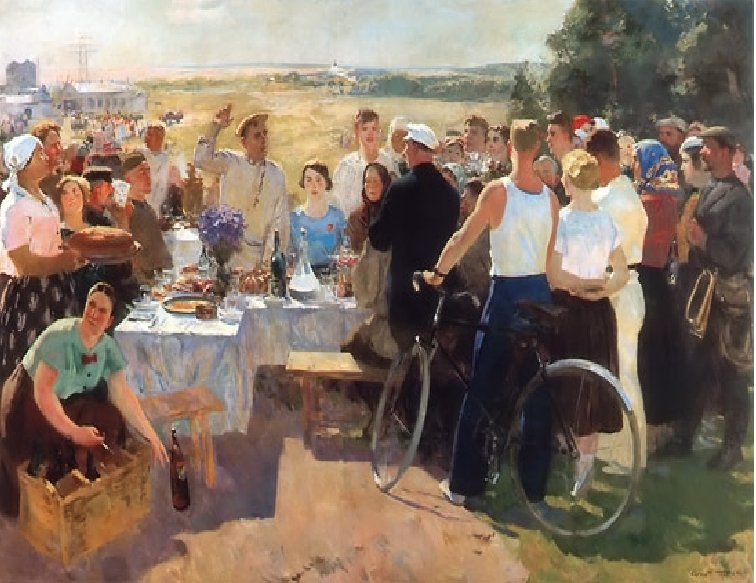
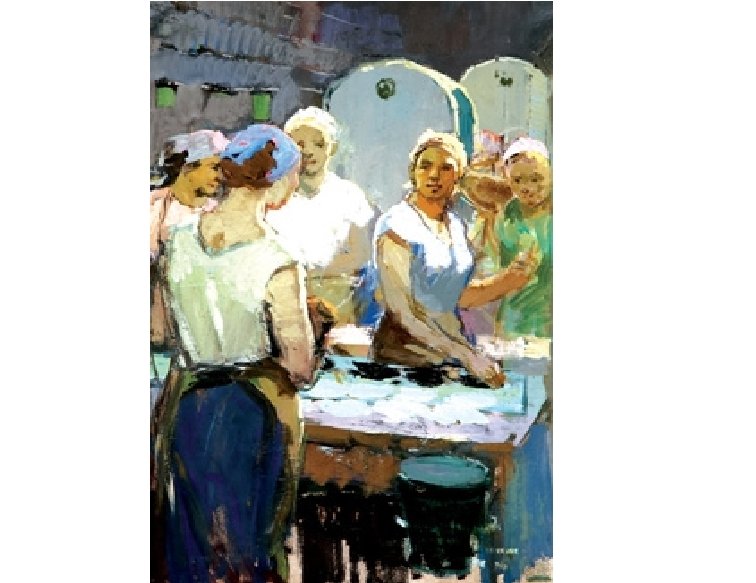
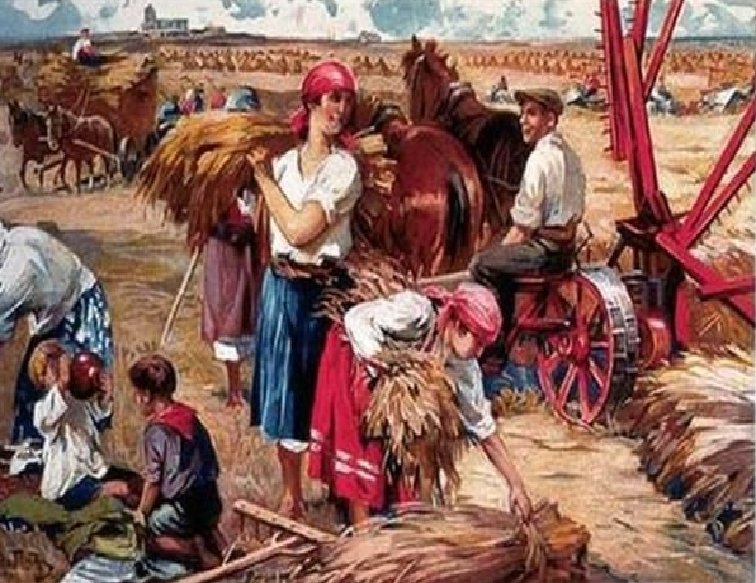
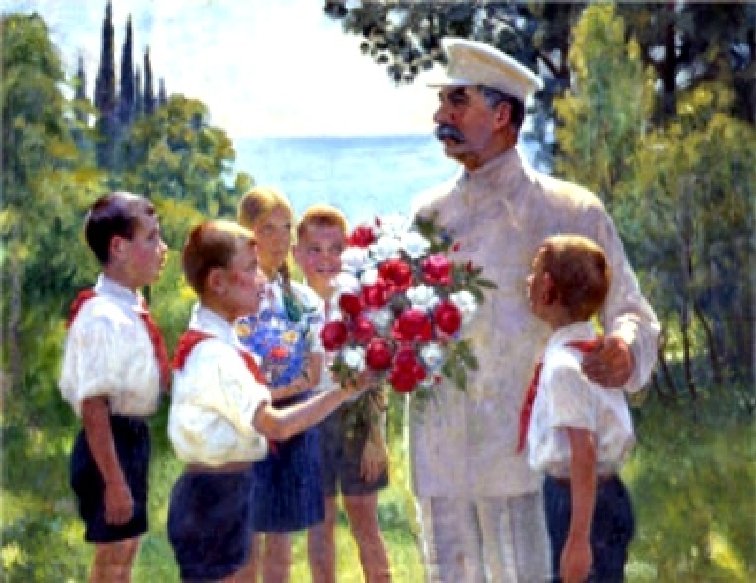
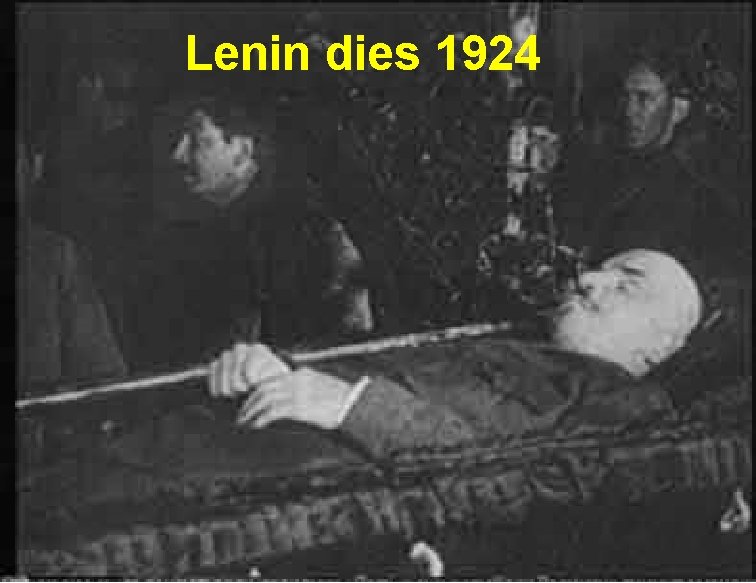
Lenin dies 1924
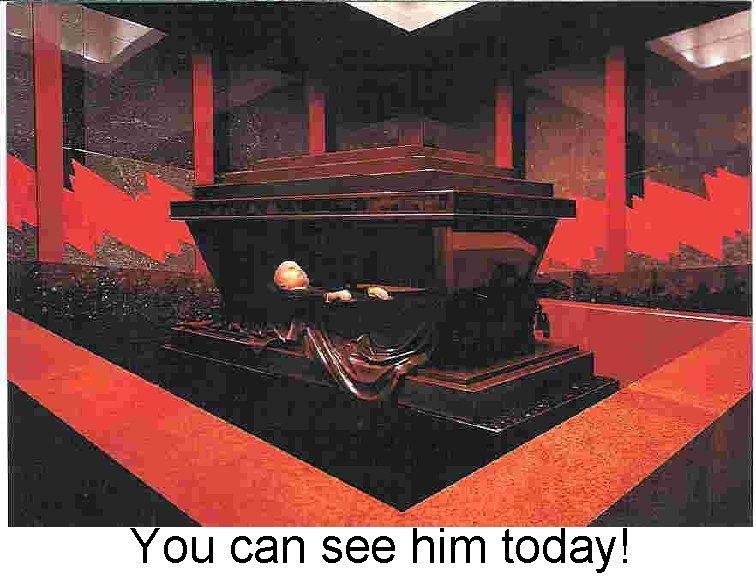
You can see him today!
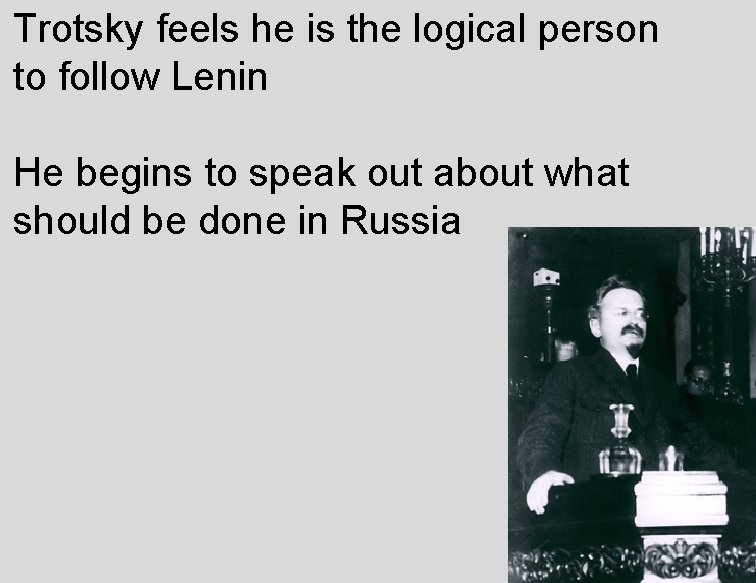
Trotsky feels he is the logical person to follow Lenin He begins to speak out about what should be done in Russia
Stalin had been given the secretariat of the Party and used it to install his supporters in key positions within the Party Allies with two other members of the Politburo
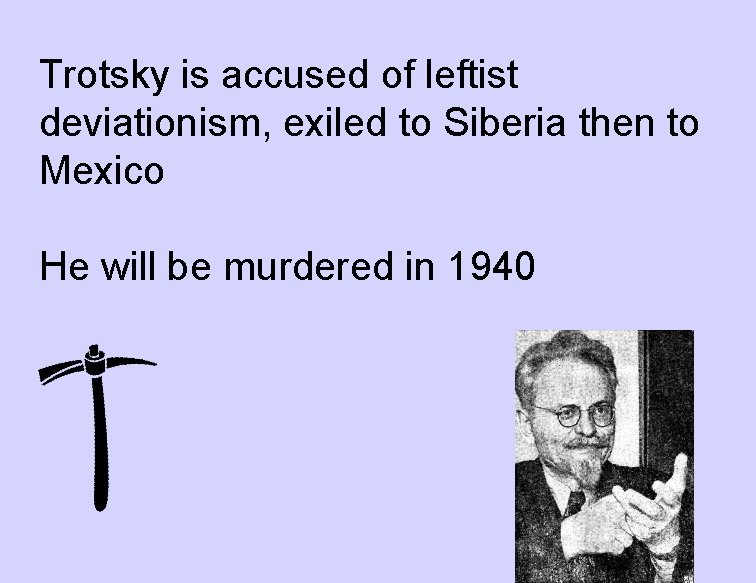
Trotsky is accused of leftist deviationism, exiled to Siberia then to Mexico He will be murdered in 1940
1928 -1 st 5 Year Plan Rapid industrialization and collectivization of agriculture
Industrially, there is a command economy with the government setting quotas for production Agriculturally, the land was put into collective farms Those who resisted were eliminated
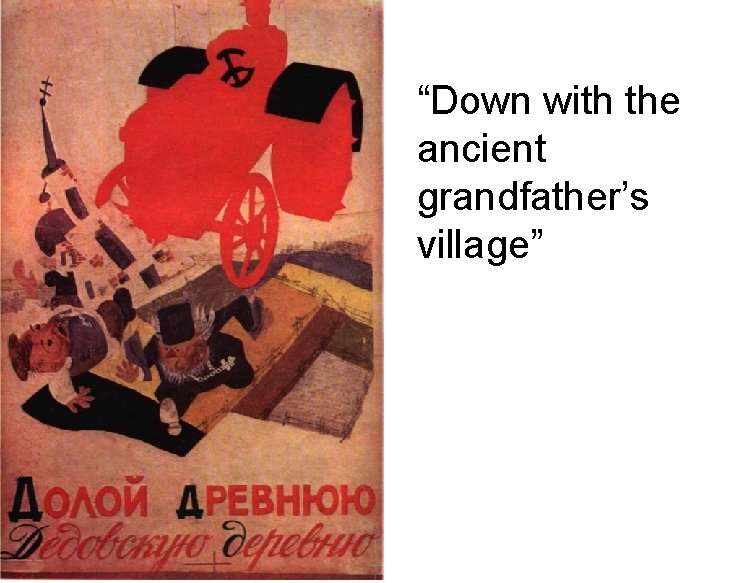
“Down with the ancient grandfather’s village”
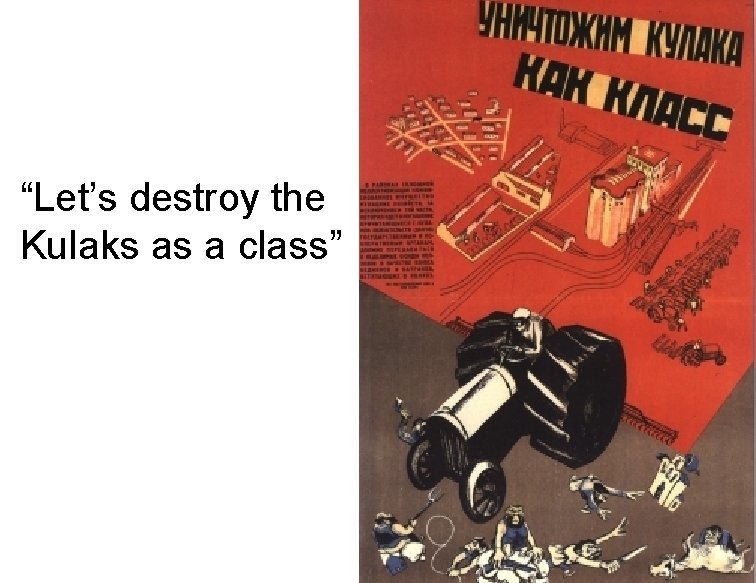
“Let’s destroy the Kulaks as a class”
Many farmers killed their livestock rather than have it taken away by the state Quotas were set for farms with a fixed amount of crops taken to feed the factory workers and exported to pay for machinery purchased from the West
One of the results is wide spread famine
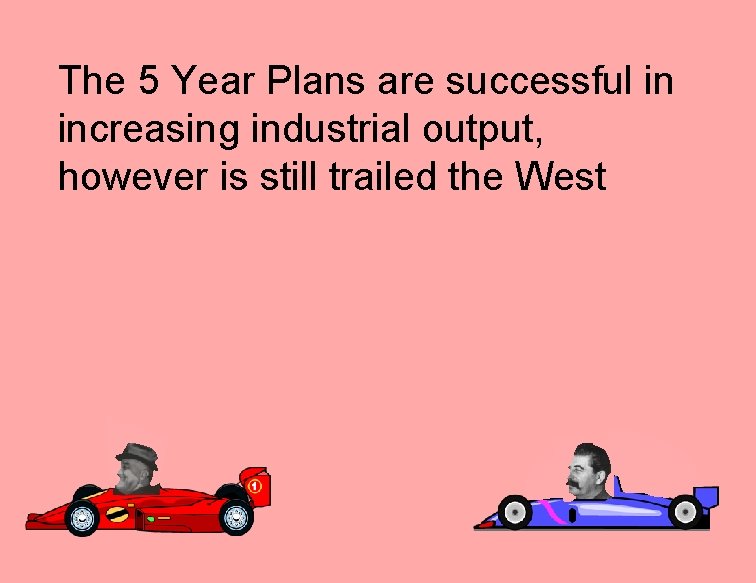
The 5 Year Plans are successful in increasing industrial output, however is still trailed the West
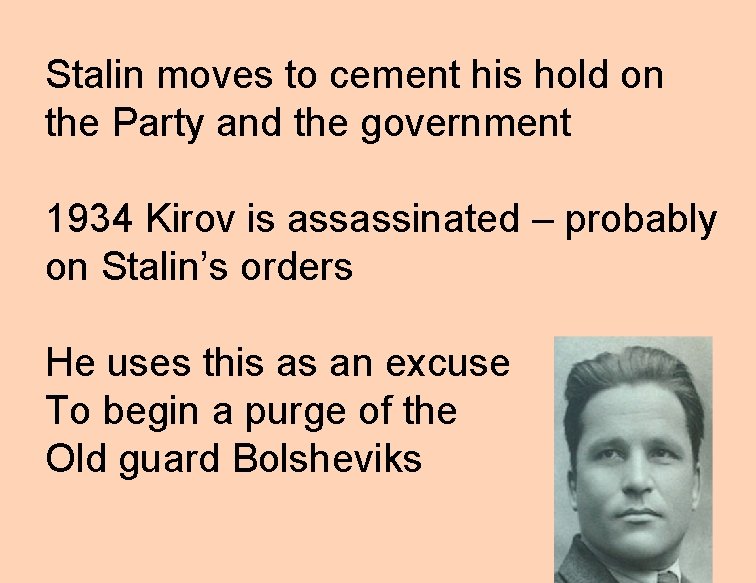
Stalin moves to cement his hold on the Party and the government 1934 Kirov is assassinated – probably on Stalin’s orders He uses this as an excuse To begin a purge of the Old guard Bolsheviks
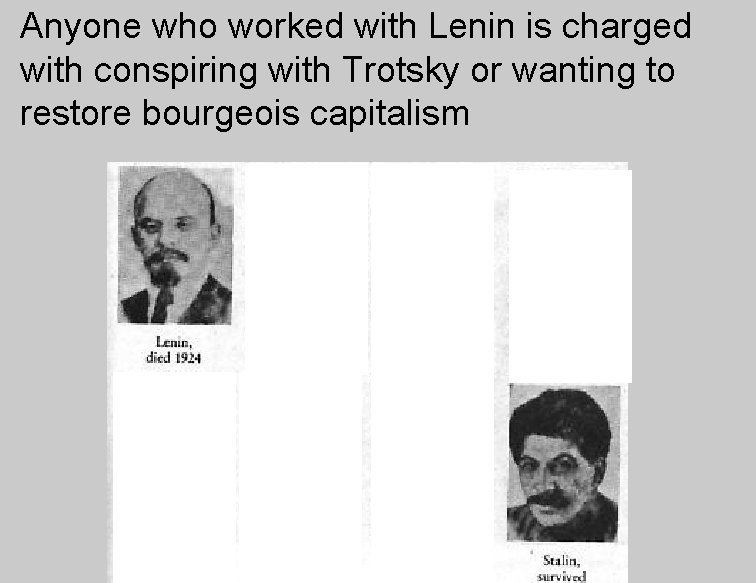
Anyone who worked with Lenin is charged with conspiring with Trotsky or wanting to restore bourgeois capitalism
Stalin replaced them with his people who knew only Stalin’s rule and not the period of Lenin
After he eliminates any political rivals, Stain purges the officer corps 50 of 57 Corps Commanders 154 of 186 Divisional Commanders 16 of 16 army commissars
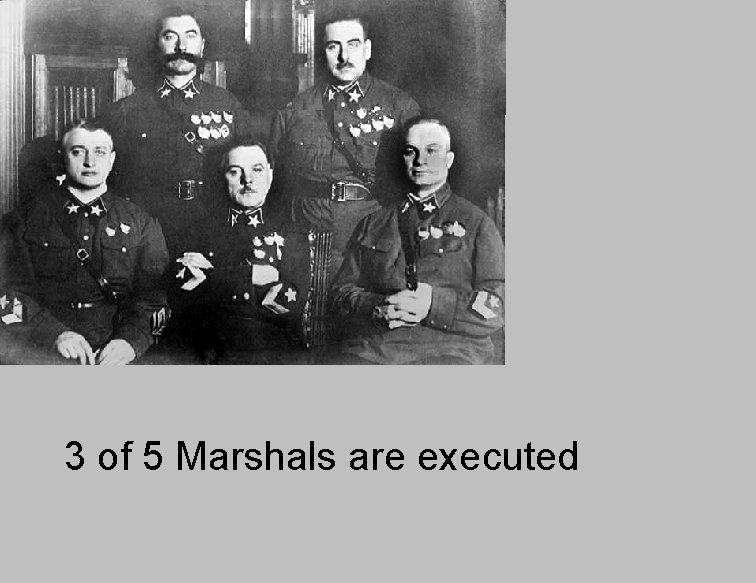
3 of 5 Marshals are executed
KGB records show that 3, 778, 334 were tried for crimes against the state and 786, 098 were executed The rest were sent to Gulags where an unknown number died
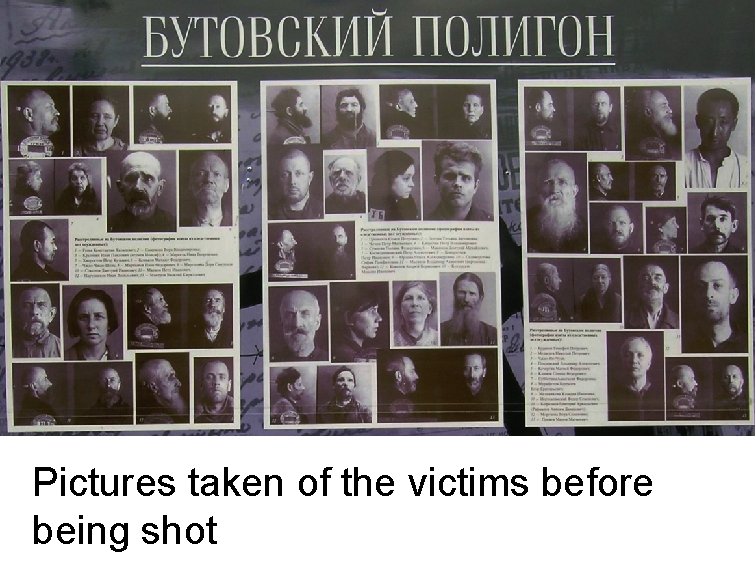
Pictures taken of the victims before being shot
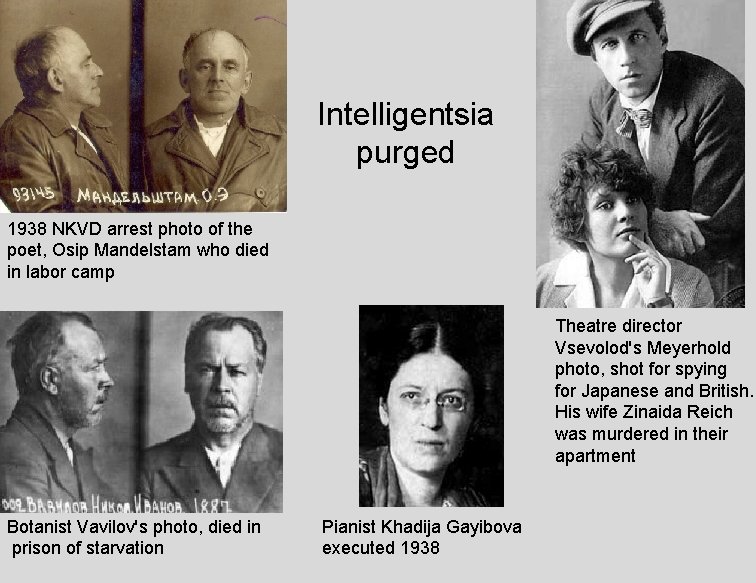
Intelligentsia purged 1938 NKVD arrest photo of the poet, Osip Mandelstam who died in labor camp Theatre director Vsevolod's Meyerhold photo, shot for spying for Japanese and British. His wife Zinaida Reich was murdered in their apartment Botanist Vavilov's photo, died in prison of starvation Pianist Khadija Gayibova executed 1938
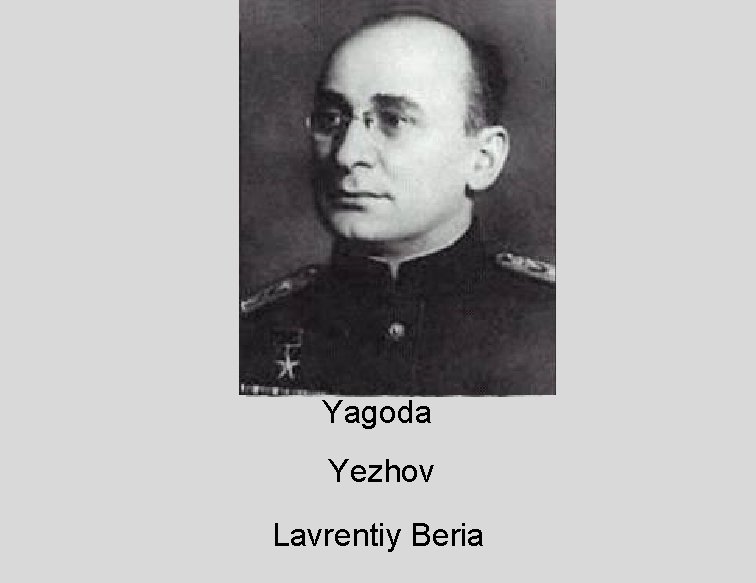
Yagoda Yezhov Lavrentiy Beria
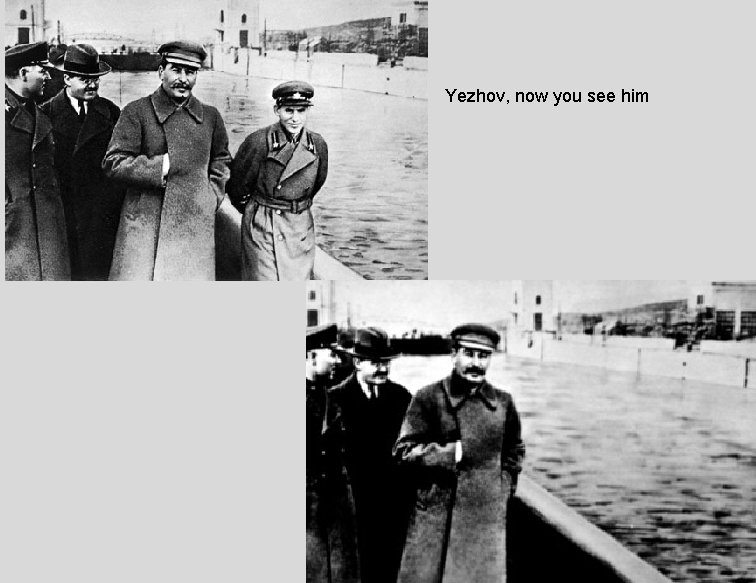
Yezhov, now you see him
- Slides: 64