
Chapter 18 Volcanoes 18 1 Volcanoes Zones of

- Slides: 17
Chapter 18 - Volcanoes
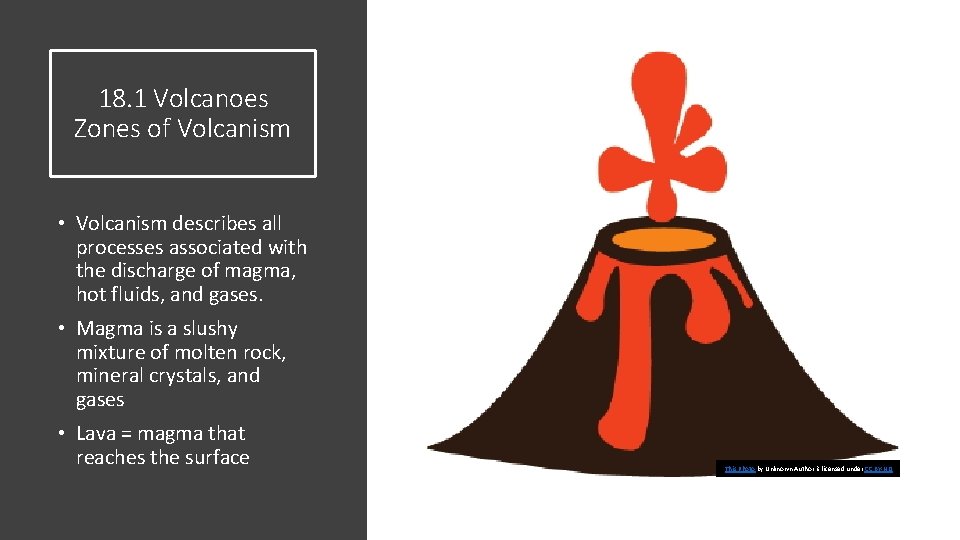
18. 1 Volcanoes Zones of Volcanism • Volcanism describes all processes associated with the discharge of magma, hot fluids, and gases. • Magma is a slushy mixture of molten rock, mineral crystals, and gases • Lava = magma that reaches the surface This Photo by Unknown Author is licensed under CC BY-ND
Distribution of volcanoes is not random Volcanoes Most form at Convergent and Divergent Plate Boundaries
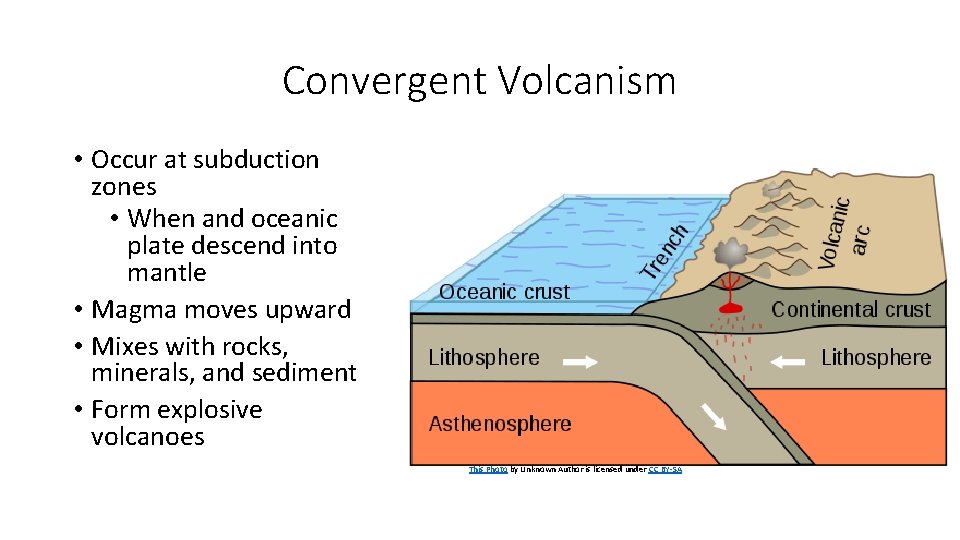
Convergent Volcanism • Occur at subduction zones • When and oceanic plate descend into mantle • Magma moves upward • Mixes with rocks, minerals, and sediment • Form explosive volcanoes This Photo by Unknown Author is licensed under CC BY-SA
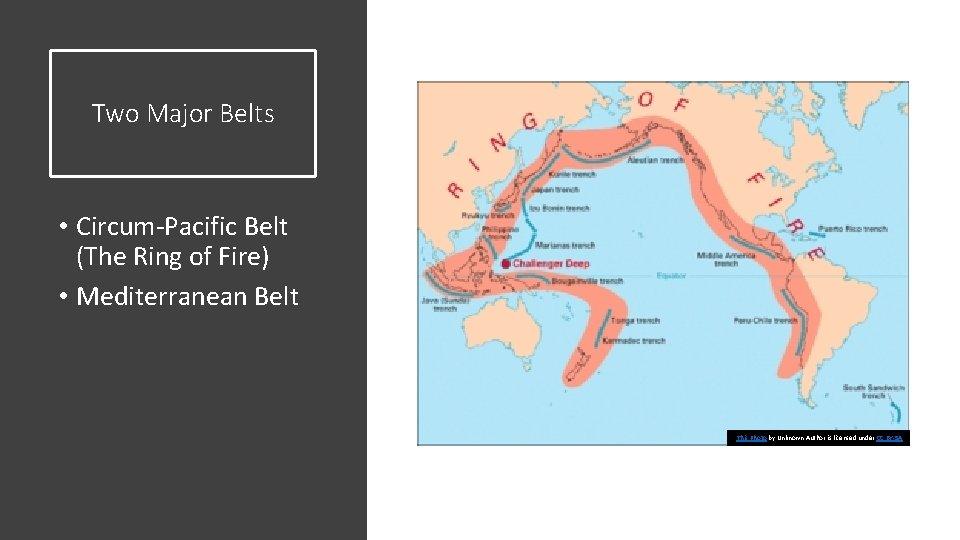
Two Major Belts • Circum-Pacific Belt (The Ring of Fire) • Mediterranean Belt This Photo by Unknown Author is licensed under CC BY-SA
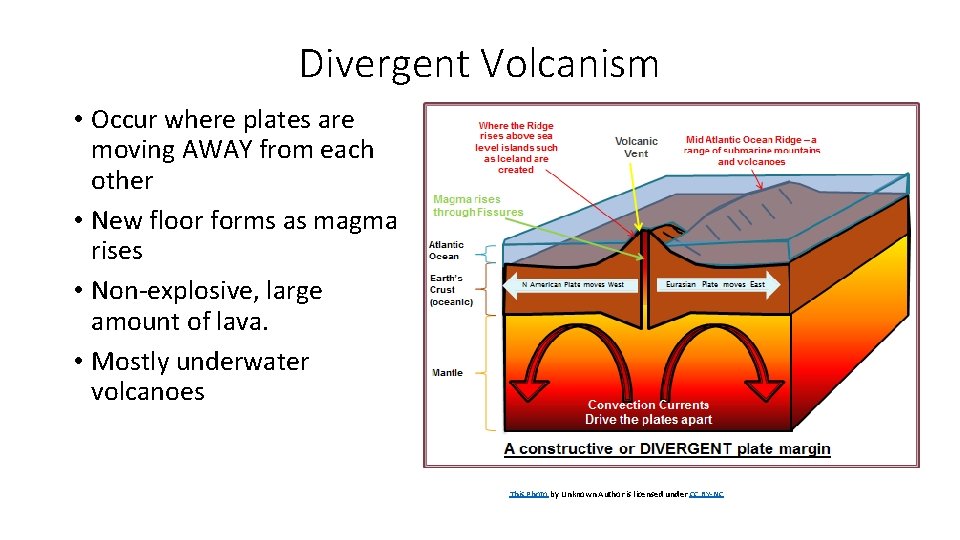
Divergent Volcanism • Occur where plates are moving AWAY from each other • New floor forms as magma rises • Non-explosive, large amount of lava. • Mostly underwater volcanoes This Photo by Unknown Author is licensed under CC BY-NC
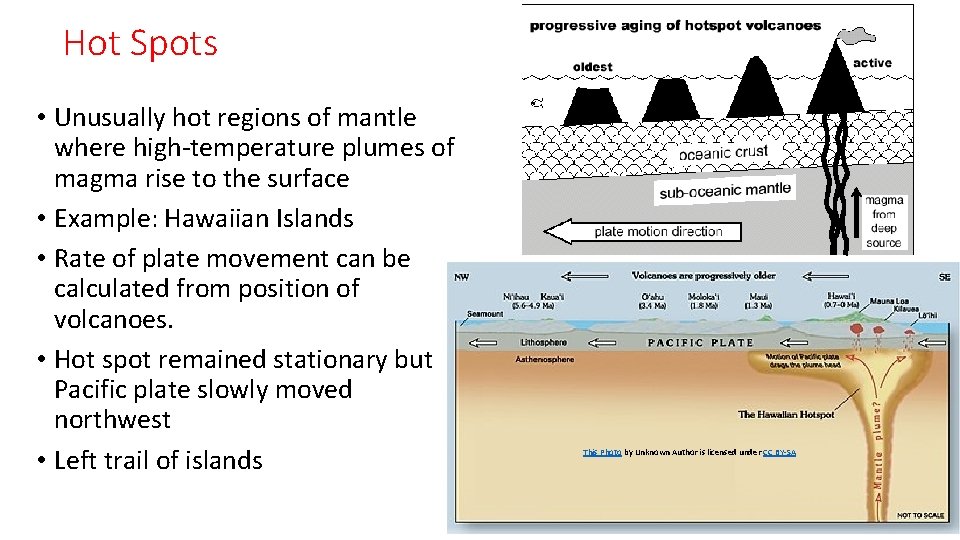
Hot Spots • Unusually hot regions of mantle where high-temperature plumes of magma rise to the surface • Example: Hawaiian Islands • Rate of plate movement can be calculated from position of volcanoes. • Hot spot remained stationary but Pacific plate slowly moved northwest • Left trail of islands This Photo by Unknown Author is licensed under CC BY-SA This Photo by Unknown Author is licensed under CC BY
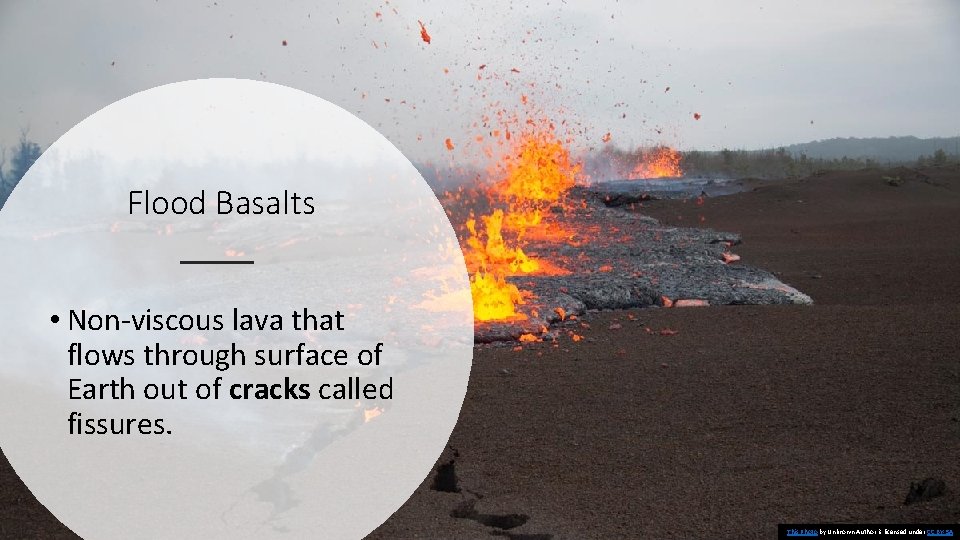
Flood Basalts • Non-viscous lava that flows through surface of Earth out of cracks called fissures. This Photo by Unknown Author is licensed under CC BY-SA
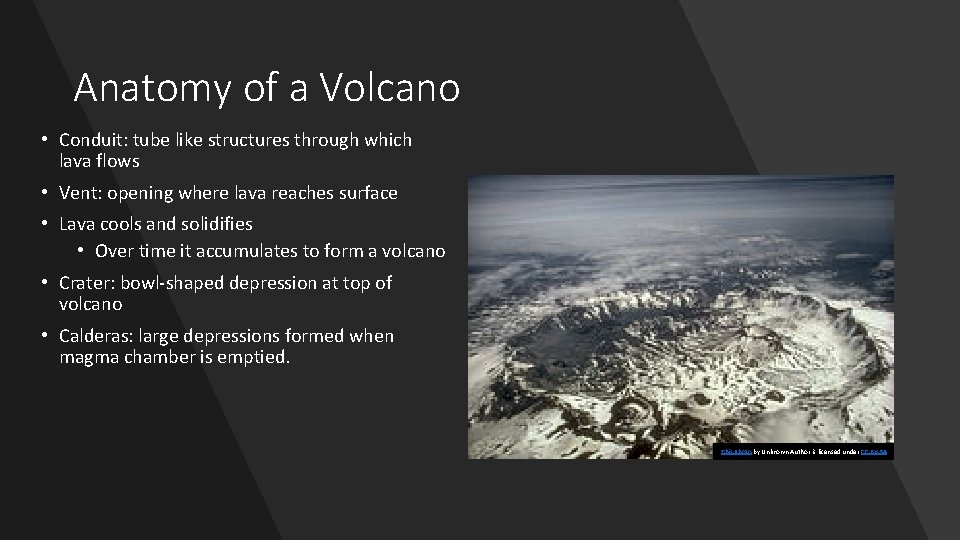
Anatomy of a Volcano • Conduit: tube like structures through which lava flows • Vent: opening where lava reaches surface • Lava cools and solidifies • Over time it accumulates to form a volcano • Crater: bowl-shaped depression at top of volcano • Calderas: large depressions formed when magma chamber is emptied. This Photo by Unknown Author is licensed under CC BY-SA
Worksheet!
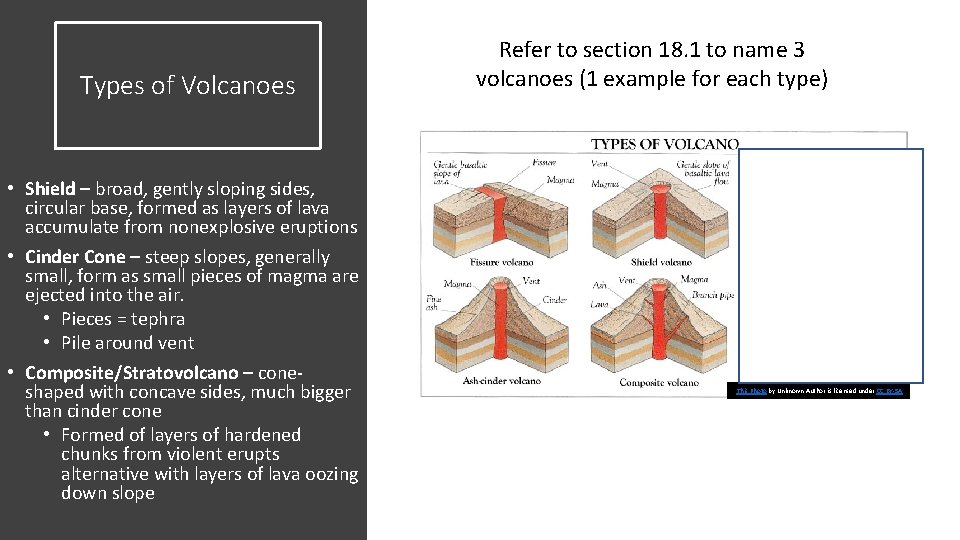
Types of Volcanoes • Shield – broad, gently sloping sides, circular base, formed as layers of lava accumulate from nonexplosive eruptions • Cinder Cone – steep slopes, generally small, form as small pieces of magma are ejected into the air. • Pieces = tephra • Pile around vent • Composite/Stratovolcano – coneshaped with concave sides, much bigger than cinder cone • Formed of layers of hardened chunks from violent erupts alternative with layers of lava oozing down slope Refer to section 18. 1 to name 3 volcanoes (1 example for each type) This Photo by Unknown Author is licensed under CC BY-SA
Temperature, pressure, and water content affect magma formation 18. 2 Eruptions Making Magma composition determines explosivity • As the amount of gas increases, so does explosivity • Water vapor and carbon dioxide • Gases can escape easier from fluid-like magma (low viscosity) making it less violent • As viscosity (resistance to flow) increases, explosivity decreases. • High silica content = thick and sticky = viscous which leads to explosive eruptions • Low silica content = runny and thin (warm syrup) = low viscosity
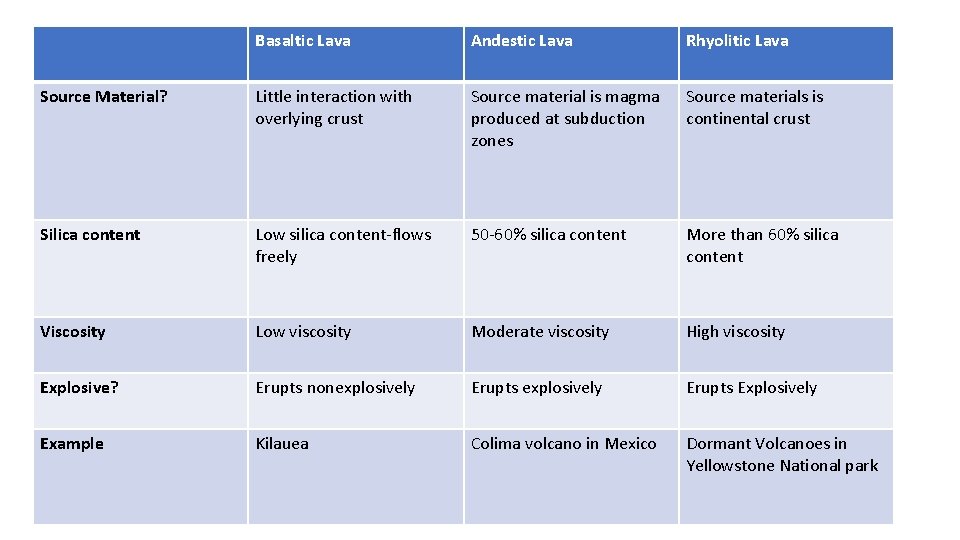
Basaltic: quiet eruptions (least silica); more fluid Types of Magma – page 510 Andesitic: middle level (intermediate eruptions – middle amount of silica) Rhyolitic: very explosive (most silica)
Basaltic Lava Andestic Lava Rhyolitic Lava Source Material? Little interaction with overlying crust Source material is magma produced at subduction zones Source materials is continental crust Silica content Low silica content-flows freely 50 -60% silica content More than 60% silica content Viscosity Low viscosity Moderate viscosity High viscosity Explosive? Erupts nonexplosively Erupts Explosively Example Kilauea Colima volcano in Mexico Dormant Volcanoes in Yellowstone National park
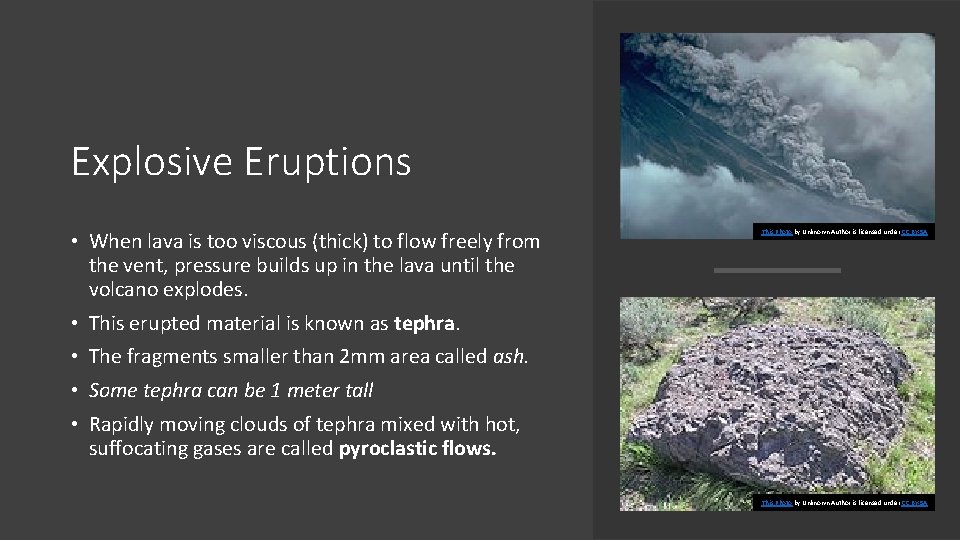
Explosive Eruptions • When lava is too viscous (thick) to flow freely from the vent, pressure builds up in the lava until the volcano explodes. This Photo by Unknown Author is licensed under CC BY-SA • This erupted material is known as tephra. • The fragments smaller than 2 mm area called ash. • Some tephra can be 1 meter tall • Rapidly moving clouds of tephra mixed with hot, suffocating gases are called pyroclastic flows. This Photo by Unknown Author is licensed under CC BY-SA
18. 3 Intrusive Activity Plutons • Most Volcanism is beneath Earth’s surface • Plutons are intrusive igneous structures that result from the cooling and hardening of magma beneath the surface of Earth. • Classified according to size, shape, and relationship to surrounding rock layers. • The largest plutons are batholiths. They are irregularly shaped masses of igneous rocks. ~100 km 2 • Irregularly shaped plutons that are similar to batholiths, but smaller are called stocks. • A laccolith is a lens-shaped pluton with a round top and flat bottom. Relatively small compared to batholiths and stocks; around 16 km wide. • A sill forms when magma intrudes parallel to layers of rock. • Unlike a sill, a dike is a pluton that cuts through existing rocks, instead of being parallel. Range in size from a few centimeters to several meters wide.
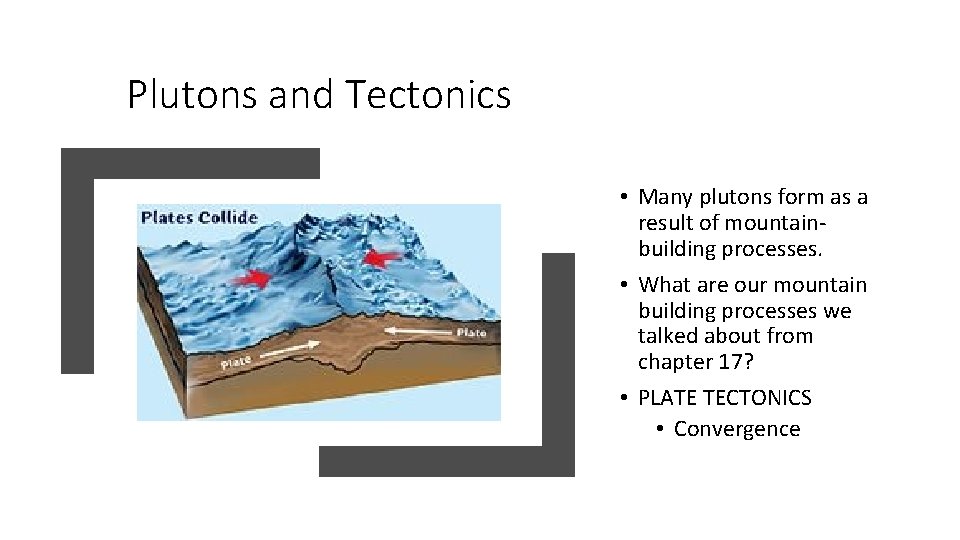
Plutons and Tectonics • Many plutons form as a result of mountainbuilding processes. • What are our mountain building processes we talked about from chapter 17? • PLATE TECTONICS • Convergence