
Chapter 18 The Evolution of Invertebrate Diversity Power
Chapter 18 The Evolution of Invertebrate Diversity Power. Point Lectures Campbell Biology: Concepts & Connections, Eighth Edition REECE • TAYLOR • SIMON • DICKEY • HOGAN © 2015 Pearson Education, Inc. Lecture by Edward J. Zalisko
Introduction • The vast diversity of insects encompasses a wide variety of • • • shapes and sizes, habitats, diets, mating habits, and other characteristics. • With more than a million species—nearly threequarters of all animal species—insects are exemplars of animal diversity. © 2015 Pearson Education, Inc.
ANIMAL EVOLUTION AND DIVERSITY © 2015 Pearson Education, Inc.
18. 1 What is an animal? • Animals • are eukaryotes, • are multicellular heterotrophs, and • have cells that lack cell walls. • Animals also use ingestion, the eating of food. • Fungi absorb nutrients after digesting food outside their body. © 2015 Pearson Education, Inc.
18. 1 What is an animal? • Most adult animals are diploid and reproduce sexually. • The eggs and sperm • are produced by meiosis, • are the only haploid cells, and • fuse during fertilization to form a zygote. • The zygote divides by mitosis to form a hollow ball of cells called a blastula. © 2015 Pearson Education, Inc.
18. 1 What is an animal? • One side of the blastula folds in and cells become rearranged to form a gastrula that establishes three embryonic layers. • Endoderm forms a lining of the future digestive tract. • Ectoderm forms an outer layer that will give rise to the skin and nervous system. • Mesoderm forms a middle layer that will give rise to muscles and most internal organs. © 2015 Pearson Education, Inc.
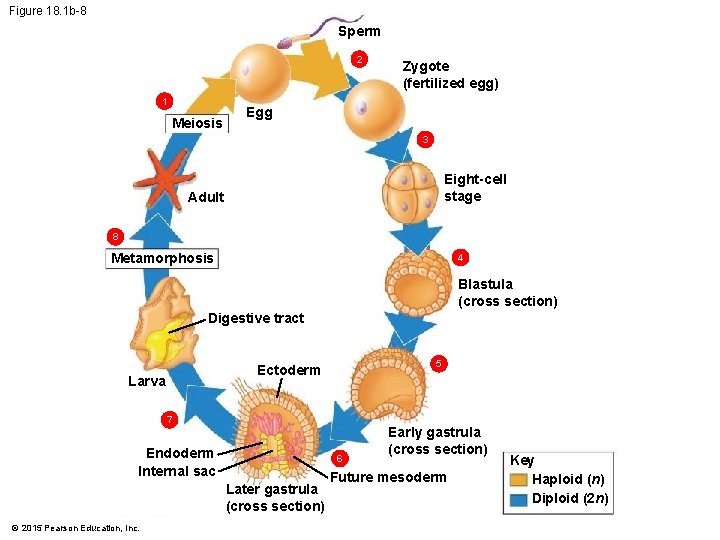
Figure 18. 1 b-8 Sperm 2 1 Meiosis Zygote (fertilized egg) Egg 3 Eight-cell stage Adult 8 Metamorphosis 4 Blastula (cross section) Digestive tract 5 Ectoderm Larva 7 Endoderm Internal sac 6 Later gastrula (cross section) © 2015 Pearson Education, Inc. Early gastrula (cross section) Future mesoderm Key Haploid (n) Diploid (2 n)
18. 1 What is an animal? • After the gastrula stage, many animals develop directly into adults. • Other animals, such as the sea star, develop into one or more larval stages. • A larva is an immature individual that looks different from the adult animal. • A larva undergoes a major change in body form, called metamorphosis, and becomes a reproductively mature adult. • Clusters of master control homeotic genes control transformation of the zygote into an adult animal. © 2015 Pearson Education, Inc.
18. 2 Animal diversification began more than half a billion years ago • The lineage that gave rise to animals is thought to have diverged from a flagellated unikont ancestor more than 1 billion years ago. • The oldest generally accepted animal fossils that have been found are 575– 550 million years old. © 2015 Pearson Education, Inc.
18. 2 Animal diversification began more than half a billion years ago • Animal diversification appears to have accelerated rapidly from 535 to 525 million years ago, during the Cambrian period, known as the Cambrian explosion. • The most celebrated source of Cambrian fossils is the Burgess Shale, containing a cornucopia of perfectly preserved animal fossils. © 2015 Pearson Education, Inc.
18. 2 Animal diversification began more than half a billion years ago • The Cambrian explosion may have been caused by • increasingly complex predator-prey relationships or • an increase in atmospheric oxygen. • Much of the diversity in body form among the animal phyla is associated with variations in where and when homeotic genes are expressed within developing embryos. © 2015 Pearson Education, Inc.
18. 2 Animal diversification began more than half a billion years ago • Of the 35 or so animal phyla (systematists disagree on the precise number), only one phylum includes vertebrates, animals with a backbone. • Roughly 96% of animals are invertebrates, animals that lack a backbone. © 2015 Pearson Education, Inc.
18. 3 VISUALIZING THE CONCEPT: Animals can be characterized by basic features of their “body plan” • Animal body plans vary in • • • symmetry, presence of true tissues, number of embryonic layers, presence of a body cavity, and details of their embryonic development. © 2015 Pearson Education, Inc.
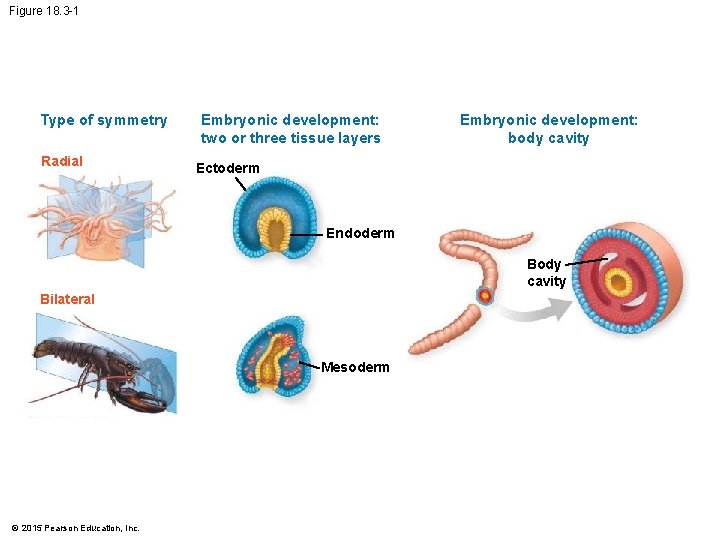
Figure 18. 3 -1 Type of symmetry Radial Embryonic development: two or three tissue layers Embryonic development: body cavity Ectoderm Endoderm Body cavity Bilateral Mesoderm © 2015 Pearson Education, Inc.
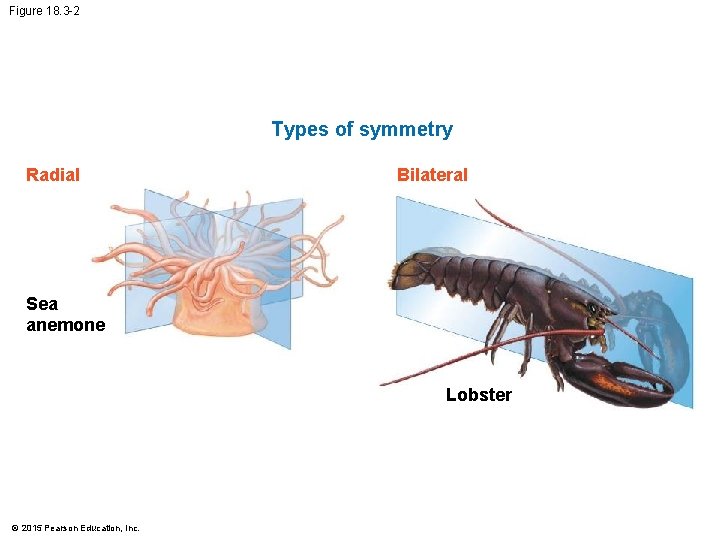
Figure 18. 3 -2 Types of symmetry Radial Bilateral Sea anemone Lobster © 2015 Pearson Education, Inc.
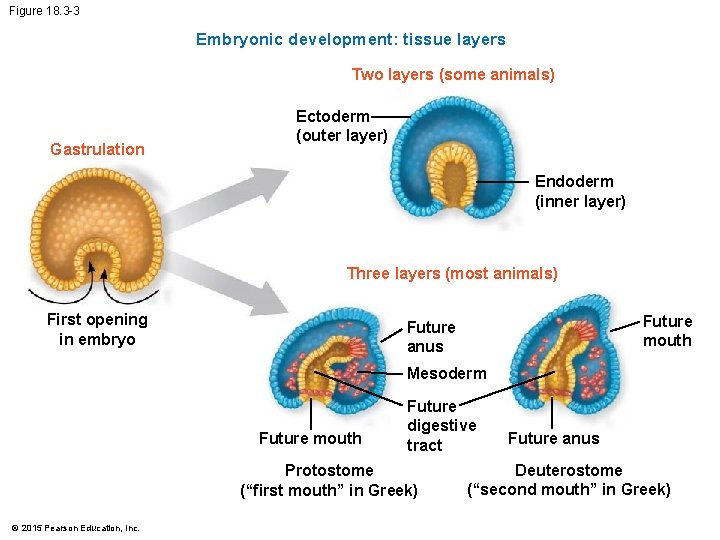
Figure 18. 3 -3 Embryonic development: tissue layers Two layers (some animals) Gastrulation Ectoderm (outer layer) Endoderm (inner layer) Three layers (most animals) First opening in embryo Future mouth Future anus Mesoderm Future mouth Future digestive tract Protostome (“first mouth” in Greek) © 2015 Pearson Education, Inc. Future anus Deuterostome (“second mouth” in Greek)
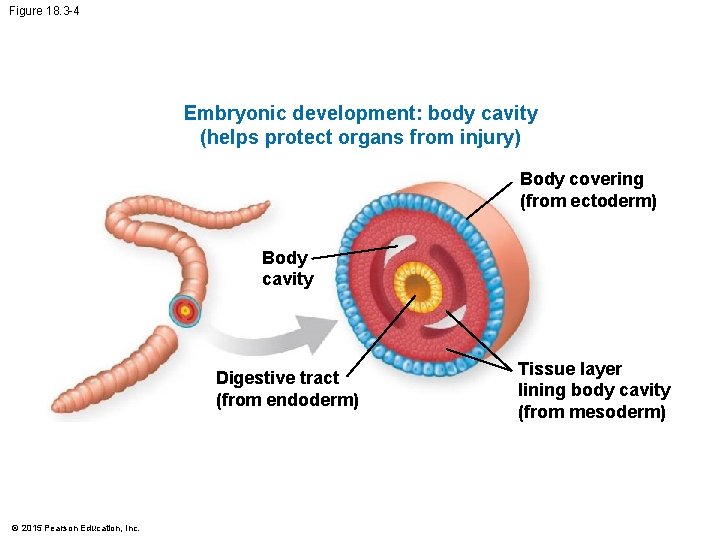
Figure 18. 3 -4 Embryonic development: body cavity (helps protect organs from injury) Body covering (from ectoderm) Body cavity Digestive tract (from endoderm) © 2015 Pearson Education, Inc. Tissue layer lining body cavity (from mesoderm)
18. 4 Body plans and molecular comparisons of animals can be used to build phylogenetic trees • Biologists make hypotheses about the phylogeny of animal groups using evidence from • body plan characteristics, • the fossil record, and • most recently, molecular data, chiefly DNA sequences. © 2015 Pearson Education, Inc.
18. 4 Body plans and molecular comparisons of animals can be used to build phylogenetic trees • One phylogenetic tree recently revised to reflect new information distinguishes between • sponges (without true tissues) and eumetazoans (animals with true tissues), • animals with two tissue layers and radial symmetry and animals with three tissue layers and bilateral symmetry (bilaterians), • protostomes and deuterostomes, and • ecdysozoans and lophotrochozoans. © 2015 Pearson Education, Inc.
INVERTEBRATE DIVERSITY © 2015 Pearson Education, Inc.
18. 5 Sponges have a relatively simple, porous body • Sponges (phylum Porifera) • • are simple animals, do not have true tissues, usually lack body symmetry, and are usually marine, although some are found in fresh water. • Water enters through pores in the body wall into a central cavity and then flows out through a larger opening. © 2015 Pearson Education, Inc.
18. 5 Sponges have a relatively simple, porous body • The body of a sponge consists of two layers of cells separated by a gelatinous region. • The inner layer of flagellated choanocytes helps to sweep water through the sponge’s body. • Amoebocytes wander through the middle body region and produce skeletal fibers composed of • flexible protein and • mineralized particles called spicules. © 2015 Pearson Education, Inc.
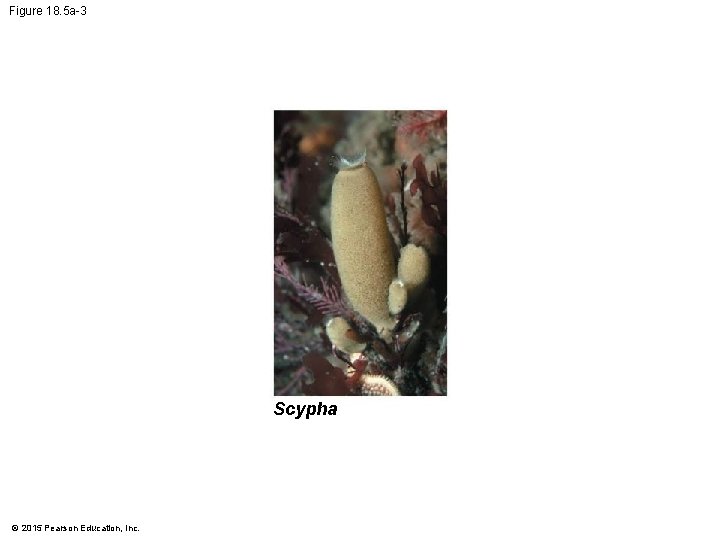
Figure 18. 5 a-3 Scypha © 2015 Pearson Education, Inc.
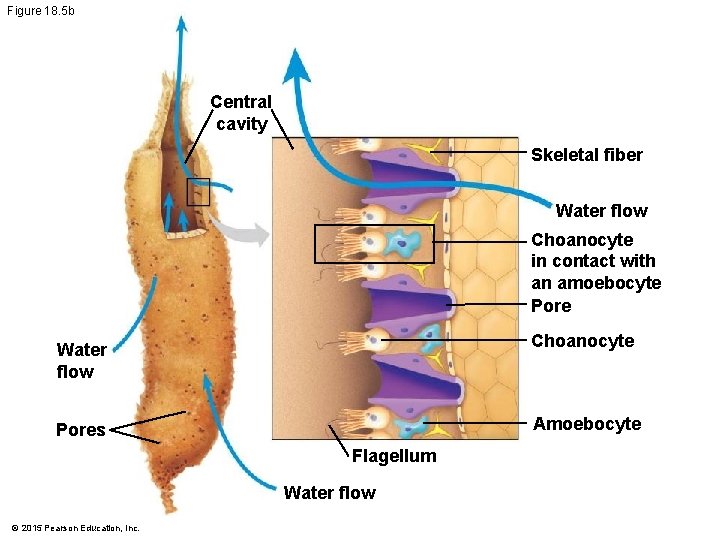
Figure 18. 5 b Central cavity Skeletal fiber Water flow Choanocyte in contact with an amoebocyte Pore Choanocyte Water flow Amoebocyte Pores Flagellum Water flow © 2015 Pearson Education, Inc.
18. 5 Sponges have a relatively simple, porous body • Sponges are suspension feeders, filtering food particles from water passed through food-trapping equipment. • To obtain enough food to grow by 100 g, a sponge must filter roughly 1, 000 kg of water. • Choanocytes trap food particles in mucus on the membranous collars that surround their flagella. © 2015 Pearson Education, Inc.
18. 5 Sponges have a relatively simple, porous body • Adult sponges are sessile and cannot escape from predators. • They deter pathogens, parasites, and predators by producing defensive toxins and antibiotics. Some of these compounds may prove useful to humans as new drugs. • Biologists hypothesize that sponge lineages arose very early from the multicellular organisms that gave rise to the animal kingdom. © 2015 Pearson Education, Inc.
18. 6 Cnidarians are radial animals with tentacles and stinging cells • Cnidarians (phylum Cnidaria) • are characterized by radial symmetry, • have only two tissue layers, • an outer epidermis, • an inner cell layer lining the digestive cavity, and • have a jelly-filled middle region that may contain scattered amoeboid cells. © 2015 Pearson Education, Inc.
18. 6 Cnidarians are radial animals with tentacles and stinging cells • Cnidarians exhibit two kinds of radially symmetrical body forms. • The sedentary polyp body is cylindrical with tentacles projecting from one end, as seen in hydras and sea anemones. • The more mobile medusa form is exemplified by a marine jelly. © 2015 Pearson Education, Inc.
18. 6 Cnidarians are radial animals with tentacles and stinging cells • Cnidarians are carnivores that use their tentacles to capture prey and to push prey into their mouths. • The mouth leads to the gastrovascular cavity, which functions in digestion, in circulation, and as a hydrostatic skeleton. • Cnidocytes are unique stinging cells that capture prey and function in defense. © 2015 Pearson Education, Inc.
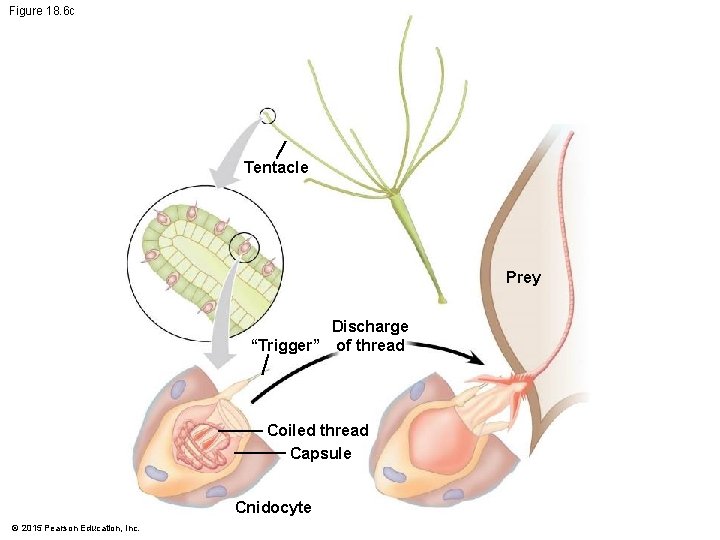
Figure 18. 6 c Tentacle Prey Discharge “Trigger” of thread Coiled thread Capsule Cnidocyte © 2015 Pearson Education, Inc.
18. 7 Flatworms are the simplest bilateral animals • Flatworms (phylum Platyhelminthes) • are the simplest bilaterians, • have three tissue layers, but • lack a body cavity. • Flatworms live in marine, freshwater, and damp terrestrial habitats. • Some are parasitic, and others are free-living. © 2015 Pearson Education, Inc.
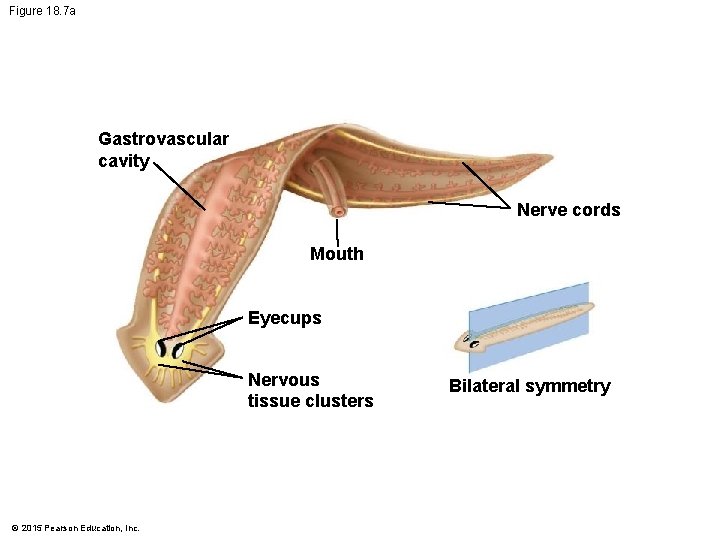
Figure 18. 7 a Gastrovascular cavity Nerve cords Mouth Eyecups Nervous tissue clusters © 2015 Pearson Education, Inc. Bilateral symmetry
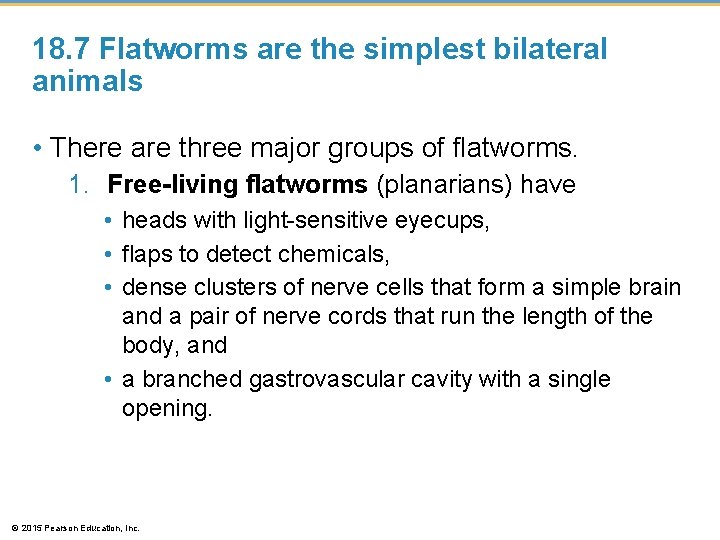
18. 7 Flatworms are the simplest bilateral animals • There are three major groups of flatworms. 1. Free-living flatworms (planarians) have • heads with light-sensitive eyecups, • flaps to detect chemicals, • dense clusters of nerve cells that form a simple brain and a pair of nerve cords that run the length of the body, and • a branched gastrovascular cavity with a single opening. © 2015 Pearson Education, Inc.
18. 7 Flatworms are the simplest bilateral animals 2. Flukes are parasitic flatworms with complex life cycles; many have suckers to attach to their hosts. 3. Tapeworms • • are parasitic, inhabit the digestive tracts of vertebrates, consist of a ribbonlike body with repeated units, have an anterior scolex armed with hooks and suckers that grasp the host, • have no mouth, • simply absorb nutrients across their body surface, and • have units at the posterior end that are full of ripe eggs that pass out of the host’s body. © 2015 Pearson Education, Inc.
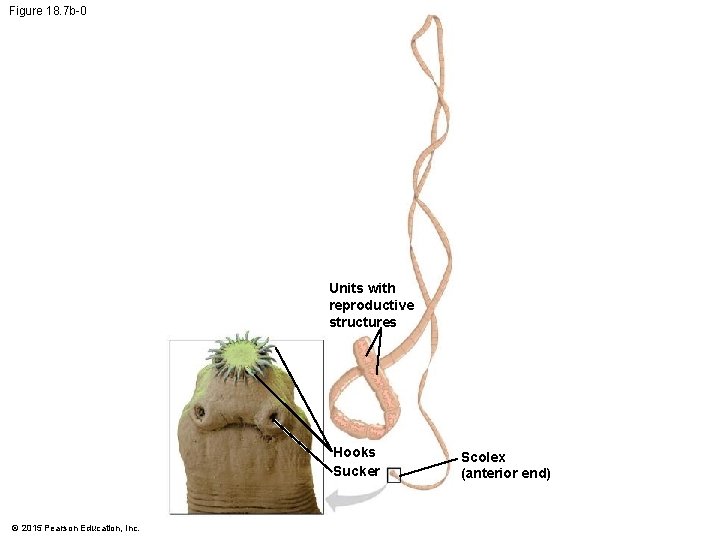
Figure 18. 7 b-0 Units with reproductive structures Hooks Sucker © 2015 Pearson Education, Inc. Scolex (anterior end)
18. 8 Nematodes have a body cavity and a complete digestive tract • Nematodes, or roundworms (phylum Nematoda), are abundant and diverse. • Nematodes have • bilateral symmetry, • three tissue layers, • a nonliving cuticle covering the body that prevents them from drying out, • a fluid-filled body cavity that functions to distribute nutrients, and • a complete digestive tract with a mouth and anus. © 2015 Pearson Education, Inc.
18. 8 Nematodes have a body cavity and a complete digestive tract • Although about 25, 000 species of nematodes have been named, estimates of the total number of species range as high as 500, 000. • Humans are host to at least 50 species of parasitic nematodes. © 2015 Pearson Education, Inc.
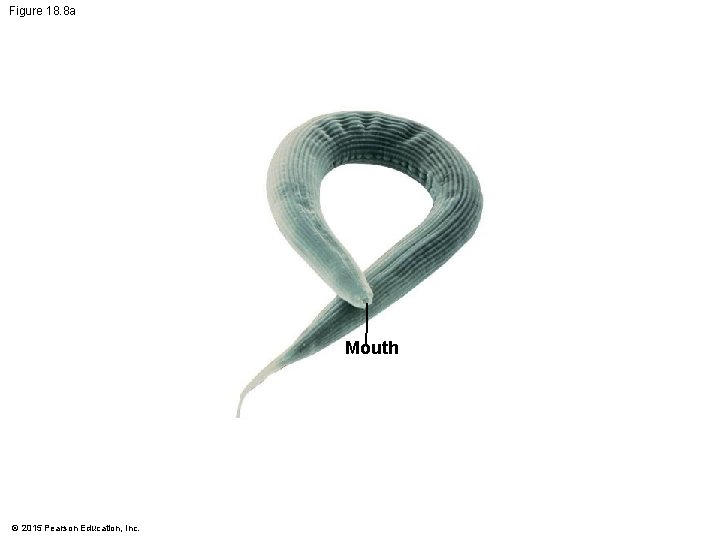
Figure 18. 8 a Mouth © 2015 Pearson Education, Inc.
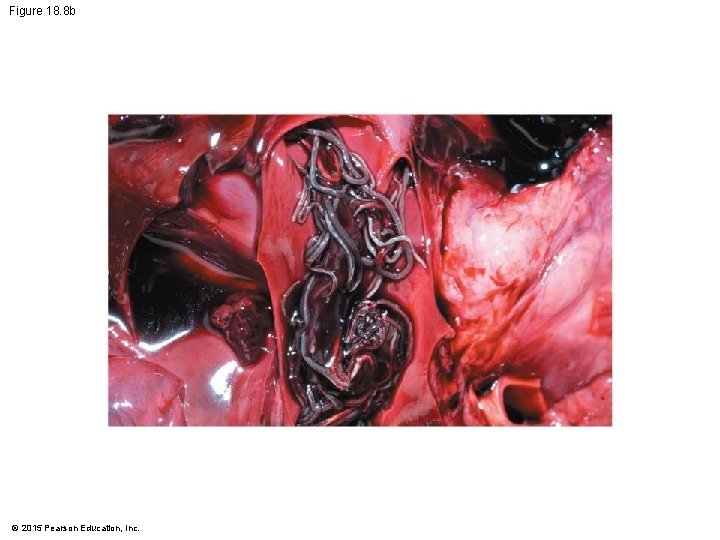
Figure 18. 8 b © 2015 Pearson Education, Inc.
18. 9 Diverse molluscs are variations on a common body plan • Molluscs (phylum Mollusca) have • a muscular foot, which functions in locomotion, • a visceral mass containing most of the internal organs, • a mantle, which may secrete a shell that encloses the visceral mass, and • a circulatory system that pumps blood and distributes nutrients and oxygen throughout the body. • Many molluscs feed with a rasping radula, used to scrape up food. © 2015 Pearson Education, Inc.
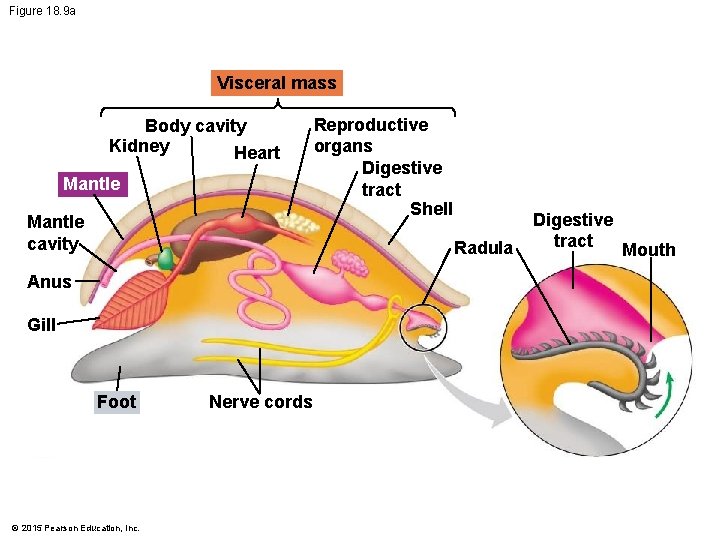
Figure 18. 9 a Visceral mass Body cavity Kidney Heart Mantle cavity Reproductive organs Digestive tract Shell Radula Anus Gill Foot © 2015 Pearson Education, Inc. Nerve cords Digestive tract Mouth
18. 9 Diverse molluscs are variations on a common body plan • Most molluscs have separate sexes, with reproductive organs located in the visceral mass. • The life cycle of many marine molluscs includes a ciliated larva called a trochophore. © 2015 Pearson Education, Inc.
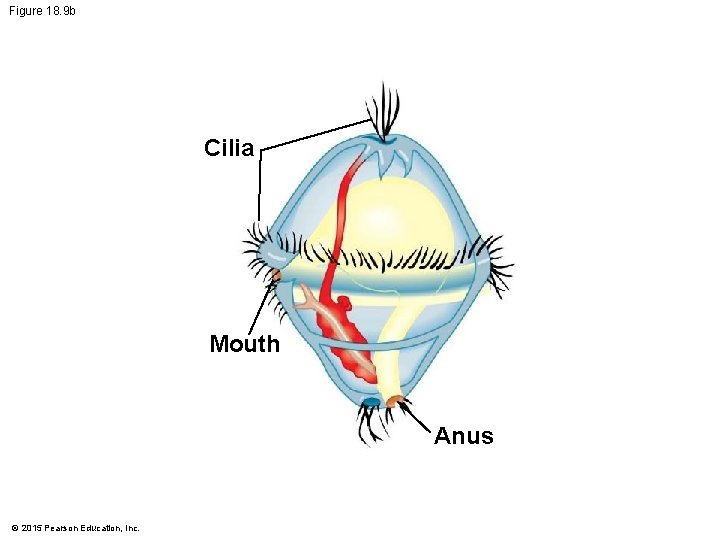
Figure 18. 9 b Cilia Mouth Anus © 2015 Pearson Education, Inc.
18. 9 Diverse molluscs are variations on a common body plan • Gastropods are the largest group of molluscs and include the snails and slugs. Gastropods are • found in fresh water, salt water, and terrestrial environments, • the only molluscs that live on land, using the mantle cavity as a lung, and • often protected by a single, spiral shell. • Slugs have lost their mantle and shell. Sea slugs have long, colorful projections that function as gills. © 2015 Pearson Education, Inc.
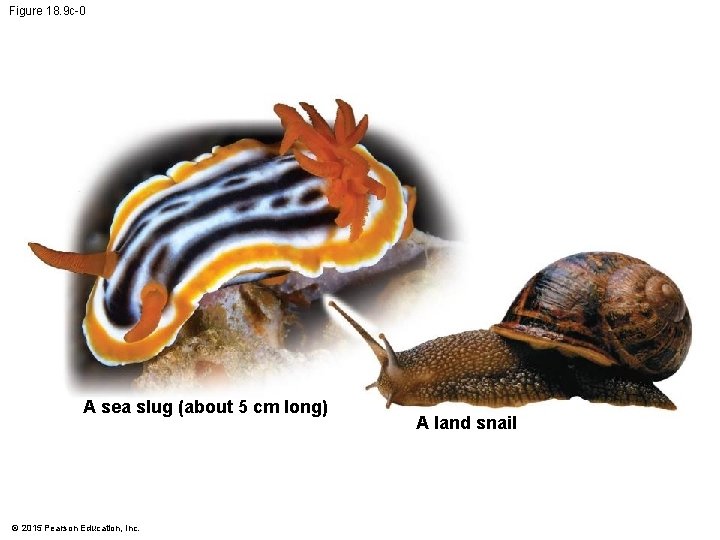
Figure 18. 9 c-0 A sea slug (about 5 cm long) © 2015 Pearson Education, Inc. A land snail
18. 9 Diverse molluscs are variations on a common body plan • Bivalves include clams, oysters, mussels, and scallops. • Bivalves have shells divided into two halves that are hinged together. • Most bivalves are sedentary suspension feeders, attached to the substrate by strong threads. © 2015 Pearson Education, Inc.
18. 9 Diverse molluscs are variations on a common body plan • Cephalopods • include squids, octopuses, and nautiluses, • are fast, agile predators, • have large brains and sophisticated sense organs, including complex image-focusing eyes, and • have a shell that is large in a nautilus, small and internal in a squid, or missing in an octopus. • Squid are fast, streamlined predators that use a muscular siphon for jet propulsion. • The so-called colossal squid, which lives in the ocean depths near Antarctica, is the largest of all invertebrates. © 2015 Pearson Education, Inc.
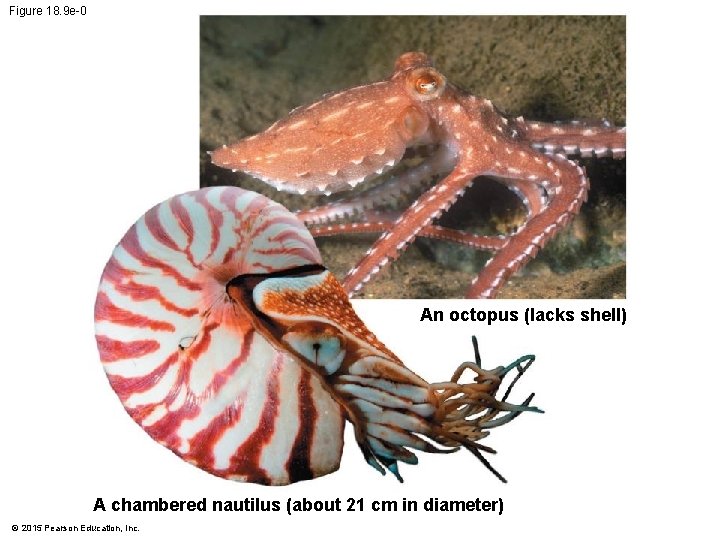
Figure 18. 9 e-0 An octopus (lacks shell) A chambered nautilus (about 21 cm in diameter) © 2015 Pearson Education, Inc.
18. 10 Annelids are segmented worms • Annelids (phylum Annelida) have • segmentation, the subdivision of the body along its length into a series of repeated parts, • a nervous system that includes a simple brain and ventral nerve cord, and • a closed circulatory system in which blood remains enclosed in vessels throughout the body. • Many invertebrates, such as molluscs and arthropods, have an open circulatory system in which blood is pumped through vessels into open body cavities. © 2015 Pearson Education, Inc.
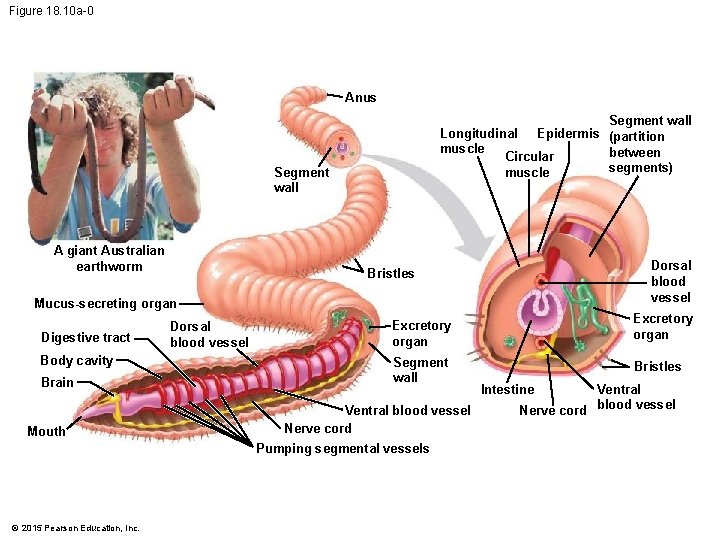
Figure 18. 10 a-0 Anus Segment wall Longitudinal Epidermis (partition muscle between Circular segments) muscle Segment wall A giant Australian earthworm Dorsal blood vessel Bristles Mucus-secreting organ Digestive tract Body cavity Brain Mouth Dorsal blood vessel Segment wall Ventral blood vessel Nerve cord Pumping segmental vessels © 2015 Pearson Education, Inc. Excretory organ Bristles Intestine Ventral Nerve cord blood vessel
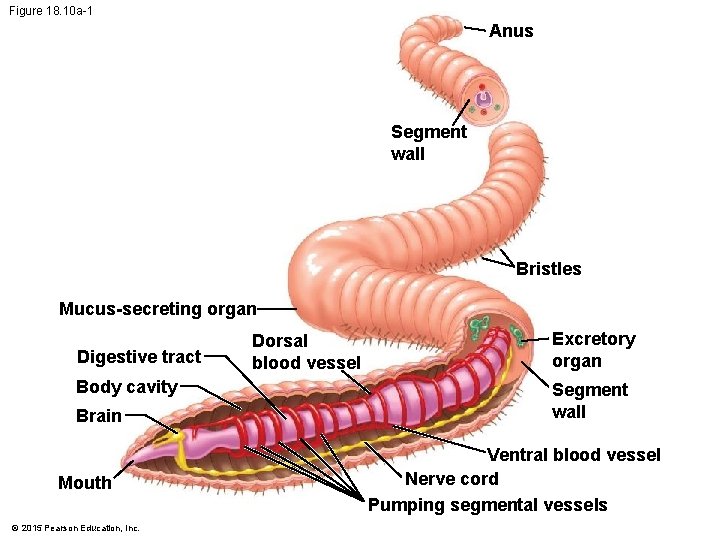
Figure 18. 10 a-1 Anus Segment wall Bristles Mucus-secreting organ Digestive tract Body cavity Brain Mouth © 2015 Pearson Education, Inc. Dorsal blood vessel Excretory organ Segment wall Ventral blood vessel Nerve cord Pumping segmental vessels
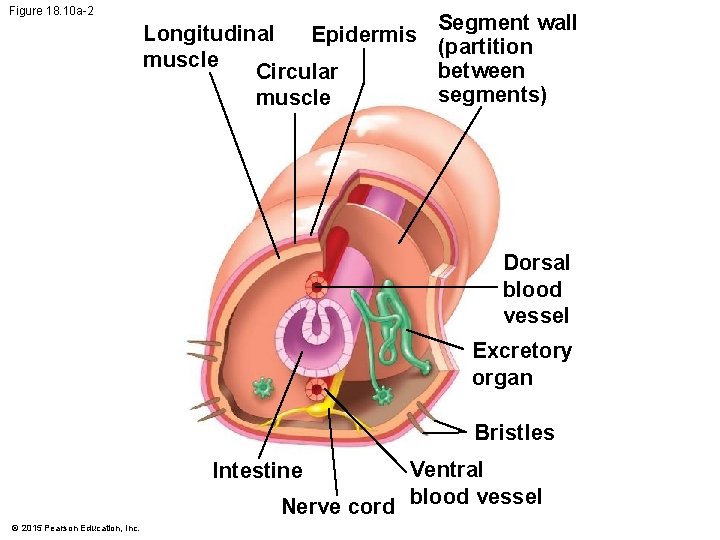
Figure 18. 10 a-2 Longitudinal Epidermis muscle Circular muscle Segment wall (partition between segments) Dorsal blood vessel Excretory organ Bristles Ventral Nerve cord blood vessel Intestine © 2015 Pearson Education, Inc.
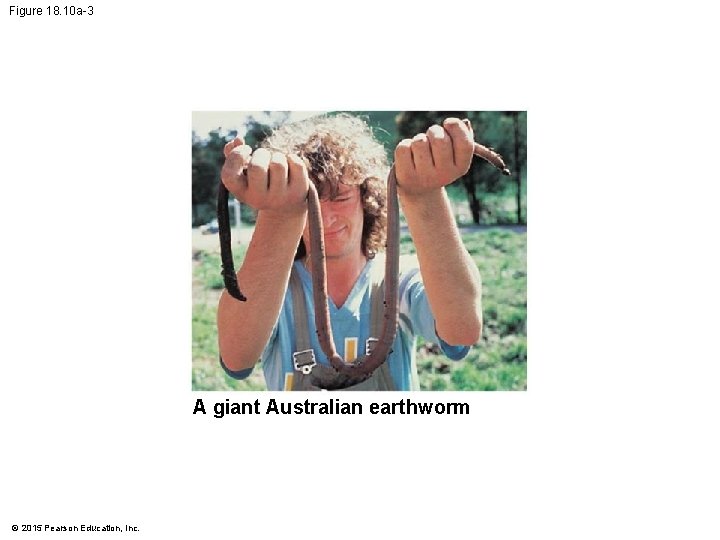
Figure 18. 10 a-3 A giant Australian earthworm © 2015 Pearson Education, Inc.
18. 10 Annelids are segmented worms • Annelids are found in damp soil, the sea, and most freshwater habitats. • The three groups of annelids are • earthworms and their relatives, • polychaetes, and • leeches. • Earthworms ingest soil and extract nutrients, aerating soil and improving its texture. © 2015 Pearson Education, Inc.
18. 10 Annelids are segmented worms • Polychaetes are the largest group of annelids. • Each polychaete segment has a pair of fleshy appendages with stiff bristles or chaetae. • Polychaetes search for prey on the seafloor or live in tubes and filter food particles. © 2015 Pearson Education, Inc.
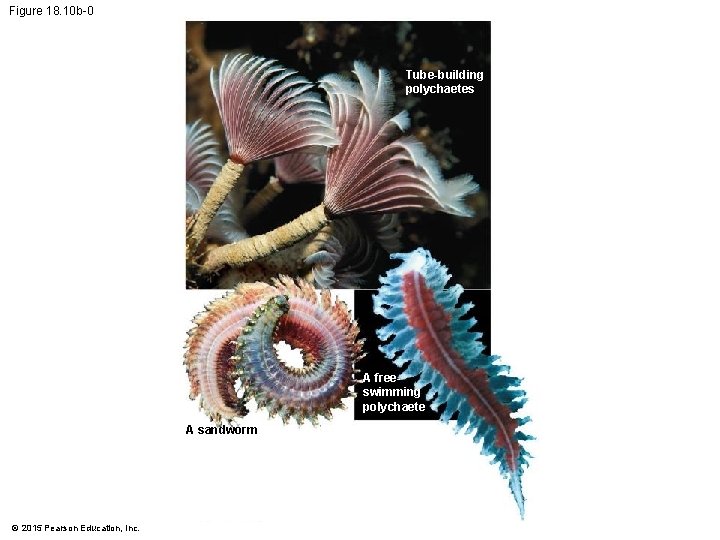
Figure 18. 10 b-0 Tube-building polychaetes A freeswimming polychaete A sandworm © 2015 Pearson Education, Inc.
18. 10 Annelids are segmented worms • Most leeches are free-living carnivores, but some suck blood. Blood-sucking leeches • use razor-like jaws, • secrete an anesthetic and an anticoagulant, and • suck up to 10 times their own weight in blood. © 2015 Pearson Education, Inc.
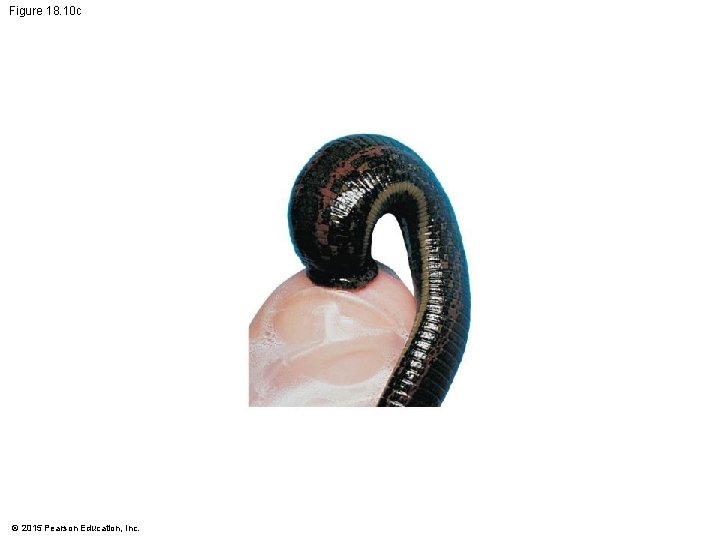
Figure 18. 10 c © 2015 Pearson Education, Inc.
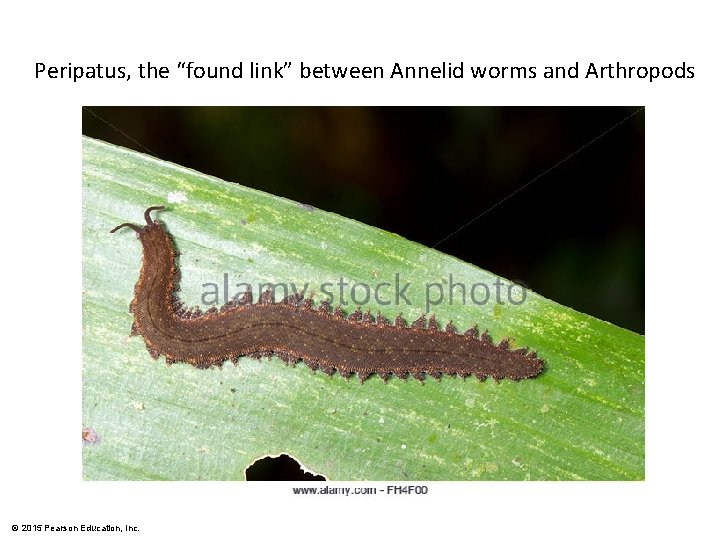
18. 11 Arthropods are segmented animals with jointed appendages and an exoskeleton • There are over a million species of arthropods (phylum Arthropoda), including crayfish, lobsters, crabs, barnacles, spiders, ticks, and insects. • The diversity and success of arthropods are due to their • segmentation, • hard exoskeleton, and • jointed appendages, for which the phylum is named. © 2015 Pearson Education, Inc.
18. 11 Arthropods are segmented animals with jointed appendages and an exoskeleton • Arthropods have an open circulatory system and an exoskeleton, an external skeleton that protects the animal but must be shed in the process of molting to permit growth. • The body of most arthropods includes a head, thorax, and abdomen, although these segments may be fused. © 2015 Pearson Education, Inc.
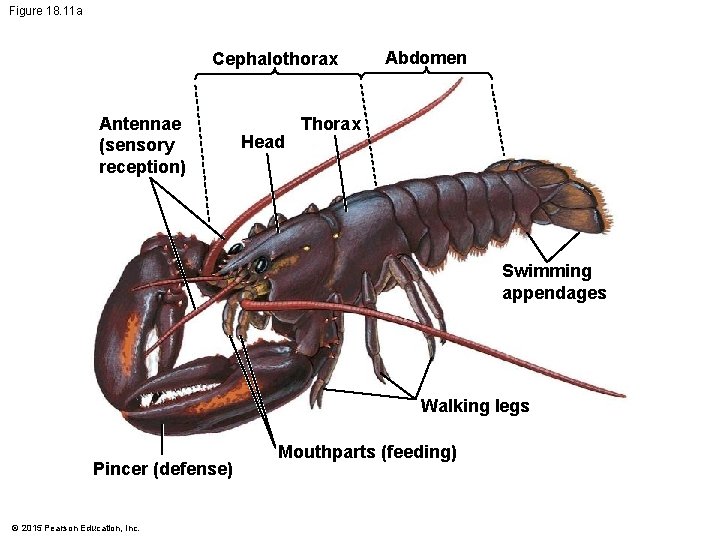
Figure 18. 11 a Cephalothorax Antennae (sensory reception) Head Abdomen Thorax Swimming appendages Walking legs Pincer (defense) © 2015 Pearson Education, Inc. Mouthparts (feeding)
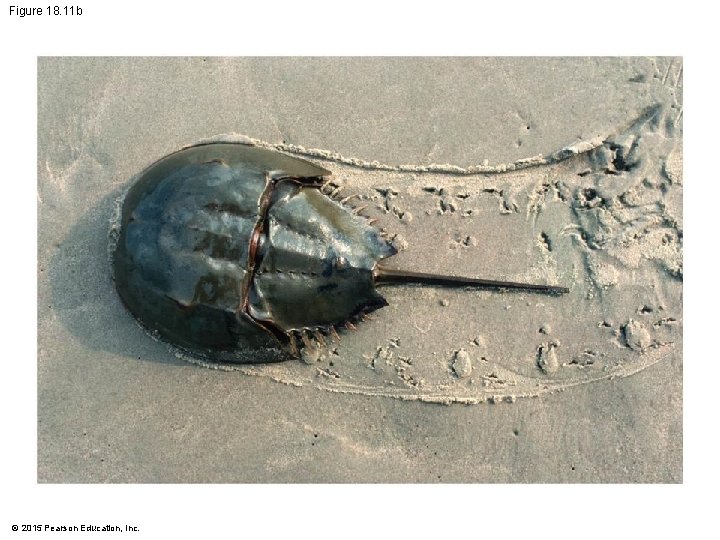
Figure 18. 11 b © 2015 Pearson Education, Inc.
18. 11 Arthropods are segmented animals with jointed appendages and an exoskeleton • Living arthropods represent four major lineages. 1. Chelicerates include horseshoe crabs and arachnids, such as spiders, scorpions, mites, and ticks. • Most are terrestrial. • Scorpions are nocturnal hunters. • Spiders are a diverse group that typically hunt insects or trap them in webs of silk that they spin from specialized glands on their abdomen. • Mites do not carry infectious diseases, but many people are allergic to them. © 2015 Pearson Education, Inc.
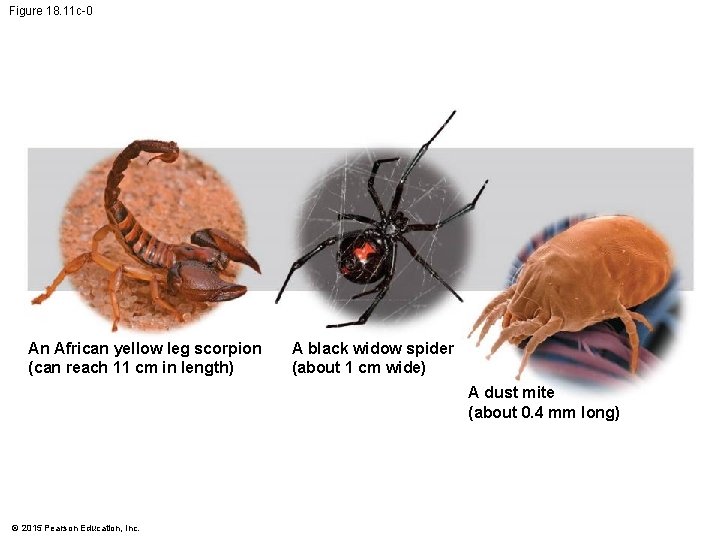
Figure 18. 11 c-0 An African yellow leg scorpion (can reach 11 cm in length) A black widow spider (about 1 cm wide) A dust mite (about 0. 4 mm long) © 2015 Pearson Education, Inc.
18. 11 Arthropods are segmented animals with jointed appendages and an exoskeleton 2. Millipedes and centipedes are terrestrial creatures identified by the number of jointed legs per body segment. • Millipedes are herbivores that have two pairs of short legs per body segment. • Centipedes are carnivores that have one pair of legs per body segment. © 2015 Pearson Education, Inc.
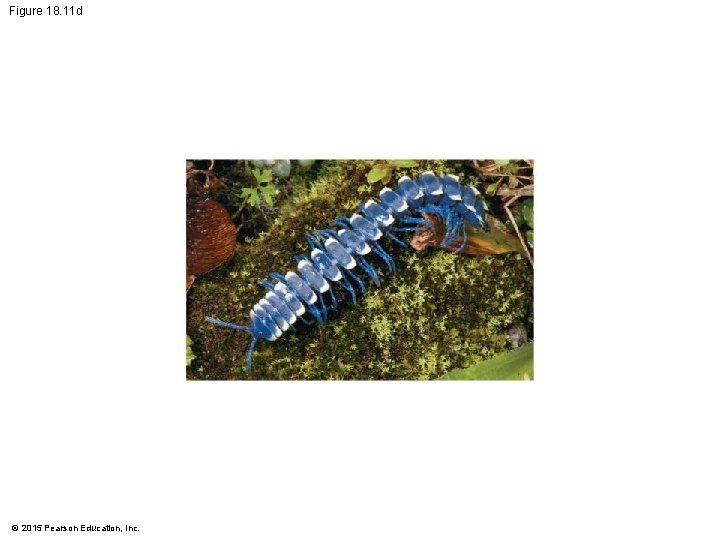
Figure 18. 11 d © 2015 Pearson Education, Inc.
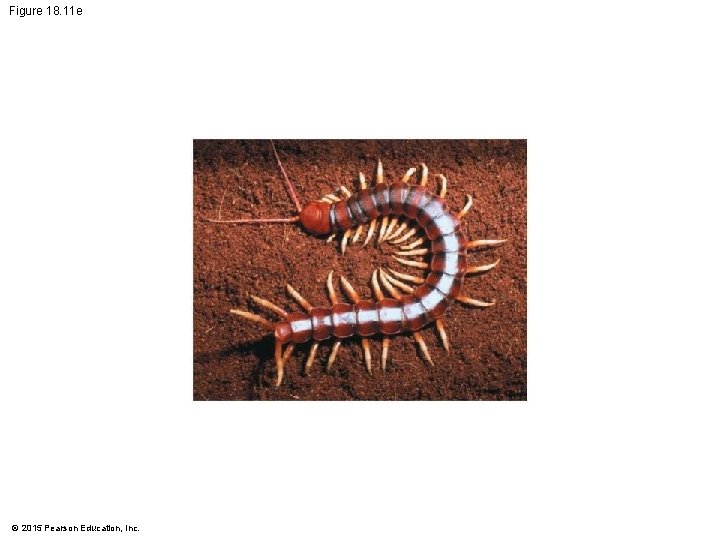
Figure 18. 11 e © 2015 Pearson Education, Inc.
18. 11 Arthropods are segmented animals with jointed appendages and an exoskeleton 3. Crustaceans are nearly all aquatic. They include crabs, shrimp, and barnacles, which feed with jointed appendages. 4. Insects are the fourth lineage of arthropods, addressed next. © 2015 Pearson Education, Inc.
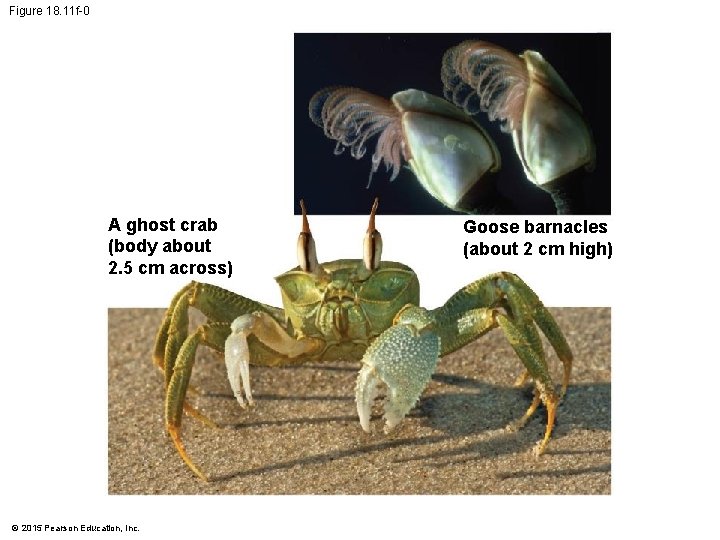
Figure 18. 11 f-0 A ghost crab (body about 2. 5 cm across) © 2015 Pearson Education, Inc. Goose barnacles (about 2 cm high)
18. 12 EVOLUTION CONNECTION: Insects are the most successful group of animals • Nearly 75% of all identified animal species are insects. • There may be as many as 30 million insect species. • The body of an insect typically includes • • • a head, thorax, abdomen, three sets of legs, and wings (with few exceptions). © 2015 Pearson Education, Inc.
18. 12 EVOLUTION CONNECTION: Insects are the most successful group of animals • The extraordinary success of insects is due to • • • body segmentation, an exoskeleton, jointed appendages, flight, a waterproof cuticle, and a complex life cycle with short generations and large numbers of offspring. © 2015 Pearson Education, Inc.
18. 12 EVOLUTION CONNECTION: Insects are the most successful group of animals • Insect life cycles often include metamorphosis, during which the animal takes on different body forms as it develops from larva to adult. • More than 80% of insect species undergo complete metamorphosis, in which a free-living larva transforms from a pupa into an adult. • Other insect species undergo incomplete metamorphosis, in which the transition from larva to adult is achieved through multiple molts, but without forming a pupa. © 2015 Pearson Education, Inc.
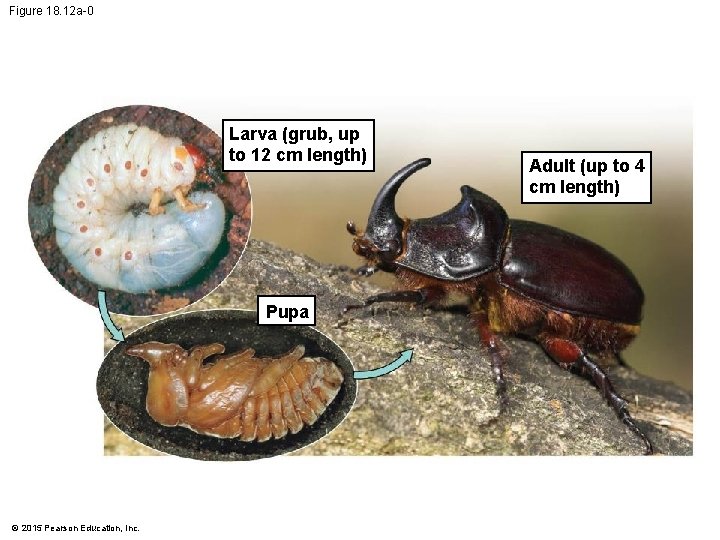
Figure 18. 12 a-0 Larva (grub, up to 12 cm length) Pupa © 2015 Pearson Education, Inc. Adult (up to 4 cm length)
18. 12 EVOLUTION CONNECTION: Insects are the most successful group of animals • Insects have a modular body plan. • The adult body parts of insects are formed by the fusion of embryonic segments identical to each other. • The insect body plan is essentially modular, in that each embryonic segment develops independently. • Homeotic genes act to modify the structure of insect segments and their appendages. © 2015 Pearson Education, Inc.
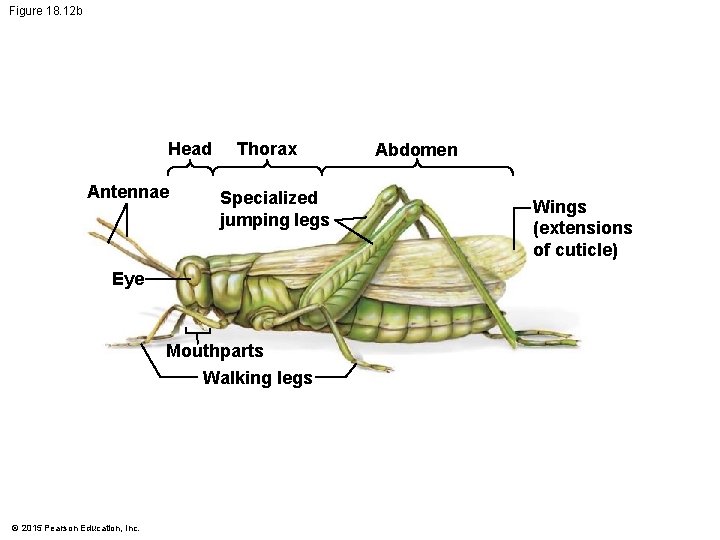
Figure 18. 12 b Head Antennae Thorax Specialized jumping legs Eye Mouthparts Walking legs © 2015 Pearson Education, Inc. Abdomen Wings (extensions of cuticle)
18. 12 EVOLUTION CONNECTION: Insects are the most successful group of animals • Insect mouthparts are adapted for various types of feeding, such as • • chewing (grasshoppers), biting and tearing prey (mantids), lapping up fluids (houseflies), and piercing and sucking fluids of plants (aphids) and animals (mosquitoes). © 2015 Pearson Education, Inc.
18. 12 EVOLUTION CONNECTION: Insects are the most successful group of animals • Insects have three pairs of legs, which are adapted for • • • walking, jumping, grasping prey, digging in soil, or paddling on water. © 2015 Pearson Education, Inc.
18. 12 EVOLUTION CONNECTION: Insects are the most successful group of animals • Most adult insects have one or two pairs of wings, allowing dispersal and escape from predators. • Because wings are extensions of the cuticle, insects have acquired flight without sacrificing any legs. • Many insects have protective color patterns and disguises, including modifications to antennae, wings, and bodies. © 2015 Pearson Education, Inc.
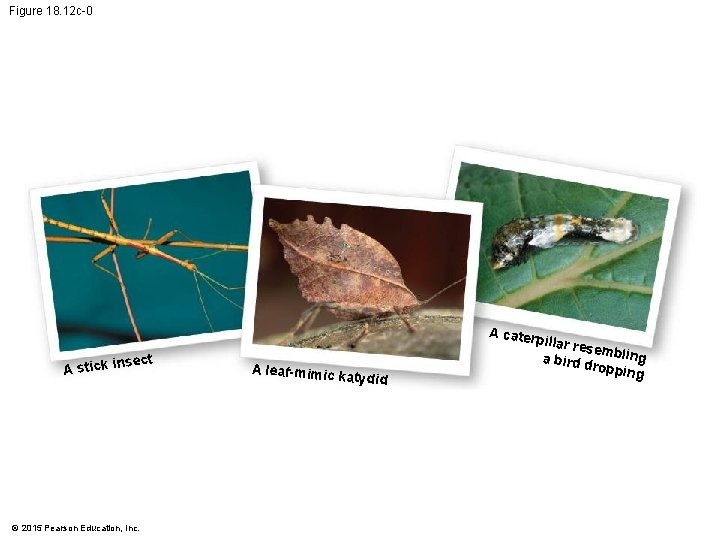
Figure 18. 12 c-0 A cater nsect A stick i © 2015 Pearson Education, Inc. A leaf-mimic katydid pillar r esemb ling a bird d roppin g
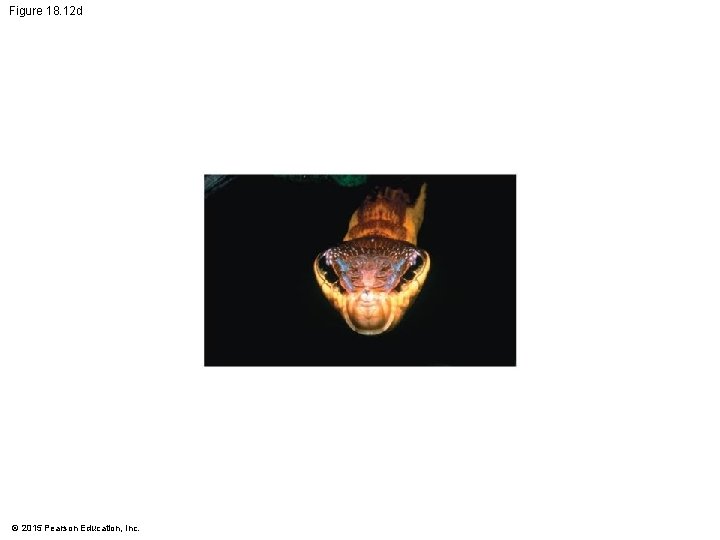
Figure 18. 12 d © 2015 Pearson Education, Inc.
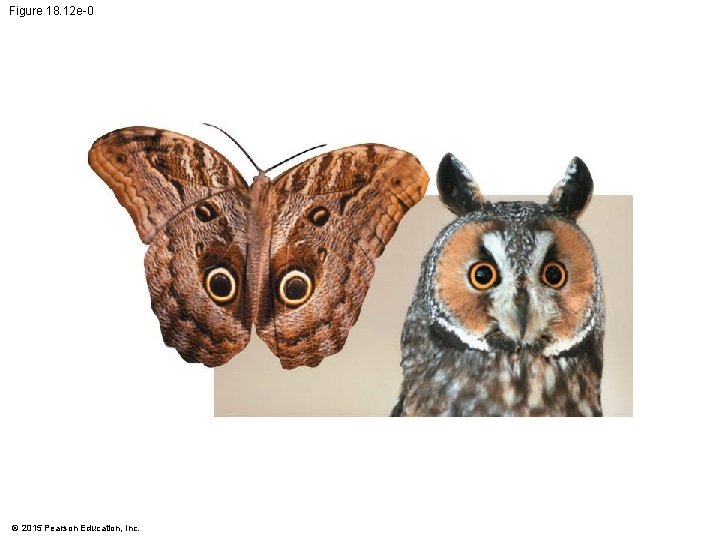
Figure 18. 12 e-0 © 2015 Pearson Education, Inc.
Peripatus, the “found link” between Annelid worms and Arthropods © 2015 Pearson Education, Inc.
© 2015 Pearson Education, Inc.
Giant Grasshoppers? , uh No! © 2015 Pearson Education, Inc.
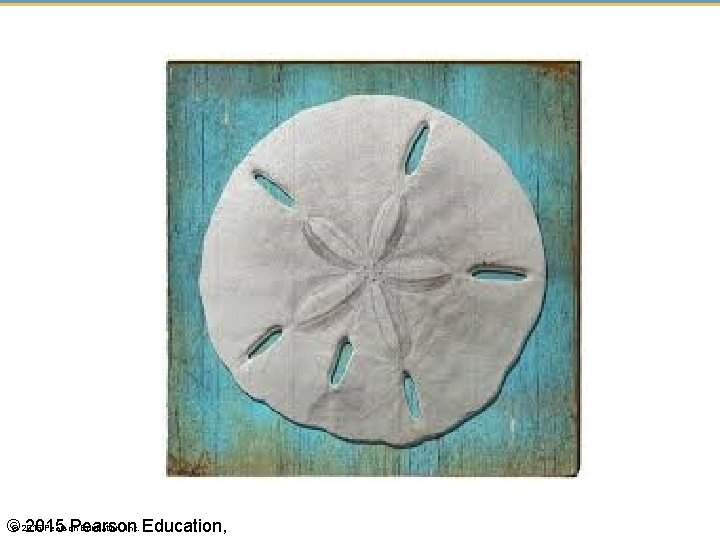
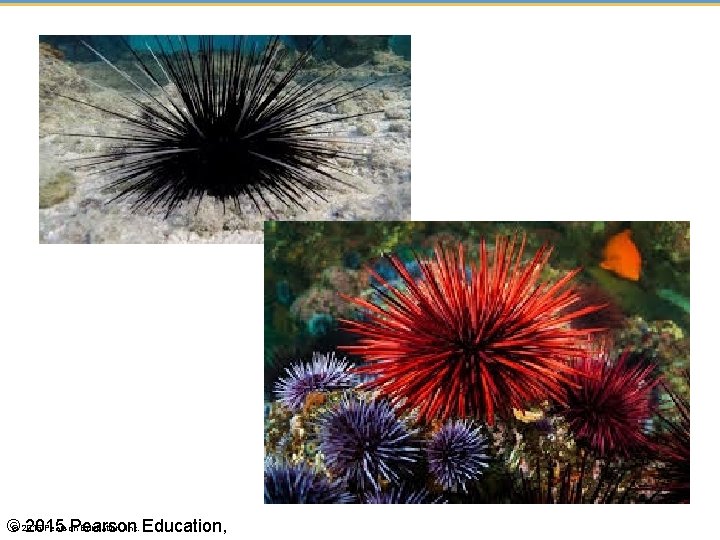
18. 14 Echinoderms have spiny skin, an endoskeleton, and a water vascular system for movement • Echinoderms (phylum Echinodermata) are • a diverse group including sea stars, sand dollars, and sea urchins, • slow-moving or sessile, • all marine, • radially symmetrical as adults, and • deuterostomes (along with the chordates). © 2015 Pearson Education, Inc.
Pearson Education, Inc. Education, ©© 2015 Pearson
Pearson Education, Inc. Education, ©© 2015 Pearson
18. 14 Echinoderms have spiny skin, an endoskeleton, and a water vascular system for movement • Echinoderms have • an endoskeleton of hard calcium-containing plates under a thin skin, • a water vascular system based on a network of water-filled canals that branch into extensions called tube feet, and • the ability to regenerate lost arms. © 2015 Pearson Education, Inc.
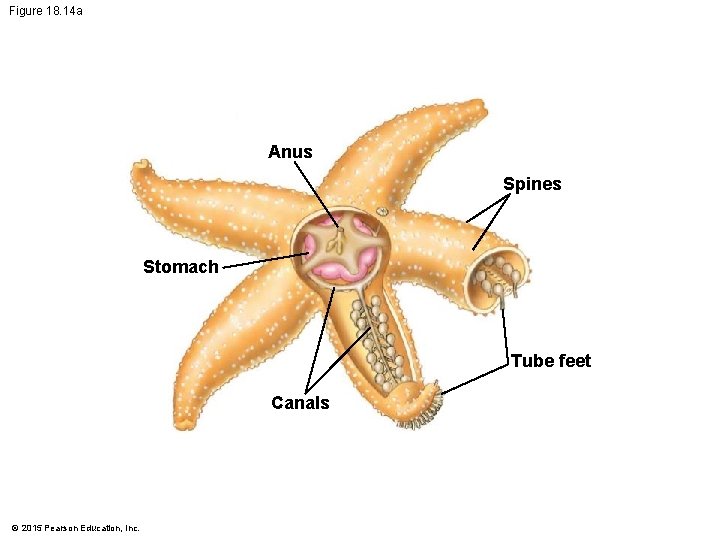
Figure 18. 14 a Anus Spines Stomach Tube feet Canals © 2015 Pearson Education, Inc.
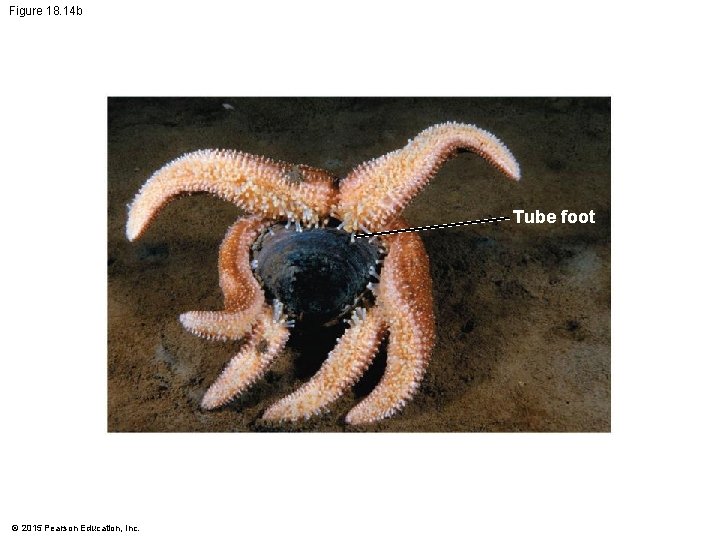
Figure 18. 14 b Tube foot © 2015 Pearson Education, Inc.
18. 14 Echinoderms have spiny skin, an endoskeleton, and a water vascular system for movement • Sea urchins • are spherical, • have no arms, • have tube feet that project through five rows in the animal’s globe-like case, and • usually eat algae. © 2015 Pearson Education, Inc.
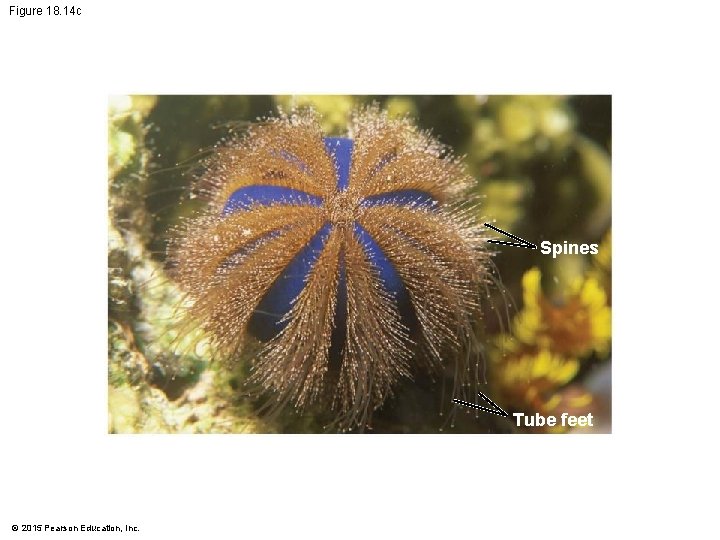
Figure 18. 14 c Spines Tube feet © 2015 Pearson Education, Inc.
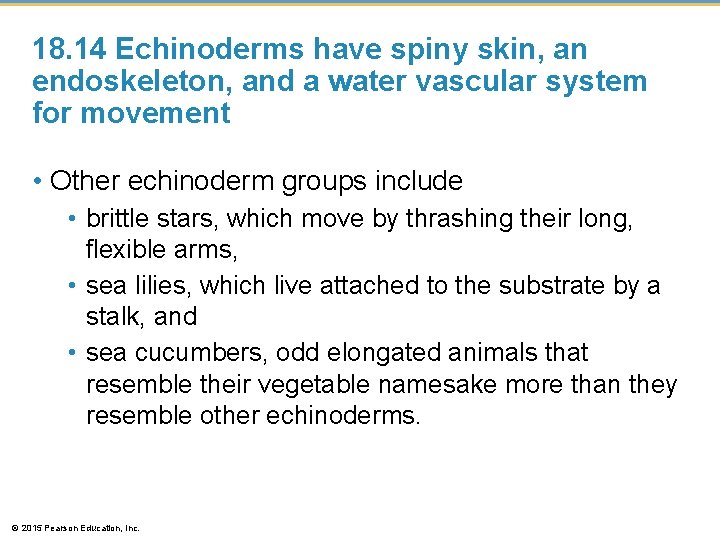
18. 14 Echinoderms have spiny skin, an endoskeleton, and a water vascular system for movement • Other echinoderm groups include • brittle stars, which move by thrashing their long, flexible arms, • sea lilies, which live attached to the substrate by a stalk, and • sea cucumbers, odd elongated animals that resemble their vegetable namesake more than they resemble other echinoderms. © 2015 Pearson Education, Inc.
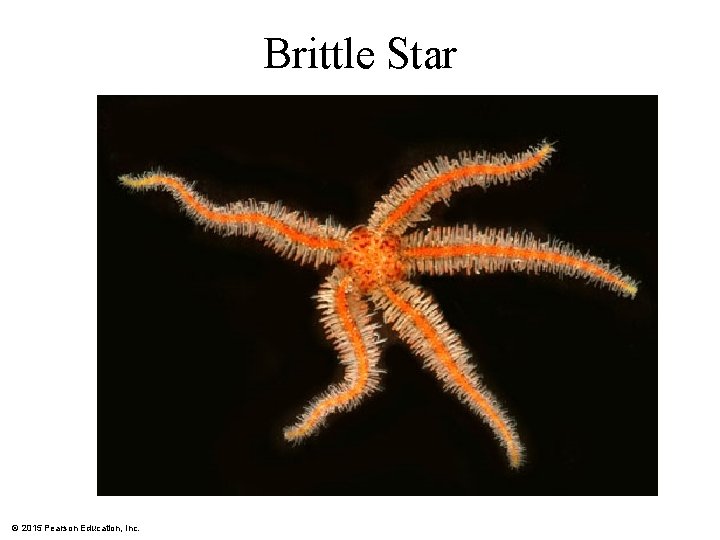
Brittle Star © 2015 Pearson Education, Inc.
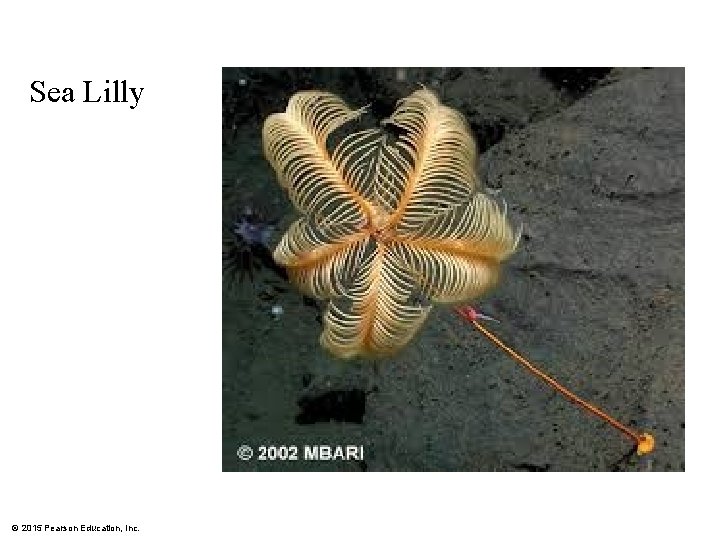
Sea Lilly © 2015 Pearson Education, Inc.
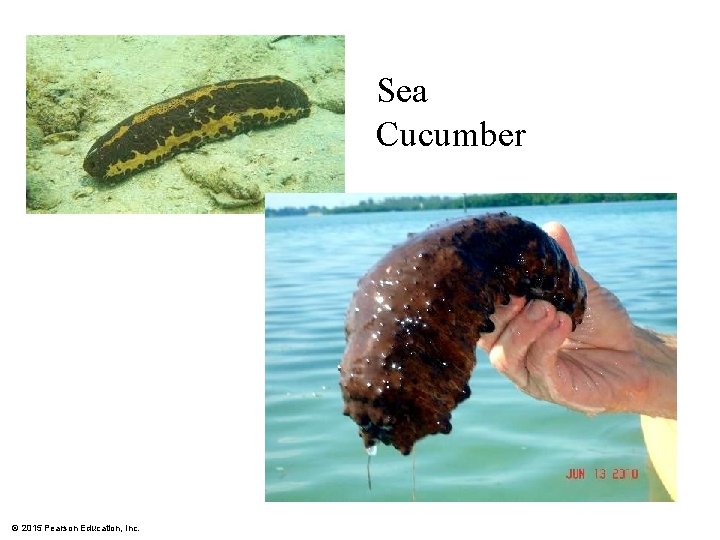
Sea Cucumber © 2015 Pearson Education, Inc.
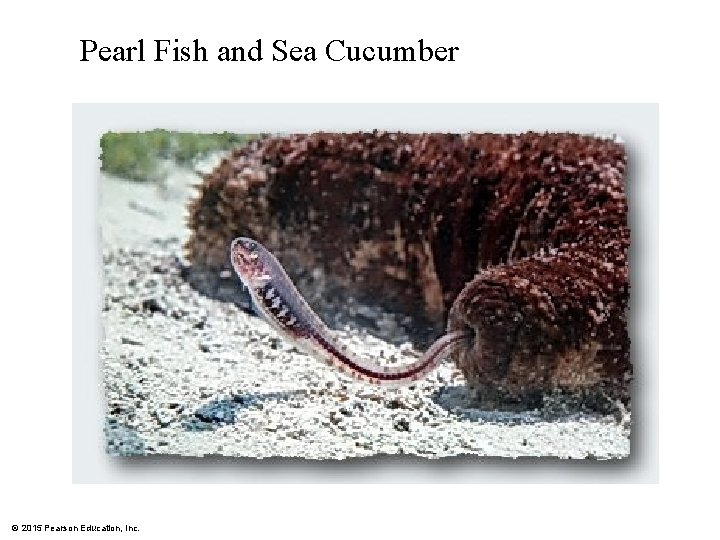
Pearl Fish and Sea Cucumber © 2015 Pearson Education, Inc.
18. 15 Our own phylum, Chordata, is distinguished by four features • Chordates (phylum Chordata) are defined by • a dorsal, hollow nerve cord, • a flexible, supportive, longitudinal rod, the notochord, • pharyngeal slits, and • a muscular post-anal tail. © 2015 Pearson Education, Inc.
18. 15 Our own phylum, Chordata, is distinguished by four features • The chordates tunicates and lancelets • do not have a backbone and • use their pharyngeal slits for suspension feeding. • Adult tunicates are stationary and attached, while the tunicate larva is a tadpole-like organism. • Lancelets are small, bladelike chordates that live in marine sands. © 2015 Pearson Education, Inc.
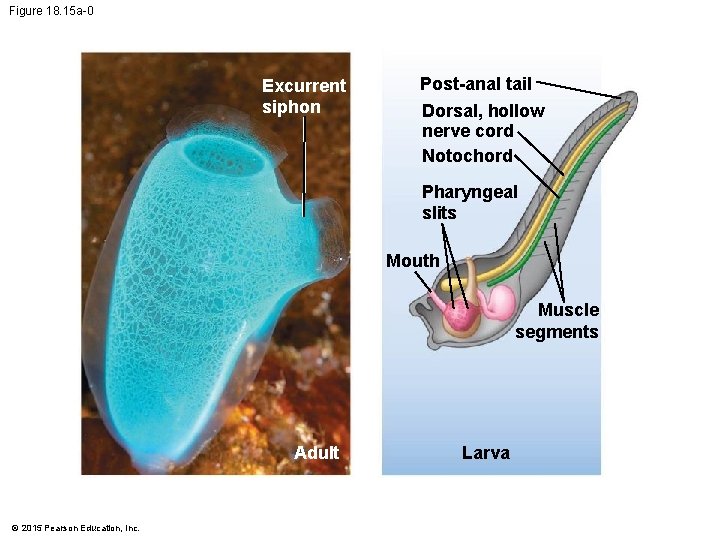
Figure 18. 15 a-0 Excurrent siphon Post-anal tail Dorsal, hollow nerve cord Notochord Pharyngeal slits Mouth Muscle segments Adult © 2015 Pearson Education, Inc. Larva
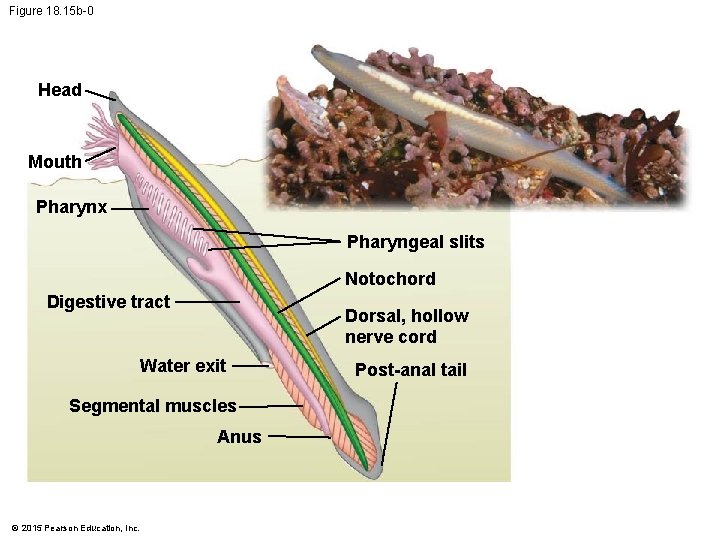
Figure 18. 15 b-0 Head Mouth Pharynx Pharyngeal slits Notochord Digestive tract Dorsal, hollow nerve cord Water exit Segmental muscles Anus © 2015 Pearson Education, Inc. Post-anal tail
18. 16 CONNECTION: Invertebrate diversity is a valuable but threatened resource • Invertebrates • play critical roles in natural ecosystems and • provide valuable services to humans. © 2015 Pearson Education, Inc.
18. 16 CONNECTION: Invertebrate diversity is a valuable but threatened resource • There are many examples of the significance of invertebrates. • Reef-building corals create enormous structures that provide support and shelter for hundreds of other species. • Reef-dwelling cone snails produce a powerful painkiller in their venom. © 2015 Pearson Education, Inc.
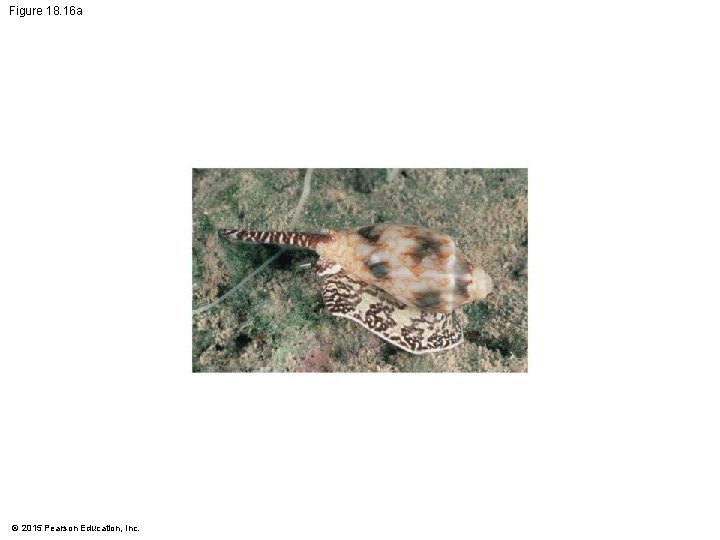
Figure 18. 16 a © 2015 Pearson Education, Inc.
18. 16 CONNECTION: Invertebrate diversity is a valuable but threatened resource • Freshwater mussels filter and improve water quality in natural ecosystems and reduce the cost of water treatment for human uses. © 2015 Pearson Education, Inc.
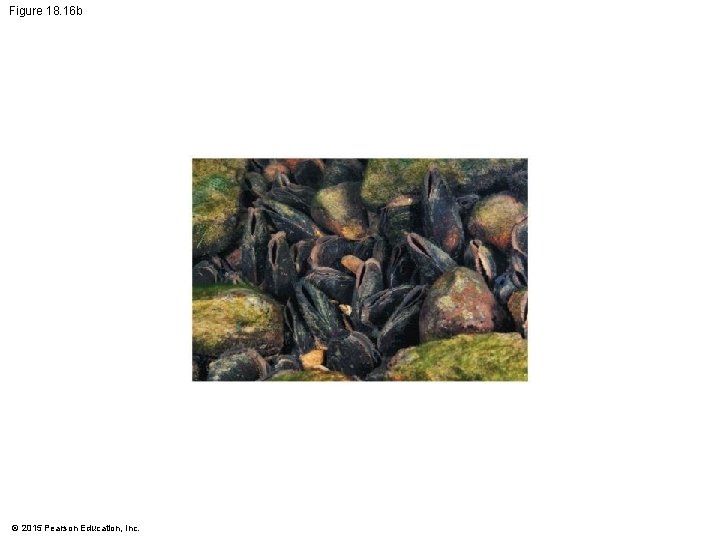
Figure 18. 16 b © 2015 Pearson Education, Inc.
18. 16 CONNECTION: Invertebrate diversity is a valuable but threatened resource • Most flowering plants are pollinated by animals, chiefly insects. • An estimated one-third of the world’s food supply depends on pollinators. • In the United States, production of fruits and vegetables relies on pollination by bees, mostly non -native honeybees imported from Europe. © 2015 Pearson Education, Inc.
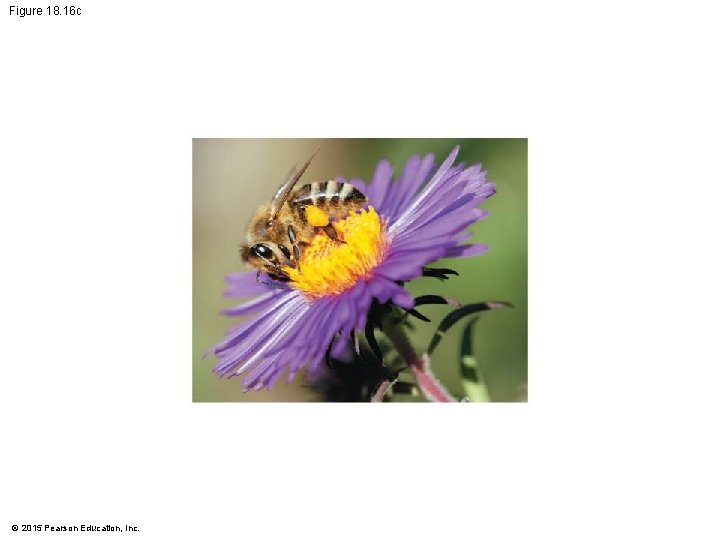
Figure 18. 16 c © 2015 Pearson Education, Inc.
- Slides: 108