
Chapter 18 The Digestive System Functions of the
- Slides: 98
Chapter 18 The Digestive System
Functions of the GI Tract § Motility: n Movement of food through the GI tract. n Ingestion: n Taking food into the ________. n Mastication: n Chewing the food and mixing it with saliva. n ____________: n Swallowing the food. n Peristalsis: n Rhythmic wave-like contractions that move food through GI tract.
Functions of the GI Tract n Secretion: n (continued) Includes both _______ and endocrine secretions. Exocrine: n HCl, H 20, HC 03 -, bile, lipase, pepsin, amylase, trypsin, elastase, and histamine are secreted into the lumen of the GI tract. n Endocrine: n Stomach and small intestine secrete hormones to help regulate the GI system. n Gastrin, secretin, CCK, GIP, GLP-1, guanylin, VIP, and somatostatin. n
Functions of the GI Tract n Digestion: n n Breakdown of food particles into subunits (_________ structure change). Absorption: n n (continued) Process of the passage of digestion (chemical subunits) into the blood or lymph. Storage and elimination: n Temporary storage and elimination of indigestible food.
Digestive System (GI) GI tract divided into: n Alimentary canal. n Accessory digestive organs. n GI tract is ______ft long and extends from mouth to anus. n
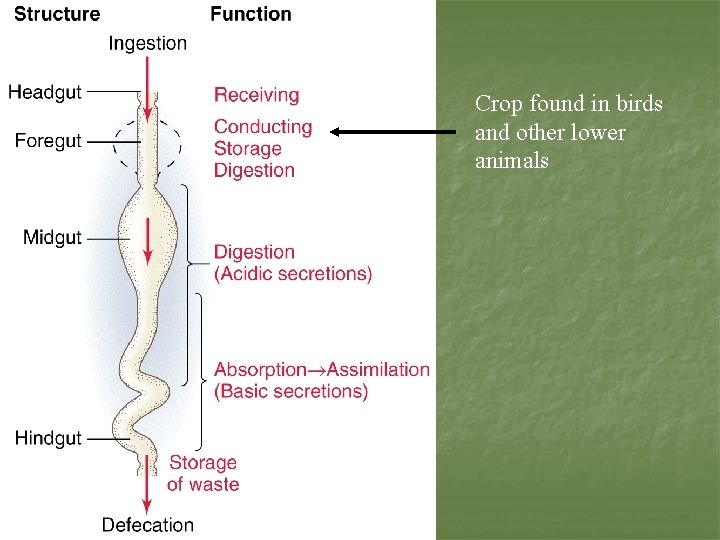
Crop found in birds and other lower animals
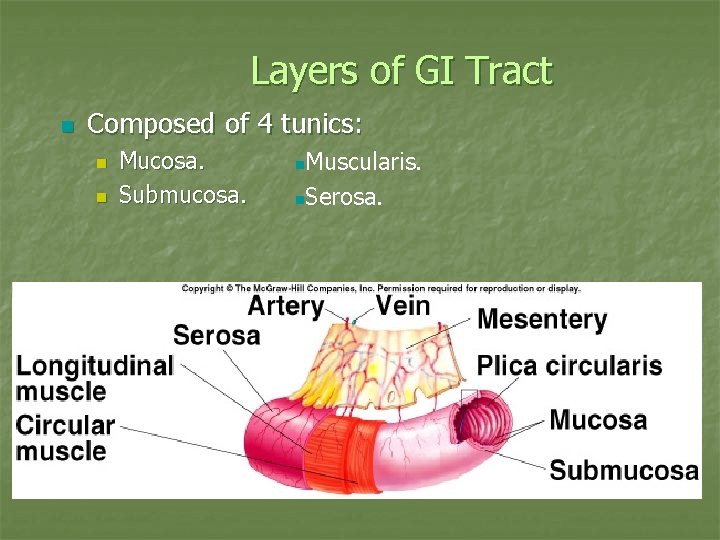
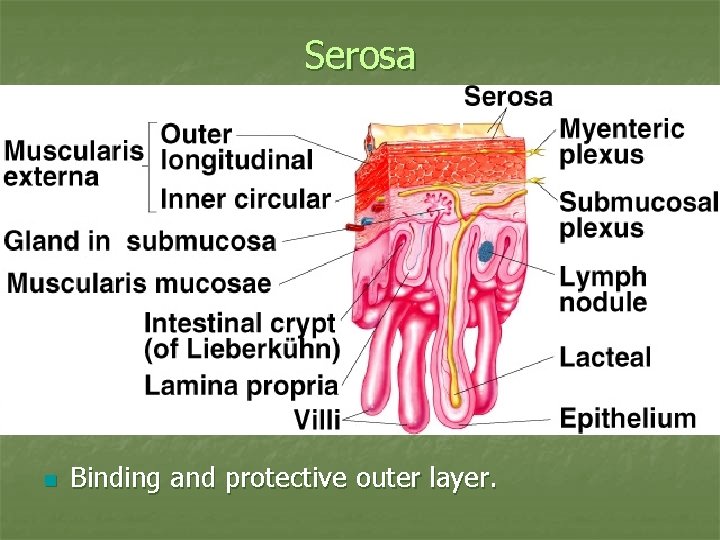
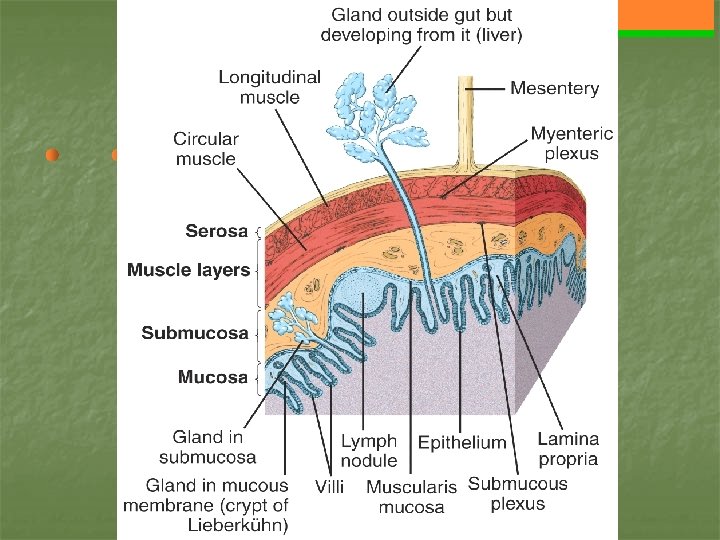
Layers of GI Tract n Composed of 4 tunics: n n Mucosa. Submucosa. Muscularis. n. Serosa. n
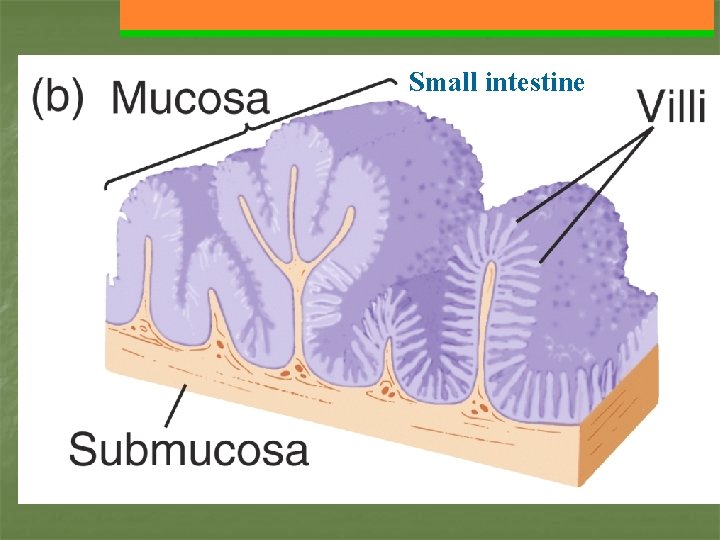
Mucosa n Lines the lumen of GI tract. n Contains: Connective tissue & lymph nodules. n Thin layer of smooth muscle responsible for the folds. n Goblet cells: n n Secrete ________.
Submucosa n n n Contains blood vessels, lymph, and nerve fibers Absorbed molecules enter the blood and lymphatic vessels. Submucosal plexus (Meissner’s plexus): n Provide autonomic nerve supply to the muscularis mucosae.
Muscularis n Responsible for segmental contractions and peristaltic movement through the GI tract. n n n Inner circular layer of _____ muscle. Outer longitudinal layer of smooth muscle. Contractions of these layers move food through the tract; pulverize and mix the food. n Major nerve supply to GI tract. n n Fibers and ganglia from both sympathetic and parasympathetic nervous systems. Enterogastric Reflex: (_______)
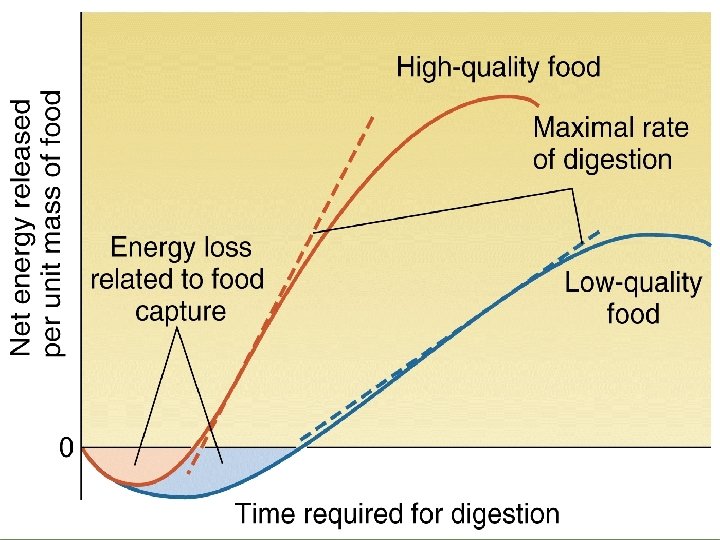
Enterogastric Reflex: (pacemaker) Type of food determines rate of passage in gut n High fat meal – may be in GIT ____ or more hours n High COH – may be out by ____ hours n
Serosa n Binding and protective outer layer.
Regulation of the GI Tract n Extrinsic innervation: n Parasympathetic nervous system: n n Vagus and spinal nerves: n Stimulate motility and GI secretions. Sympathetic nervous system: n Reduce peristalsis and secretory activity.
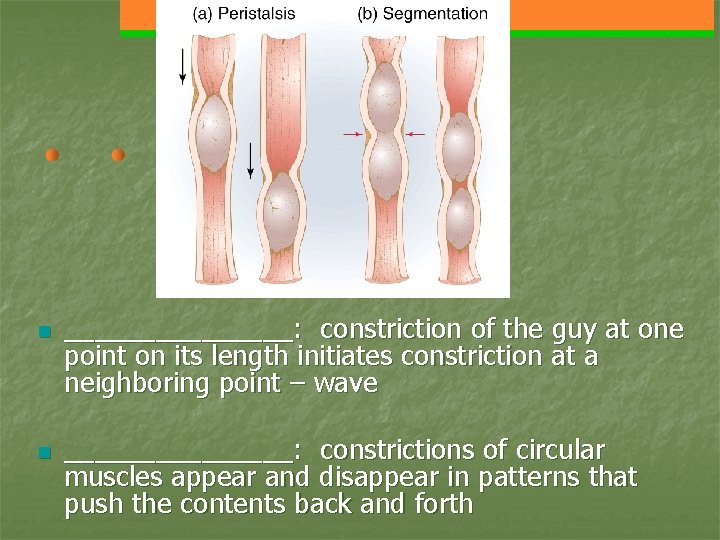
n n ________: constriction of the guy at one point on its length initiates constriction at a neighboring point – wave ________: constrictions of circular muscles appear and disappear in patterns that push the contents back and forth
Regulation of the GI Tract n Submucosal and myenteric plexuses: n n Paracrine secretion: n n Local regulation of the GI tract. Molecules acting locally. Hormonal secretion: n Secreted by the mucosa. (continued)
From Mouth to Stomach
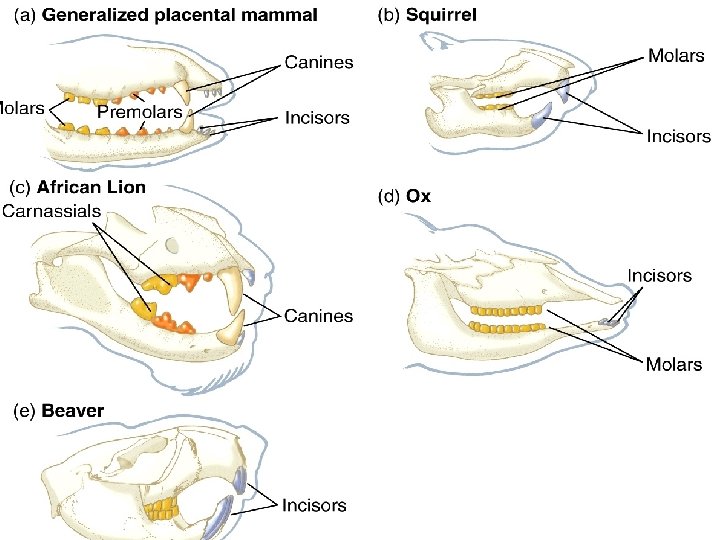
Mouth n Tongue: in herbivores, tongue grasps food and brings it in Rough surface: papillae, providing traction for moving food Bringing food into mouth is voluntary n n
Mouth n ________: decreases particle size and mixes with saliva which contains salivary amylase. n n n Enzyme that can catalyze the partial digestion of starch. Makes food into a bolus ________: important in ruminants(regurgitation) n Ruminants take in large amounts of food in a short period of time
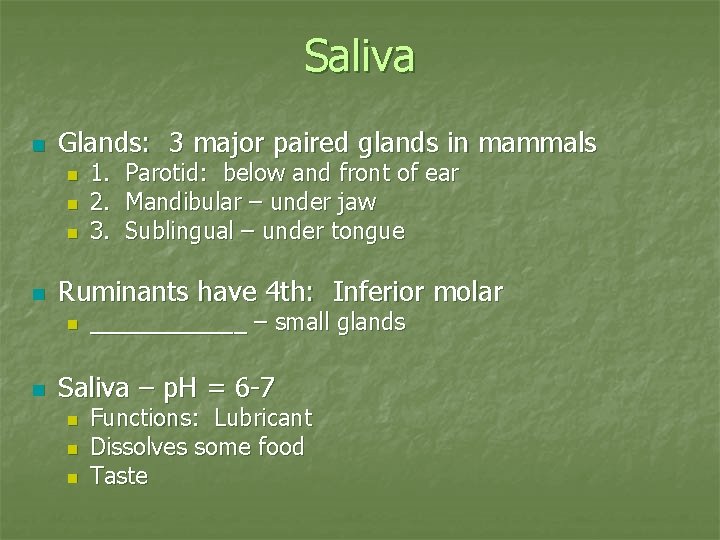
Saliva n Glands: 3 major paired glands in mammals n n Ruminants have 4 th: Inferior molar n n 1. Parotid: below and front of ear 2. Mandibular – under jaw 3. Sublingual – under tongue ______ – small glands Saliva – p. H = 6 -7 n n n Functions: Lubricant Dissolves some food Taste
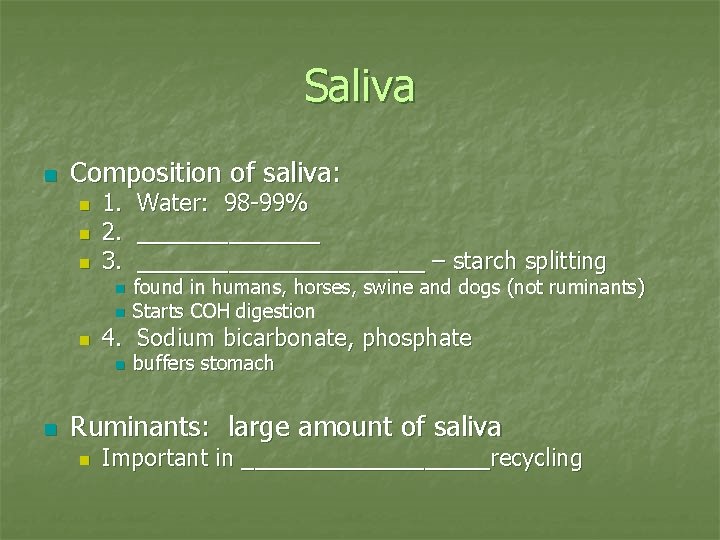
Saliva n Composition of saliva: n n n 1. 2. 3. n n n found in humans, horses, swine and dogs (not ruminants) Starts COH digestion 4. Sodium bicarbonate, phosphate n n Water: 98 -99% __________________ – starch splitting buffers stomach Ruminants: large amount of saliva n Important in __________recycling
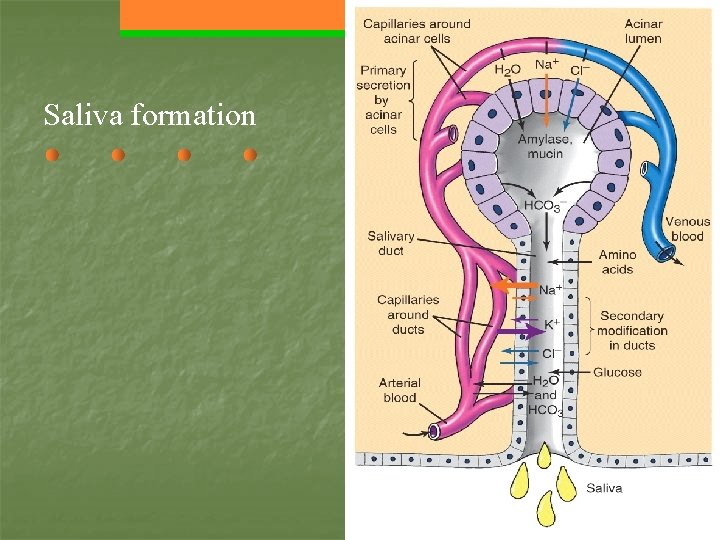
Saliva formation
From Mouth to Stomach n _________ (swallowing): Begins as a voluntary activity. n Cannot be stopped. n Larynx is raised. n Epiglottis covers the entrance to respiratory tract. n
From Mouth to Stomach n (continued) Esophagus: n Muscular tube – passes through thoracic cavity and diaphragm to the ____ of the stomach n Normally closed, stretches open when a bolus of food passes through n Sits on the _____ side of the trachea n Connects pharynx to the stomach n Can observe bolus transport in cattle
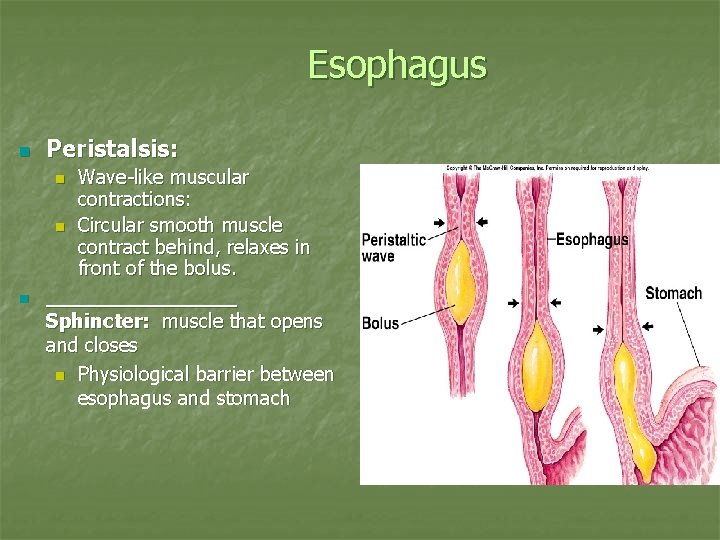
Esophagus n Peristalsis: Wave-like muscular contractions: n Circular smooth muscle contract behind, relaxes in front of the bolus. ________ Sphincter: muscle that opens and closes n Physiological barrier between esophagus and stomach n n Insert 18. 4 a
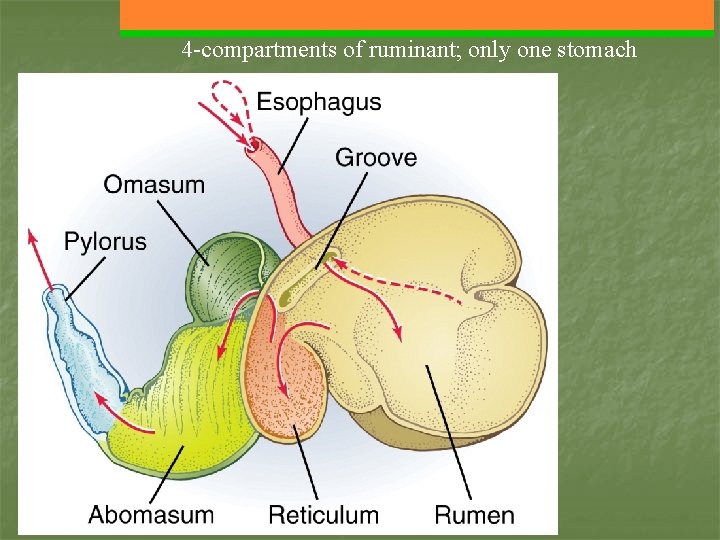
Ruminant Stomach n n ________ animals Digestive system n n Large, lots of space for processing large quantities of bulky forage 4 chambers of stomach: n _________________
4 -compartments of ruminant; only one stomach
Ruminant Stomach n Reticulorumen n n Large structure for fermentation of cellulose n n n @ 1 billion bacteria & 1 million protozoa per milliliter ________% of total digestion occurs here ______ secretory function Does have _________ function Composed of smooth muscle with vagus innervation Blood from reticulorumen n portal vein – liver
Digestion in ruminant n Carbohydrates – cellulose n Microbe population n n volatile fatty acids (________________) absorbed across rumen wall Proteins – digested by _______ Lipids – also broken down Microbes in rumen synthesize all ______complex vitamins and all ______ amino acids
Ruminant Stomach n _____ – common to both the rumen and reticulum (where they sort of meet) esophageal groove n Extends from the cardia to the omasum n Formed by two heavy muscles n Can close to allow food to go directly from the esophagus to the ________ n _________ n
Omasum n n Epithelium has leaflike folds Enormous ________ ability
Abomasum n True stomach similar to monogastric stomach with some secretory ability n Has a ________ sphincter n
Non- Ruminant Stomach n Most distensible part of GI tract. n n Empties into the duodenum. Functions of the stomach: n __________. n Initiates digestion of ______. n Kills bacteria. n Moves food (chyme) into intestine.
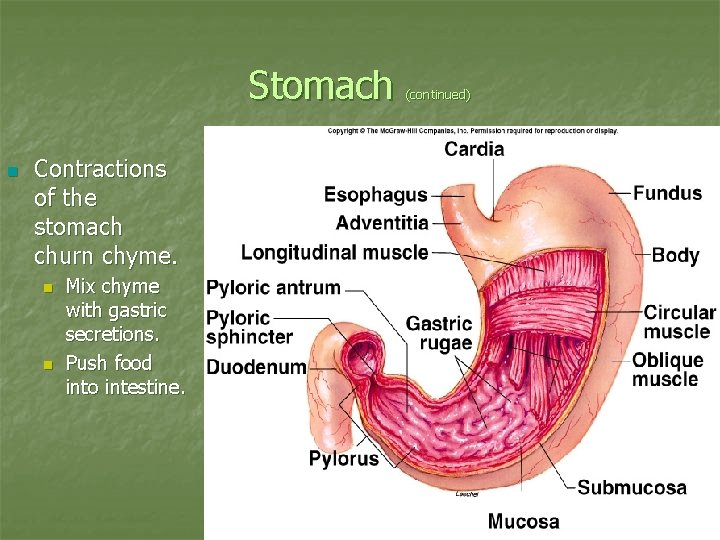
Stomach n Contractions of the stomach churn chyme. n n Mix chyme with gastric secretions. Push food into intestine. (continued) Insert fig. 18. 5
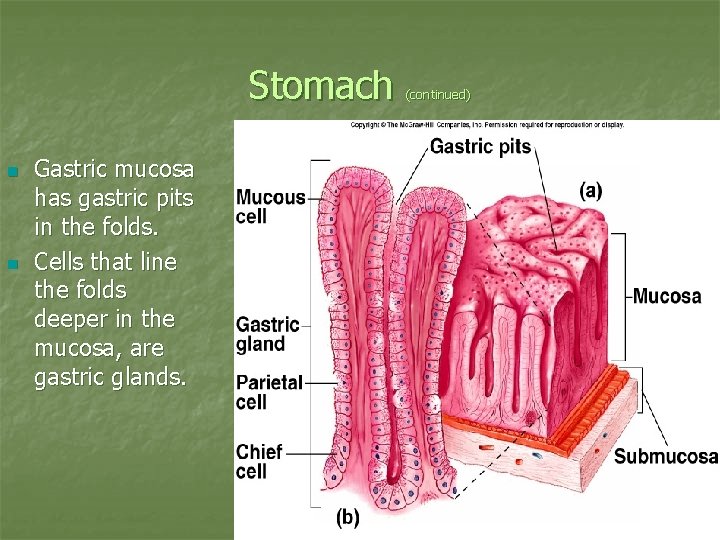
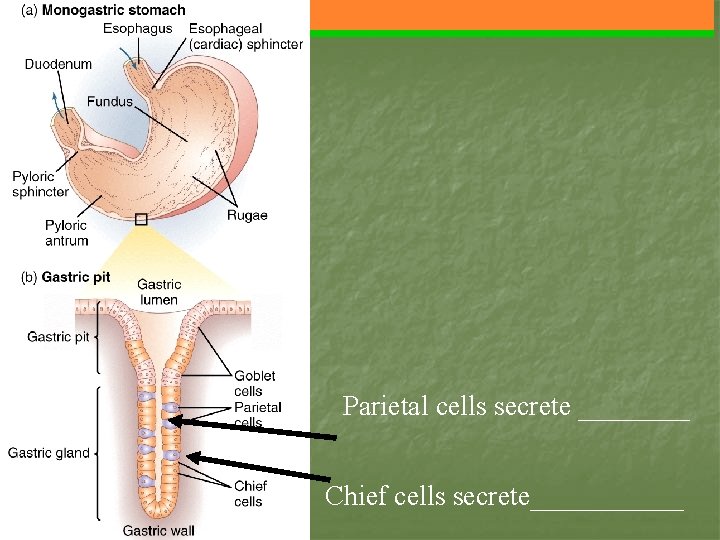
Stomach n n Gastric mucosa has gastric pits in the folds. Cells that line the folds deeper in the mucosa, are gastric glands. (continued) Insert fig. 18. 7
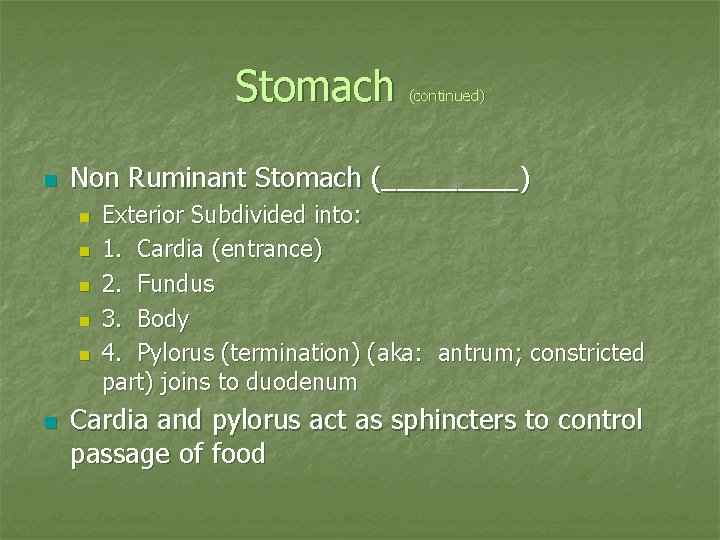
Stomach n Non Ruminant Stomach (_____) n n n (continued) Exterior Subdivided into: 1. Cardia (entrance) 2. Fundus 3. Body 4. Pylorus (termination) (aka: antrum; constricted part) joins to duodenum Cardia and pylorus act as sphincters to control passage of food
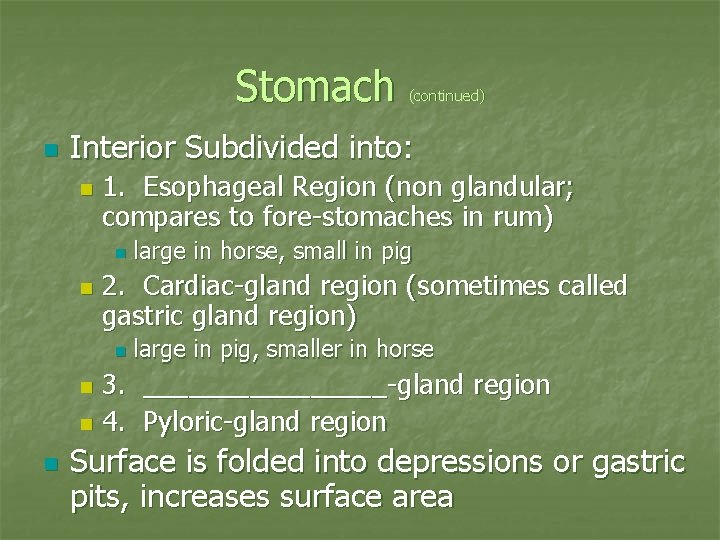
Stomach n (continued) Interior Subdivided into: n 1. Esophageal Region (non glandular; compares to fore-stomaches in rum) n n large in horse, small in pig 2. Cardiac-gland region (sometimes called gastric gland region) n large in pig, smaller in horse 3. ________-gland region n 4. Pyloric-gland region n n Surface is folded into depressions or gastric pits, increases surface area
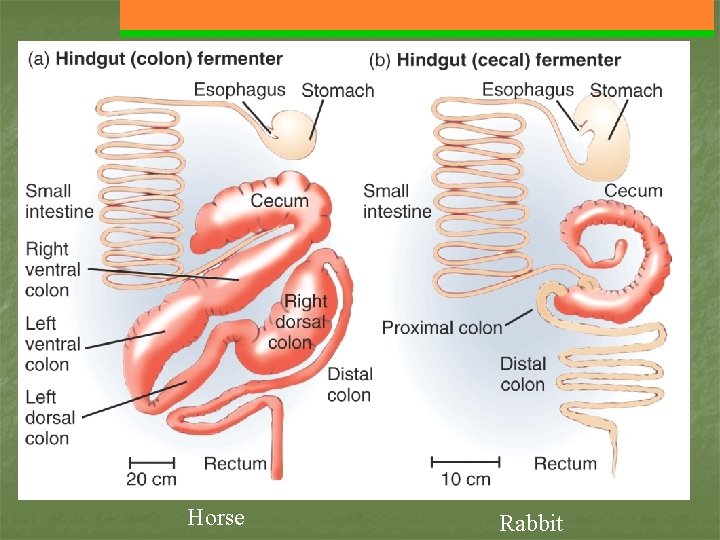
Horse Rabbit
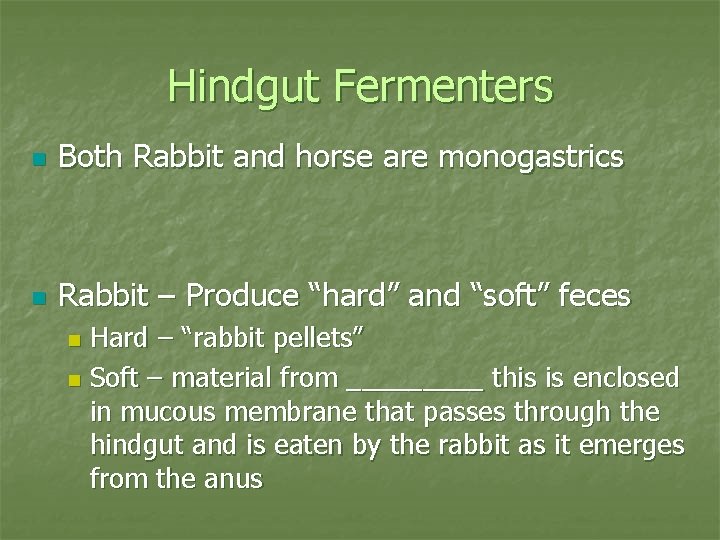
Hindgut Fermenters n Both Rabbit and horse are monogastrics n Rabbit – Produce “hard” and “soft” feces Hard – “rabbit pellets” n Soft – material from _____ this is enclosed in mucous membrane that passes through the hindgut and is eaten by the rabbit as it emerges from the anus n
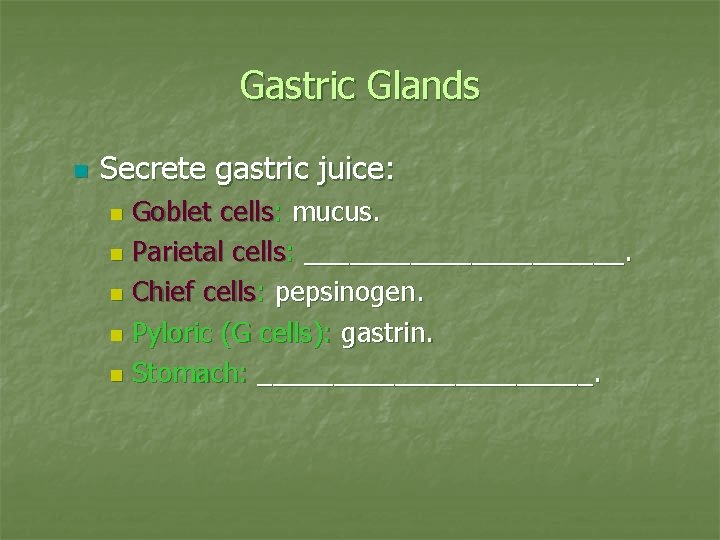
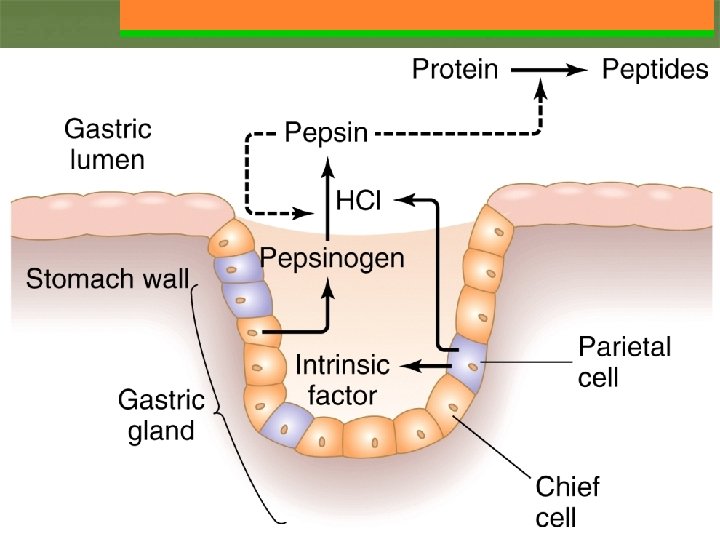
Gastric Glands n Secrete gastric juice: Goblet cells: mucus. n Parietal cells: ___________. n Chief cells: pepsinogen. n Pyloric (G cells): gastrin. n Stomach: ___________. n
Parietal cells secrete ____ Chief cells secrete______
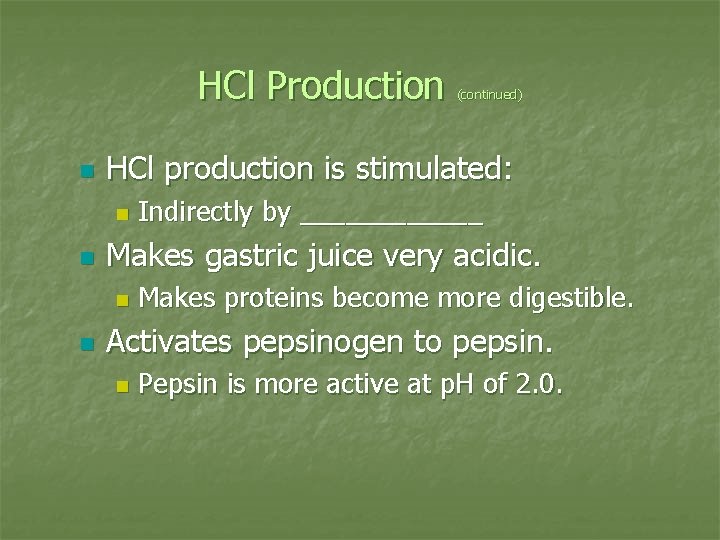
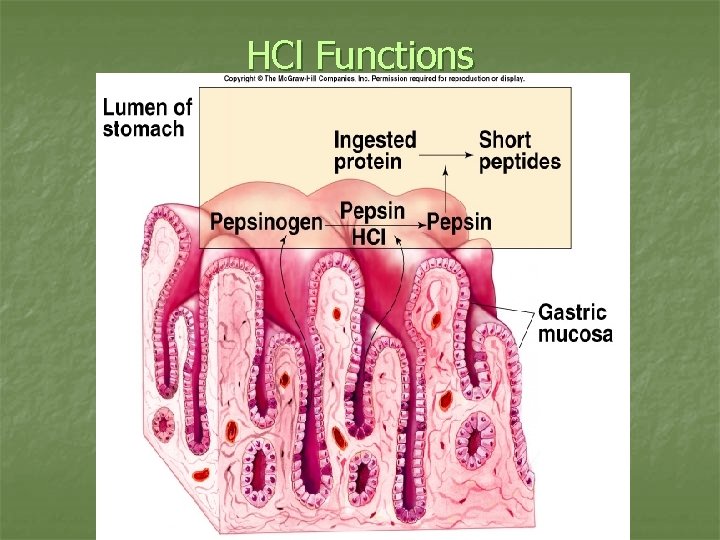
HCl Production n HCl production is stimulated: n n Indirectly by ______ Makes gastric juice very acidic. n n (continued) Makes proteins become more digestible. Activates pepsinogen to pepsin. n Pepsin is more active at p. H of 2. 0.
HCl Functions Insert fig. 18. 9
Digestion and Absorption in the Stomach n n n Proteins partially digested by______. Carbohydrate digestion by salivary amylase is soon inactivated by acidity. ____________ are the only commonly ingested substances absorbed.
Protective Mechanisms of Stomach n n n Parietal and chief cells impermeable to ____. Alkaline mucus contains HC 03 -. Tight junctions between adjacent epithelial cells. Rapid rate of cell division (entire epithelium replaced in 3 days). __________ inhibit gastric secretions.
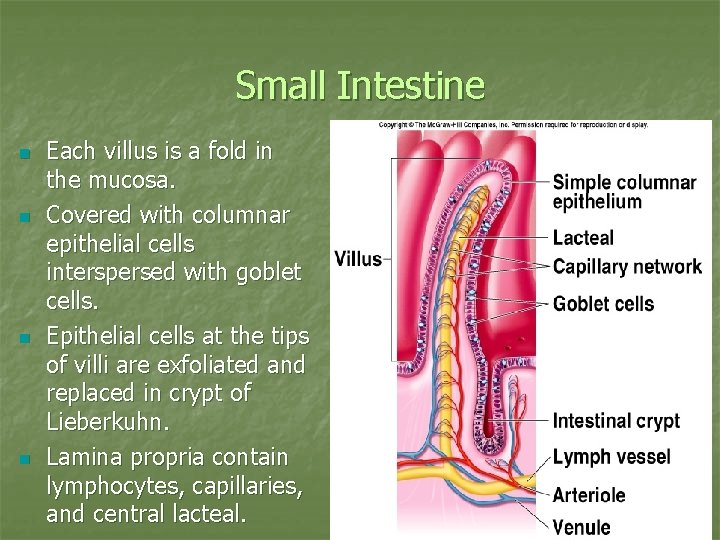
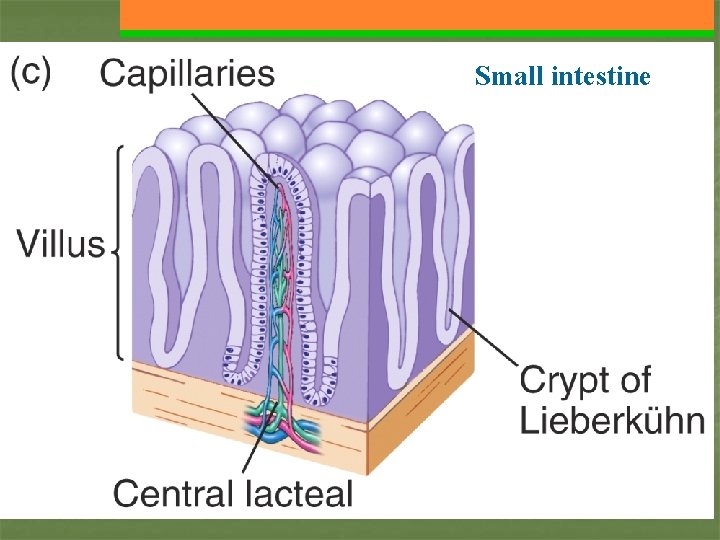
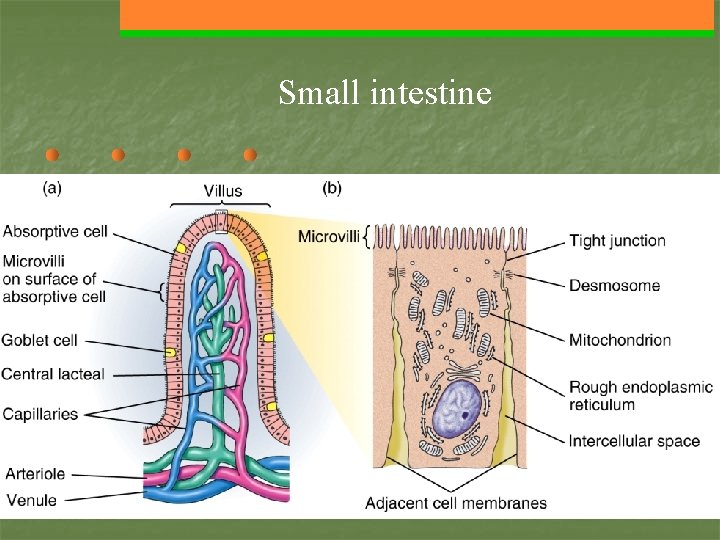
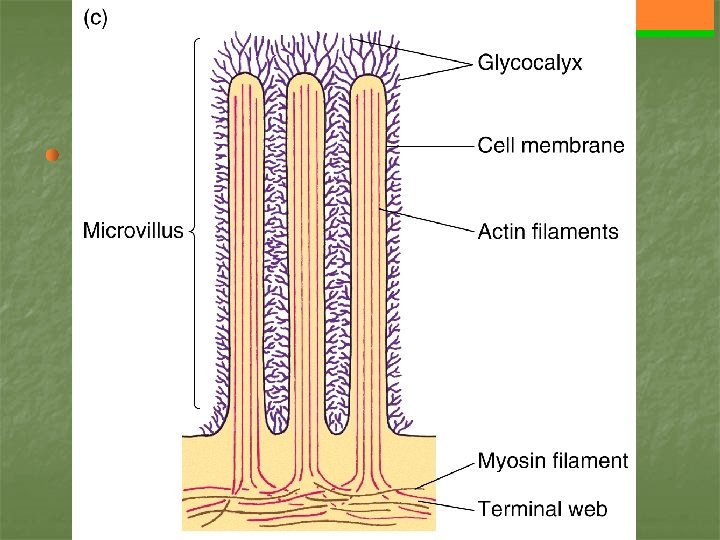
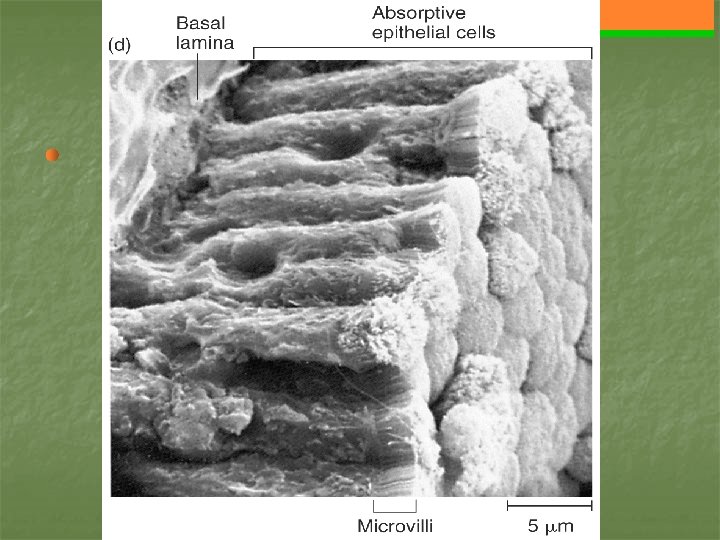
Small Intestine n n Each villus is a fold in the mucosa. Covered with columnar epithelial cells interspersed with goblet cells. Epithelial cells at the tips of villi are exfoliated and replaced in crypt of Lieberkuhn. Lamina propria contain lymphocytes, capillaries, and central lacteal. Insert fig. 18. 12
Absorption in Small Intestine (most absorption occurs here) n Duodenum and jejunum: n n Carbohydrates, amino acids, lipids, iron, and Ca 2+. Ileum: n Bile salts, vitamin B 12, electrolytes, and H 20.
Small intestine
Intestinal Enzymes n n Microvilli contain brush border enzymes that are not secreted into the lumen. Absorption requires both brush border enzymes and pancreatic enzymes.
Small intestine
Small intestine
Pancreas n In close proximity to Duodenum Release proteases (_____ enzymes) n _________ (starch spitting) n Lipases (fat breakdown) + bicarbonate (buffer) n Opens into duodenum near the common bile duct n
Large Intestine n n Outer surface bulges outward to form ______. Little absorptive function. n n Absorbs H 20, electrolytes, several vitamin B complexes, vitamin K, and folic acid. n Intestinal microbiota produce significant amounts of folic acid and _________. n Bacteria ferment indigestible molecules to produce short-chain fatty acids. n Does not contain villi. Secretes _____, via active transport of Na. Cl into intestinal lumen.
Fluid and Electrolyte Absorption in the Intestine n Small intestine: n n n Most of the fluid and electrolytes are absorbed by small intestine. n Absorbs about 90% of the remaining volume. Absorption of H 20 occurs passively as a result of the osmotic gradient created by active transport. n Aldosterone stimulates Na. Cl and H 20 absorption in the ileum. Large intestine: n Absorbs about ____ of the remaining volume. n Absorption of H 20 occurs passively as a result of the osmotic gradient created by active transport of Na+ and Cl-.
Defecation n Waste material passes to the rectum. Occurs when rectal pressure _____ and external anal sphincter relaxes. Defecation reflex: n Longitudinal rectal muscles contract to increase rectal pressure. n n Relaxation of internal anal sphincter. Excretion is aided by contractions of abdominal and pelvic skeletal muscles. n Push feces from the rectum.
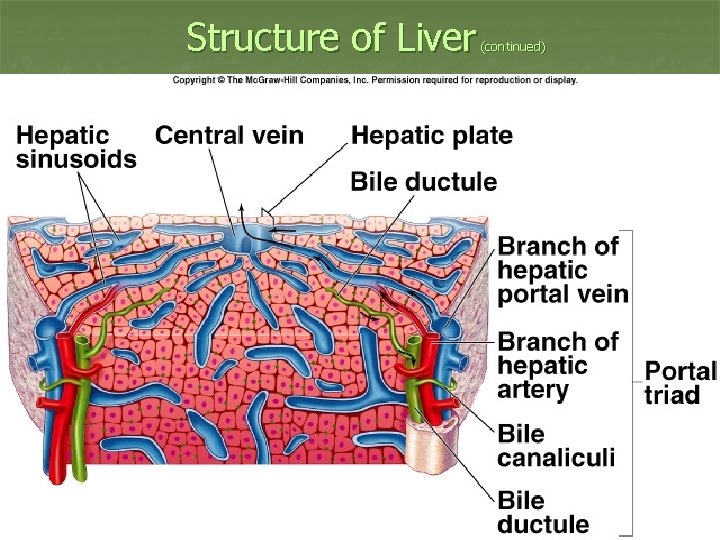
Structure of Liver n n n Liver _____ internal organ. n Arranged into functional units called lobules. Plates separated by sinusoids. Secretes ____ into bile canaliculi, which are drained by bile ducts.
Structure of Liver (continued) Insert fig. 18. 20
Hepatic Portal System n n Products of digestion that are absorbed are delivered to the liver. Capillaries drain into the hepatic portal vein, which carries blood to liver. ¾ blood is deoxygenated. n _______ vein drains liver. n
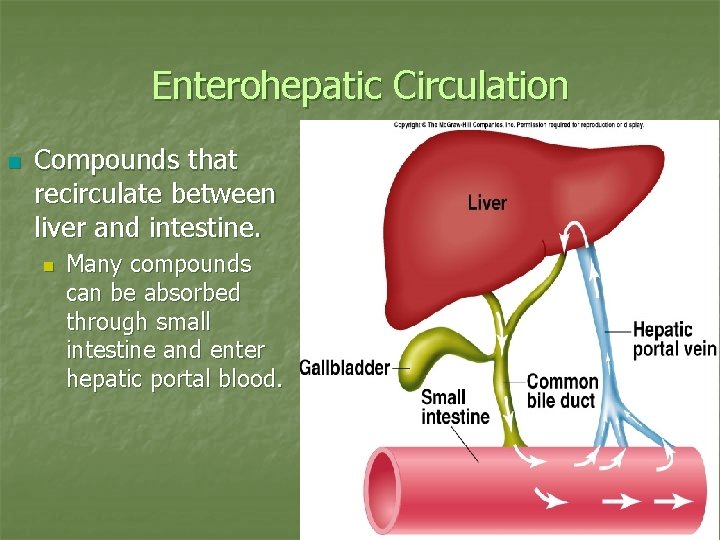
Enterohepatic Circulation n Compounds that recirculate between liver and intestine. n Many compounds can be absorbed through small intestine and enter hepatic portal blood. Insert fig. 18. 22
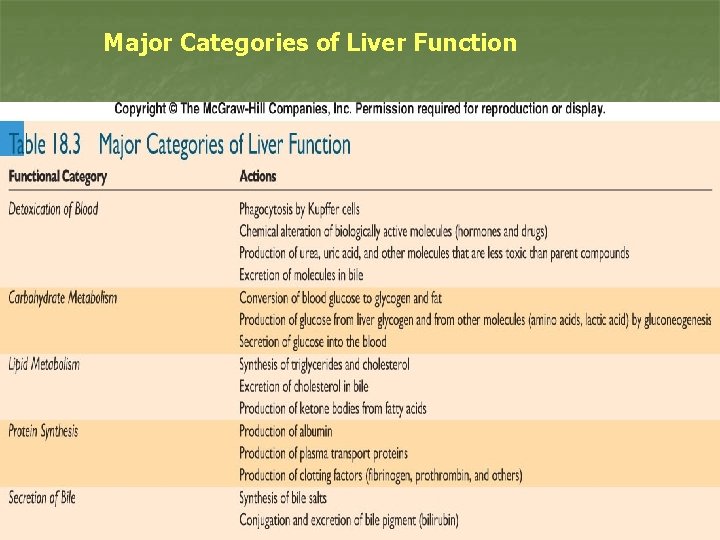
Major Categories of Liver Function
Bile Production and Secretion n The liver produces and secretes 250– 1500 ml of bile/day. n Major constituents of bile are n n n Bile pigment (bilirubin) - also produced in the spleen and bone marrow Bile salts Phosholipids _____________ Inorganic ions
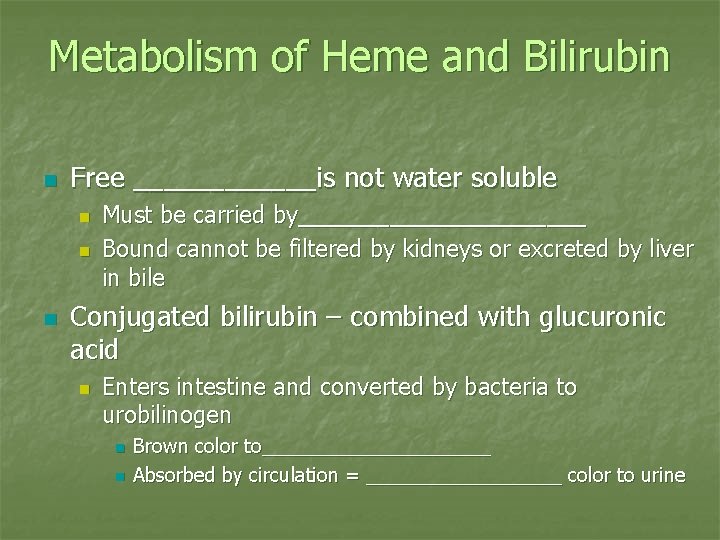
Metabolism of Heme and Bilirubin n Free ______is not water soluble n n n Must be carried by___________ Bound cannot be filtered by kidneys or excreted by liver in bile Conjugated bilirubin – combined with glucuronic acid n Enters intestine and converted by bacteria to urobilinogen n n Brown color to___________ Absorbed by circulation = _________ color to urine
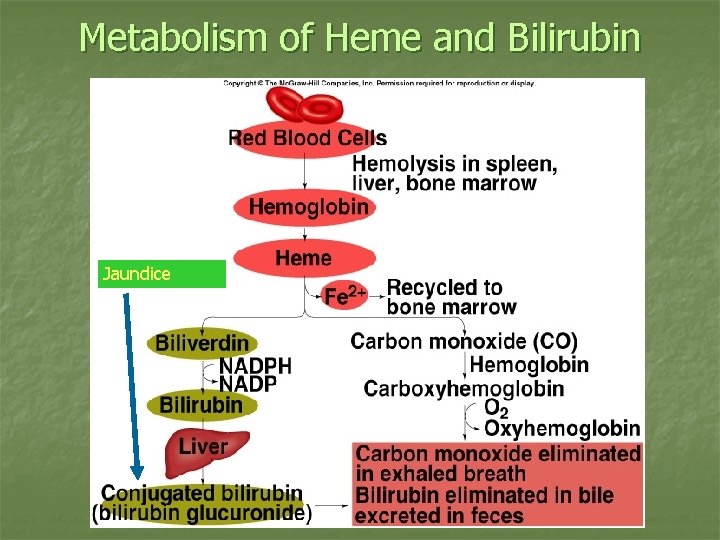
Metabolism of Heme and Bilirubin Insert fig. 18. 23 Jaundice
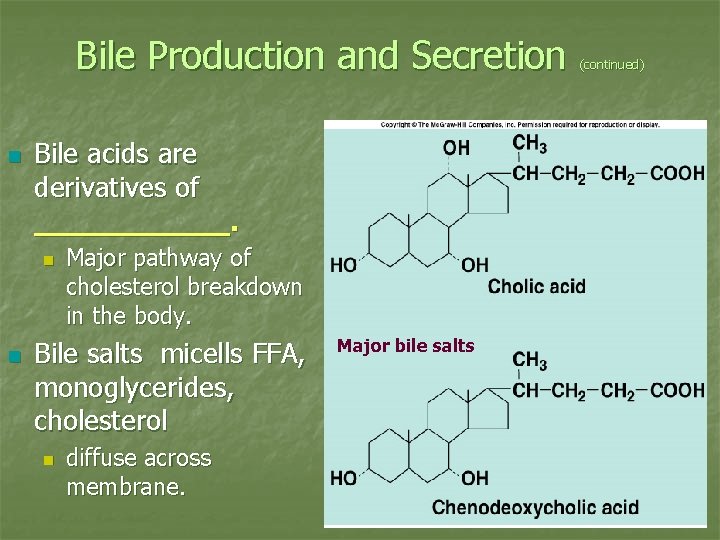
Bile Production and Secretion n Bile acids are derivatives of ______. n n n Insert fig. 18. 25 Major pathway of cholesterol breakdown in the body. Bile salts micells FFA, monoglycerides, cholesterol diffuse across membrane. (continued) Major bile salts
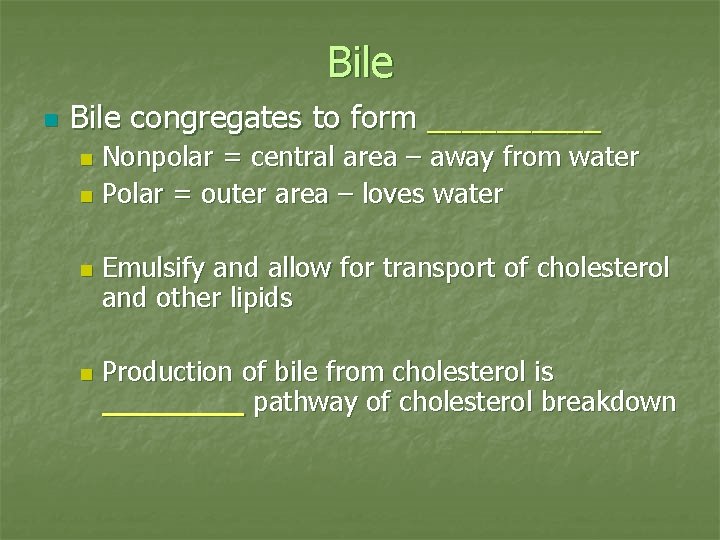
Bile n Bile congregates to form _____ Nonpolar = central area – away from water n Polar = outer area – loves water n n n Emulsify and allow for transport of cholesterol and other lipids Production of bile from cholesterol is ____ pathway of cholesterol breakdown
Detoxification of the Blood n Liver can remove hormones, drugs, and other biologically active molecules from the blood by: Excretion into the ____. n Chemical alteration of the molecules. n __________is produced by deamination of amino acids in the liver. n Liver converts it into urea. n n Excreted in urine.
Detoxification of the Blood n n (continued) Inactivation of steroid hormones and drugs. Hydroxylation (addition of OH-) groups n Makes hormones more polar-excreted in urine
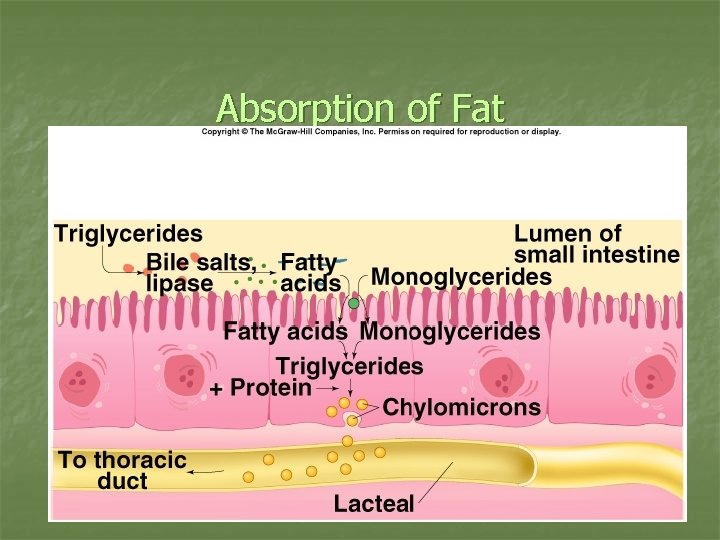
Bile Production and Secretion n n (continued) Triglycerides formed in epithelial cells – encased in protein coat (chylomicrons) – enter lacteals All _____ is digested/absorbed in upper part of small intestine.
Secretion of Glucose, Triglycerides and Ketones n Liver helps regulate blood glucose concentration by: Glycogenesis and lipogenesis. n Glycogenolysis and gluconeogenesis. n n Contains enzymes required to convert free fatty acids into _____ bodies.
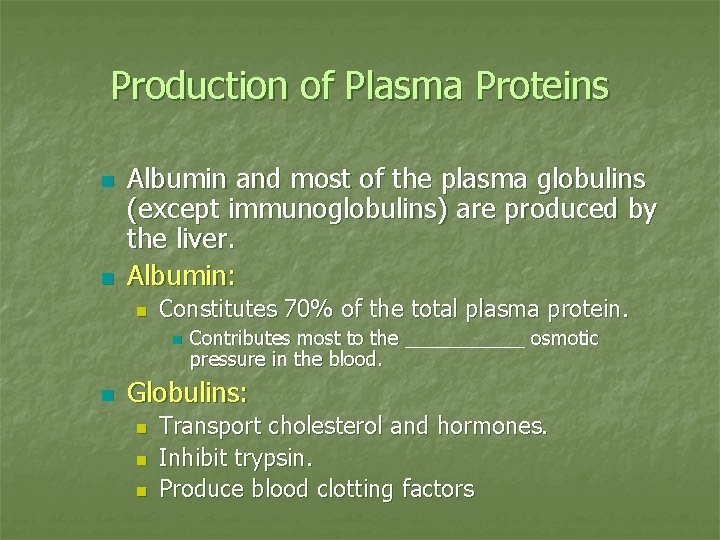
Production of Plasma Proteins n n Albumin and most of the plasma globulins (except immunoglobulins) are produced by the liver. Albumin: n Constitutes 70% of the total plasma protein. n n Contributes most to the ______ osmotic pressure in the blood. Globulins: n n n Transport cholesterol and hormones. Inhibit trypsin. Produce blood clotting factors
Gallbladder n n n Sac-like organ attached to the inferior surface of the liver. Stores and concentrates bile. When gallbladder fills with bile, it expands.
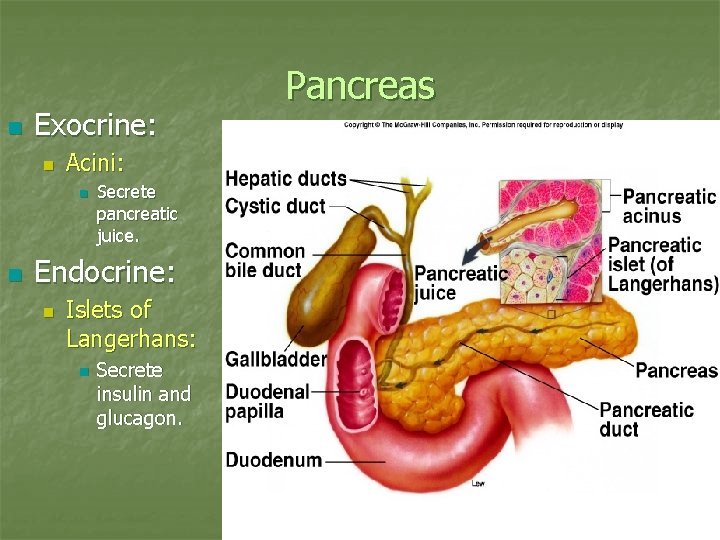
n Exocrine: n Acini: n n Secrete pancreatic juice. Endocrine: n Pancreas Islets of Langerhans: n Secrete insulin and glucagon. Insert fig. 18. 26
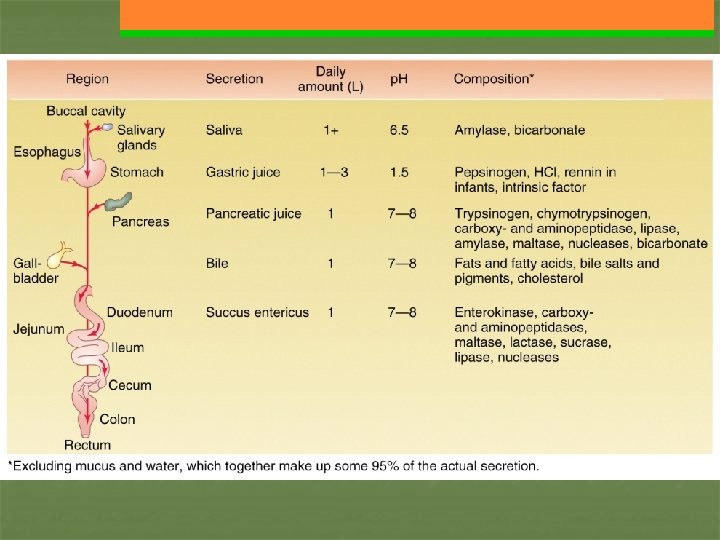
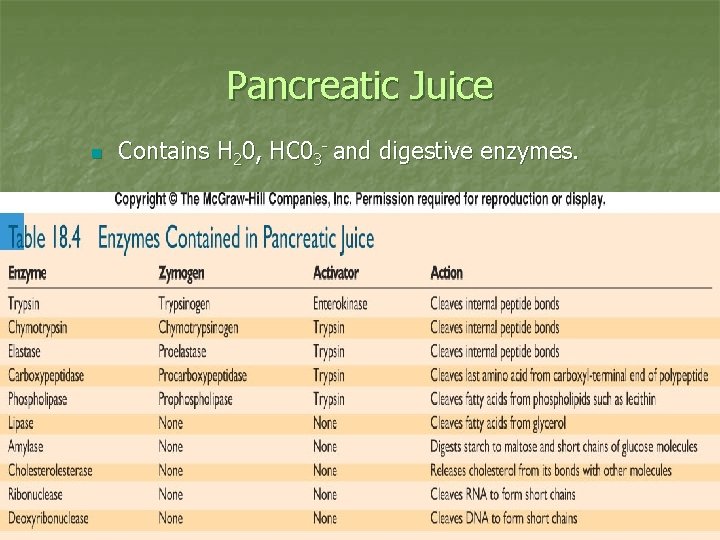
Pancreatic Juice n Contains H 20, HC 03 - and digestive enzymes.
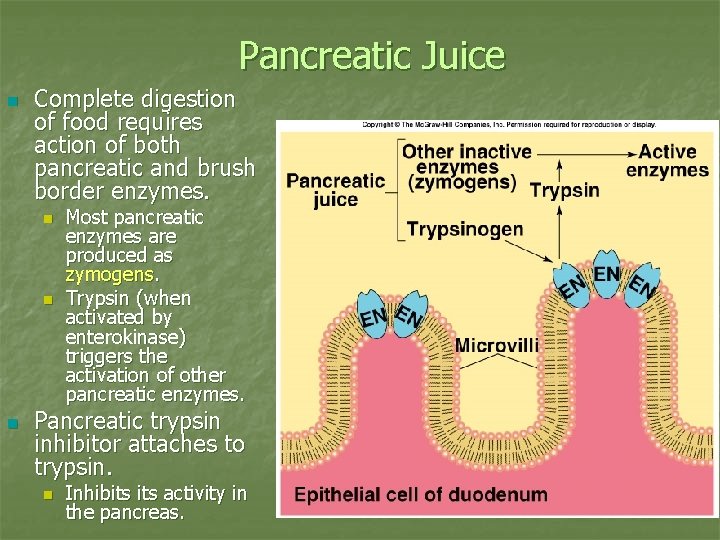
Pancreatic Juice n Complete digestion of food requires action of both pancreatic and brush border enzymes. n n n Most pancreatic enzymes are produced as zymogens. Trypsin (when activated by enterokinase) triggers the activation of other pancreatic enzymes. Pancreatic trypsin inhibitor attaches to trypsin. n Inhibits activity in the pancreas. Fig. 18. 29
Neural and Endocrine Regulation n n Neural and endocrine mechanisms modify the activity of the GI system. GI tract is both an ______ gland, and a target for the action of hormones.
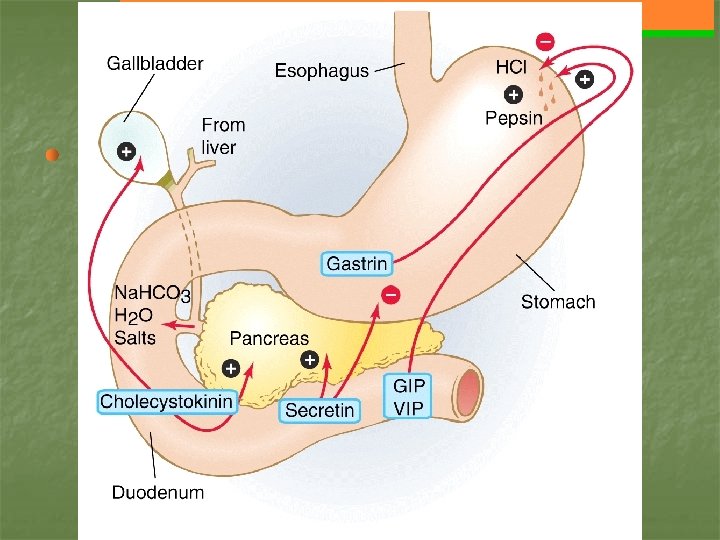
Regulation of Gastric Function n Gastric motility and secretion are automatic. Waves of contraction are initiated spontaneously by pacesetter cells. Extrinsic control of gastric function is divided into 3 phases: n n n Cephalic phase. Gastric phase. Intestinal phase.
Cephalic Phase n n Stimulated by sight, smell, and taste of food. Activation of vagus: n Stimulates chief cells to secrete _____. n Directly stimulates G cells to secrete gastrin. n Directly stimulates ECL cells to secrete __________ n Indirectly stimulates parietal cells to secrete HCl.
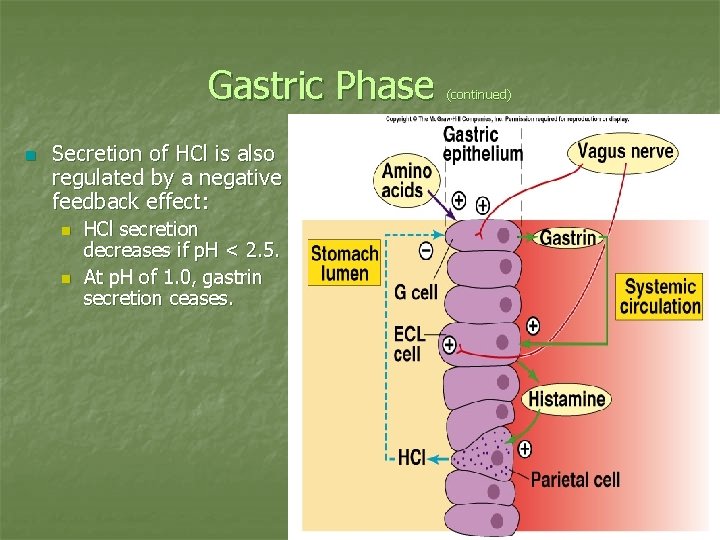
Gastric Phase n n Arrival of food in stomach stimulates the gastric phase. Gastric secretion stimulated by: n n n Distension. Chemical nature of ______(amino acids and short polypeptides). n Stimulates G cells to secrete gastrin. n Stimulates chief cells to secrete pepsinogen. Positive feedback effect. n As more HCl and pepsinogen are secreted, more polypeptides and amino acids are released.
Gastric Phase n Secretion of HCl is also regulated by a negative feedback effect: n n HCl secretion decreases if p. H < 2. 5. At p. H of 1. 0, gastrin secretion ceases. (continued) Insert. Fig. 18. 30
Intestinal Phase n n Inhibits gastric activity when chyme enters the small intestine. Activates sensory neurons of _____ and produces an inhibitory neural reflex: Inhibits gastric motility and secretion. n In the presence of fat, enterogasterone inhibits gastric motility and secretion. n n Hormone secretion: n Inhibit gastric activity: n Somatostatin, CCK, and GLP-1.
Enteric Nervous System n n n Submucosal and myenteric plexuses contain 100 million neurons. Include preganglionic parasympathetic axons, ganglion cell bodies, postganglionic sympathetic axons; and afferent intrinsic and extrinsic sensory neurons. Controls peristalsis and segmentation
Paracrine Regulators of the Intestine n Serotonin (5 -HT): n n Motilin: n n Stimulates intrinsic afferents, which send impulses into intrinsic nervous system; and activates motor neurons. Stimulates contraction of the duodenum and stomach antrum. Guanylin: n Activates guanylate cyclase, stimulating the production of c. GMP. n c. GMP stimulates the intestinal cells to secrete Cl- and H 20. n n Inhibits the absorption of Na+. __________: n May stimulate kidneys to secrete salt in urine.
Intestinal Reflexes n n Intrinsic and extrinsic regulation controlled by intrinsic and paracrine regulators. Gastroileal reflex: n n Increased gastric activity causes increased motility of ileum and movement of chyme through ileocecal sphincter. ___________ reflex: n Distension of ileum, decreases gastric motility.
Secretion of Pancreatic Juice n n n Secretion of pancreatic juice and bile is stimulated by: __________: n Occurs in response to duodenal p. H < 4. 5. n Stimulates production of HC 03 - by pancreas. n Stimulates the liver to secrete HC 03 - into the bile. _________: n Occurs in response to fat and protein content of chyme in duodenum. n Stimulates the production of pancreatic enzymes. n Enhances secretin. n Stimulates contraction of the sphincter of Oddi.
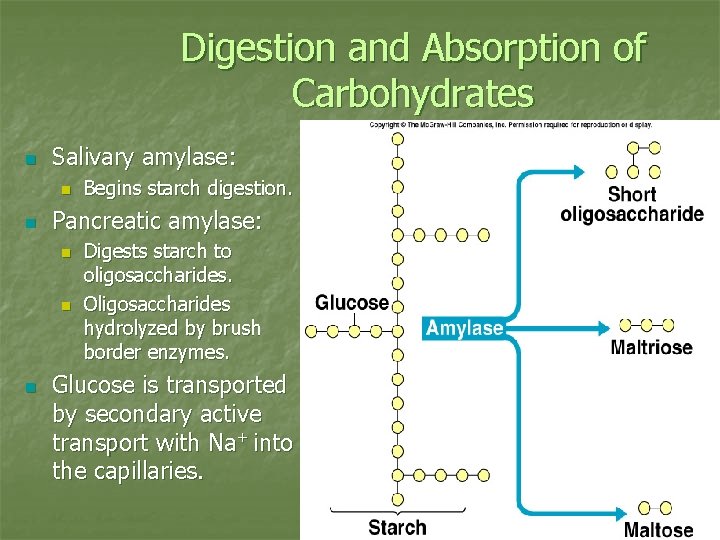
Digestion and Absorption of Carbohydrates n Salivary amylase: n n Pancreatic amylase: n n n Begins starch digestion. Digests starch to oligosaccharides. Oligosaccharides hydrolyzed by brush border enzymes. Glucose is transported by secondary active transport with Na+ into the capillaries. Insert fig. 18. 32
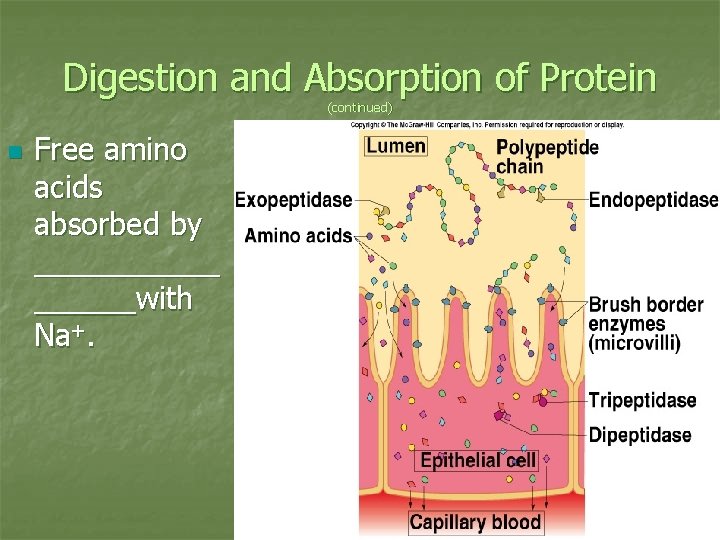
Digestion and Absorption of Protein n n Digestion begins in the stomach when pepsin digests proteins to form polypeptides. In the duodenum and jejunum: n n _________cleave peptide bonds in the interior of the polypeptide: n Trypsin. n Chymotrypsin. n Elastase. __________cleave peptide bonds from the ends of the polypeptide: n Carboxypeptidase. n Aminopeptidase.
Digestion and Absorption of Protein (continued) n Free amino acids absorbed by ______with Na+. Insert fig. 18. 33
Digestion and Absorption of Lipids n n Arrival of lipids in the duodenum serves as a stimulus for secretion of bile. _____________: n n Bile salt micelles are secreted into duodenum to break up fat droplets. Pancreatic lipase and colipase hydrolyze triglycerides to free fatty acids and monglycerides.
Digestion and Absorption of Lipids (continued) n Free fatty acids, monoglycerides, and lysolecithin leave micelles and enter into epithelial cells. n Resynthesize triglycerides and phospholipids within cell. n Combine with a protein to form chylomicrons.
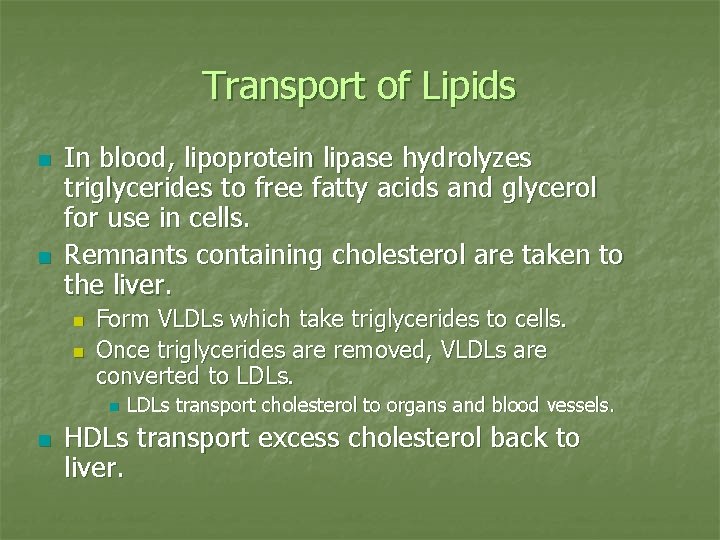
Transport of Lipids n n In blood, lipoprotein lipase hydrolyzes triglycerides to free fatty acids and glycerol for use in cells. Remnants containing cholesterol are taken to the liver. n n Form VLDLs which take triglycerides to cells. Once triglycerides are removed, VLDLs are converted to LDLs. n n LDLs transport cholesterol to organs and blood vessels. HDLs transport excess cholesterol back to liver.
Absorption of Fat Insert fig. 18. 36