
Chapter 18 Temperature Heat and the First Law
- Slides: 26
Chapter 18 Temperature, Heat, and the First Law of Thermodynamics
Temperature • Thermodynamics – branch of physics studying thermal energy of systems • Temperature (T), a scalar – measure of thermal (internal) energy of a system • SI unit: K (Kelvin) • Kelvin scale has a lower limit (absolute zero) and has no upper limit William Thomson (Lord Kelvin) (1824 - 1907)
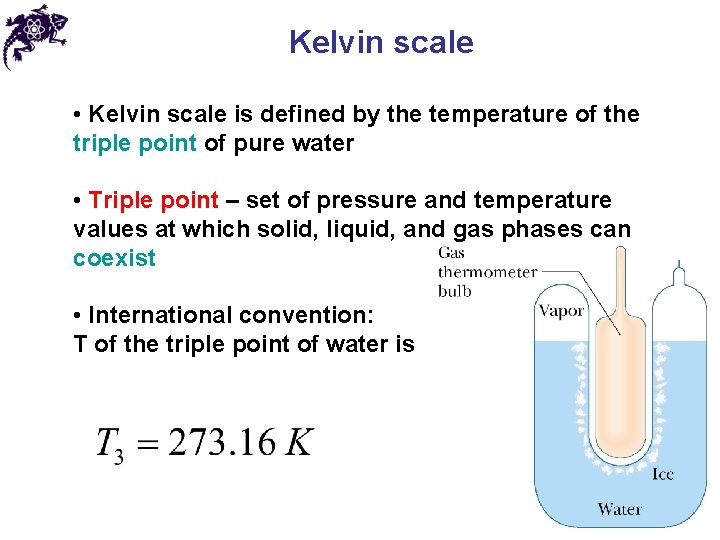
Kelvin scale • Kelvin scale is defined by the temperature of the triple point of pure water • Triple point – set of pressure and temperature values at which solid, liquid, and gas phases can coexist • International convention: T of the triple point of water is
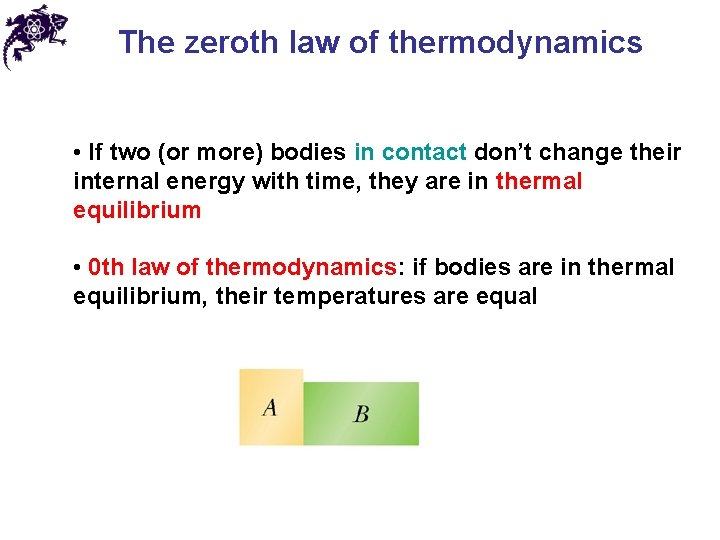
The zeroth law of thermodynamics • If two (or more) bodies in contact don’t change their internal energy with time, they are in thermal equilibrium • 0 th law of thermodynamics: if bodies are in thermal equilibrium, their temperatures are equal
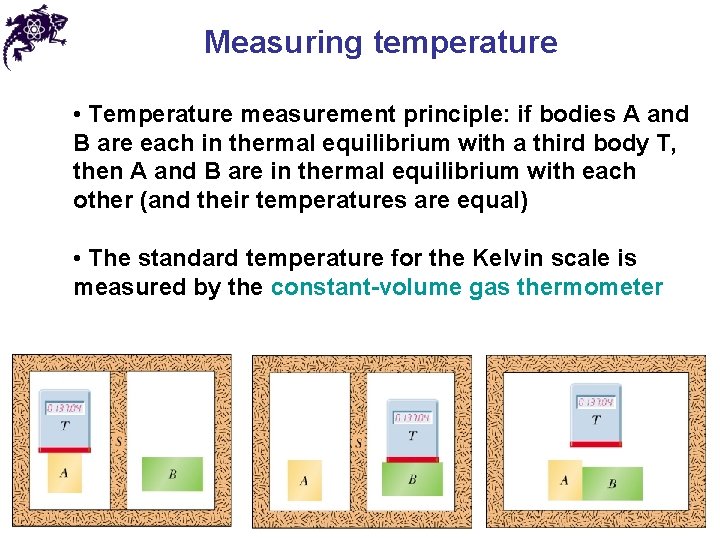
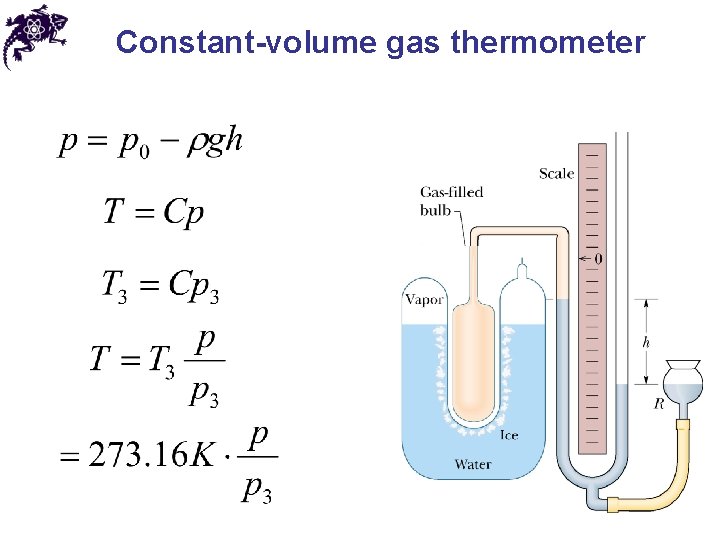
Measuring temperature • Temperature measurement principle: if bodies A and B are each in thermal equilibrium with a third body T, then A and B are in thermal equilibrium with each other (and their temperatures are equal) • The standard temperature for the Kelvin scale is measured by the constant-volume gas thermometer
Constant-volume gas thermometer
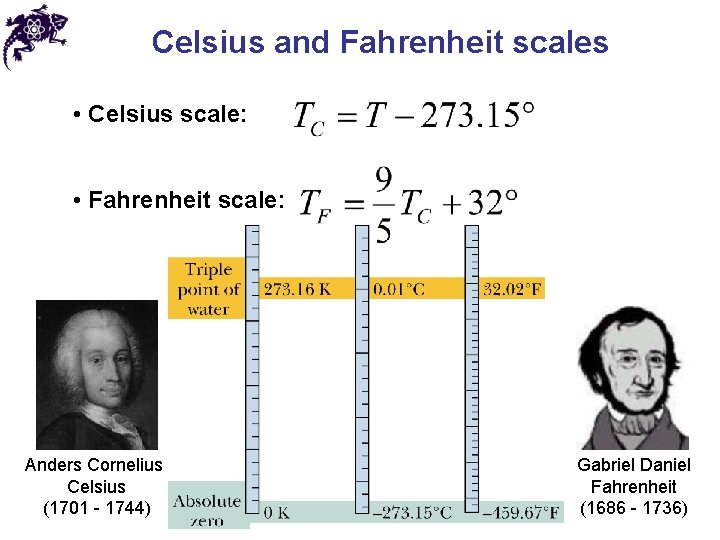
Celsius and Fahrenheit scales • Celsius scale: • Fahrenheit scale: Anders Cornelius Celsius (1701 - 1744) Gabriel Daniel Fahrenheit (1686 - 1736)
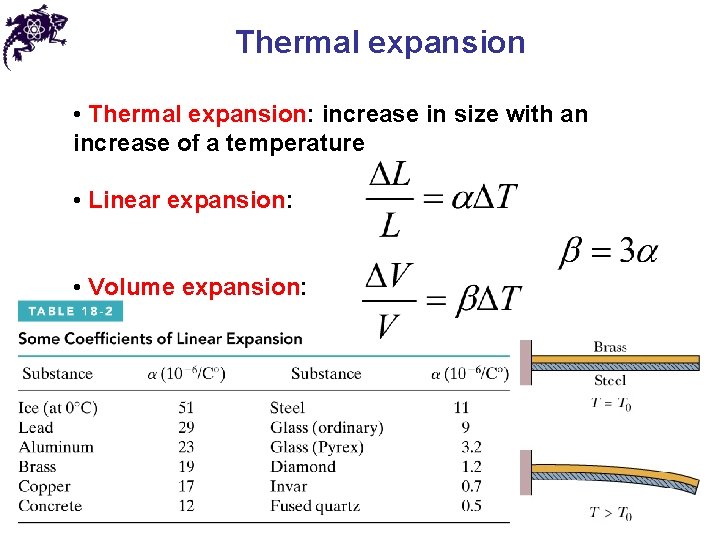
Thermal expansion • Thermal expansion: increase in size with an increase of a temperature • Linear expansion: • Volume expansion:
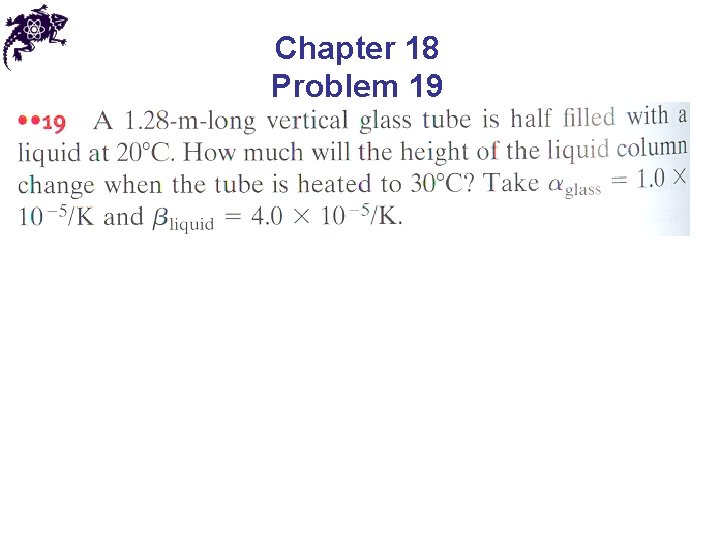
Chapter 18 Problem 19
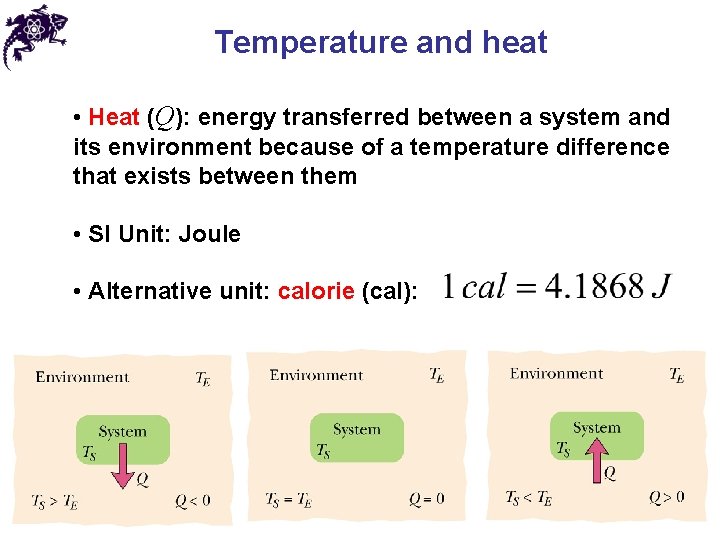
Temperature and heat • Heat (Q): energy transferred between a system and its environment because of a temperature difference that exists between them • SI Unit: Joule • Alternative unit: calorie (cal):
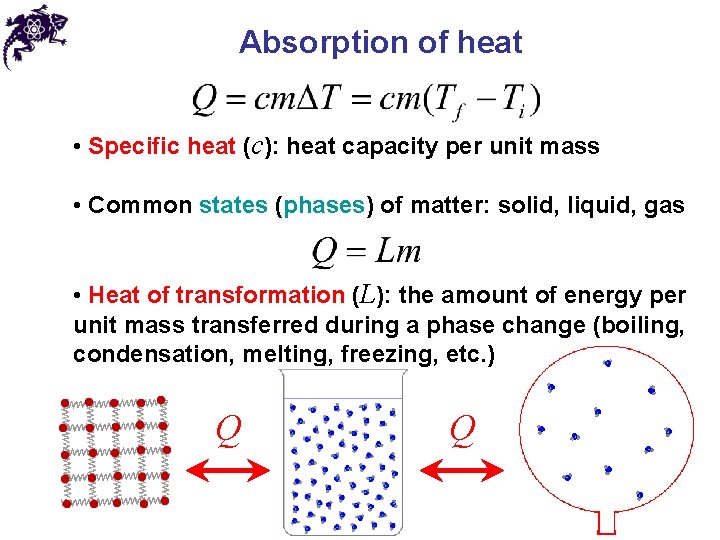
Absorption of heat • Specific heat (c): heat capacity per unit mass • Common states (phases) of matter: solid, liquid, gas • Heat of transformation (L): the amount of energy per unit mass transferred during a phase change (boiling, condensation, melting, freezing, etc. ) Q Q
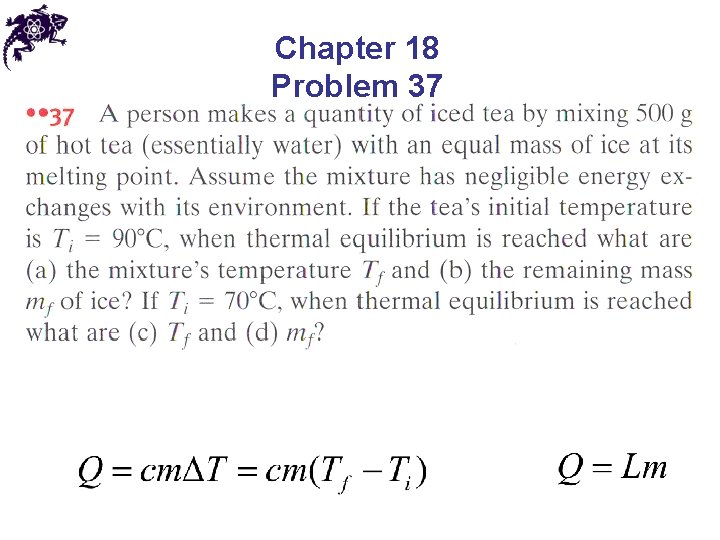
Chapter 18 Problem 37
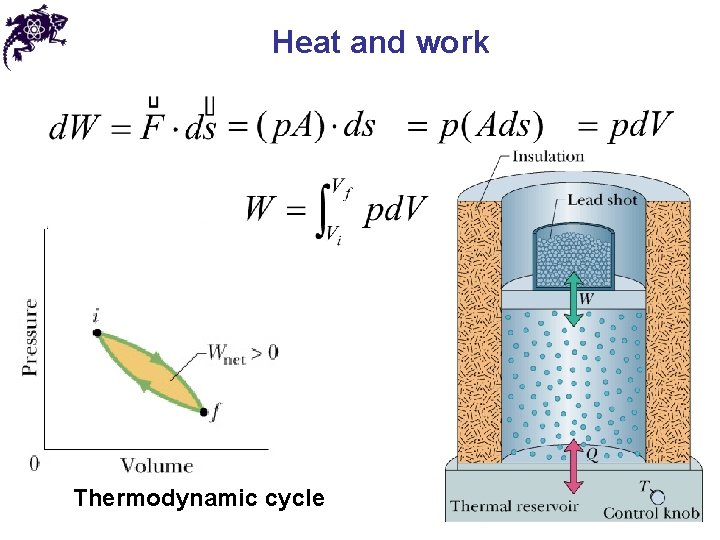
Heat and work Thermodynamic cycle
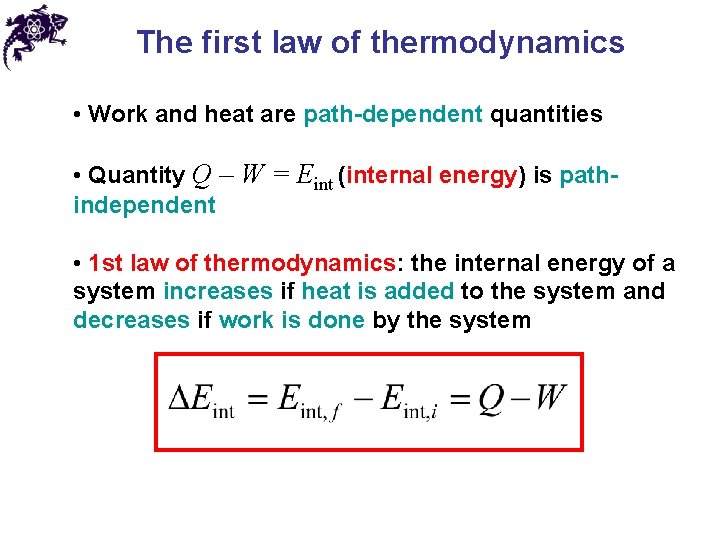
The first law of thermodynamics • Work and heat are path-dependent quantities • Quantity Q – W = Eint (internal energy) is pathindependent • 1 st law of thermodynamics: the internal energy of a system increases if heat is added to the system and decreases if work is done by the system
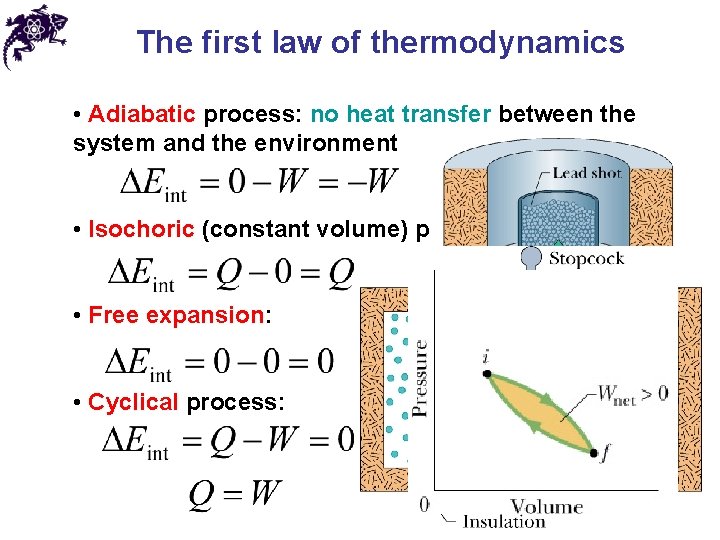
The first law of thermodynamics • Adiabatic process: no heat transfer between the system and the environment • Isochoric (constant volume) process • Free expansion: • Cyclical process:
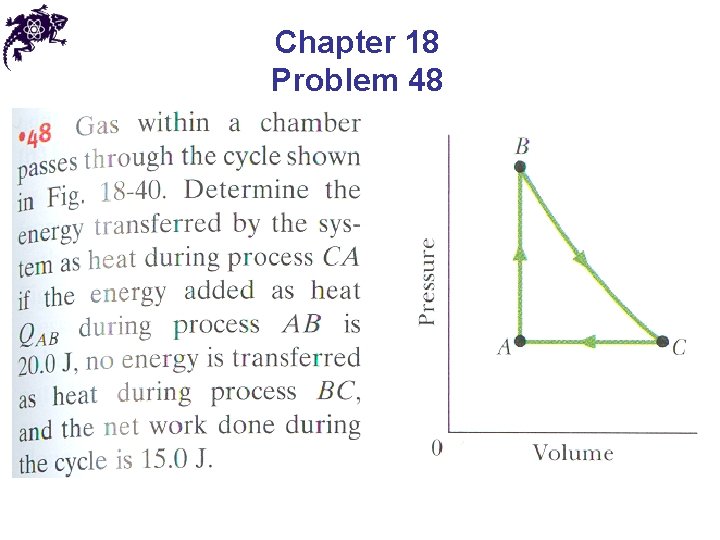
Chapter 18 Problem 48
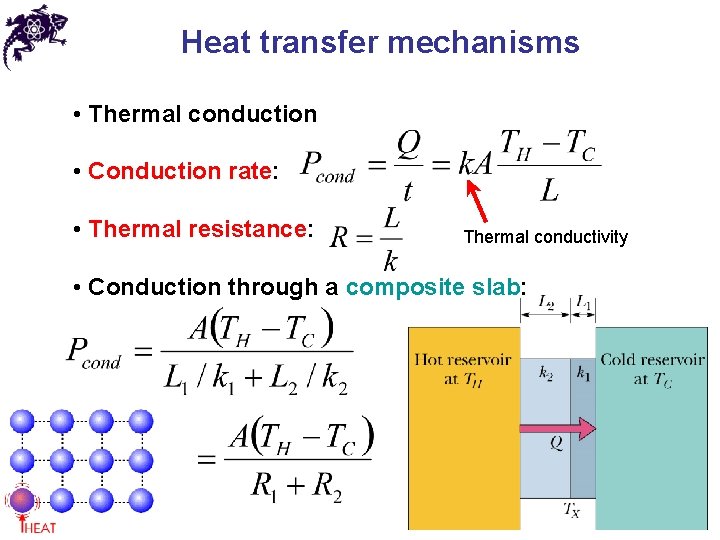
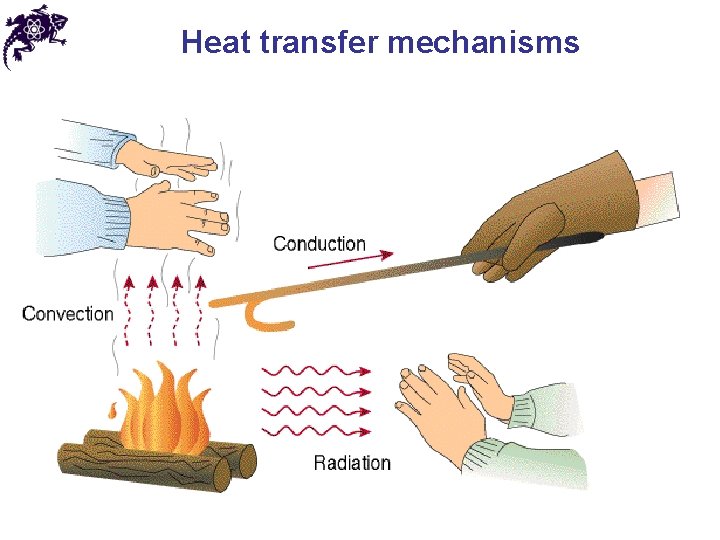
Heat transfer mechanisms • Thermal conduction • Conduction rate: • Thermal resistance: Thermal conductivity • Conduction through a composite slab:
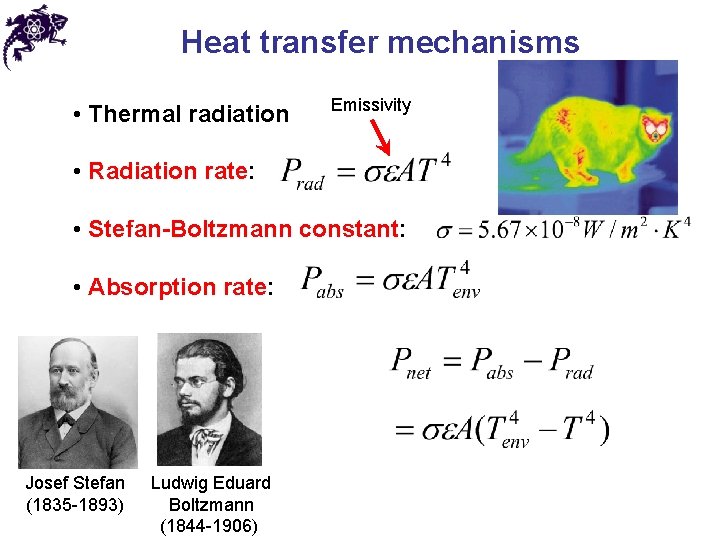
Heat transfer mechanisms • Thermal radiation Emissivity • Radiation rate: • Stefan-Boltzmann constant: • Absorption rate: Josef Stefan (1835 -1893) Ludwig Eduard Boltzmann (1844 -1906)
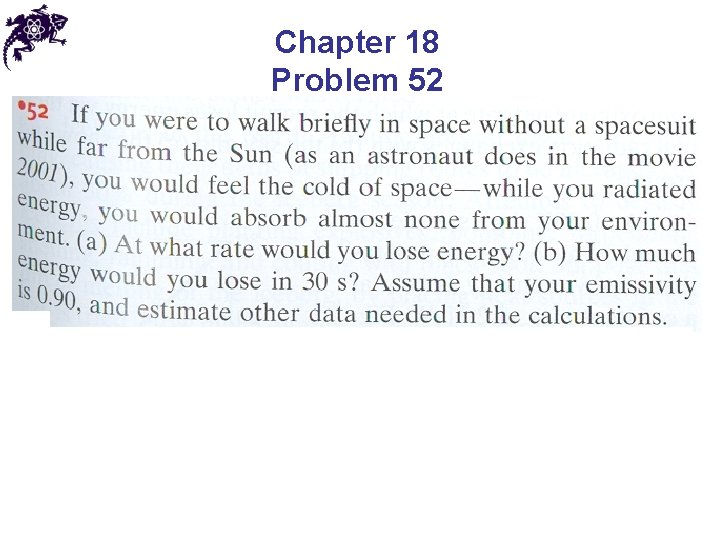
Chapter 18 Problem 52
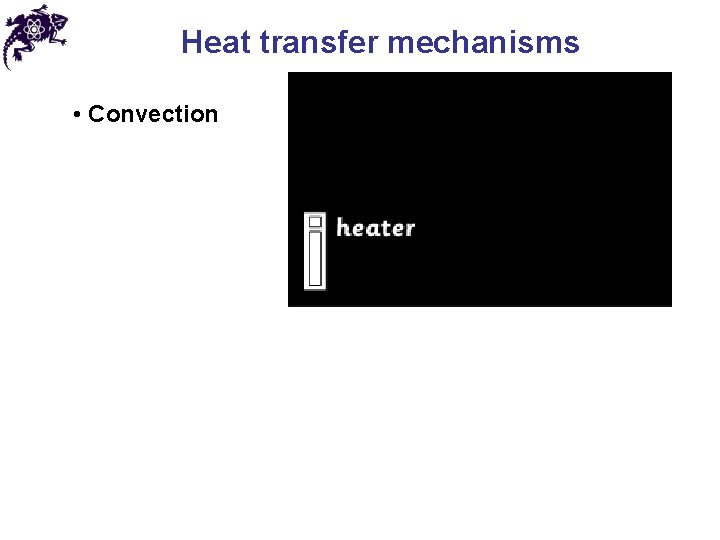
Heat transfer mechanisms • Convection
Heat transfer mechanisms
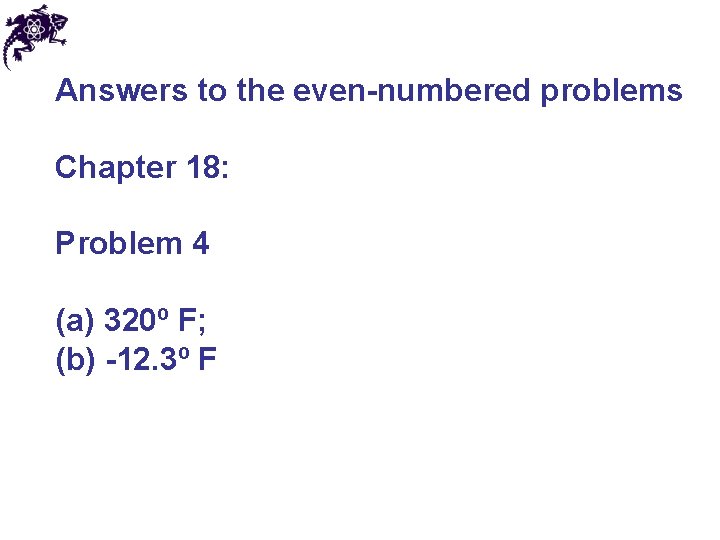
Answers to the even-numbered problems Chapter 18: Problem 4 (a) 320º F; (b) -12. 3º F
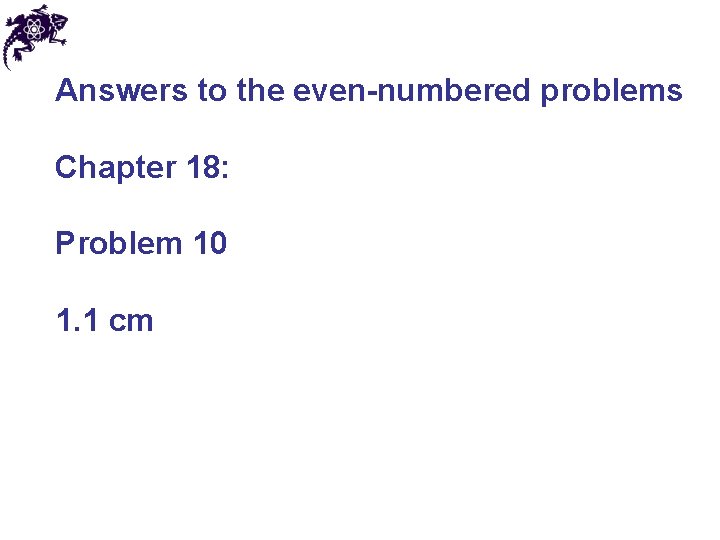
Answers to the even-numbered problems Chapter 18: Problem 10 1. 1 cm
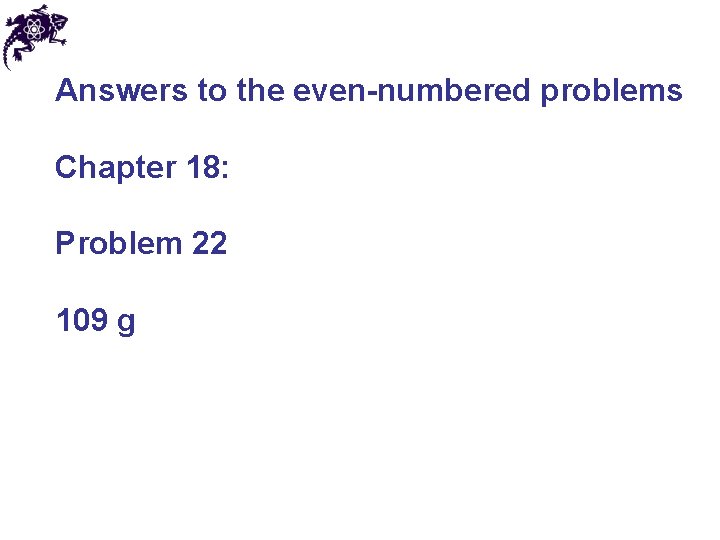
Answers to the even-numbered problems Chapter 18: Problem 22 109 g
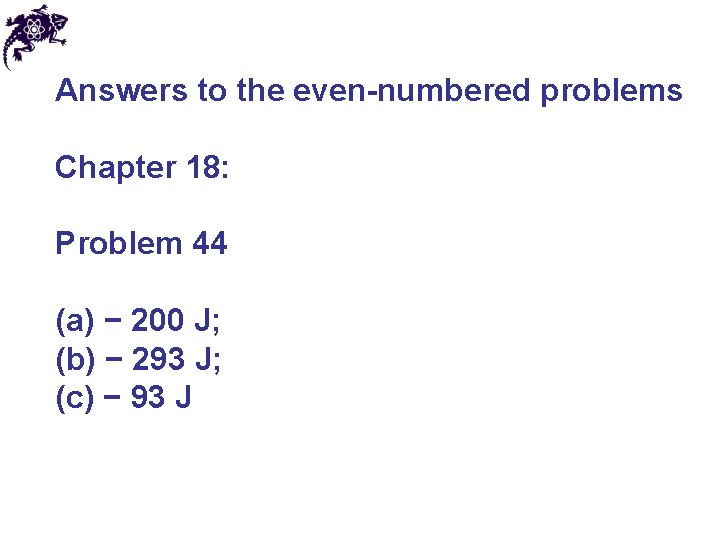
Answers to the even-numbered problems Chapter 18: Problem 44 (a) − 200 J; (b) − 293 J; (c) − 93 J
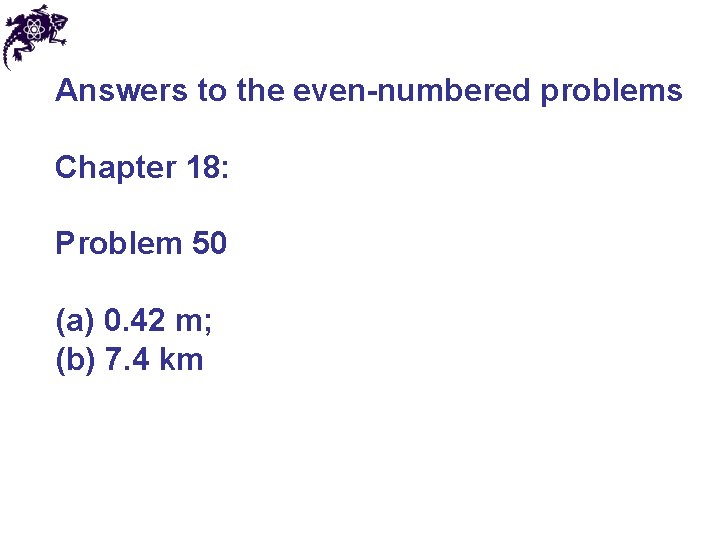
Answers to the even-numbered problems Chapter 18: Problem 50 (a) 0. 42 m; (b) 7. 4 km