
Chapter 18 Store Layout Design and Visual Merchandising





- Slides: 37
Chapter 18 Store Layout, Design and Visual Merchandising Mc. Graw-Hill/Irwin Retailing Management, 6/e Copyright © 2007 by The Mc. Graw-Hill Companies, Inc. All rights reserved.
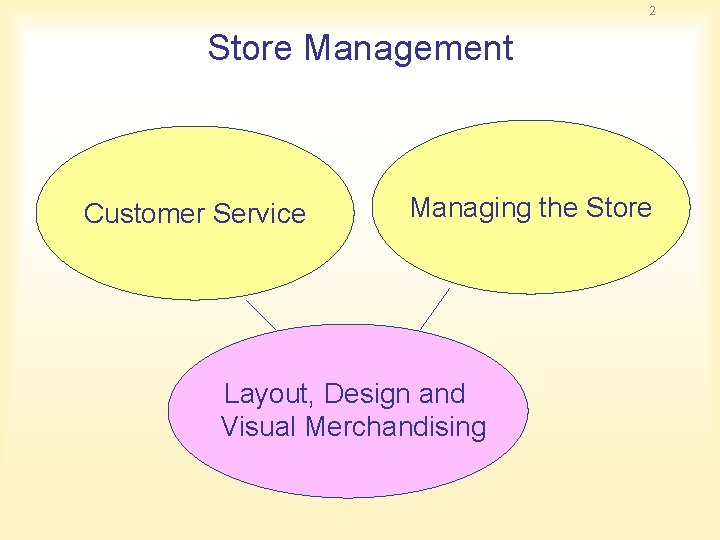
2 Store Management Customer Service Managing the Store Layout, Design and Visual Merchandising
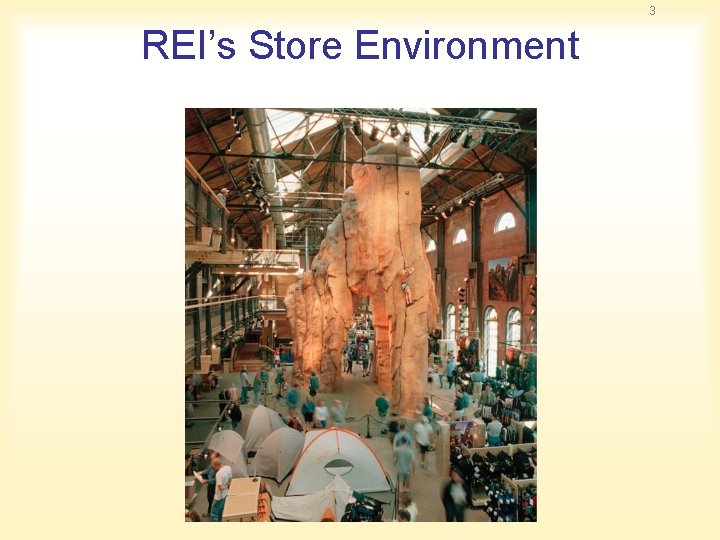
3 REI’s Store Environment
4 Store Design Objectives • • • Implement retailer’s strategy Influence customer buying behavior Control design and maintenance costs Provide flexibility Meet legal requirements
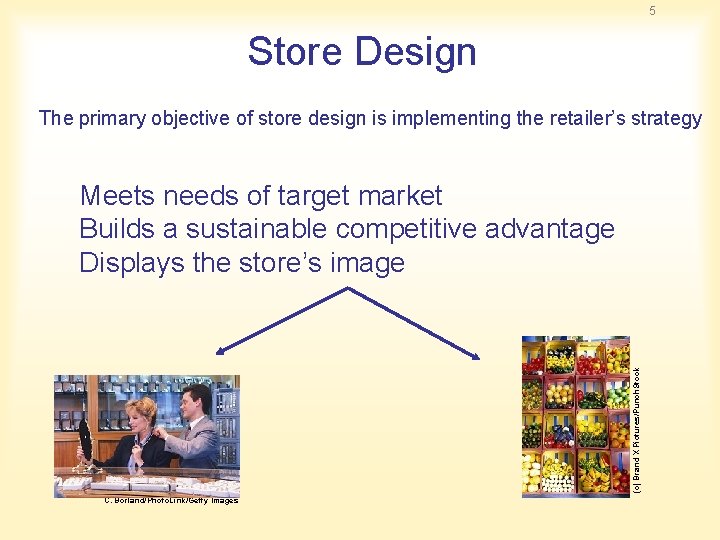
5 Store Design The primary objective of store design is implementing the retailer’s strategy (c) Brand X Pictures/Punch. Stock Meets needs of target market Builds a sustainable competitive advantage Displays the store’s image C. Borland/Photo. Link/Getty Images
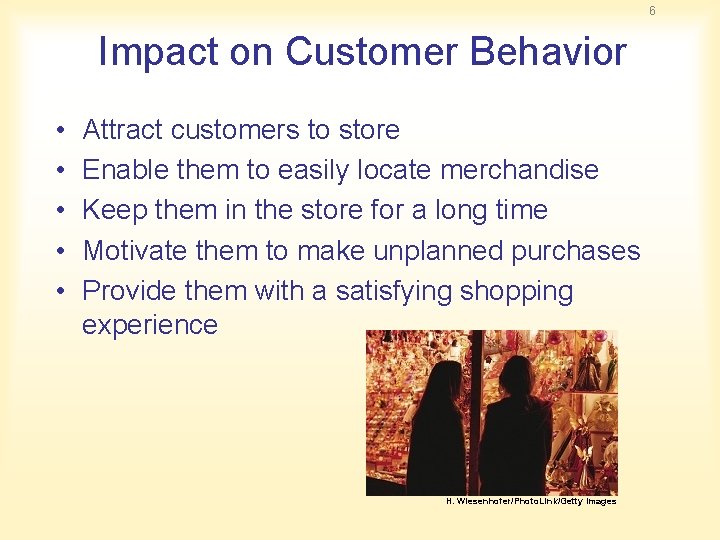
6 Impact on Customer Behavior • • • Attract customers to store Enable them to easily locate merchandise Keep them in the store for a long time Motivate them to make unplanned purchases Provide them with a satisfying shopping experience H. Wiesenhofer/Photo. Link/Getty Images
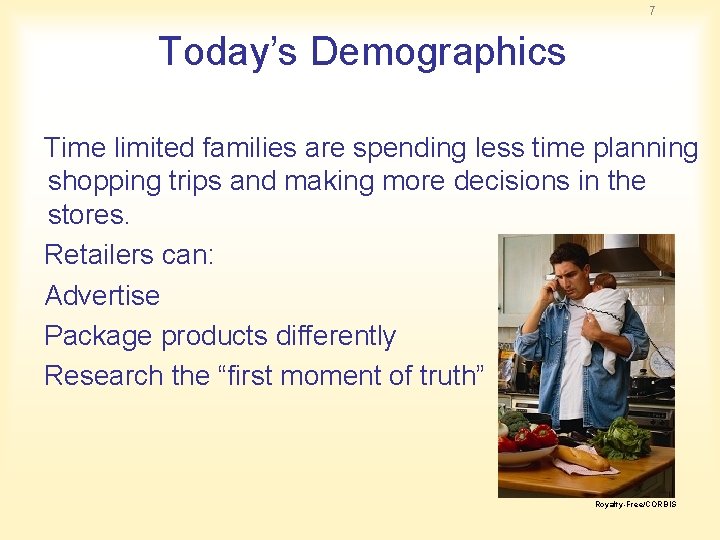
7 Today’s Demographics Time limited families are spending less time planning shopping trips and making more decisions in the stores. Retailers can: Advertise Package products differently Research the “first moment of truth” Royalty-Free/CORBIS
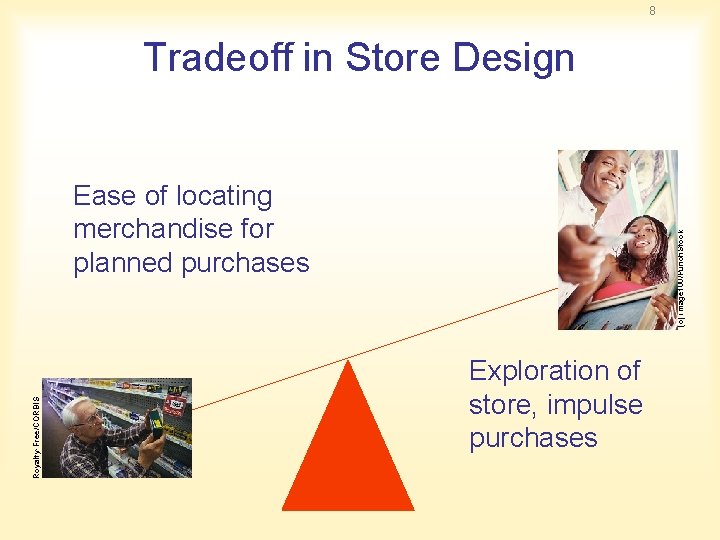
8 Tradeoff in Store Design Royalty-Free/CORBIS (c) image 100/Punch. Stock Ease of locating merchandise for planned purchases Exploration of store, impulse purchases
9 Legal Considerations Americans with Disabilities Act (ADA) Protects people with disabilities from discrimination in employment, transportation, public accommodations, telecommunications and activities of state and local government Affects store design as disabled people need “reasonable access” to merchandise and services built before 1993. After 1993, stores are expected to be fully accessible.
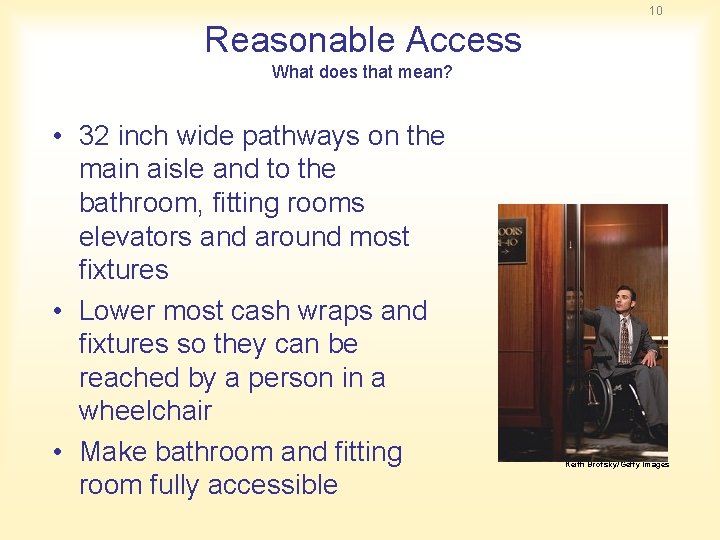
10 Reasonable Access What does that mean? • 32 inch wide pathways on the main aisle and to the bathroom, fitting rooms elevators and around most fixtures • Lower most cash wraps and fixtures so they can be reached by a person in a wheelchair • Make bathroom and fitting room fully accessible Keith Brofsky/Getty Images
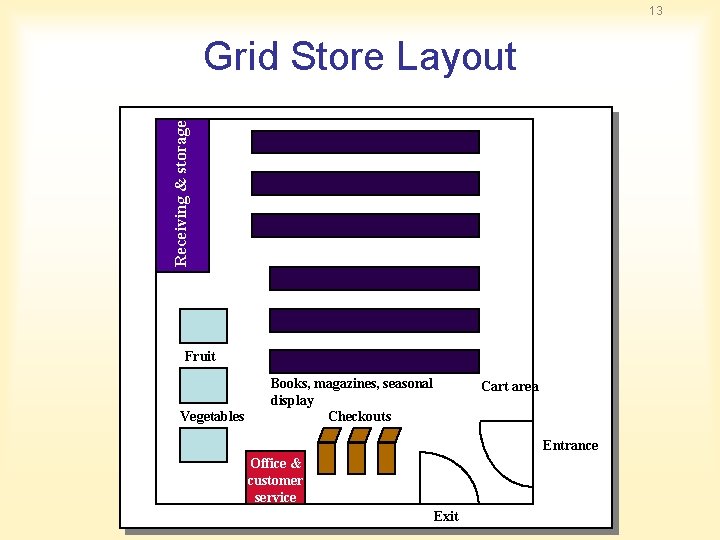
11 Types of Store Layouts Grid Racetrack Free Form
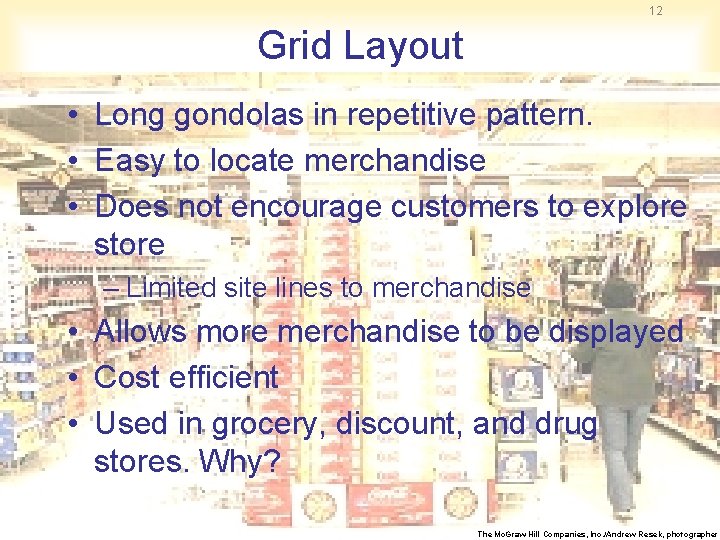
12 Grid Layout • Long gondolas in repetitive pattern. • Easy to locate merchandise • Does not encourage customers to explore store – Limited site lines to merchandise • Allows more merchandise to be displayed • Cost efficient • Used in grocery, discount, and drug stores. Why? The Mc. Graw-Hill Companies, Inc. /Andrew Resek, photographer
13 Receiving & storage Grid Store Layout Fruit Vegetables Books, magazines, seasonal display Checkouts Cart area Entrance Office & customer service Exit
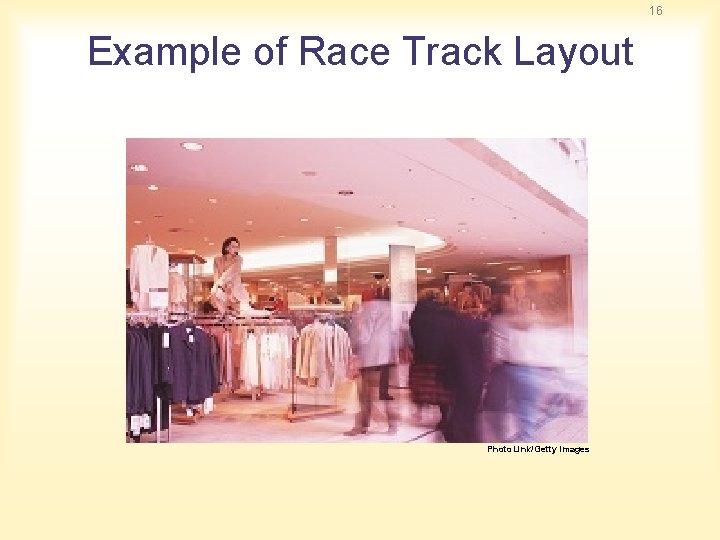
14 Racetrack Layout • Loop with a major aisle that has access to departments and store’s multiple entrances. • Draws customers around the store. • Provide different site lines and encourage exploration, impulse buying • Used in department stores
15 JCPenney Racetrack Layout
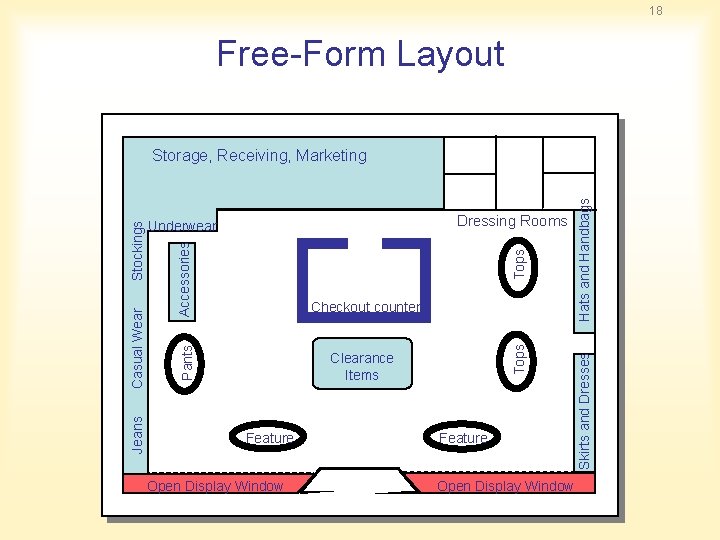
16 Example of Race Track Layout Photo. Link/Getty Images
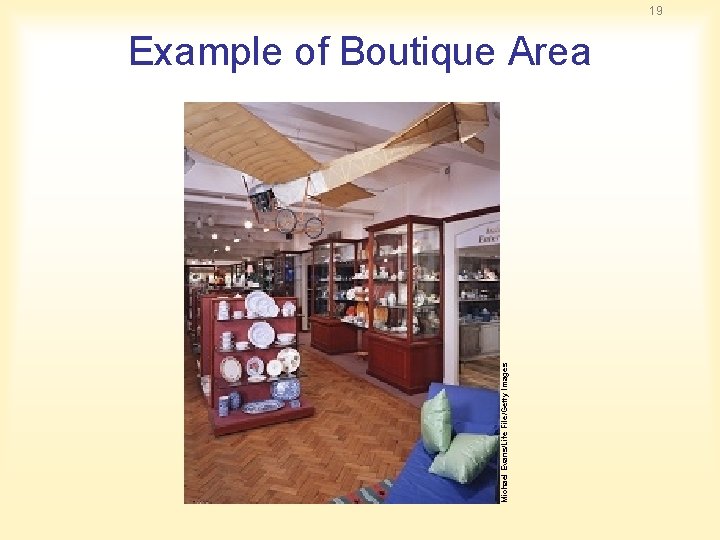
17 Free-Form (Boutique) Layout • Fixtures and aisles arranged asymmetrically • Pleasant relaxing ambiance doesn’t come cheap – small store experience • Inefficient use of space • More susceptible to shoplifting – salespeople can not view adjacent spaces. • Used in specialty stores and upscale department stores Jack Star/Photo. Link/Getty Images
18 Free-Form Layout Pants Clearance Items Feature Open Display Window Tops Accessories Checkout counter Feature Open Display Window Hats and Handbags Dressing Rooms Underwear Skirts and Dresses Jeans Casual Wear Stockings Storage, Receiving, Marketing
Michael Evans/Life File/Getty Images 19 Example of Boutique Area
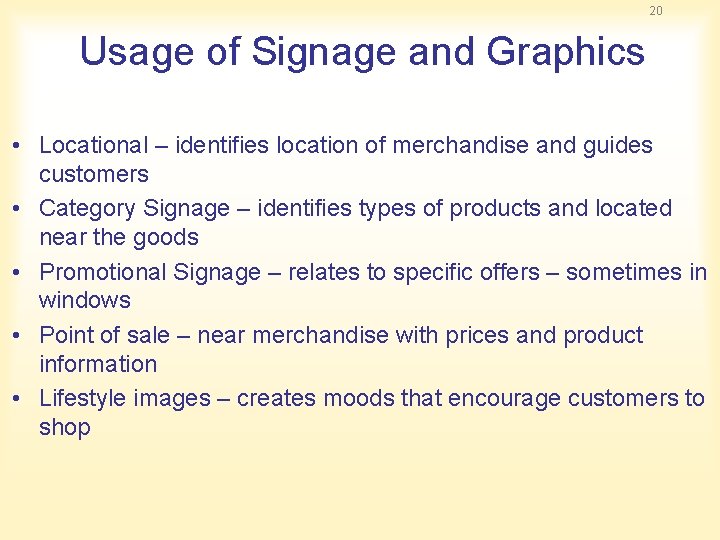
20 Usage of Signage and Graphics • Locational – identifies location of merchandise and guides customers • Category Signage – identifies types of products and located near the goods • Promotional Signage – relates to specific offers – sometimes in windows • Point of sale – near merchandise with prices and product information • Lifestyle images – creates moods that encourage customers to shop
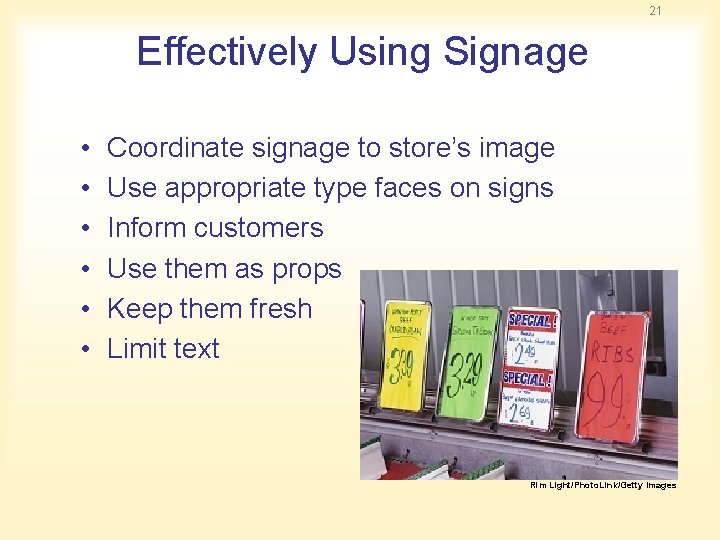
21 Effectively Using Signage • • • Coordinate signage to store’s image Use appropriate type faces on signs Inform customers Use them as props Keep them fresh Limit text Rim Light/Photo. Link/Getty Images
22 Digital Signage • • • Visual Content delivered digitally through a centrally managed and controlled network and displayed on a TV monitor or flat panel screen Superior in attracting attention Enhances store environment Provides appealing atmosphere Overcomes time-to-message hurdle Messages can target demographics Eliminates costs with printing, distribution and installing traditional signage
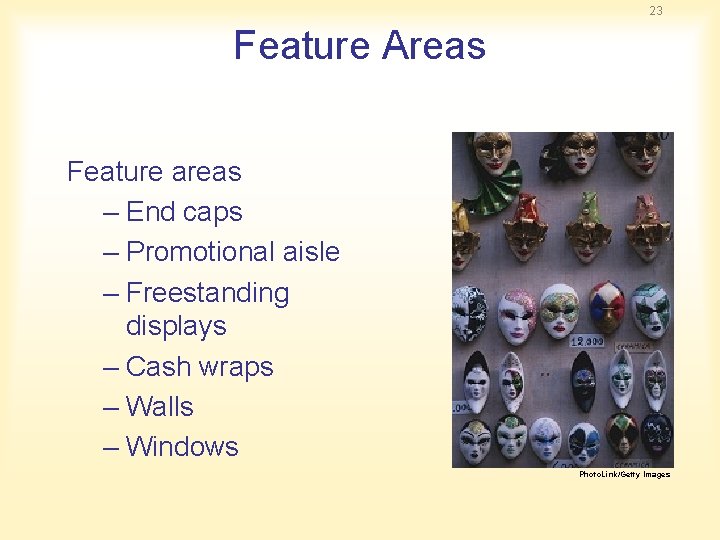
23 Feature Areas Feature areas – End caps – Promotional aisle – Freestanding displays – Cash wraps – Walls – Windows Photo. Link/Getty Images
24 Space Planning • Productivity of allocated space • Merchandise inventory turnover • Impact on store sales Photodisc/Getty Images • Display needs for the merchandise
25 Space Planning Considerations • Profitability of merchandise • Customer Buying considerations – Impulse products near front – Demand/Destination areas off the beaten path • Physical characteristics of product. • Complementary products should be adjacent • Sales rate – More units of faster selling merchandise need to be displayed
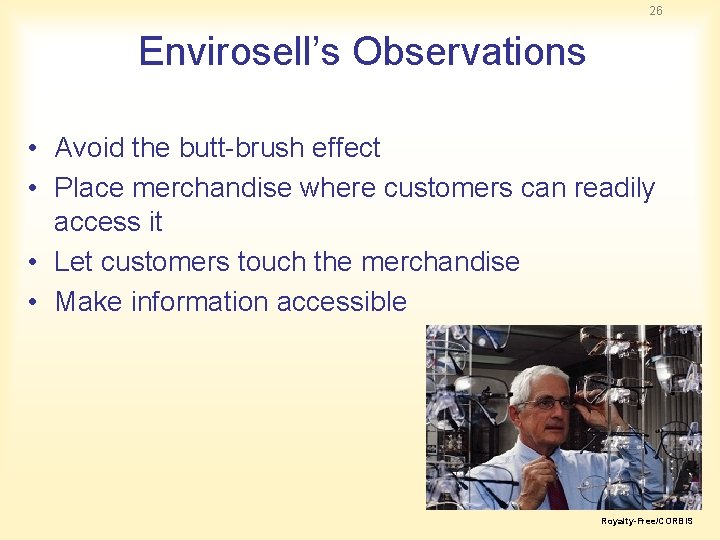
26 Envirosell’s Observations • Avoid the butt-brush effect • Place merchandise where customers can readily access it • Let customers touch the merchandise • Make information accessible Royalty-Free/CORBIS
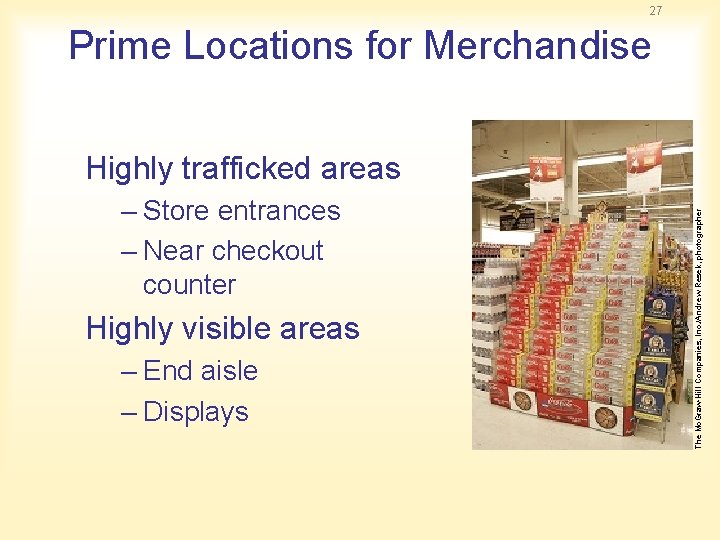
27 Prime Locations for Merchandise – Store entrances – Near checkout counter Highly visible areas – End aisle – Displays The Mc. Graw-Hill Companies, Inc. /Andrew Resek, photographer Highly trafficked areas
28 Location of Merchandise Categories • Impulse merchandise – near heavily trafficked areas • Demand merchandise – back left-hand corner of the store • Special merchandise – lightly trafficked areas (glass pieces) • Adjacencies – complimentary merchandise next to each other
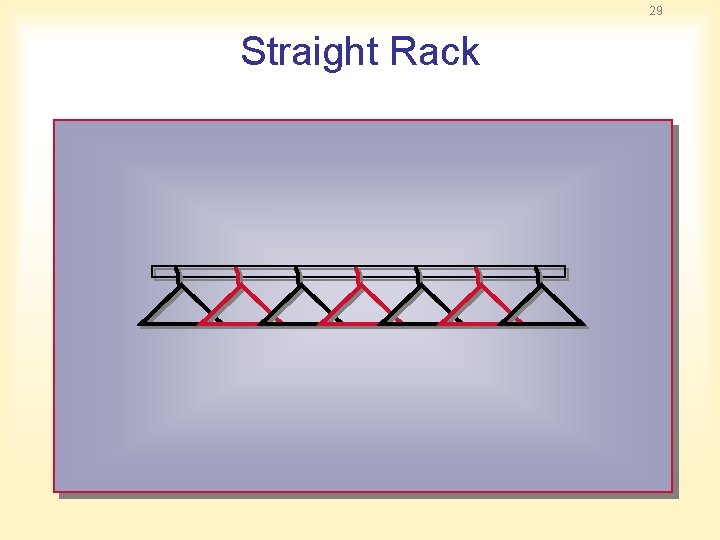
29 Straight Rack
30 Straight Rack Royalty-Free/CORBIS Holds a lot of apparel Hard to feature specific styles and colors Found often in discount and off-price stores
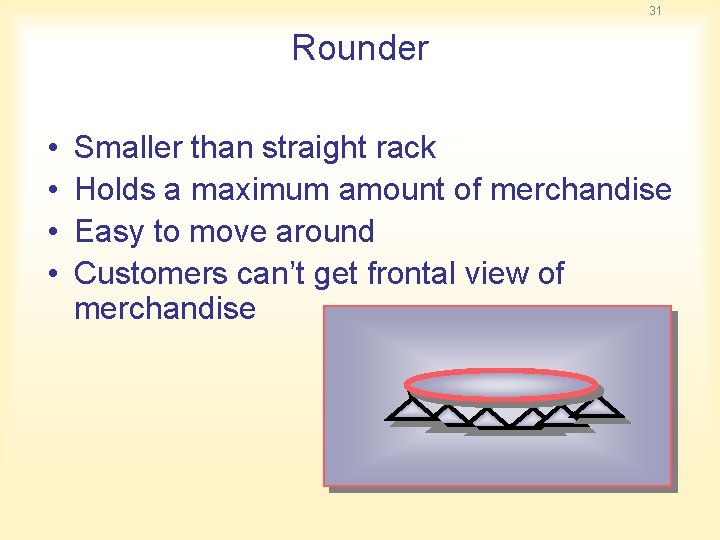
31 Rounder • • Smaller than straight rack Holds a maximum amount of merchandise Easy to move around Customers can’t get frontal view of merchandise
32 Four-Way Holds large amount of merchandise Allows customers to view entire garment Hard to maintain because of styles and colors Fashion oriented apparel retailer
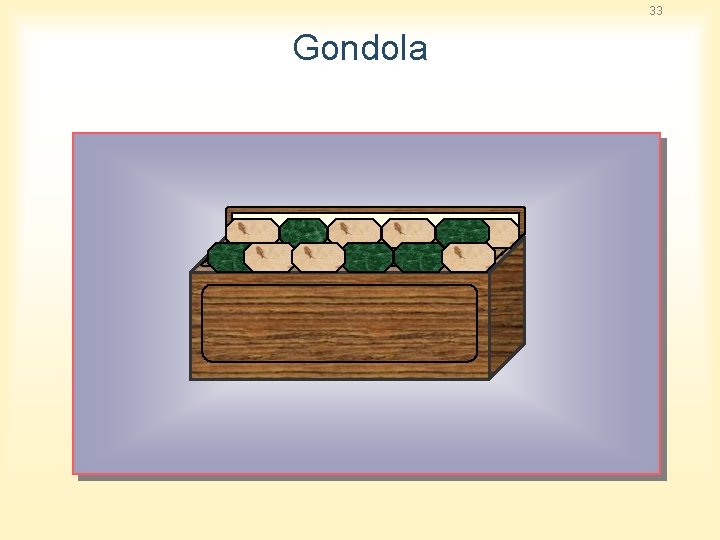
33 Gondola
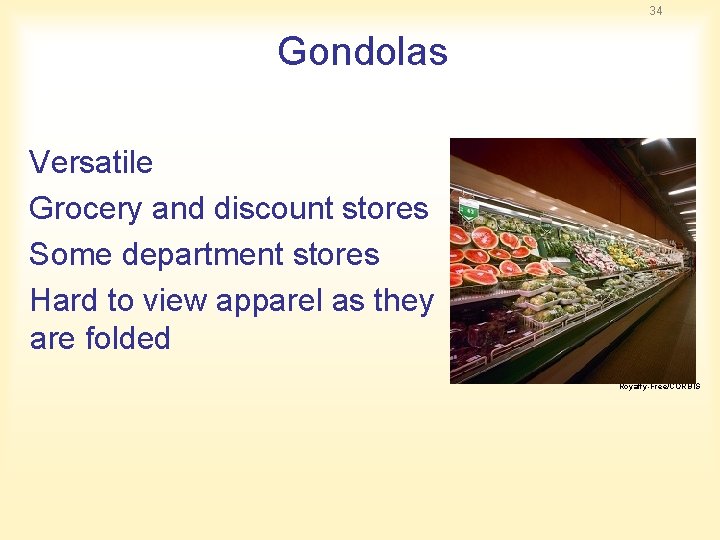
34 Gondolas Versatile Grocery and discount stores Some department stores Hard to view apparel as they are folded Royalty-Free/CORBIS
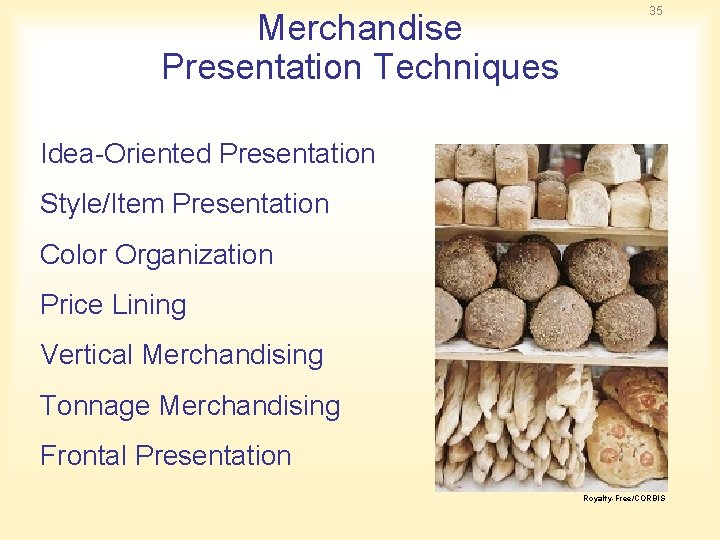
Merchandise Presentation Techniques 35 Idea-Oriented Presentation Style/Item Presentation Color Organization Price Lining Vertical Merchandising Tonnage Merchandising Frontal Presentation Royalty-Free/CORBIS
36 Creating a Store Environment Color Lighting Store Atmosphere Scent Music
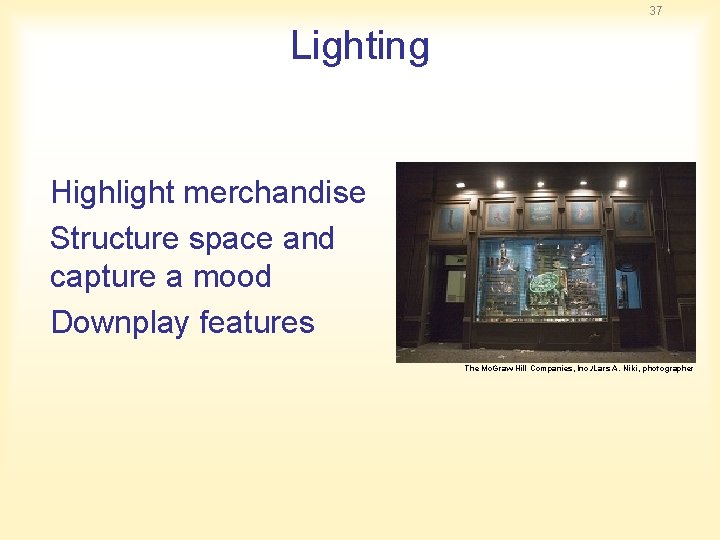
37 Lighting Highlight merchandise Structure space and capture a mood Downplay features The Mc. Graw-Hill Companies, Inc. /Lars A. Niki, photographer