
Chapter 18 Processing of Ceramics Glass and Superconductors
- Slides: 14
Chapter 18 Processing of Ceramics, Glass, and Superconductors Copyright Prentice-Hall
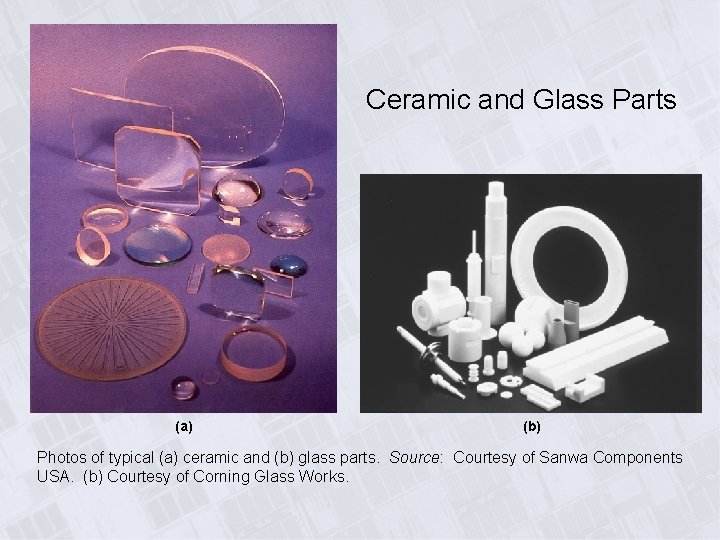
Ceramic and Glass Parts (a) (b) Photos of typical (a) ceramic and (b) glass parts. Source: Courtesy of Sanwa Components USA. (b) Courtesy of Corning Glass Works.
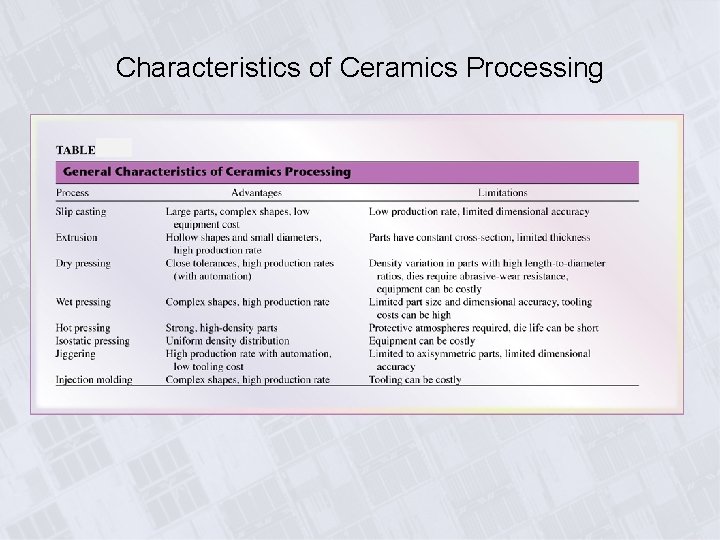
Characteristics of Ceramics Processing
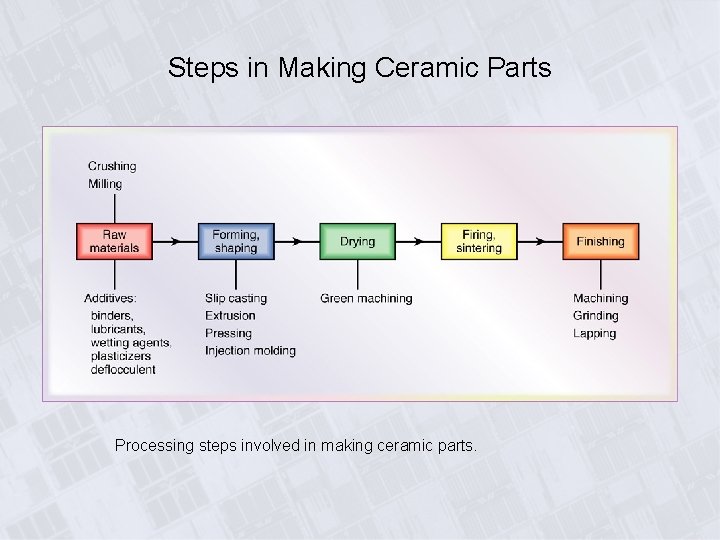
Steps in Making Ceramic Parts Processing steps involved in making ceramic parts.
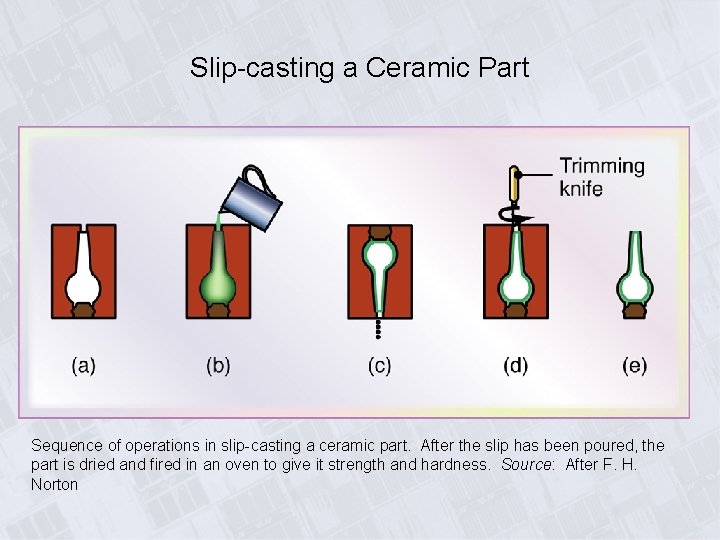
Slip-casting a Ceramic Part Sequence of operations in slip-casting a ceramic part. After the slip has been poured, the part is dried and fired in an oven to give it strength and hardness. Source: After F. H. Norton
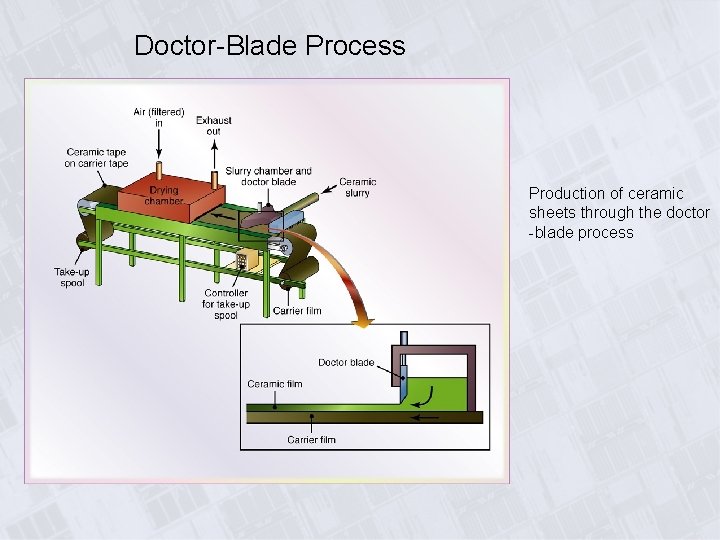
Doctor-Blade Process Production of ceramic sheets through the doctor -blade process
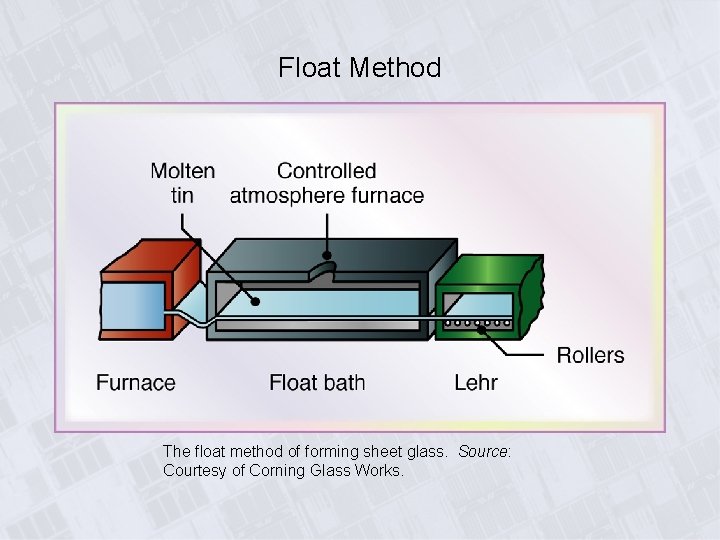
Float Method The float method of forming sheet glass. Source: Courtesy of Corning Glass Works.
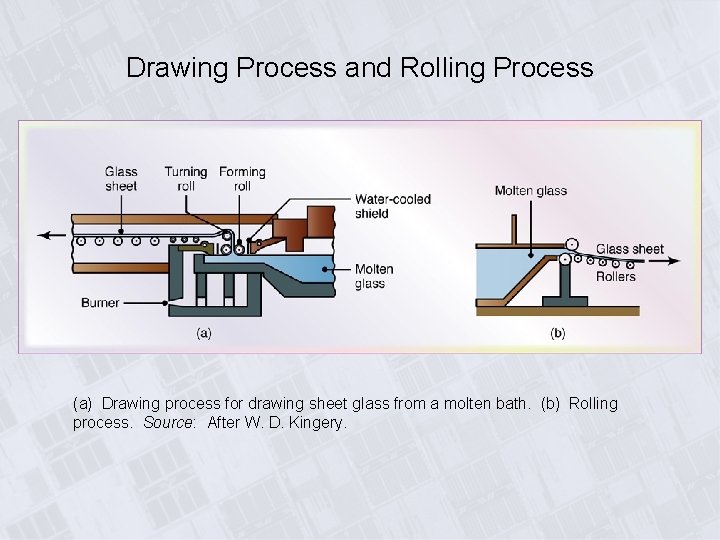
Drawing Process and Rolling Process (a) Drawing process for drawing sheet glass from a molten bath. (b) Rolling process. Source: After W. D. Kingery.
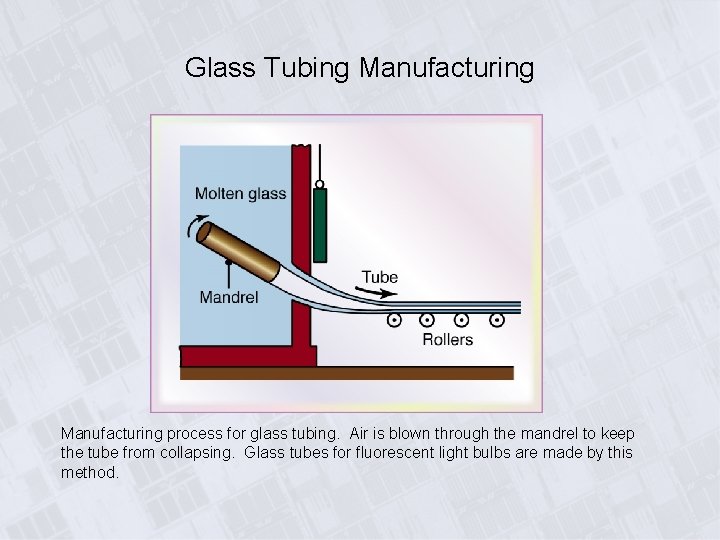
Glass Tubing Manufacturing process for glass tubing. Air is blown through the mandrel to keep the tube from collapsing. Glass tubes for fluorescent light bulbs are made by this method.
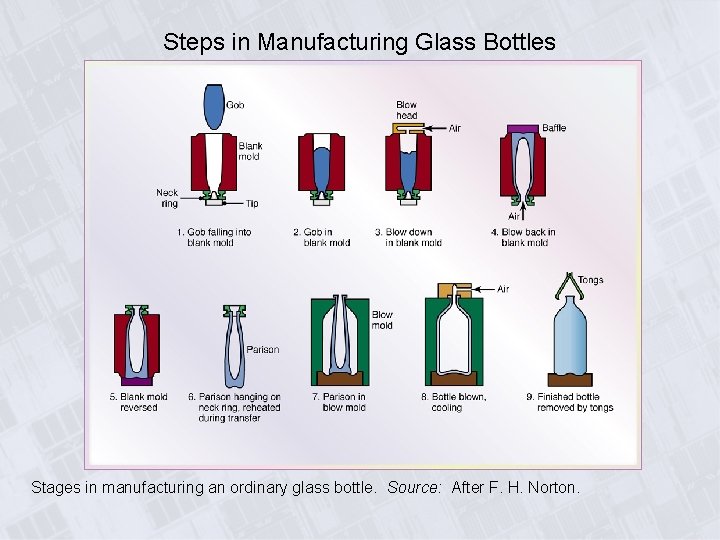
Steps in Manufacturing Glass Bottles Stages in manufacturing an ordinary glass bottle. Source: After F. H. Norton.
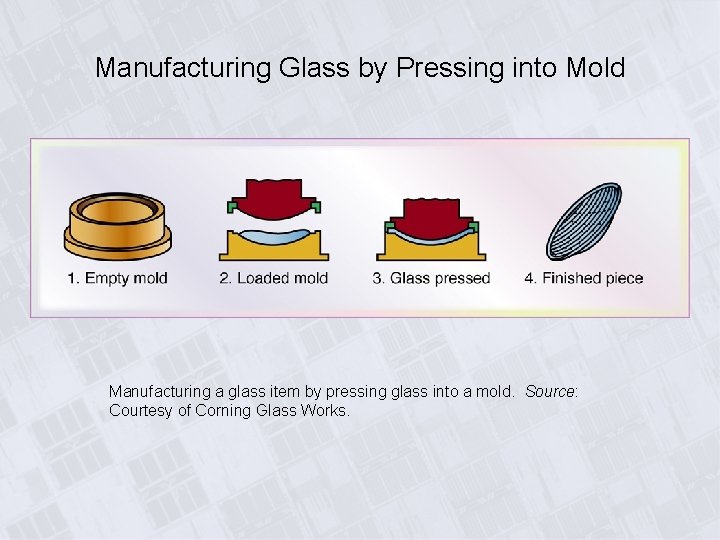
Manufacturing Glass by Pressing into Mold Manufacturing a glass item by pressing glass into a mold. Source: Courtesy of Corning Glass Works.
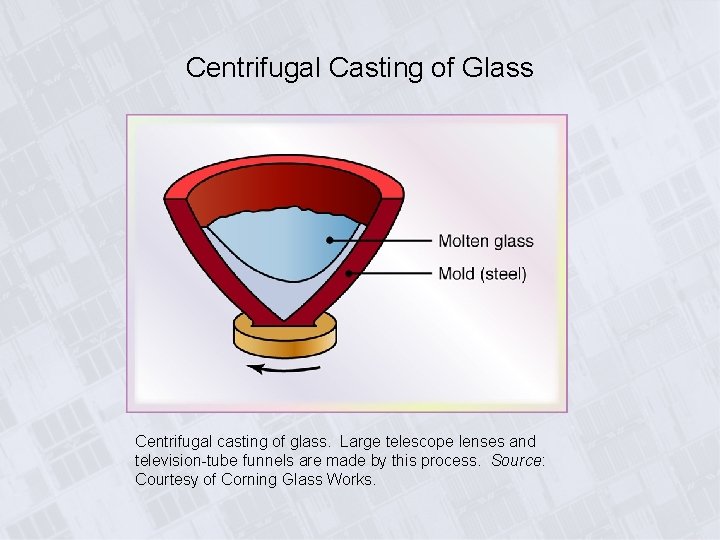
Centrifugal Casting of Glass Centrifugal casting of glass. Large telescope lenses and television-tube funnels are made by this process. Source: Courtesy of Corning Glass Works.
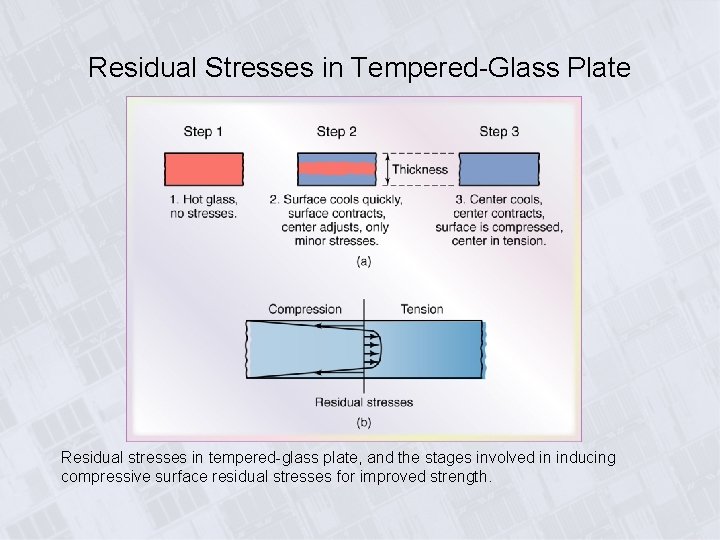
Residual Stresses in Tempered-Glass Plate Residual stresses in tempered-glass plate, and the stages involved in inducing compressive surface residual stresses for improved strength.
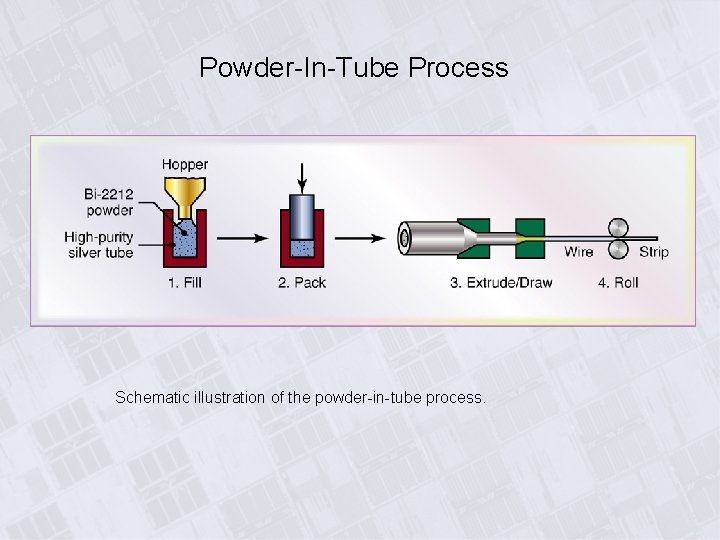
Powder-In-Tube Process Schematic illustration of the powder-in-tube process.