
Chapter 18 Poisoning Types of Poisons Ingested swallowed






- Slides: 39
Chapter 18 Poisoning
Types of Poisons • Ingested (swallowed) • Through the mouth • Inhaled (breathed) • Through the lungs • Absorbed (contact) • Through the skin • Injected • Through needlelike device
Ingested (Swallowed) Poisons • Occurs when victim swallows toxic substance • Most poisonings happen by ingestion. • Common among children • Some substances can block airway. • Analgesics are most common poisoning. • Most exposures to plants are minor.
Recognizing Ingested Poisons • • • Abdominal pain, cramping Nausea or vomiting Diarrhea Burns, stains, odor near or in mouth Drowsiness or unresponsiveness Poison containers nearby
Care for Ingested Poisons (1 of 3) • Determine • Age and size of victim • What and how much poison ingested • When it was taken • If corrosive or caustic, have victim sip cold water or milk. • Responsive victim, call Poison Control Center at 800 -222 -1222 • Can advise if medical care is needed
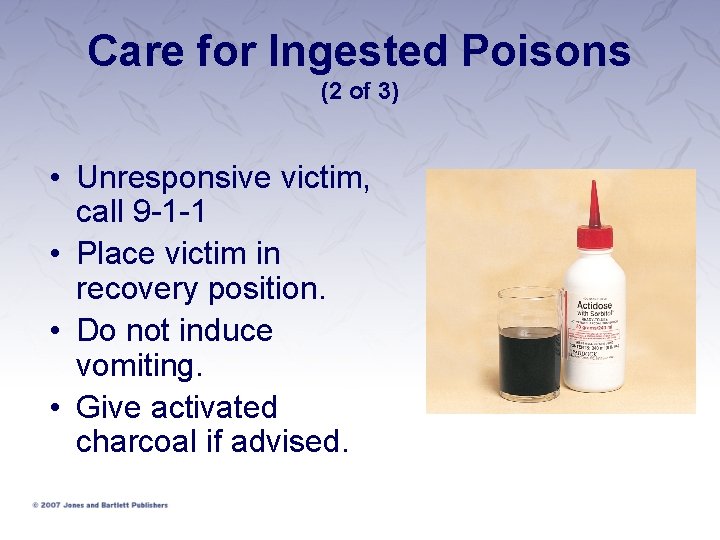
Care for Ingested Poisons (2 of 3) • Unresponsive victim, call 9 -1 -1 • Place victim in recovery position. • Do not induce vomiting. • Give activated charcoal if advised.
Care for Ingested Poisons (3 of 3) • Activated charcoal • Black powder that binds to poison • Does not absorb all drugs well • Save containers, plants, and vomit
Alcohol Intoxication • Alcohol is a depressant. • Most commonly abused drug in US. • Often implicated as cofactor in other types of accidents • Can cause belligerent, combative behavior • Can be life-threatening • Take condition seriously
Recognizing Alcohol Intoxication • • Odor of alcohol Unsteadiness, staggering Confusion Slurred speech Nausea and vomiting Flushed face Seizures can also result.
Care for Alcohol Intoxication • • • Look for injuries. Monitor breathing. Recovery position Call poison control center at 800 -222 -1222. If victim becomes violent, leave scene and await police. • Provide emotional support. • If victim is unresponsive, await EMS. • Move person to a warm place.
Drug Emergencies • Drug classifications: • Uppers (stimulants)—amphetamines, cocaine, caffeine • Downers (sedative-hypnotic)—barbiturates, tranquilizers, marijuana, narcotics • Hallucinogens—LSD, mescaline, peyote, PCP • Volatile chemicals—glue, cement, paint solvent, gasoline, spray paint, nail polish remover
Sympathomimetics • • • Stimulants (“uppers”) Produce excitement Amphetamines, methamphetamines Taken by mouth or injected Cocaine Crack
Recognizing Sympathomimetic Use • • • Disorganized behavior Hyperactivity Restlessness Anxiety or great fear Paranoia Delusions
Care for Sympathomimetic Users • • Check breathing. Call poison center or 9 -1 -1. Check for injuries. Place in recovery position. Give reassurance, emotional support If violent, seek safety until police arrive. Seek medical care.
Hallucinogens • Produce changes in mood, sensory awareness • Hear colors, see sounds • Cause hallucinations, bizarre behavior • Protect user from hurting self
Recognizing Hallucinogen Use • Visual hallucinations • Intensity of vision and hearing
Care for Hallucinogen Use • • Check breathing. Call poison center or 9 -1 -1. Check for injuries. Place in recovery position. Give reassurance, emotional support If violent, seek safety until police arrive. Seek medical care.
Marijuana • Flowering hemp plant • Estimated 20 million people use marijuana daily in US
Recognizing Marijuana Overdose • Euphoria, relaxation, drowsiness • Short-term memory loss • Impaired capacity for complex thinking and work • Depression, confusion • Altered perception of time • Anxiety, panic • Hallucinations
Care for Marijuana Overdose • • Check breathing. Call poison center or 9 -1 -1. Check for injuries. Place in the recovery position. Give reassurance, emotional support If violent, seek safety until police arrive. Seek medical care.
Depressants • Often prescribed as part of legitimate medicine • People may solicit prescriptions from several physicians. • Includes: • Opiates (narcotics) • Sedative hypnotics (barbiturates and tranquilizers)
Recognizing Sedative-Hypnotic Drug Use • Drowsiness, sleepiness • Slurred speech • Slow breathing rate
Opiates • • Pain relievers named for opium Heroin, codeine, morphine Frequently abused Addicts may start with appropriate prescription
Recognizing Opiate Overdose • Reduced breathing rate • Pinpoint pupils • Sedated condition, unresponsiveness
Care for Depressant Overdose • • Check breathing. Call poison center or 9 -1 -1. Check for injuries. Place recovery position. Give reassurance, emotional support If violent, seek safety until police arrive. Seek medical care.
Abused Inhalants • • • Glue, gasoline, lighter fluid, nail polish Similar effects to alcohol Can die of suffocation Can change heart rhythm Can cause permanent brain damage
Recognizing Abused Inhalant • • • Mild drowsiness, unresponsiveness Slurred speech, clumsiness Seizures Slow breathing rate Smell of solvents
Care for Abused Inhalant • • Check breathing. Call poison center or 9 -1 -1. Check for injuries. Place in recovery position. Give reassurance, emotional support If violent, seek safety until police arrive. Seek medical care.
Carbon Monoxide Poisoning • Leading cause of poisoning death in US each year • Invisible, tasteless, odorless, colorless, nonirritating gas • Can be unintentional poisoning or suicide • Can occur in older car, extended time in running car, or from faulty furnaces, water heaters, kerosene heaters • Causes hypoxia
Recognizing Carbon Monoxide Poisoning (1 of 2) • • Headache Ringing in ears Chest pain Muscle weakness Nausea and vomiting Dizziness and visual changes Unresponsiveness Respiratory and cardiac arrest
Recognizing Carbon Monoxide Poisoning (2 of 2) • Symptoms come and go. • Symptoms worsen and improve in certain places and at certain times. • Nearby people have similar complaints. • Pets seem ill.
Care for Carbon Monoxide Poisoning • Remove victim from environment immediately. • Call 9 -1 -1. • EMS can give 100% oxygen for 30 or 40 minutes to reverse CO poisoning. • Monitor breathing. • Place unresponsive, breathing victim in recovery position. • Seek medical care.
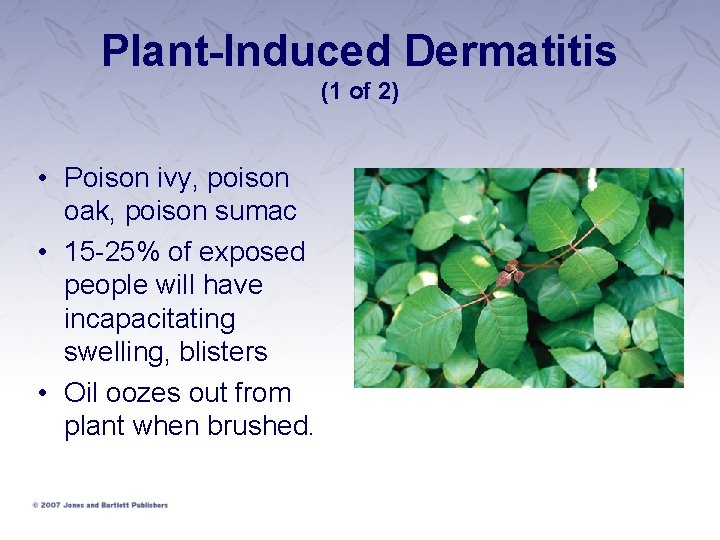
Plant-Induced Dermatitis (1 of 2) • Poison ivy, poison oak, poison sumac • 15 -25% of exposed people will have incapacitating swelling, blisters • Oil oozes out from plant when brushed.
Plant-Induced Dermatitis (2 of 2) • • Oil not visible on human skin Spread by direct contact Can stay active for months or years Smoke from burning plants can cause severe dermatitis • Difficult to identify plants • Leaves grow in groups of three
Recognizing Plant-Induced Dermatitis • • • Rash Itching Redness Blisters Swelling The greater the amount of skin affected, the greater the need for medical care. • Onset usually occurs 1 -2 days after contact.
Care for Plant-Induced Dermatitis • Clean skin with soap and cold water as soon as possible. • Apply rubbing alcohol liberally, then remove with water. • Lukewarm bath and colloidal oatmeal • Wet compresses with aluminum acetate • Calamine lotion or baking soda paste • Corticosteroid ointment and oral corticosteroid
Stinging Nettle • Plant with stinging hairs on stem and leaves • Stinging hair is touched • Fine needlepoint penetrates skin • Injects chemical irritant
Recognizing Stinging Nettle Poisoning • • Can affect anyone Effects limited to exposed area Immediate response Redness Rapid, intense burning Itching Reaction lasts hours, not days
Care for Stinging Nettle Poisoning • Wash exposed area with soap and water. • Apply: • Cold, wet pack • Colloidal oatmeal, hydrocortisone cream, or calamine lotion • Over-the-counter antihistamine