
Chapter 18 Plants have two types of growth


- Slides: 28
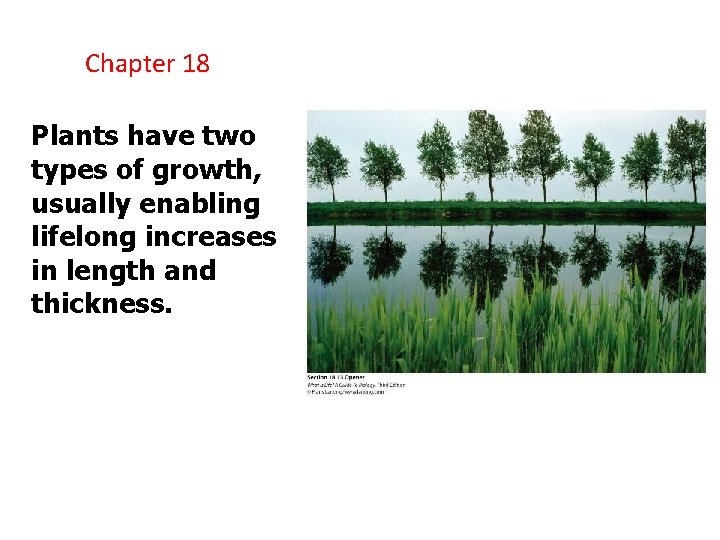
Chapter 18 Plants have two types of growth, usually enabling lifelong increases in length and thickness.
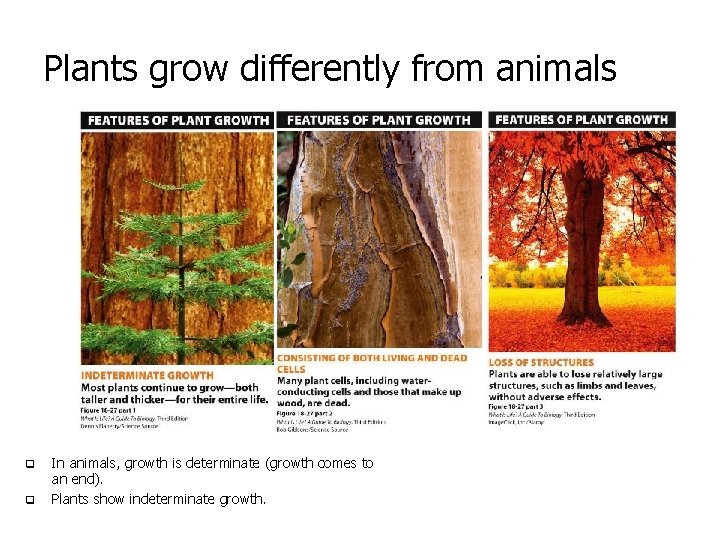
Plants grow differently from animals q q In animals, growth is determinate (growth comes to an end). Plants show indeterminate growth.
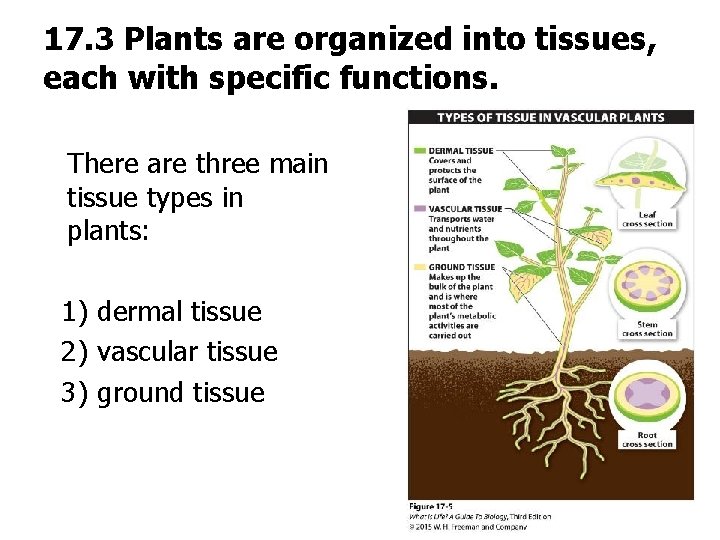
17. 3 Plants are organized into tissues, each with specific functions. There are three main tissue types in plants: 1) dermal tissue 2) vascular tissue 3) ground tissue
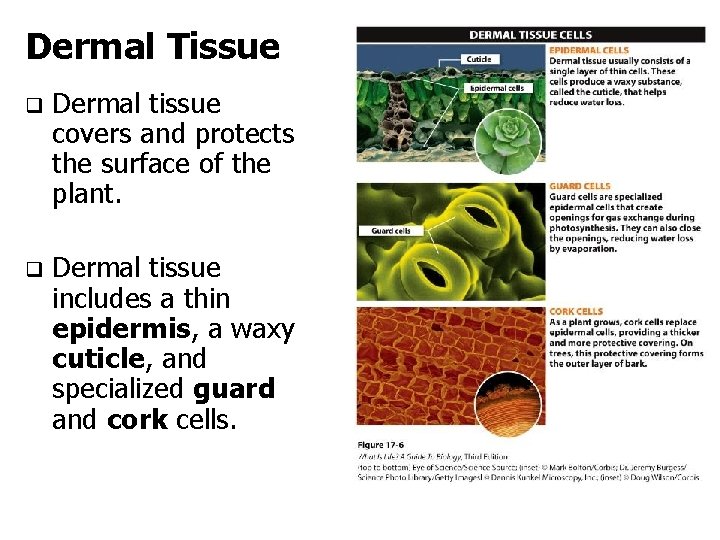
Dermal Tissue q Dermal tissue covers and protects the surface of the plant. q Dermal tissue includes a thin epidermis, a waxy cuticle, and specialized guard and cork cells.
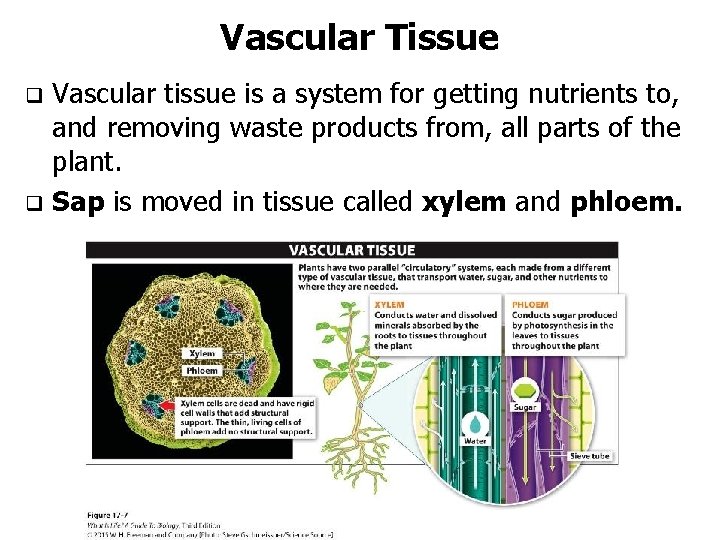
Vascular Tissue Vascular tissue is a system for getting nutrients to, and removing waste products from, all parts of the plant. q Sap is moved in tissue called xylem and phloem. q
Ground Tissue Ground tissue comprises most of the plant body. q Three types of cells —parenchyma, collenchyma, and sclerenchyma— are found in ground tissue. q
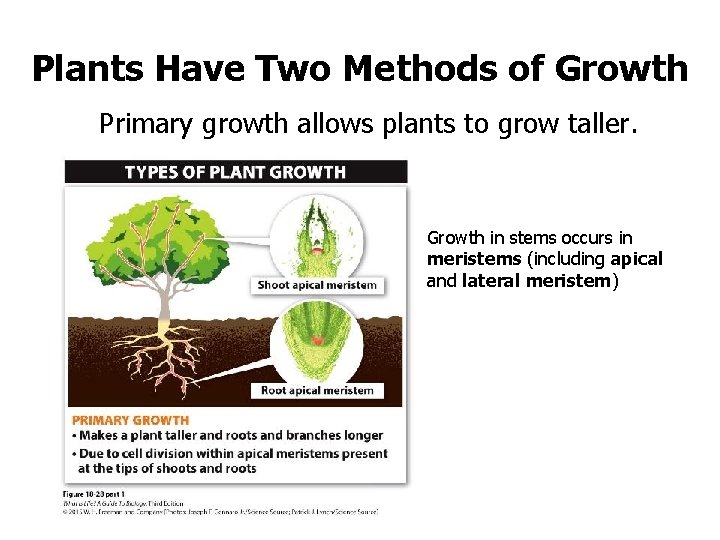
Plants Have Two Methods of Growth Primary growth allows plants to grow taller. Growth in stems occurs in meristems (including apical and lateral meristem)
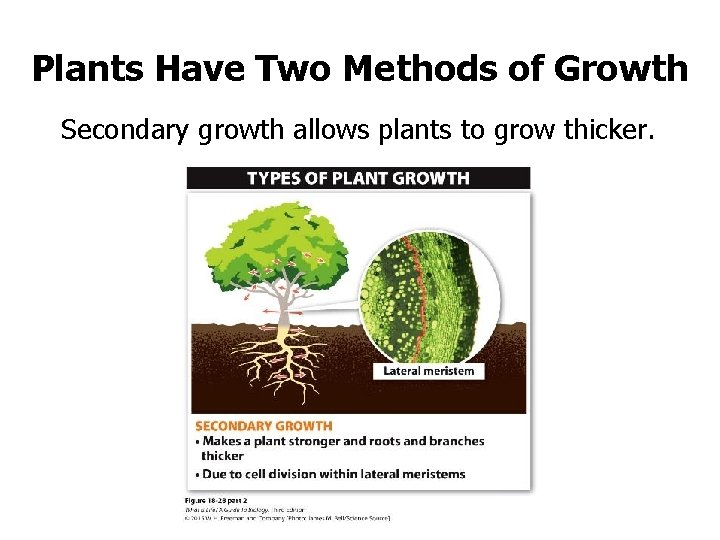
Plants Have Two Methods of Growth Secondary growth allows plants to grow thicker.
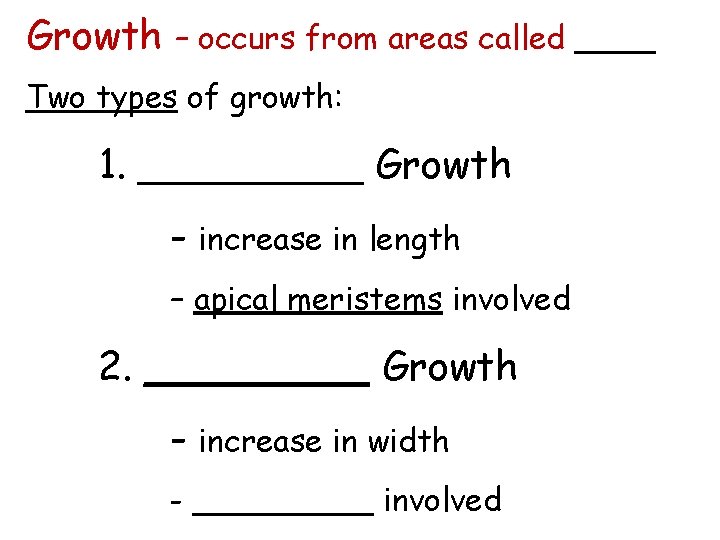
Growth – occurs from areas called ____ Two types of growth: 1. _____ Growth - increase in length – apical meristems involved 2. _____ Growth - increase in width - _____ involved
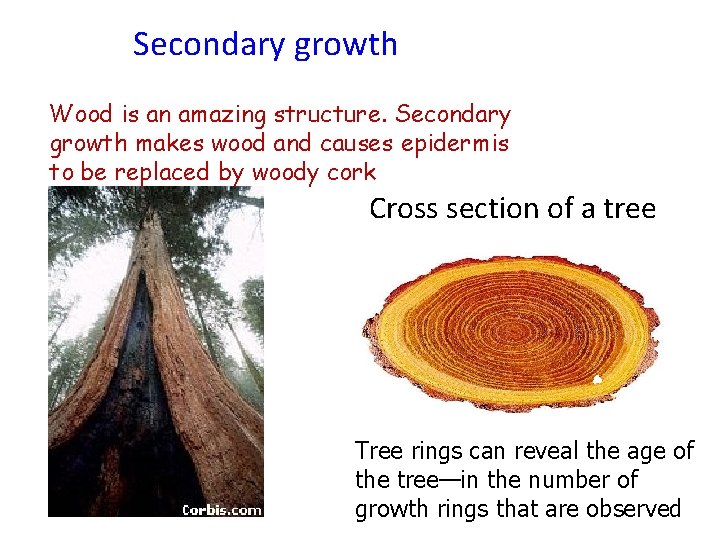
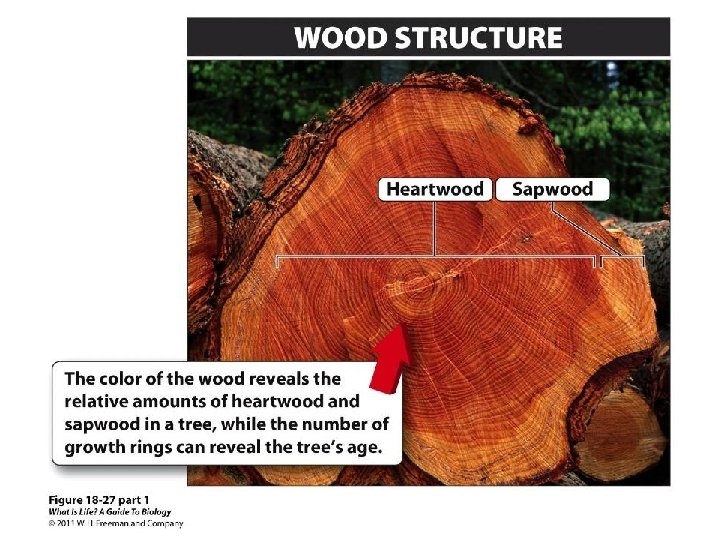
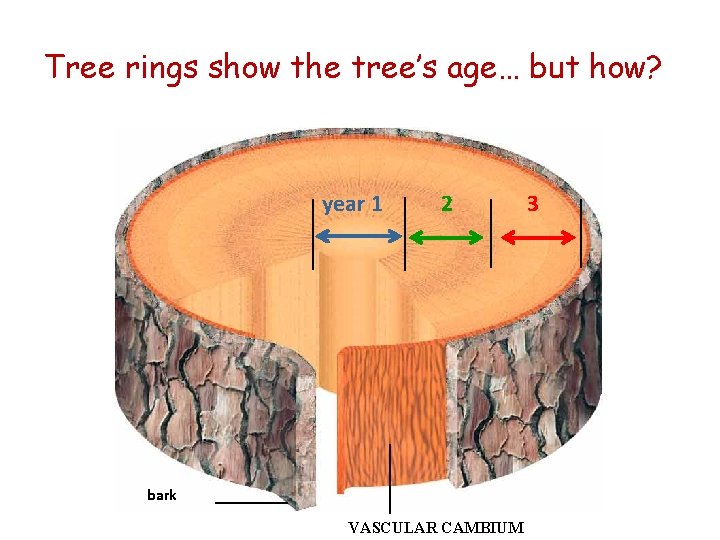
Secondary growth Wood is an amazing structure. Secondary growth makes wood and causes epidermis to be replaced by woody cork Cross section of a tree Tree rings can reveal the age of the tree—in the number of growth rings that are observed
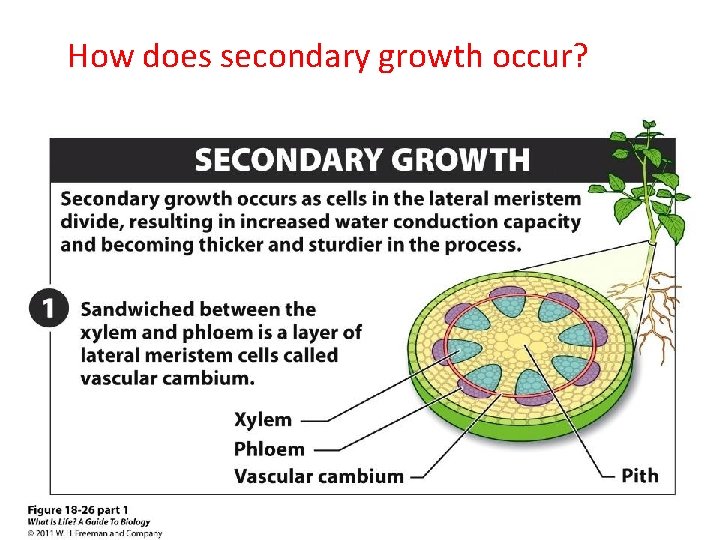
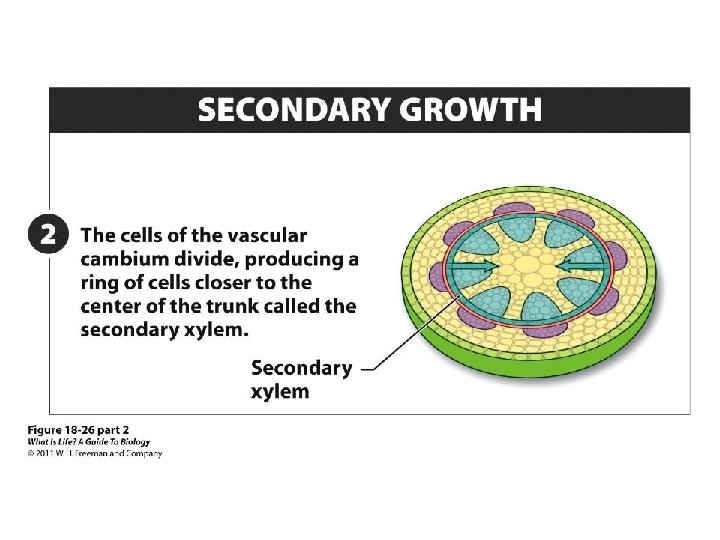
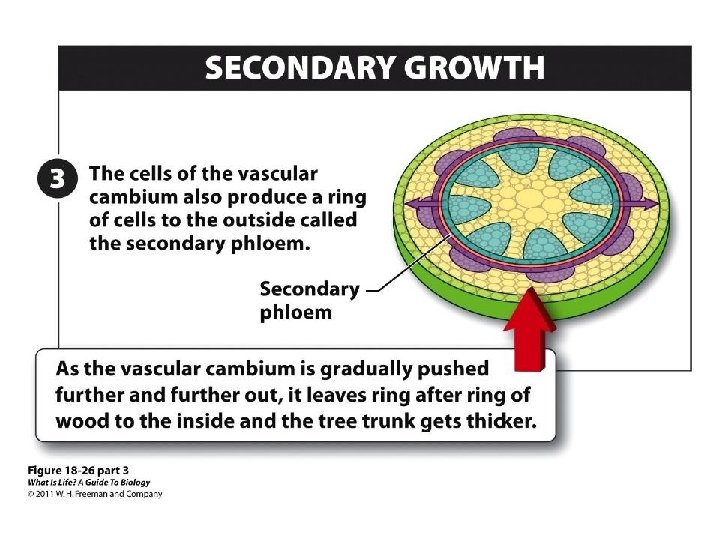
How does secondary growth occur?
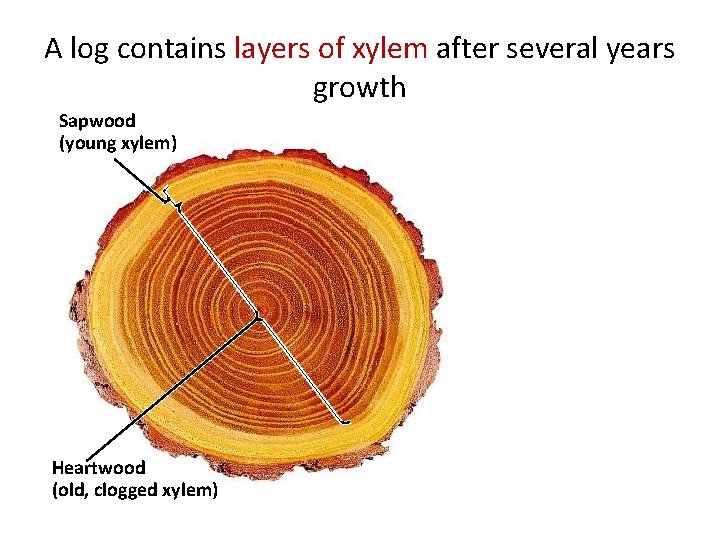
A log contains layers of xylem after several years growth Sapwood (young xylem) Heartwood (old, clogged xylem)
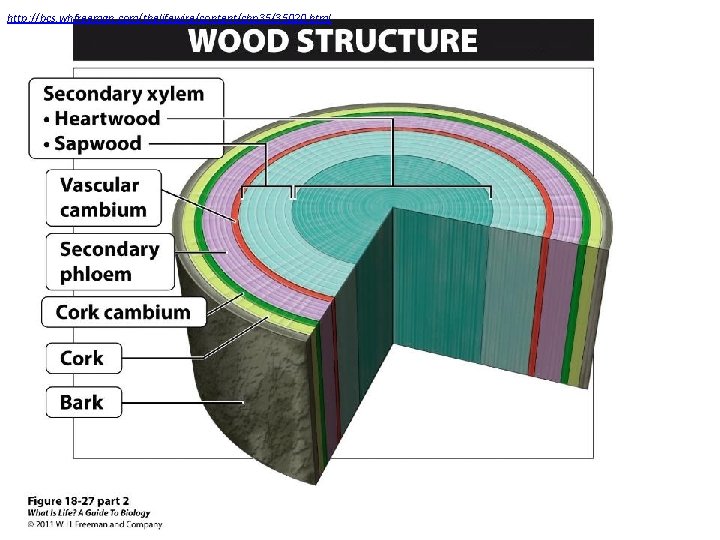
http: //bcs. whfreeman. com/thelifewire/content/chp 35/35020. html
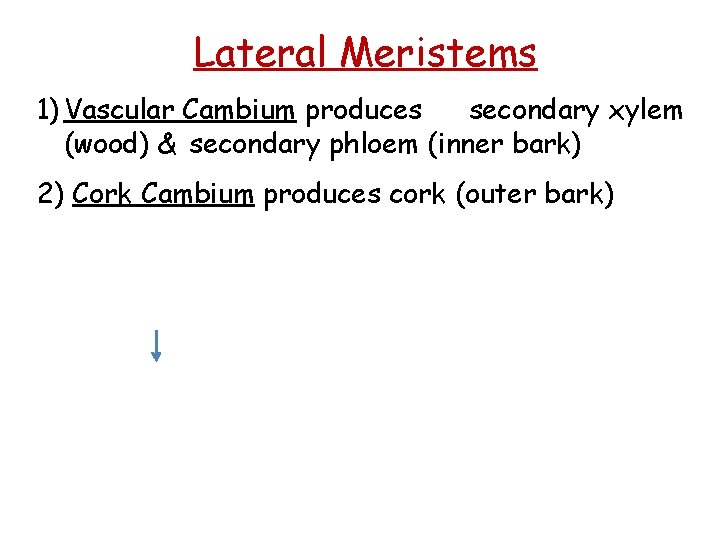
Lateral Meristems 1) Vascular Cambium produces secondary xylem (wood) & secondary phloem (inner bark) 2) Cork Cambium produces cork (outer bark)
Tree rings show the tree’s age… but how? year 1 2 bark VASCULAR CAMBIUM 3
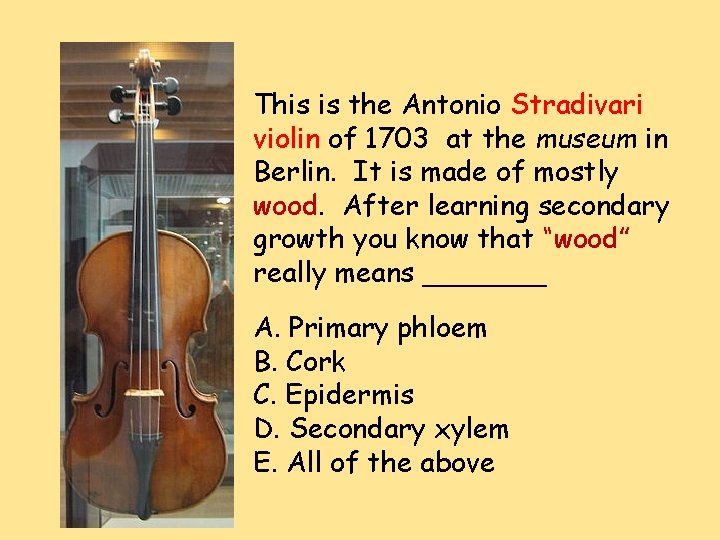
This is the Antonio Stradivari violin of 1703 at the museum in Berlin. It is made of mostly wood. After learning secondary growth you know that “wood” really means _______ A. Primary phloem B. Cork C. Epidermis D. Secondary xylem E. All of the above
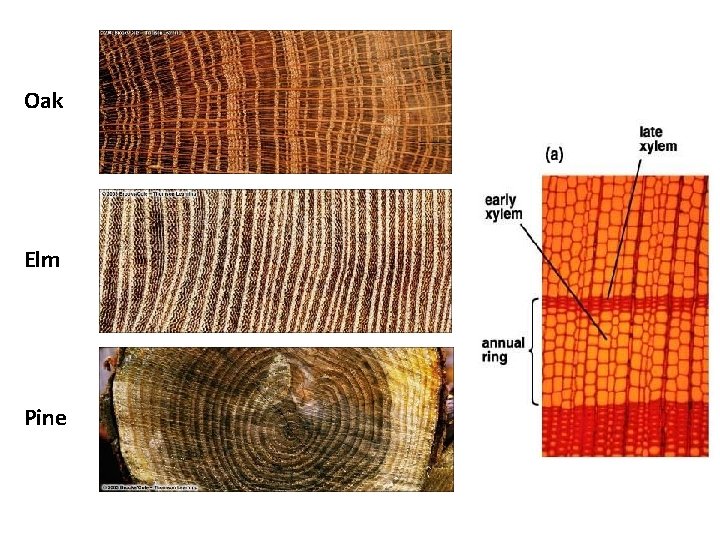
Oak Elm Pine Do not post on Internet
Tree rings are ____ A. Alternating layers of xylem and phloem are made each year. B. Size of xylem tubes varies in spring and summer C. Each year a layer of dirt and bark is trapped under new wood. D. Dead phloem shows up as a visible line.
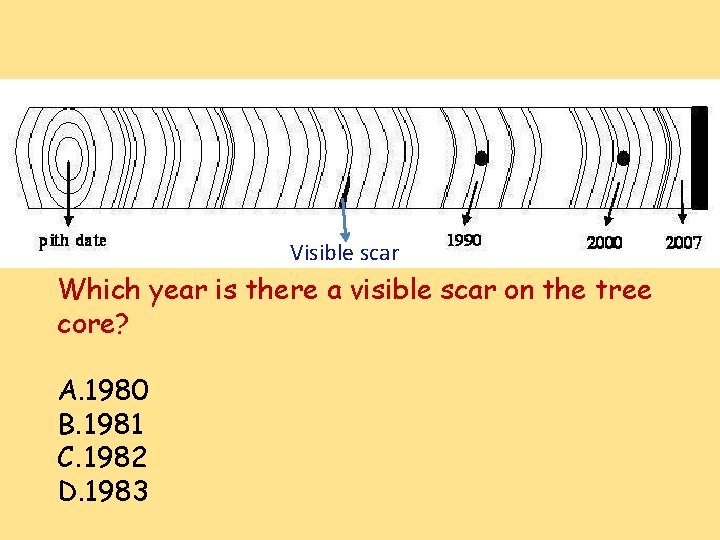
Visible scar Which year is there a visible scar on the tree core? A. 1980 B. 1981 C. 1982 D. 1983
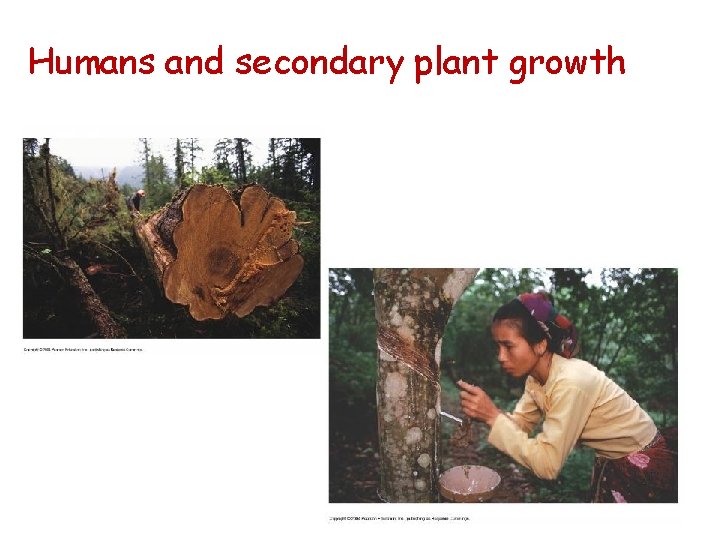
Humans and secondary plant growth
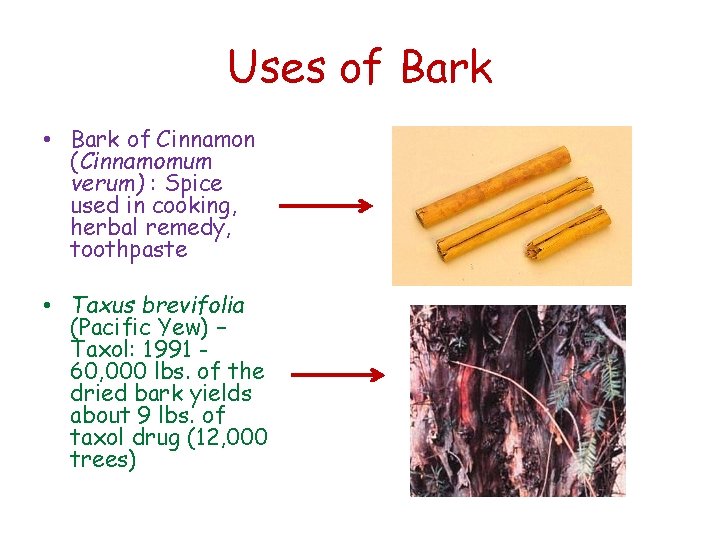
Uses of Bark • Bark of Cinnamon (Cinnamomum verum) : Spice used in cooking, herbal remedy, toothpaste • Taxus brevifolia (Pacific Yew) – Taxol: 1991 60, 000 lbs. of the dried bark yields about 9 lbs. of taxol drug (12, 000 trees)
Girdling (surface scraping) a tree often kills it because___. A. water transport has been interrupted. B. food transport has been interrupted.
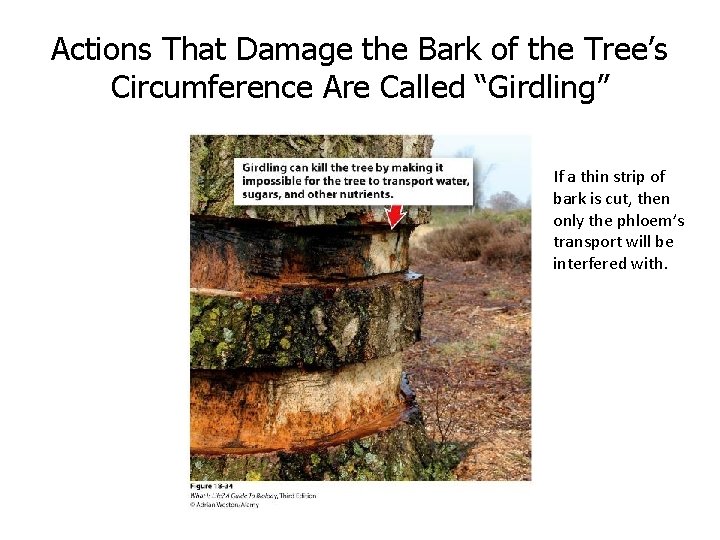
Actions That Damage the Bark of the Tree’s Circumference Are Called “Girdling” If a thin strip of bark is cut, then only the phloem’s transport will be interfered with.