
Chapter 18 Photocopier Printer and Fax Examination Examiner




- Slides: 12
Chapter 18
§ Photocopier, Printer, and Fax Examination § Examiner may need to: § Identify the make & model of the machine used to possible print the document. § Compare test samples from a particular machine to the questioned document, (usually 10 samples).
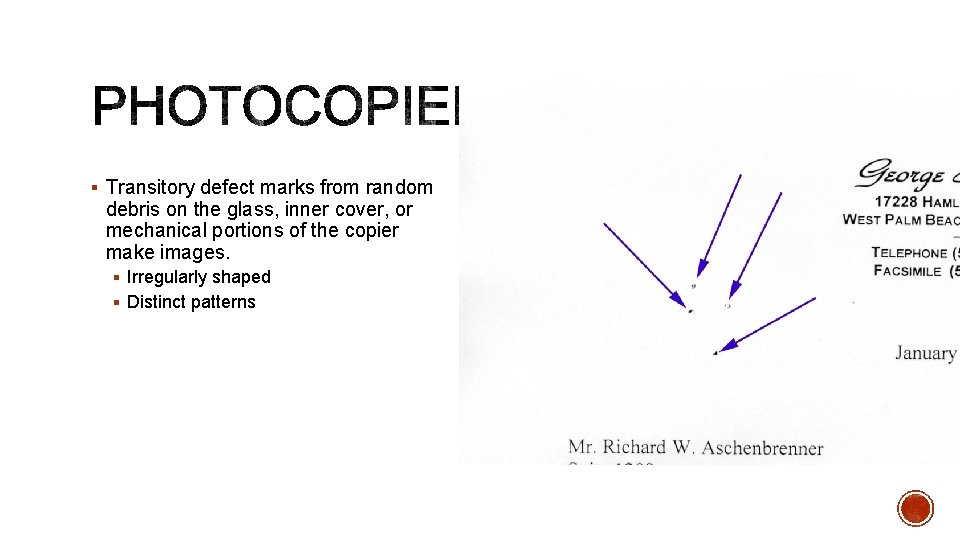
§ Transitory defect marks from random debris on the glass, inner cover, or mechanical portions of the copier make images. § Irregularly shaped § Distinct patterns
§ Fax machines print a header – transmitting terminal identifier (TTI) at the top of each page. § This header and the fax’s text should have different type styles. § TTI’s can be fraudulently made on a fax copy but microscopic exam can distinguish it from the real TTI § TTI’s can be used to identify the model of the fax machine used as each brand type has its own style and characters.
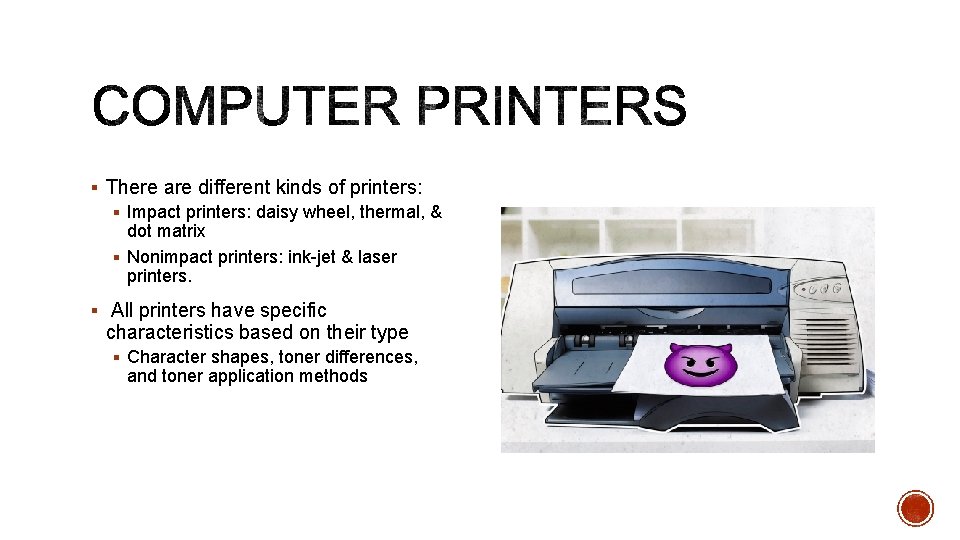
§ There are different kinds of printers: § Impact printers: daisy wheel, thermal, & dot matrix § Nonimpact printers: ink-jet & laser printers. § All printers have specific characteristics based on their type § Character shapes, toner differences, and toner application methods
§ Important to identify: § Printing technology § Type of paper § Type of toner/ink used § Chemical composition of the toner § Type of toner to paper fusing method § Examination of toner § Microscopic analysis to characterize surface morphology § Id of inorganic & organic components of toner
§ Documents are often altered or changed after being made to hide the original intent or to perpetrate a forgery. § Forgery – the act of producing a copy of document, signature, bank note, or work of art. § Fraudulence – committing fraud with the intent of monetary gain.
§ The removal of writing, typewriting, or printing from a document, normally accomplished by either chemical means or an abrasive instrument. § Using India rubber eraser, sandpaper, razor blade, or a knife to remove writing/ink. § Disturbs the fibers of the paper – can be seen microscopically § Cannot always see what was originally written. § Obliterate words with chemicals can be done. § Not visible to the naked eye but visible under microscope, see discolorations § Can use UV or infrared light to see it better – luminescence. Some inks emit light when under these lights
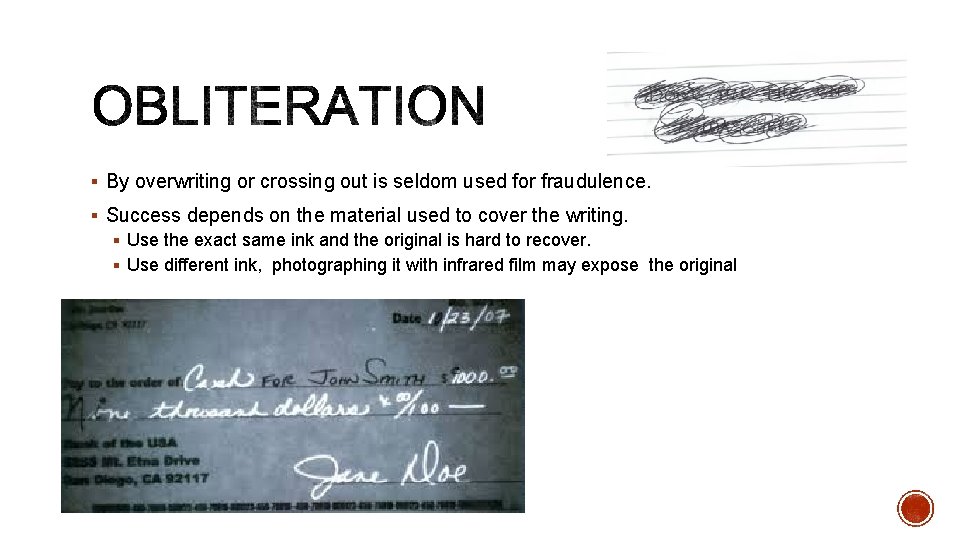
§ By overwriting or crossing out is seldom used for fraudulence. § Success depends on the material used to cover the writing. § Use the exact same ink and the original is hard to recover. § Use different ink, photographing it with infrared film may expose the original
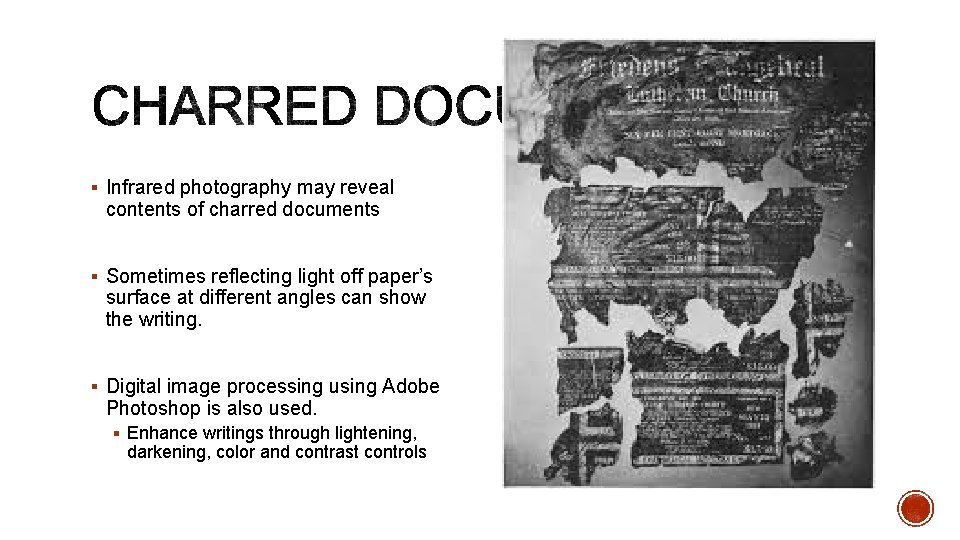
§ Infrared photography may reveal contents of charred documents § Sometimes reflecting light off paper’s surface at different angles can show the writing. § Digital image processing using Adobe Photoshop is also used. § Enhance writings through lightening, darkening, color and contrast controls
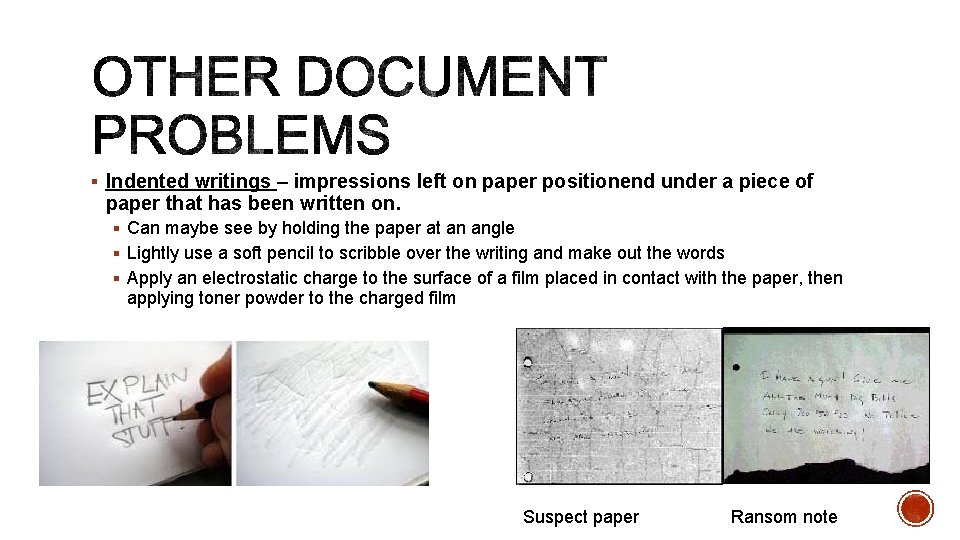
§ Indented writings – impressions left on paper positionend under a piece of paper that has been written on. § Can maybe see by holding the paper at an angle § Lightly use a soft pencil to scribble over the writing and make out the words § Apply an electrostatic charge to the surface of a film placed in contact with the paper, then applying toner powder to the charged film Suspect paper Ransom note
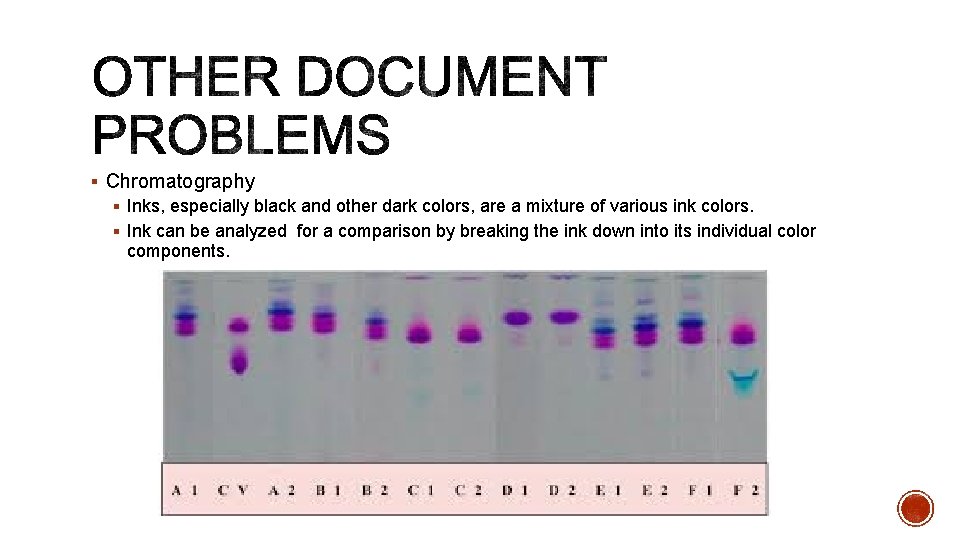
§ Chromatography § Inks, especially black and other dark colors, are a mixture of various ink colors. § Ink can be analyzed for a comparison by breaking the ink down into its individual color components.