
Chapter 18 Objectives v Identify the endocrine glands
Chapter 18 Objectives v Identify the endocrine glands and their hormones. v Gain an understanding of the functions of these hormones in the body. v Analyze medical terms related to the endocrine glands and their hormones. v Identify abnormal conditions resulting from excessive and deficient secretions of the endocrine glands. v Describe laboratory tests and clinical procedures related to endocrinology, and recognize relevant abbreviations. v Apply your new knowledge to understanding medical terms in their proper contexts, such as medical reports and records.
Endocrine System Chapter 18 Pages 749 – 798
Page 750 Introduction v The endocrine system is an information signaling system. • Glands located in all over the body release hormones into the bloodstream that regulate many functions of the body. • Each hormone has its own receptor Ø Binding of a receptor by a hormone works like the interaction of a key and a lock.
Page 750 Endocrine vs Exocrine v ENDOCRINE glands – Secrete hormones directly into the bloodstream v EXOCRINE glands – Send chemical substances via ducts to the outside of the body
Page 750 Endocrine Glands v Pineal gland v Pituitary gland v Thyroid v Ovaries (pair) v Parathyroid (four glands) v Testes (pair) v Adrenal glands (pair) v Pancreas (islets of Langerhans)
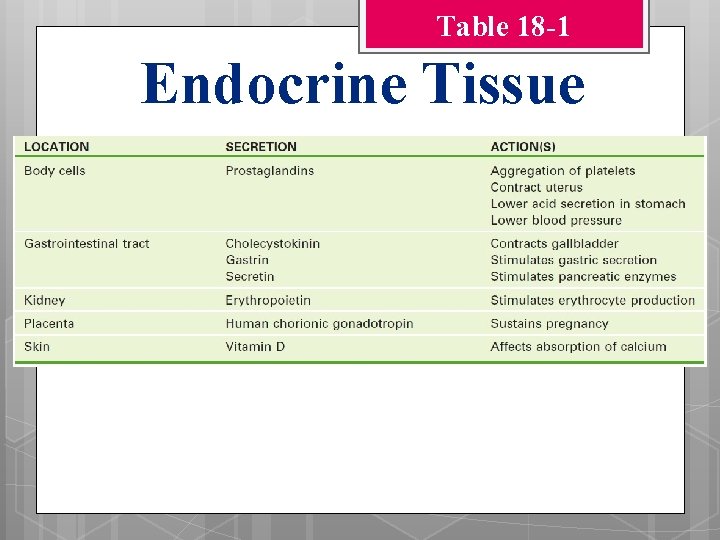
Table 18 -1 Endocrine Tissue
Page 750 Pineal Gland v Not much known about this gland; Ductless included as an endocrine gland v Located: central portion of the brain v Secretes: melatonin – increases with deprivation of light and is inhibited by sunlight • Linked to seasonal affective disorder (SAD), a mental condition in which the person suffers from depression in winter months.
Page 752 Thyroid Gland v Location: composed of a right and left lobe on either side of the trachea, just below the thyroid cartilage (Adam's apple). • v Isthmus = a narrow strip of glandular tissue that connects the two lobes. Secretes: Thyroxine or tetraiodothyronine (T 4), Triiodothyronine (T 3), and Calcitonin
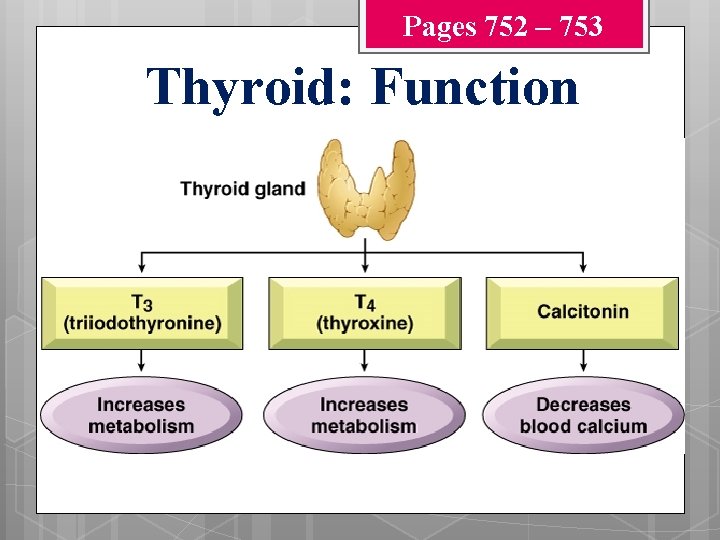
Pages 752 – 753 Thyroid: Function
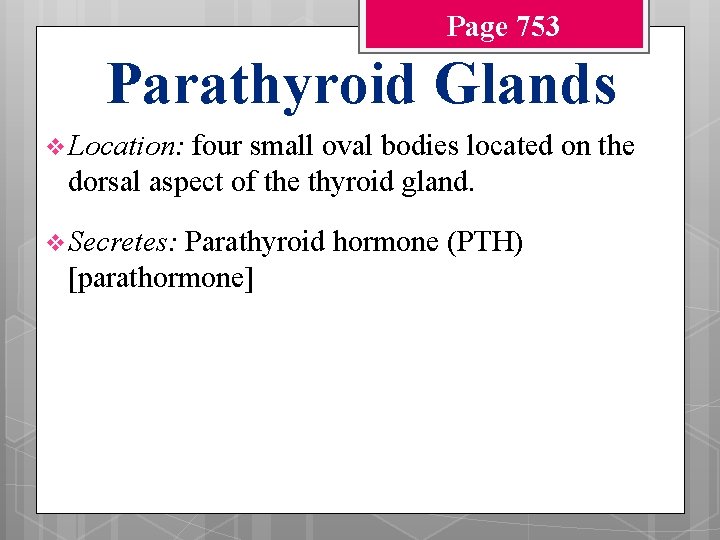
Page 753 Parathyroid Glands v Location: four small oval bodies located on the dorsal aspect of the thyroid gland. v Secretes: Parathyroid hormone (PTH) [parathormone]
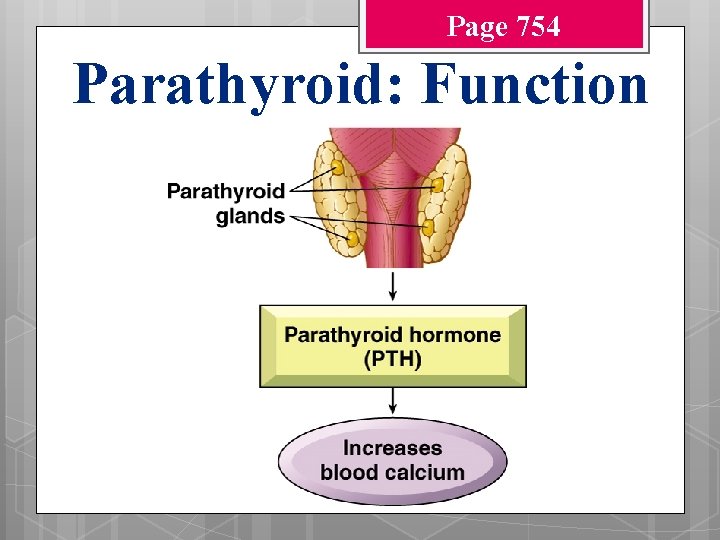
Page 754 Parathyroid: Function

Page 754 Adrenal Glands v Location: two small glands, one on top of each kidney. Each gland consists of two parts: • adrenal cortex = the outer portion ü • Secretes steroids or corticosteroids; chemicals derived from cholesterol adrenal medulla = the inner portion ü Secretes catecholamines; chemicals derived from amino acids
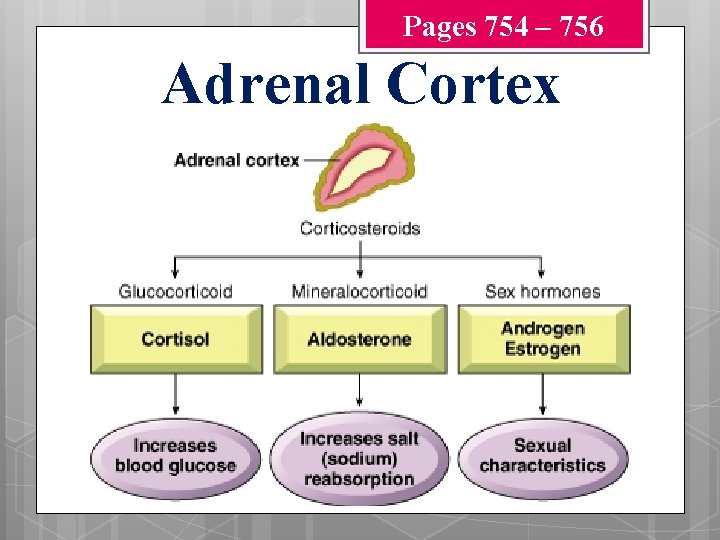
Pages 754 – 756 Adrenal Cortex
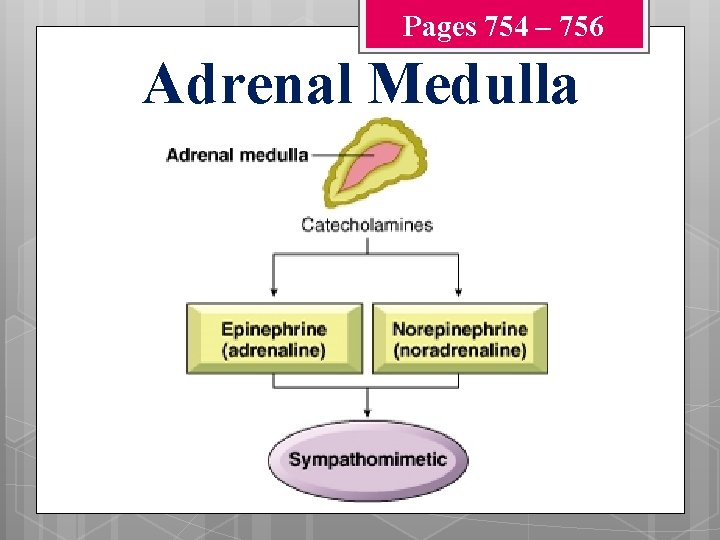
Pages 754 – 756 Adrenal Medulla
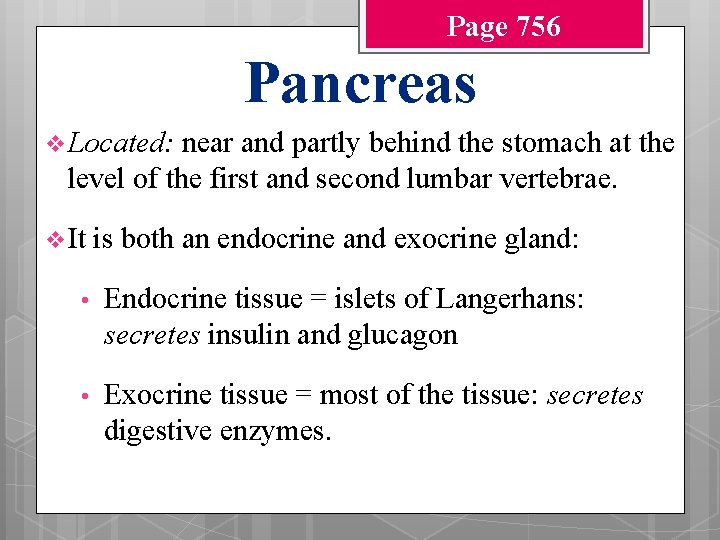
Page 756 Pancreas v Located: near and partly behind the stomach at the level of the first and second lumbar vertebrae. v It is both an endocrine and exocrine gland: • Endocrine tissue = islets of Langerhans: secretes insulin and glucagon • Exocrine tissue = most of the tissue: secretes digestive enzymes.
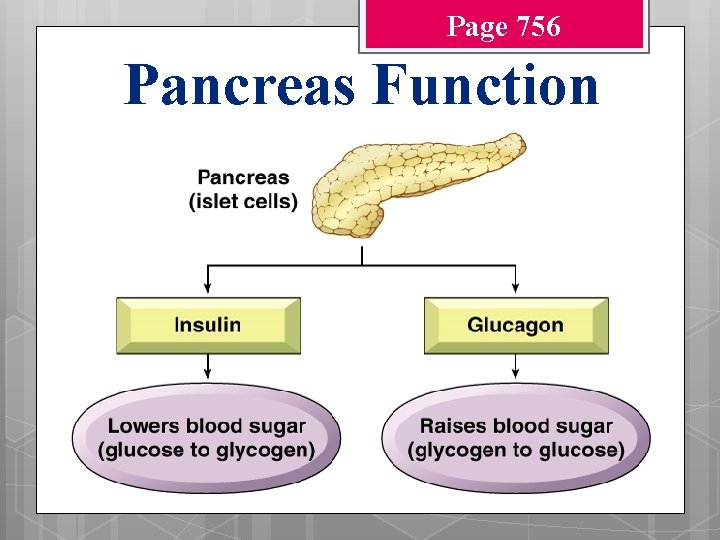
Page 756 Pancreas Function
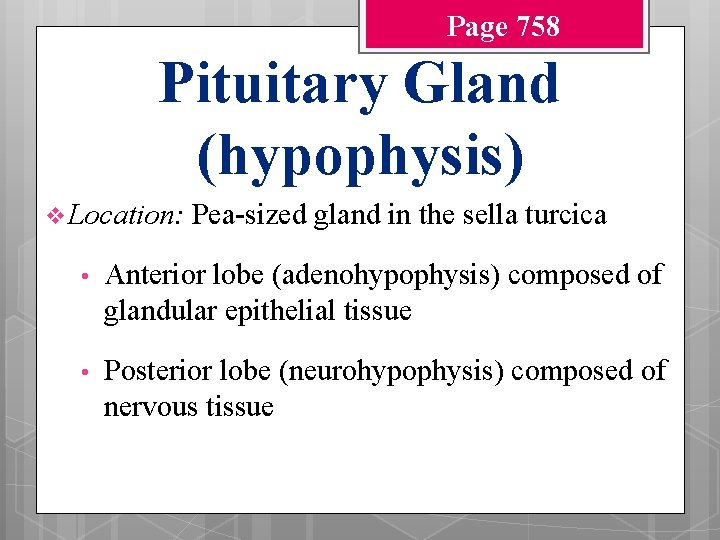
Page 758 Pituitary Gland (hypophysis) v Location: Pea-sized gland in the sella turcica • Anterior lobe (adenohypophysis) composed of glandular epithelial tissue • Posterior lobe (neurohypophysis) composed of nervous tissue
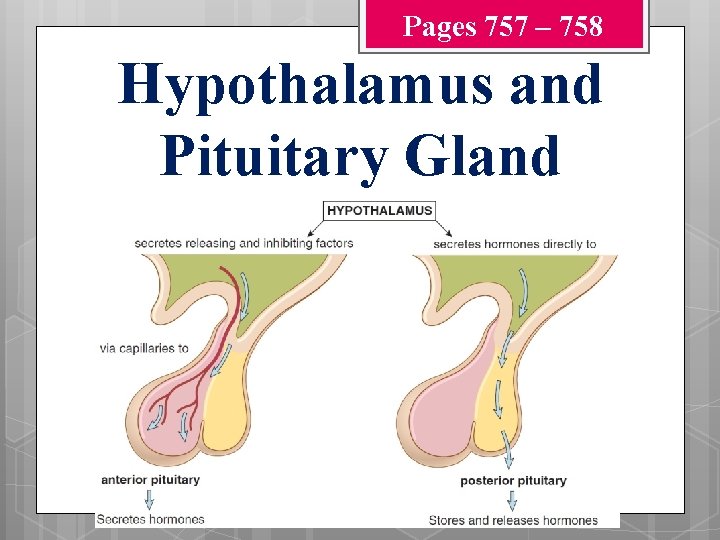
Pages 757 – 758 Hypothalamus and Pituitary Gland
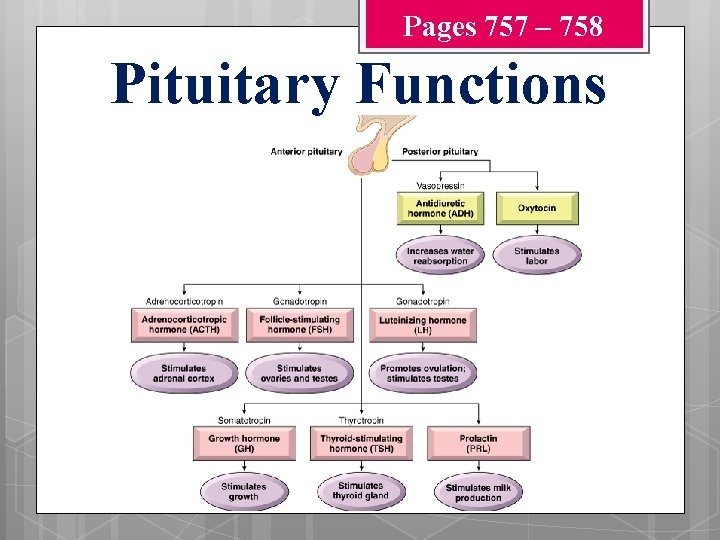
Pages 757 – 758 Pituitary Functions
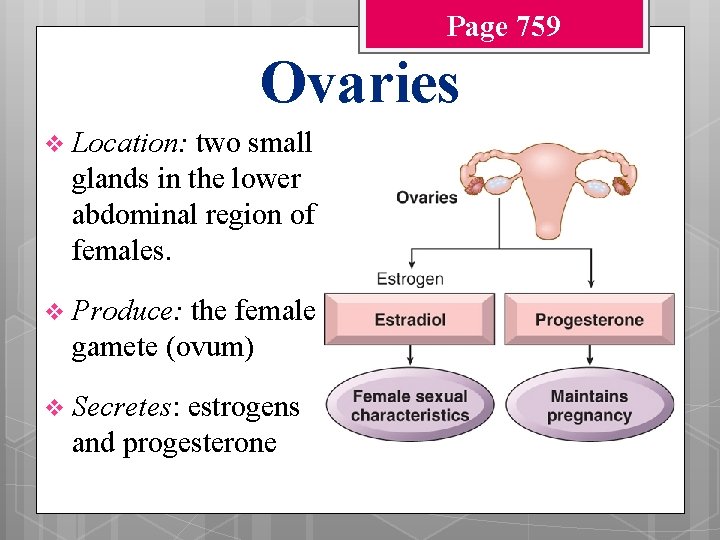
Page 759 Ovaries v Location: two small glands in the lower abdominal region of females. v Produce: the female gamete (ovum) v Secretes: estrogens and progesterone
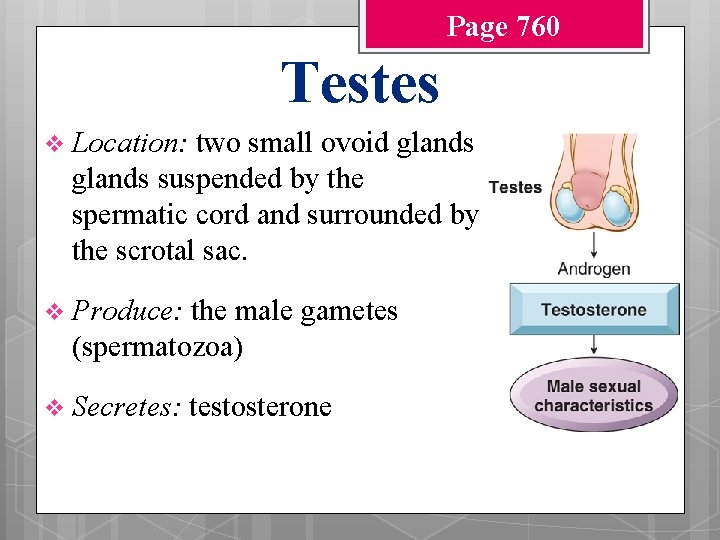
Page 760 Testes v Location: two small ovoid glands suspended by the spermatic cord and surrounded by the scrotal sac. v Produce: the male gametes (spermatozoa) v Secretes: testosterone
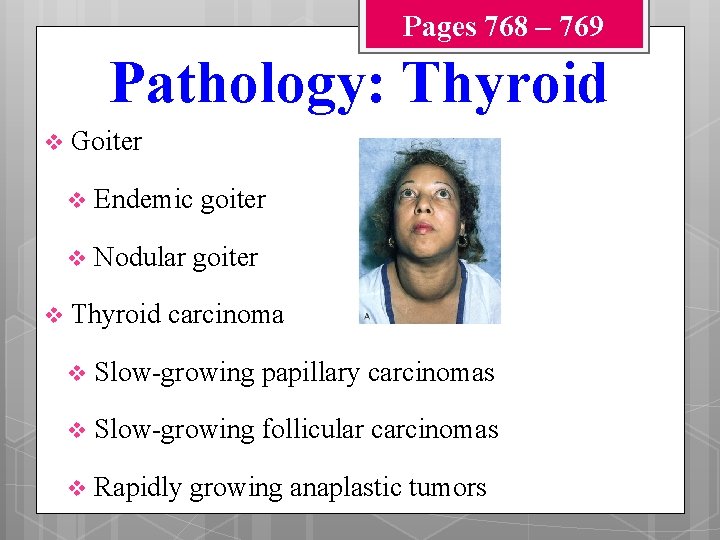
Pages 768 – 769 Pathology: Thyroid v v Goiter v Endemic goiter v Nodular goiter Thyroid carcinoma v Slow-growing papillary carcinomas v Slow-growing follicular carcinomas v Rapidly growing anaplastic tumors
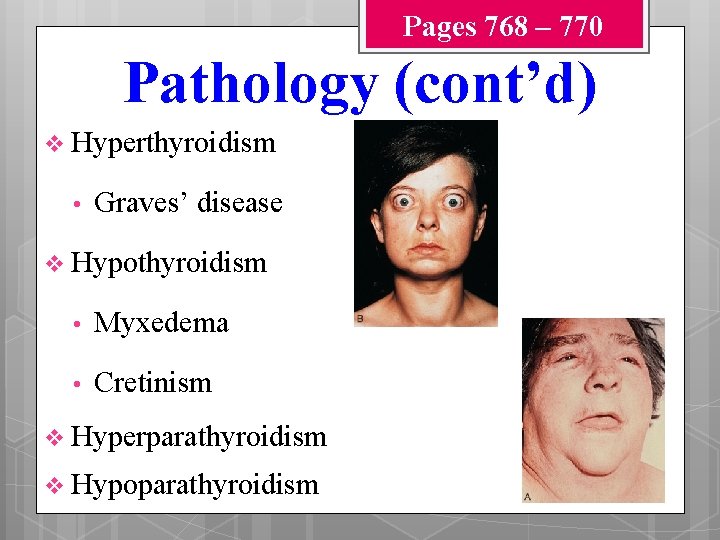
Pages 768 – 770 Pathology (cont’d) v Hyperthyroidism • Graves’ disease v Hypothyroidism • Myxedema • Cretinism v Hyperparathyroidism v Hypoparathyroidism
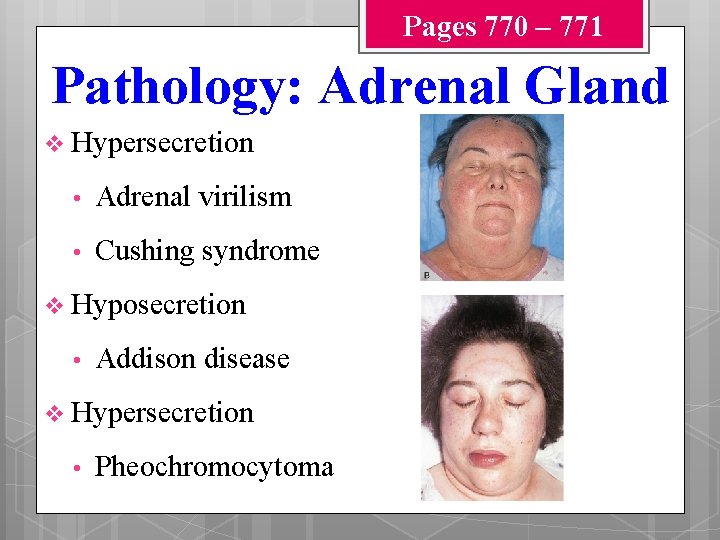
Pages 770 – 771 Pathology: Adrenal Gland v Hypersecretion • Adrenal virilism • Cushing syndrome v Hyposecretion • Addison disease v Hypersecretion • Pheochromocytoma
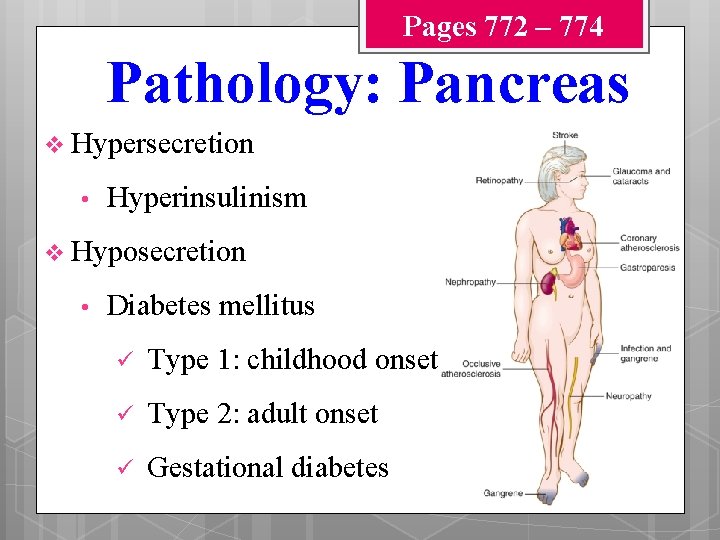
Pages 772 – 774 Pathology: Pancreas v Hypersecretion • Hyperinsulinism v Hyposecretion • Diabetes mellitus ü Type 1: childhood onset ü Type 2: adult onset ü Gestational diabetes
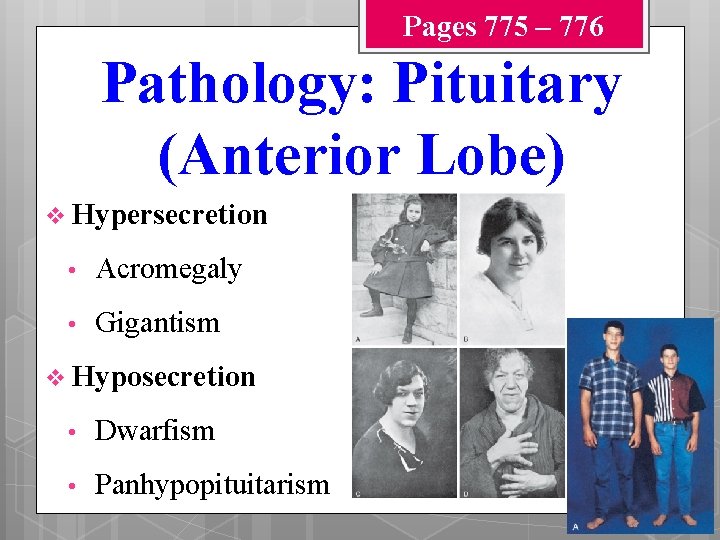
Pages 775 – 776 Pathology: Pituitary (Anterior Lobe) v Hypersecretion • Acromegaly • Gigantism v Hyposecretion • Dwarfism • Panhypopituitarism
Page 777 Pathology: Pituitary (Posterior Lobe) v Hypersecretion • Syndrome of inappropriate ADH (SIADH) v Hyposecretion • Diabetes insipidus
Page 778 Laboratory Tests v Fasting plasma glucose (FPG) v Glucose tolerance test v glycosylated v Serum hemoglobin test (Hb. A 1 C or A 1 C) and urine tests v Urinary microalbumin assay v Thyroid function tests
Page 778 Clinical Procedures v Exophthalmometry v Computed v Magnetic v Thyroid tomography (CT) scan resonance imaging (MRI) scan v Ultrasound examination
- Slides: 29