
Chapter 18 Notes Classification Prentice Hall pages 447
- Slides: 27
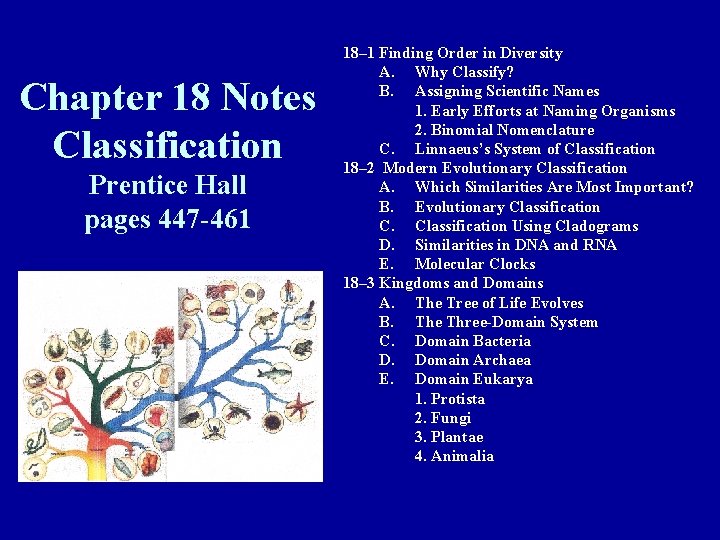
Chapter 18 Notes Classification Prentice Hall pages 447 -461 18– 1 Finding Order in Diversity A. Why Classify? B. Assigning Scientific Names 1. Early Efforts at Naming Organisms 2. Binomial Nomenclature C. Linnaeus’s System of Classification 18– 2 Modern Evolutionary Classification A. Which Similarities Are Most Important? B. Evolutionary Classification C. Classification Using Cladograms D. Similarities in DNA and RNA E. Molecular Clocks 18– 3 Kingdoms and Domains A. The Tree of Life Evolves B. The Three-Domain System C. Domain Bacteria D. Domain Archaea E. Domain Eukarya 1. Protista 2. Fungi 3. Plantae 4. Animalia
Finding Order in Diversity • Biologists want to better understand organisms so they organize them. • One tool that they use to do this is classification— the grouping of objects or information based on similarities. • Taxonomy is the branch of biology that groups and names organisms based on studies of their different characteristics. • Biologists who study taxonomy are called taxonomists.
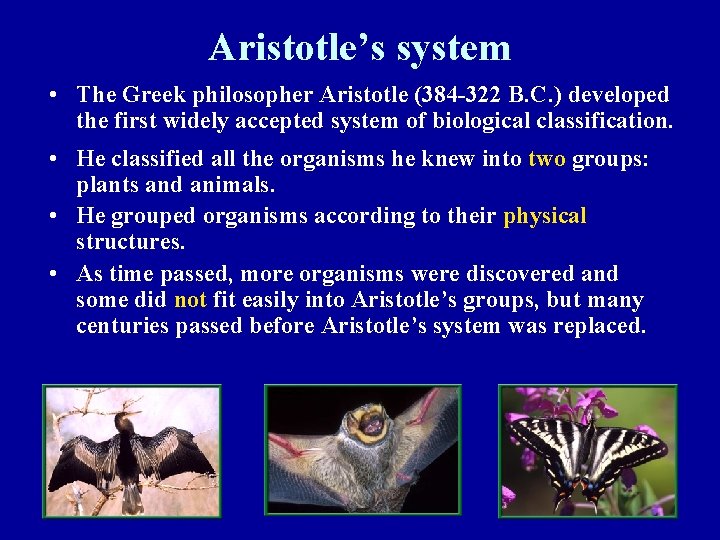
Aristotle’s system • The Greek philosopher Aristotle (384 -322 B. C. ) developed the first widely accepted system of biological classification. • He classified all the organisms he knew into two groups: plants and animals. • He grouped organisms according to their physical structures. • As time passed, more organisms were discovered and some did not fit easily into Aristotle’s groups, but many centuries passed before Aristotle’s system was replaced.
Linnaeus’s system of binomial nomenclature • In the late eighteenth century, a Swedish botanist, Carolus Linnaeus (1707 -1778), developed a method of grouping organisms that is the basis of modern classification systems. – Linnaeus’s system was based on physical and structural similarities of organisms. • Modern classification systems use a two-word naming system called binomial nomenclature that Linnaeus developed to identify species. – In this system, the first word identifies the genus of the organism. • A genus (plural, genera) consists of a group of similar species.
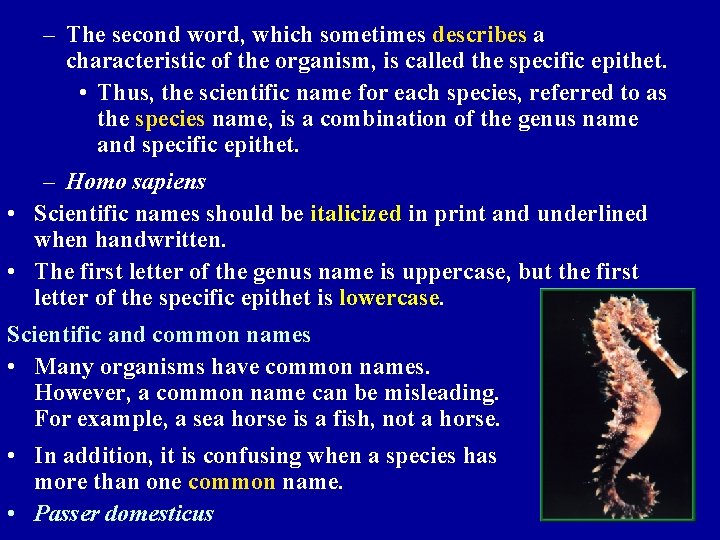
– The second word, which sometimes describes a characteristic of the organism, is called the specific epithet. • Thus, the scientific name for each species, referred to as the species name, is a combination of the genus name and specific epithet. – Homo sapiens • Scientific names should be italicized in print and underlined when handwritten. • The first letter of the genus name is uppercase, but the first letter of the specific epithet is lowercase. Scientific and common names • Many organisms have common names. However, a common name can be misleading. For example, a sea horse is a fish, not a horse. • In addition, it is confusing when a species has more than one common name. • Passer domesticus
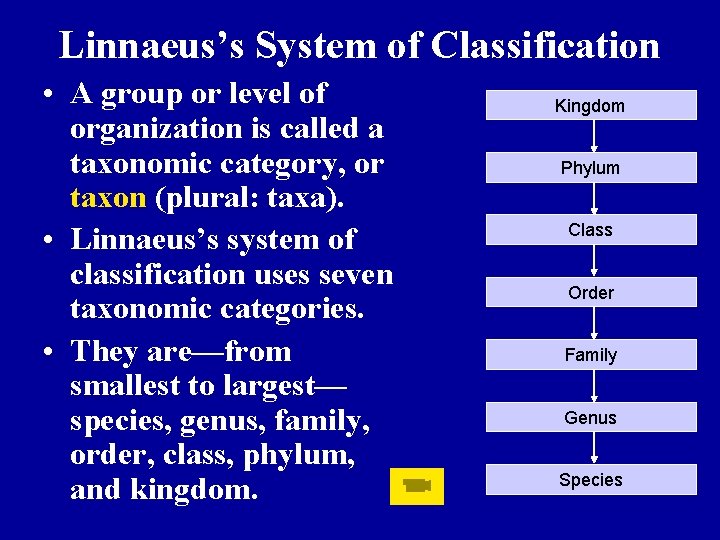
Linnaeus’s System of Classification • A group or level of organization is called a taxonomic category, or taxon (plural: taxa). • Linnaeus’s system of classification uses seven taxonomic categories. • They are—from smallest to largest— species, genus, family, order, class, phylum, and kingdom. Kingdom Phylum Class Order Family Genus Species
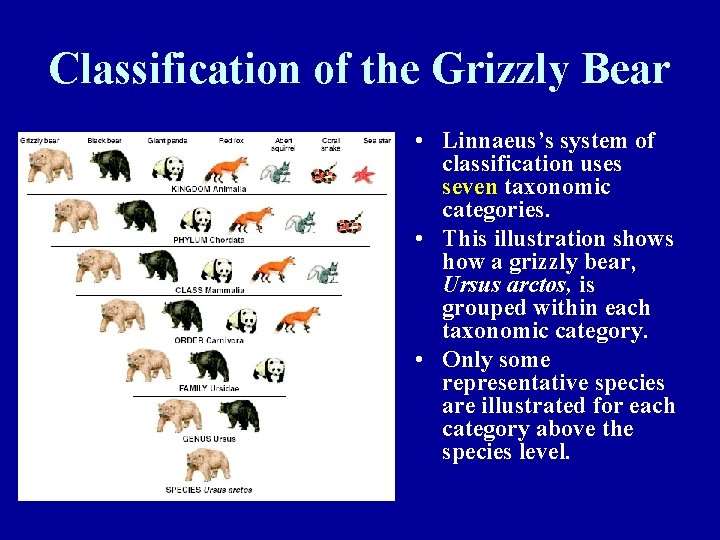
Classification of the Grizzly Bear • Linnaeus’s system of classification uses seven taxonomic categories. • This illustration shows how a grizzly bear, Ursus arctos, is grouped within each taxonomic category. • Only some representative species are illustrated for each category above the species level.
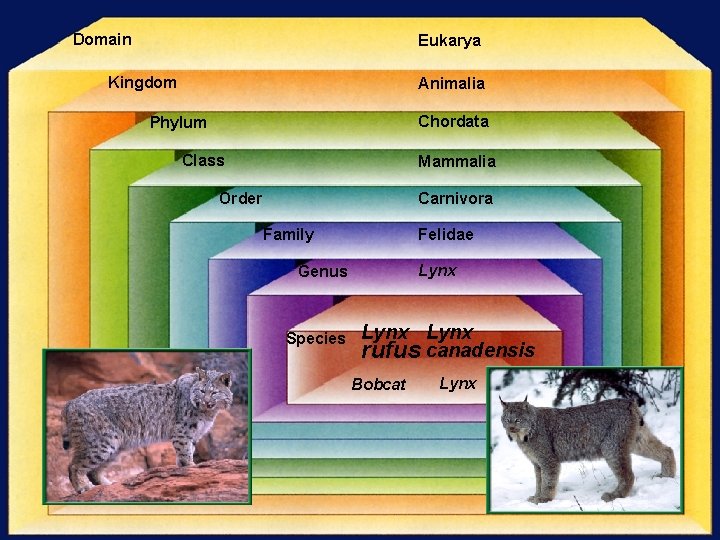
Domain Eukarya Kingdom Animalia Chordata Phylum Class Mammalia Carnivora Order Felidae Family Lynx Genus Species Lynx rufus canadensis Bobcat Lynx
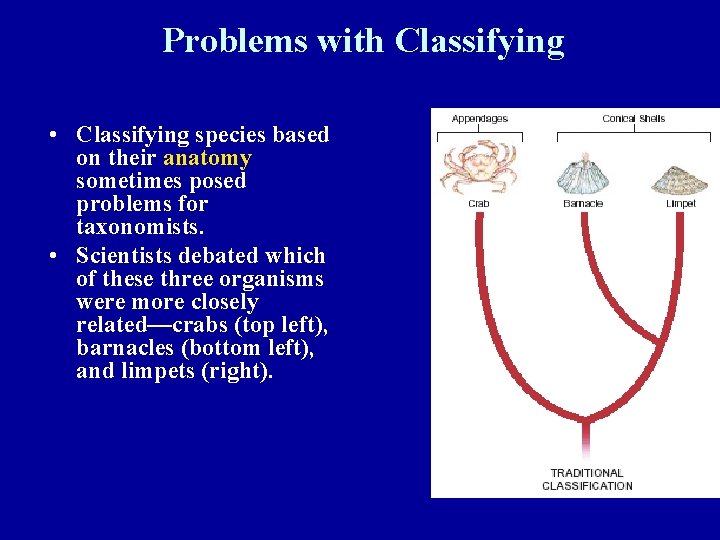
Problems with Classifying • Classifying species based on their anatomy sometimes posed problems for taxonomists. • Scientists debated which of these three organisms were more closely related—crabs (top left), barnacles (bottom left), and limpets (right).
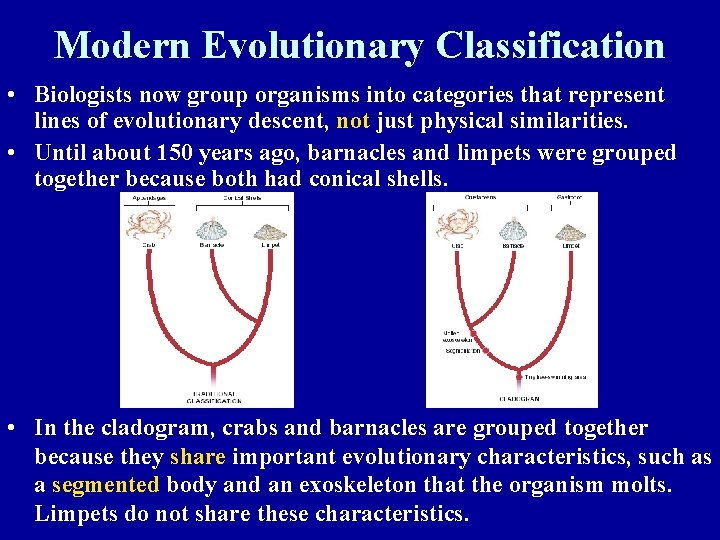
Modern Evolutionary Classification • Biologists now group organisms into categories that represent lines of evolutionary descent, not just physical similarities. • Until about 150 years ago, barnacles and limpets were grouped together because both had conical shells. • In the cladogram, crabs and barnacles are grouped together because they share important evolutionary characteristics, such as a segmented body and an exoskeleton that the organism molts. Limpets do not share these characteristics.
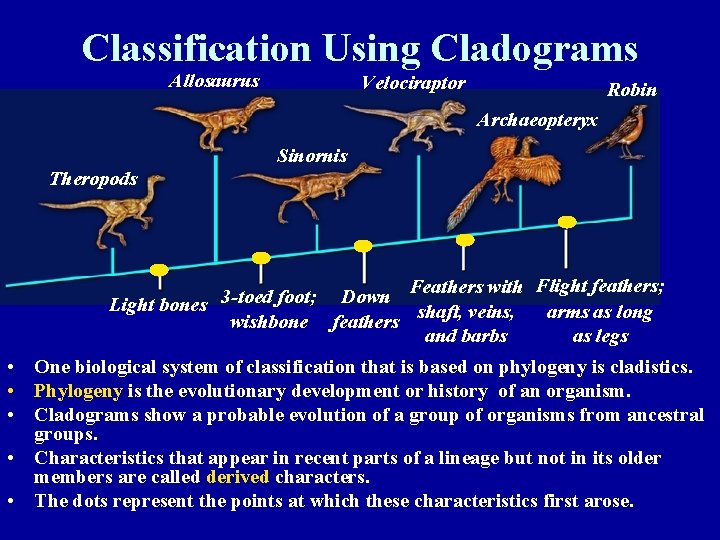
Classification Using Cladograms Allosaurus Velociraptor Robin Archaeopteryx Sinornis Theropods Feathers with Flight feathers; 3 -toed foot; Down Light bones arms as long shaft, veins, wishbone feathers as legs and barbs • One biological system of classification that is based on phylogeny is cladistics. • Phylogeny is the evolutionary development or history of an organism. • Cladograms show a probable evolution of a group of organisms from ancestral groups. • Characteristics that appear in recent parts of a lineage but not in its older members are called derived characters. • The dots represent the points at which these characteristics first arose.
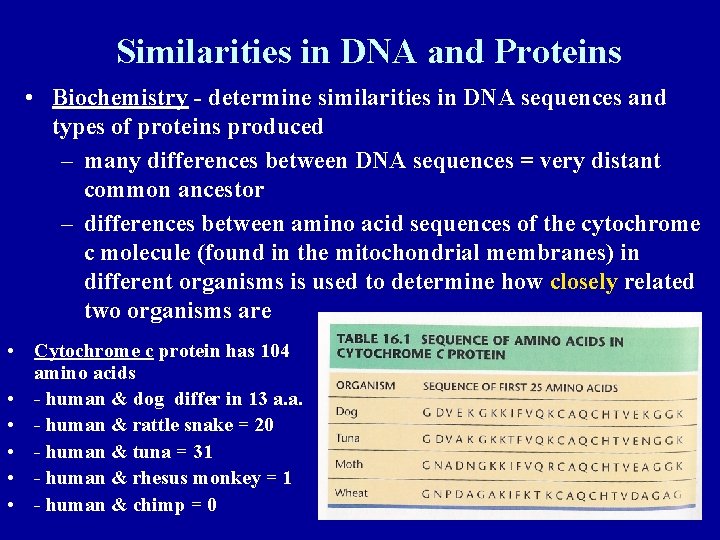
Similarities in DNA and Proteins • Biochemistry - determine similarities in DNA sequences and types of proteins produced – many differences between DNA sequences = very distant common ancestor – differences between amino acid sequences of the cytochrome c molecule (found in the mitochondrial membranes) in different organisms is used to determine how closely related two organisms are • Cytochrome c protein has 104 amino acids • - human & dog differ in 13 a. a. • - human & rattle snake = 20 • - human & tuna = 31 • - human & rhesus monkey = 1 • - human & chimp = 0
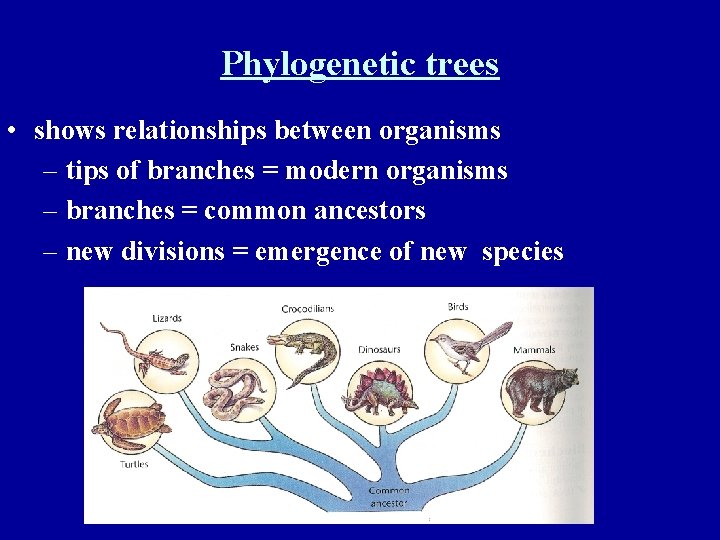
Phylogenetic trees • shows relationships between organisms – tips of branches = modern organisms – branches = common ancestors – new divisions = emergence of new species
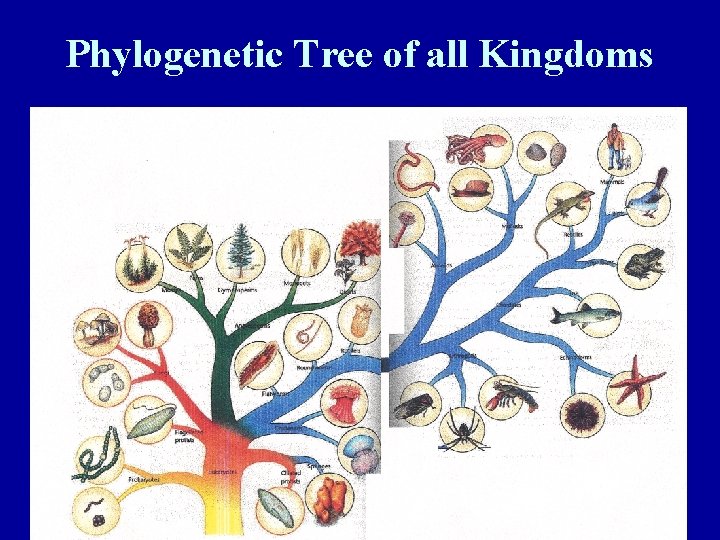
Phylogenetic Tree of all Kingdoms
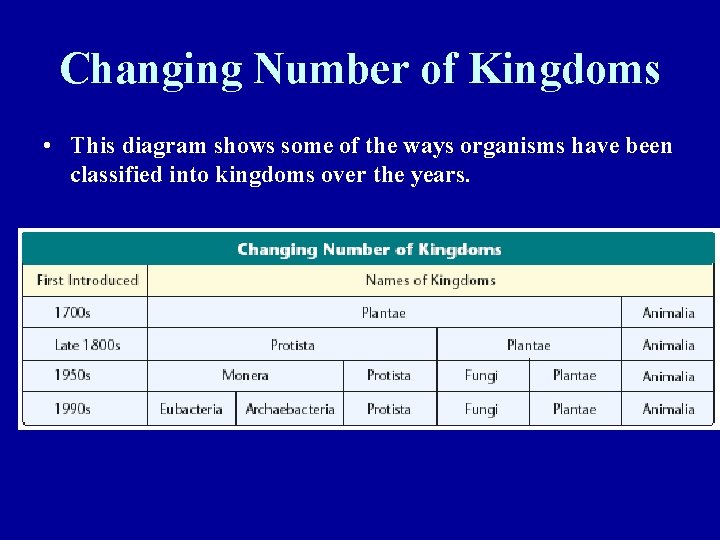
Changing Number of Kingdoms • This diagram shows some of the ways organisms have been classified into kingdoms over the years.
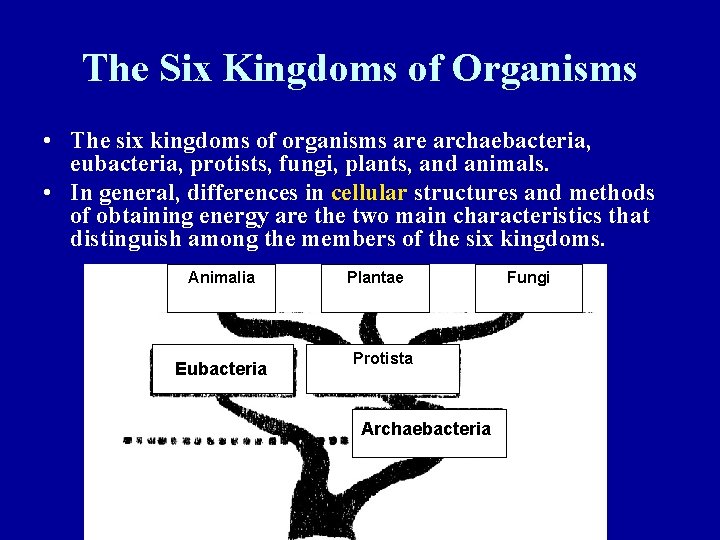
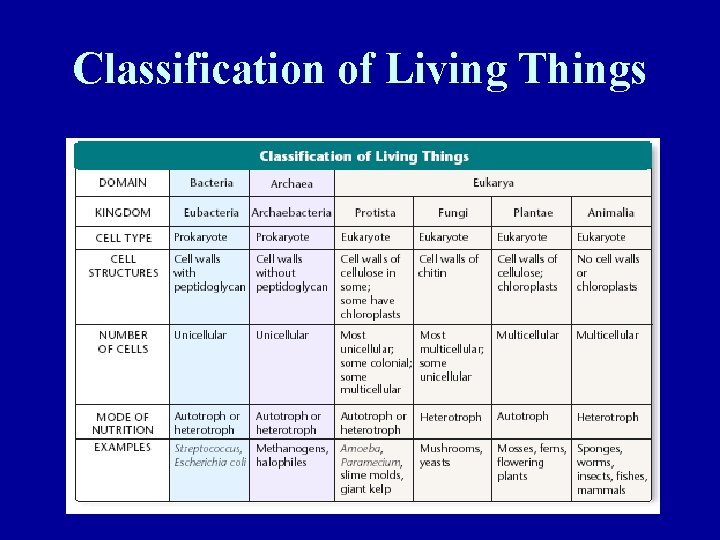
The Six Kingdoms of Organisms • The six kingdoms of organisms are archaebacteria, eubacteria, protists, fungi, plants, and animals. • In general, differences in cellular structures and methods of obtaining energy are the two main characteristics that distinguish among the members of the six kingdoms. Animalia Eubacteria Plantae Protista Archaebacteria Fungi
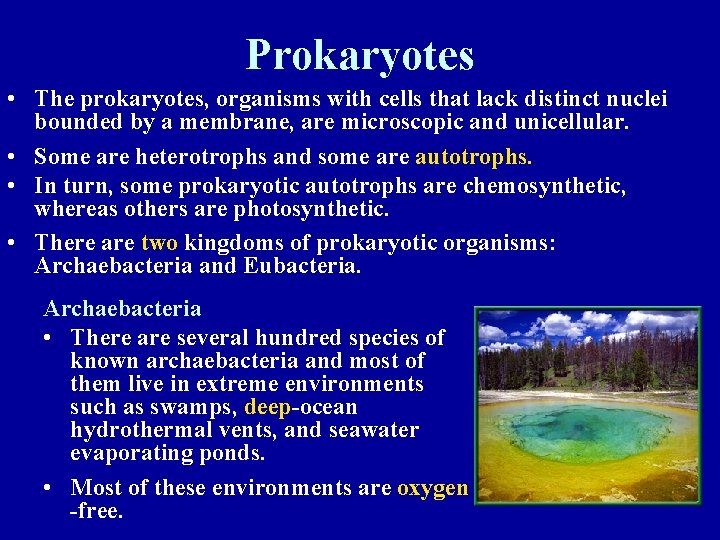
Prokaryotes • The prokaryotes, organisms with cells that lack distinct nuclei bounded by a membrane, are microscopic and unicellular. • Some are heterotrophs and some are autotrophs. • In turn, some prokaryotic autotrophs are chemosynthetic, whereas others are photosynthetic. • There are two kingdoms of prokaryotic organisms: Archaebacteria and Eubacteria. Archaebacteria • There are several hundred species of known archaebacteria and most of them live in extreme environments such as swamps, deep-ocean hydrothermal vents, and seawater evaporating ponds. • Most of these environments are oxygen -free.
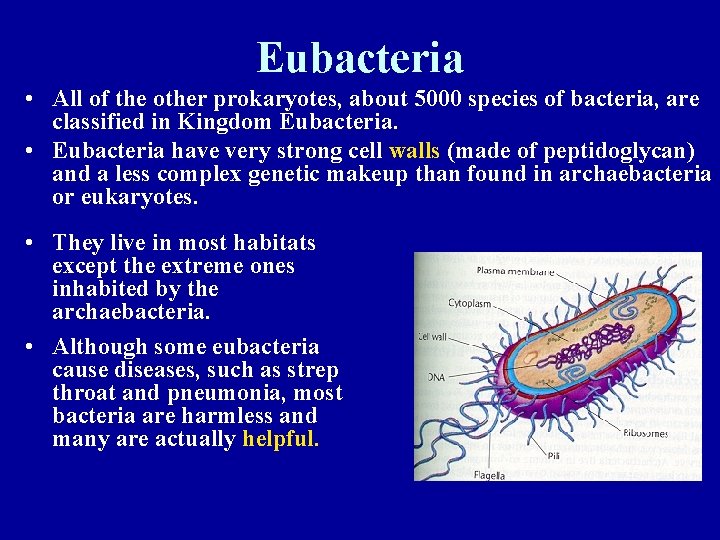
Eubacteria • All of the other prokaryotes, about 5000 species of bacteria, are classified in Kingdom Eubacteria. • Eubacteria have very strong cell walls (made of peptidoglycan) and a less complex genetic makeup than found in archaebacteria or eukaryotes. • They live in most habitats except the extreme ones inhabited by the archaebacteria. • Although some eubacteria cause diseases, such as strep throat and pneumonia, most bacteria are harmless and many are actually helpful.
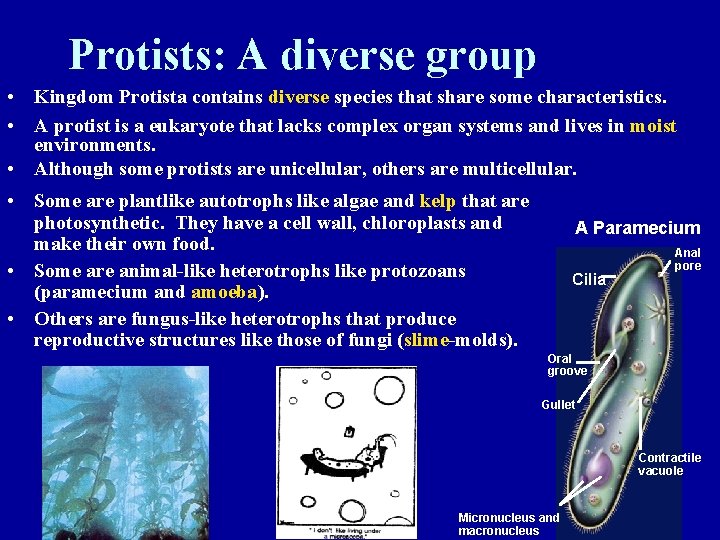
Protists: A diverse group • Kingdom Protista contains diverse species that share some characteristics. • A protist is a eukaryote that lacks complex organ systems and lives in moist environments. • Although some protists are unicellular, others are multicellular. • Some are plantlike autotrophs like algae and kelp that are photosynthetic. They have a cell wall, chloroplasts and make their own food. • Some are animal-like heterotrophs like protozoans (paramecium and amoeba). • Others are fungus-like heterotrophs that produce reproductive structures like those of fungi (slime-molds). A Paramecium Cilia Anal pore Oral groove Gullet Contractile vacuole Micronucleus and macronucleus
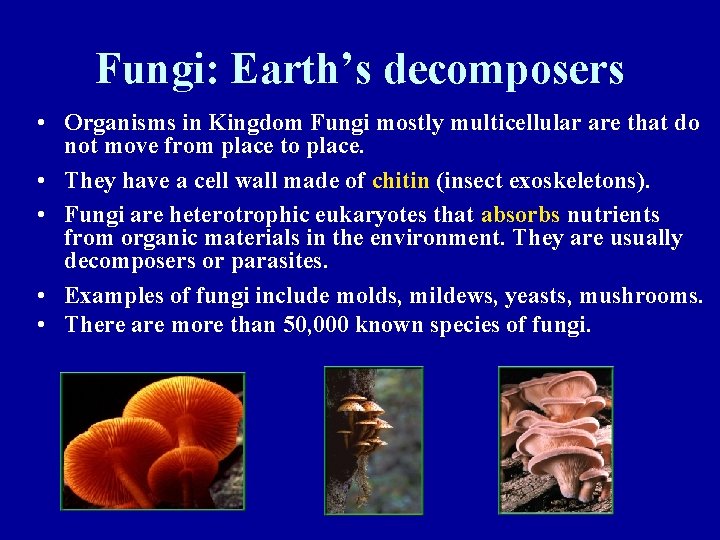
Fungi: Earth’s decomposers • Organisms in Kingdom Fungi mostly multicellular are that do not move from place to place. • They have a cell wall made of chitin (insect exoskeletons). • Fungi are heterotrophic eukaryotes that absorbs nutrients from organic materials in the environment. They are usually decomposers or parasites. • Examples of fungi include molds, mildews, yeasts, mushrooms. • There are more than 50, 000 known species of fungi.
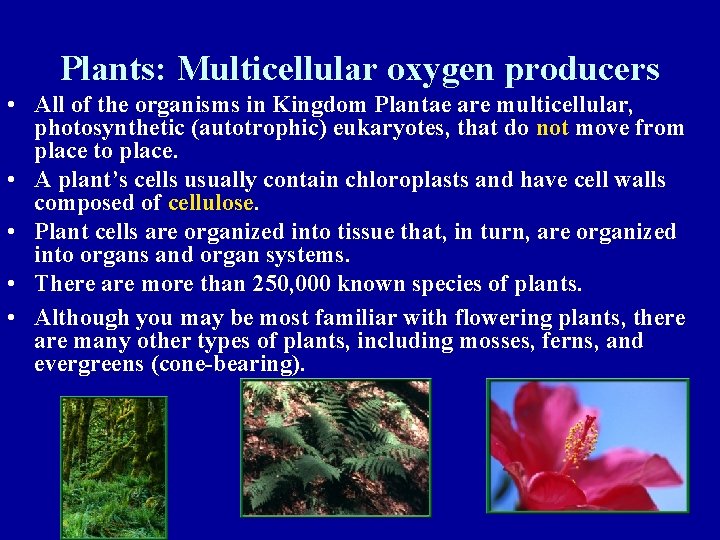
Plants: Multicellular oxygen producers • All of the organisms in Kingdom Plantae are multicellular, photosynthetic (autotrophic) eukaryotes, that do not move from place to place. • A plant’s cells usually contain chloroplasts and have cell walls composed of cellulose. • Plant cells are organized into tissue that, in turn, are organized into organs and organ systems. • There are more than 250, 000 known species of plants. • Although you may be most familiar with flowering plants, there are many other types of plants, including mosses, ferns, and evergreens (cone-bearing).
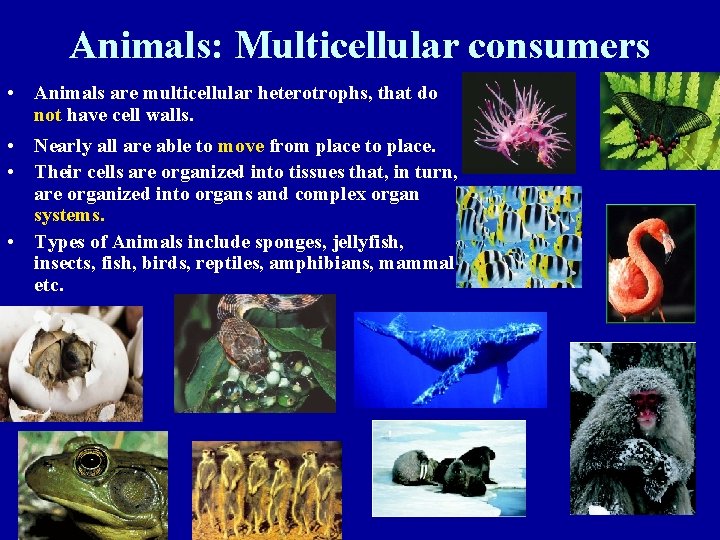
Animals: Multicellular consumers • Animals are multicellular heterotrophs, that do not have cell walls. • Nearly all are able to move from place to place. • Their cells are organized into tissues that, in turn, are organized into organs and complex organ systems. • Types of Animals include sponges, jellyfish, insects, fish, birds, reptiles, amphibians, mammals, etc.
Classification of Living Things
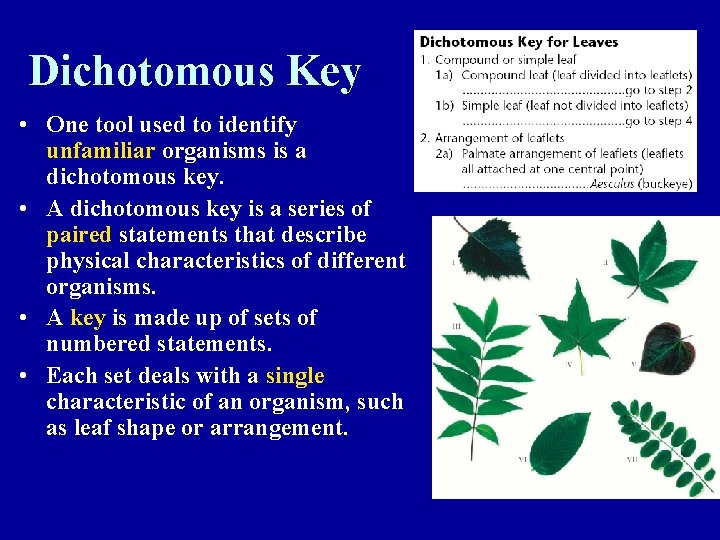
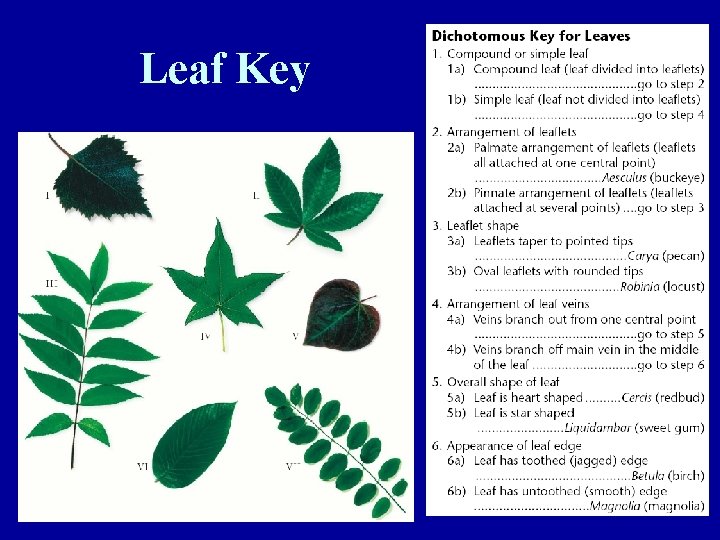
Dichotomous Key • One tool used to identify unfamiliar organisms is a dichotomous key. • A dichotomous key is a series of paired statements that describe physical characteristics of different organisms. • A key is made up of sets of numbered statements. • Each set deals with a single characteristic of an organism, such as leaf shape or arrangement.
Leaf Key
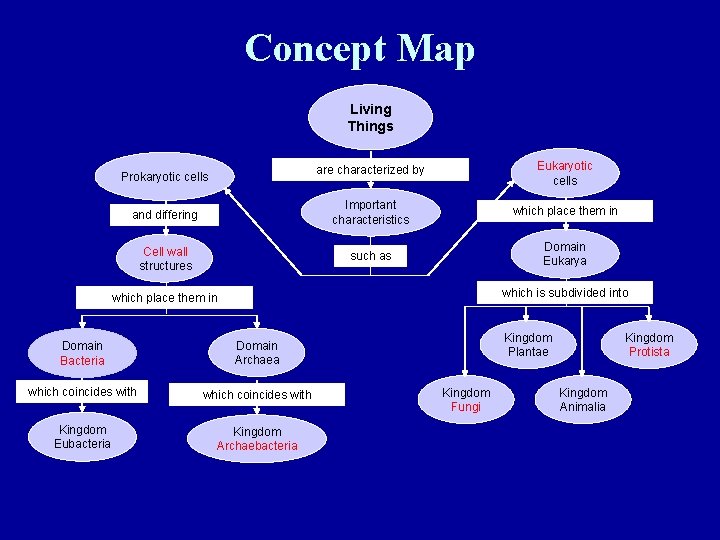
Concept Map Living Things are characterized by Eukaryotic cells and differing Important characteristics which place them in Cell wall structures such as Domain Eukarya Prokaryotic cells which is subdivided into which place them in Domain Bacteria Domain Archaea which coincides with Kingdom Eubacteria Kingdom Archaebacteria Kingdom Plantae Kingdom Fungi Kingdom Protista Kingdom Animalia
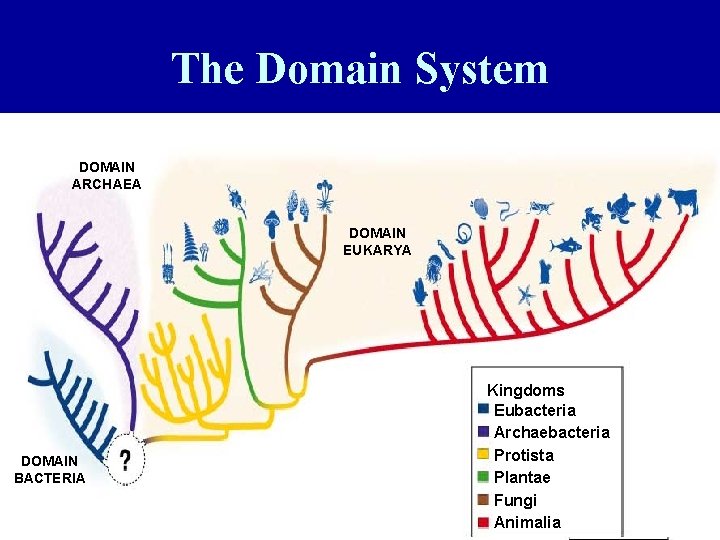
The Domain System DOMAIN ARCHAEA DOMAIN EUKARYA DOMAIN BACTERIA Kingdoms Eubacteria Archaebacteria Protista Plantae Fungi Animalia