
Chapter 18 Network Theorems ac Superposition Thevenin Norton
- Slides: 37
Chapter 18 Network Theorems (ac) Superposition Thevenin Norton Maximum Power Transfer 1
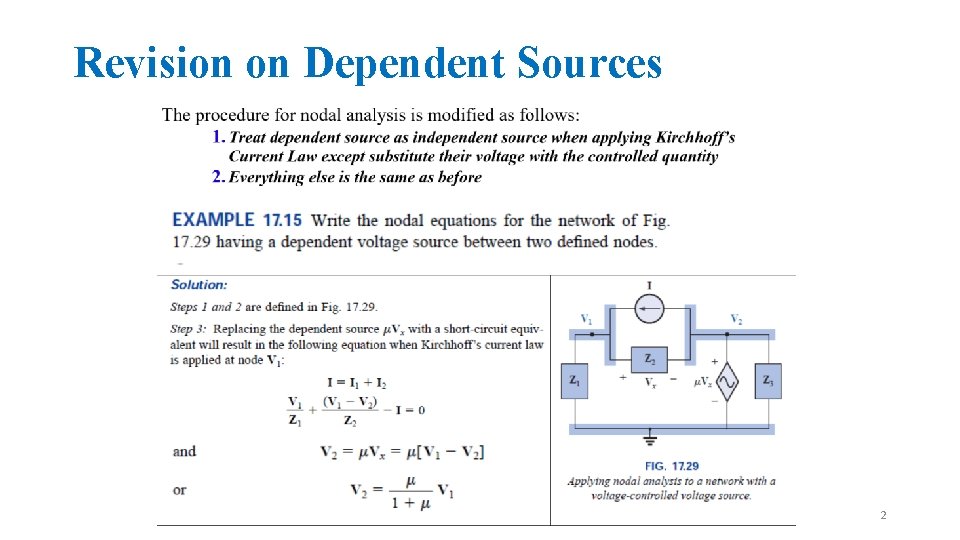
Revision on Dependent Sources 2
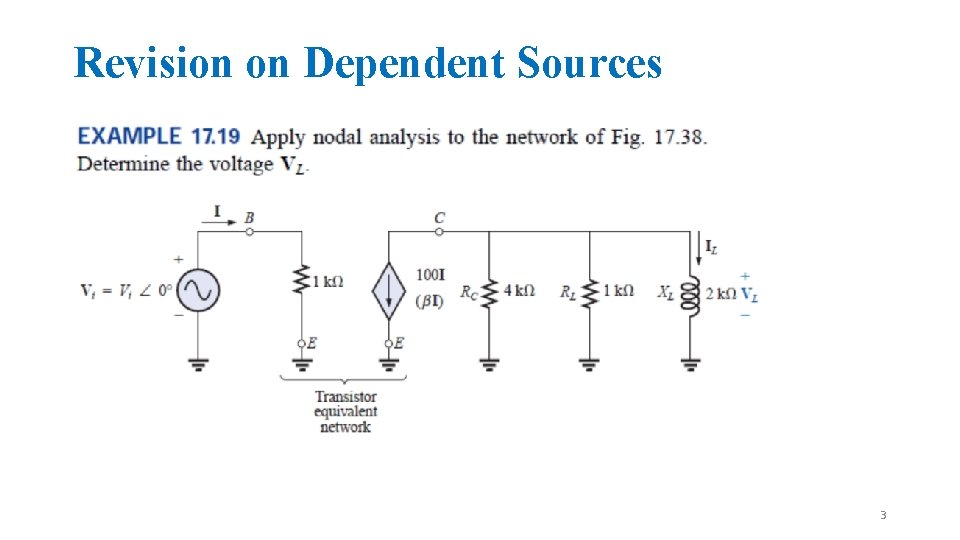
Revision on Dependent Sources 3
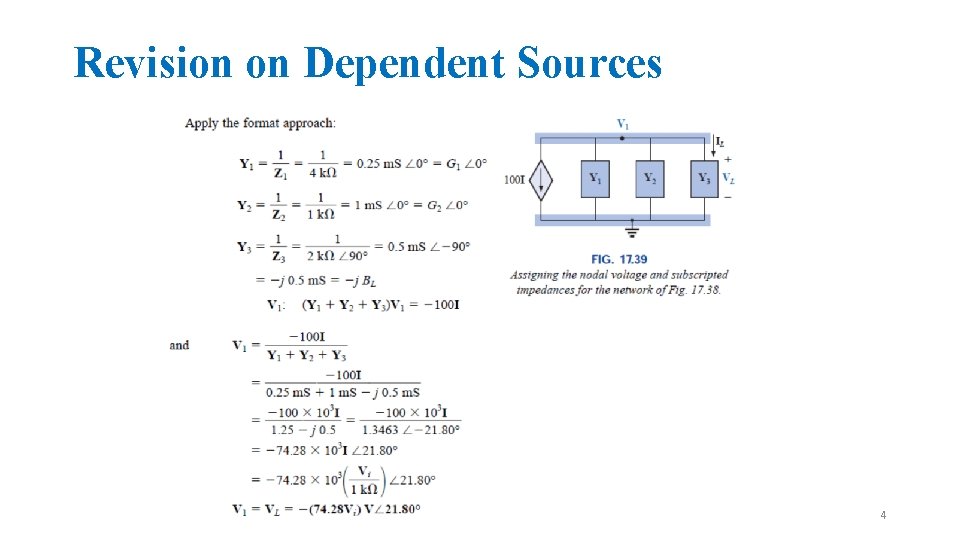
Revision on Dependent Sources 4
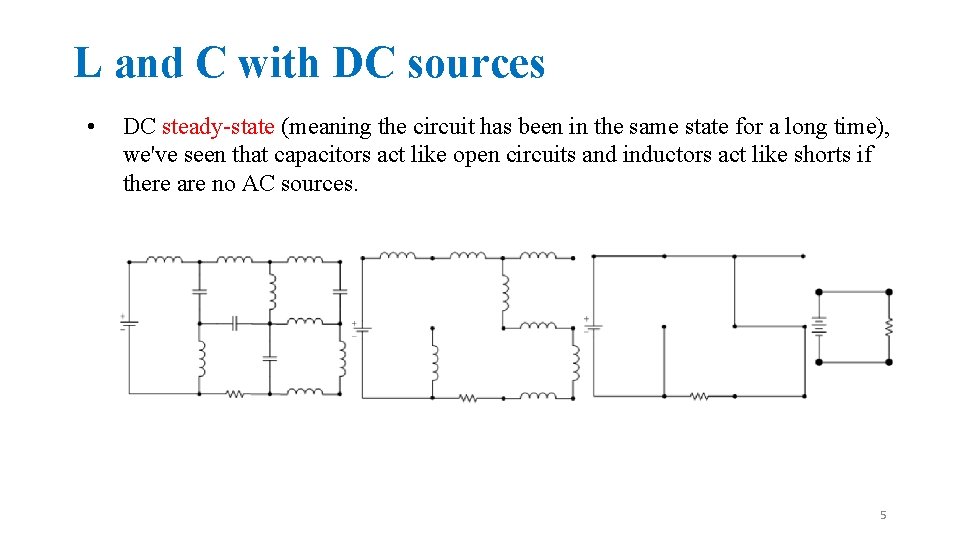
L and C with DC sources • DC steady-state (meaning the circuit has been in the same state for a long time), we've seen that capacitors act like open circuits and inductors act like shorts if there are no AC sources. 5
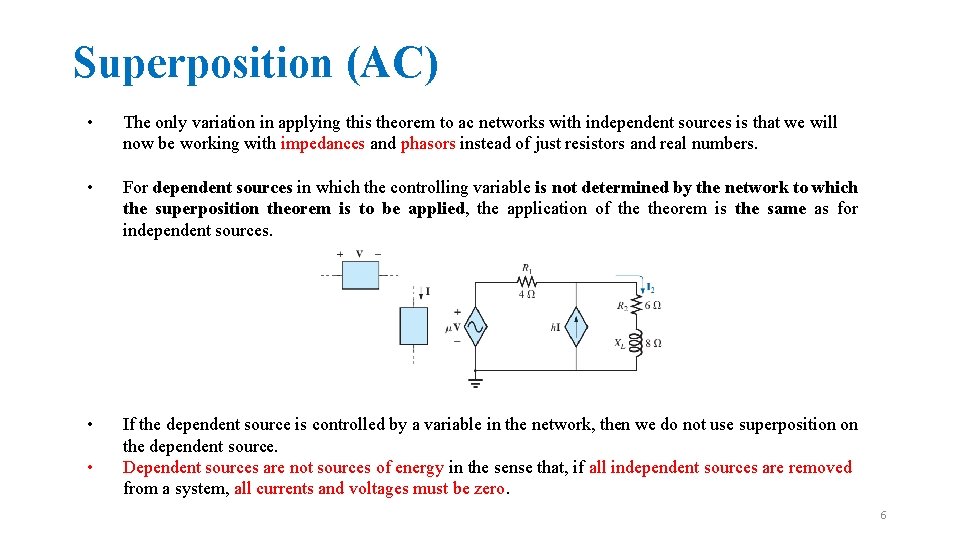
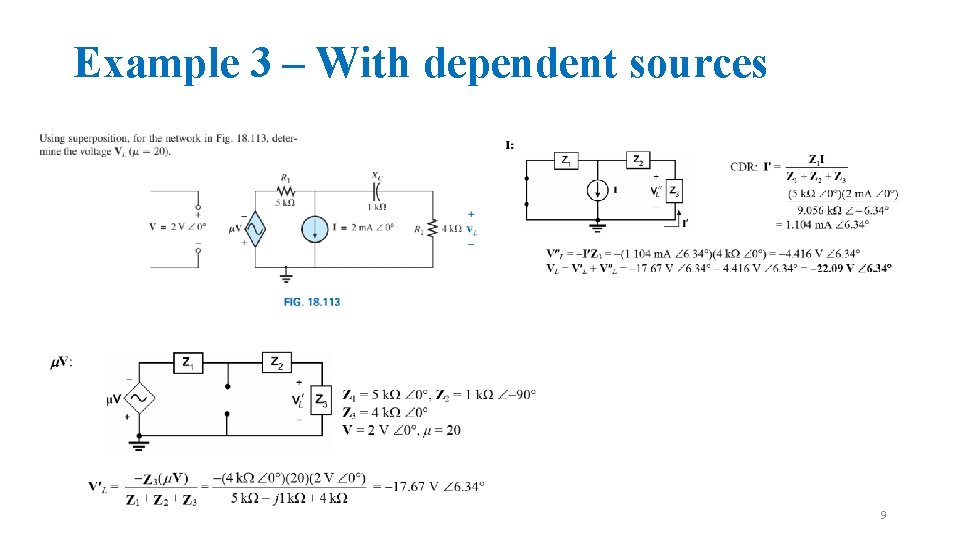
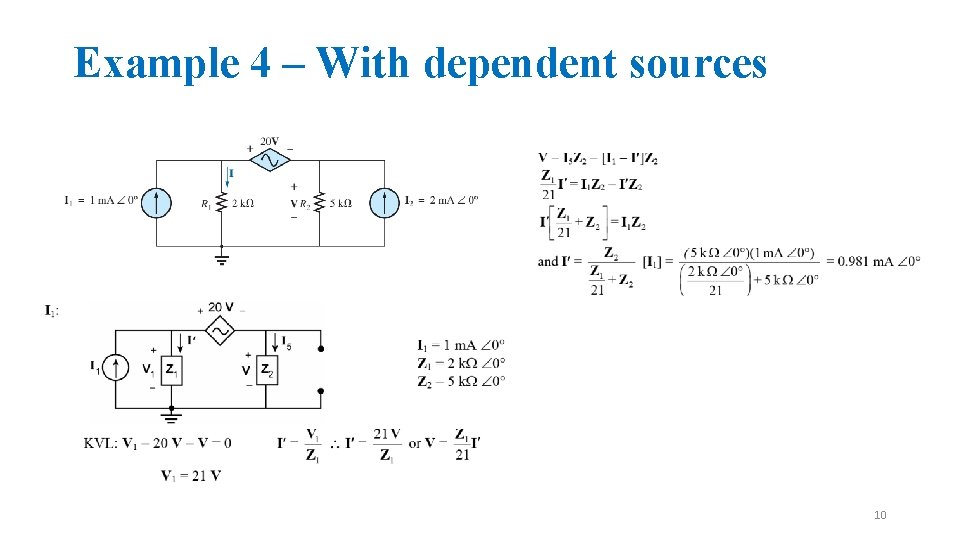
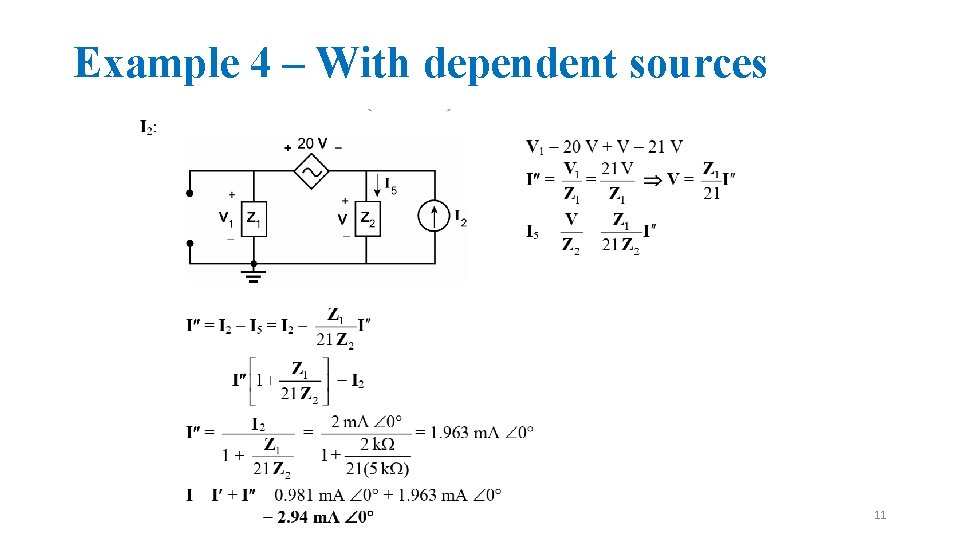
Superposition (AC) • The only variation in applying this theorem to ac networks with independent sources is that we will now be working with impedances and phasors instead of just resistors and real numbers. • For dependent sources in which the controlling variable is not determined by the network to which the superposition theorem is to be applied, the application of theorem is the same as for independent sources. • If the dependent source is controlled by a variable in the network, then we do not use superposition on the dependent source. Dependent sources are not sources of energy in the sense that, if all independent sources are removed from a system, all currents and voltages must be zero. • 6
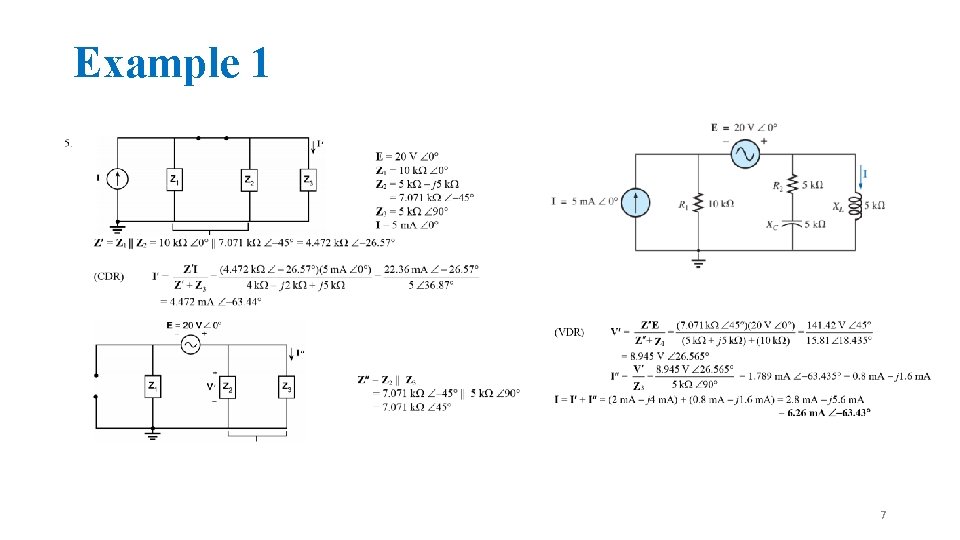
Example 1 7
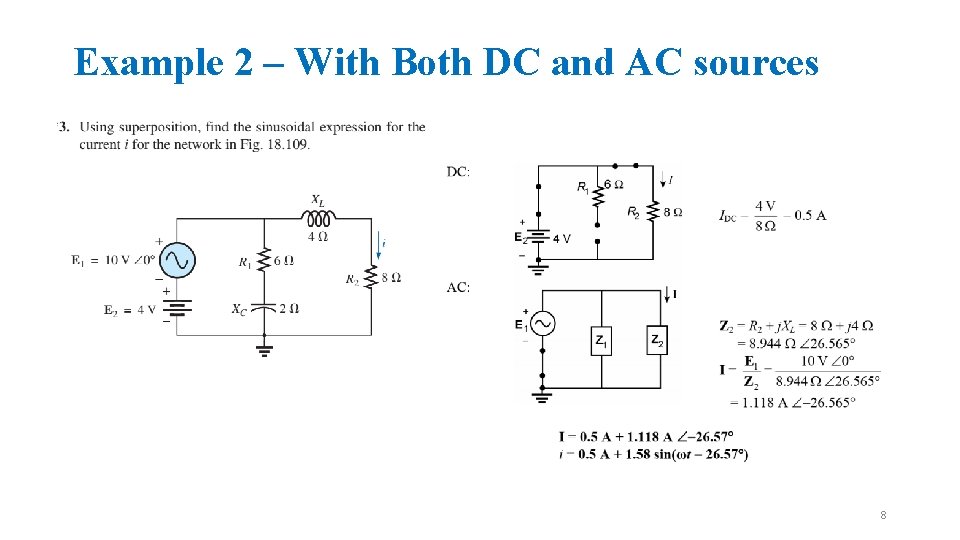
Example 2 – With Both DC and AC sources 8
Example 3 – With dependent sources 9
Example 4 – With dependent sources 10
Example 4 – With dependent sources 11
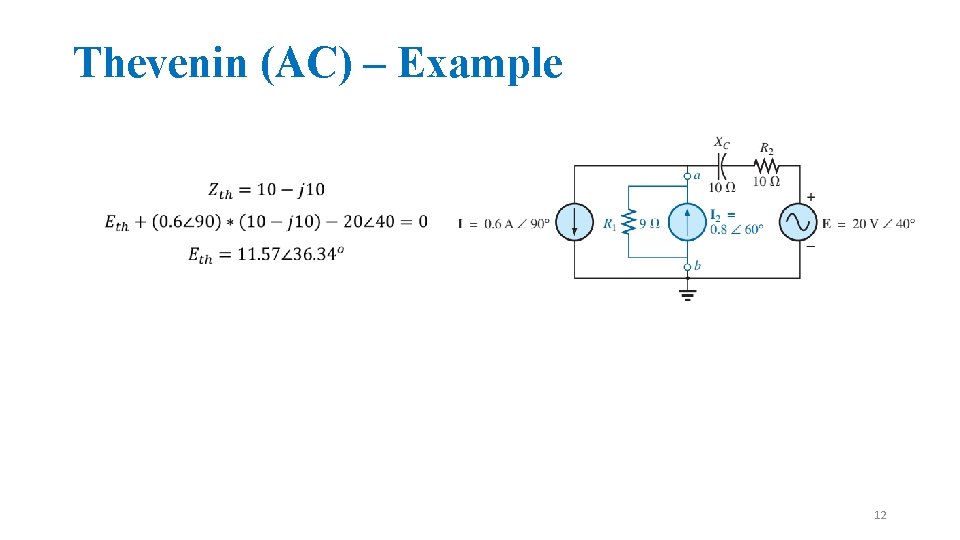
Thevenin (AC) – Example 12
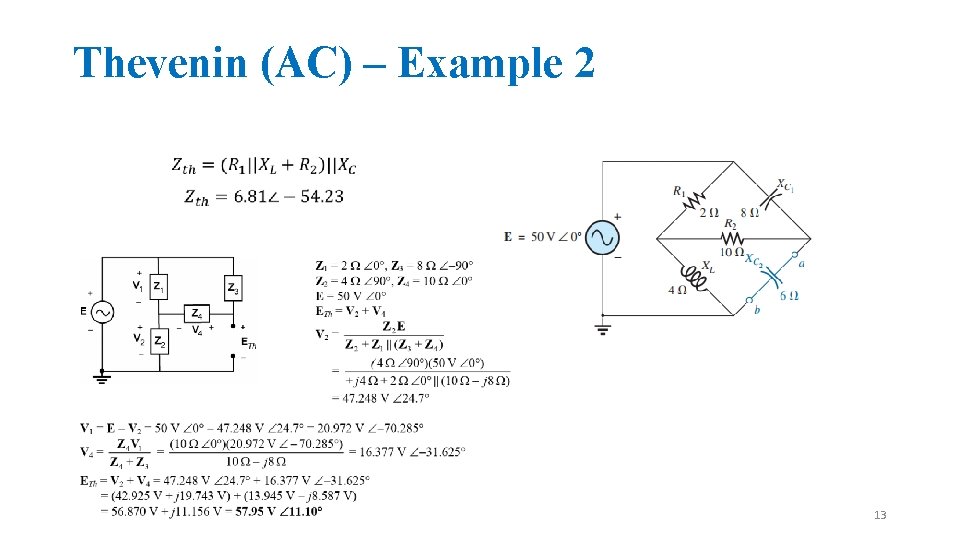
Thevenin (AC) – Example 2 13
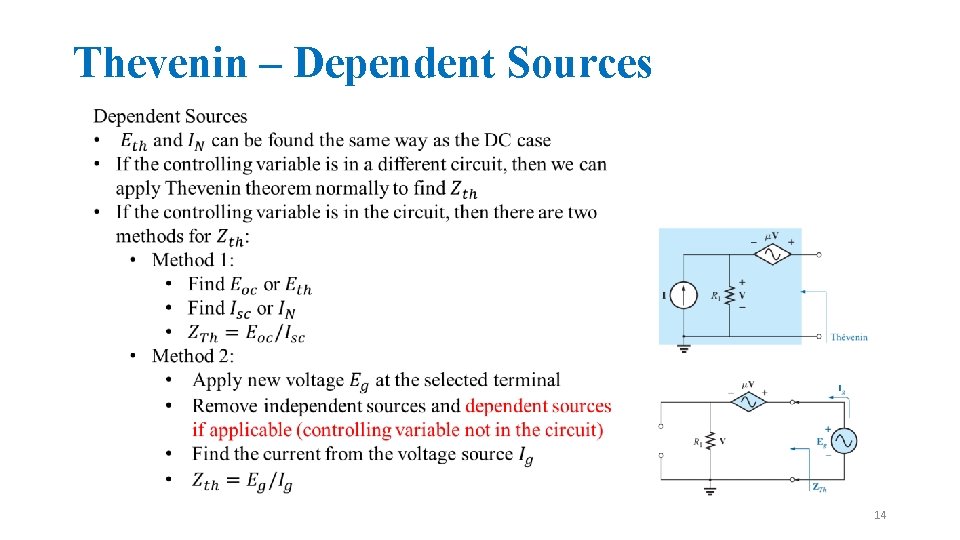
Thevenin – Dependent Sources 14
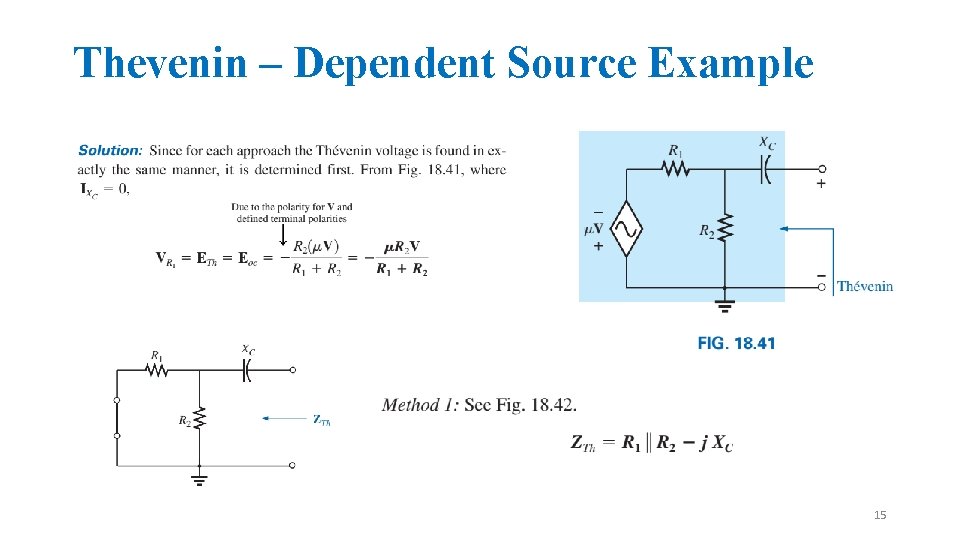
Thevenin – Dependent Source Example 15
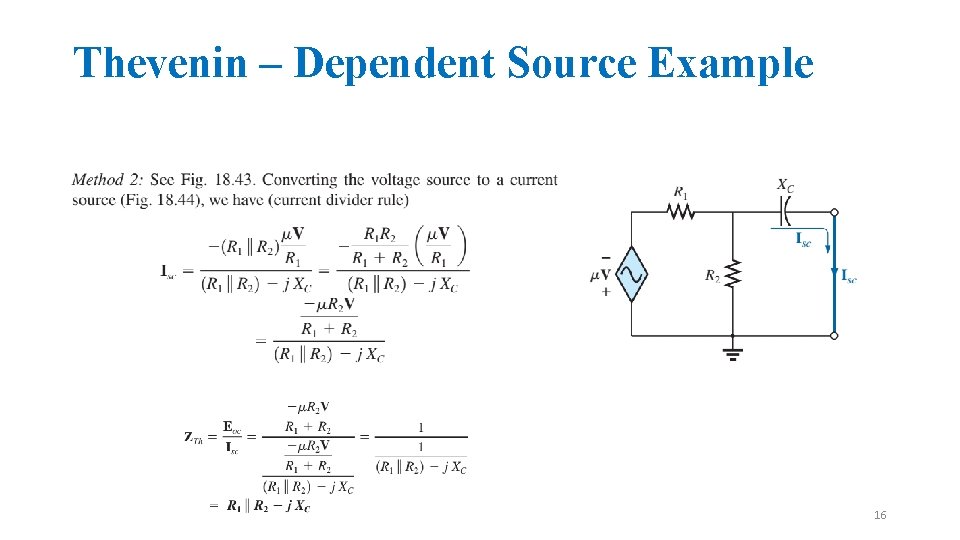
Thevenin – Dependent Source Example 16
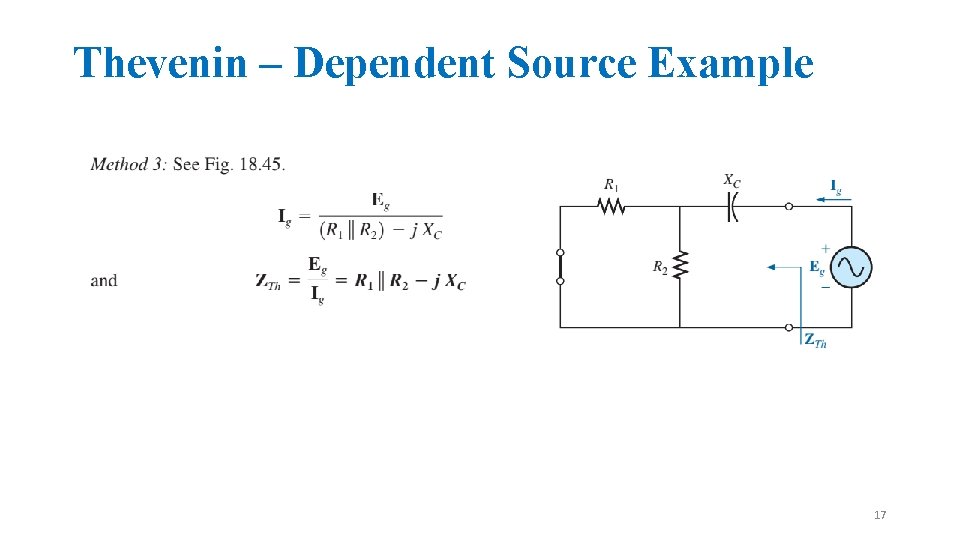
Thevenin – Dependent Source Example 17
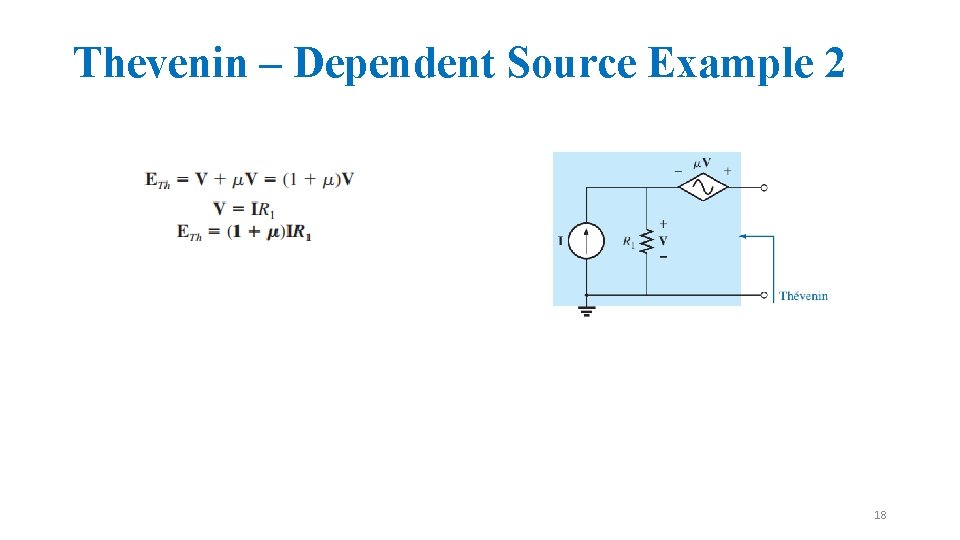
Thevenin – Dependent Source Example 2 18
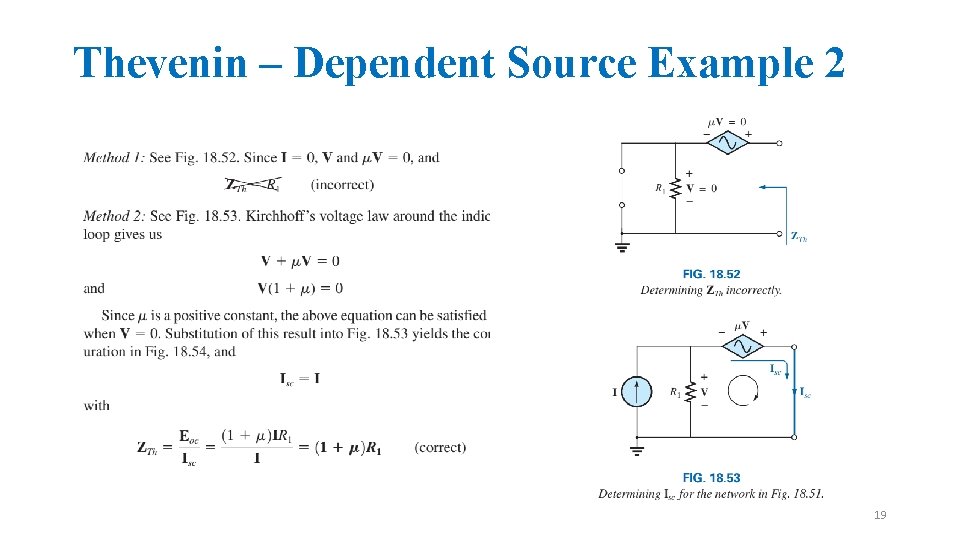
Thevenin – Dependent Source Example 2 19
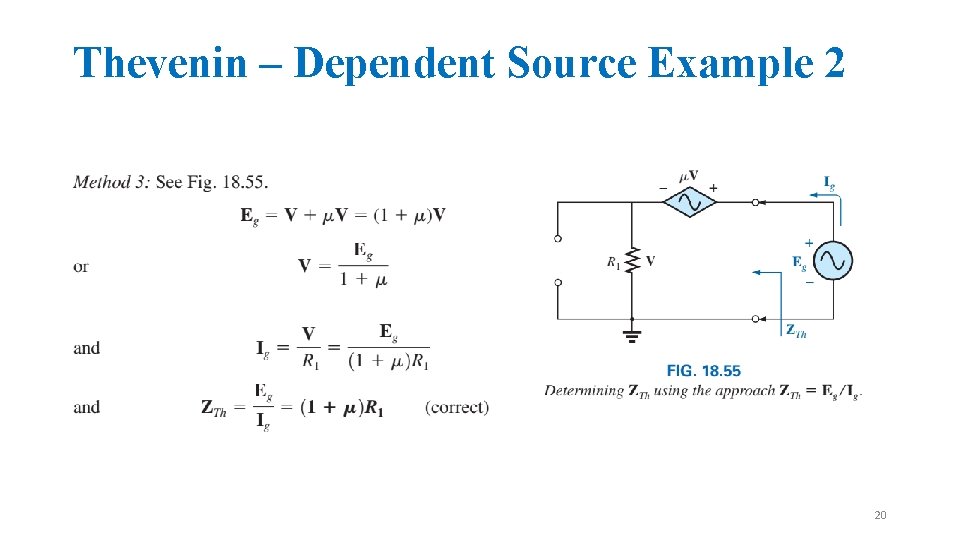
Thevenin – Dependent Source Example 2 20
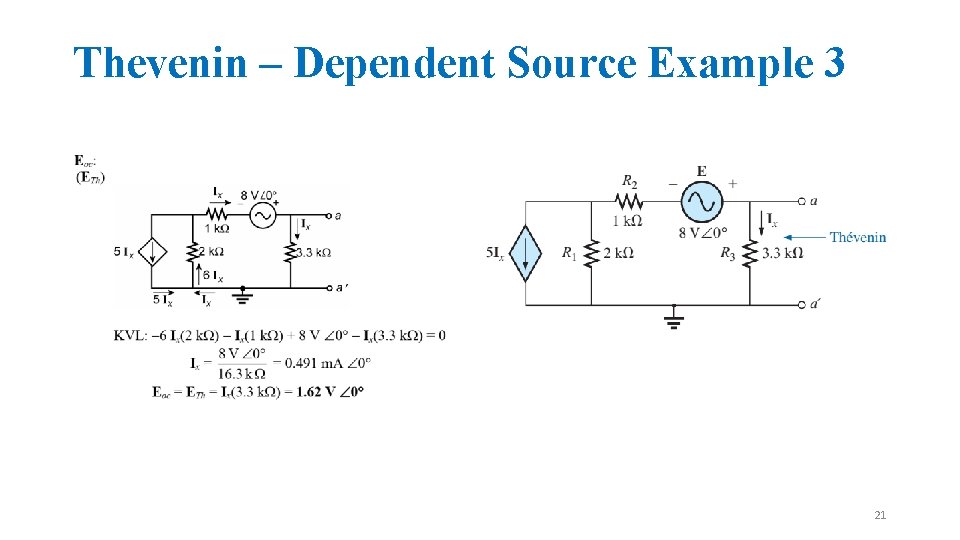
Thevenin – Dependent Source Example 3 21
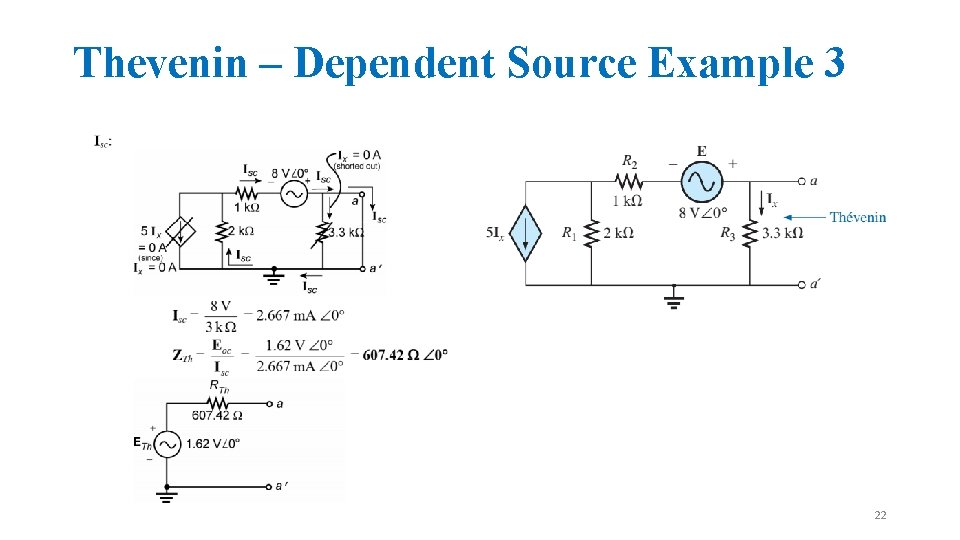
Thevenin – Dependent Source Example 3 22
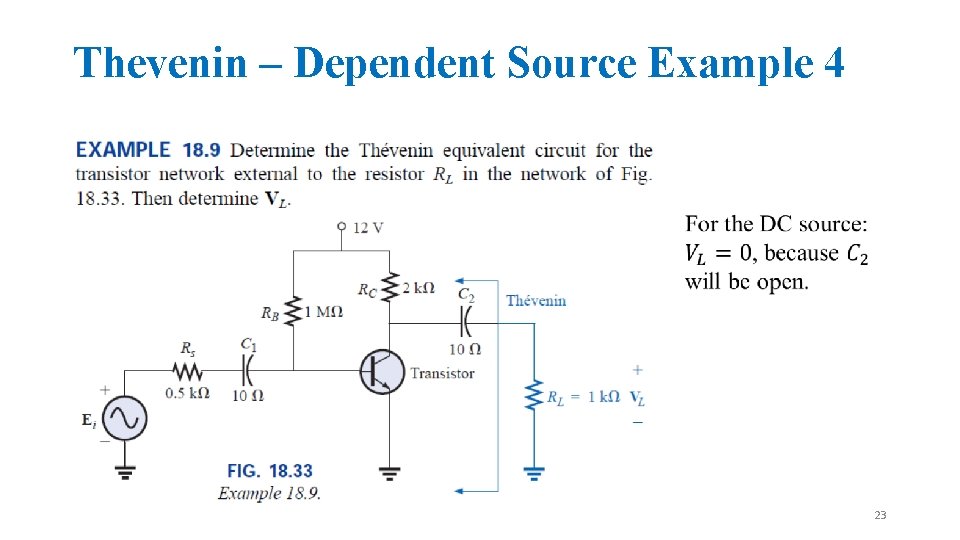
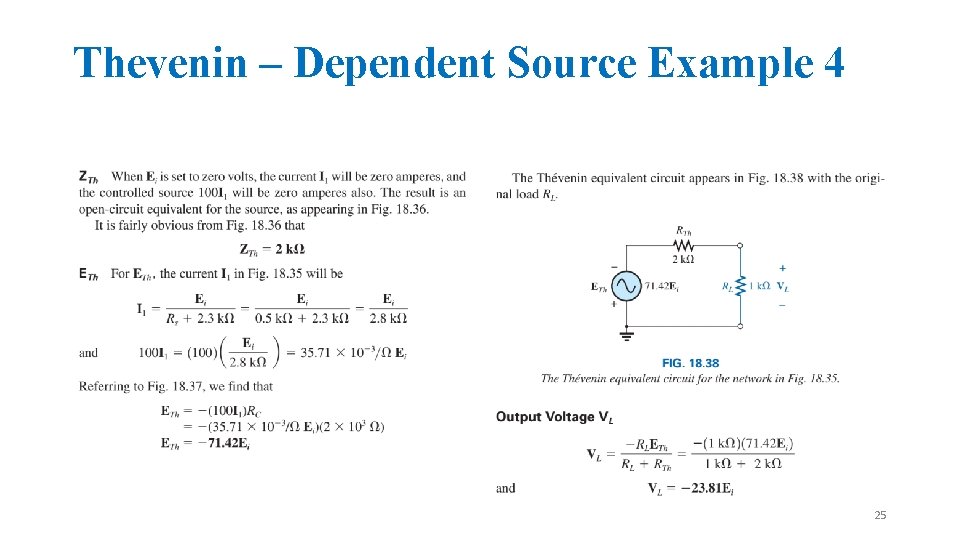
Thevenin – Dependent Source Example 4 23
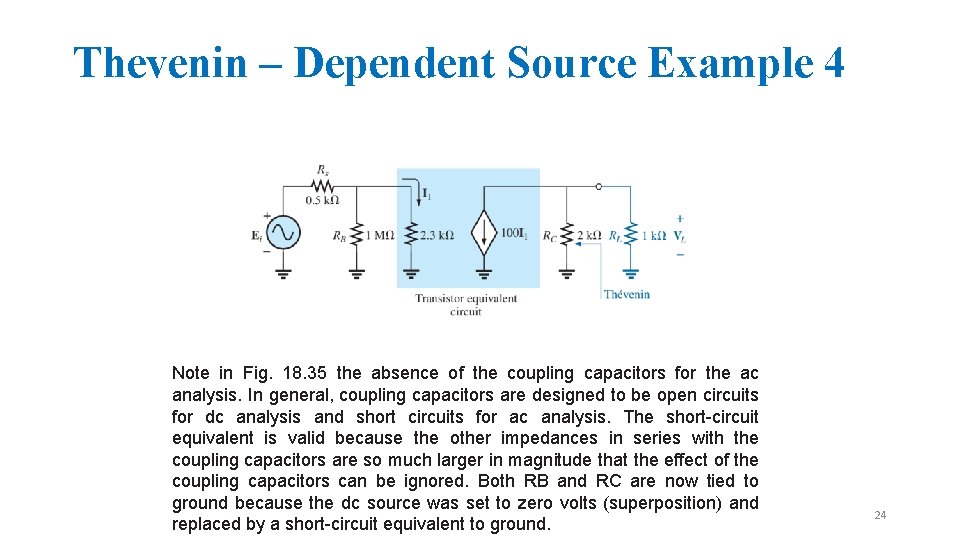
Thevenin – Dependent Source Example 4 Note in Fig. 18. 35 the absence of the coupling capacitors for the ac analysis. In general, coupling capacitors are designed to be open circuits for dc analysis and short circuits for ac analysis. The short-circuit equivalent is valid because the other impedances in series with the coupling capacitors are so much larger in magnitude that the effect of the coupling capacitors can be ignored. Both RB and RC are now tied to ground because the dc source was set to zero volts (superposition) and replaced by a short-circuit equivalent to ground. 24
Thevenin – Dependent Source Example 4 25
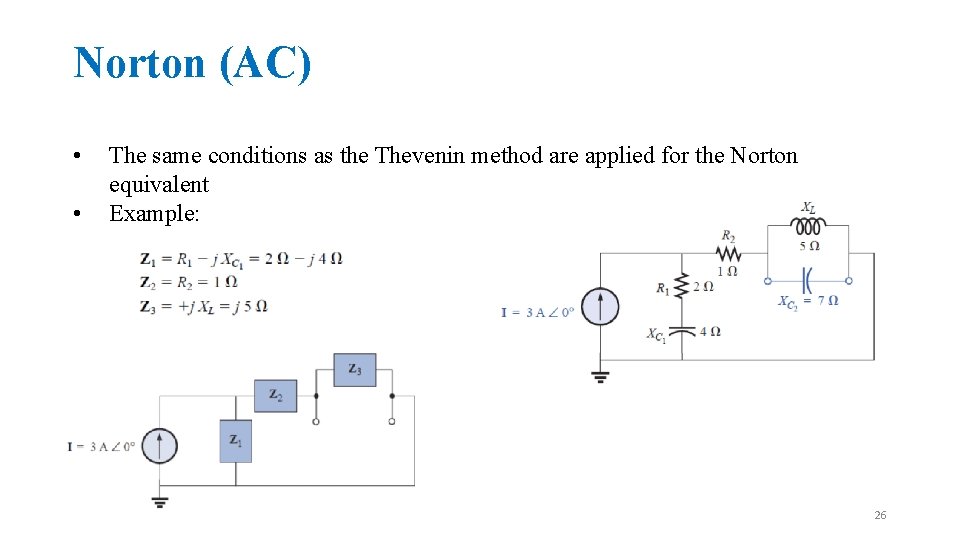
Norton (AC) • • The same conditions as the Thevenin method are applied for the Norton equivalent Example: 26
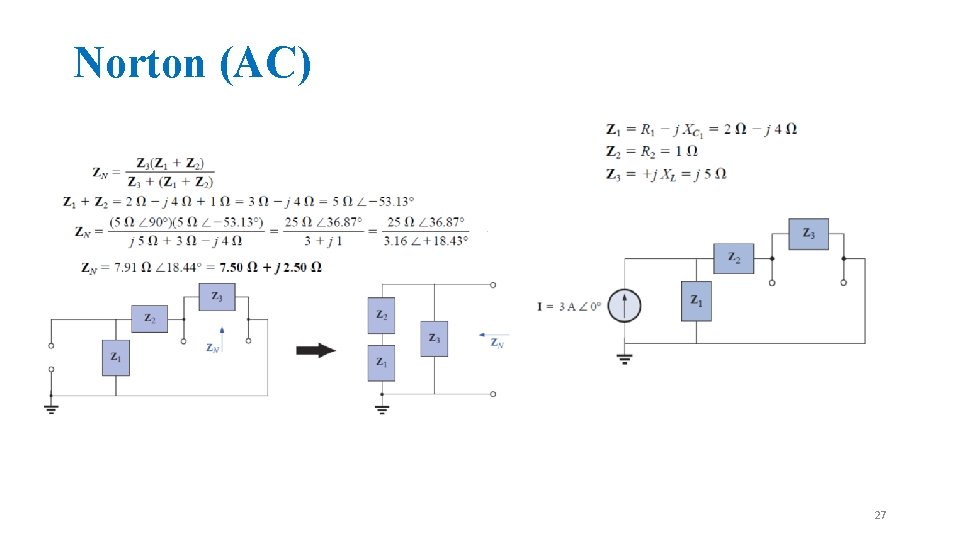
Norton (AC) 27
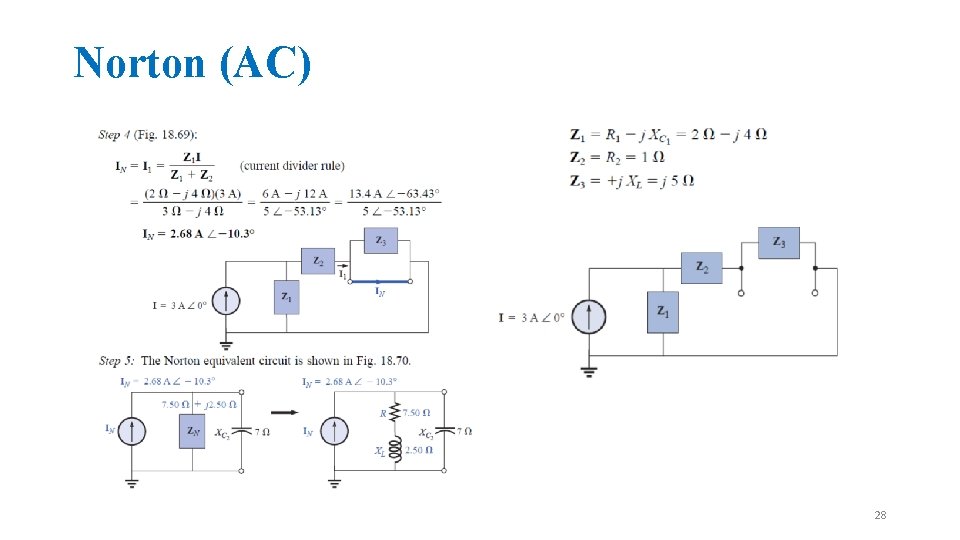
Norton (AC) 28
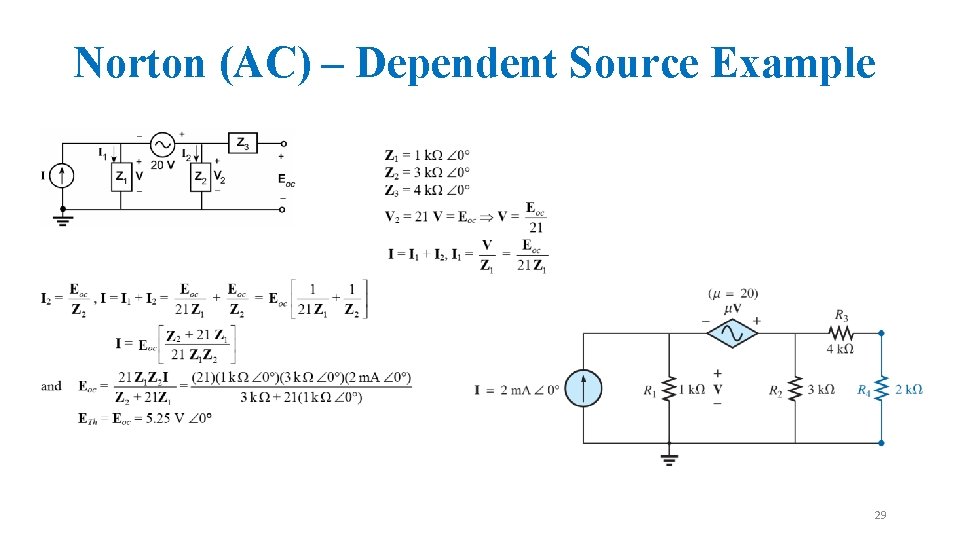
Norton (AC) – Dependent Source Example 29
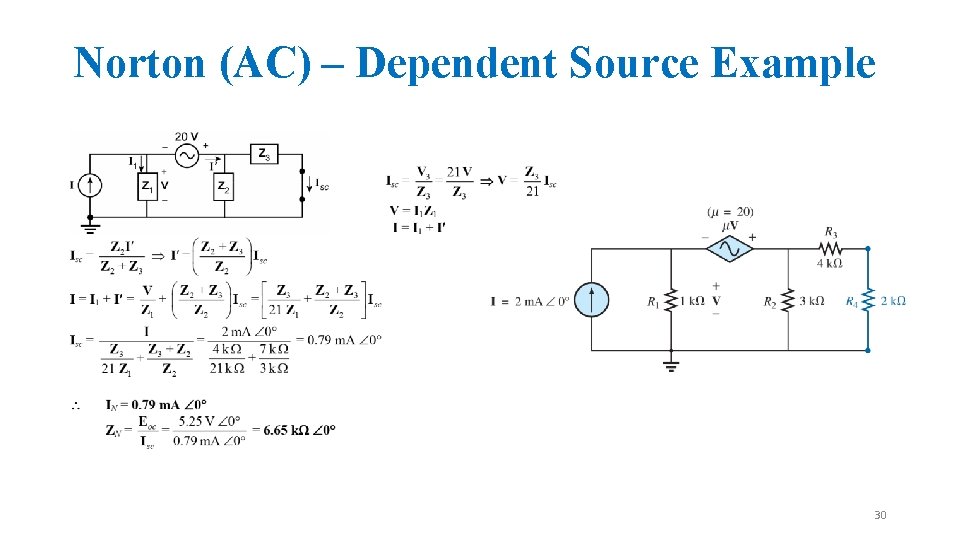
Norton (AC) – Dependent Source Example 30
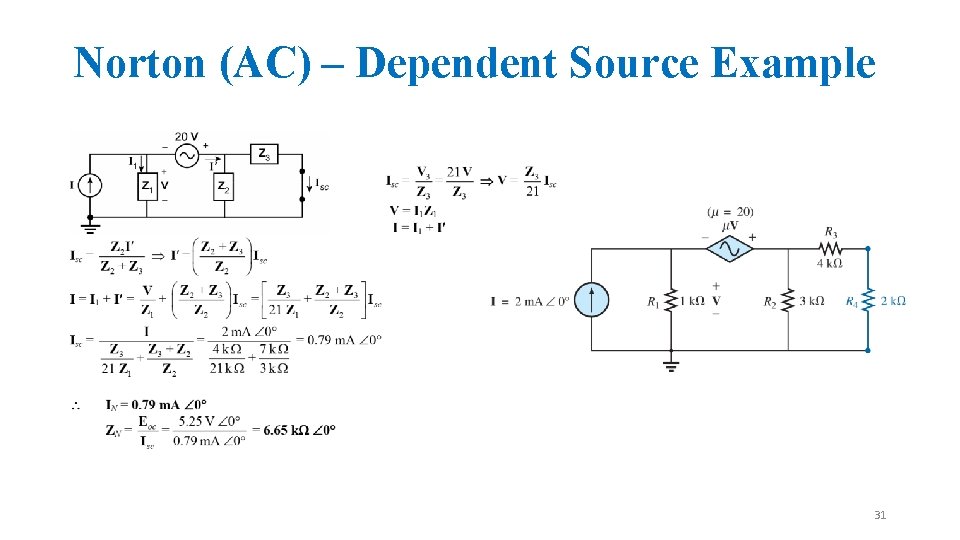
Norton (AC) – Dependent Source Example 31
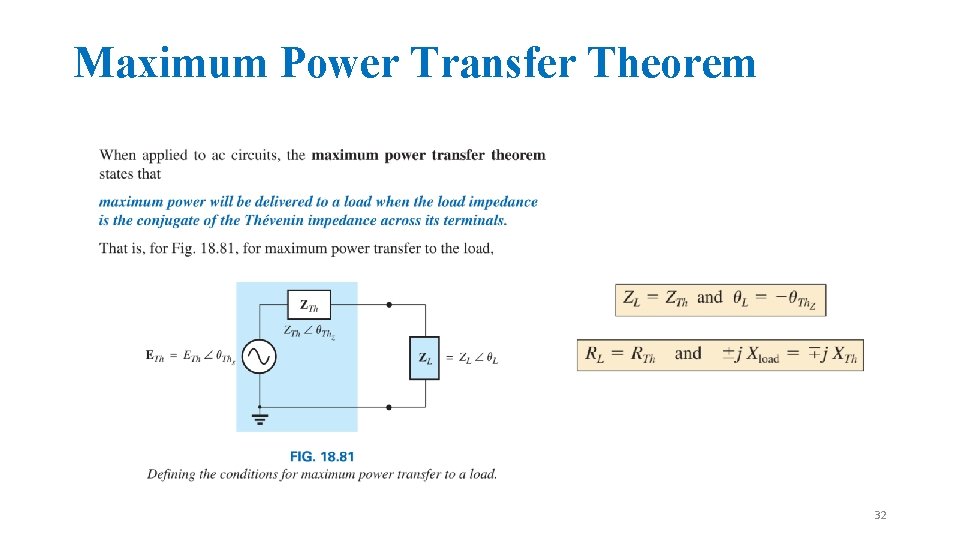
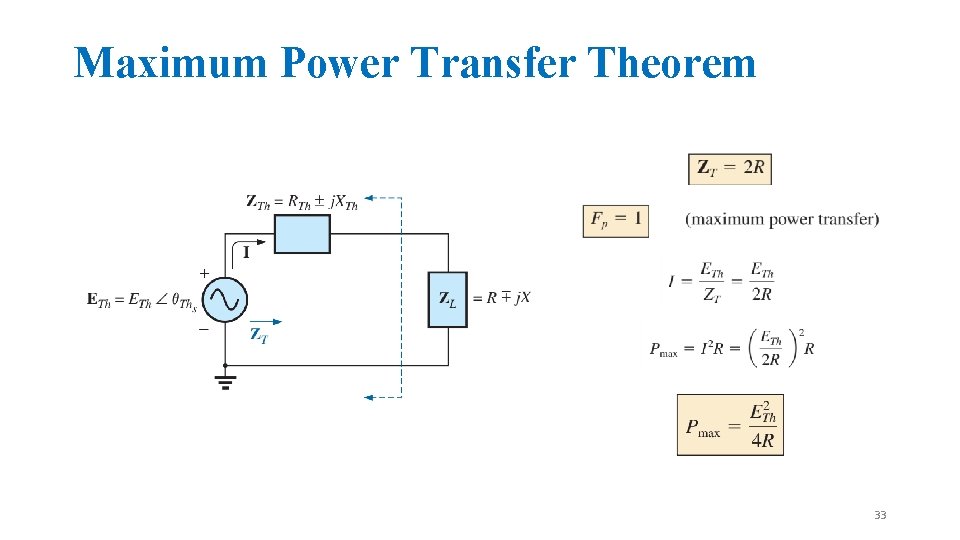
Maximum Power Transfer Theorem 32
Maximum Power Transfer Theorem 33
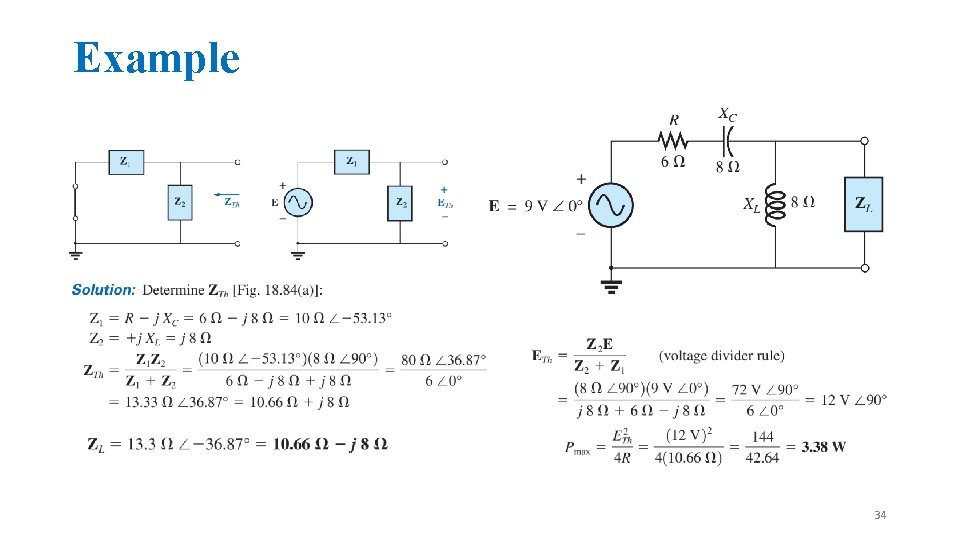
Example 34
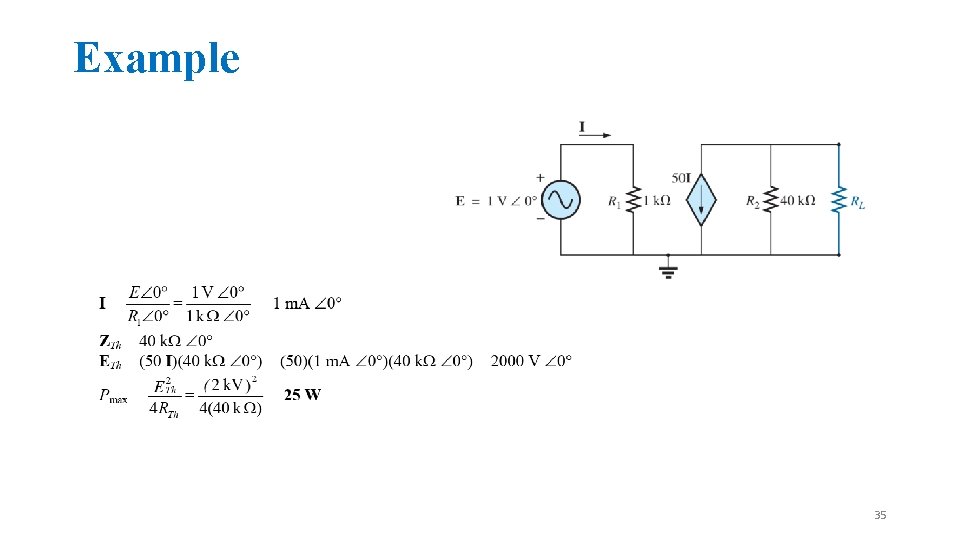
Example 35
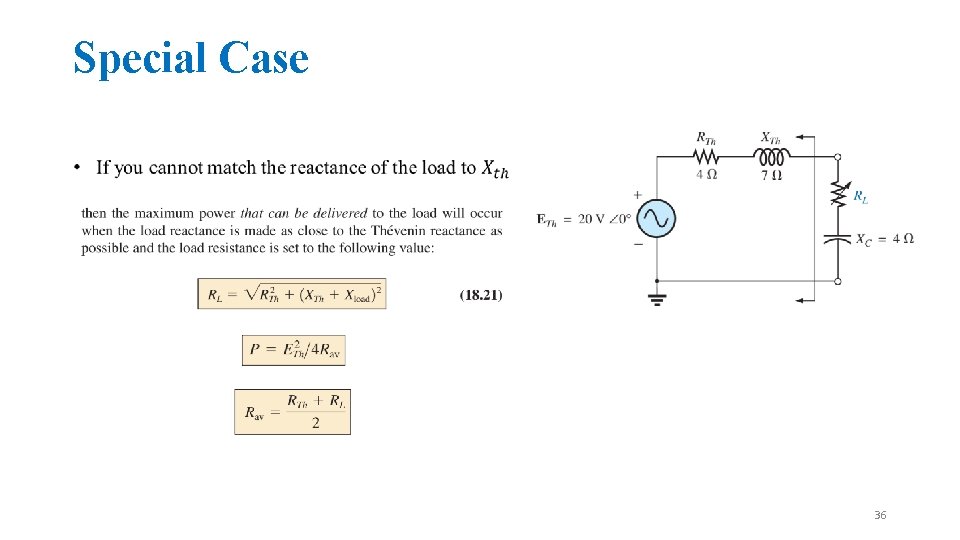
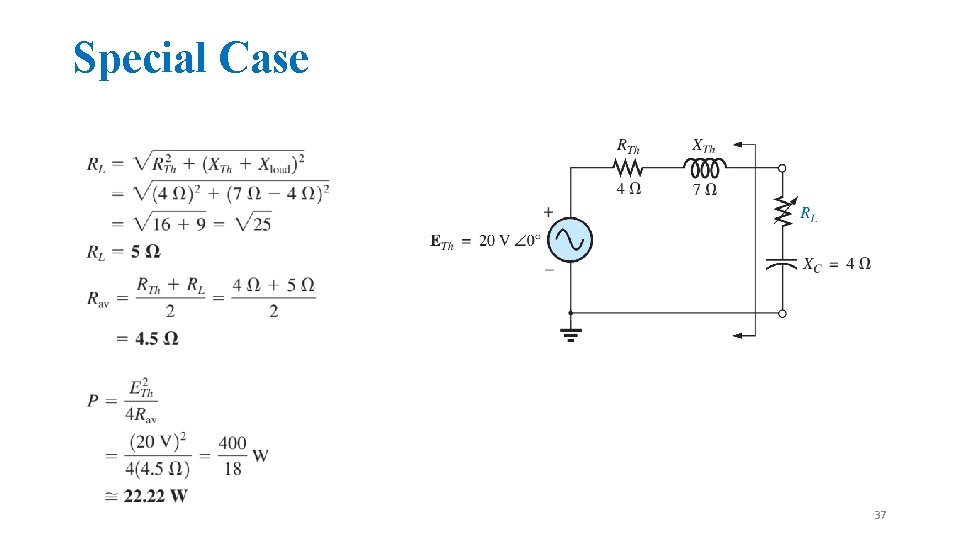
Special Case 36
Special Case 37