
Chapter 18 Microevolution Populations Evolve Biological evolution does
Chapter 18: Microevolution
Populations Evolve • Biological evolution does not change individuals. It changes a population. • Traits in a population vary among individuals • Evolution is change in frequency of traits
The Gene Pool • All of the genes in the population • Genetic resource that is shared (in theory) by all members of population
Gene Mutations • • • Infrequent but inevitable Each gene has own mutation rate Lethal mutations Neutral mutations Advantageous mutations
Variation in Phenotype • Each kind of gene in gene pool may have two or more alleles • Individuals inherit different allele combinations • This leads to variation in phenotype • Offspring inherit genes, not phenotypes
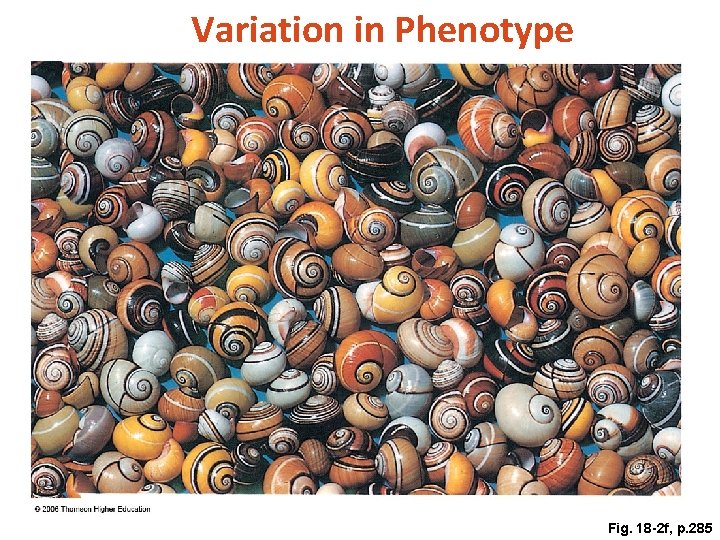
Variation in Phenotype Fig. 18 -2 f, p. 285
What Determines Alleles in New Individual? • Mutation • Crossing over at meiosis I • Independent assortment • Fertilization • Change in chromosome number or structure
Genetic Equilibrium • Allele frequencies at a locus are not changing • Population is not evolving
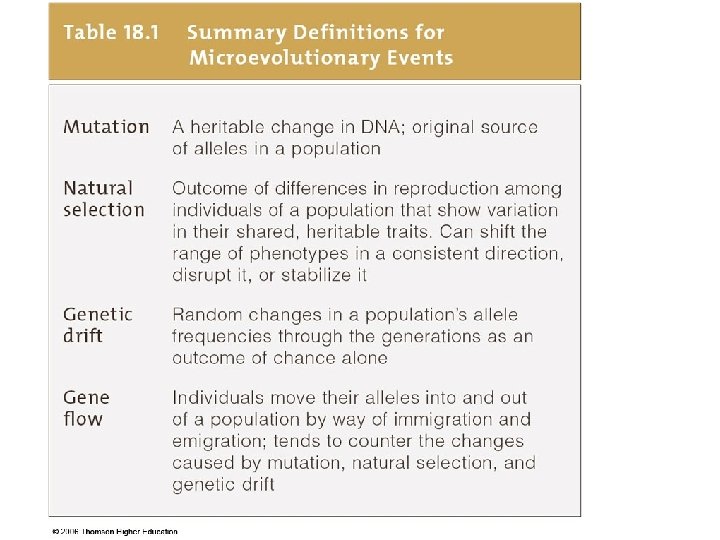
Microevolutionary Processes • Drive a population away from genetic equilibrium • Small-scale changes in allele frequencies brought about by: – Natural selection – Gene flow – Genetic drift
Five Conditions • No mutation • Random mating • Gene doesn’t affect survival or reproduction • Large population • No immigration/emigration
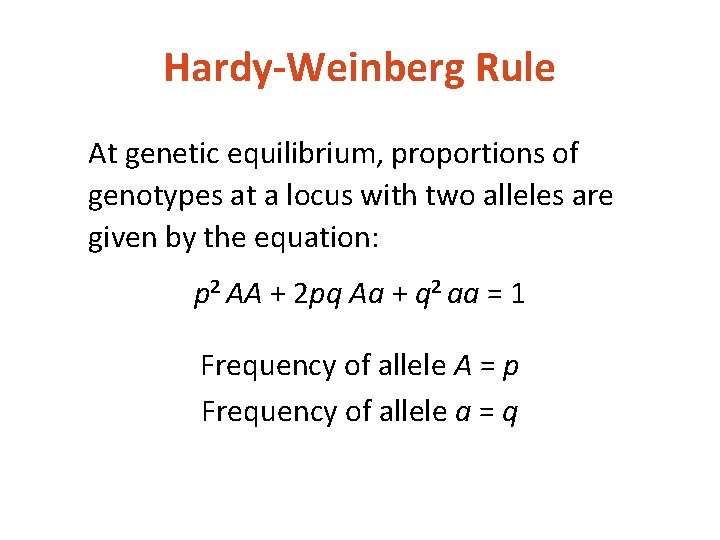
Hardy-Weinberg Rule At genetic equilibrium, proportions of genotypes at a locus with two alleles are given by the equation: p 2 AA + 2 pq Aa + q 2 aa = 1 Frequency of allele A = p Frequency of allele a = q
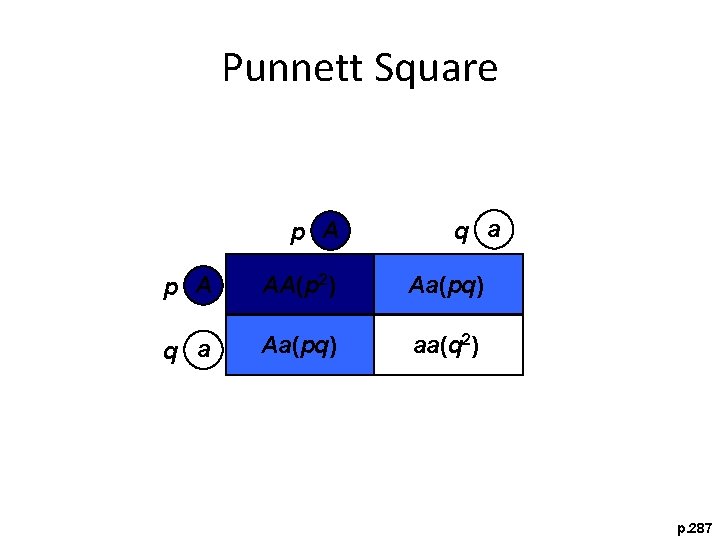
Punnett Square p A q a p A AA(p 2) Aa(pq) q a Aa(pq) aa(q 2) p. 287
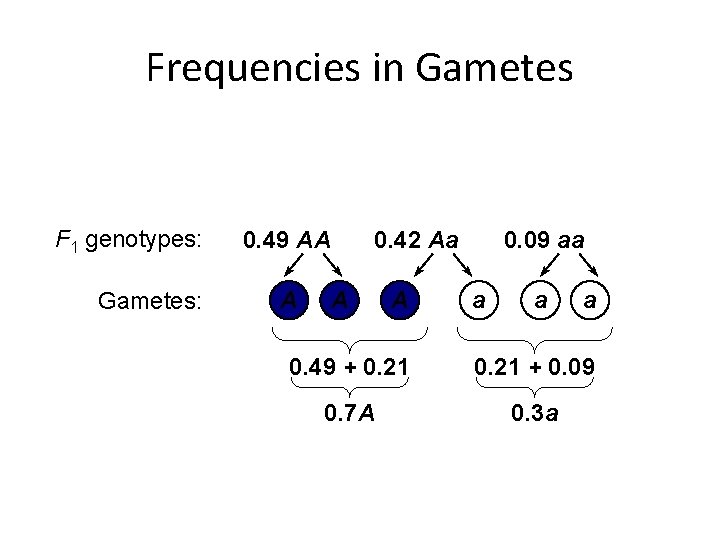
Frequencies in Gametes F 1 genotypes: Gametes: 0. 49 AA A 0. 42 Aa A A 0. 09 aa a 0. 49 + 0. 21 + 0. 09 0. 7 A 0. 3 a
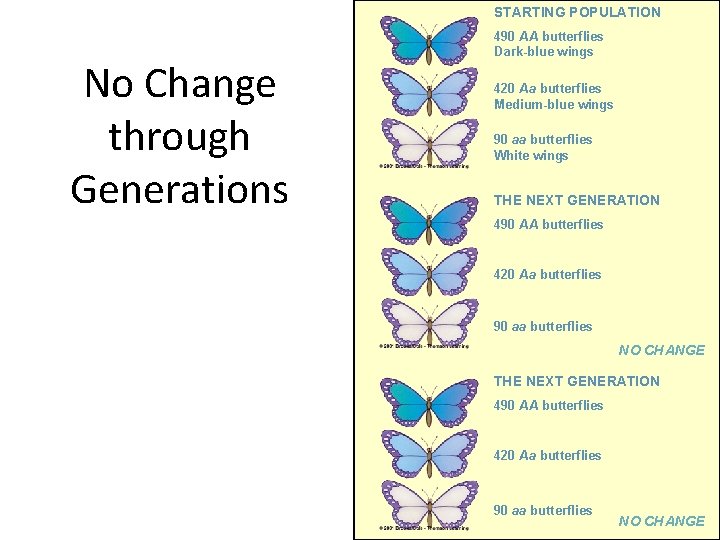
STARTING POPULATION No Change through Generations 490 AA butterflies Dark-blue wings 420 Aa butterflies Medium-blue wings 90 aa butterflies White wings THE NEXT GENERATION 490 AA butterflies 420 Aa butterflies 90 aa butterflies NO CHANGE
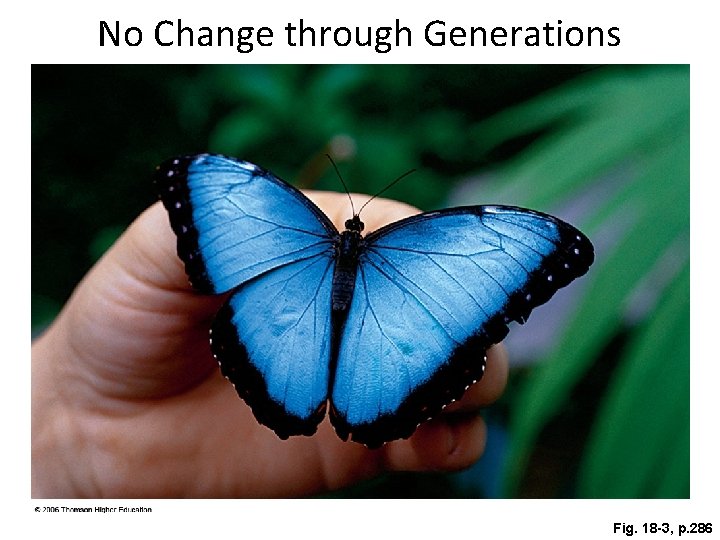
No Change through Generations Fig. 18 -3, p. 286
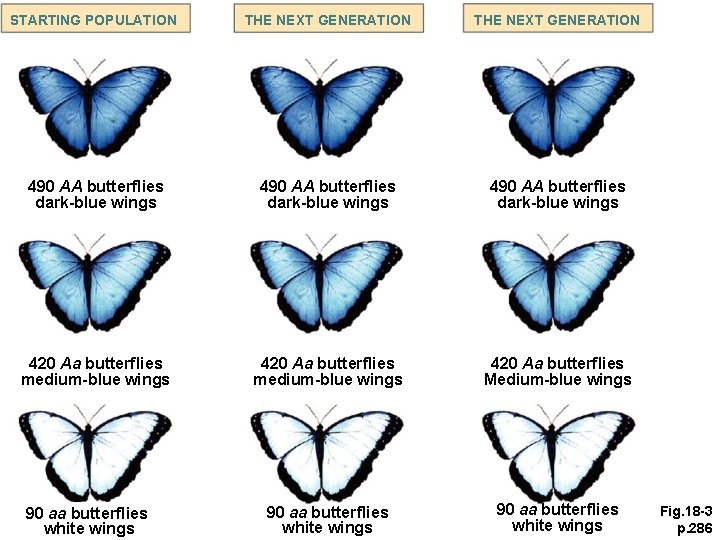
STARTING POPULATION THE NEXT GENERATION 490 AA butterflies dark-blue wings 420 Aa butterflies medium-blue wings 420 Aa butterflies Medium-blue wings 90 aa butterflies white wings Fig. 18 -3 p. 286
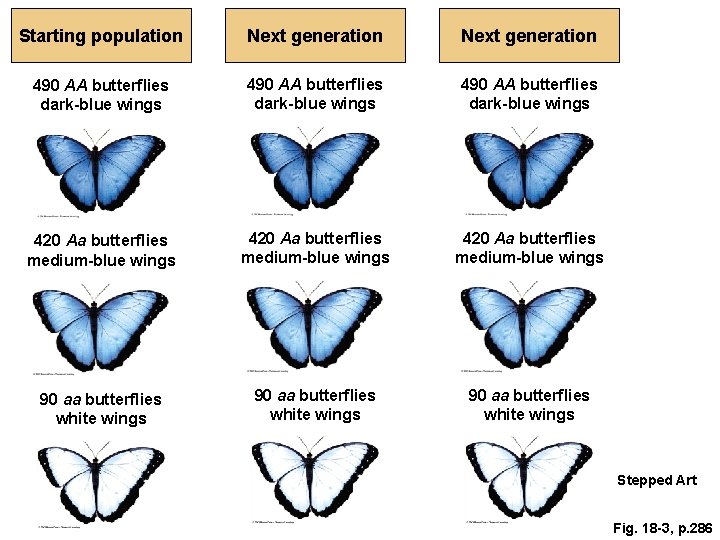
Starting population Next generation 490 AA butterflies dark-blue wings 420 Aa butterflies medium-blue wings 90 aa butterflies white wings Stepped Art Fig. 18 -3, p. 286
Natural Selection • A difference in the survival and reproductive success of different phenotypes • Acts directly on phenotypes and indirectly on genotypes
Reproductive Capacity & Competition • All populations have the capacity to increase in numbers • No population can increase indefinitely • Eventually the individuals of a population will end up competing for resources
Results of Natural Selection Three possible outcomes: • Directional shift in the range of values for a given trait in some direction • Stabilization of an existing range of values • Disruption of an existing range of values
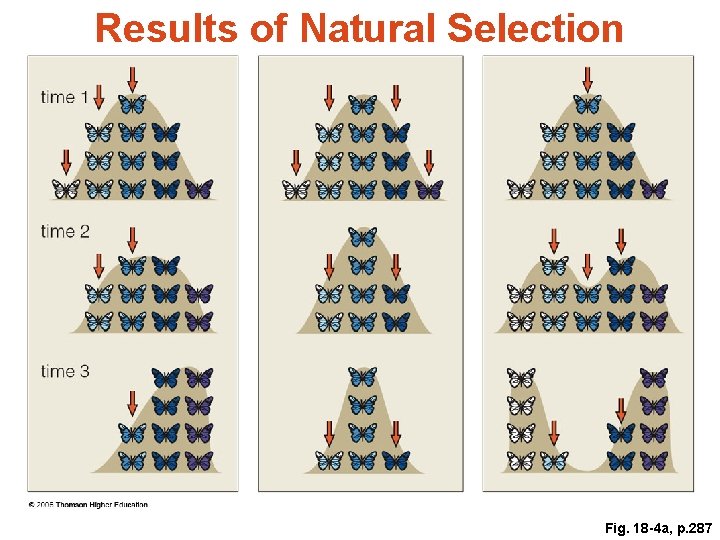
Results of Natural Selection Fig. 18 -4 a, p. 287
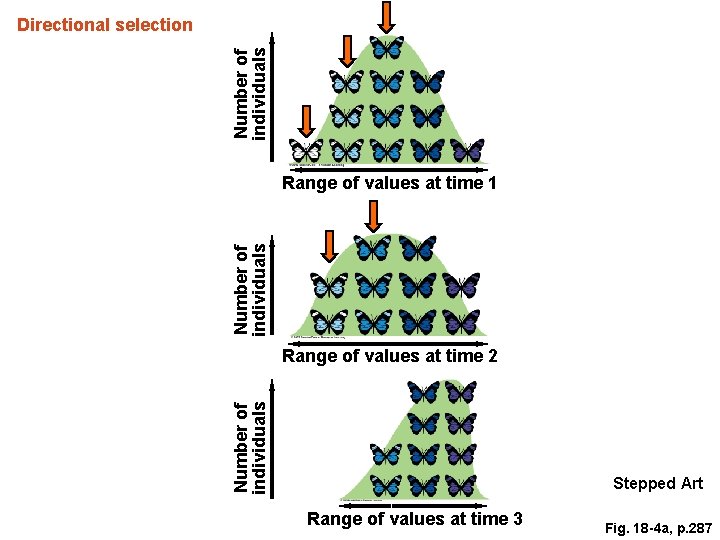
Number of individuals Directional selection Number of individuals Range of values at time 1 Number of individuals Range of values at time 2 Stepped Art Range of values at time 3 Fig. 18 -4 a, p. 287
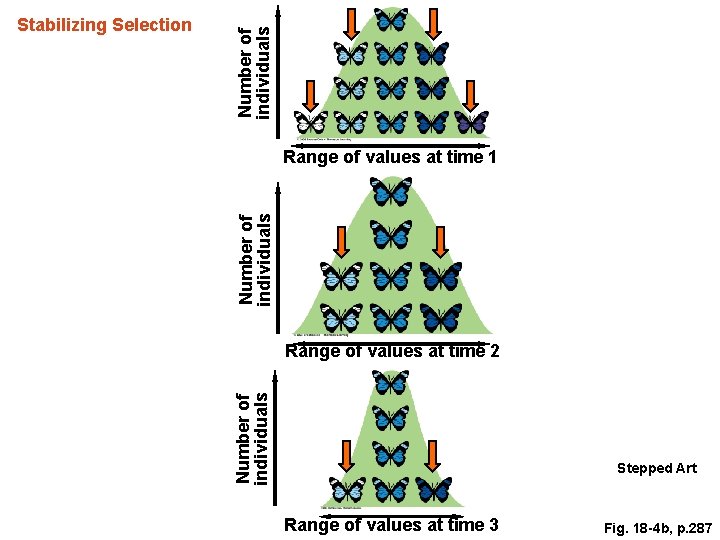
Number of individuals Range of values at time 1 Range of values at time 2 Number of individuals Stabilizing Selection Stepped Art Range of values at time 3 Fig. 18 -4 b, p. 287
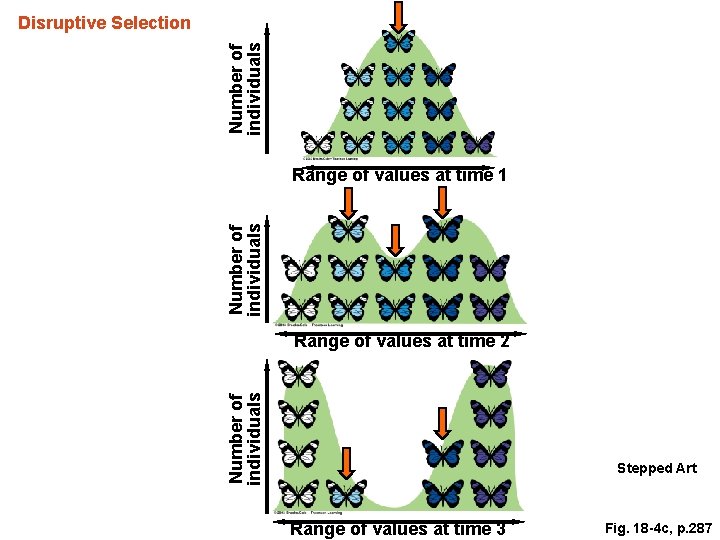
Number of individuals Disruptive Selection Number of individuals Range of values at time 1 Number of individuals Range of values at time 2 Stepped Art Range of values at time 3 Fig. 18 -4 c, p. 287
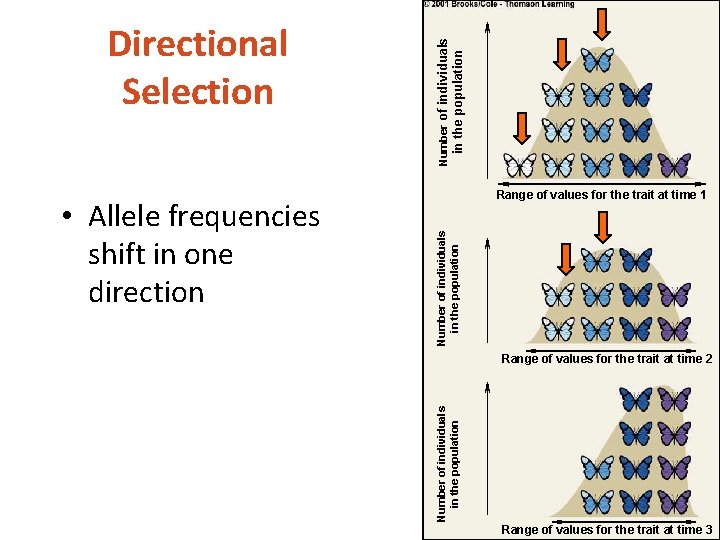
in the population Number of individuals in the population • Allele frequencies shift in one direction Range of values for the trait at time 1 Range of values for the trait at time 2 Number of individuals in the population Directional Selection Range of values for the trait at time 3
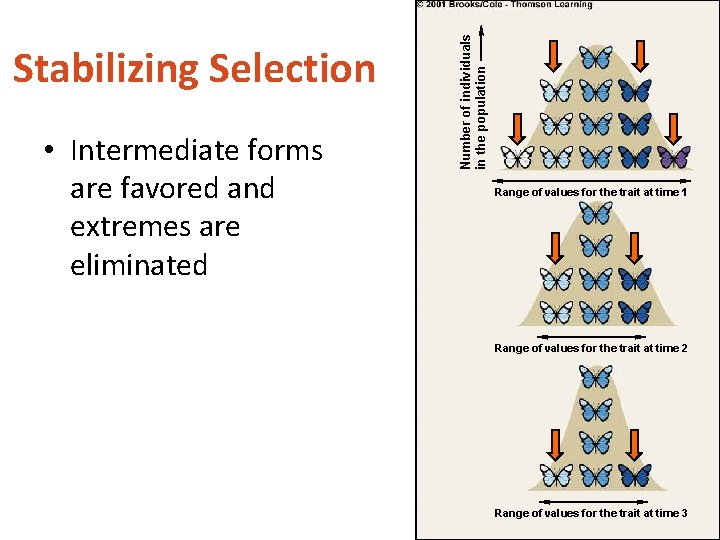
• Intermediate forms are favored and extremes are eliminated Number of individuals in the population Stabilizing Selection Range of values for the trait at time 1 Range of values for the trait at time 2 Range of values for the trait at time 3
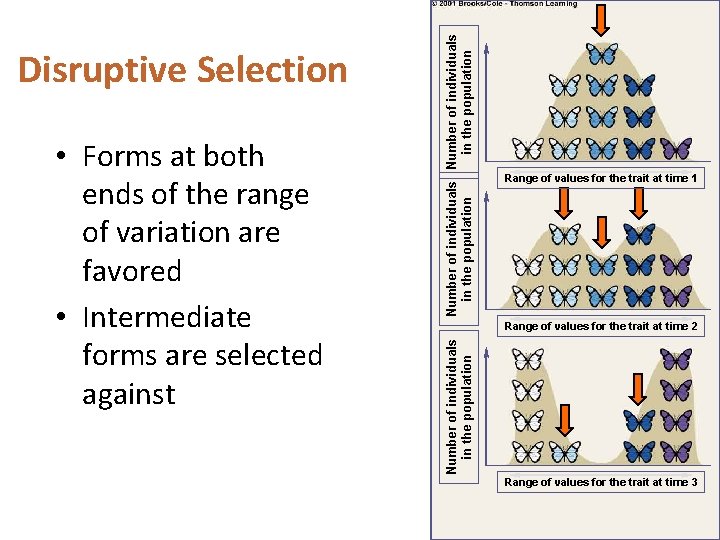
Number of individuals in the population • Forms at both ends of the range of variation are favored • Intermediate forms are selected against Range of values for the trait at time 1 Range of values for the trait at time 2 Number of individuals in the population Disruptive Selection Range of values for the trait at time 3
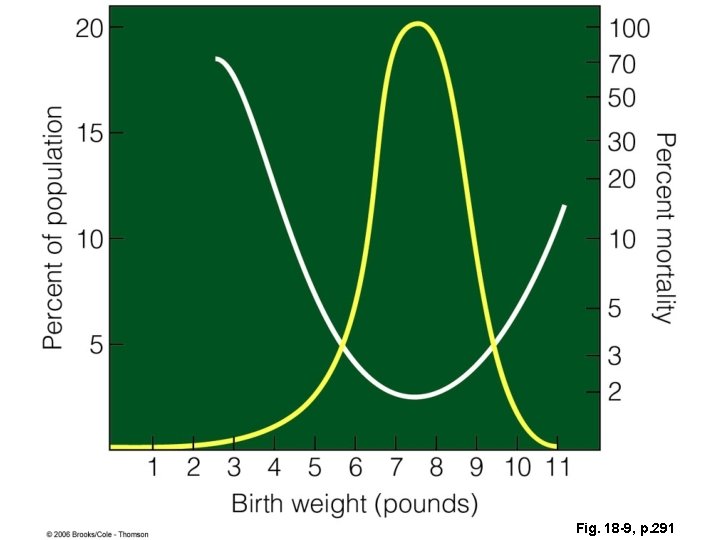
Fig. 18 -9, p. 291
Sexual Selection • Selection favors certain secondary sexual characteristics • Through nonrandom mating, alleles for preferred traits increase • Leads to increased sexual dimorphism
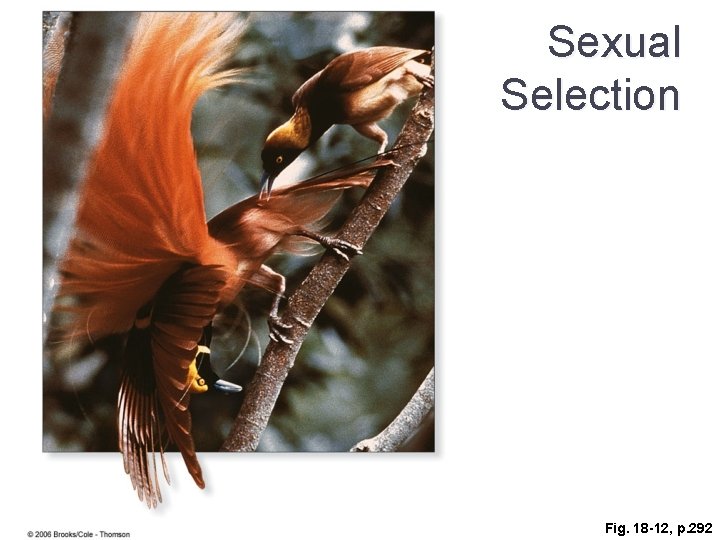
Sexual Selection Fig. 18 -12, p. 292
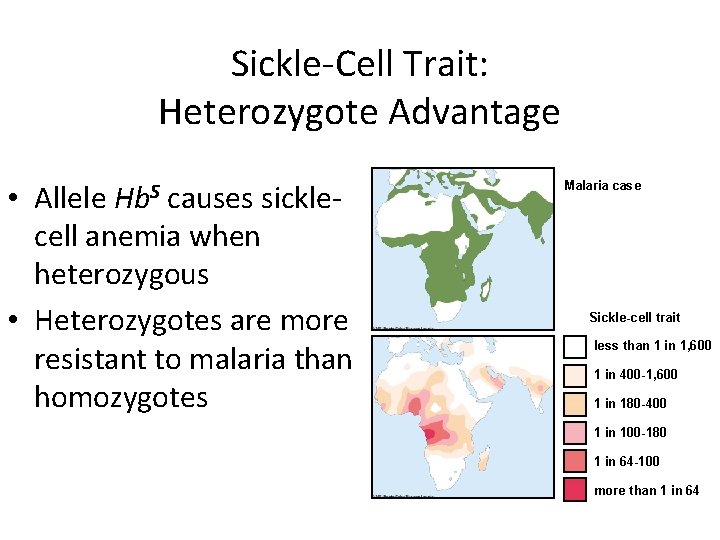
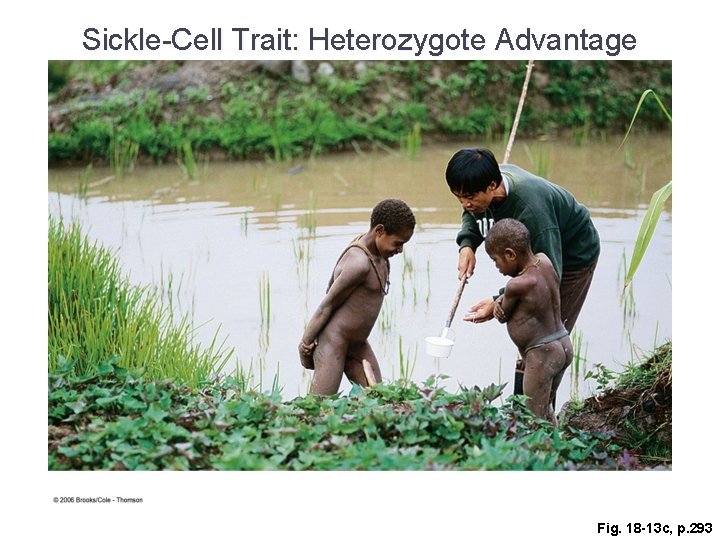
Sickle-Cell Trait: Heterozygote Advantage Hb. S • Allele causes sicklecell anemia when heterozygous • Heterozygotes are more resistant to malaria than homozygotes Malaria case Sickle-cell trait less than 1 in 1, 600 1 in 400 -1, 600 1 in 180 -400 1 in 100 -180 1 in 64 -100 more than 1 in 64
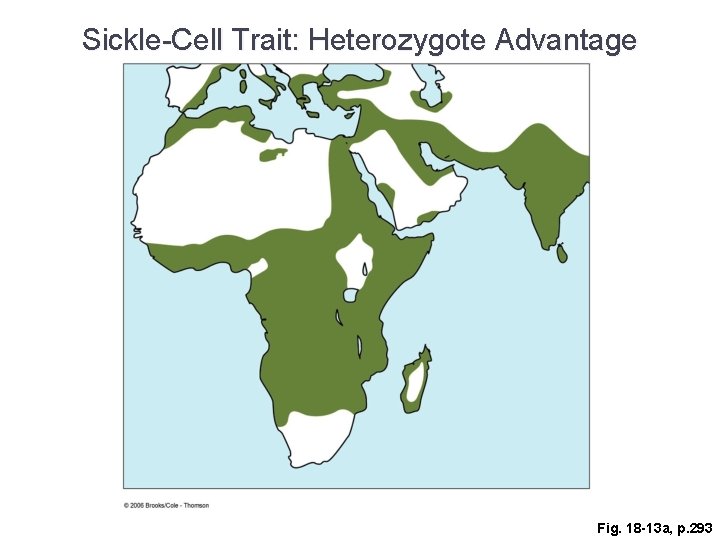
Sickle-Cell Trait: Heterozygote Advantage Fig. 18 -13 a, p. 293
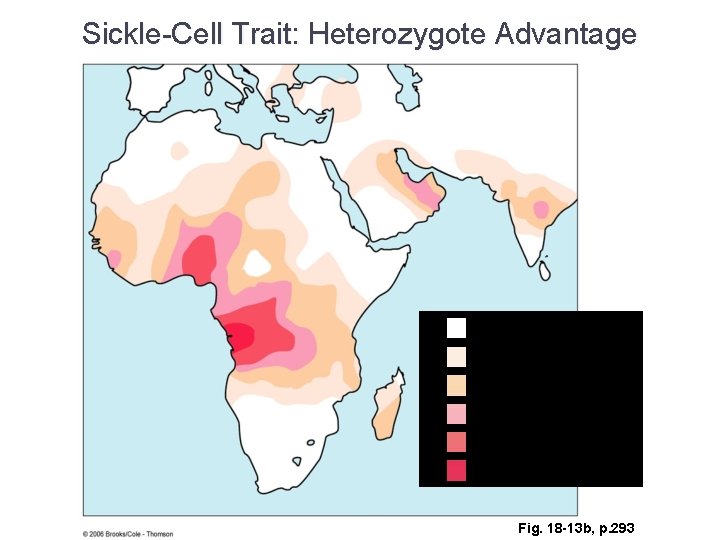
Sickle-Cell Trait: Heterozygote Advantage less than 1 in 1, 600 1 in 400 -1, 600 1 in 180 -400 1 in 100 -180 1 in 64 -100 more than 1 in 64 Fig. 18 -13 b, p. 293
Sickle-Cell Trait: Heterozygote Advantage Fig. 18 -13 c, p. 293
Genetic Drift • Random change in allele frequencies brought about by chance • Effect is most pronounced in small populations • Sampling error - Fewer times an event occurs, greater the variance in outcome
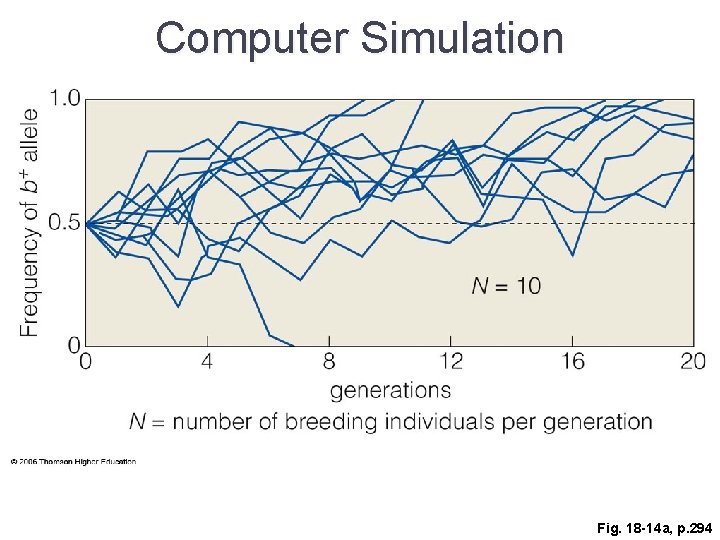
Computer Simulation Fig. 18 -14 a, p. 294
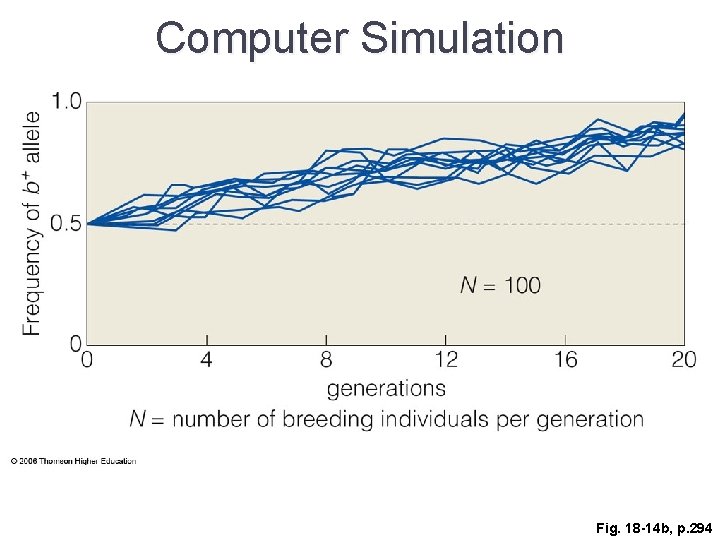
Computer Simulation Fig. 18 -14 b, p. 294
Bottleneck • A severe reduction in population size • Causes pronounced drift • Example – Elephant seal population hunted down to just 20 individuals – Population rebounded to 30, 000 – Electrophoresis revealed there is now no allele variation at 24 genes
Founder Effect • Effect of drift when a small number of individuals starts a new population • By chance, allele frequencies of founders may not be same as those in original population • Effect is pronounced on isolated islands
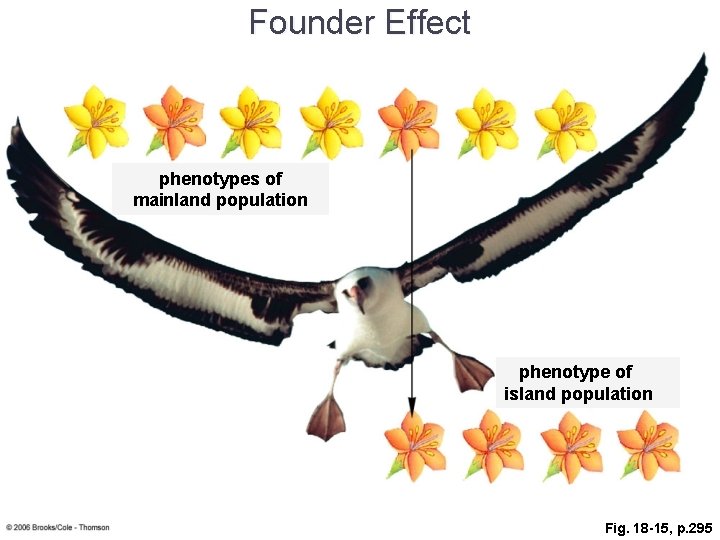
Founder Effect phenotypes of mainland population phenotype of island population Fig. 18 -15, p. 295
Inbreeding • Nonrandom mating between related individuals • Leads to increased homozygosity • Can lower fitness when deleterious recessive alleles are expressed • Amish, cheetahs
Gene Flow • Physical flow of alleles into a population • Tends to keep the gene pools of populations similar • Counters the differences that result from mutation, natural selection, and genetic drift
Speciation & Natural Selection • Natural selection can lead to speciation • Speciation can also occur as a result of other microevolutionary processes – Genetic drift – Mutation
- Slides: 44