
CHAPTER 18 DIAGNOSIS OF DISEASE BY TESSA HAYMAN
CHAPTER 18 DIAGNOSIS OF DISEASE BY: TESSA HAYMAN AND MADISON CHARRON
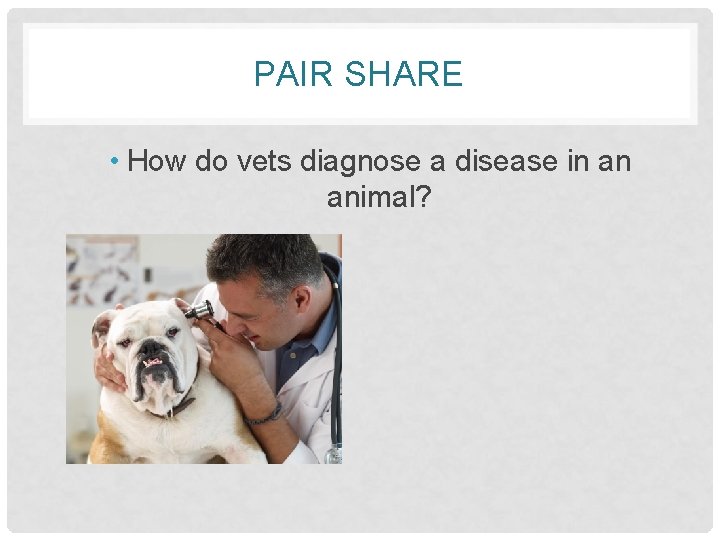
PAIR SHARE • How do vets diagnose a disease in an animal?
VOCABULARY • Signalment- basic description of an animal presented for evaluation • Borborygmi- normal noise made in an animal’s intestinal tract as gas and fluid move • Ophthalmoscope- instrument used to observe the structures in the interior of the eye • Packed cell volume- rapid test that provides the % of blood composed of red blood cells • Chemistry panel- test that often evaluated blood sugar, electrolytes, protein, liver and pancreatic enzymes, bilirubin, and nitrogen-containing wastes
VOCABULARY CONTINUED • Complete blood cell count- test that evaluates red blood cell (RBC) count, amount of hemoglobin, number of platelets, total white blood cell count, and a breakdown of the types of cell present • Serology- measurement of the presence of antibodies against a specific organism • Examination-a detailed inspection or investigation • Stethoscope- instrument for listening to the action of someone's heart or breathing • Palpation-used as part of a physical examination in which an object is felt to determine its size, shape, firmness, or location
HOW DO VETS DIAGNOSIS DISEASES? • 1 st- Case is presented to vet • Cases begin with a thorough history • 2 nd- Vets develops a systematic approach in order to reach diagnosis • Vet asks questions that guide the process of making the diagnosis • Questions should be based on the species of animal

SIGNALMENT • A vet must learn the basic description of the animal or signalment • Includes: • • • Name or number of the animal Age Breed Sex Reproductive status Use of activity
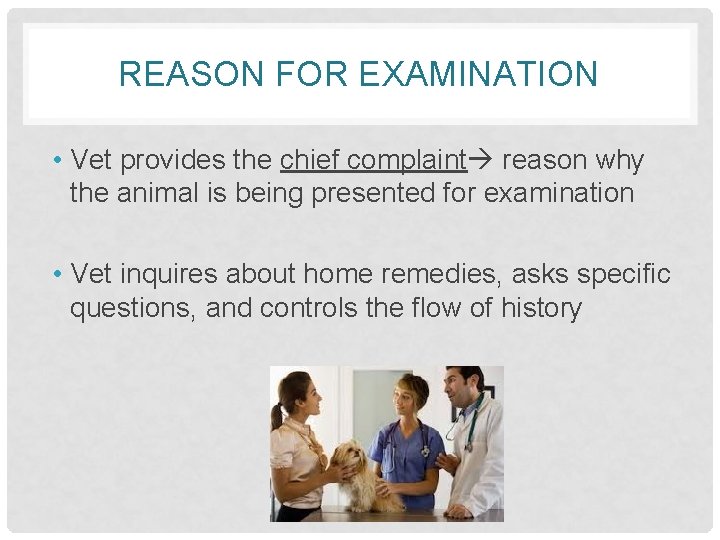
REASON FOR EXAMINATION • Vet provides the chief complaint reason why the animal is being presented for examination • Vet inquires about home remedies, asks specific questions, and controls the flow of history
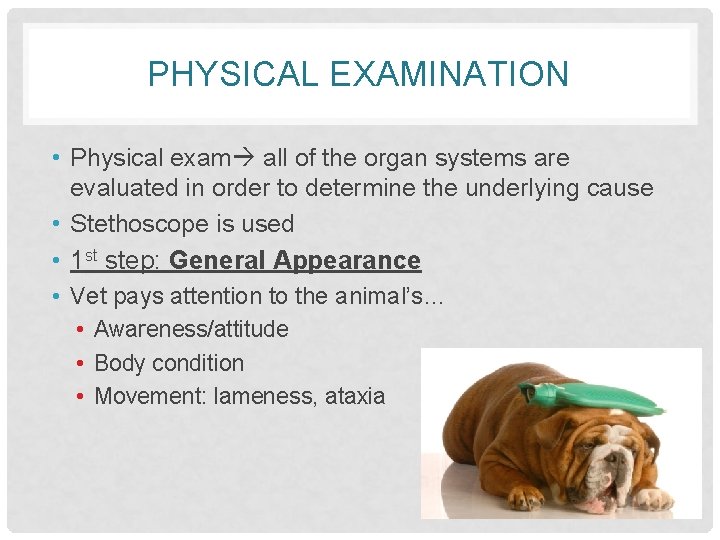
PHYSICAL EXAMINATION • Physical exam all of the organ systems are evaluated in order to determine the underlying cause • Stethoscope is used • 1 st step: General Appearance • Vet pays attention to the animal’s… • Awareness/attitude • Body condition • Movement: lameness, ataxia
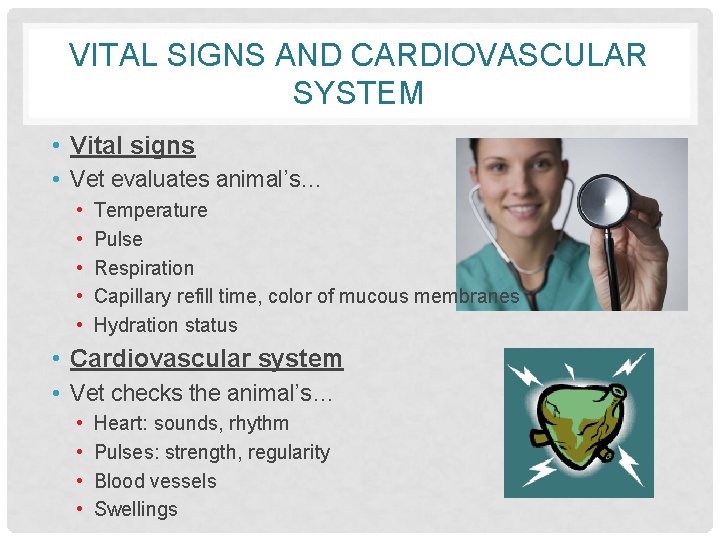
VITAL SIGNS AND CARDIOVASCULAR SYSTEM • Vital signs • Vet evaluates animal’s… • • • Temperature Pulse Respiration Capillary refill time, color of mucous membranes Hydration status • Cardiovascular system • Vet checks the animal’s… • • Heart: sounds, rhythm Pulses: strength, regularity Blood vessels Swellings
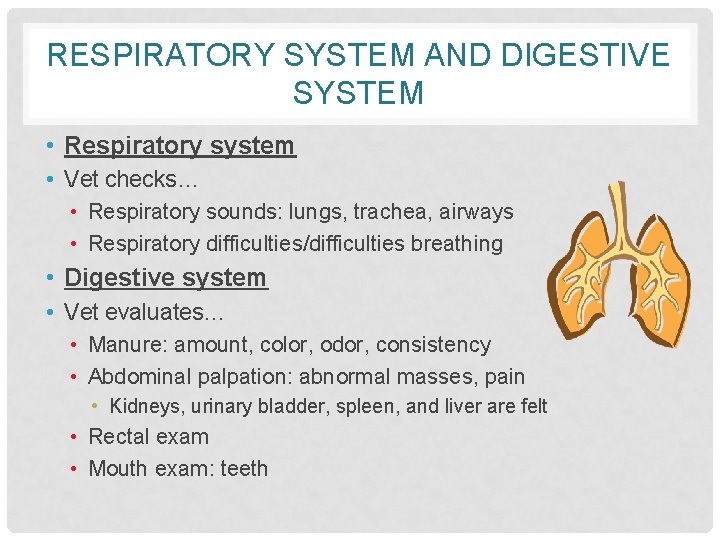
RESPIRATORY SYSTEM AND DIGESTIVE SYSTEM • Respiratory system • Vet checks… • Respiratory sounds: lungs, trachea, airways • Respiratory difficulties/difficulties breathing • Digestive system • Vet evaluates… • Manure: amount, color, odor, consistency • Abdominal palpation: abnormal masses, pain • Kidneys, urinary bladder, spleen, and liver are felt • Rectal exam • Mouth exam: teeth
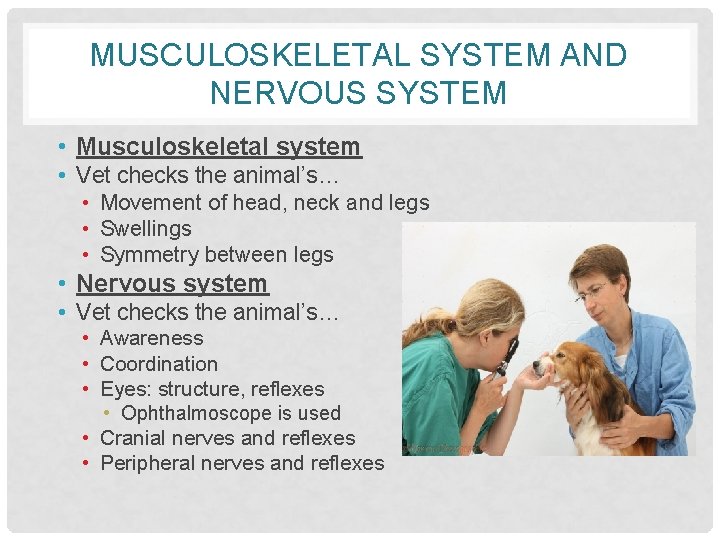
MUSCULOSKELETAL SYSTEM AND NERVOUS SYSTEM • Musculoskeletal system • Vet checks the animal’s… • Movement of head, neck and legs • Swellings • Symmetry between legs • Nervous system • Vet checks the animal’s… • Awareness • Coordination • Eyes: structure, reflexes • Ophthalmoscope is used • Cranial nerves and reflexes • Peripheral nerves and reflexes
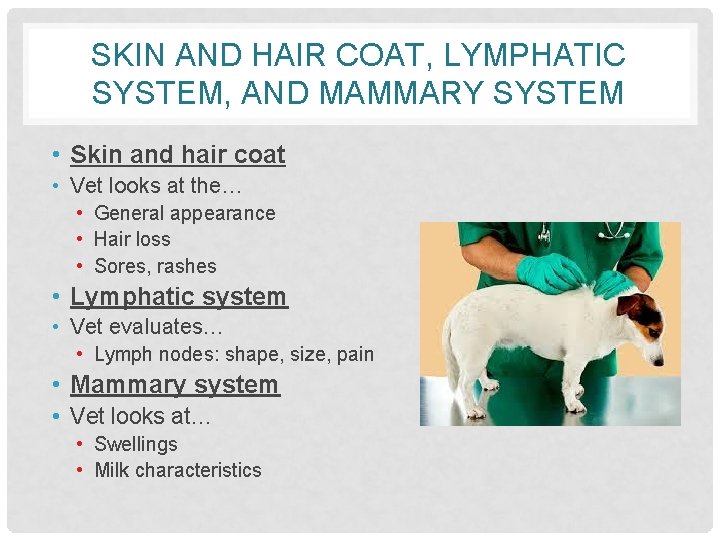
SKIN AND HAIR COAT, LYMPHATIC SYSTEM, AND MAMMARY SYSTEM • Skin and hair coat • Vet looks at the… • General appearance • Hair loss • Sores, rashes • Lymphatic system • Vet evaluates… • Lymph nodes: shape, size, pain • Mammary system • Vet looks at… • Swellings • Milk characteristics
REACHING A DIAGNOSIS • To reach a diagnosis, the case is evaluated • Diagnoses are ranked with the most likely causes first • Confirm or rule out diseases Blood work, urinalysis, radiology, biopsy, and pathology
BLOOD WORK • Blood tests: Packed cell volume, complete blood cell count (CBC), chemistry panel • Packed cell volume- rapid test that provides the % of blood composed of red blood cells • Monitors patients for changes • CBC- evaluates red blood cell (RBC) count and total white blood cell (WBC) count • Evaluates infectious and inflammatory diseases • Chemistry profile- evaluates blood sugar, electrolytes, protein, liver and pancreatic enzymes, bilirubin, and nitrogen-containing wastes • Helps rule out dehydration
URINALYSIS AND RADIOGRAPHS • Urinalysis • Assesses the physical and chemical composition of urine • Evaluates the function of the kidneys • Tests: urine sample • Evaluates hydration • Can determine kidney disease • Radiographs • Help to look within the body • Evaluates bones • Rule out foreign bodies and tumors • Types: X-ray, chest radiograph evaluate structures
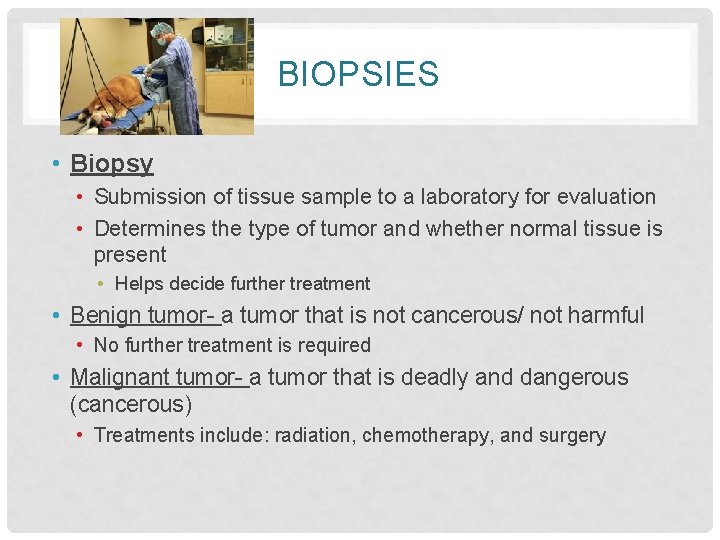
BIOPSIES • Biopsy • Submission of tissue sample to a laboratory for evaluation • Determines the type of tumor and whether normal tissue is present • Helps decide further treatment • Benign tumor- a tumor that is not cancerous/ not harmful • No further treatment is required • Malignant tumor- a tumor that is deadly and dangerous (cancerous) • Treatments include: radiation, chemotherapy, and surgery
PATHOLOGY AND SEROLOGY • Pathologist • Recognizes normal and abnormal structures • Performs autopsies or postmortems, and biopsies • Autopsy- explains the cause of death • Serology • Measures the presence of antibodies against a specific organism • Positive result- animal has been exposed to the organism • Negative result- occurs if the test is taken before the animal has the opportunity to increase antibodies • To confirm diagnosis, animal is tested twice
DIAGNOSIS • Information from the case history, physical exam, and testing help to reach diagnosis • Once the diagnosis is confirmed, treatment begins • If initial testing offers no clues towards diagnosis, addition tests are run
- Slides: 18