
Chapter 18 215 Regulation of Gene Expression Operon


- Slides: 33
Chapter 18 215 Regulation of Gene Expression Operon: promoter, operator and structural genes Promoter: where RNA polymerase binds Operator: repressor protein binds to stop gene transcription Structural gene: codes for polypeptide Activator: switches on an operon
215 Regulator gene: codes for a repressor protein Constitutive enzyme: is always synthesized in the presence or absence of an inducer Inducible enzyme: synthesized only in the presence of an inducer Cistron: a transcript of several genes which can be translated into several polypeptides Polycistronic: a m. RNA which is transcribed from DNA with several genes
216 Substrate Induction System (Jacob-Monod Model of Gene Induction): In the presence of substrate, the genes are activated to produce enzymes which break down the substrate. Beta-galactosidase: splits lactose into glucose and galactose; coded by lac Z gene. Permease: transports lactose into the cell; coded by lac Y gene. Transacetylase: mechanism is unknown; coded by lac A gene.
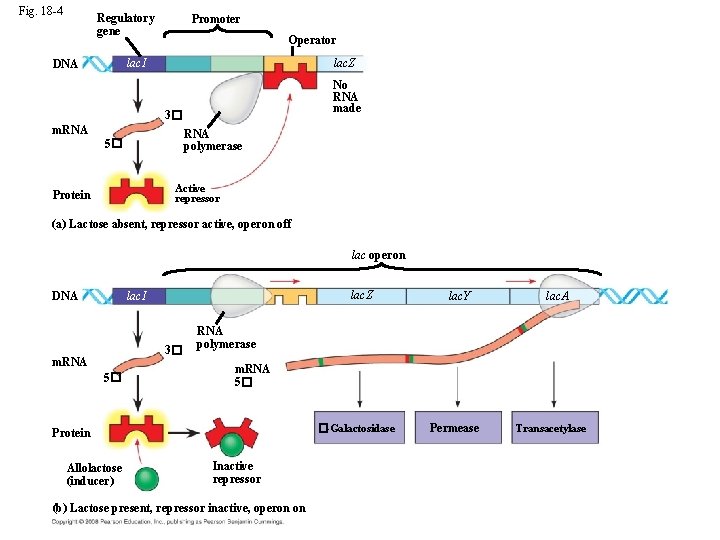
Fig. 18 -4 Regulatory gene Promoter Operator lac. Z lac. I DNA No RNA made 3� m. RNA polymerase 5� Active repressor Protein (a) Lactose absent, repressor active, operon off lac operon DNA lac. Z lac. I 3� m. RNA 5� lac. A RNA polymerase m. RNA 5� �-Galactosidase Protein Allolactose (inducer) lac. Y Inactive repressor (b) Lactose present, repressor inactive, operon on Permease Transacetylase
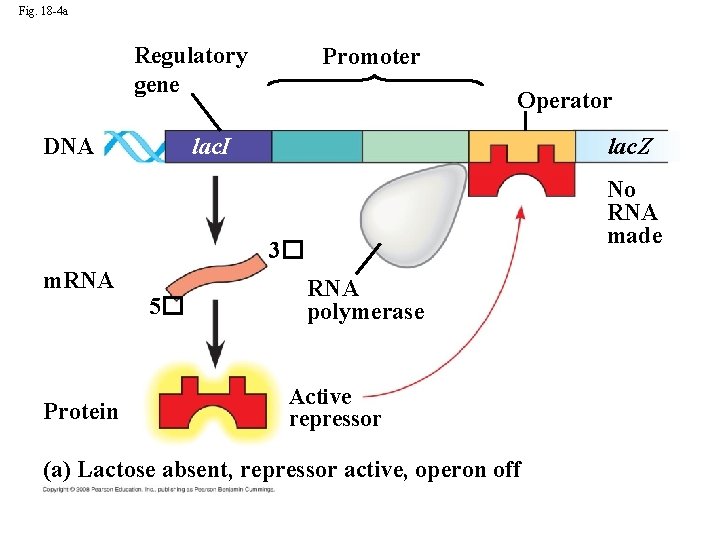
Fig. 18 -4 a Regulatory gene Promoter Operator lac. I DNA lac. Z No RNA made 3� m. RNA Protein 5� RNA polymerase Active repressor (a) Lactose absent, repressor active, operon off
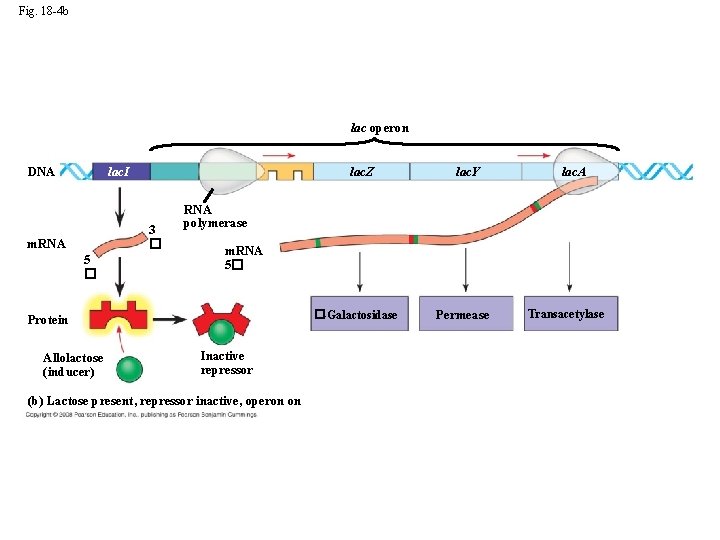
Fig. 18 -4 b lac operon DNA lac. I lac. Z 3 � m. RNA 5 � lac. A RNA polymerase m. RNA 5� �-Galactosidase Protein Allolactose (inducer) lac. Y Inactive repressor (b) Lactose present, repressor inactive, operon on Permease Transacetylase
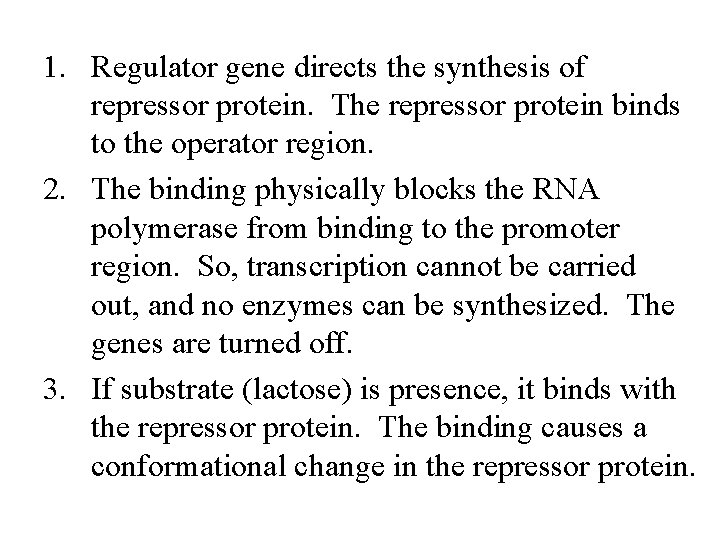
1. Regulator gene directs the synthesis of repressor protein. The repressor protein binds to the operator region. 2. The binding physically blocks the RNA polymerase from binding to the promoter region. So, transcription cannot be carried out, and no enzymes can be synthesized. The genes are turned off. 3. If substrate (lactose) is presence, it binds with the repressor protein. The binding causes a conformational change in the repressor protein.
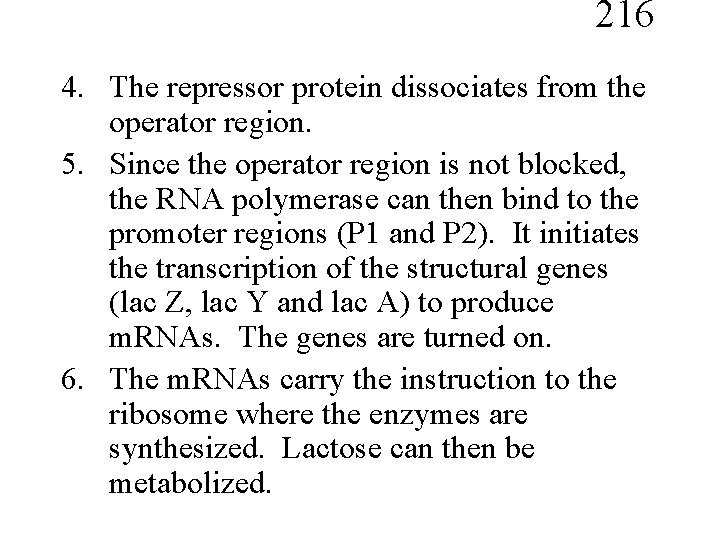
216 4. The repressor protein dissociates from the operator region. 5. Since the operator region is not blocked, the RNA polymerase can then bind to the promoter regions (P 1 and P 2). It initiates the transcription of the structural genes (lac Z, lac Y and lac A) to produce m. RNAs. The genes are turned on. 6. The m. RNAs carry the instruction to the ribosome where the enzymes are synthesized. Lactose can then be metabolized.
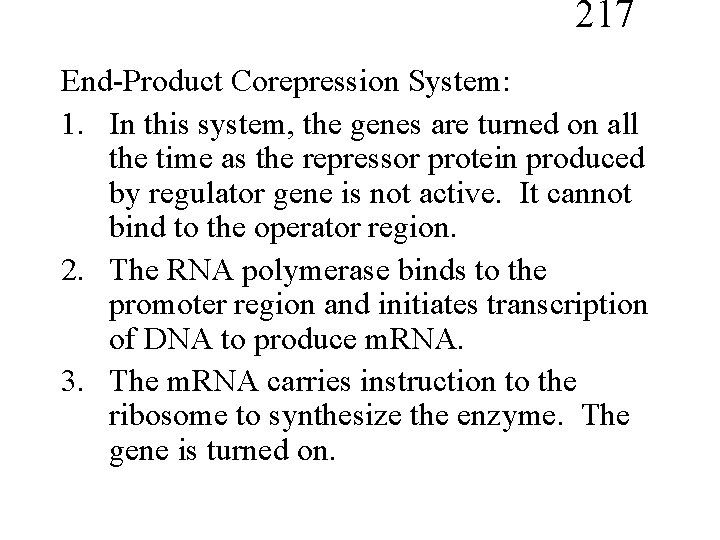
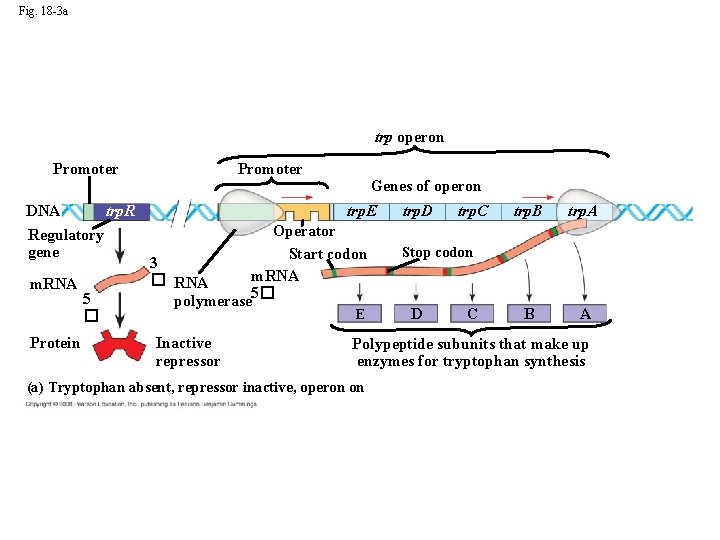
217 End-Product Corepression System: 1. In this system, the genes are turned on all the time as the repressor protein produced by regulator gene is not active. It cannot bind to the operator region. 2. The RNA polymerase binds to the promoter region and initiates transcription of DNA to produce m. RNA. 3. The m. RNA carries instruction to the ribosome to synthesize the enzyme. The gene is turned on.
Fig. 18 -3 a trp operon Promoter DNA trp. R Regulatory gene m. RNA Protein 5 � Genes of operon trp. E Operator Start codon 3 m. RNA � RNA polymerase 5� E Inactive repressor trp. D trp. C trp. B trp. A B A Stop codon D C Polypeptide subunits that make up enzymes for tryptophan synthesis (a) Tryptophan absent, repressor inactive, operon on
217 4. The enzyme breaks down the substrate into end product. 5. The end product binds to the repressor protein. The binding causes a conformational change in the repressor protein to become active. 6. The active repressor protein binds to the operator region to block the RNA polymerase from binding to the promoter region. The gene is turned off.
217 -218 3. c. AMP-CAP Activation System: c. AMP: cyclic adenosine monophosphate CAP: catabolic gene activator protein If glucose is abundant, the operon for lactose remains shut off. The cell preferentially metabolizes glucose. As the glucose concentration goes down, the concentration of c. AMP increases. The c. AMP binds with an activator protein (CAP), and the c. AMP-CAP complex then binds to the promoter region of the operon. The binding of this complex facilitates the binding of RNA polymerase to the promoter. The structural genes are transcribed, and the enzymes for lactose metabolism are produced.
218 Eukaryotic gene expression can be regulated at any stage: Differential gene expression: Human genome has an estimated 22, 333 genes. A human cell expresses about 20% of its genes at any given time. The differences in cell types are due to differential gene expression, not due to different genes. Only 1. 5% of human genome codes for proteins, the rest codes for RNA products.
218 Regulation of Chromatin Structure: Functions of chromatin organization: 1. to pack the DNA inside a nucleus 2. to control the gene expression by DNA methylation and histone acetylation.
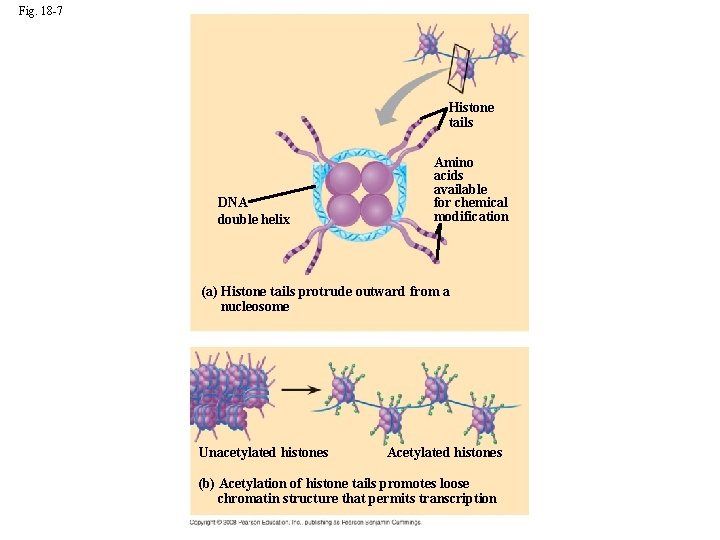
Fig. 18 -7 Histone tails DNA double helix Amino acids available for chemical modification (a) Histone tails protrude outward from a nucleosome Unacetylated histones Acetylated histones (b) Acetylation of histone tails promotes loose chromatin structure that permits transcription
218 DNA methylation: addition of methyl groups (-CH 3) to the bases of DNA to inactivate the gene. In each female, one of the two X chromosomes is compacted to form a Barr body (a heterochromatin). The DNA in Barr body is heavily methylated.
218 Histone acetylation: the attachment of acetyl groups ( -COCH 3) to the positively charged lysines in histone tails. It will cause the histone tails of a nucleosome to change the shape, loosening the grip to the DNA. This allows an easy access to the genes in the acetylated region by transcription proteins to initiate gene transcription. The gene is turned on as the gene is being transcribed. Histone deacetylation: the removal of acetyl groups
219 Organization of a Typical Eukaryotic Gene: Eukaryotic genes are interrupted by introns. The primary transcript (pre-m. RNA) contains regions of introns and exons. The intron regions are excised and the exon regions are spliced to form a final transcript (mature m. RNA).
220 RNA Processing: In eukaryotes, the initial transcripts must be processed before they can act as m. RNA, t. RNA or r. RNA. A m. RNA transcript must be tagged with 7 -methylguanosine at the 5’ end, and with adenine at 3’ end. m. RNA Degradation: In prokaryotes, the m. RNAs are degraded by enzymes within a few minutes. The m. RNA in eukaryotes can last for hours, days or even weeks.
221 • Noncoding RNAs (nc. RNA): Only about 1. 5% of the human genome codes for proteins. A significant amount of the genome codes for non-protein-coding RNAs (noncoding RNAs or nc. RNAs).
221 -222 • Micro. RNA (mi. RNA) is a small singlestranded RNA formed from longer RNA precursors. They fold back to form a double -stranded hairpin held by hydrogen bonds. An enzyme called Dicer cuts it into short double-stranded fragments from the primary mi. RNA transcript. One of the strands is degraded.
222 The other strand (mi. RNA) binds to a large protein to form a complex, which can degrade the target m. RNA or block its translation. Small interfering RNAs (si. RNAs) are similar in size and function as mi. RNAs. They turn off the genes with the same sequence.
226 Cancer results from genetic changes that affect cell cycle control: Tumor: benign, malignant (cancer) Metastasis
226 Characteristics of Cancer Cells: 1. Have abnormal number of chromosomes (He. La cell: 70 -80) or have chromosomes with altered sequences. 2. Spherical shape due to lack of microfibrils. 3. Loss of anchorage dependence. 4. Lack of contact inhibition property. 5. Absence of cellular affinities, resulting in metastasis.
226 6. Cell coats bear abnormal antigens. 7. Consume more glucose than normal cells. They metabolize glucose at a high rate and excrete much lactic acid and proteolytic enyzmes, which may alter the cell surface of their own or that of the normal cells.
226 • Carcinogens: • Oncogenes: • Proto-oncogenes: These are the genes related to the viral genes. They code for proteins that regulate cell growth, cell division, and cell adhesion. They can be converted to oncogenes by mutation. • Tumor-suppressor genes help prevent uncontrolled cell growth, repair damaged DNA, control cell adhesion, and serve as the components of the signaling pathways that inhibit the cell cycle. A change in these genes may also cause cancer.
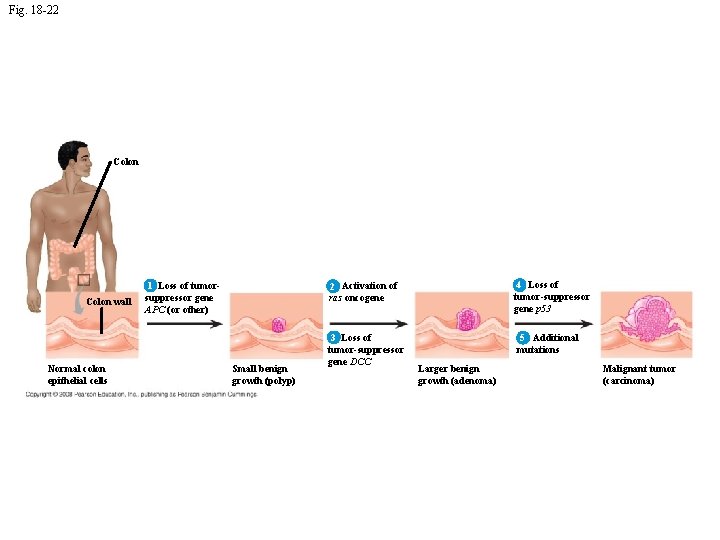
Fig. 18 -22 Colon EFFECTS OF MUTATIONS Colon wall Normal colon epithelial cells 1 Loss of tumorsuppressor gene APC (or other) Small benign growth (polyp) 2 Activation of ras oncogene 4 Loss of tumor-suppressor gene p 53 3 Loss of tumor-suppressor gene DCC 5 Additional mutations Larger benign growth (adenoma) Malignant tumor (carcinoma)
227 The p 53 gene codes for a transcription factor (p 53 protein) that promotes the synthesis of growth-inhibiting proteins. The gene is named for the 53, 000 -dalton molecular weight of its protein product. The gene is activated by DNA damage caused by radiation or toxic chemicals. It is often called the guardian angel of the genome.
227 • The p 53 protein often activates p 21 gene whose product binds to cyclin-dependent kinases to halt the cell cycle, thus allowing time for DNA repair. • The p 53 protein also activates “suicide” genes whose proteins cause apoptosis (programmed cell death). Mutation of p 53 gene can lead to cancer.
227 • The Multistep Model of Cancer Development: • Cancer is often caused by multiple mutations. Higher cancer rate is correlated with age because of the accumulation of mutations.
227 At DNA level, there must be about half a dozen changes taking place in order for a cell to become cancerous. The changes include the appearance of at least one active oncogene, and the mutation of several tumor-suppressor genes. The mutations knock out both alleles to block tumor suppression. In many malignant tumors, the gene for telomerase is activated. The enzyme prevents the erosion of the ends of the chromosomes and thus allows the cell to divide indefinitely.
227 About 15% of human cancer is caused by viruses. The insertion of viral nucleic acid may disrupt a tumor-suppressor gene or convert a proto-oncogene to an oncogene.
228 • In 5% to 10% of breast cancer, there is evidence of a strong inherited predisposition. More than half of the inherited breast cancers are associated with mutation of BRCA 1 (BReast CAncer) genes on chromosome 17. The other half of breast cancers are associated with mutation of BRCA 2 gene on chromosome 13. • Mutations of either gene can result in breast cancer and ovarian cancer. Both genes serve as tumor suppressor genes whose products are involved in DNA repair.