
CHAPTER 17 The Principle of Linear Superposition and
- Slides: 13
CHAPTER 17 The Principle of Linear Superposition and Interference Phenomena Interference Constructive and Destructive Interference: BEATS Standing Waves: Transverse-Stringed Instruments and Longitudinal-Wind Instruments. Diffraction Speakers
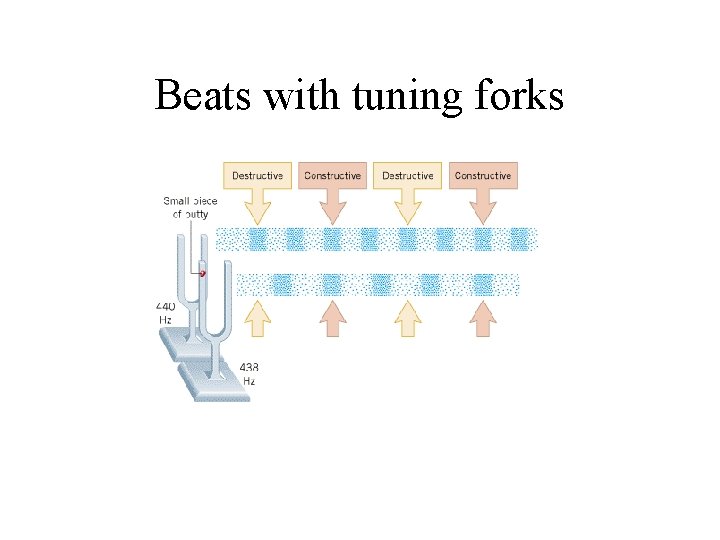
Beats with tuning forks
Simulation of Beats http: //www 3. interscience. wiley. com: 8100/legacy/college/cutn ell/0471151831/concepts/index. htm
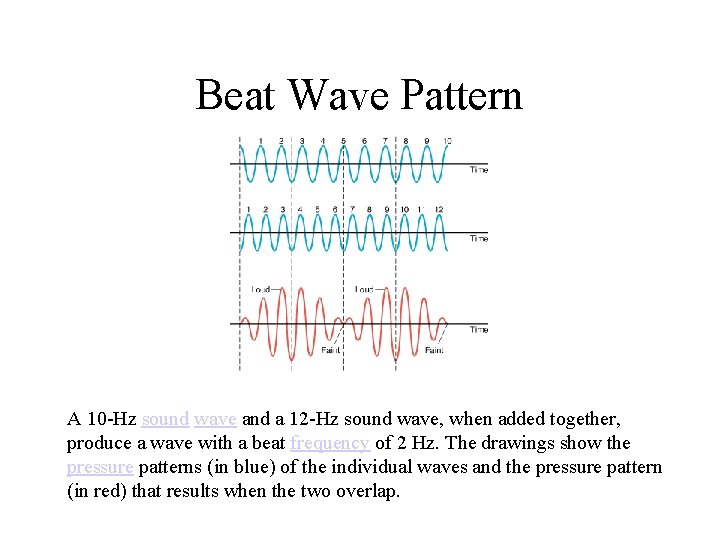
Beat Wave Pattern A 10 -Hz sound wave and a 12 -Hz sound wave, when added together, produce a wave with a beat frequency of 2 Hz. The drawings show the pressure patterns (in blue) of the individual waves and the pressure pattern (in red) that results when the two overlap.
17. 4 Beats
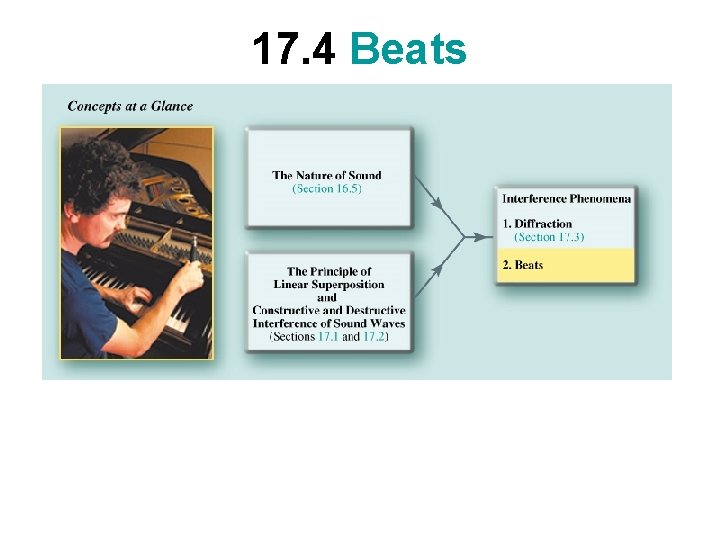
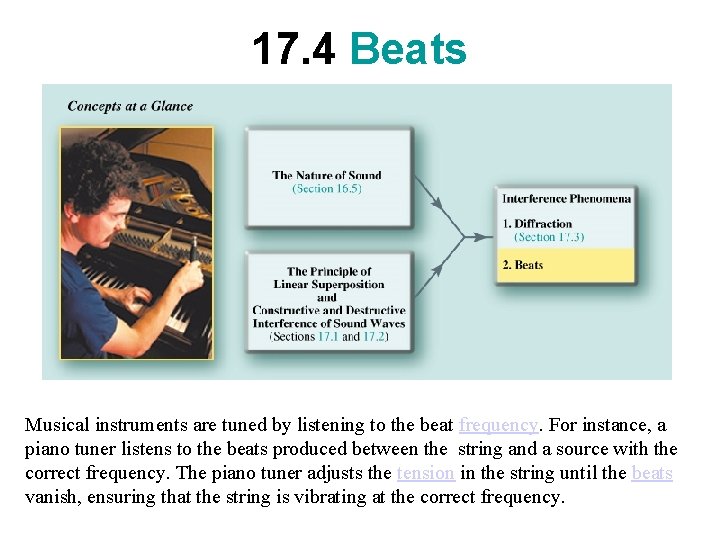
17. 4 Beats Musical instruments are tuned by listening to the beat frequency. For instance, a piano tuner listens to the beats produced between the string and a source with the correct frequency. The piano tuner adjusts the tension in the string until the beats vanish, ensuring that the string is vibrating at the correct frequency.
17. 5 Transverse Standing Waves
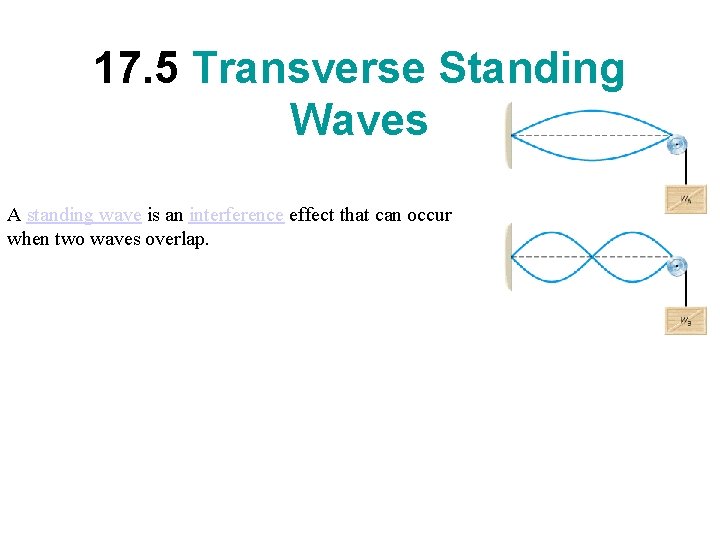
17. 5 Transverse Standing Waves A standing wave is an interference effect that can occur when two waves overlap.
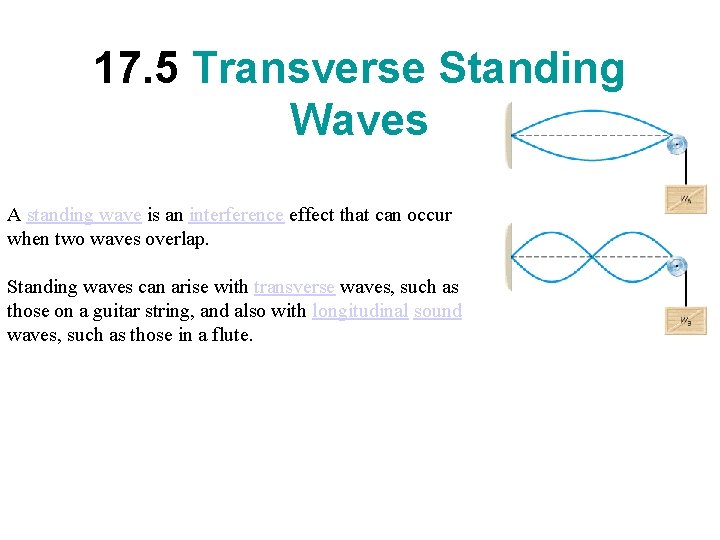
17. 5 Transverse Standing Waves A standing wave is an interference effect that can occur when two waves overlap. Standing waves can arise with transverse waves, such as those on a guitar string, and also with longitudinal sound waves, such as those in a flute.
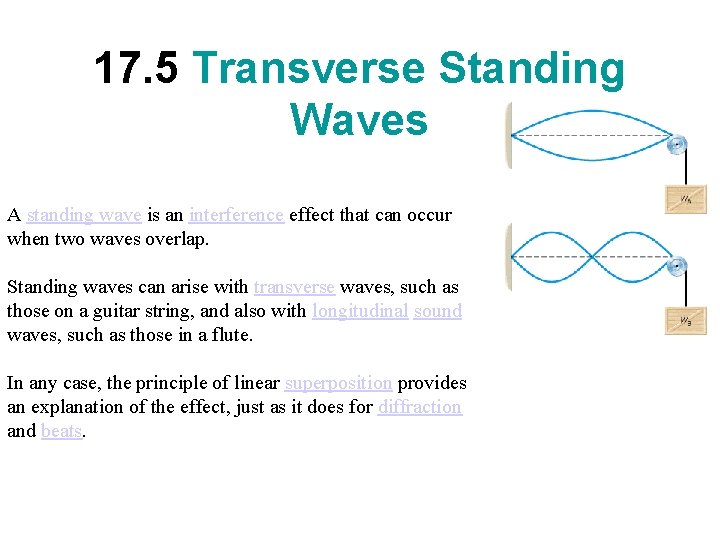
17. 5 Transverse Standing Waves A standing wave is an interference effect that can occur when two waves overlap. Standing waves can arise with transverse waves, such as those on a guitar string, and also with longitudinal sound waves, such as those in a flute. In any case, the principle of linear superposition provides an explanation of the effect, just as it does for diffraction and beats.
Simulation of Standing waves http: //www 3. interscience. wiley. com: 8100/legacy/college/cutnell/ 0471151831/concepts/index. htm
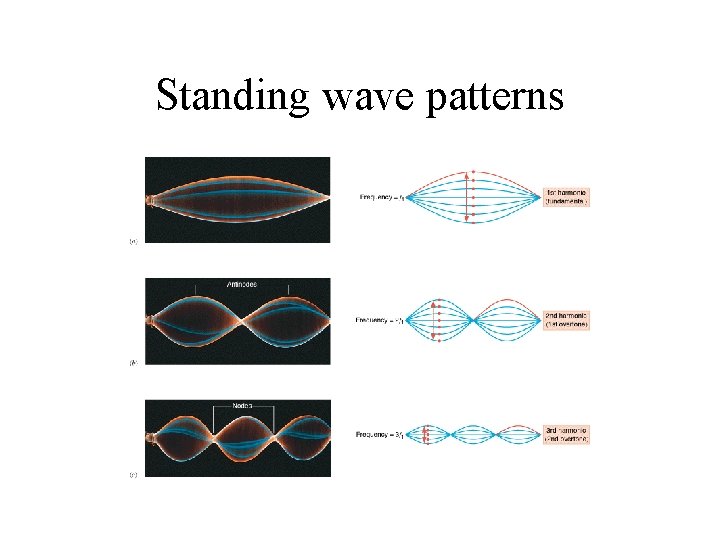
Standing wave patterns
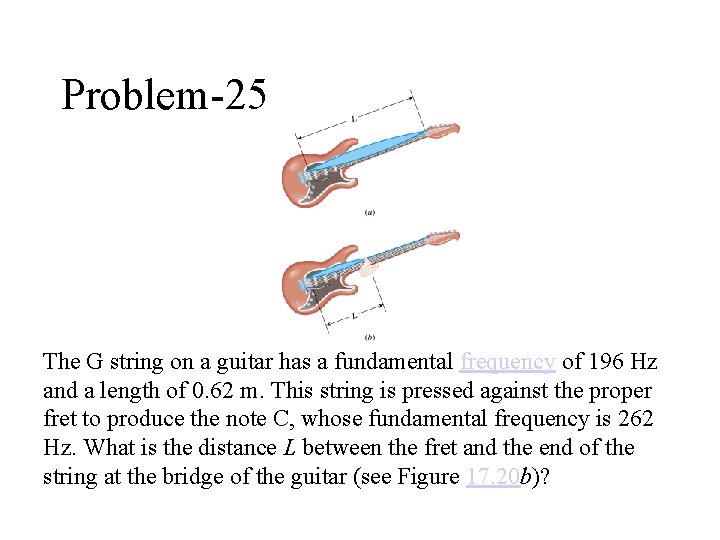
Problem-25 The G string on a guitar has a fundamental frequency of 196 Hz and a length of 0. 62 m. This string is pressed against the proper fret to produce the note C, whose fundamental frequency is 262 Hz. What is the distance L between the fret and the end of the string at the bridge of the guitar (see Figure 17. 20 b)?