
Chapter 17 THE ENLIGHTENMENT THE AMERICAN REVOLUTION Sec




- Slides: 32
Chapter 17 THE ENLIGHTENMENT & THE AMERICAN REVOLUTION
Sec 1 PHILOSOPHY IN THE AGE OF REASON
� Early 1700 s – European thinkers believed nothing was beyond reach of the human mind � Use of reason – people & gov’t could solve every social, political and economic problem
Scientific Revolution Sparks Enlightenment � Changed the way people looked at the world � Power of reason & science to fix problems in the world
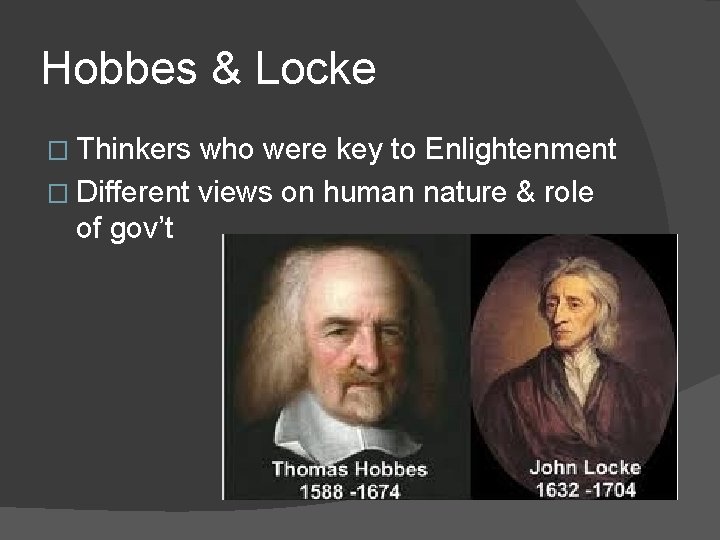
Hobbes & Locke � Thinkers who were key to Enlightenment � Different views on human nature & role of gov’t
Thomas Hobbes � Strong government � People are naturally cruel, greedy & selfish � Need to be strictly controlled – or they would fight, rob and oppress one another � Life in the “state of nature” w/o laws or other controls would be “solitary, poor, nasty, brutish and short”
Thomas Hobbes � To escape life in the “state of nature” people enter into Social Contracts – an agreement by which they give up their freedom for an organized society � Powerful government = orderly society � Need for absolute monarch to impose order & compel obedience
John Locke Optimistic view of human nature - people are moral & reasonable � Natural rights – rights that belonged to all humans from birth � People form gov’t to protect their natural rights � Gov’t should have limited power & should be accepted by all citizens �
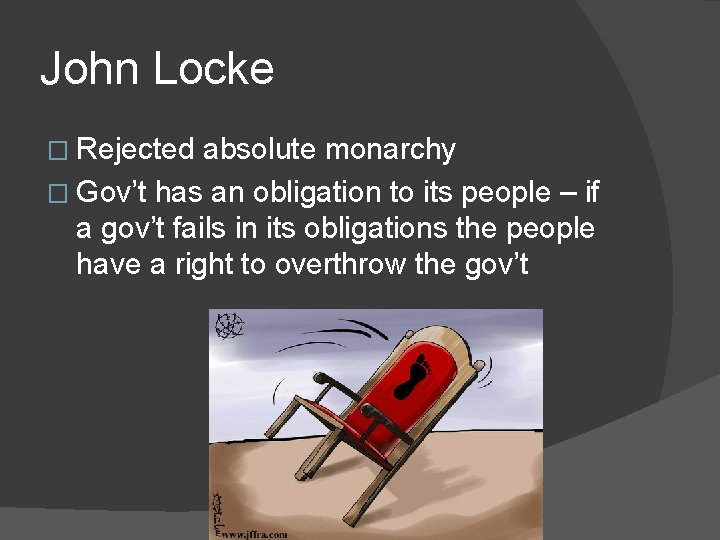
John Locke � Rejected absolute monarchy � Gov’t has an obligation to its people – if a gov’t fails in its obligations the people have a right to overthrow the gov’t
For the following video clips – determine which philosopher these governments adhere to � Keep it to yourself until the end of both! Star Wars 1 V for Vendetta
Which approach to government is the most effective?
Other Philosophers � Montesquieu – best way to protect liberty – divide gov’t into 3 branches – legislative, executive, judicial – checks & balances � Voltaire – Defend freedom and thought & speech � Rousseau – less limitations on people – good of the community should be placed above individual interests. Hatred of all forms of political & economic oppression
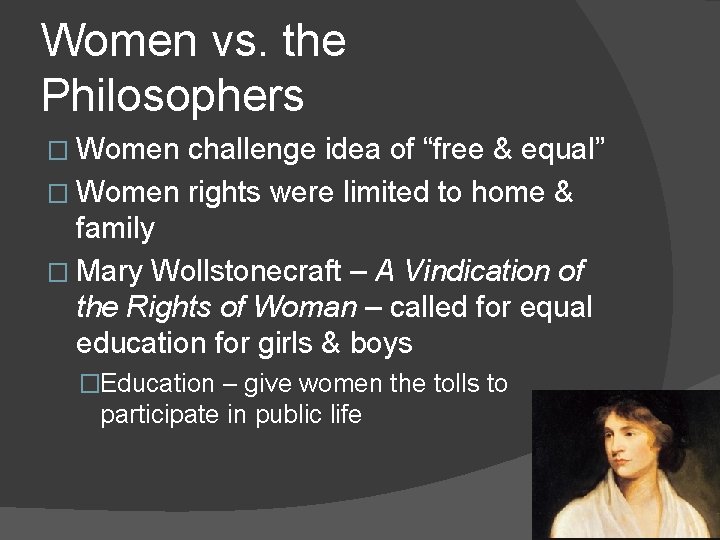
Women vs. the Philosophers � Women challenge idea of “free & equal” � Women rights were limited to home & family � Mary Wollstonecraft – A Vindication of the Rights of Woman – called for equal education for girls & boys �Education – give women the tolls to participate in public life
Changes in the Economy � Laissez Faire Replaces Mercantilism no gov’t control of economy � Adam Smith & the Free Market – supply & demand should drive economy
Ch 17 Sec 2 ENLIGHTENMENT IDEAS SPREAD
New Ideas of Enlightenment Challenge Society � Writers Face Censorship – gov’t & church defend old order � Censorship – restricting access to ideas & information � Banned & burned books & imprisoned writers � Some writers disguised their ideas in fiction books
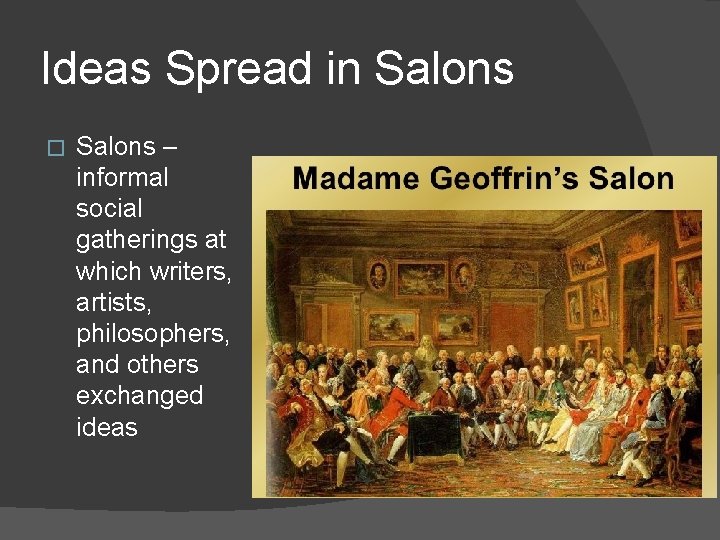
Ideas Spread in Salons � Salons – informal social gatherings at which writers, artists, philosophers, and others exchanged ideas
Arts & Literature Reflect New Ideas � Classical music – ballets & opera � Johann Sebastian Bach � George Frideric Handel � Franz Joseph Haydn � Wolfgang Amadeus Mozart
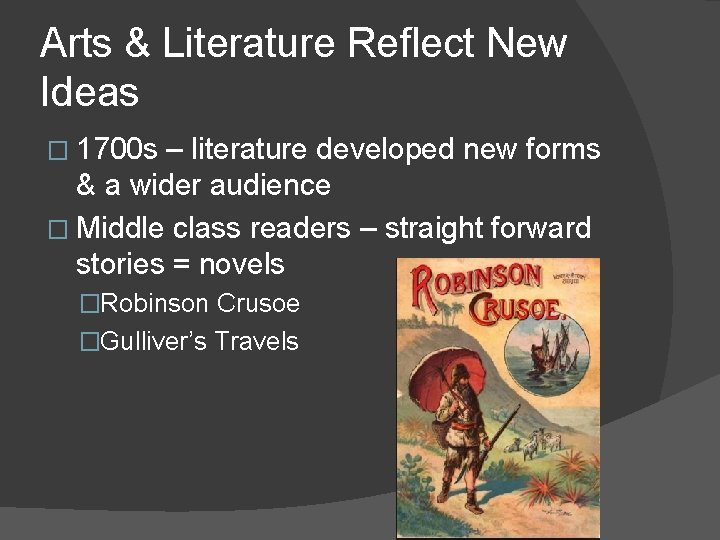
Arts & Literature Reflect New Ideas � 1700 s – literature developed new forms & a wider audience � Middle class readers – straight forward stories = novels �Robinson Crusoe �Gulliver’s Travels
Checking for Understanding � What did the government and church do with books that they didn’t approve of? Censorship, burn, banned
Lives of the Majority Change Slowly � Took a long time for lives of peasants to change � Late 1700 s – ideas had seeped into peasant villages �Peasants divided by new & old order � 1800 s – war & political upheaval – changing economy – would transform peasant life in Europe
Chapter 17, Sec 3 BIRTH OF THE AMERICAN REPUBLIC
Britain Becomes a Global Power � Location – Control trade � England – few trade restrictions = good for business � Won wars & gained territory � Monopolized slave trade � George III – regain royal power
Colonies in the Mid-1700 s England colonies wealthy – part of Britain’s empire � Britain applied mercantilists polices � Navigation Acts – regulated trade & manufacturing (though not rigorously enforced � Social distinctions more blurred than Europe � Colonists felt entitled to rights of English citizens �
Colonists Express Discontent � Seven Years’ War & French & Indian War = British treasury empty � Increase taxes on colonists �Sugar Act 1764 �Stamp Act 1765 � No taxation without representation! � Repealed Stamp Act � Declaratory Act – England had complete authority over colonists
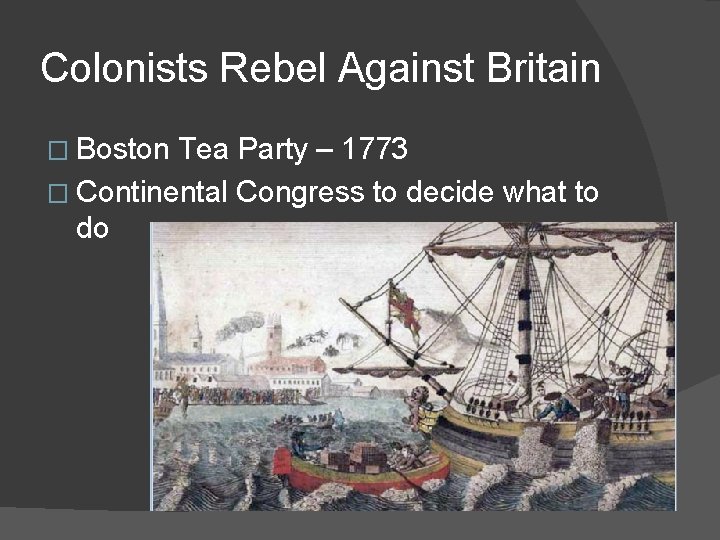
Colonists Rebel Against Britain � Boston Tea Party – 1773 � Continental Congress to decide what to do
Colonist Declare Independence � April 1775 – war breaks out � July 4, 1776 – Declaration of Independence �Took many of Locke’s ideas ○ Life, liberty, property ○ Popular sovereignty – all government power comes from the people
The American Revolution Continues British - Advantages � � � Large # of trained soldiers Large fleet Many resources Native Americans Enslaved people British - Disadvantages • Lacked knowledge of geography Colonists- Disadvantages Lacked military resources � Lacked $ to pay soldiers � No strategic plan � Colonists- Advantages • Geography – Colonists knew • Strong leader • Fierce determination
France Provides Support � 1777 - Turning point in war – Americans win at the Battle of Saratoga � France join to help Americans �Brought supplies, soldiers, warships � Netherlands and Spain add support
Treaty of Paris Ends the War � French blockaded Chesapeake Bay – Washington forces British army to surrender at Yorktown, Virginia British Surrenders � Treaty of Paris 1783 – ended war � Britain recognizes independence
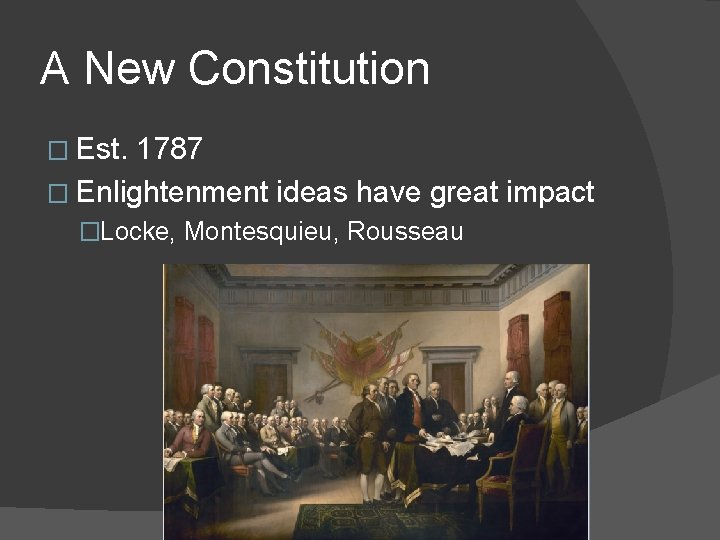
A New Constitution � Est. 1787 � Enlightenment ideas have great impact �Locke, Montesquieu, Rousseau
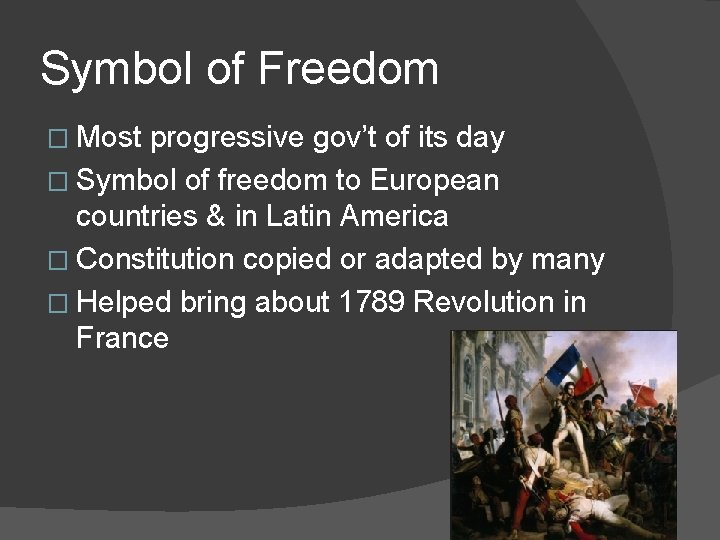
Symbol of Freedom � Most progressive gov’t of its day � Symbol of freedom to European countries & in Latin America � Constitution copied or adapted by many � Helped bring about 1789 Revolution in France