
Chapter 17 The Atmosphere Structure and Temperature 17
- Slides: 23
Chapter 17 The Atmosphere: Structure and Temperature
17. 1 Atmosphere Characteristics Weather is constantly changing, and it refers to the state of the atmosphere at any given time and place. Climate, however, is based on observations of weather that have been collected over many years. Climate helps describe a place or region.
17. 1 Atmosphere Characteristics Composition of the Atmosphere Major Components • Air is a mixture of different gases and particles, each with its own physical properties.
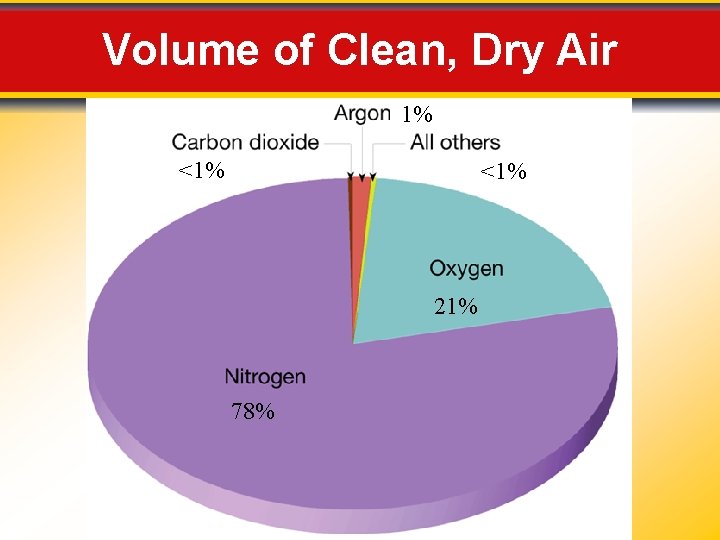
17. 1 Atmosphere Characteristics – Two major gases: • Nitrogen (78%) • Oxygen (21%) – Other gases vary • Carbon dioxide is increasing due to human activities • CO 2 raises temperatures in the atmosphere by trapping heat near the surface
Volume of Clean, Dry Air 1% <1% 21% 78%
17. 1 Atmosphere Characteristics Composition of the Atmosphere • Water vapor is the source of all clouds and precipitation. Like carbon dioxide, water vapor absorbs heat given off by Earth. It also absorbs some solar energy. • Ozone is a form of oxygen that combines three oxygen atoms into each molecule (O 3). • If ozone did not filter most UV radiation and all of the sun’s UV rays reached the surface of Earth, our planet would be uninhabitable for many living organisms.
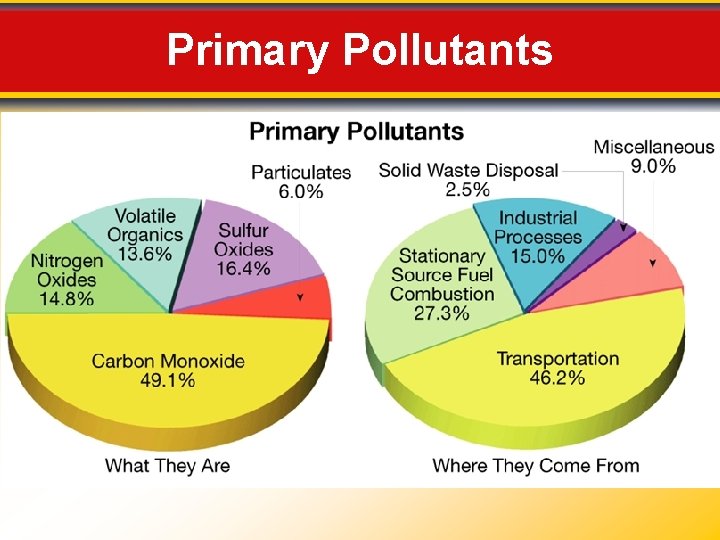
17. 1 Atmosphere Characteristics Composition of the Atmosphere Human Influence • Emissions from transportation vehicles account for nearly half the primary pollutants by weight (46. 2%)
Primary Pollutants
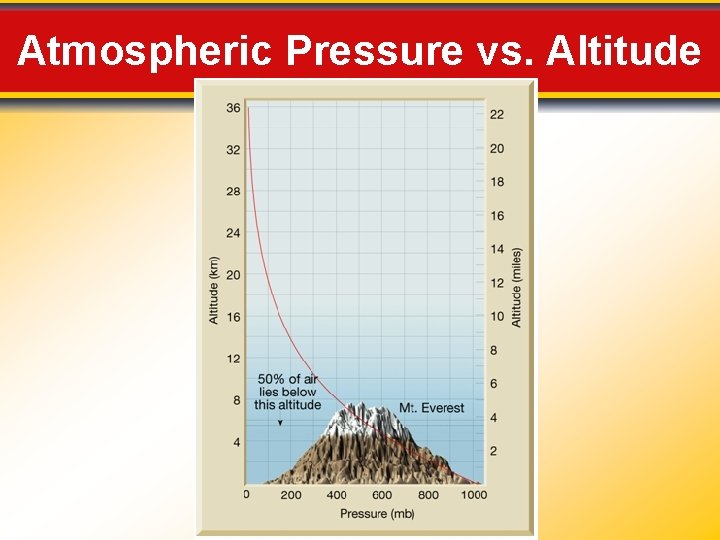
17. 1 Atmosphere Characteristics Height and Structure of the Atmosphere The atmosphere rapidly thins as you travel away from Earth until there are too few gas molecules to detect. Pressure Changes • Atmospheric pressure is simply the weight of the air above.
Atmospheric Pressure vs. Altitude
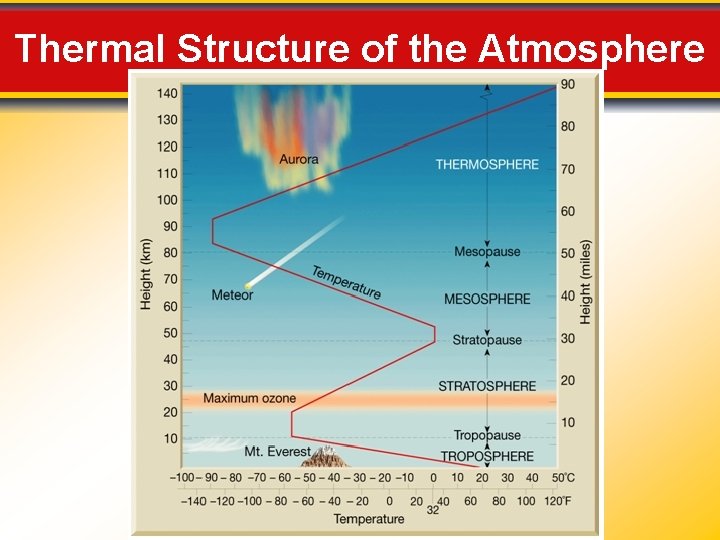
17. 1 Atmosphere Characteristics Height and Structure of the Atmosphere Temperature Changes • The atmosphere can be divided vertically into four layers based on temperature. • •
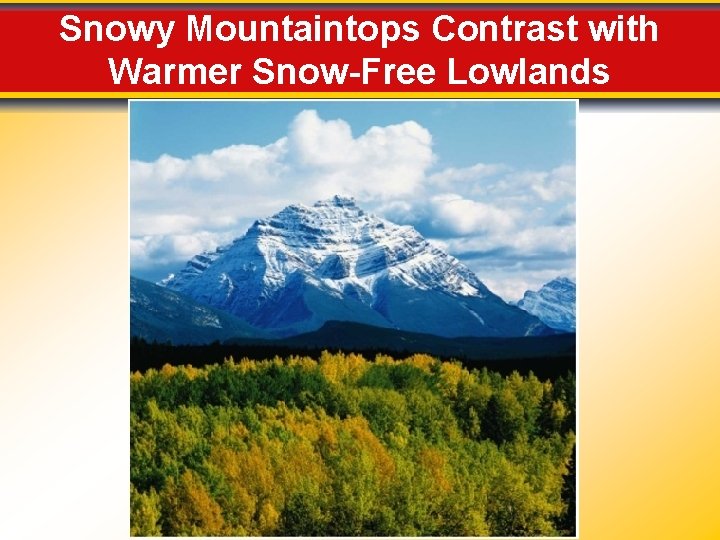
Snowy Mountaintops Contrast with Warmer Snow-Free Lowlands
Thermal Structure of the Atmosphere
17. 1 Atmosphere Characteristics Height and Structure of the Atmosphere Temperature Changes • Earth’s atmosphere can be divided vertically into four layers based on temperature.
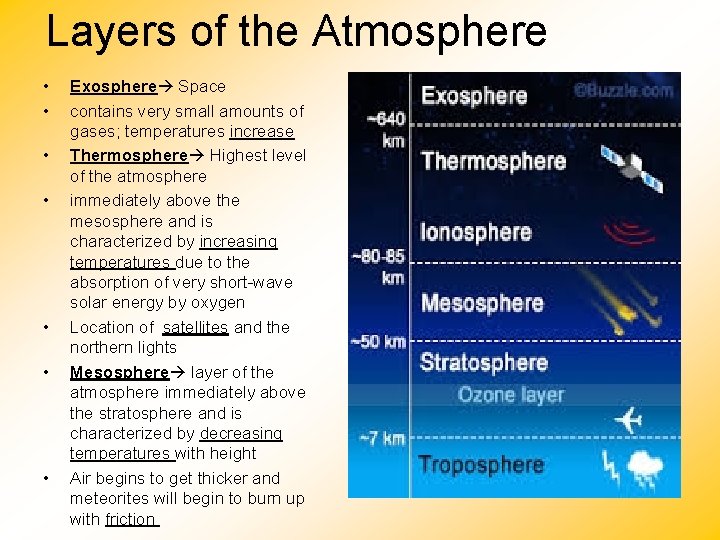
Layers of the Atmosphere • • Exosphere Space contains very small amounts of gases; temperatures increase Thermosphere Highest level of the atmosphere immediately above the mesosphere and is characterized by increasing temperatures due to the absorption of very short-wave solar energy by oxygen. Location of satellites and the northern lights Mesosphere layer of the atmosphere immediately above the stratosphere and is characterized by decreasing temperatures with height Air begins to get thicker and meteorites will begin to burn up with friction
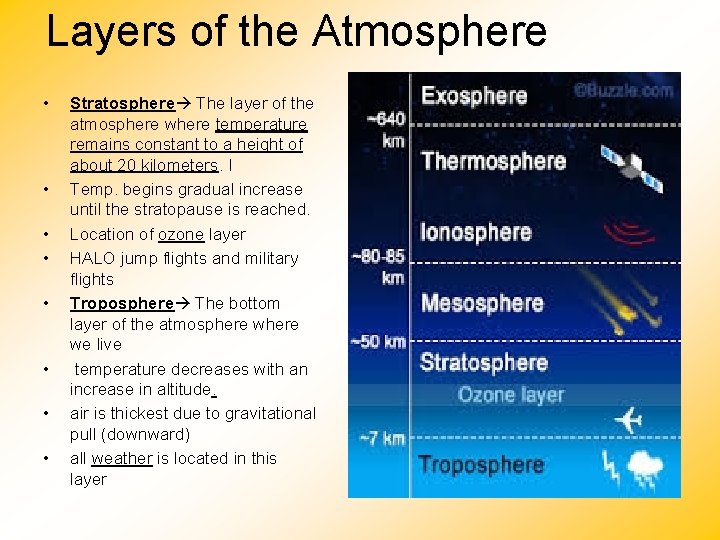
Layers of the Atmosphere • • Stratosphere The layer of the atmosphere where temperature remains constant to a height of about 20 kilometers. I Temp. begins gradual increase until the stratopause is reached. Location of ozone layer HALO jump flights and military flights Troposphere The bottom layer of the atmosphere we live temperature decreases with an increase in altitude. air is thickest due to gravitational pull (downward) all weather is located in this layer
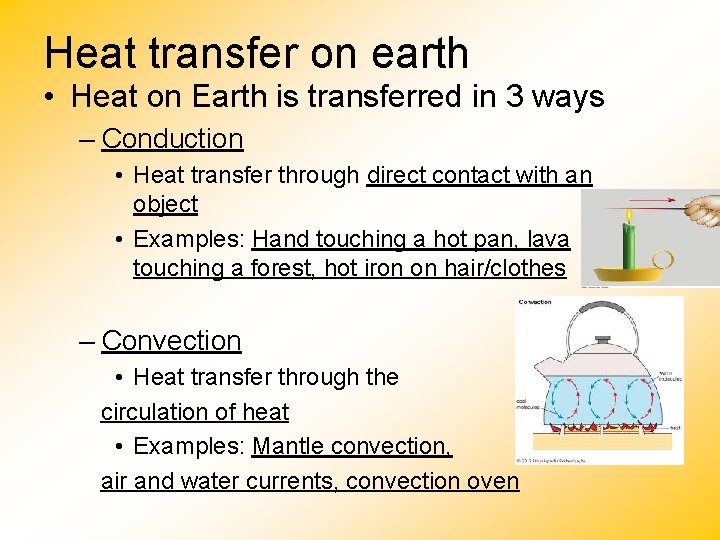
Heat transfer on earth • Heat on Earth is transferred in 3 ways – Conduction • Heat transfer through direct contact with an object • Examples: Hand touching a hot pan, lava touching a forest, hot iron on hair/clothes – Convection • Heat transfer through the circulation of heat • Examples: Mantle convection, air and water currents, convection oven
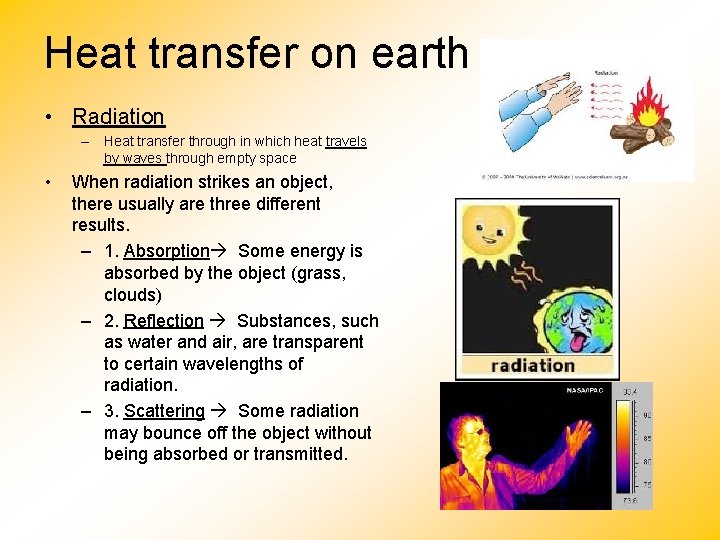
Heat transfer on earth • Radiation – Heat transfer through in which heat travels by waves through empty space • When radiation strikes an object, there usually are three different results. – 1. Absorption Some energy is absorbed by the object (grass, clouds) – 2. Reflection Substances, such as water and air, are transparent to certain wavelengths of radiation. – 3. Scattering Some radiation may bounce off the object without being absorbed or transmitted.
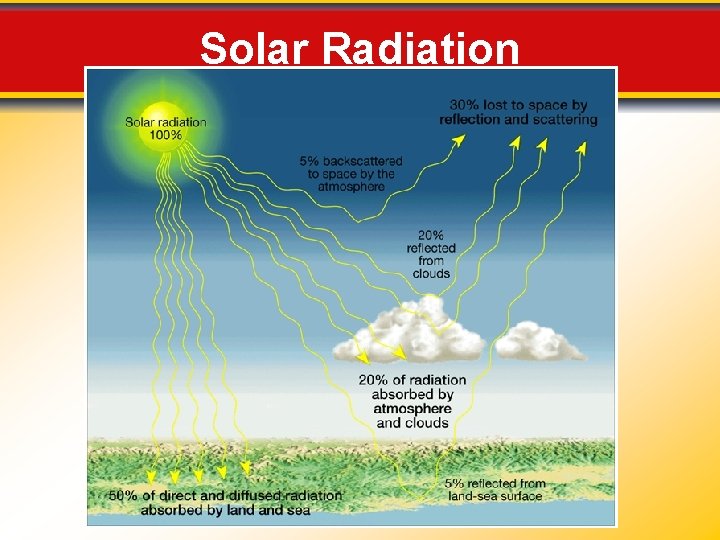
17. 2 Heating the Atmosphere What Happens to Solar Radiation? Absorption • About 50% of the solar energy that strikes the top of the atmosphere reaches Earth’s surface and is absorbed. • The greenhouse effect is the heating of Earth’s surface and atmosphere from solar radiation being absorbed and emitted by the atmosphere, mainly by water vapor and carbon dioxide.
Solar Radiation
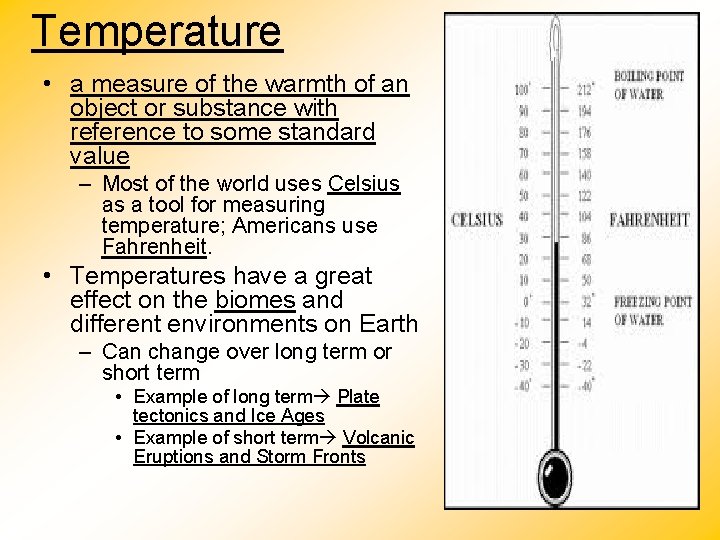
Temperature • a measure of the warmth of an object or substance with reference to some standard value – Most of the world uses Celsius as a tool for measuring temperature; Americans use Fahrenheit. • Temperatures have a great effect on the biomes and different environments on Earth – Can change over long term or short term • Example of long term Plate tectonics and Ice Ages • Example of short term Volcanic Eruptions and Storm Fronts
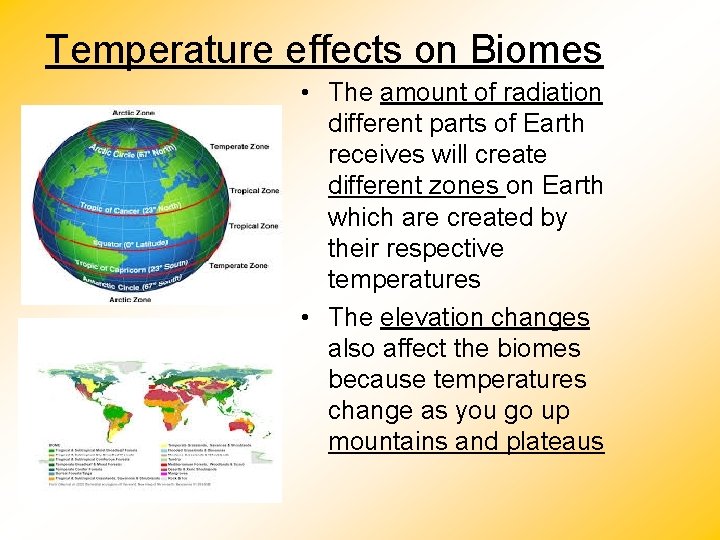
Temperature effects on Biomes • The amount of radiation different parts of Earth receives will create different zones on Earth which are created by their respective temperatures • The elevation changes also affect the biomes because temperatures change as you go up mountains and plateaus
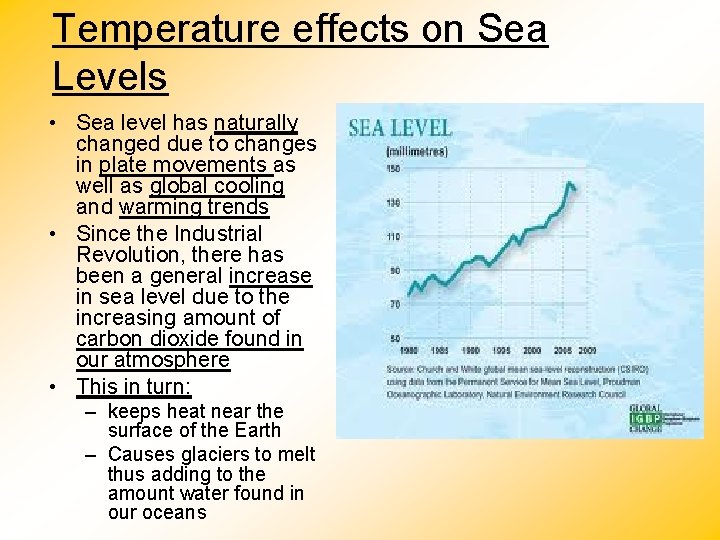
Temperature effects on Sea Levels • Sea level has naturally changed due to changes in plate movements as well as global cooling and warming trends • Since the Industrial Revolution, there has been a general increase in sea level due to the increasing amount of carbon dioxide found in our atmosphere • This in turn: – keeps heat near the surface of the Earth – Causes glaciers to melt thus adding to the amount water found in our oceans