
Chapter 17 Selling Satisfies Customers Principles of Marketing
- Slides: 20
Chapter 17: Selling Satisfies Customers Principles of Marketing Mrs. Piotrowski 1
SECTION 1: THE VALUE OF SELLING 2
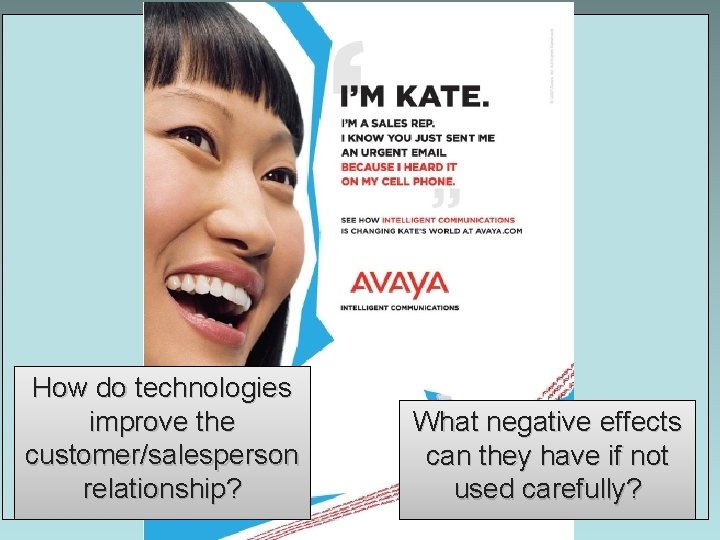
What message does this ad convey? How do technologies improve the customer/salesperson relationship? What negative effects can they have if not used carefully? 3
The Process of Personal Selling • Selling is the direct, personal, communications with prospective customers in order to assess needs and satisfy those needs with appropriate products and services. • Selling is part of the promotion element of the marketing mix. • Salespeople provide the link between the customer and the business. 4
Personal Selling is… • Direct & Personal – personal selling is used to communicate with one or a few customers. – By listening to the tone of voice and observing body language a salesperson can personalize the communication. • Assess & Satisfy – salespeople can tailor the choices of a business’s products to individual customer needs and preferences. 5
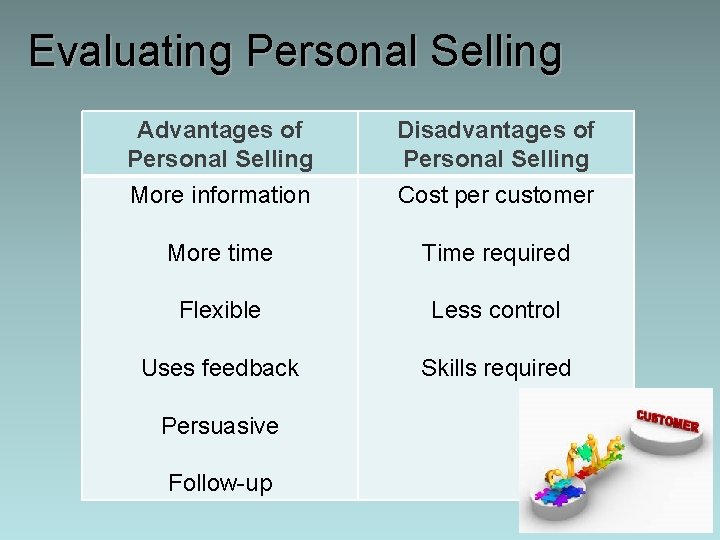
Evaluating Personal Selling Advantages of Personal Selling Disadvantages of Personal Selling More information Cost per customer More time Time required Flexible Less control Uses feedback Skills required Persuasive Follow-up 6
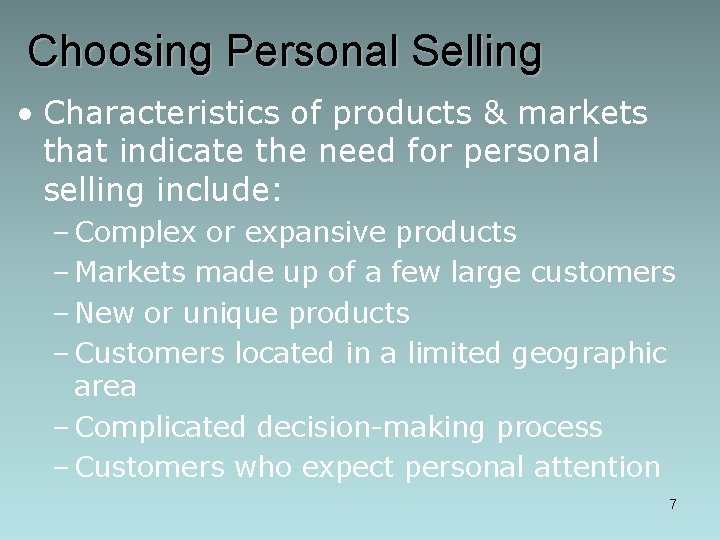
Choosing Personal Selling • Characteristics of products & markets that indicate the need for personal selling include: – Complex or expansive products – Markets made up of a few large customers – New or unique products – Customers located in a limited geographic area – Complicated decision-making process – Customers who expect personal attention 7
SECTION 2: PREPARING FOR EFFECTIVE SELLING 8
Imagine you are preparing to go on a job interview. You need to sell yourself to the employer; you are the product and the other applicants are the competition. Make a list of 2 points each about the customer (employer), the product, and the competition that will determine your chances for success. 9
Identifying Customers • Just as a business identifies its target market, salespeople need to identify appropriate customers. • Some salespeople use a process called cold calling, where they contact large numbers of people without knowing a great deal about the people being contacted. • Marketing-oriented businesses typically conduct research prior to calling on potential customers, making the selling process a more positive experience. 10
Qualifying Prospective Customers • Qualifying involves gathering information to determine which people are most likely to buy. • Three characteristics qualify a person as a prospective customer: – A need for the product – The resources to purchase the product – The authority to make a decision to purchase 11
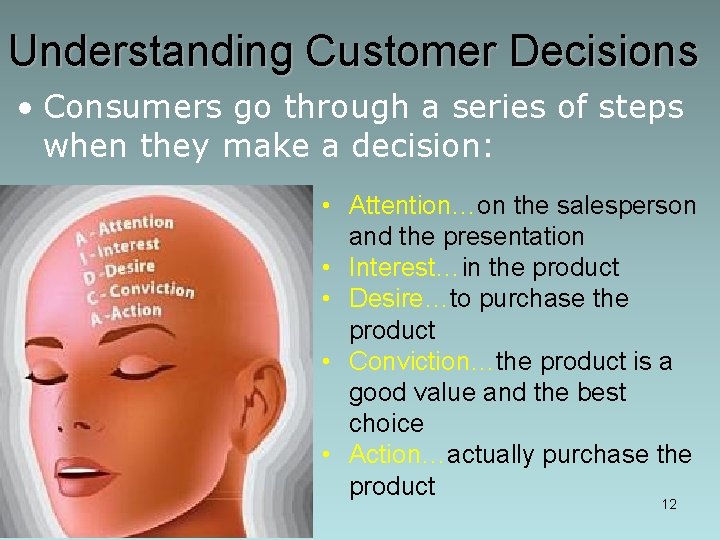
Understanding Customer Decisions • Consumers go through a series of steps when they make a decision: • Attention…on the salesperson and the presentation • Interest…in the product • Desire…to purchase the product • Conviction…the product is a good value and the best choice • Action…actually purchase the product 12
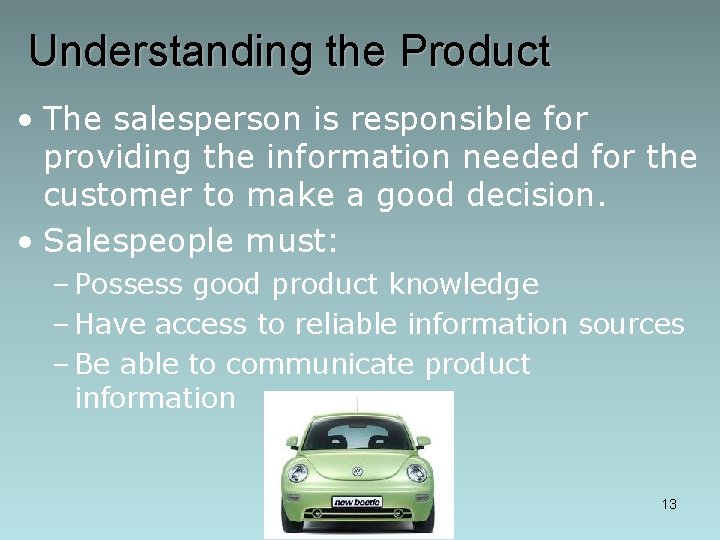
Understanding the Product • The salesperson is responsible for providing the information needed for the customer to make a good decision. • Salespeople must: – Possess good product knowledge – Have access to reliable information sources – Be able to communicate product information 13
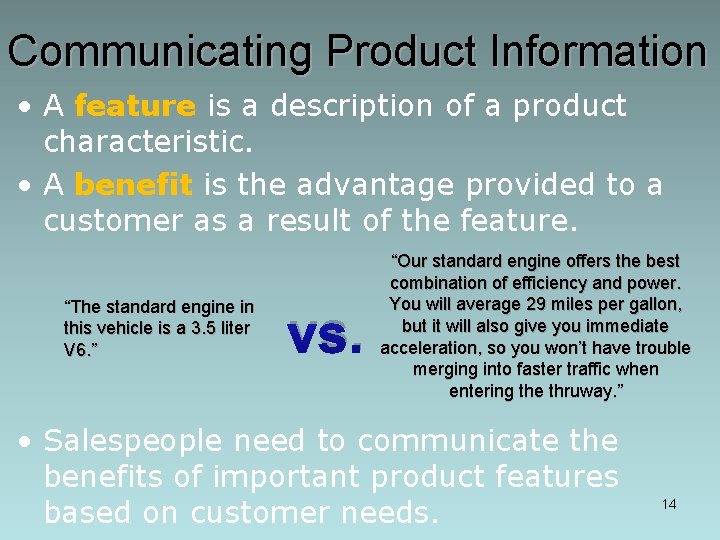
Communicating Product Information • A feature is a description of a product characteristic. • A benefit is the advantage provided to a customer as a result of the feature. “The standard engine in this vehicle is a 3. 5 liter V 6. ” vs. “Our standard engine offers the best combination of efficiency and power. You will average 29 miles per gallon, but it will also give you immediate acceleration, so you won’t have trouble merging into faster traffic when entering the thruway. ” • Salespeople need to communicate the benefits of important product features based on customer needs. 14
SECTION 3: THE SELLING PROCESS & SALES SUPPORT 15
Describe the last time you worked with a salesperson to buy something. . E V L SO What did the salesperson convince you to buy? What could he or she have done differently to be more effective? 16 16
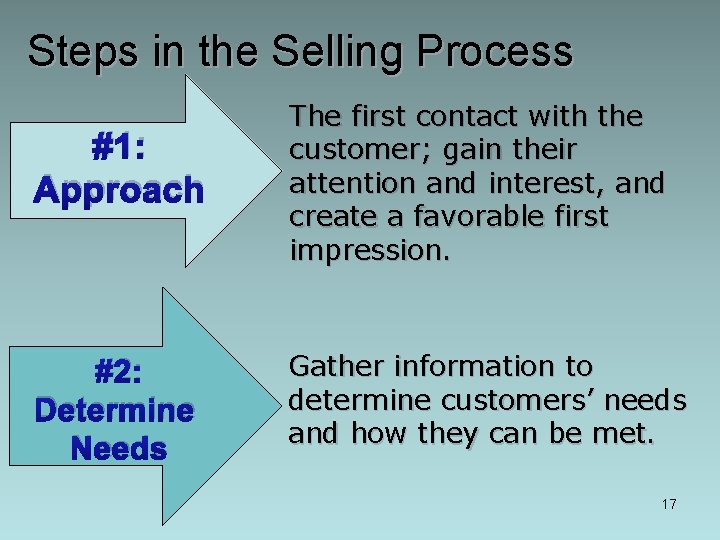
Steps in the Selling Process #1: Approach #2: Determine Needs The first contact with the customer; gain their attention and interest, and create a favorable first impression. Gather information to determine customers’ needs and how they can be met. 17
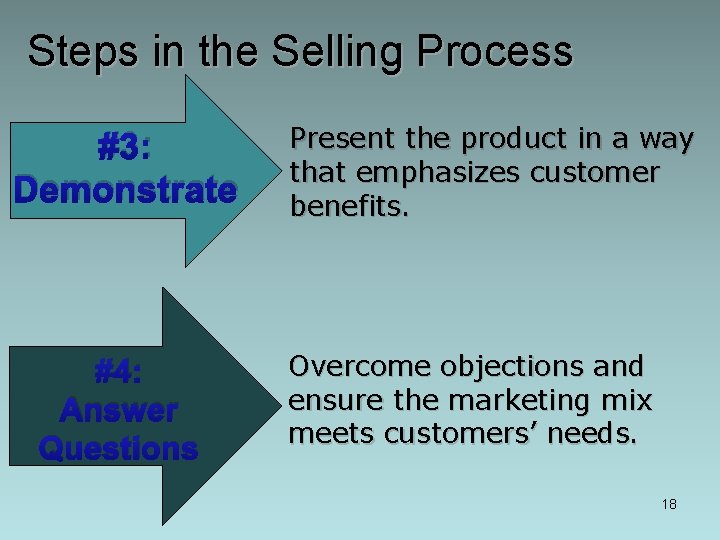
Steps in the Selling Process #3: Demonstrate #4: Answer Questions Present the product in a way that emphasizes customer benefits. Overcome objections and ensure the marketing mix meets customers’ needs. 18
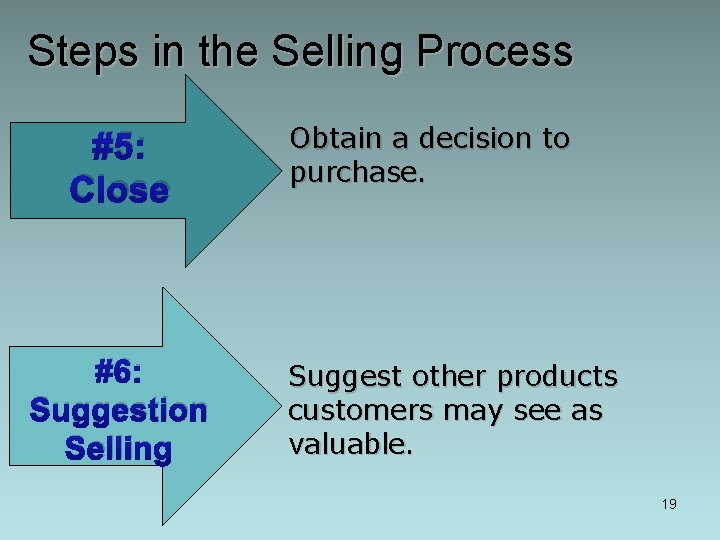
Steps in the Selling Process #5: Close #6: Suggestion Selling Obtain a decision to purchase. Suggest other products customers may see as valuable. 19
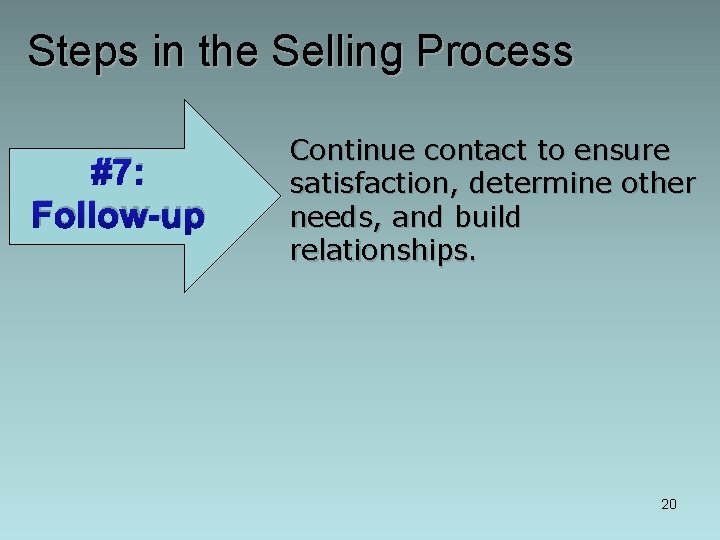
Steps in the Selling Process #7: Follow-up Continue contact to ensure satisfaction, determine other needs, and build relationships. 20