
Chapter 17 Principles of Trauma Objectives Define Kinematics

Chapter 17: Principles of Trauma
Objectives - Define: - - Kinematics Mechanism of Injury Index of Suspicion Low vs. high velocity injuries 5 Mechanisms of Injury Trauma Centers
Kinematics is. . . - Movement of the Body Injury Patterns - Snowboarder falling forward is likely to injure wrist Boot top fractures

Kinetic Energy - Velocity is squared Velocity has greatest impact on Kinetic Energy Equation:

Stopping Distance VS

Materials and Effect on Trauma - Density of organs - - Hollow vs. Solid Organs Some parts of body are brittle and some are not
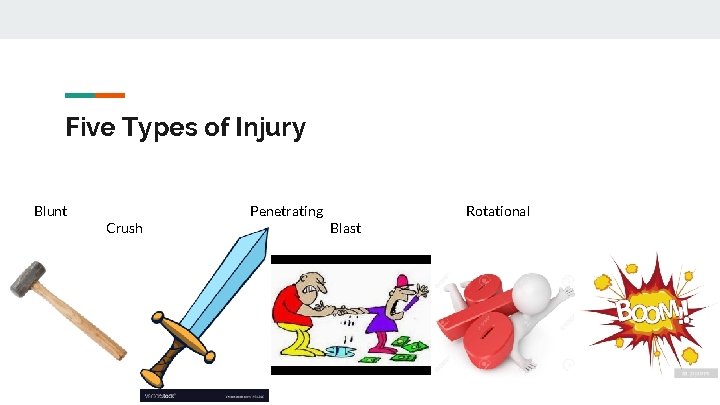
Five Types of Injury Blunt Penetrating Crush Rotational Blast
Penetrating Wounds - High Velocity - - > 2000 ft/s Low Velocity - < 2000 ft/s
Blast Injury - Primary - - Secondary - - Blast Wave (projectiles, superheated gases, etc. ) Tertiary - - Pressure Victim Displacement Quaternary/Miscellaneous
Phases of Injury - Pre-Injury Phase - - Injury prevention and proper safety equipment Index of Suspicion Post-Injury Phase - 3 peaks of traumatic death First few seconds/minutes “golden hour” Days and weeks following
Levels of Trauma Centers 1. Level I: Comprehensive Service (Including an Education Program) a. 2. 3. Level II: Same As Level I but without Education Program Level III: Has resources for most trauma situations, but does not have subspecialist available a. 4. UVM Medical Center Porter Hospital Levels IV and V: Have trauma nurse available at all times and have access to a physician who can be called in. Usually in very rural areas
- Slides: 11