
Chapter 17 Population and Urbanization Chapter Outline Using

Chapter 17 Population and Urbanization
Chapter Outline Using the Sociological Imagination n The Dynamics of Demography n Population Growth n Theories of City Growth n The Quality of Urban Life n
Demography Encompasses all measures of population: n size, distribution, composition, age structure, and change. n Draws from biology, geography, mathematics, economics, sociology, and political science. n
Demographic research Formal demography n Example: The dramatic increase in the Latino population of California and Texas. n Social demography n Example: Trends in the population shifts of aging baby boomers. n
Study of Population Trends n Provides information about: n Population growth. n Characteristics of population. n Location of population. n Probable long- and short-run effects of demographic trends.
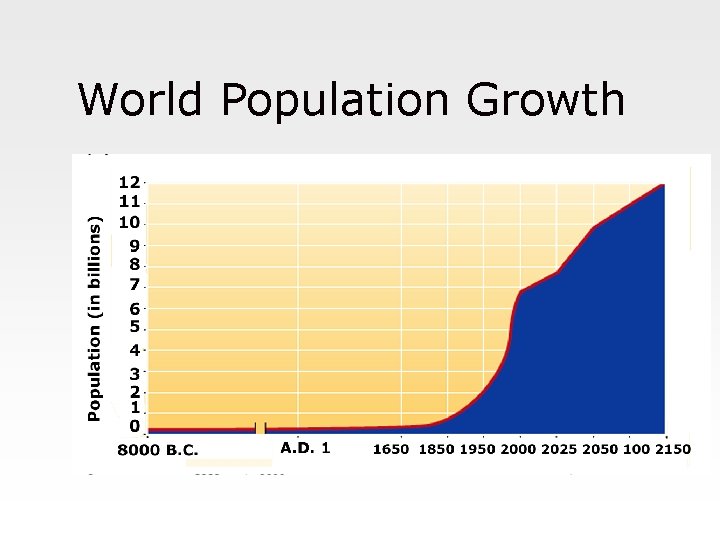
World Population Growth
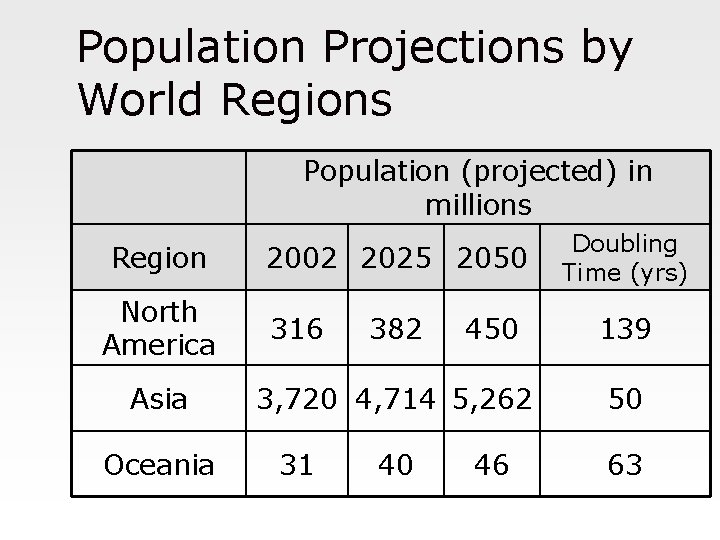
Population Projections by World Regions Population (projected) in millions Region North America Asia Oceania 2002 2025 2050 316 382 450 3, 720 4, 714 5, 262 31 40 46 Doubling Time (yrs) 139 50 63
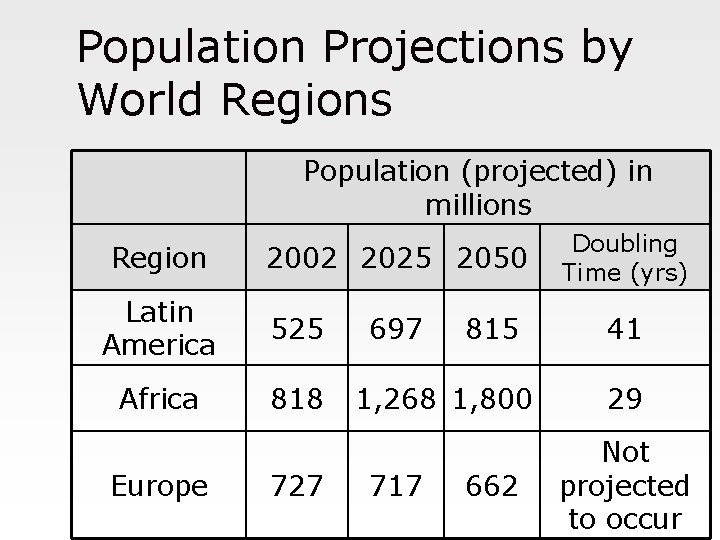
Population Projections by World Regions Population (projected) in millions Region 2002 2025 2050 Latin America 525 Africa 818 Europe 727 697 815 1, 268 1, 800 717 662 Doubling Time (yrs) 41 29 Not projected to occur
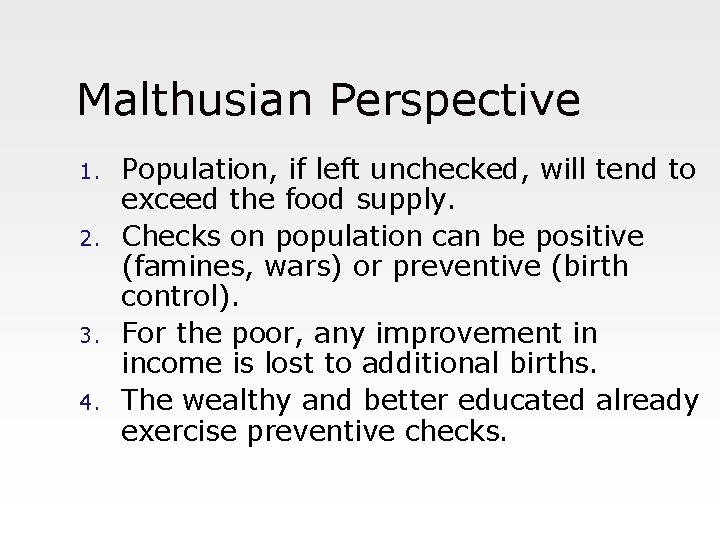
Malthusian Perspective 1. 2. 3. 4. Population, if left unchecked, will tend to exceed the food supply. Checks on population can be positive (famines, wars) or preventive (birth control). For the poor, any improvement in income is lost to additional births. The wealthy and better educated already exercise preventive checks.
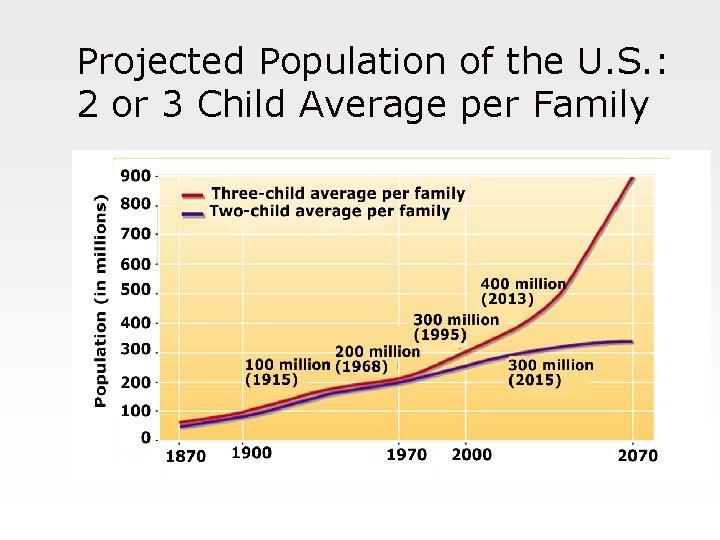
Projected Population of the U. S. : 2 or 3 Child Average per Family
Demographic Transition Theory: Four Stages n Stage 1. n Birth rate and the death rate are high. n Population growth is modest.
Demographic Transition Theory: Four Stages n Stage 2. n Birth rate remains high. n Death rate begins to drop sharply because of sanitation, increased food production, medical advances. n Rate of population growth is very high. n Most sub-Saharan African countries are presently at this stage.
Demographic Transition Theory: Four Stages n Stage 3. n The birth rate declines sharply. n Because the death rate continues to drop, population growth is still rapid.
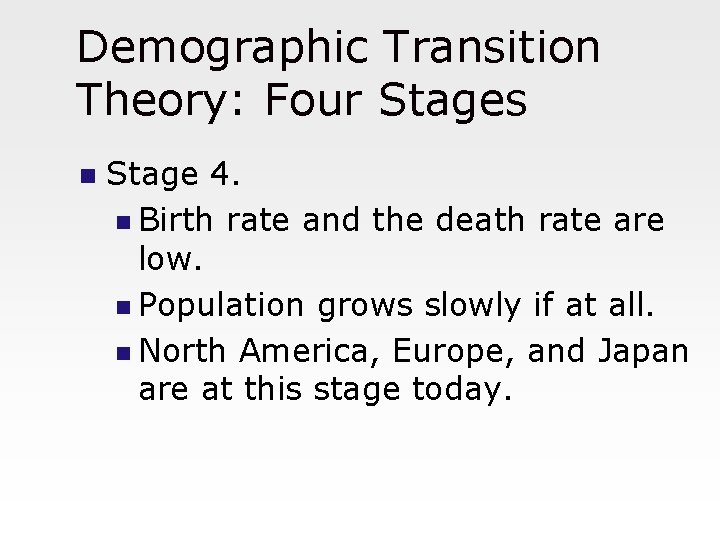
Demographic Transition Theory: Four Stages n Stage 4. n Birth rate and the death rate are low. n Population grows slowly if at all. n North America, Europe, and Japan are at this stage today.
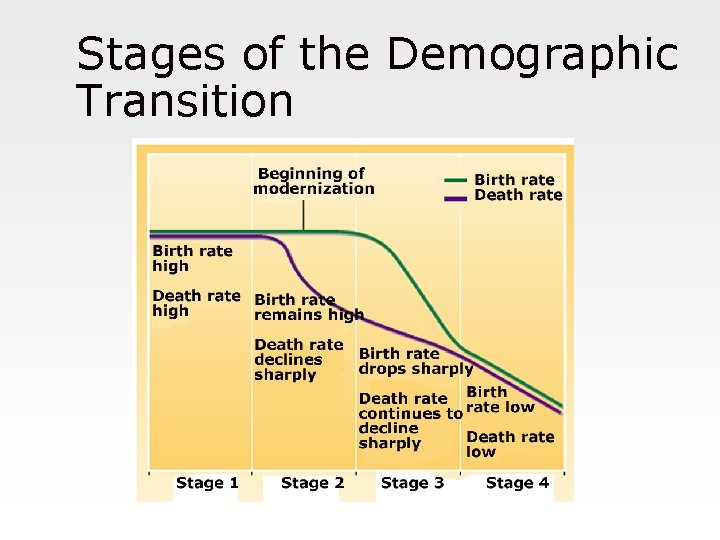
Stages of the Demographic Transition
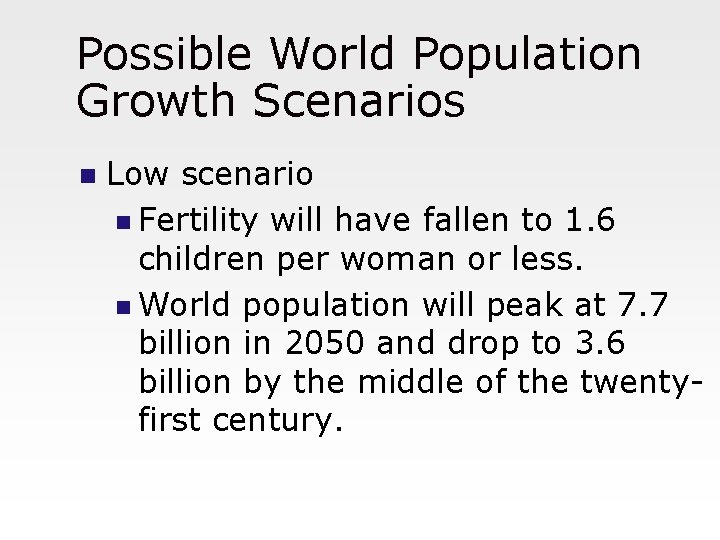
Possible World Population Growth Scenarios n Low scenario n Fertility will have fallen to 1. 6 children per woman or less. n World population will peak at 7. 7 billion in 2050 and drop to 3. 6 billion by the middle of the twentyfirst century.
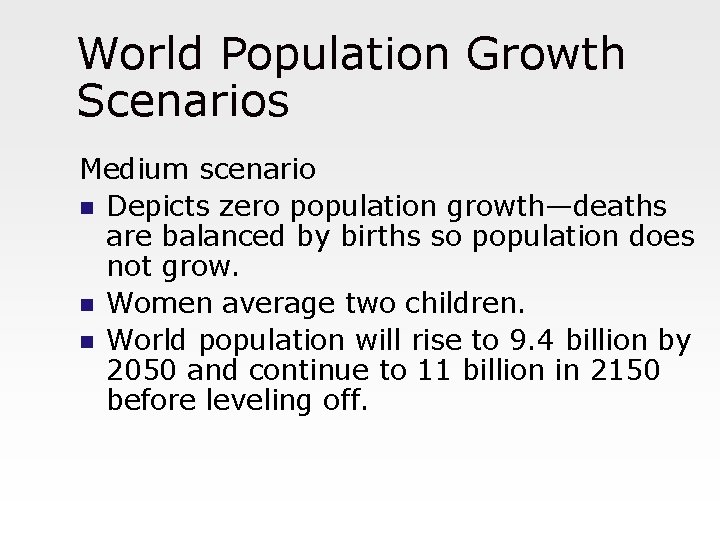
World Population Growth Scenarios Medium scenario n Depicts zero population growth—deaths are balanced by births so population does not grow. n Women average two children. n World population will rise to 9. 4 billion by 2050 and continue to 11 billion in 2150 before leveling off.
Possible World Population Growth Scenarios n High Scenario n Women worldwide will average about 2. 5 children. n World population will rise to 11. 2 billion in 2050 and continue to grow indefinitely, exceeding 27 billion 100 years later.
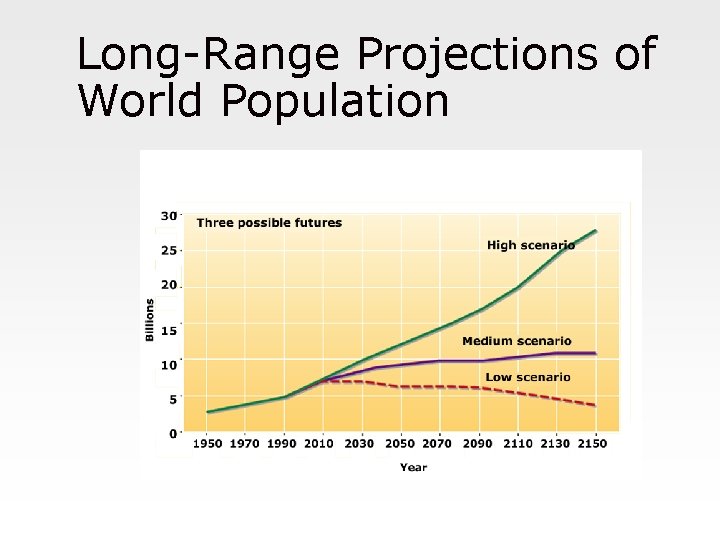
Long-Range Projections of World Population
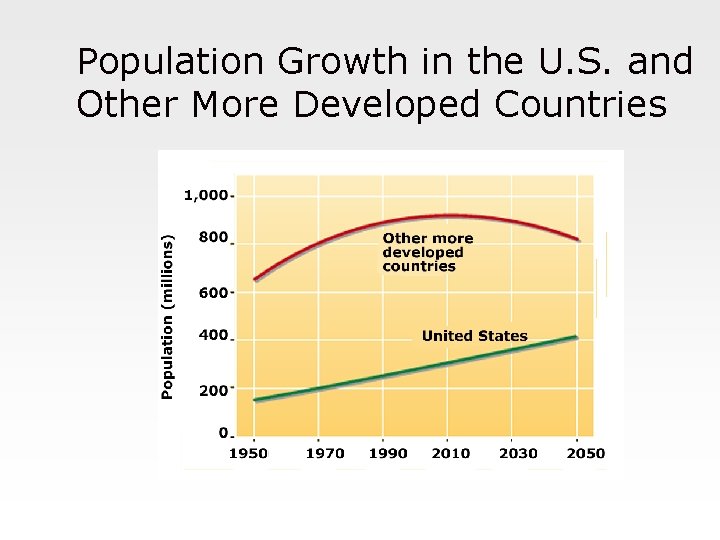
Population Growth in the U. S. and Other More Developed Countries
Population Growth in the United States n n n Population of the U. S. has grown from less than 4 million in the first census in 1790, to 288 million in 2002. Population is expected to continue growing despite the average American family at replacement level of 2. 1 children per family. If the current predictions are accurate, the U. S. population will reach 420 million by 2050.
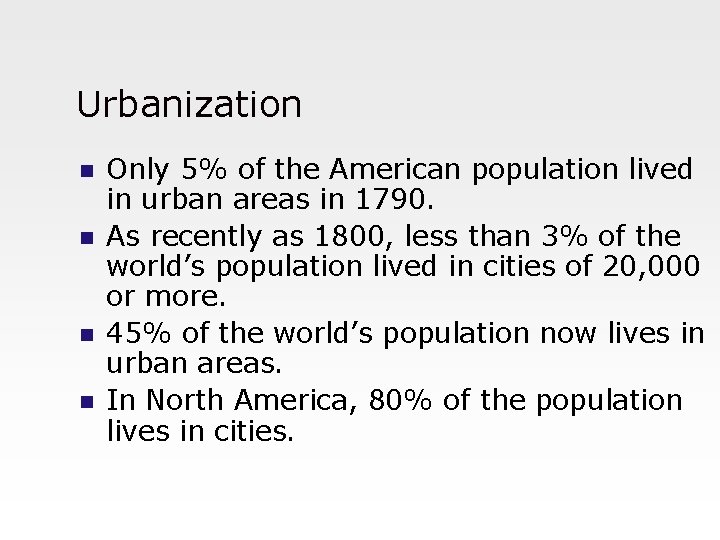
Urbanization n n Only 5% of the American population lived in urban areas in 1790. As recently as 1800, less than 3% of the world’s population lived in cities of 20, 000 or more. 45% of the world’s population now lives in urban areas. In North America, 80% of the population lives in cities.
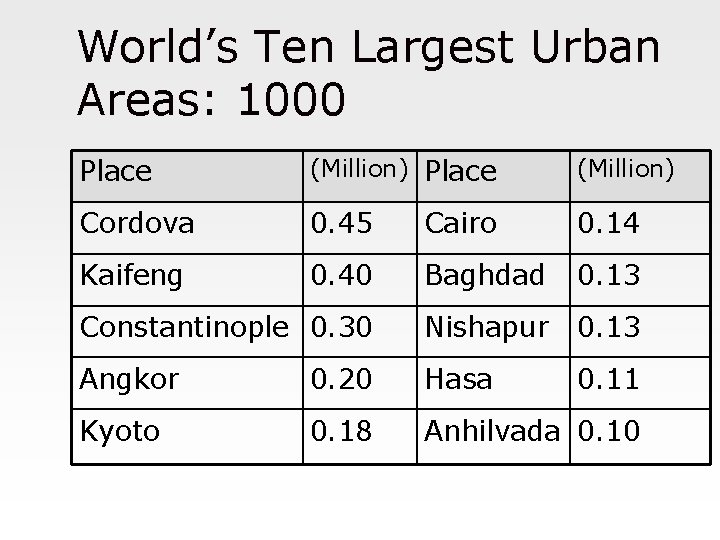
World’s Ten Largest Urban Areas: 1000 Place (Million) Cordova 0. 45 Cairo 0. 14 Kaifeng 0. 40 Baghdad 0. 13 Constantinople 0. 30 Nishapur 0. 13 Angkor 0. 20 Hasa 0. 11 Kyoto 0. 18 Anhilvada 0. 10
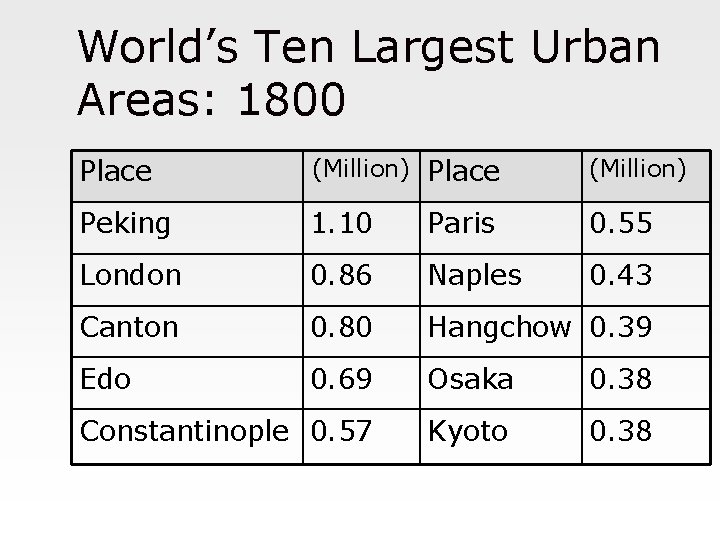
World’s Ten Largest Urban Areas: 1800 Place (Million) Peking 1. 10 Paris 0. 55 London 0. 86 Naples 0. 43 Canton 0. 80 Hangchow 0. 39 Edo 0. 69 Osaka 0. 38 Constantinople 0. 57 Kyoto 0. 38
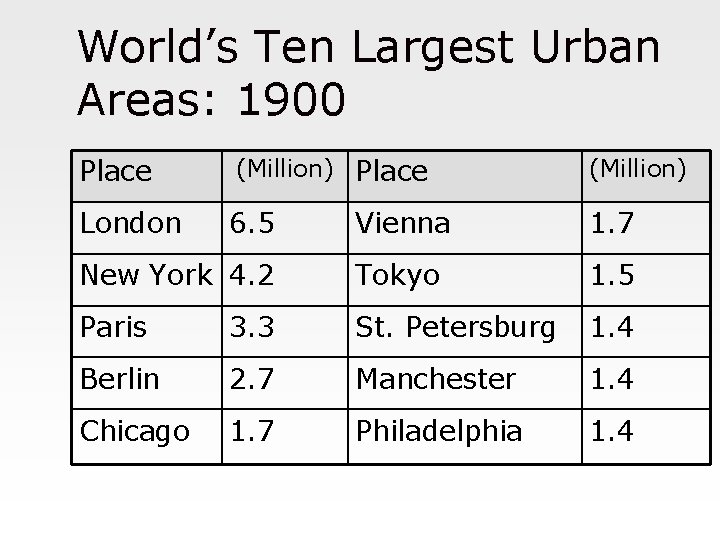
World’s Ten Largest Urban Areas: 1900 Place (Million) London 6. 5 Vienna 1. 7 New York 4. 2 Tokyo 1. 5 Paris 3. 3 St. Petersburg 1. 4 Berlin 2. 7 Manchester 1. 4 Chicago 1. 7 Philadelphia 1. 4
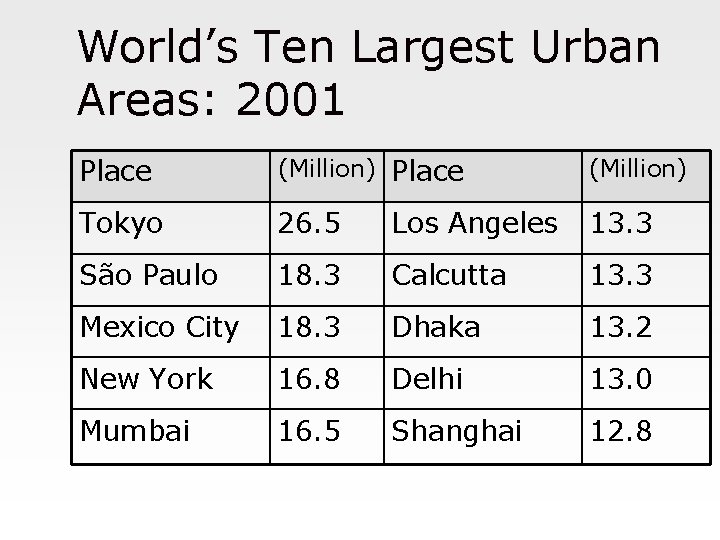
World’s Ten Largest Urban Areas: 2001 Place (Million) Tokyo 26. 5 Los Angeles 13. 3 São Paulo 18. 3 Calcutta 13. 3 Mexico City 18. 3 Dhaka 13. 2 New York 16. 8 Delhi 13. 0 Mumbai 16. 5 Shanghai 12. 8
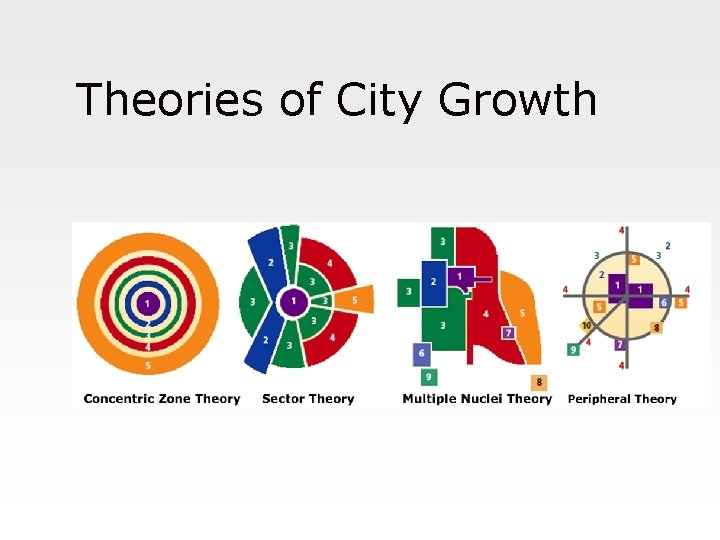
Theories of City Growth
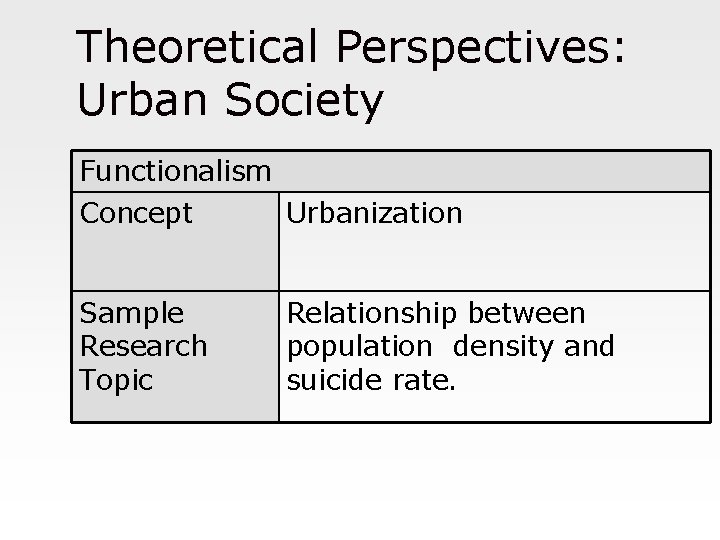
Theoretical Perspectives: Urban Society Functionalism Concept Urbanization Sample Research Topic Relationship between population density and suicide rate.
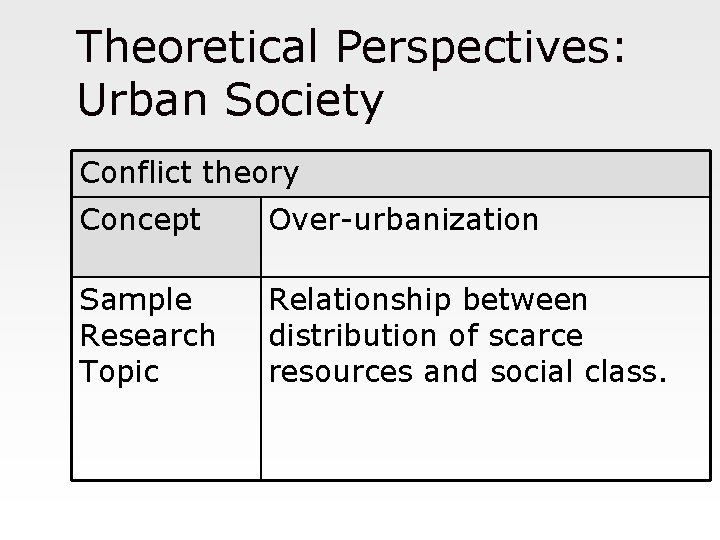
Theoretical Perspectives: Urban Society Conflict theory Concept Over-urbanization Sample Research Topic Relationship between distribution of scarce resources and social class.
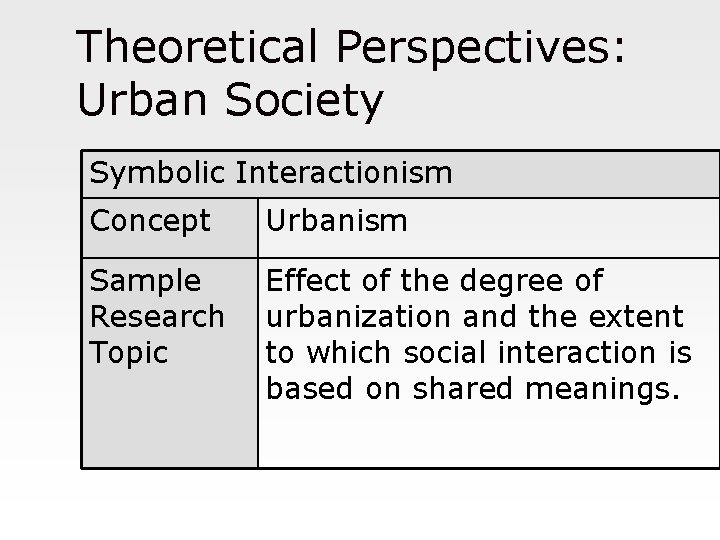
Theoretical Perspectives: Urban Society Symbolic Interactionism Concept Urbanism Sample Research Topic Effect of the degree of urbanization and the extent to which social interaction is based on shared meanings.
- Slides: 30