
Chapter 17 Nucleic Acids and Protein Synthesis 17

- Slides: 18
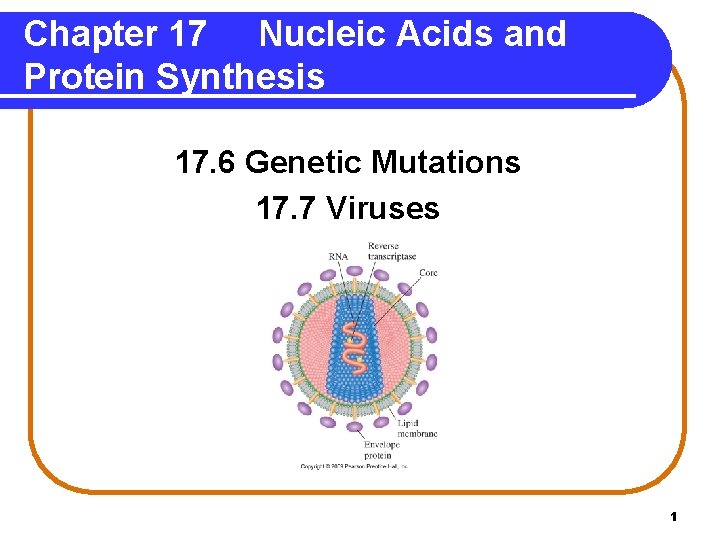
Chapter 17 Nucleic Acids and Protein Synthesis 17. 6 Genetic Mutations 17. 7 Viruses 1
Mutations A mutation can • alter the nucleotide sequence in DNA. • result from mutagens such as radiation and chemicals. • produce one or more incorrect codons in m. RNA. • produce a protein containing one or more incorrect amino acids. • produce defective proteins and enzymes. • cause genetic diseases. 2
Examples of Genetic Diseases Galactosemia Cystic fibrosis Down syndrome Muscular dystrophy Huntington’s disease Sickle-cell anemia Hemophilia Tay-Sachs disease 3
Normal DNA Sequence The normal DNA sequence produces a m. RNA that provides instructions for the correct series of amino acids in a protein. Correct order Copyright © 2009 by Pearson Education, Inc. 4
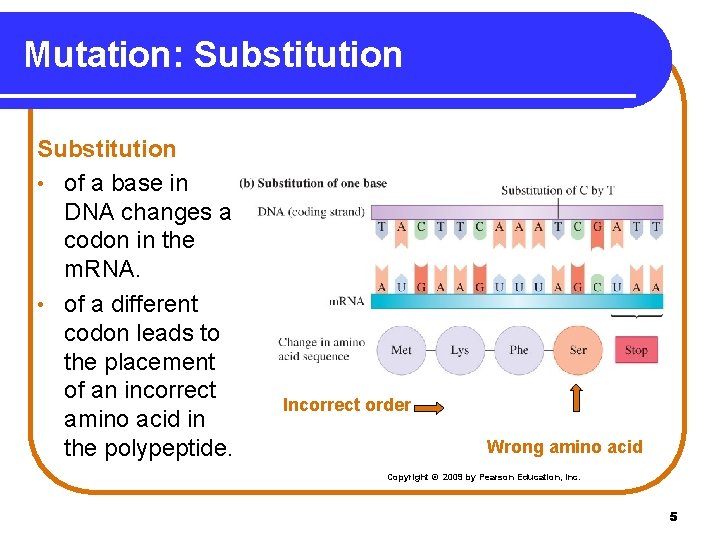
Mutation: Substitution • of a base in DNA changes a codon in the m. RNA. • of a different codon leads to the placement of an incorrect amino acid in the polypeptide. Incorrect order Wrong amino acid Copyright © 2009 by Pearson Education, Inc. 5
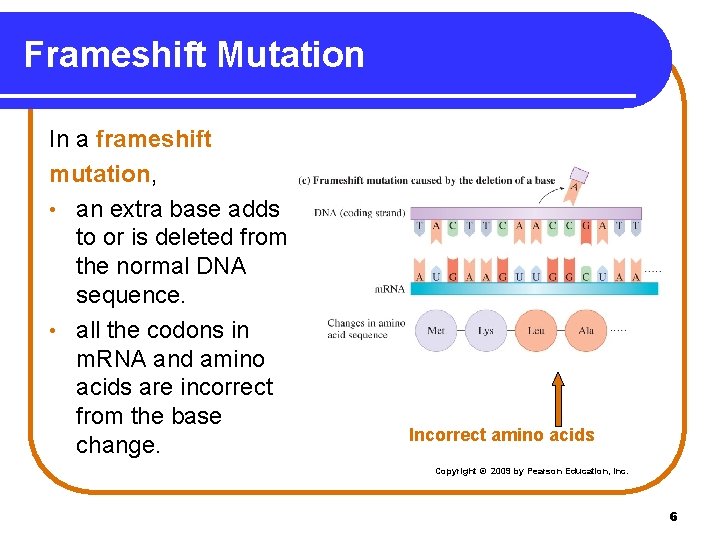
Frameshift Mutation In a frameshift mutation, • an extra base adds to or is deleted from the normal DNA sequence. • all the codons in m. RNA and amino acids are incorrect from the base change. Incorrect amino acids Copyright © 2009 by Pearson Education, Inc. 6
Learning Check Identify each type of mutations as 1) substitution or 2) frameshift. A. Cytidine (C) enters the DNA sequence. B. One adenosine is removed from the DNA sequence. C. A base sequence of TGA in DNA changes to TAA. 7
Solution Identify each type of mutations as 1) substitution or 2) frame shift. A. 2 Cytosine (C) enters the DNA sequence. B. 2 One adenosine is removed from the DNA sequence. C. 1 A base sequence of TGA in DNA changes to TAA. 8
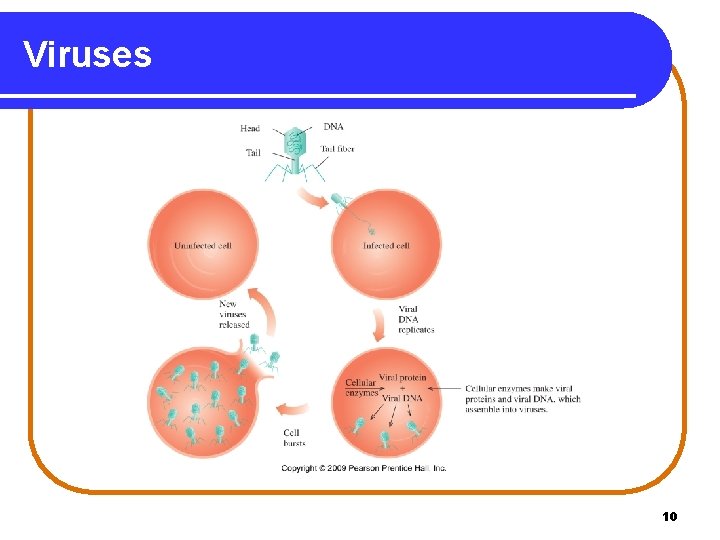
Viruses • are small particles of DNA or RNA that require a host cell to replicate. • cause a viral infection when the DNA or RNA enters a host cell. • are synthesized in the host cell from the viral RNA produced by viral DNA. 9
Viruses 10
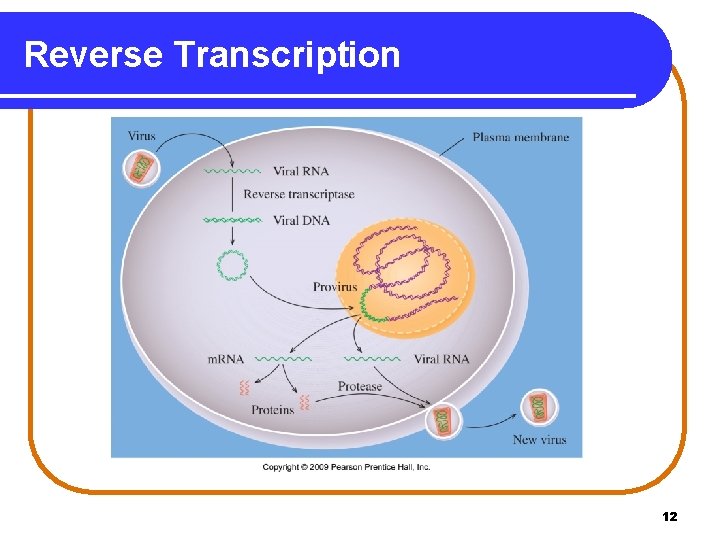
Reverse Transcription In reverse transcription, • a retrovirus, which contains viral RNA, but no viral DNA, enters a cell. • the viral RNA uses reverse transcriptase to produce a viral DNA strand. • the viral DNA strand forms a complementary DNA strand. • the new DNA uses the nucleotides and enzymes in the host cell to synthesize new virus particles. 11
Reverse Transcription 12
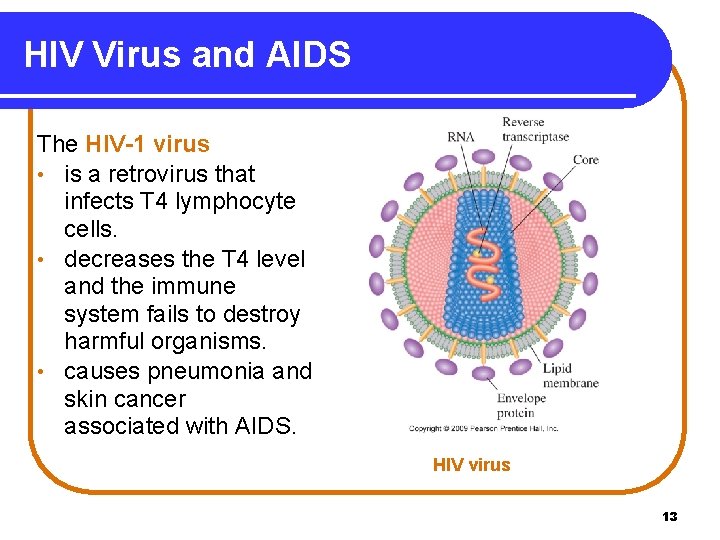
HIV Virus and AIDS The HIV-1 virus • is a retrovirus that infects T 4 lymphocyte cells. • decreases the T 4 level and the immune system fails to destroy harmful organisms. • causes pneumonia and skin cancer associated with AIDS. HIV virus 13
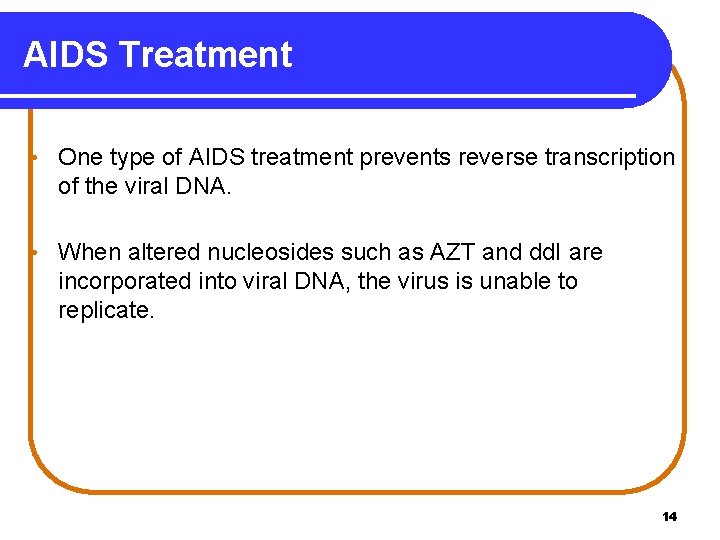
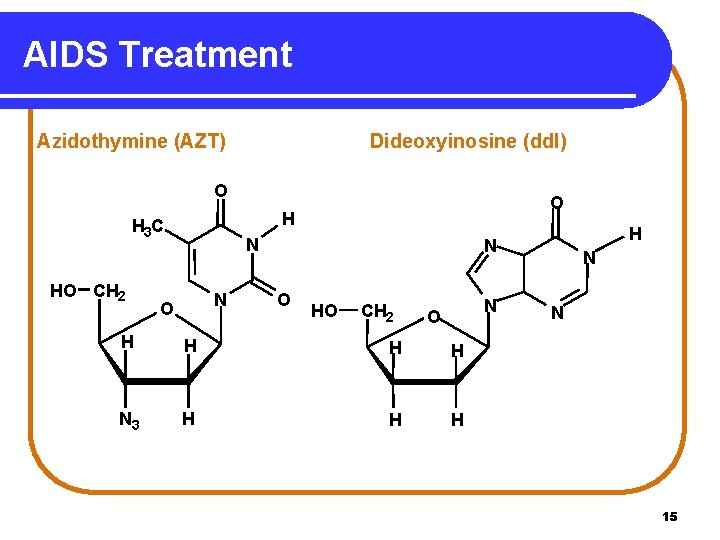
AIDS Treatment • One type of AIDS treatment prevents reverse transcription of the viral DNA. • When altered nucleosides such as AZT and dd. I are incorporated into viral DNA, the virus is unable to replicate. 14
AIDS Treatment Azidothymine (AZT) Dideoxyinosine (dd. I) O H H 3 C HO CH 2 O N N O HO CH 2 N O H H N 3 H H H N N 15
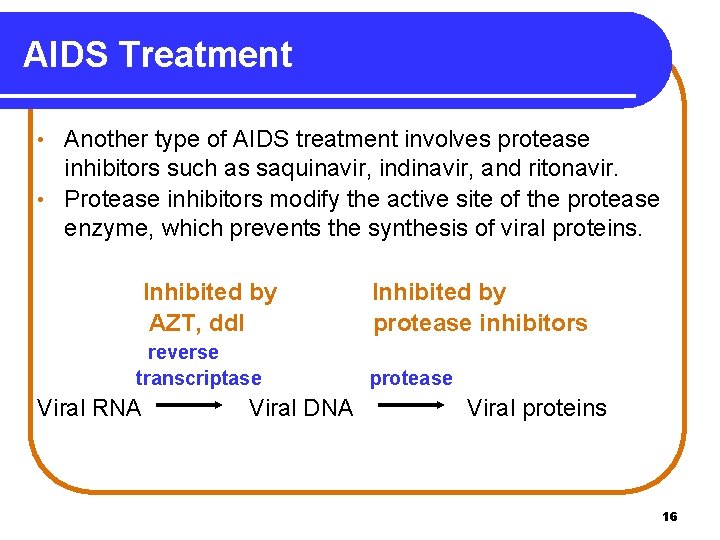
AIDS Treatment Another type of AIDS treatment involves protease inhibitors such as saquinavir, indinavir, and ritonavir. • Protease inhibitors modify the active site of the protease enzyme, which prevents the synthesis of viral proteins. • Inhibited by AZT, dd. I reverse transcriptase Viral RNA Viral DNA Inhibited by protease inhibitors protease Viral proteins 16
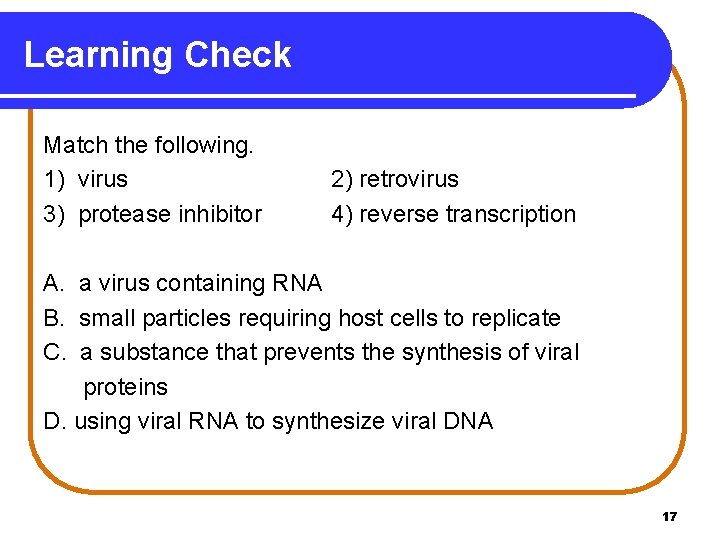
Learning Check Match the following. 1) virus 3) protease inhibitor 2) retrovirus 4) reverse transcription A. a virus containing RNA B. small particles requiring host cells to replicate C. a substance that prevents the synthesis of viral proteins D. using viral RNA to synthesize viral DNA 17
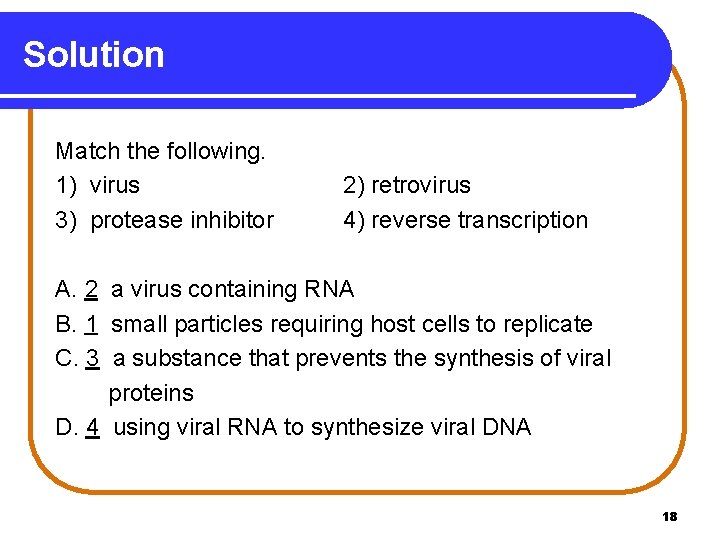
Solution Match the following. 1) virus 3) protease inhibitor 2) retrovirus 4) reverse transcription A. 2 a virus containing RNA B. 1 small particles requiring host cells to replicate C. 3 a substance that prevents the synthesis of viral proteins D. 4 using viral RNA to synthesize viral DNA 18