
Chapter 17 From Gene to Protein AP Biology
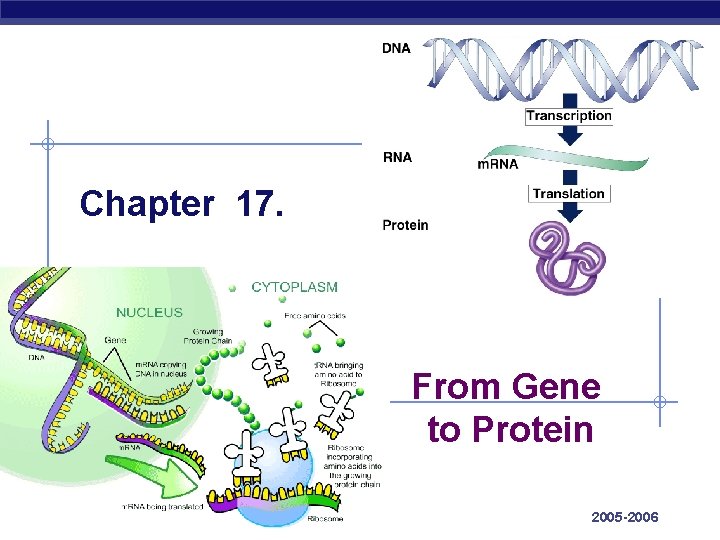
Chapter 17. From Gene to Protein AP Biology 2005 -2006

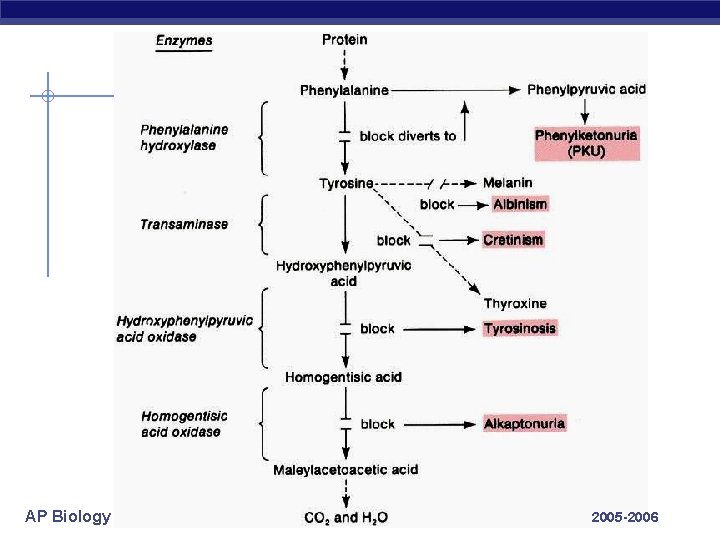
Metabolism teaches us about genes Metabolic defects u studying metabolic diseases suggested that genes specified proteins alkaptonuria (black urine from alkapton) PKU (phenylketonuria) u A AP Biology Genes create phenotype each disease is caused by non-functional enzyme B C D E 2005 -2006
AP Biology 2005 -2006
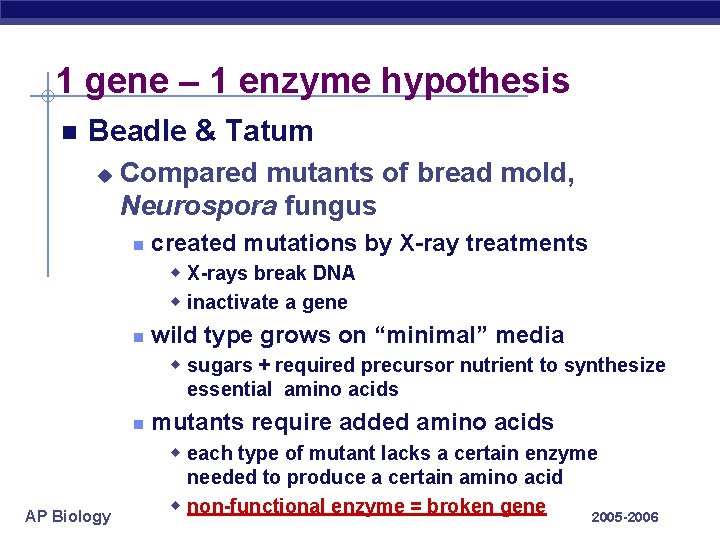
1 gene – 1 enzyme hypothesis Beadle & Tatum u Compared mutants of bread mold, Neurospora fungus created mutations by X-ray treatments w X-rays break DNA w inactivate a gene wild type grows on “minimal” media w sugars + required precursor nutrient to synthesize essential amino acids mutants require added amino acids w each type of mutant lacks a certain enzyme AP Biology needed to produce a certain amino acid w non-functional enzyme = broken gene 2005 -2006
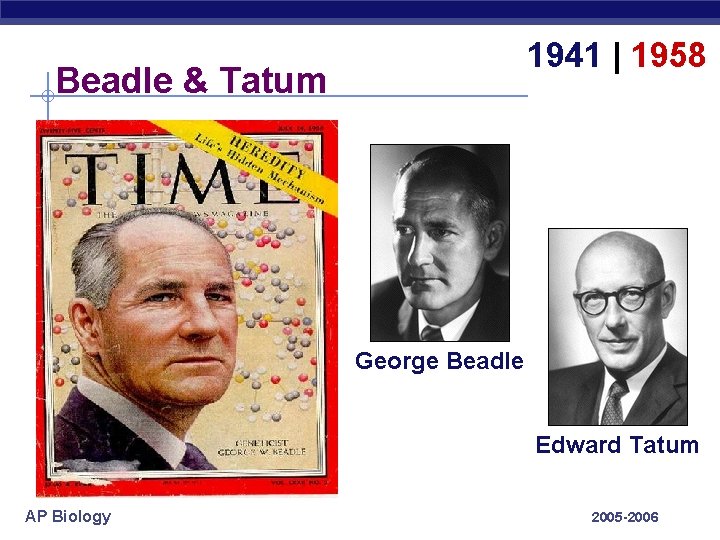
1941 | 1958 Beadle & Tatum George Beadle Edward Tatum AP Biology 2005 -2006
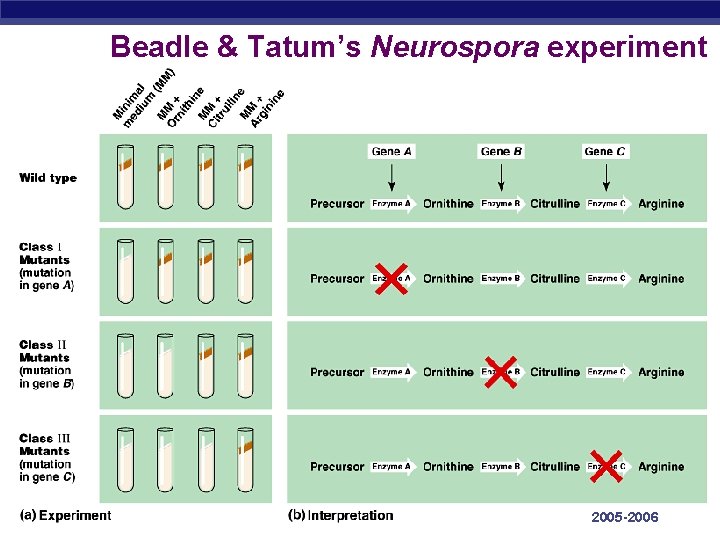
Beadle & Tatum’s Neurospora experiment AP Biology 2005 -2006
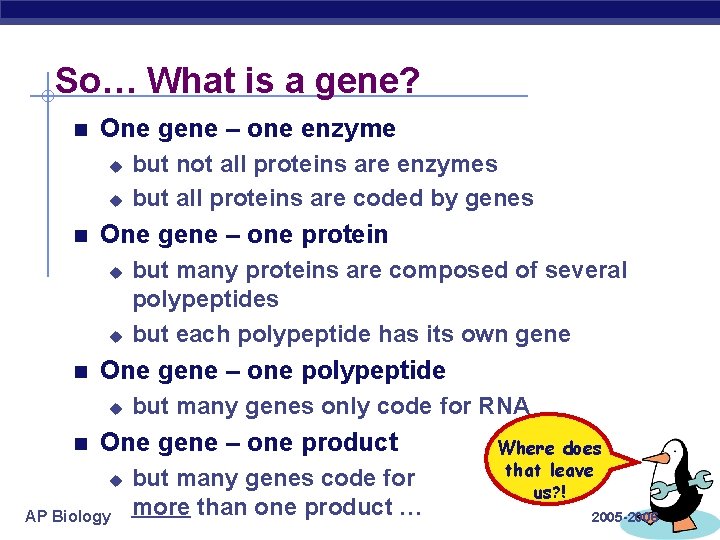
So… What is a gene? One gene – one enzyme u u One gene – one protein u u but many proteins are composed of several polypeptides but each polypeptide has its own gene One gene – one polypeptide u but not all proteins are enzymes but all proteins are coded by genes but many genes only code for RNA One gene – one product u AP Biology but many genes code for more than one product … Where does that leave us? ! 2005 -2006
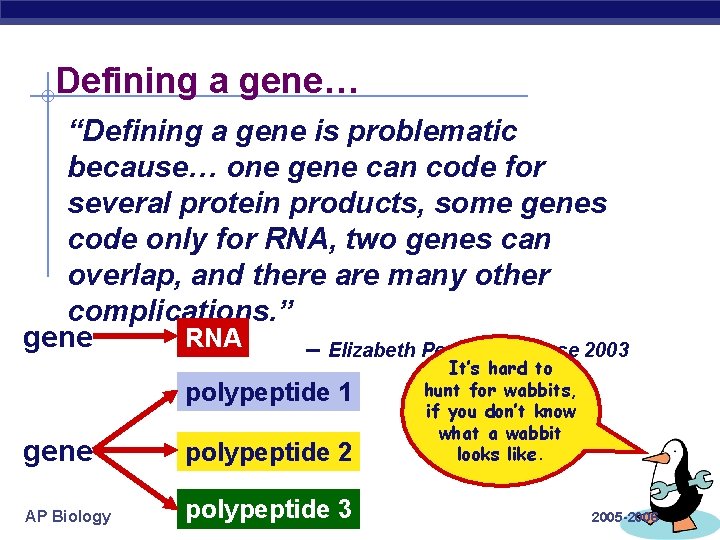
Defining a gene… “Defining a gene is problematic because… one gene can code for several protein products, some genes code only for RNA, two genes can overlap, and there are many other complications. ” RNA gene – Elizabeth Pennisi, Science 2003 polypeptide 1 gene polypeptide 2 AP Biology polypeptide 3 It’s hard to hunt for wabbits, if you don’t know what a wabbit looks like. 2005 -2006
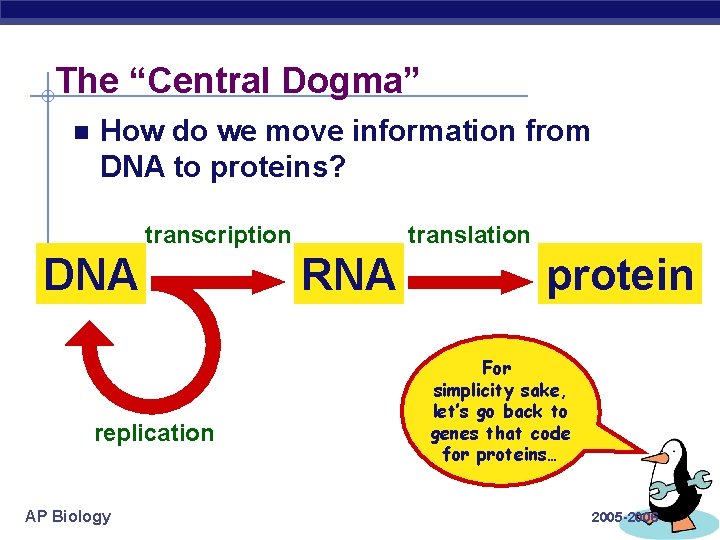
The “Central Dogma” How do we move information from DNA to proteins? transcription DNA replication AP Biology translation RNA protein For simplicity sake, let’s go back to genes that code for proteins… 2005 -2006
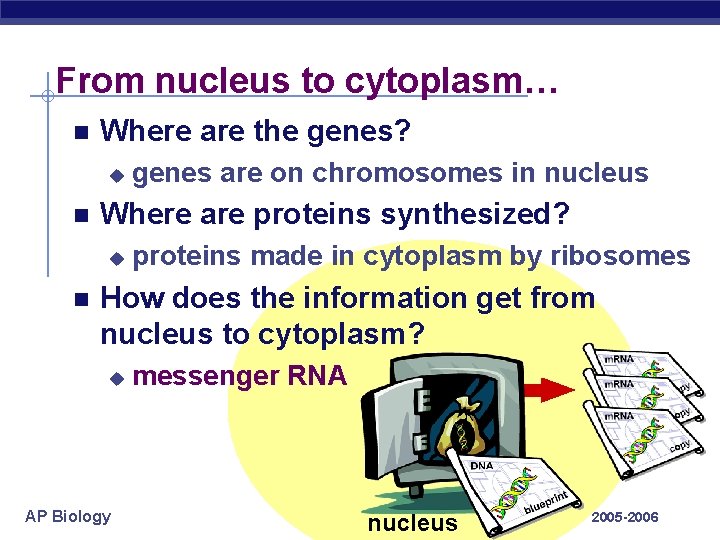
From nucleus to cytoplasm… Where are the genes? u Where are proteins synthesized? u genes are on chromosomes in nucleus proteins made in cytoplasm by ribosomes How does the information get from nucleus to cytoplasm? u AP Biology messenger RNA nucleus 2005 -2006
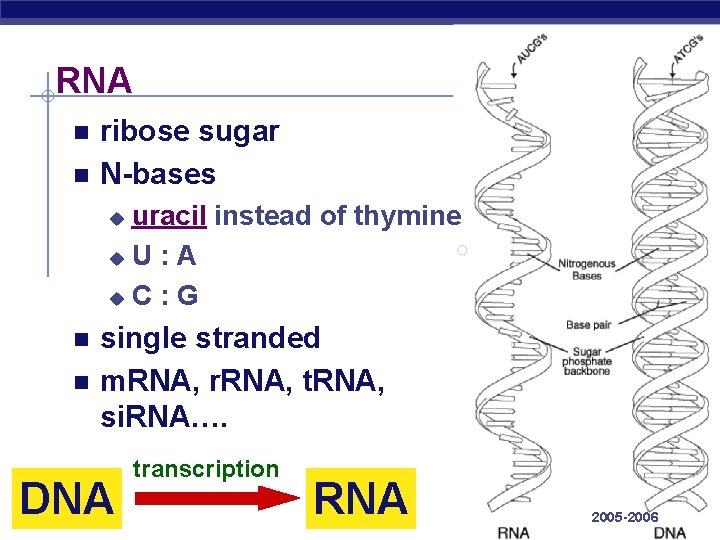
RNA ribose sugar N-bases uracil instead of thymine u. U : A u. C : G u single stranded m. RNA, r. RNA, t. RNA, si. RNA…. DNA AP Biology transcription RNA 2005 -2006

Transcription Transcribed DNA strand = template strand u Synthesis of complementary RNA strand u untranscribed DNA strand = coding strand transcription bubble Enzyme u AP Biology RNA polymerase 2005 -2006
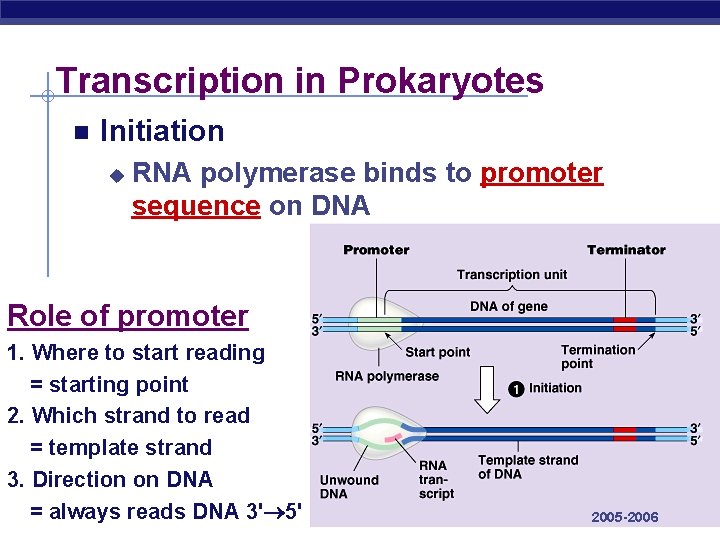
Transcription in Prokaryotes Initiation u RNA polymerase binds to promoter sequence on DNA Role of promoter 1. Where to start reading = starting point 2. Which strand to read = template strand 3. Direction on DNA = always AP Biology reads DNA 3' 5' 2005 -2006
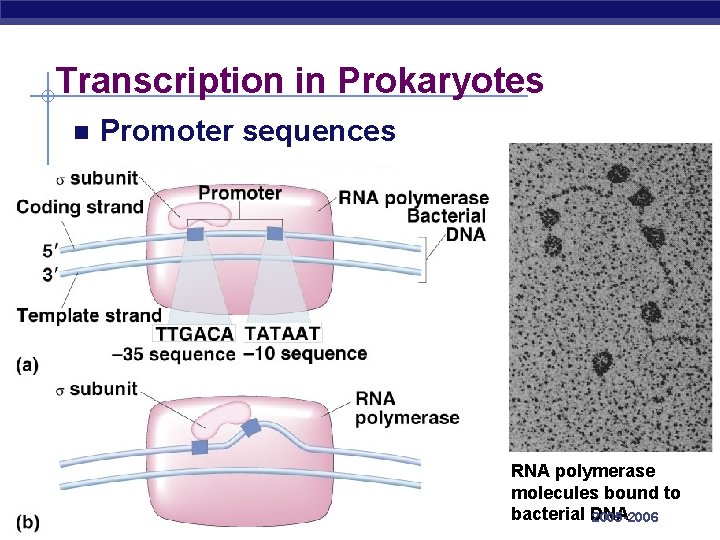
Transcription in Prokaryotes Promoter sequences AP Biology RNA polymerase molecules bound to bacterial DNA 2005 -2006
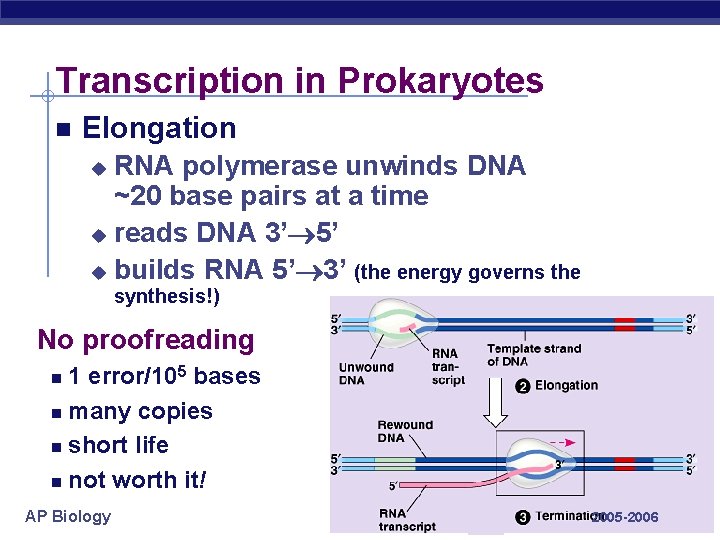
Transcription in Prokaryotes Elongation RNA polymerase unwinds DNA ~20 base pairs at a time u reads DNA 3’ 5’ u builds RNA 5’ 3’ (the energy governs the u synthesis!) No proofreading 1 error/105 bases many copies short life not worth it! AP Biology 2005 -2006
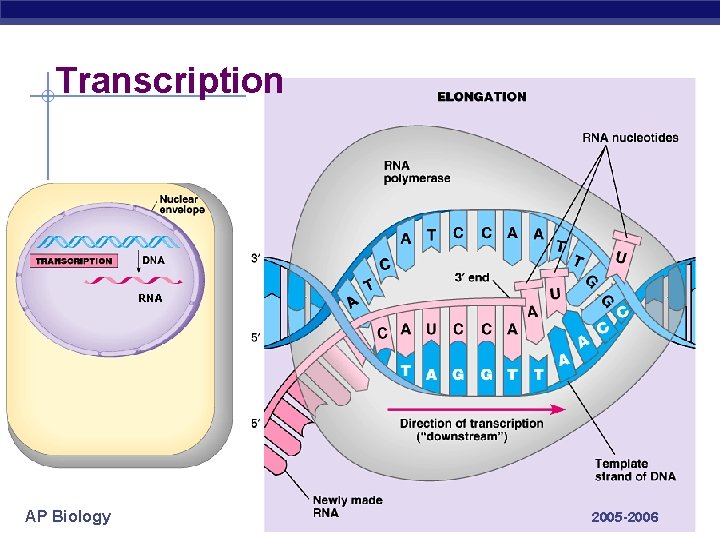
Transcription RNA AP Biology 2005 -2006
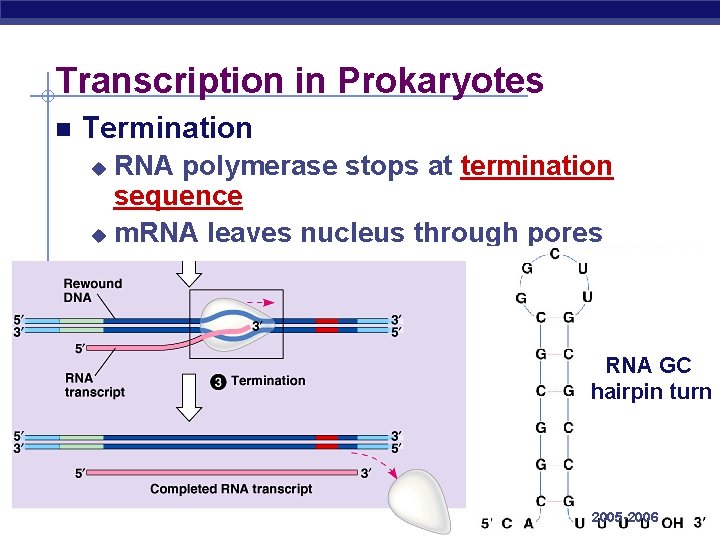
Transcription in Prokaryotes Termination RNA polymerase stops at termination sequence u m. RNA leaves nucleus through pores u RNA GC hairpin turn AP Biology 2005 -2006
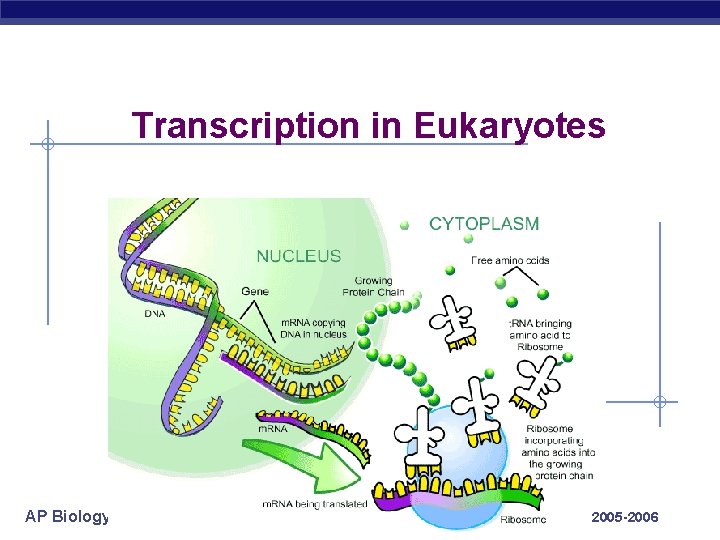
Transcription in Eukaryotes AP Biology 2005 -2006
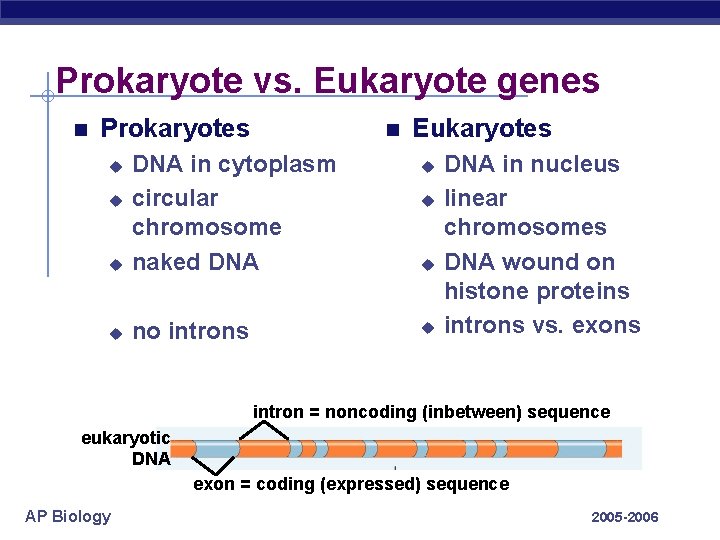
Prokaryote vs. Eukaryote genes Prokaryotes u DNA in cytoplasm circular chromosome naked DNA u no introns u u Eukaryotes u u DNA in nucleus linear chromosomes DNA wound on histone proteins introns vs. exons intron = noncoding (inbetween) sequence eukaryotic DNA exon = coding (expressed) sequence AP Biology 2005 -2006
Transcription in Eukaryotes 3 RNA polymerase enzymes u RNA polymerase I I u AP Biology transcribes genes into m. RNA polymerase I I I u only transcribes r. RNA genes each has a specific promoter sequence it recognizes 2005 -2006
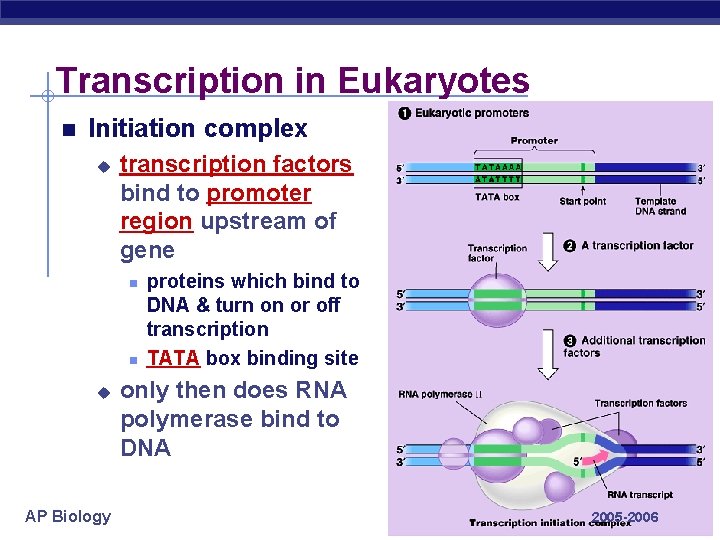
Transcription in Eukaryotes Initiation complex u transcription factors bind to promoter region upstream of gene u AP Biology proteins which bind to DNA & turn on or off transcription TATA box binding site only then does RNA polymerase bind to DNA 2005 -2006
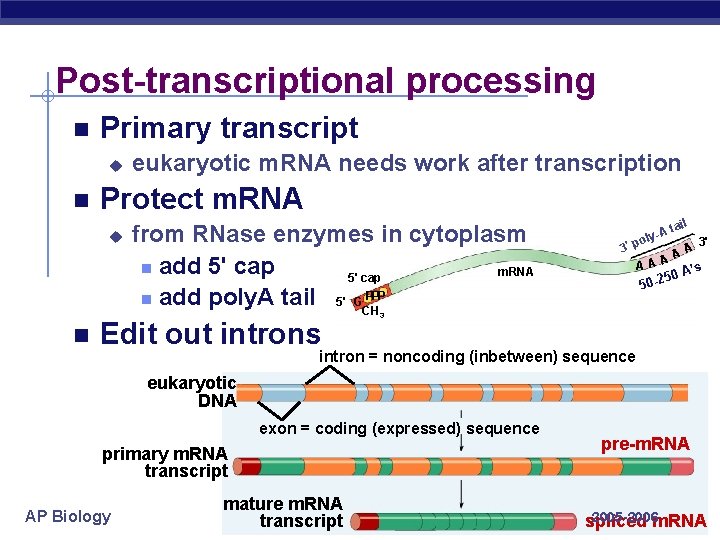
Post-transcriptional processing Primary transcript u Protect m. RNA u eukaryotic m. RNA needs work after transcription from RNase enzymes in cytoplasm add 5' cap m. RNA 5' cap add poly. A tail 5' G PPP CH Edit out introns t ly-A ail o 3' 3' p A A AAA A’s 50 50 -2 3 intron = noncoding (inbetween) sequence eukaryotic DNA exon = coding (expressed) sequence primary m. RNA transcript AP Biology mature m. RNA transcript pre-m. RNA 2005 -2006 spliced m. RNA
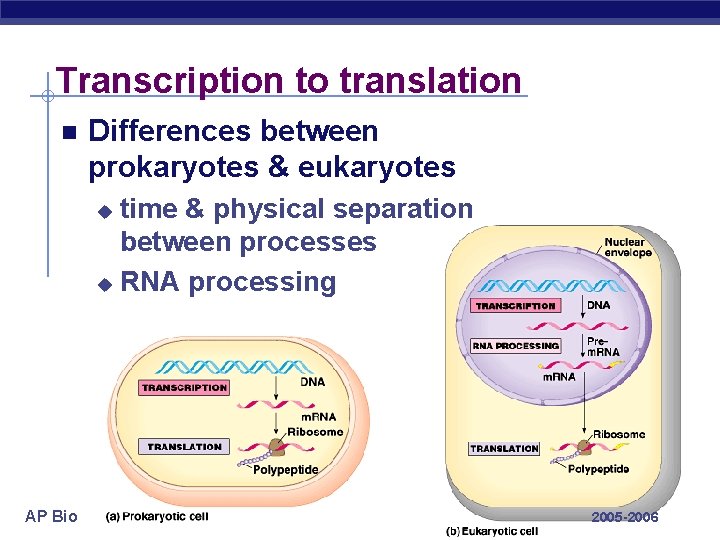
Transcription to translation Differences between prokaryotes & eukaryotes time & physical separation between processes u RNA processing u AP Biology 2005 -2006
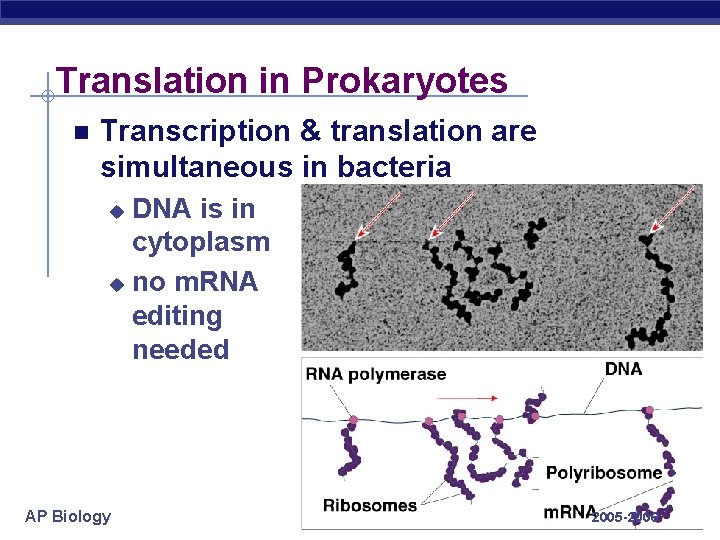
Translation in Prokaryotes Transcription & translation are simultaneous in bacteria DNA is in cytoplasm u no m. RNA editing needed u AP Biology 2005 -2006
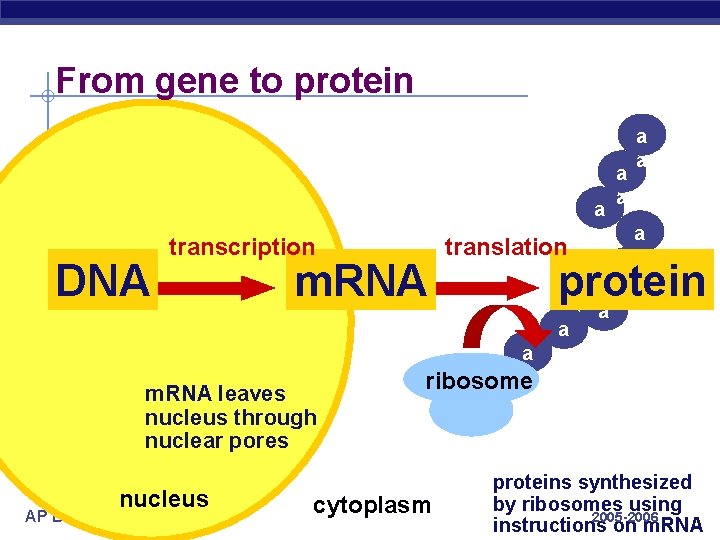
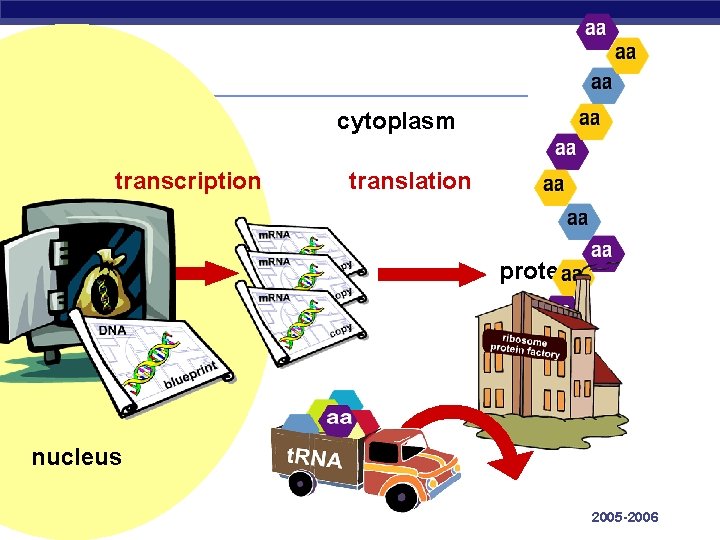
From gene to protein DNA transcription m. RNA leaves nucleus through nuclear pores AP Biology nucleus translation a a protein a ribosomea cytoplasm a a a proteins synthesized by ribosomes using 2005 -2006 instructions on m. RNA
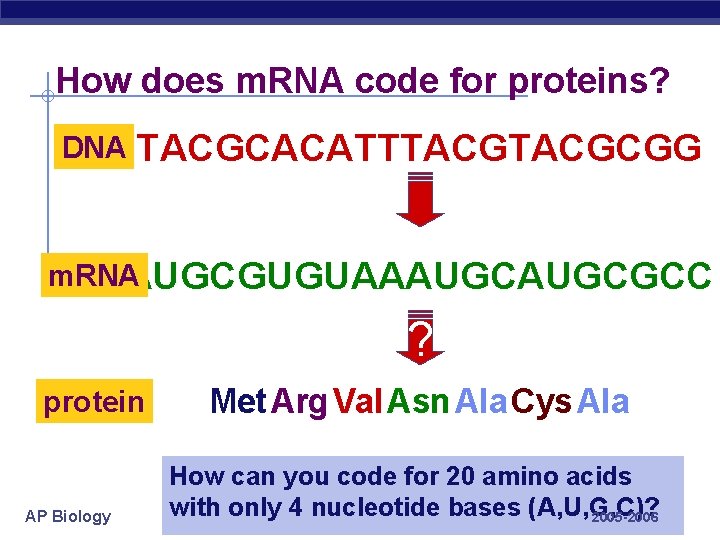
How does m. RNA code for proteins? DNA TACGCACATTTACGCGG m. RNA AUGCGUGUAAAUGCGCC ? protein AP Biology Met Arg Val Asn Ala Cys Ala How can you code for 20 amino acids with only 4 nucleotide bases (A, U, G, C)? 2005 -2006
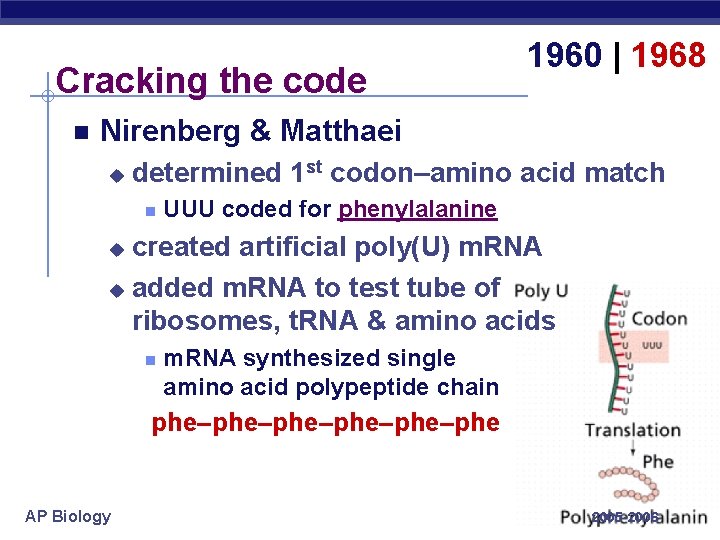
Cracking the code 1960 | 1968 Nirenberg & Matthaei u determined 1 st codon–amino acid match UUU coded for phenylalanine created artificial poly(U) m. RNA u added m. RNA to test tube of ribosomes, t. RNA & amino acids u m. RNA synthesized single amino acid polypeptide chain phe–phe–phe–phe AP Biology 2005 -2006
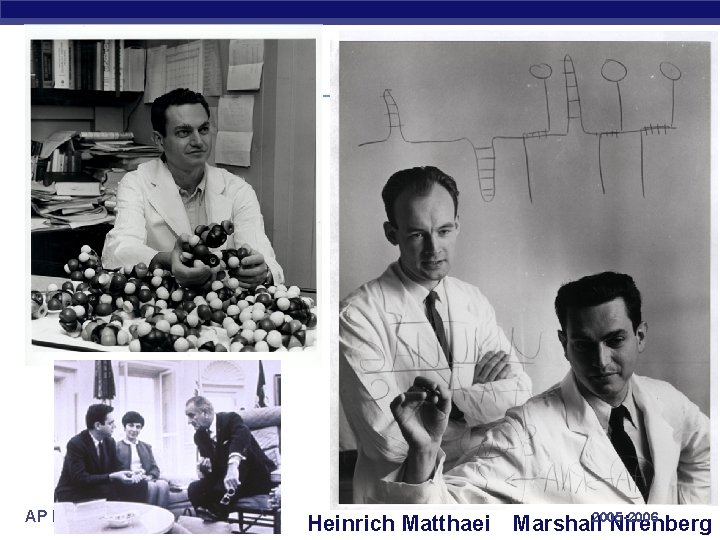
AP Biology Heinrich Matthaei Marshall 2005 -2006 Nirenberg
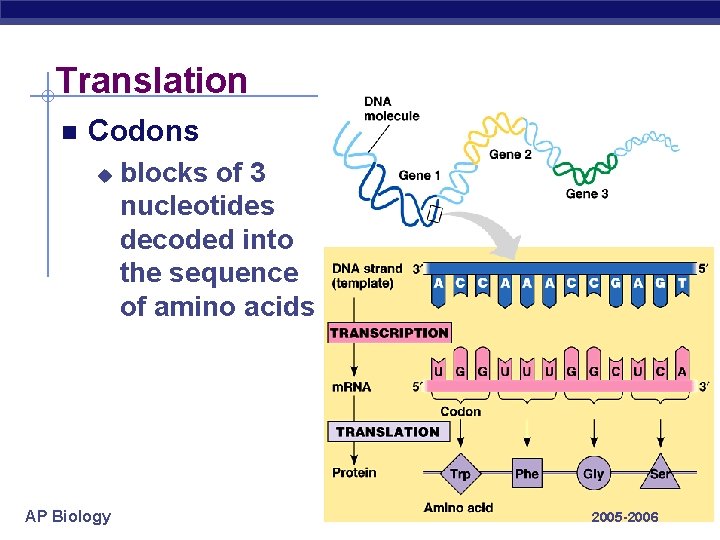
Translation Codons u AP Biology blocks of 3 nucleotides decoded into the sequence of amino acids 2005 -2006
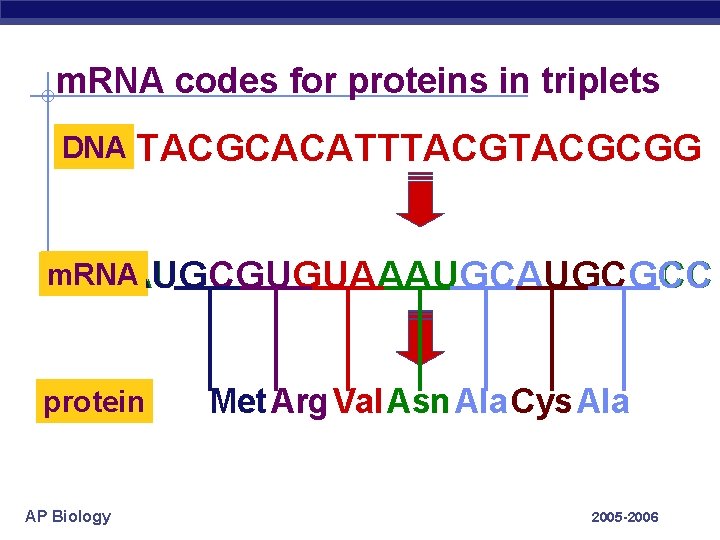
m. RNA codes for proteins in triplets DNA TACGCACATTTACGCGG m. RNA AUGCGUGUAAAUGCGCC ? protein AP Biology Met Arg Val Asn Ala Cys Ala 2005 -2006
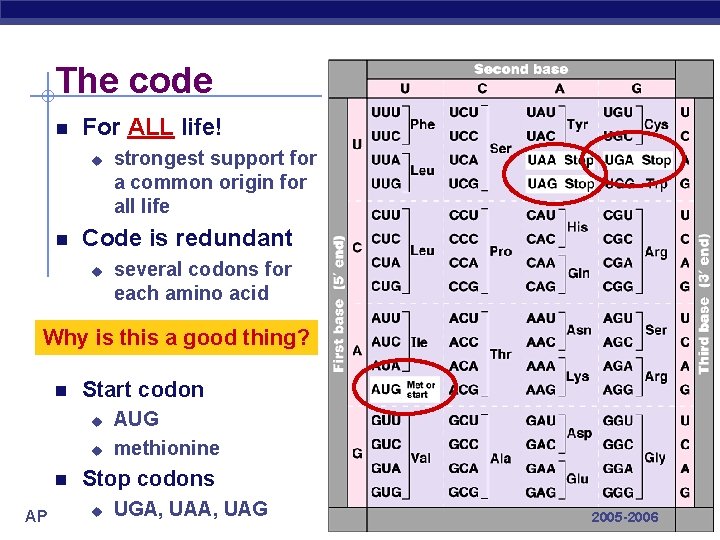
The code For ALL life! u strongest support for a common origin for all life Code is redundant u several codons for each amino acid Why is this a good thing? Start codon u u AUG methionine Stop codons u UGA, AP Biology UAA, UAG 2005 -2006
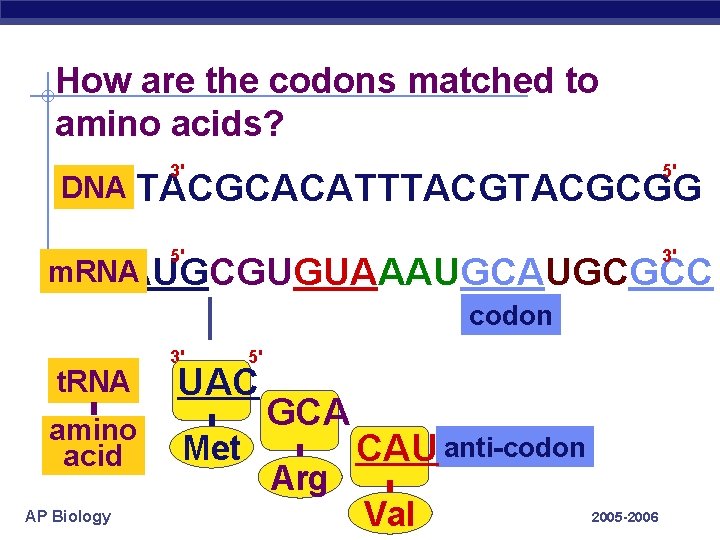
How are the codons matched to amino acids? DNA 3' 5' 5' 3' TACGCACATTTACGCGG m. RNA AUGCGUGUAAAUGCGCC codon t. RNA amino acid AP Biology 3' 5' UAC Met GCA Arg CAU anti-codon Val 2005 -2006
cytoplasm transcription translation protein nucleus AP Biology 2005 -2006

t. RNA structure “Clover leaf” structure anticodon on “clover leaf” end u amino acid attached on 3' end u AP Biology 2005 -2006
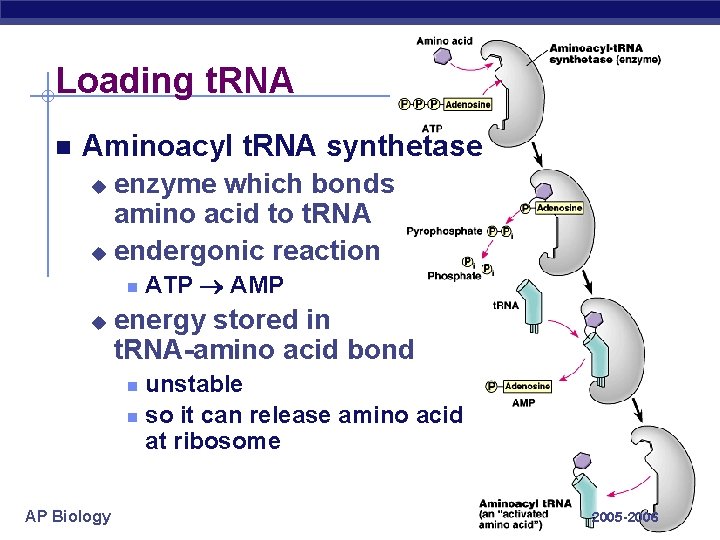
Loading t. RNA Aminoacyl t. RNA synthetase enzyme which bonds amino acid to t. RNA u endergonic reaction u u ATP AMP energy stored in t. RNA-amino acid bond unstable so it can release amino acid at ribosome AP Biology 2005 -2006
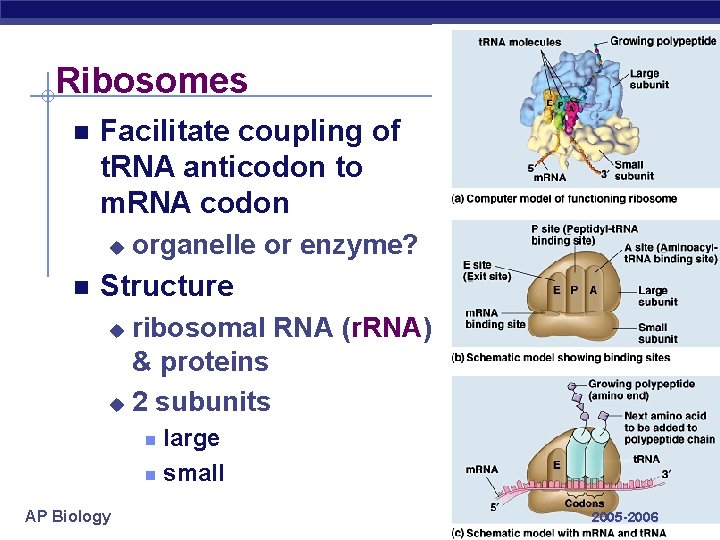
Ribosomes Facilitate coupling of t. RNA anticodon to m. RNA codon u organelle or enzyme? Structure ribosomal RNA (r. RNA) & proteins u 2 subunits u large small AP Biology 2005 -2006
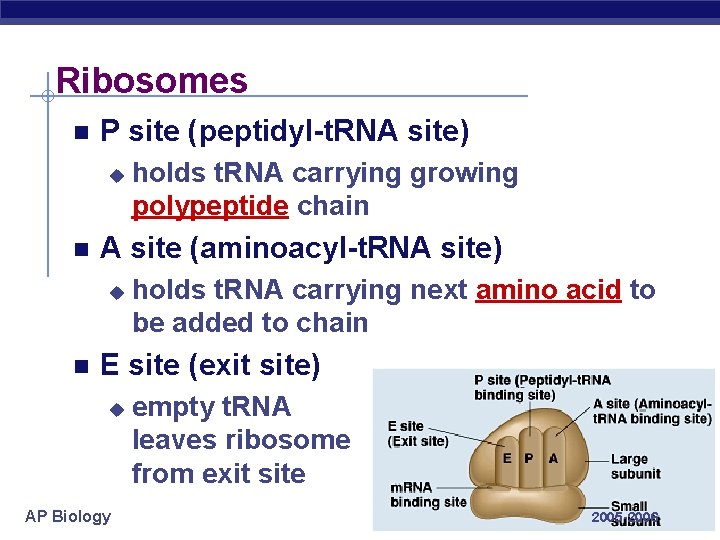
Ribosomes P site (peptidyl-t. RNA site) u A site (aminoacyl-t. RNA site) u holds t. RNA carrying growing polypeptide chain holds t. RNA carrying next amino acid to be added to chain E site (exit site) u AP Biology empty t. RNA leaves ribosome from exit site 2005 -2006

Building a polypeptide Initiation u brings together m. RNA, ribosome subunits, proteins & initiator t. RNA Elongation Termination AP Biology 2005 -2006
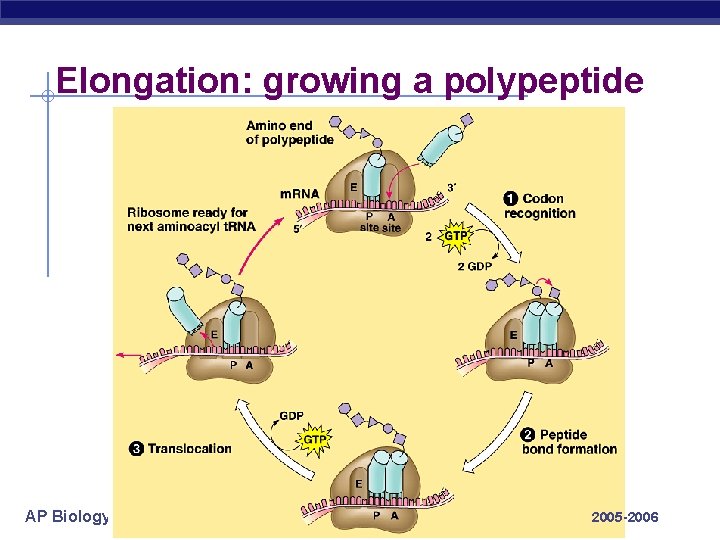
Elongation: growing a polypeptide AP Biology 2005 -2006

Termination: release polypeptide Release factor “release protein” bonds to A site u bonds water molecule to polypeptide chain u Now what happens to the polypeptide? AP Biology 2005 -2006
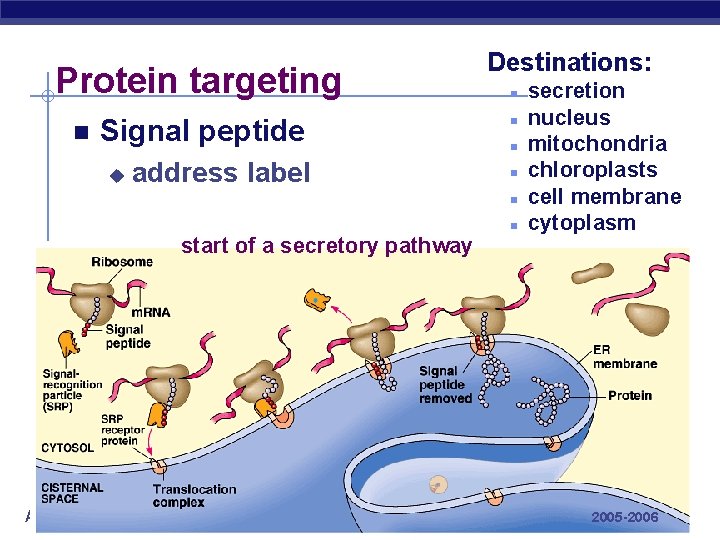
Protein targeting Signal peptide u address label Destinations: start of a secretory pathway AP Biology secretion nucleus mitochondria chloroplasts cell membrane cytoplasm 2005 -2006
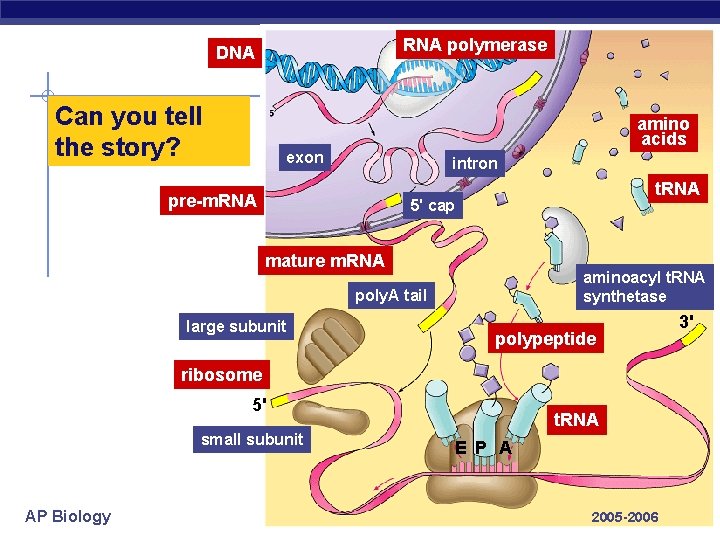
RNA polymerase DNA Can you tell the story? amino acids exon intron pre-m. RNA t. RNA 5' cap mature m. RNA aminoacyl t. RNA synthetase poly. A tail large subunit polypeptide ribosome 5' small subunit AP Biology t. RNA E P A 2005 -2006 3'
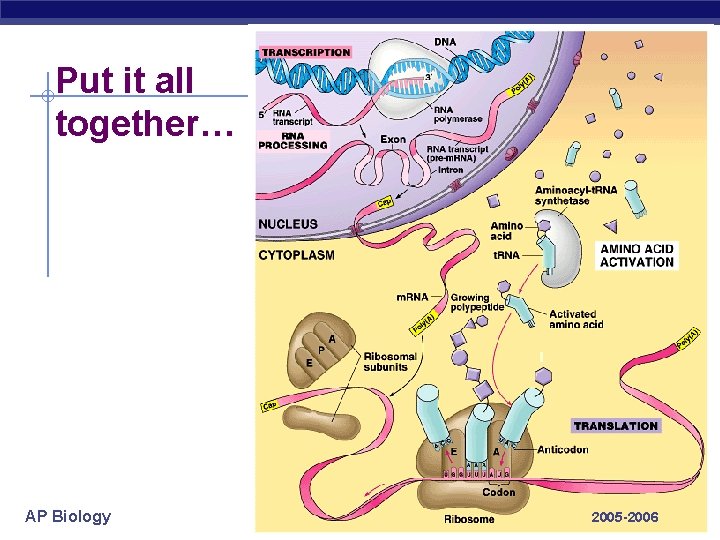
Put it all together… AP Biology 2005 -2006
Any Questions? ? AP Biology 2005 -2006
- Slides: 44