
CHAPTER 17 EVOLUTION OF POPULATIONS 17 2 Evolution
- Slides: 13
CHAPTER 17 EVOLUTION OF POPULATIONS 17. 2: Evolution as Genetic Change in Populations
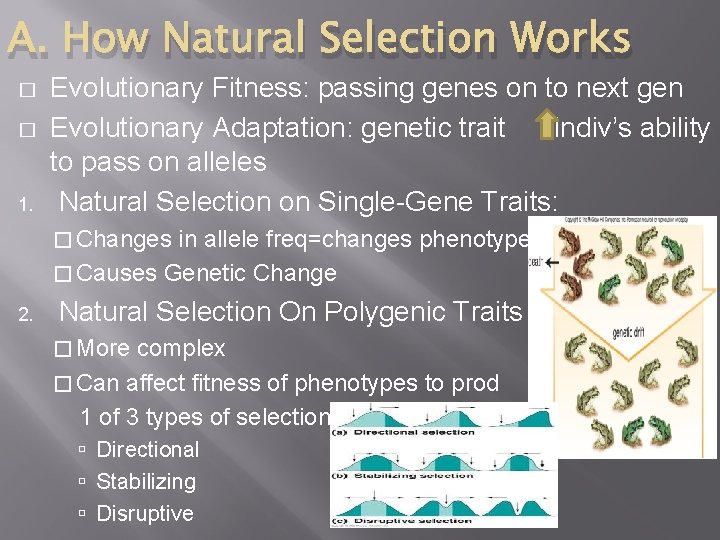
A. How Natural Selection Works � � 1. Evolutionary Fitness: passing genes on to next gen Evolutionary Adaptation: genetic trait indiv’s ability to pass on alleles Natural Selection on Single-Gene Traits: � Changes in allele freq=changes phenotype � Causes Genetic Change 2. Natural Selection On Polygenic Traits � More complex � Can affect fitness of phenotypes to prod 1 of 3 types of selection Directional Stabilizing Disruptive
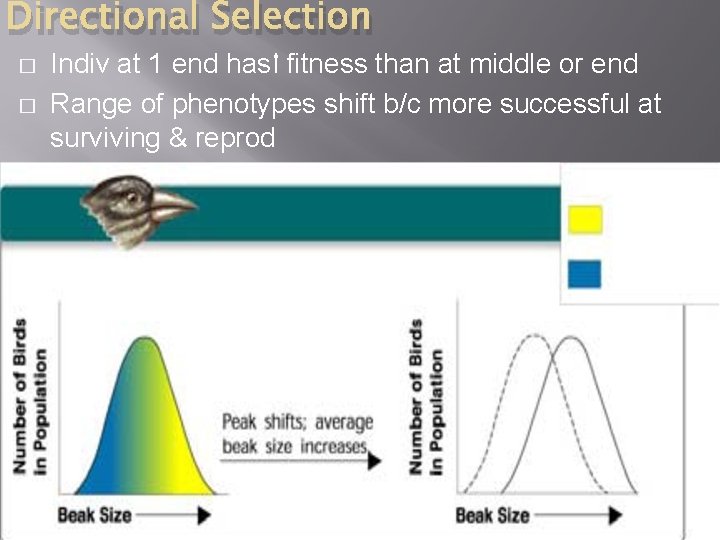
Directional Selection � � Indiv at 1 end has fitness than at middle or end Range of phenotypes shift b/c more successful at surviving & reprod
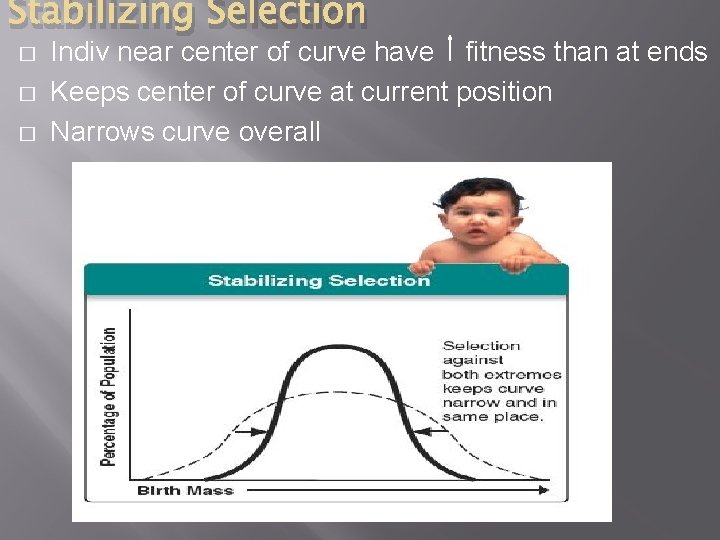
Stabilizing Selection � � � Indiv near center of curve have fitness than at ends Keeps center of curve at current position Narrows curve overall
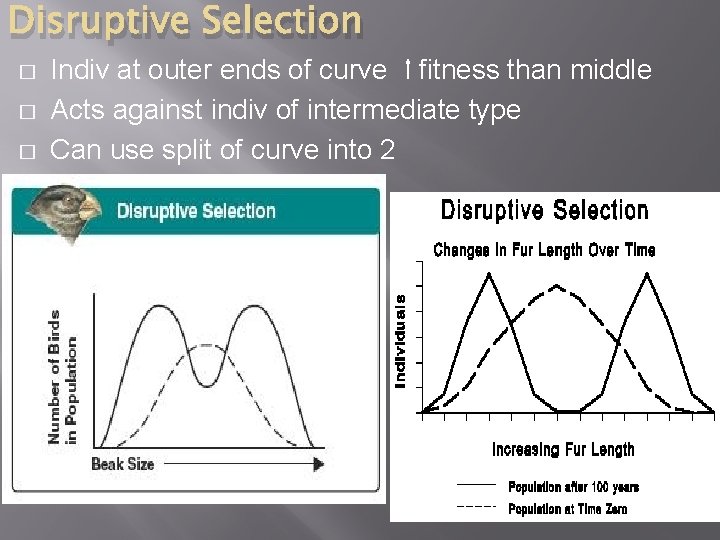
Disruptive Selection � � � Indiv at outer ends of curve fitness than middle Acts against indiv of intermediate type Can use split of curve into 2
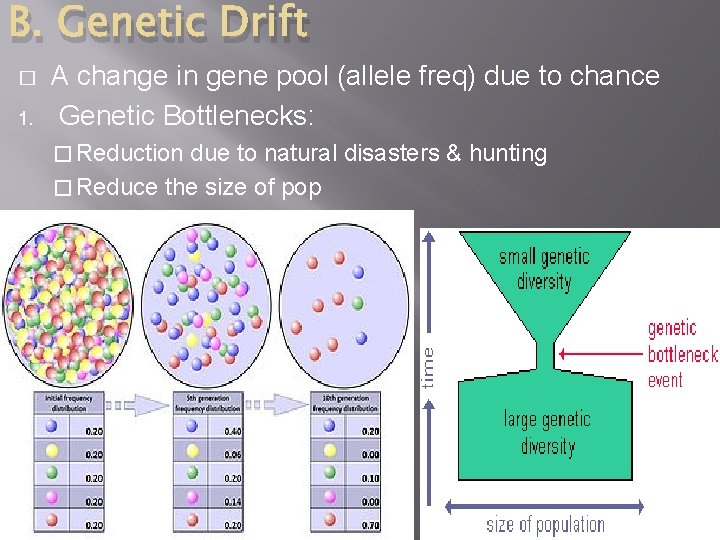
B. Genetic Drift � 1. A change in gene pool (allele freq) due to chance Genetic Bottlenecks: � Reduction due to natural disasters & hunting � Reduce the size of pop
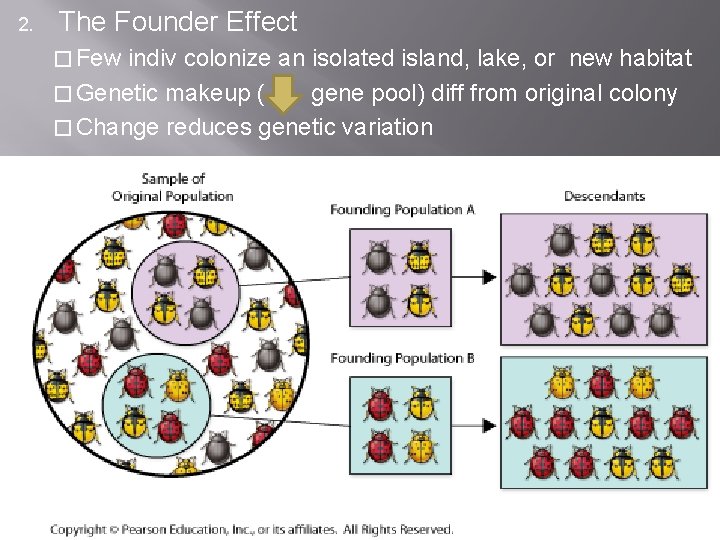
2. The Founder Effect � Few indiv colonize an isolated island, lake, or new habitat � Genetic makeup ( gene pool) diff from original colony � Change reduces genetic variation
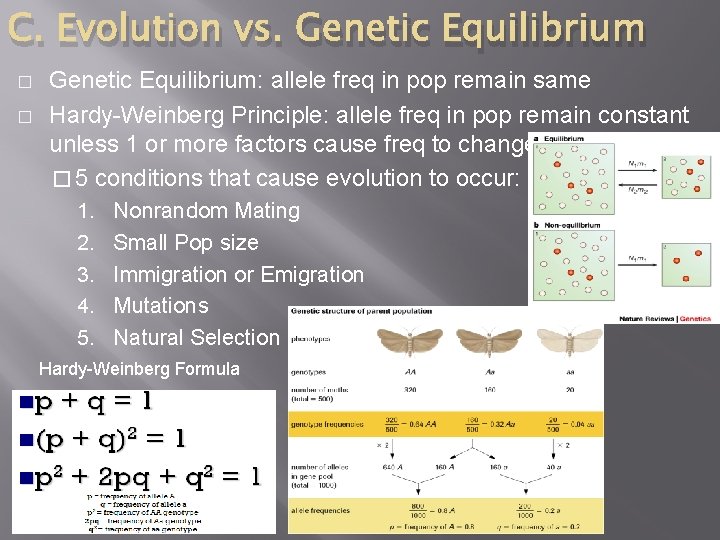
C. Evolution vs. Genetic Equilibrium � � Genetic Equilibrium: allele freq in pop remain same Hardy-Weinberg Principle: allele freq in pop remain constant unless 1 or more factors cause freq to change � 5 conditions that cause evolution to occur: 1. 2. 3. 4. 5. Nonrandom Mating Small Pop size Immigration or Emigration Mutations Natural Selection Hardy-Weinberg Formula
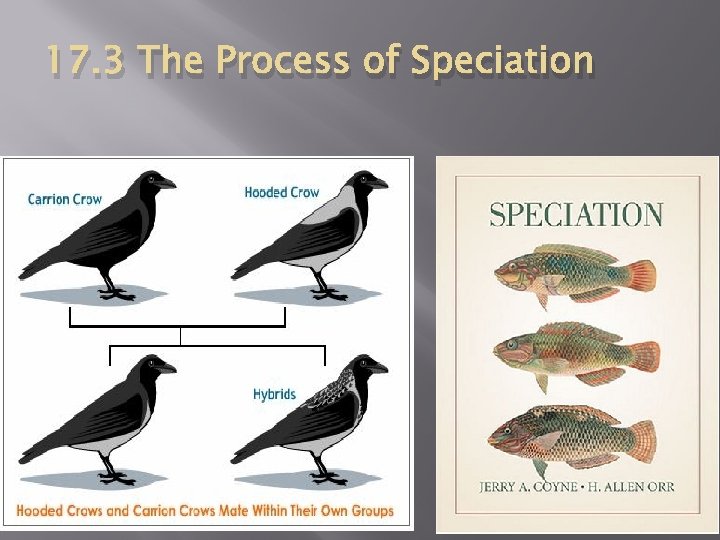
17. 3 The Process of Speciation
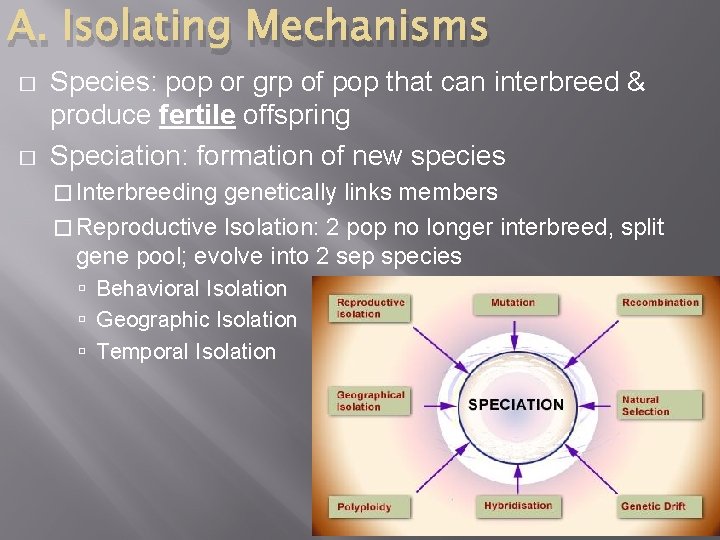
A. Isolating Mechanisms � � Species: pop or grp of pop that can interbreed & produce fertile offspring Speciation: formation of new species � Interbreeding genetically links members � Reproductive Isolation: 2 pop no longer interbreed, split gene pool; evolve into 2 sep species Behavioral Isolation Geographic Isolation Temporal Isolation
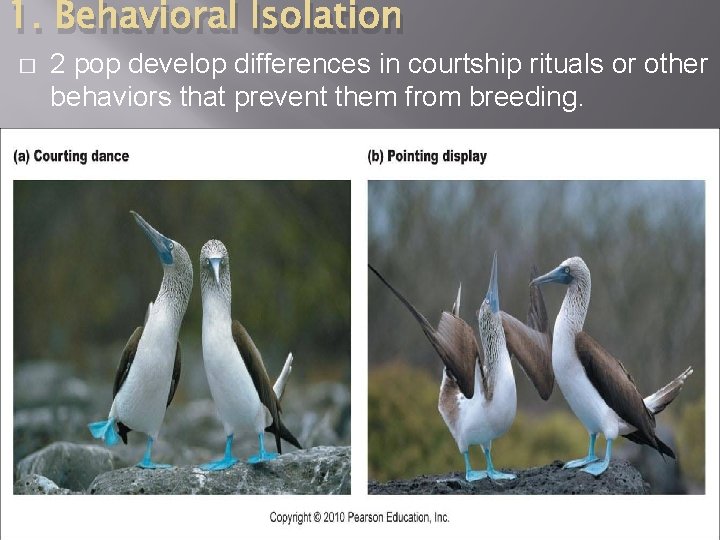
1. Behavioral Isolation � 2 pop develop differences in courtship rituals or other behaviors that prevent them from breeding.
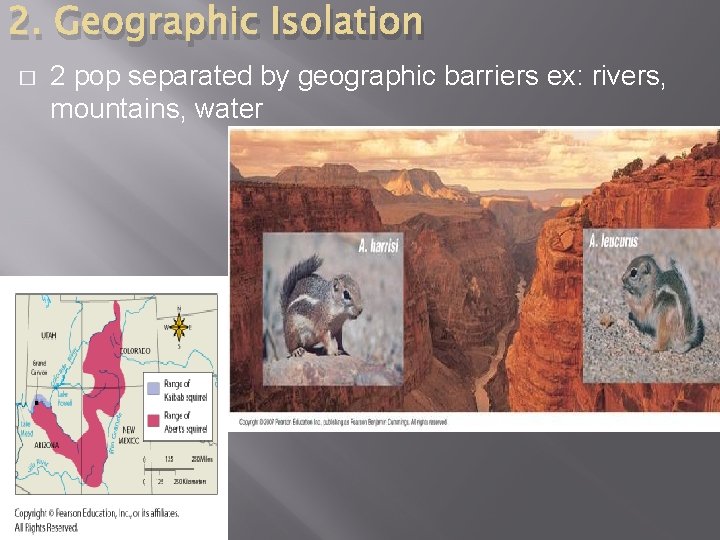
2. Geographic Isolation � 2 pop separated by geographic barriers ex: rivers, mountains, water
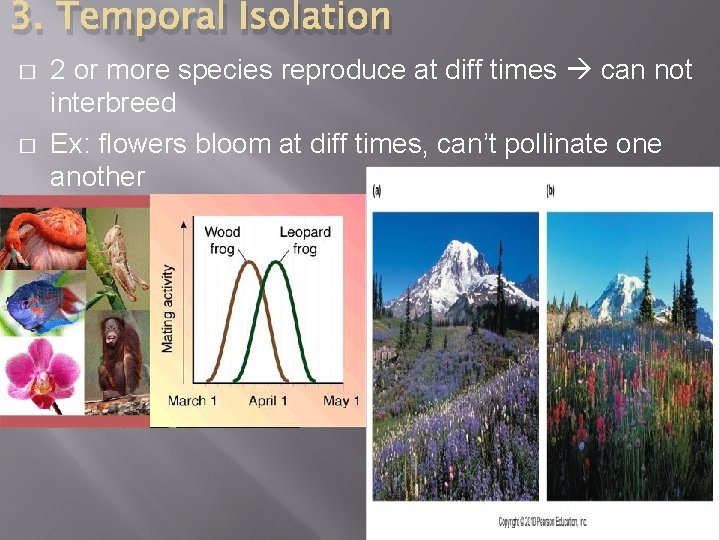
3. Temporal Isolation � � 2 or more species reproduce at diff times can not interbreed Ex: flowers bloom at diff times, can’t pollinate one another