
Chapter 17 Evolution of Populations 17 1 Genes

- Slides: 17
Chapter 17: Evolution of Populations
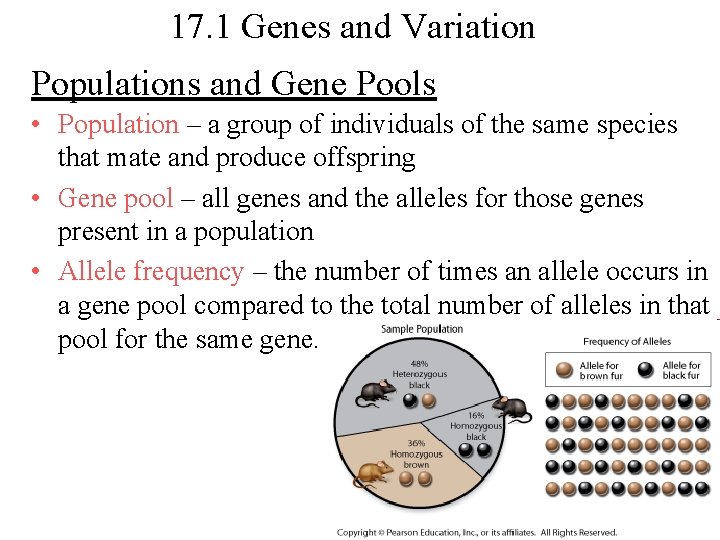
17. 1 Genes and Variation Populations and Gene Pools • Population – a group of individuals of the same species that mate and produce offspring • Gene pool – all genes and the alleles for those genes present in a population • Allele frequency – the number of times an allele occurs in a gene pool compared to the total number of alleles in that pool for the same gene.
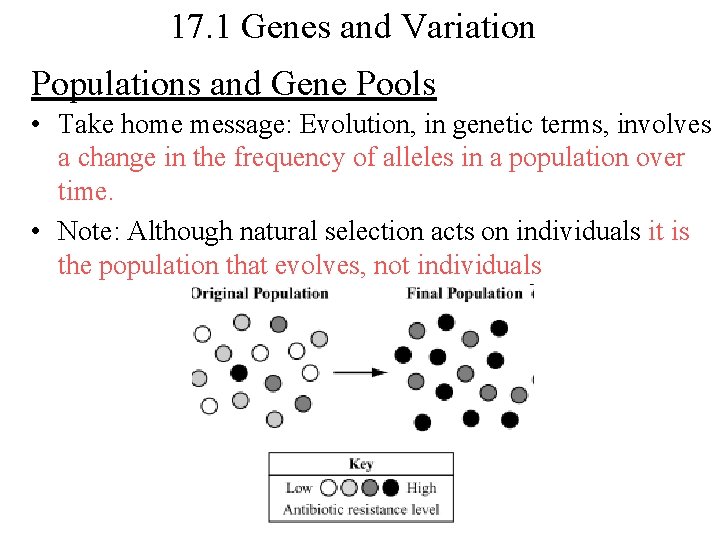
17. 1 Genes and Variation Populations and Gene Pools • Take home message: Evolution, in genetic terms, involves a change in the frequency of alleles in a population over time. • Note: Although natural selection acts on individuals it is the population that evolves, not individuals
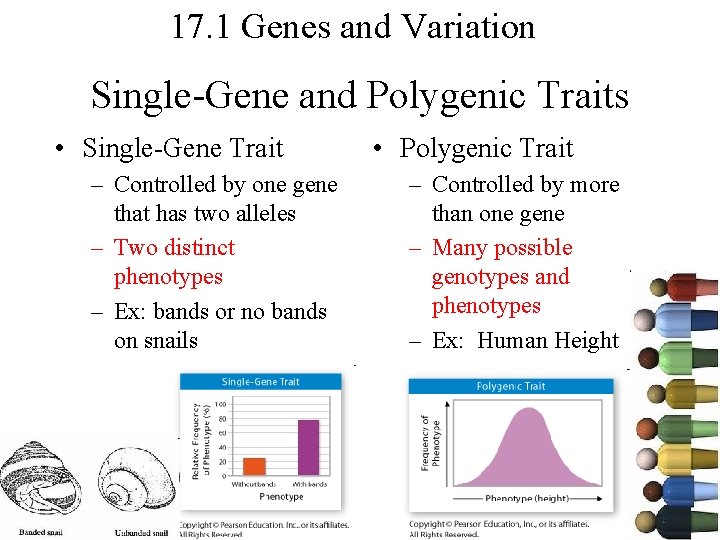
17. 1 Genes and Variation Single-Gene and Polygenic Traits • Single-Gene Trait – Controlled by one gene that has two alleles – Two distinct phenotypes – Ex: bands or no bands on snails • Polygenic Trait – Controlled by more than one gene – Many possible genotypes and phenotypes – Ex: Human Height
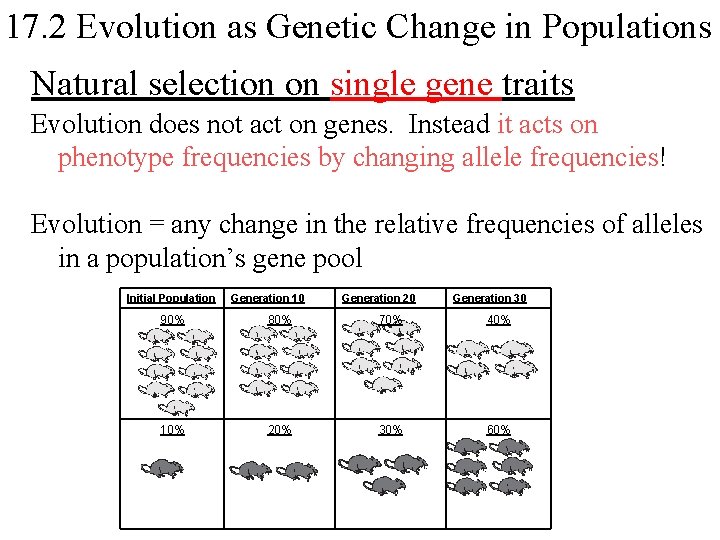
17. 2 Evolution as Genetic Change in Populations Natural selection on single gene traits Evolution does not act on genes. Instead it acts on phenotype frequencies by changing allele frequencies! Evolution = any change in the relative frequencies of alleles in a population’s gene pool Initial Population Generation 10 Generation 20 Generation 30 90% 80% 70% 40% 10% 20% 30% 60%
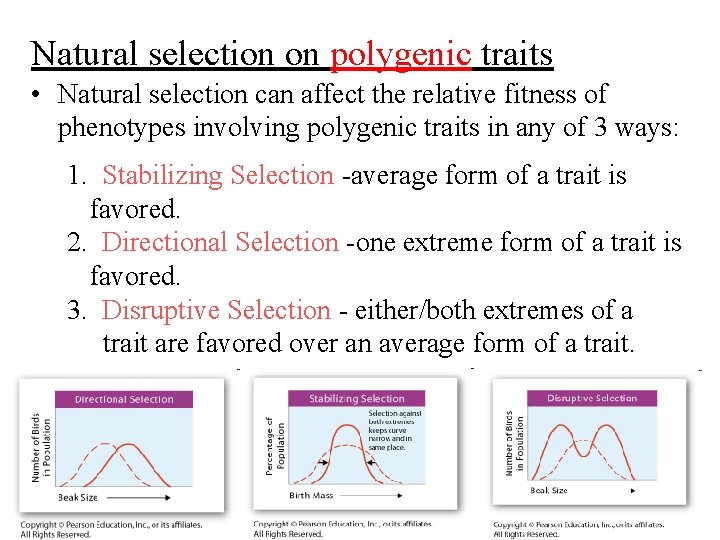
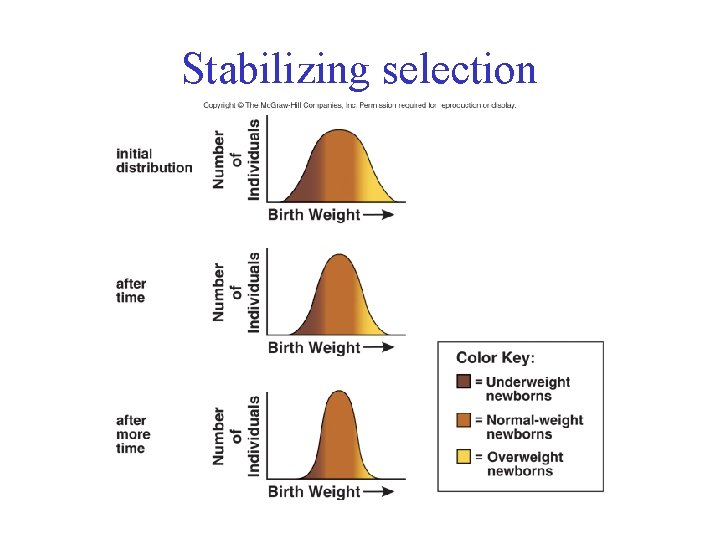
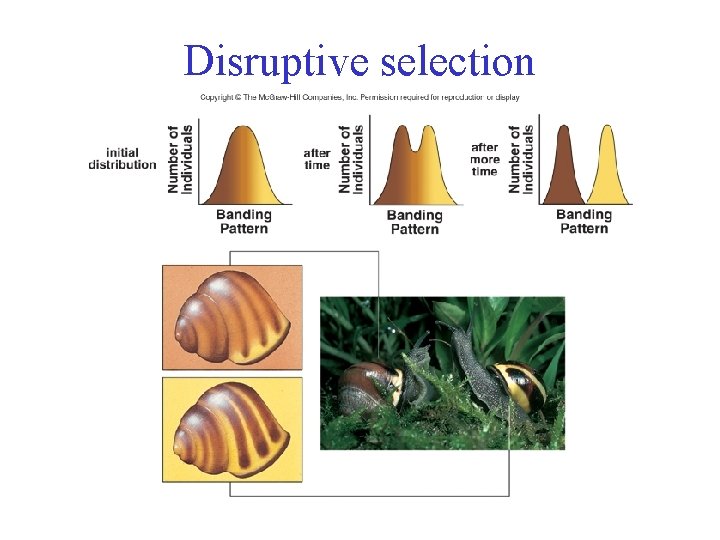
Natural selection on polygenic traits • Natural selection can affect the relative fitness of phenotypes involving polygenic traits in any of 3 ways: 1. Stabilizing Selection -average form of a trait is favored. 2. Directional Selection -one extreme form of a trait is favored. 3. Disruptive Selection - either/both extremes of a trait are favored over an average form of a trait.
Stabilizing selection
Directional selection
Disruptive selection
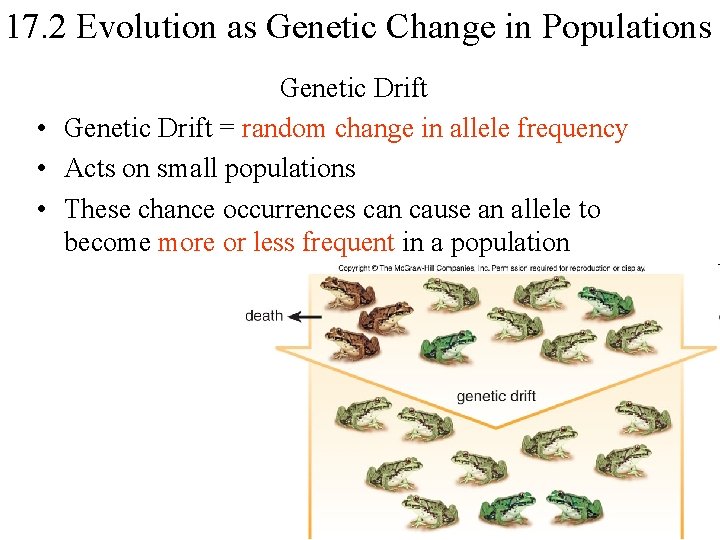
17. 2 Evolution as Genetic Change in Populations Genetic Drift • Genetic Drift = random change in allele frequency • Acts on small populations • These chance occurrences can cause an allele to become more or less frequent in a population
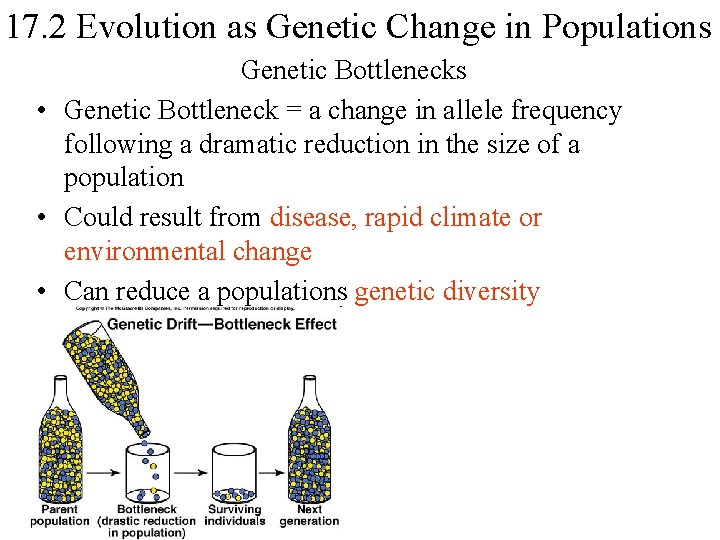
17. 2 Evolution as Genetic Change in Populations Genetic Bottlenecks • Genetic Bottleneck = a change in allele frequency following a dramatic reduction in the size of a population • Could result from disease, rapid climate or environmental change • Can reduce a populations genetic diversity
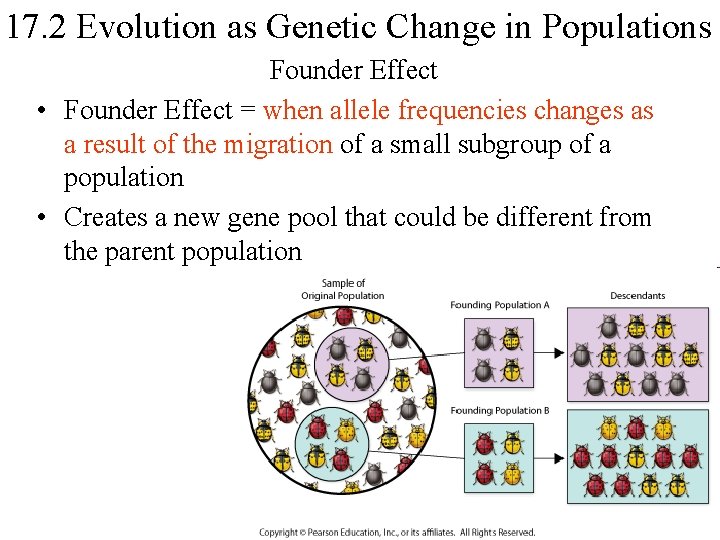
17. 2 Evolution as Genetic Change in Populations Founder Effect • Founder Effect = when allele frequencies changes as a result of the migration of a small subgroup of a population • Creates a new gene pool that could be different from the parent population
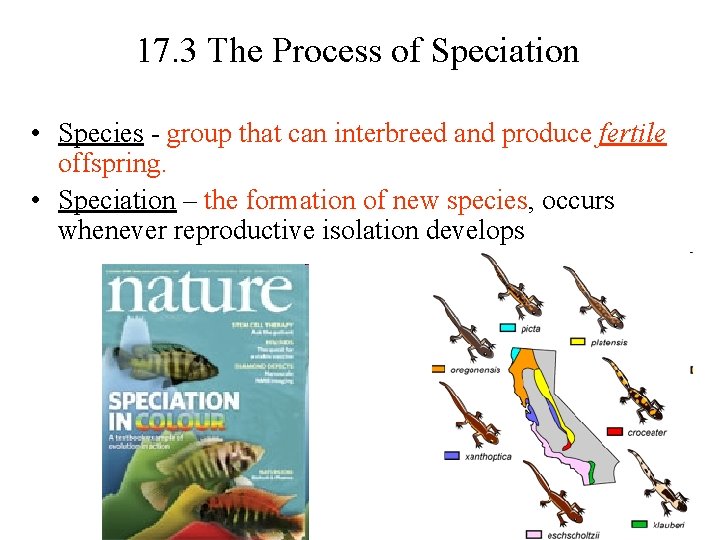
17. 3 The Process of Speciation • Species - group that can interbreed and produce fertile offspring. • Speciation – the formation of new species, occurs whenever reproductive isolation develops
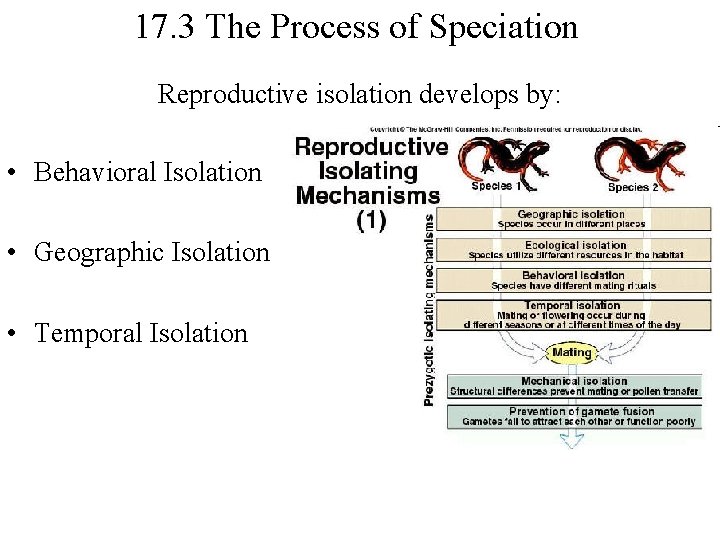
17. 3 The Process of Speciation Reproductive isolation develops by: • Behavioral Isolation • Geographic Isolation • Temporal Isolation
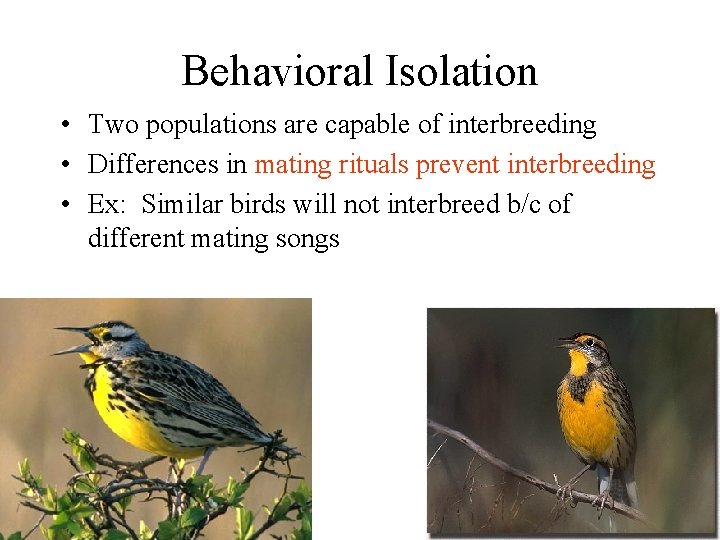
Behavioral Isolation • Two populations are capable of interbreeding • Differences in mating rituals prevent interbreeding • Ex: Similar birds will not interbreed b/c of different mating songs
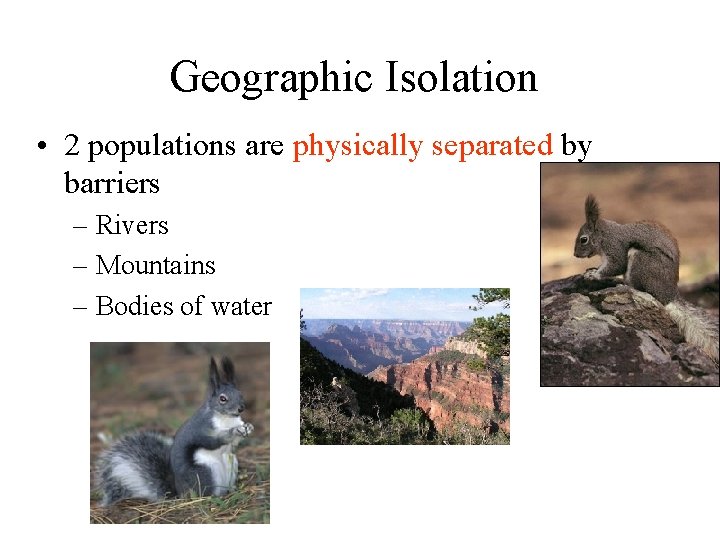
Geographic Isolation • 2 populations are physically separated by barriers – Rivers – Mountains – Bodies of water
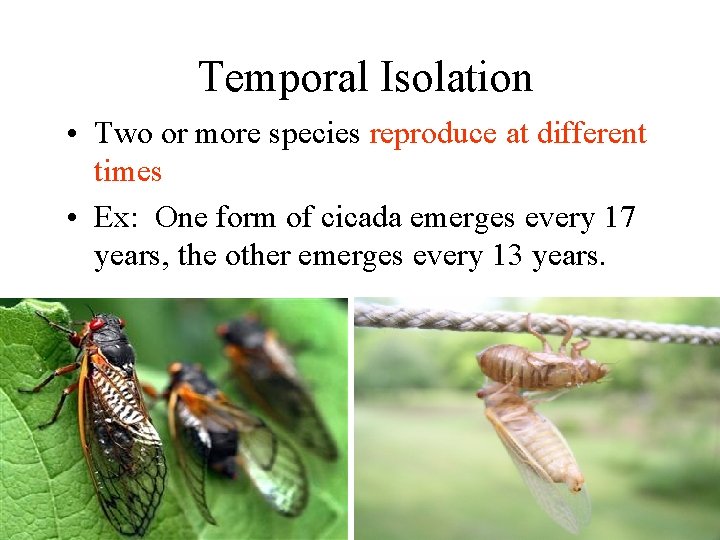
Temporal Isolation • Two or more species reproduce at different times • Ex: One form of cicada emerges every 17 years, the other emerges every 13 years.