
Chapter 17 Darwin and Evolution 2 Outline History
- Slides: 35
Chapter 17 Darwin and Evolution
2 Outline History of Evolutionary Thought Darwin’s Theory of Evolution Earth very old Descend with change from a common ancestor Adaptation to a changing environment The Evidence of Evolution Fossil Biogeographical Anatomical Biochemical
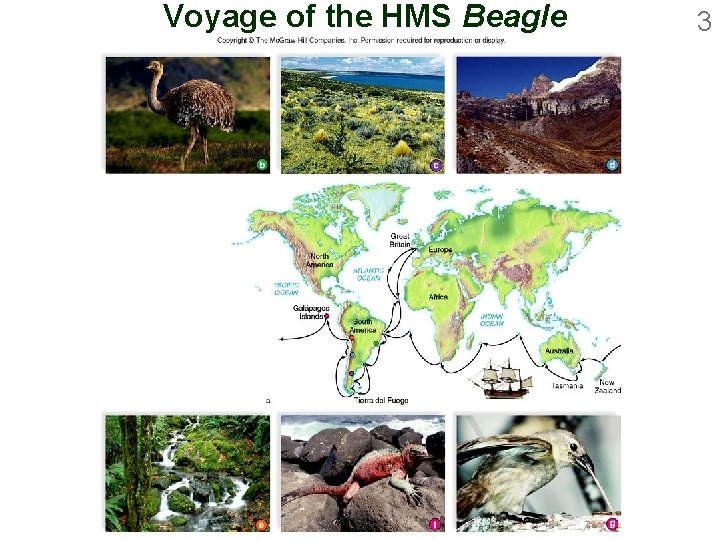
Voyage of the HMS Beagle 3
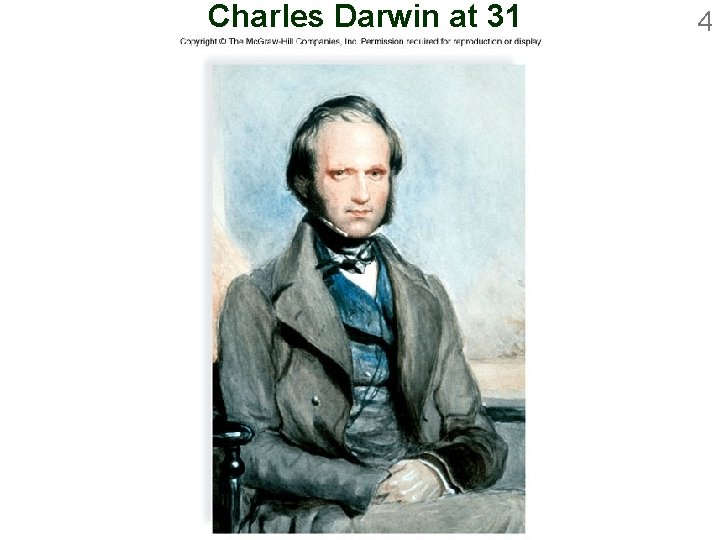
Charles Darwin at 31 4
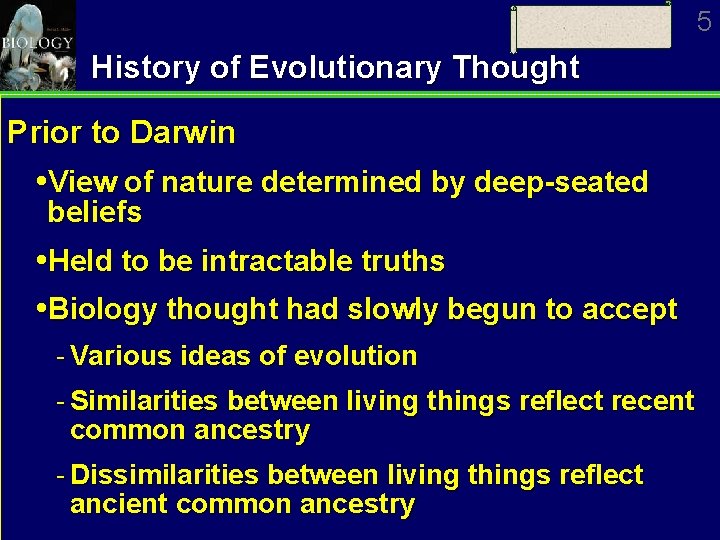
5 History of Evolutionary Thought Prior to Darwin View of nature determined by deep-seated beliefs Held to be intractable truths Biology thought had slowly begun to accept Various ideas of evolution Similarities between living things reflect recent common ancestry Dissimilarities between living things reflect ancient common ancestry
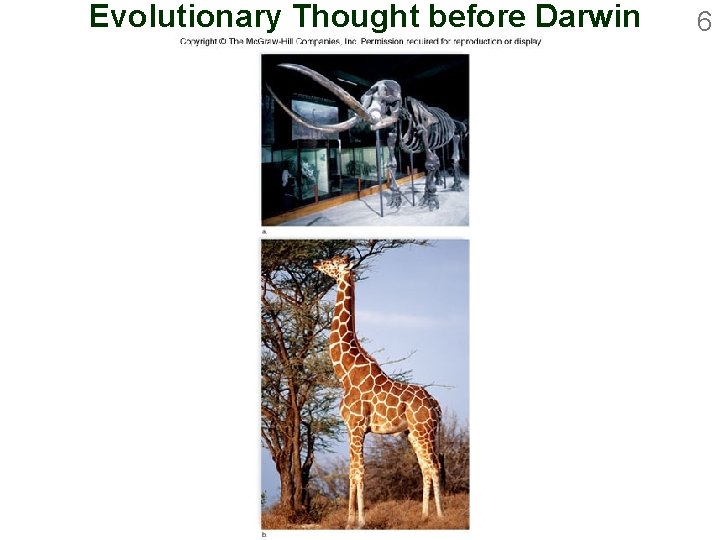
Evolutionary Thought before Darwin 6
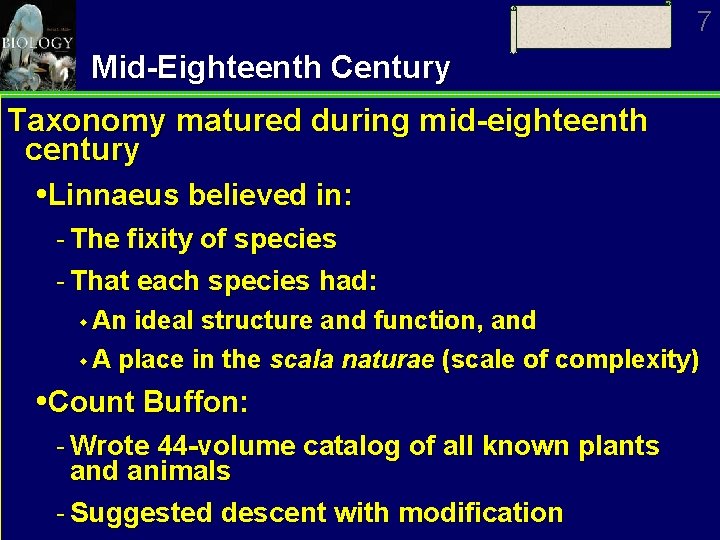
7 Mid-Eighteenth Century Taxonomy matured during mid-eighteenth century Linnaeus believed in: The fixity of species That each species had: w An ideal structure and function, and w A place in the scala naturae (scale of complexity) Count Buffon: Wrote 44 -volume catalog of all known plants and animals Suggested descent with modification
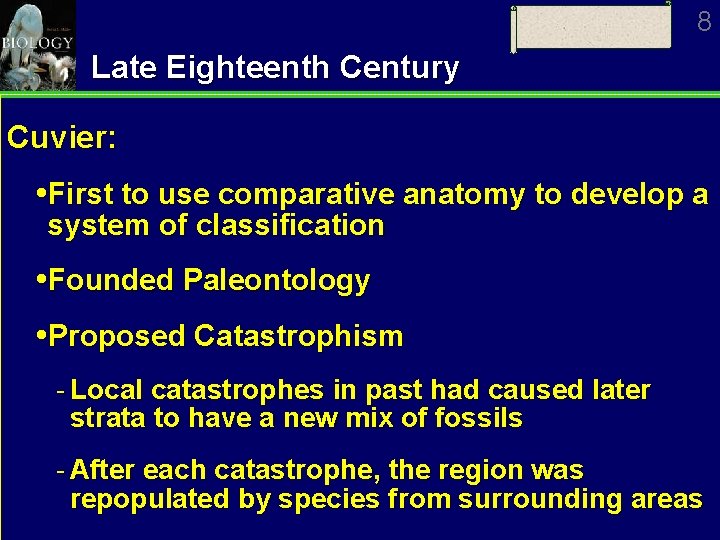
8 Late Eighteenth Century Cuvier: First to use comparative anatomy to develop a system of classification Founded Paleontology Proposed Catastrophism Local catastrophes in past had caused later strata to have a new mix of fossils After each catastrophe, the region was repopulated by species from surrounding areas
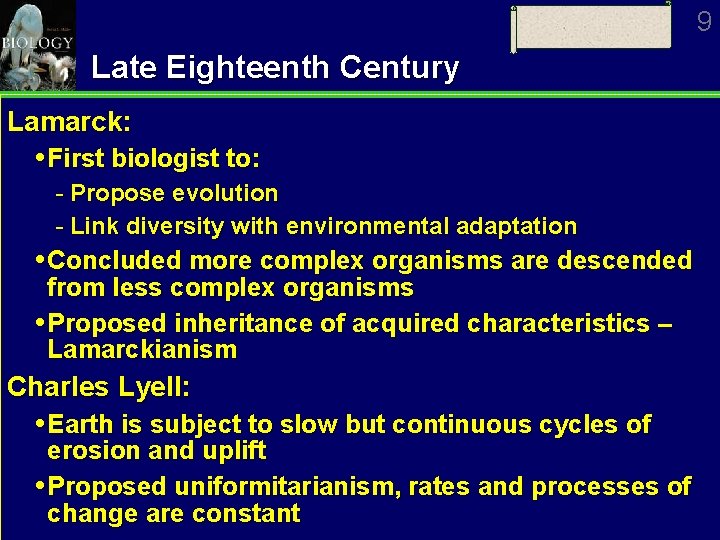
9 Late Eighteenth Century Lamarck: First biologist to: Propose evolution Link diversity with environmental adaptation Concluded more complex organisms are descended from less complex organisms Proposed inheritance of acquired characteristics – Lamarckianism Charles Lyell: Earth is subject to slow but continuous cycles of erosion and uplift Proposed uniformitarianism, rates and processes of change are constant
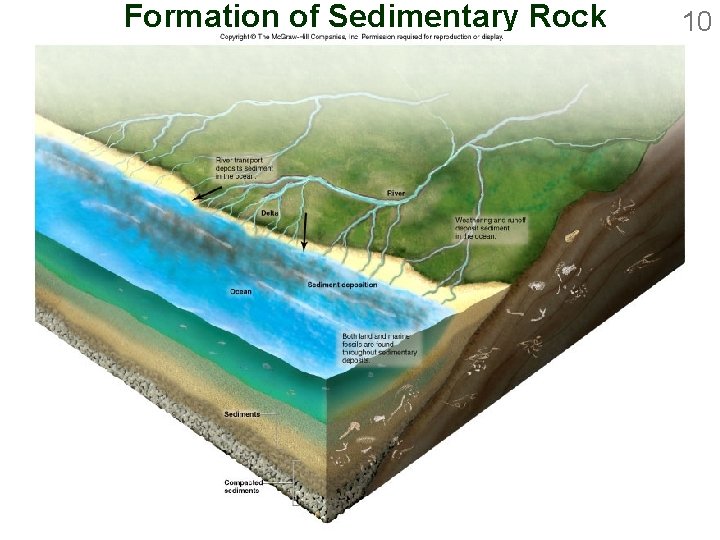
Formation of Sedimentary Rock 10
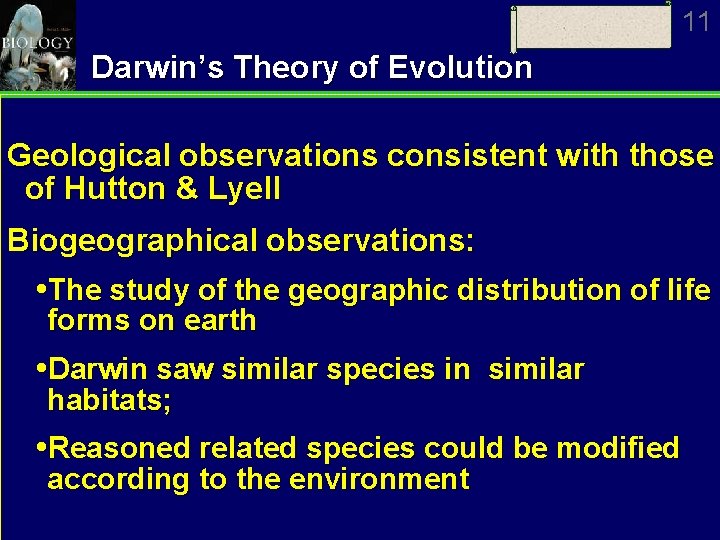
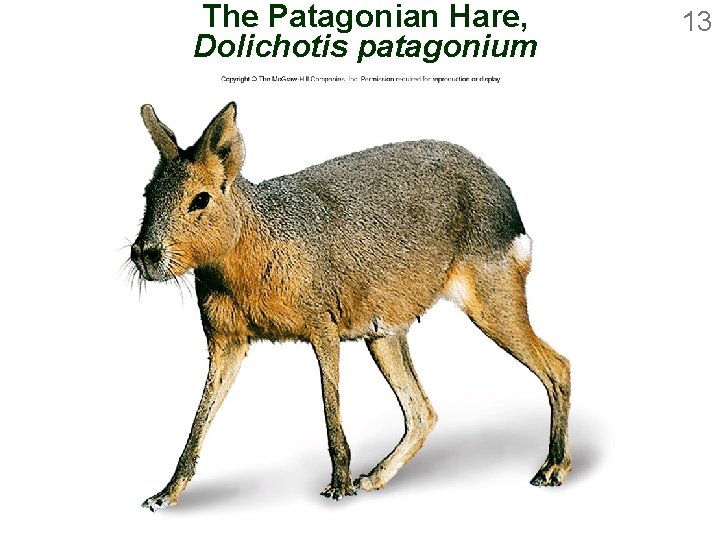
11 Darwin’s Theory of Evolution Geological observations consistent with those of Hutton & Lyell Biogeographical observations: The study of the geographic distribution of life forms on earth Darwin saw similar species in similar habitats; Reasoned related species could be modified according to the environment
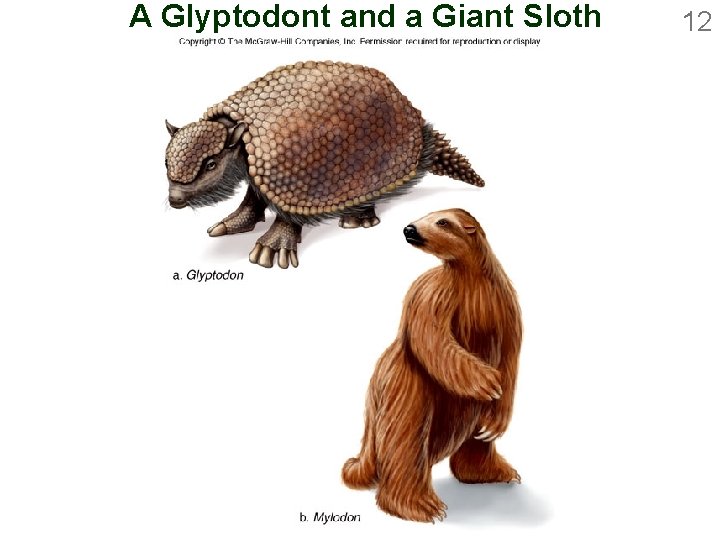
A Glyptodont and a Giant Sloth 12
The Patagonian Hare, Dolichotis patagonium 13
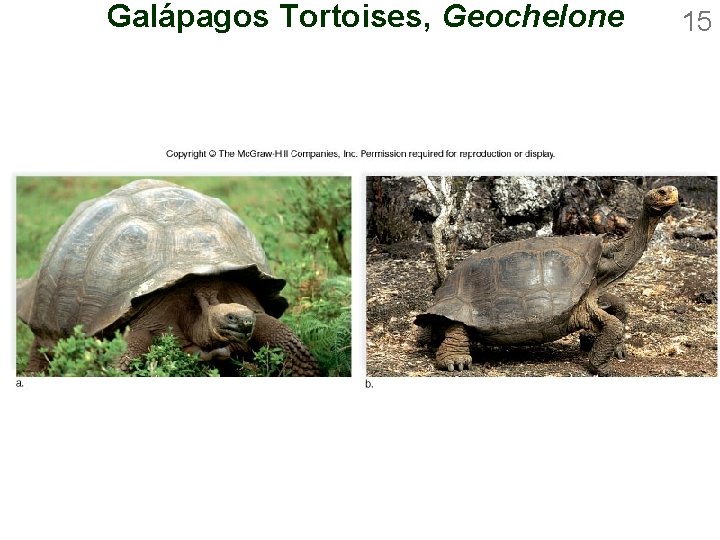
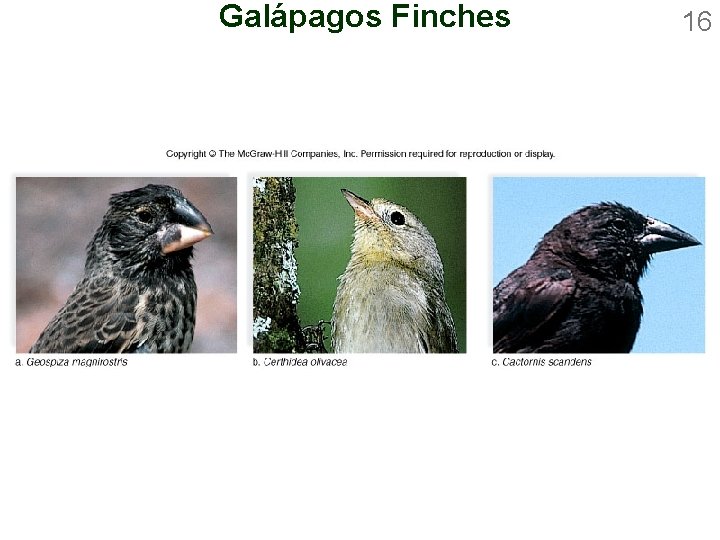
14 Galápagos Islands Tortoises Darwin observed tortoise neck length varied from island to island Proposed that speciation on islands correlated with a difference in vegetation Finches Darwin observed many different species of finches on various islands Speculated they could have descended from a single pair of mainland finch
Galápagos Tortoises, Geochelone 15
Galápagos Finches 16
17 Natural Selection and Adaptation Individuals have heritable variations More individuals produced each generation than environment can support Some individuals have adaptive characteristics Enables increased survival and reproduction Increasing proportion of succeeding generations will have these characteristics Populations become adapted to their local environment through change in individuals
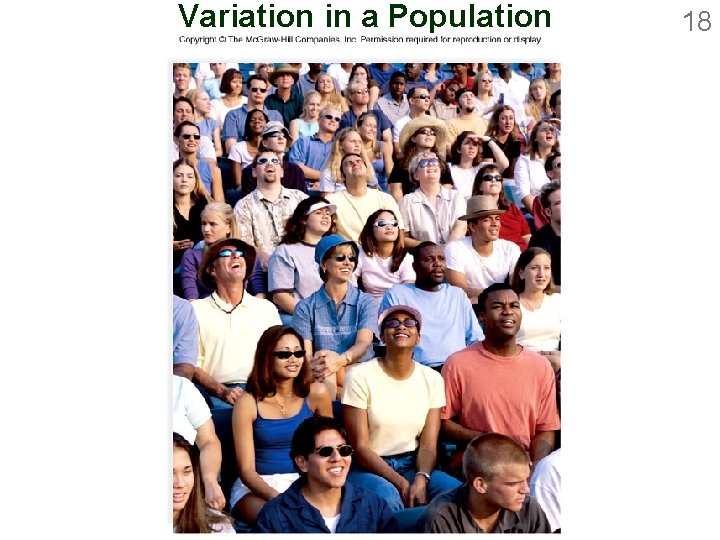
Variation in a Population 18
19 Organisms Have Variations Darwin emphasized that individuals from a population vary in their: Functional characteristics Physical characteristics Behavioral characteristics Proposed that these variations: Are essential Allow adaptation to the environment over time
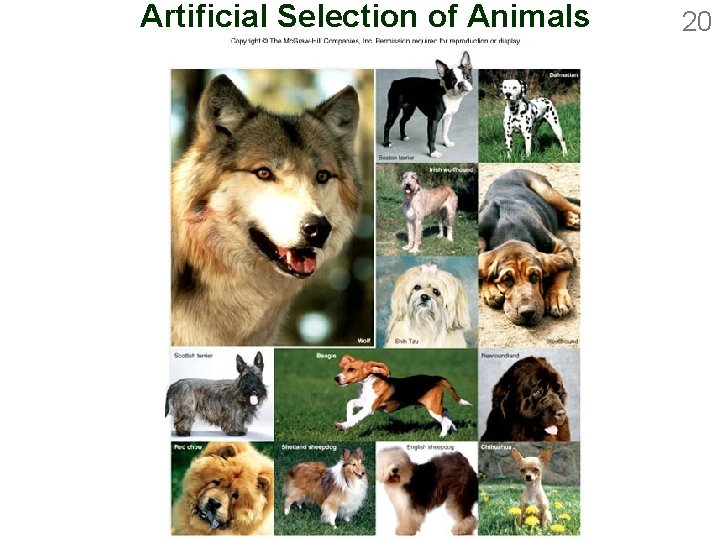
Artificial Selection of Animals 20
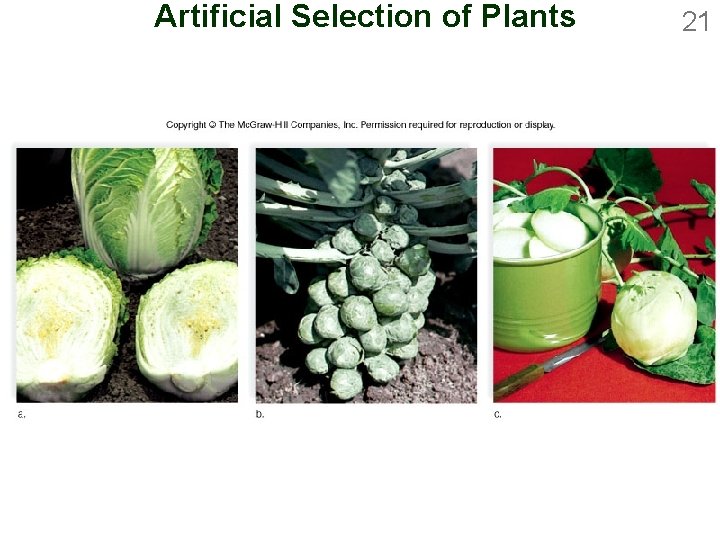
Artificial Selection of Plants 21
22 Organisms Struggle to Exist Malthus Each generation has the same reproductive potential as the previous generation Reproductive potential is greater than environment can support Death, disease, and famine were inevitable if population were to have stability Individuals experience a constant struggle for survival
23 Organisms Differ in Fitness is the relative reproductive success of an individual The most-fit individuals in a population capture a disproportionate share of goodies Interactions with the environment determine which individuals reproduce the most Adaptation Changes that help a species become more suited to its environment Product of natural selection
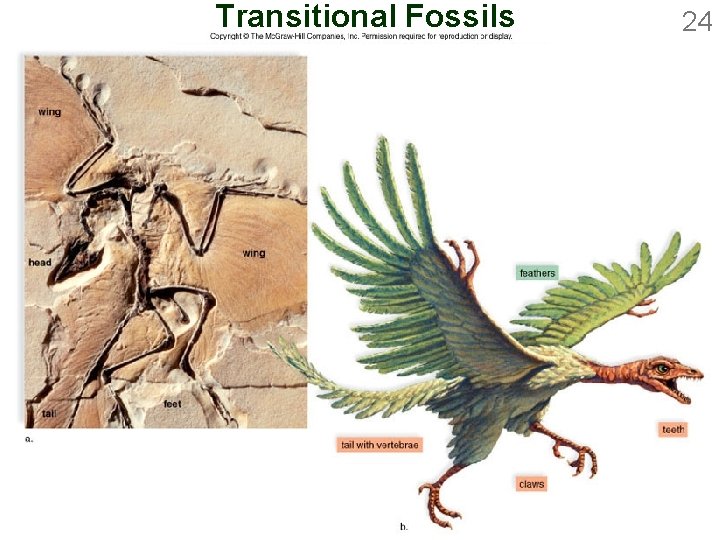
Transitional Fossils 24
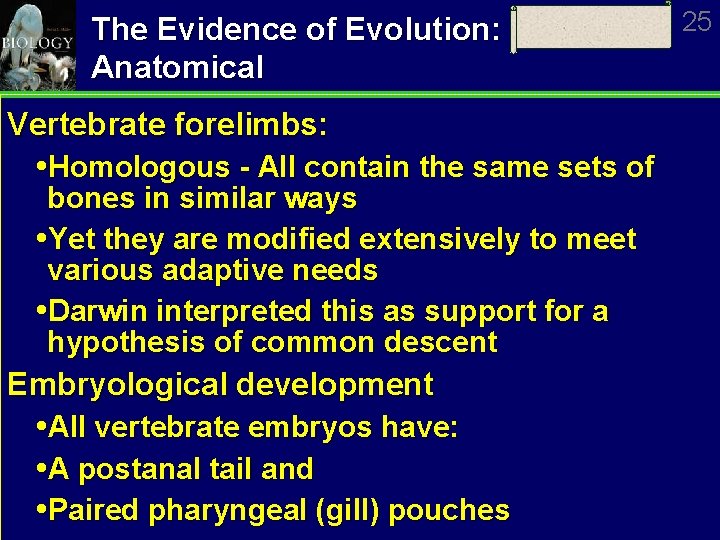
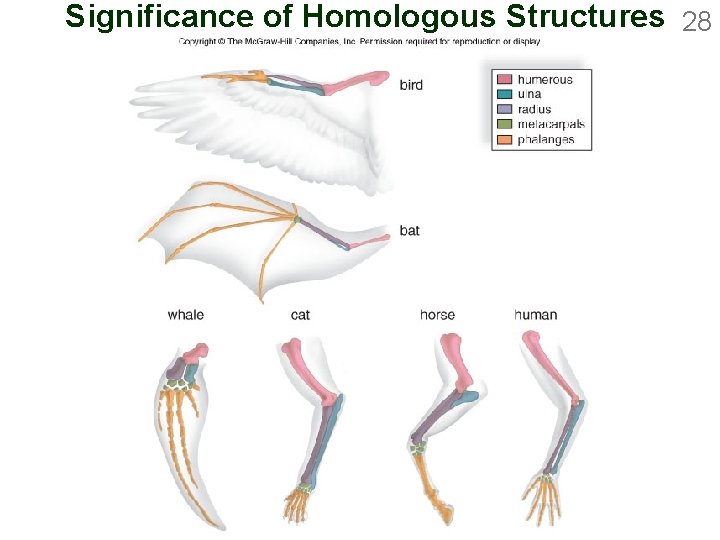
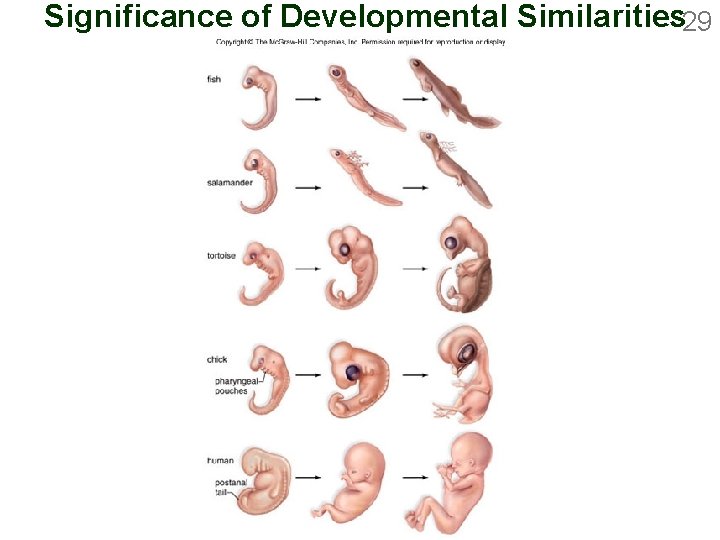
The Evidence of Evolution: Anatomical Vertebrate forelimbs: Homologous - All contain the same sets of bones in similar ways Yet they are modified extensively to meet various adaptive needs Darwin interpreted this as support for a hypothesis of common descent Embryological development All vertebrate embryos have: A postanal tail and Paired pharyngeal (gill) pouches 25
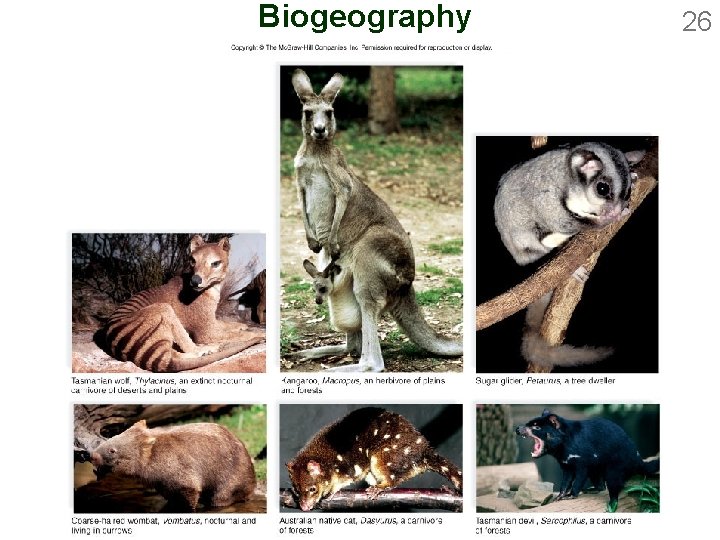
Biogeography 26
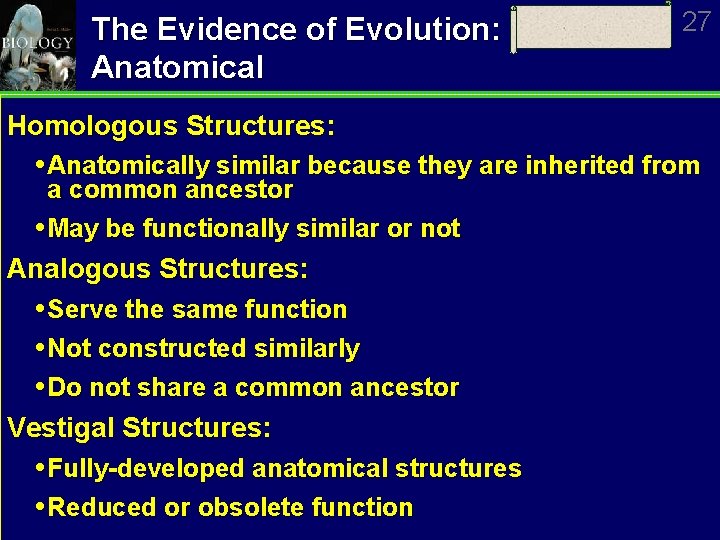
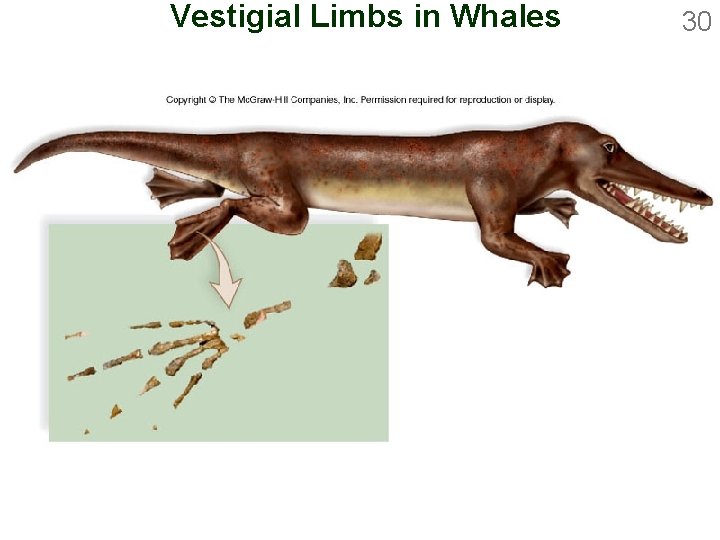
The Evidence of Evolution: Anatomical 27 Homologous Structures: Anatomically similar because they are inherited from a common ancestor May be functionally similar or not Analogous Structures: Serve the same function Not constructed similarly Do not share a common ancestor Vestigal Structures: Fully-developed anatomical structures Reduced or obsolete function
Significance of Homologous Structures 28
Significance of Developmental Similarities 29
Vestigial Limbs in Whales 30
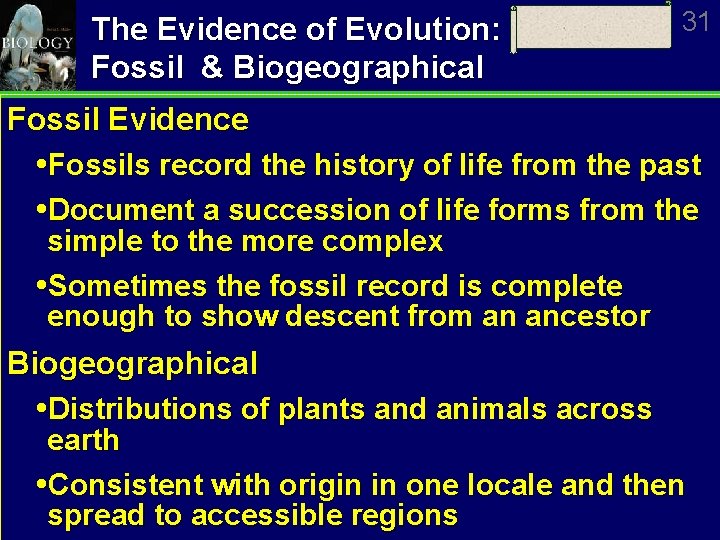
The Evidence of Evolution: Fossil & Biogeographical 31 Fossil Evidence Fossils record the history of life from the past Document a succession of life forms from the simple to the more complex Sometimes the fossil record is complete enough to show descent from an ancestor Biogeographical Distributions of plants and animals across earth Consistent with origin in one locale and then spread to accessible regions
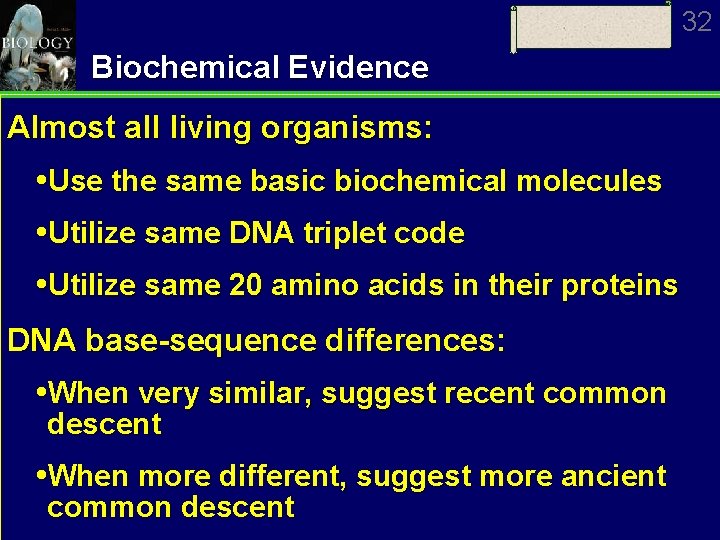
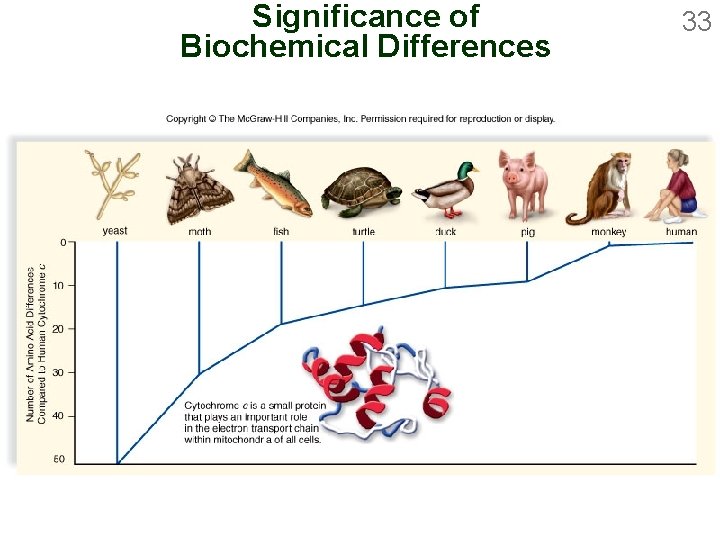
32 Biochemical Evidence Almost all living organisms: Use the same basic biochemical molecules Utilize same DNA triplet code Utilize same 20 amino acids in their proteins DNA base-sequence differences: When very similar, suggest recent common descent When more different, suggest more ancient common descent
Significance of Biochemical Differences 33
34 Review History of Evolutionary Thought Darwin’s Theory of Evolution Earth very old Descend with change from a common ancestor Adaptation to a changing environment The Evidence of Evolution Fossil Biogeographical Anatomical Biochemical
Ending Slide Chapter 17 Darwin and Evolution