
Chapter 17 Cellular Telephone and Satellite Networks Prof
- Slides: 27
Chapter 17 Cellular Telephone and Satellite Networks Prof. Choong Seon HONG Kyung Hee University 1
17. 1 Cellular Telephony v Frequency Reuse Principle v Transmitting v Receiving v Handoff v Roaming v First Generation v Second Generation v Third Generation Kyung Hee University 2
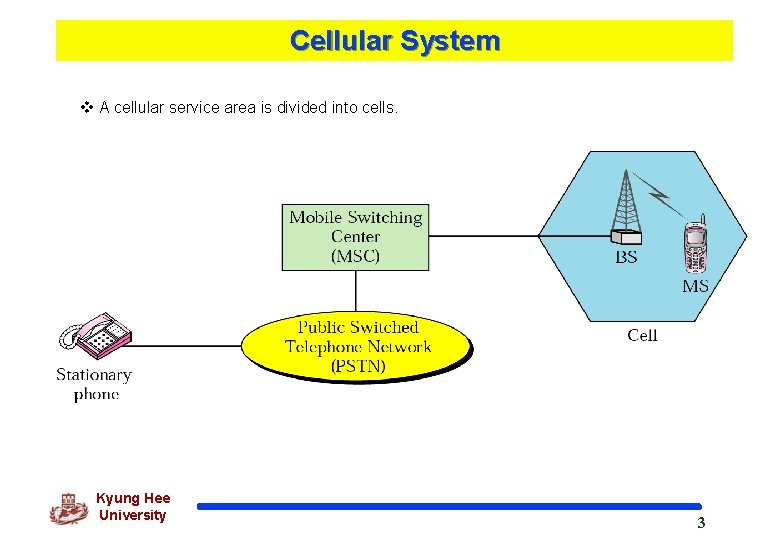
Cellular System v A cellular service area is divided into cells. Kyung Hee University 3
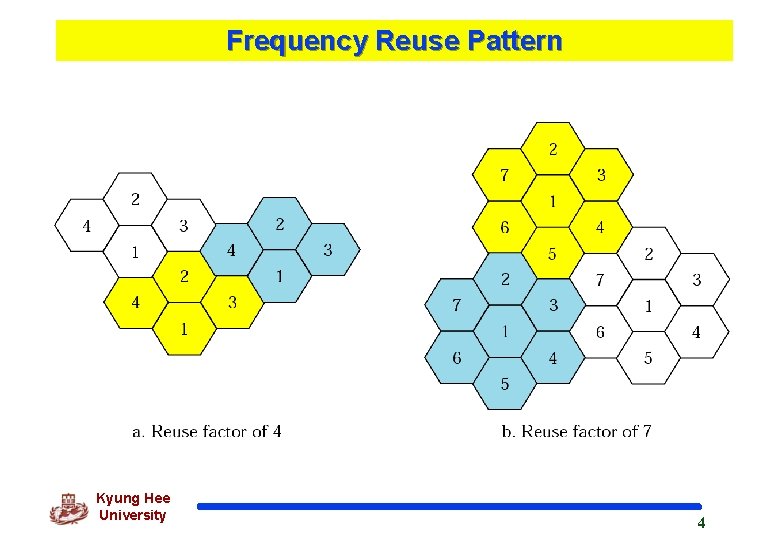
Frequency Reuse Pattern Kyung Hee University 4
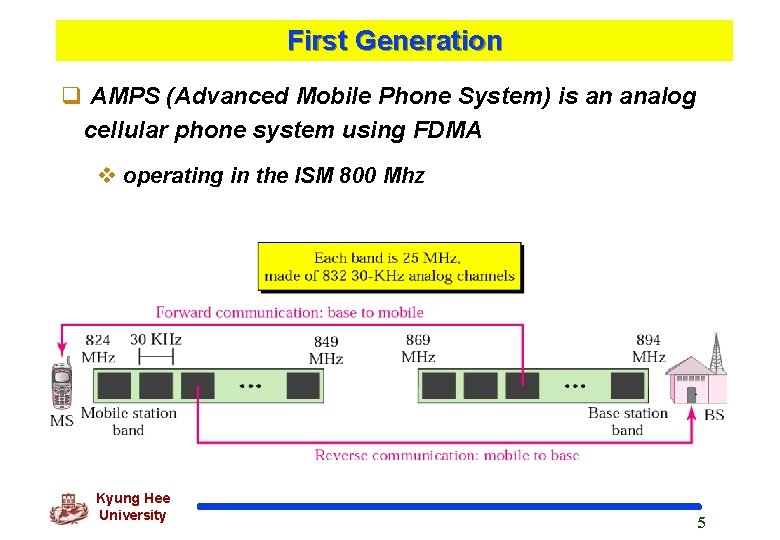
First Generation q AMPS (Advanced Mobile Phone System) is an analog cellular phone system using FDMA v operating in the ISM 800 Mhz Kyung Hee University 5
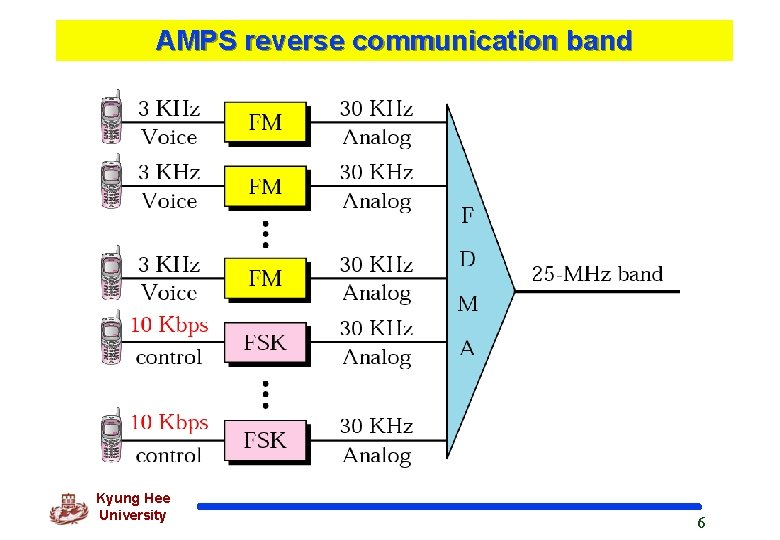
AMPS reverse communication band Kyung Hee University 6
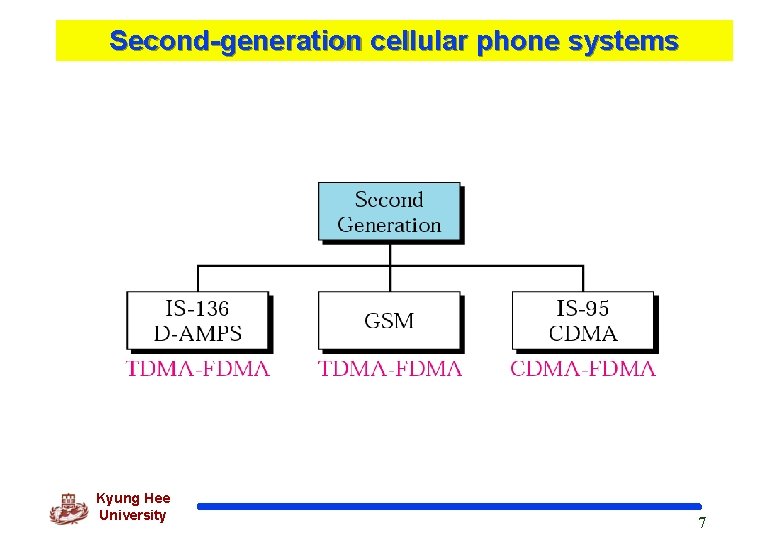
Second-generation cellular phone systems Kyung Hee University 7
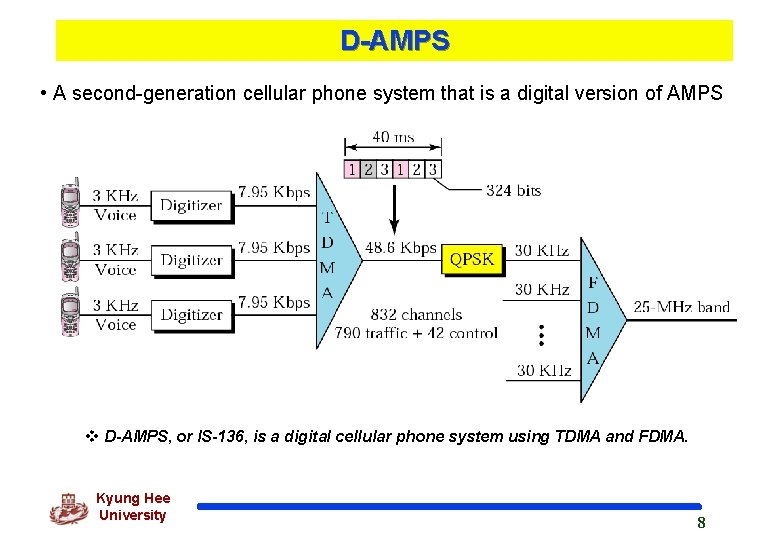
D-AMPS • A second-generation cellular phone system that is a digital version of AMPS v D-AMPS, or IS-136, is a digital cellular phone system using TDMA and FDMA. Kyung Hee University 8
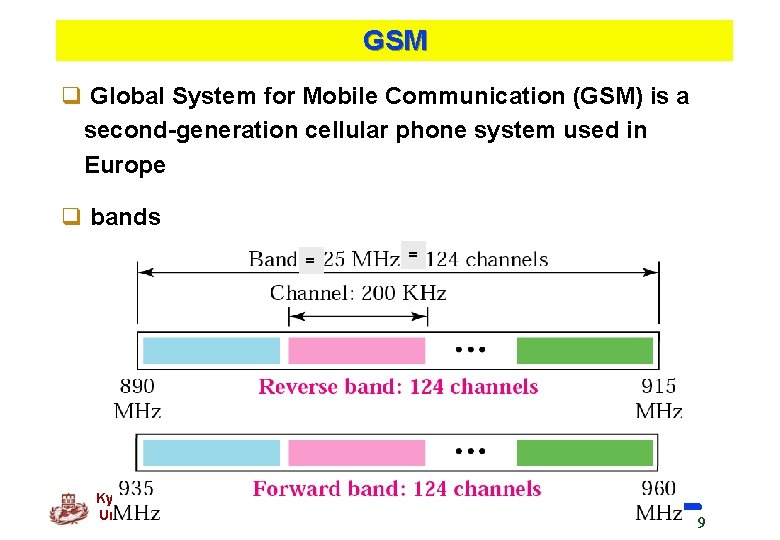
GSM q Global System for Mobile Communication (GSM) is a second-generation cellular phone system used in Europe q bands = Kyung Hee University = 9
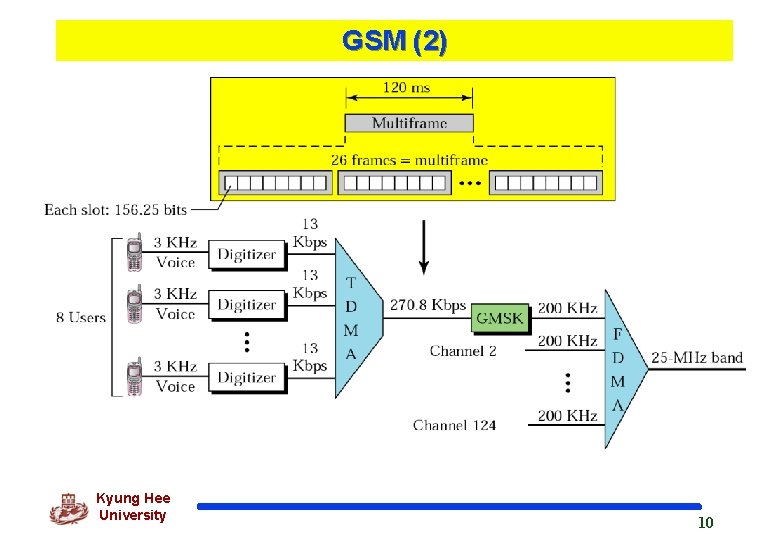
GSM (2) Kyung Hee University 10
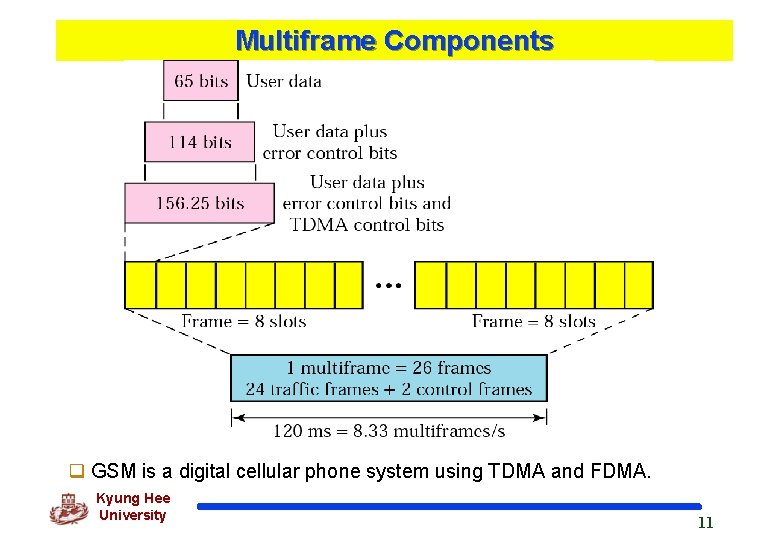
Multiframe Components q GSM is a digital cellular phone system using TDMA and FDMA. Kyung Hee University 11
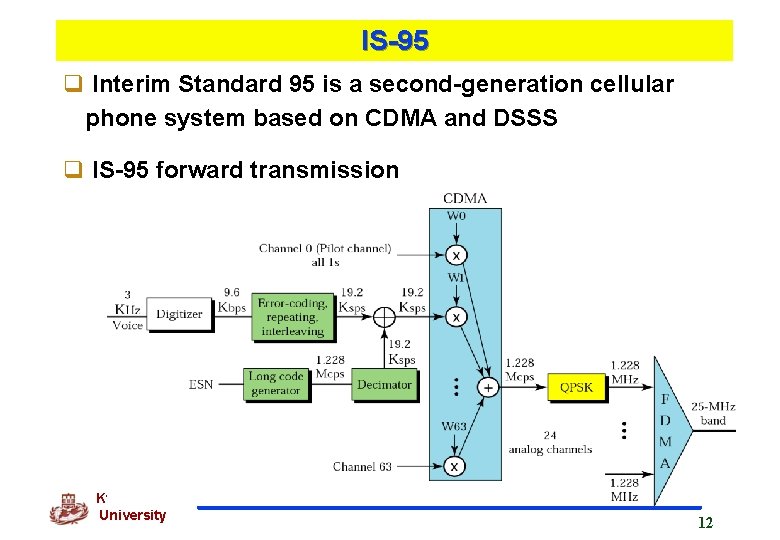
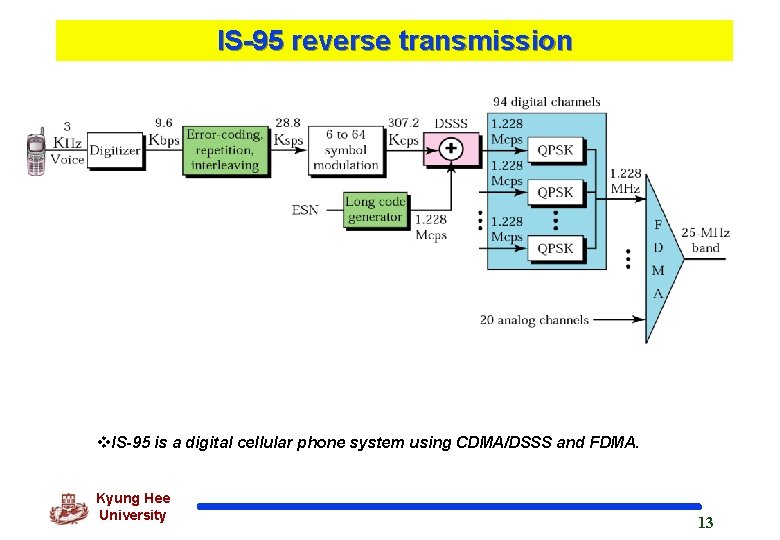
IS-95 q Interim Standard 95 is a second-generation cellular phone system based on CDMA and DSSS q IS-95 forward transmission Kyung Hee University 12
IS-95 reverse transmission v. IS-95 is a digital cellular phone system using CDMA/DSSS and FDMA. Kyung Hee University 13
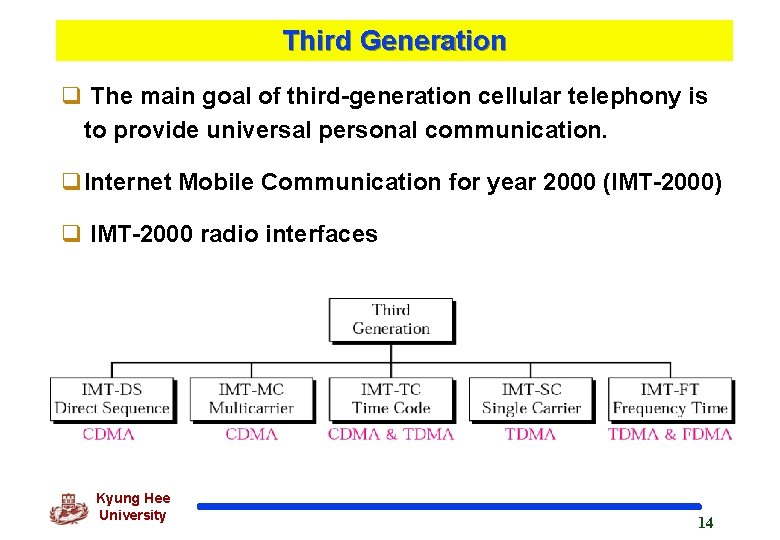
Third Generation q The main goal of third-generation cellular telephony is to provide universal personal communication. q. Internet Mobile Communication for year 2000 (IMT-2000) q IMT-2000 radio interfaces Kyung Hee University 14
17. 2 Satellite Networks • • • Orbits Three Categories of Satellites GEO Satellites MEO Satellites LEO Satellites Kyung Hee University 15
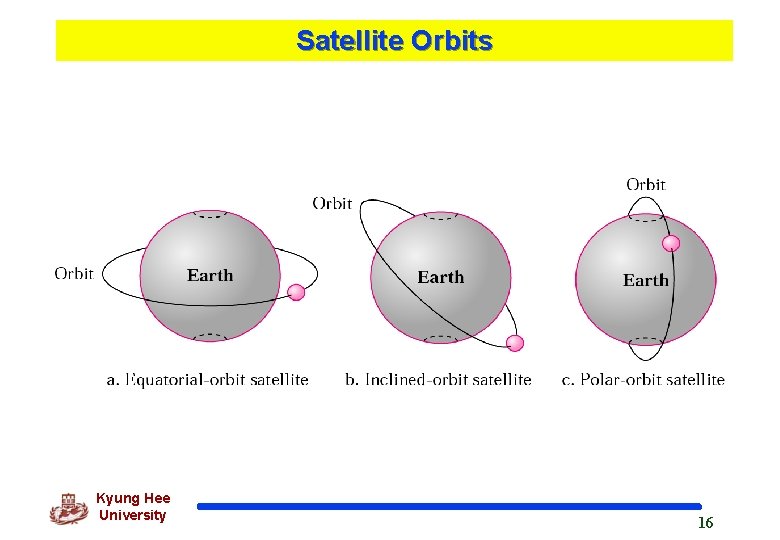
Satellite Orbits Kyung Hee University 16
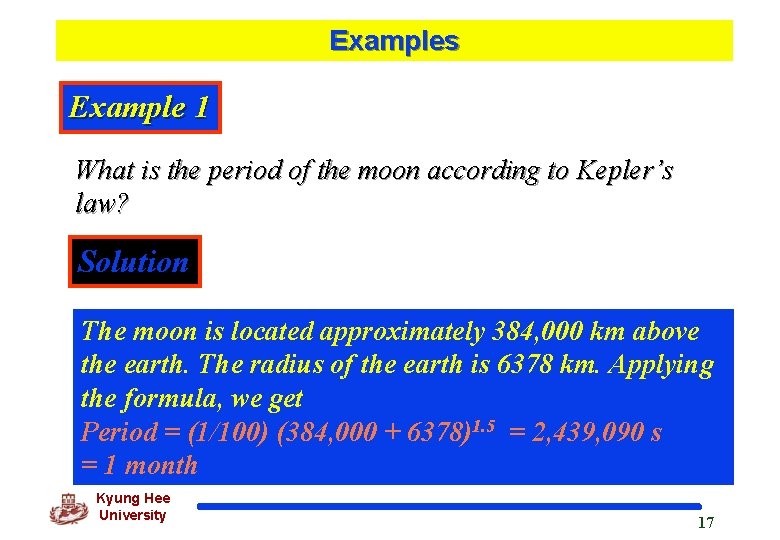
Examples Example 1 What is the period of the moon according to Kepler’s law? Solution The moon is located approximately 384, 000 km above the earth. The radius of the earth is 6378 km. Applying the formula, we get Period = (1/100) (384, 000 + 6378)1. 5 = 2, 439, 090 s = 1 month Kyung Hee University 17
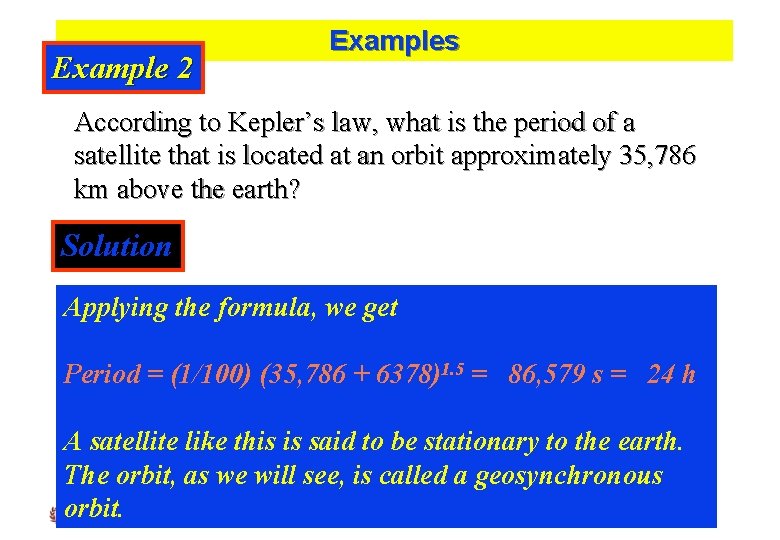
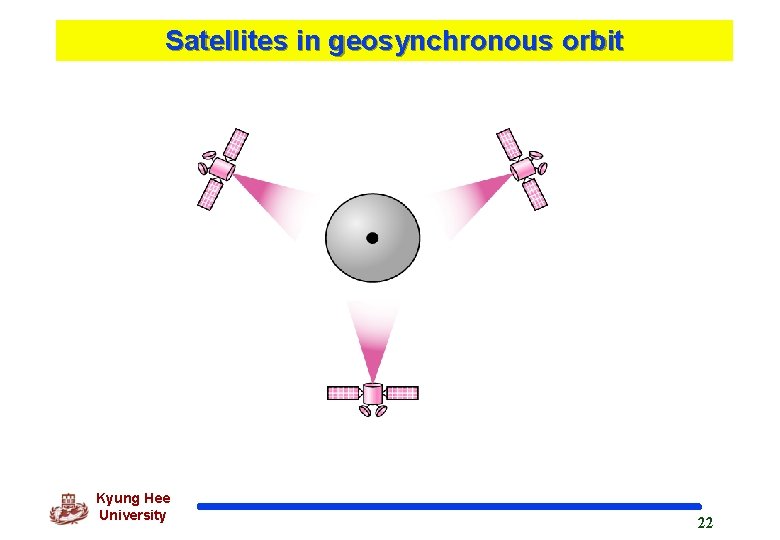
Example 2 Examples According to Kepler’s law, what is the period of a satellite that is located at an orbit approximately 35, 786 km above the earth? Solution Applying the formula, we get Period = (1/100) (35, 786 + 6378)1. 5 = 86, 579 s = 24 h A satellite like this is said to be stationary to the earth. The orbit, as we will see, is called a geosynchronous Kyung Hee orbit. University 18
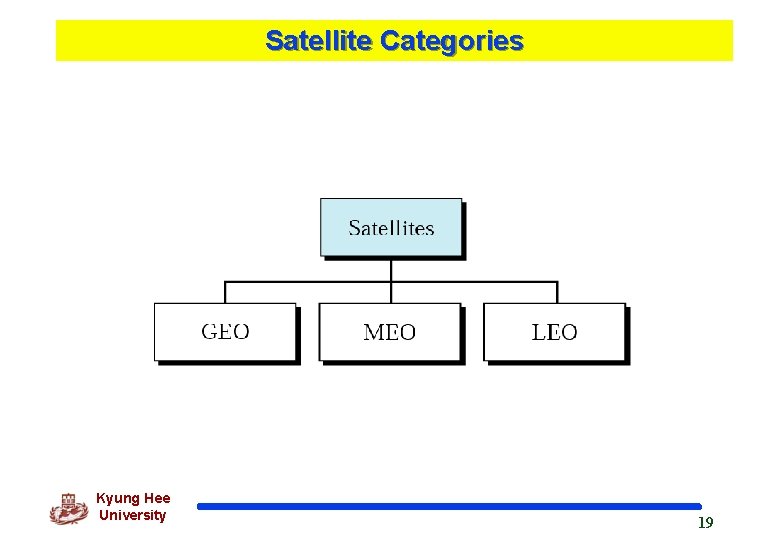
Satellite Categories Kyung Hee University 19
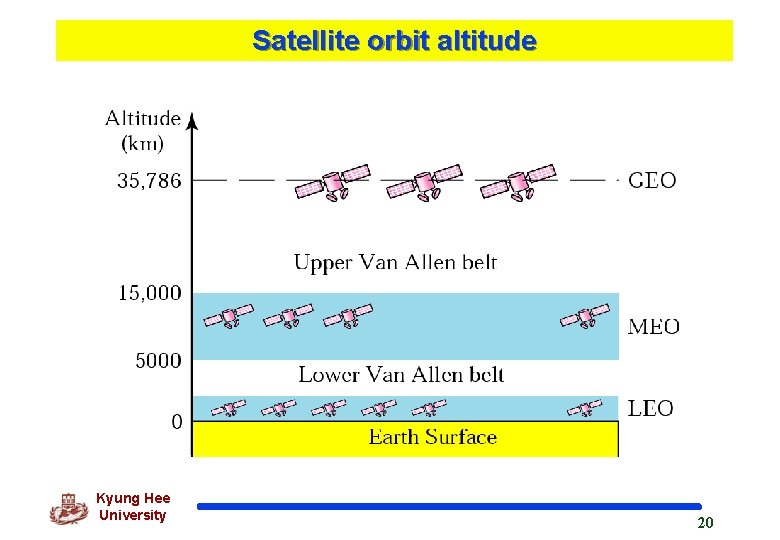
Satellite orbit altitude Kyung Hee University 20
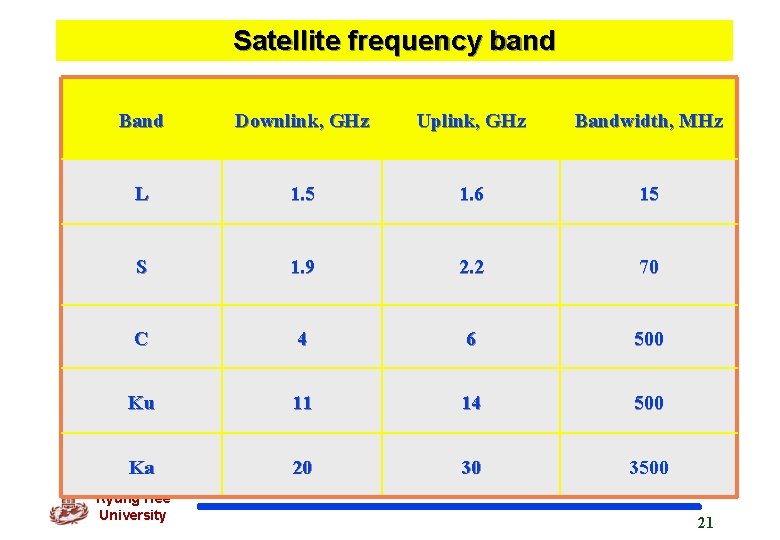
Satellite frequency band Band Downlink, GHz Uplink, GHz Bandwidth, MHz L 1. 5 1. 6 15 S 1. 9 2. 2 70 C 4 6 500 Ku 11 14 500 Ka 20 30 3500 Kyung Hee University 21
Satellites in geosynchronous orbit Kyung Hee University 22
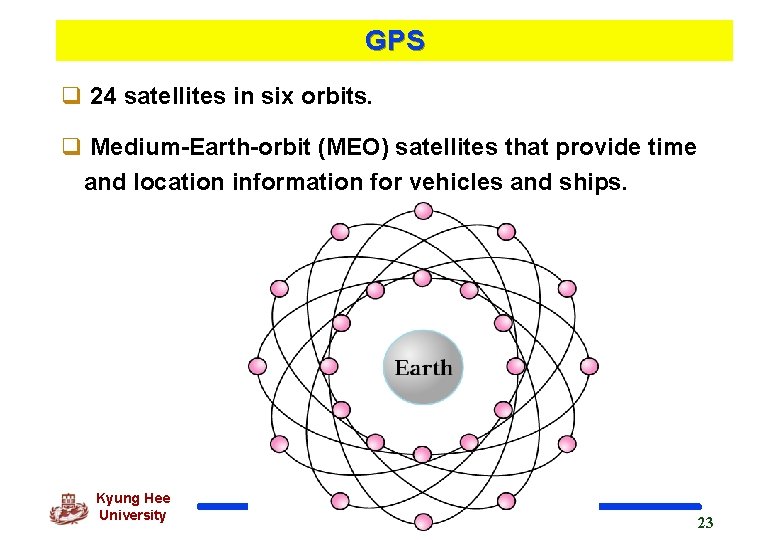
GPS q 24 satellites in six orbits. q Medium-Earth-orbit (MEO) satellites that provide time and location information for vehicles and ships. Kyung Hee University 23
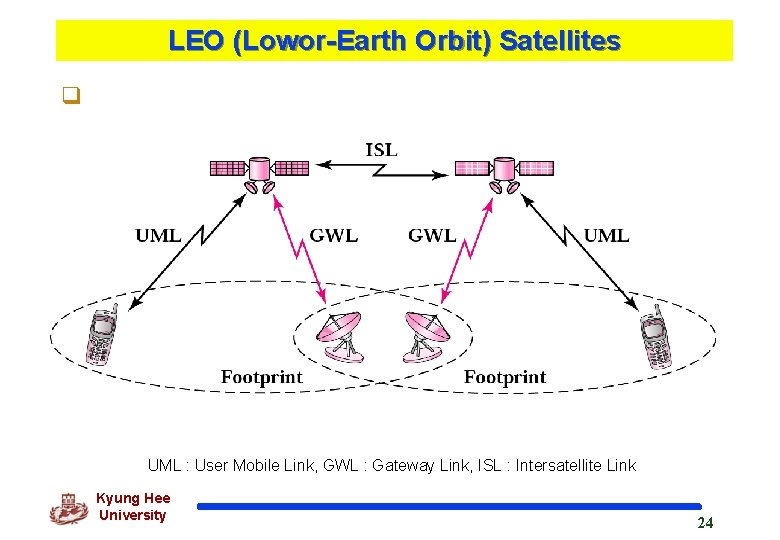
LEO (Lowor-Earth Orbit) Satellites q UML : User Mobile Link, GWL : Gateway Link, ISL : Intersatellite Link Kyung Hee University 24
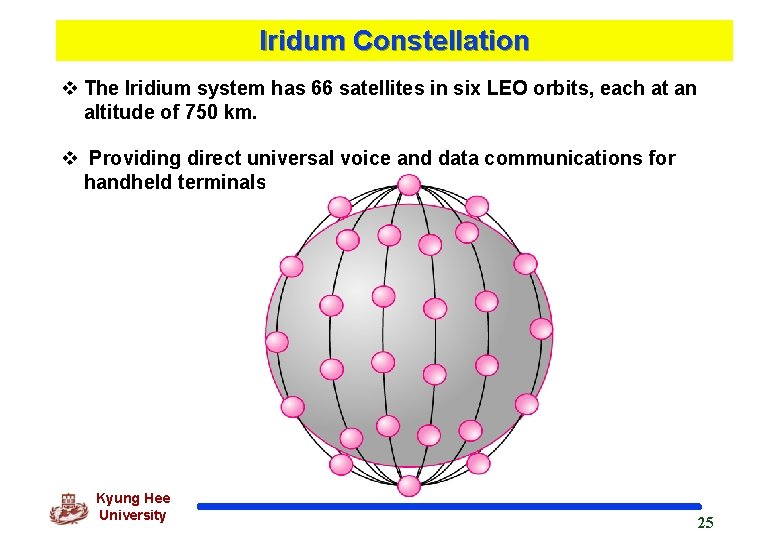
Iridum Constellation v The Iridium system has 66 satellites in six LEO orbits, each at an altitude of 750 km. v Providing direct universal voice and data communications for handheld terminals. Kyung Hee University 25
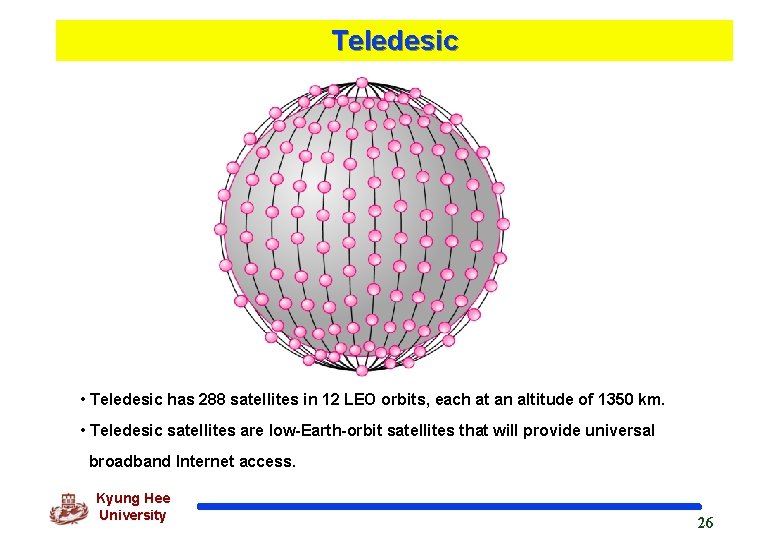
Teledesic • Teledesic has 288 satellites in 12 LEO orbits, each at an altitude of 1350 km. • Teledesic satellites are low-Earth-orbit satellites that will provide universal broadband Internet access. Kyung Hee University 26
Questions ! Kyung Hee University 27