
Chapter 17 Aldehydes and Ketones 17 1 Nomenclature
- Slides: 27
Chapter 17 Aldehydes and Ketones
17. 1 Nomenclature
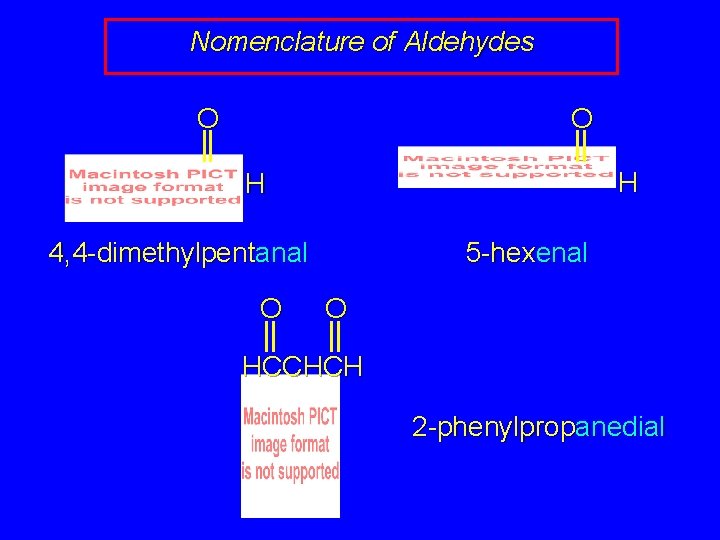
Nomenclature of Aldehydes O O H H 4, 4 -dimethylpentanal O 5 -hexenal O HCCHCH 2 -phenylpropanedial
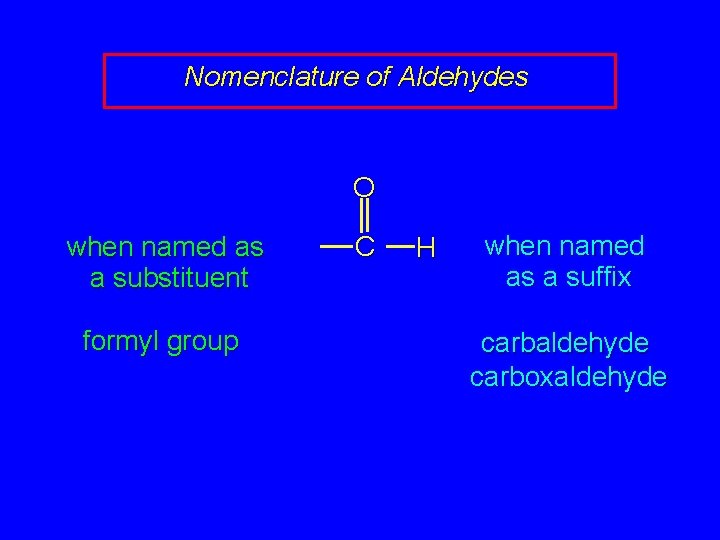
Nomenclature of Aldehydes O when named as a substituent formyl group C H when named as a suffix carbaldehyde carboxaldehyde
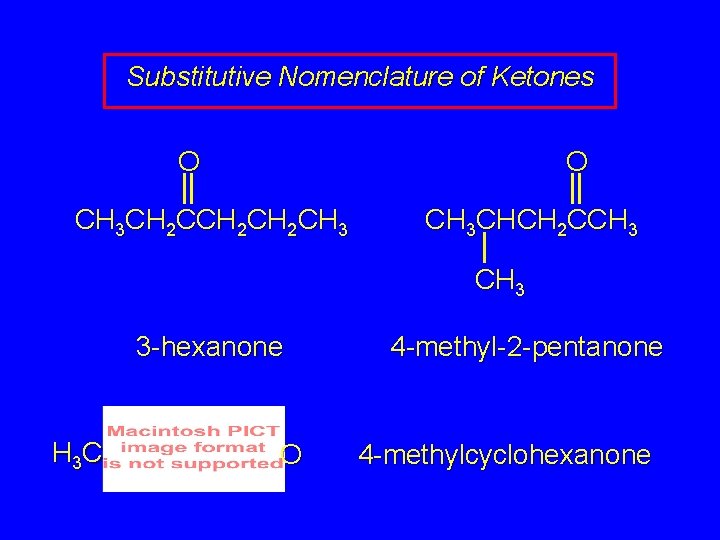
Substitutive Nomenclature of Ketones O O CH 3 CH 2 CH 2 CH 3 CHCH 2 CCH 3 3 -hexanone H 3 C O 4 -methyl-2 -pentanone 4 -methylcyclohexanone
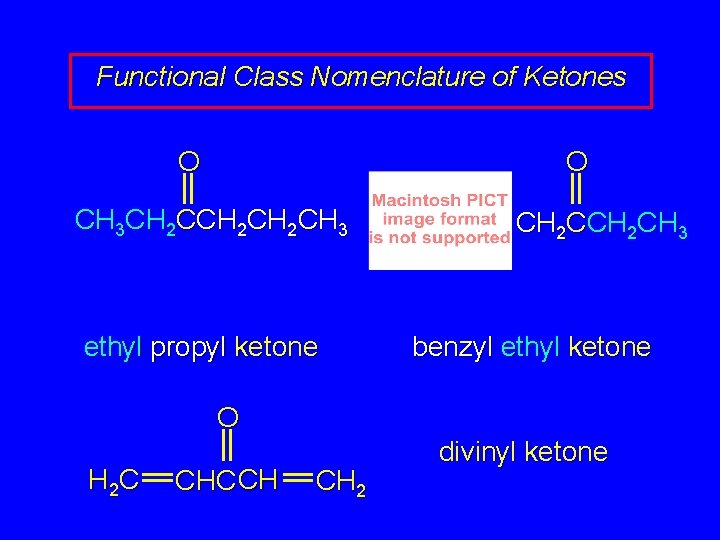
Functional Class Nomenclature of Ketones O O CH 3 CH 2 CH 2 CH 3 ethyl propyl ketone CH 2 CH 3 benzyl ethyl ketone O H 2 C CH CH 2 divinyl ketone
17. 2 Structure and Bonding: The Carbonyl Group
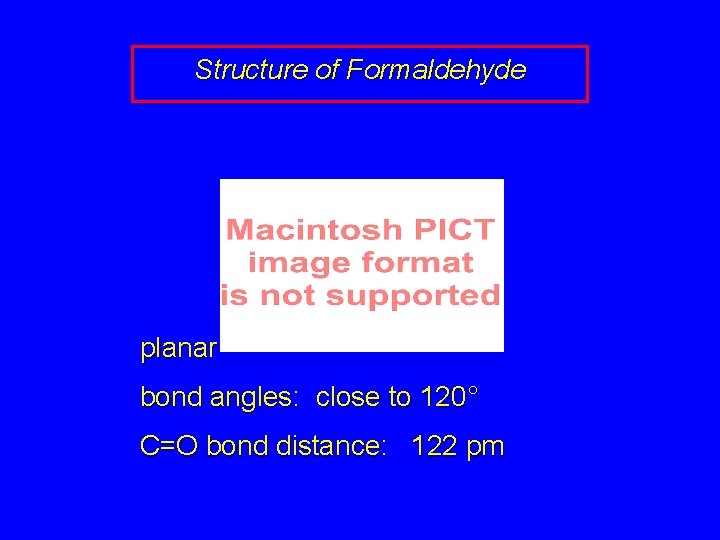
Structure of Formaldehyde planar bond angles: close to 120° C=O bond distance: 122 pm
The Carbonyl Group very polar double bond O 1 -butene propanal dipole moment = 0. 3 D dipole moment = 2. 5 D
Carbonyl group of a ketone is more stable than that of an aldehyde heat of combustion O H 2475 k. J/mol 2442 k. J/mol O Alkyl groups stabilize carbonyl groups the same way they stabilize carbon-carbon double bonds, carbocations, and free radicals.
Spread is greater for aldehydes and ketones than for alkenes O H 2475 k. J/mol Heats of combustion of C 4 H 8 isomeric alkenes CH 3 CH 2 CH=CH 2 2717 k. J/mol cis-CH 3 CH=CHCH 3 2710 k. J/mol trans-CH 3 CH=CHCH 3 2707 k. J/mol O 2442 k. J/mol (CH 3)2 C=CH 2 2700 k. J/mol
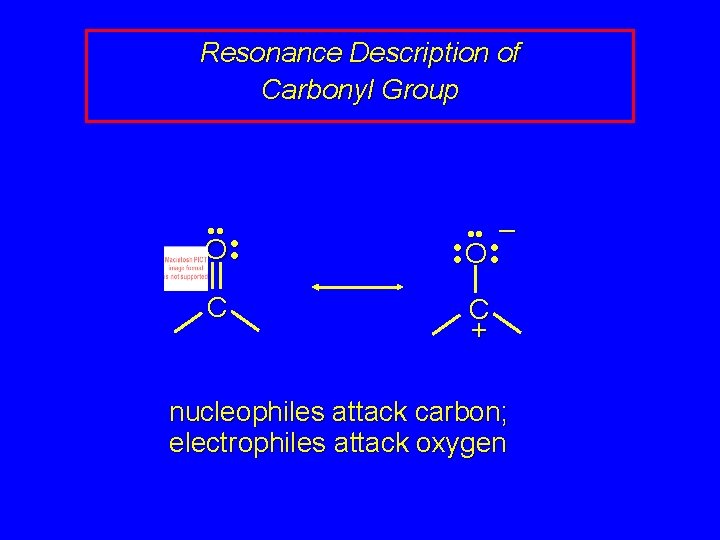
Resonance Description of Carbonyl Group • • – O • • C C + nucleophiles attack carbon; electrophiles attack oxygen
Bonding in Formaldehyde Carbon and oxygen are sp 2 hybridized
Bonding in Formaldehyde The half-filled p orbitals on carbon and oxygen overlap to form a p bond
17. 3 Physical Properties
Aldehydes and ketones have higher boiling than alkenes, but lower boiling points than alcohols. boiling point – 6°C O 49°C OH 97°C More polar than alkenes, but cannot form intermolecular hydrogen bonds to other carbonyl groups
17. 4 Sources of Aldehydes and Ketones
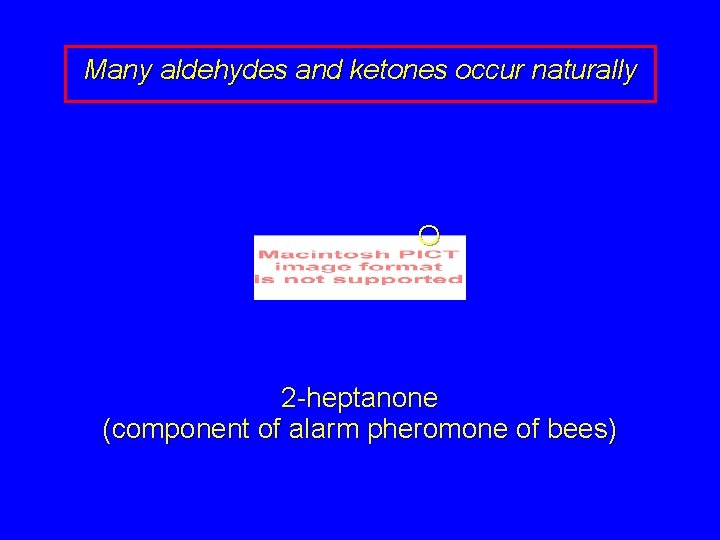
Many aldehydes and ketones occur naturally O 2 -heptanone (component of alarm pheromone of bees)
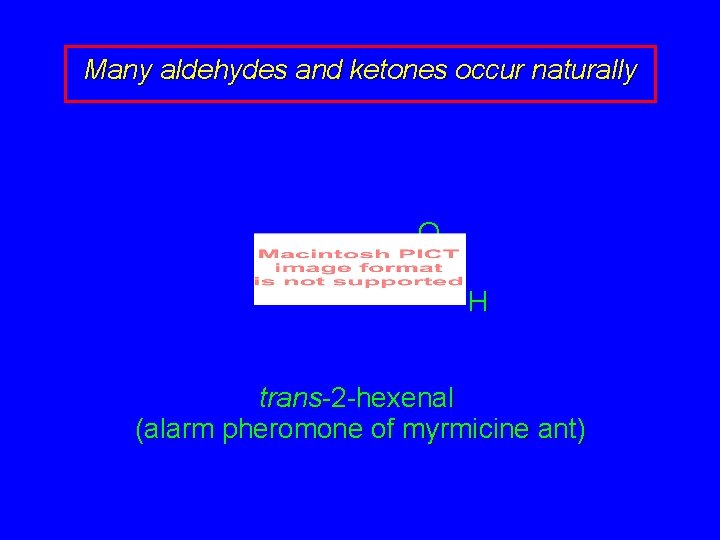
Many aldehydes and ketones occur naturally O H trans-2 -hexenal (alarm pheromone of myrmicine ant)
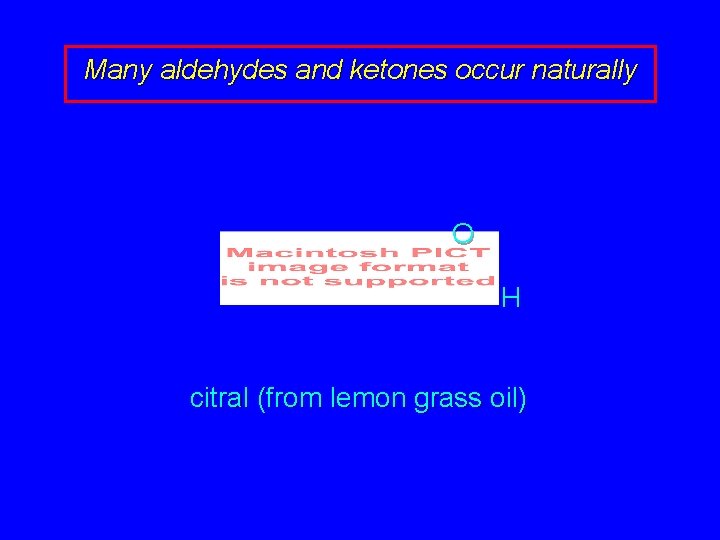
Many aldehydes and ketones occur naturally O H citral (from lemon grass oil)
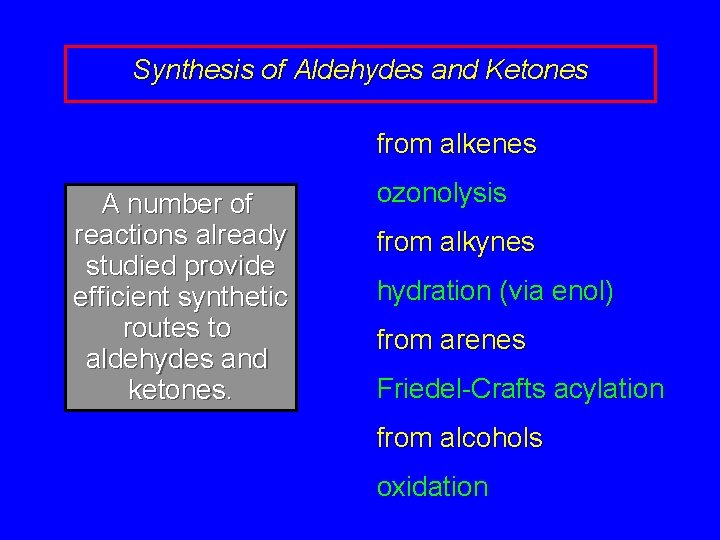
Synthesis of Aldehydes and Ketones from alkenes A number of reactions already studied provide efficient synthetic routes to aldehydes and ketones. ozonolysis from alkynes hydration (via enol) from arenes Friedel-Crafts acylation from alcohols oxidation
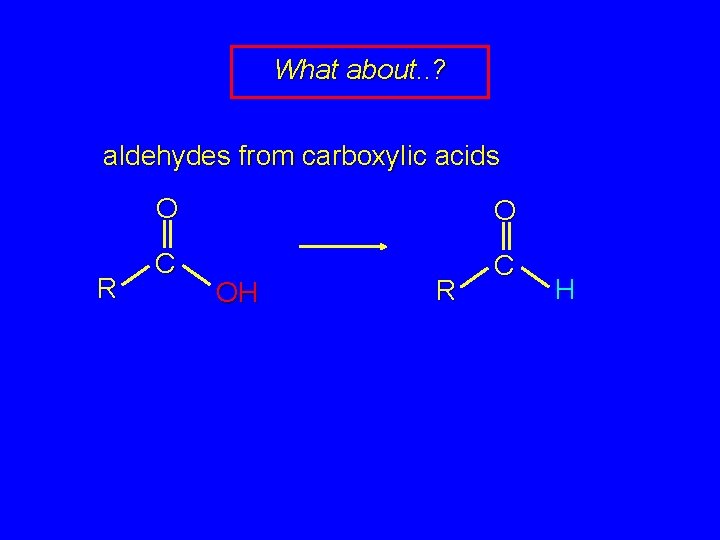
What about. . ? aldehydes from carboxylic acids R O O C C OH R H
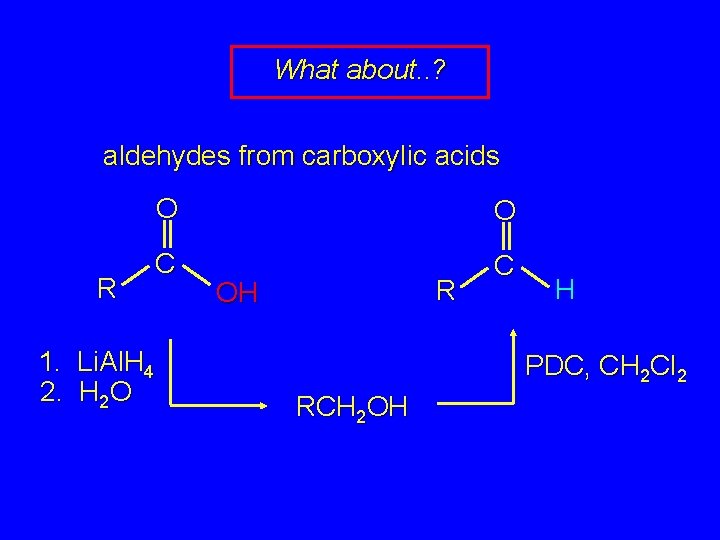
What about. . ? aldehydes from carboxylic acids R 1. Li. Al. H 4 2. H 2 O O O C C R OH H PDC, CH 2 Cl 2 RCH 2 OH
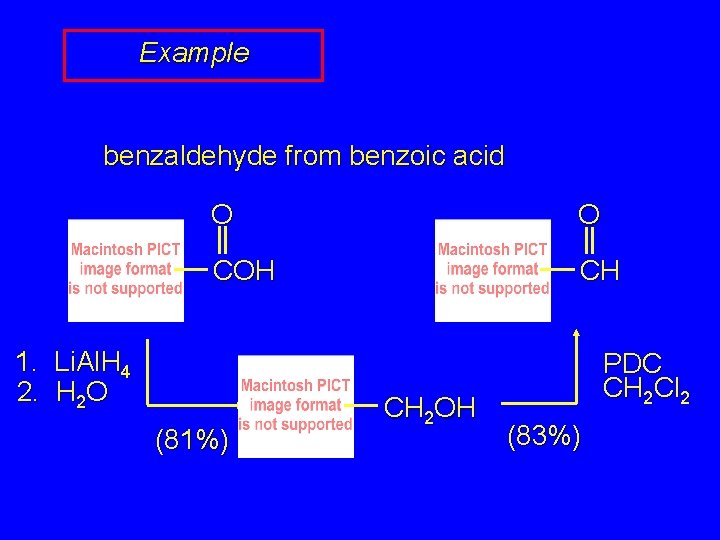
Example benzaldehyde from benzoic acid O O COH CH 1. Li. Al. H 4 2. H 2 O (81%) CH 2 OH PDC CH 2 Cl 2 (83%)
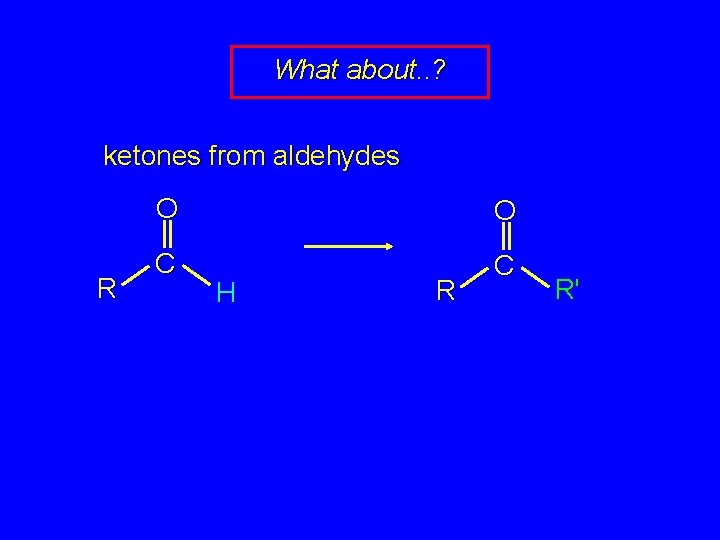
What about. . ? ketones from aldehydes R O O C C H R R'
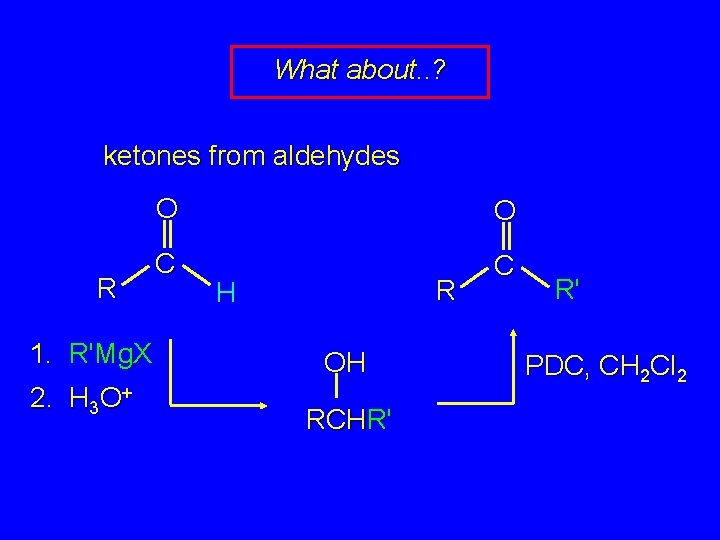
What about. . ? ketones from aldehydes R 1. R'Mg. X 2. H 3 O+ O O C C R H OH RCHR' R' PDC, CH 2 Cl 2
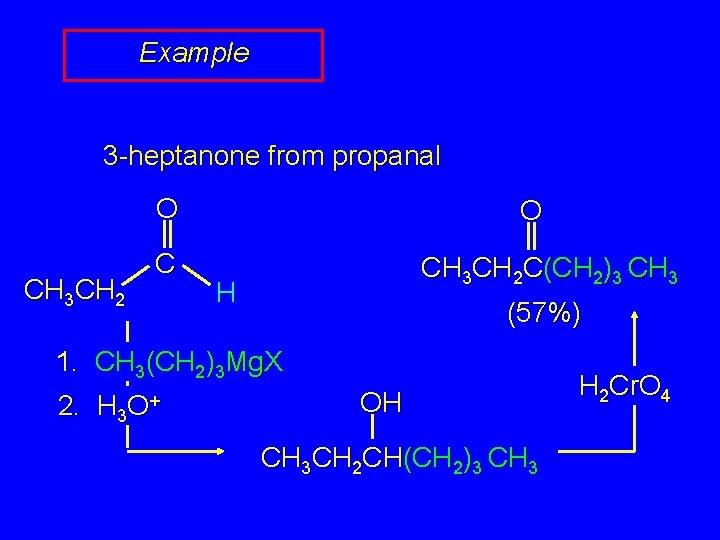
Example 3 -heptanone from propanal O CH 3 CH 2 C O CH 3 CH 2 C(CH 2)3 CH 3 H (57%) 1. CH 3(CH 2)3 Mg. X 2. H 3 O + OH CH 3 CH 2 CH(CH 2)3 CH 3 H 2 Cr. O 4