
Chapter 17 3 Current and Resistance Current is





- Slides: 13
Chapter 17 -3 Current and Resistance
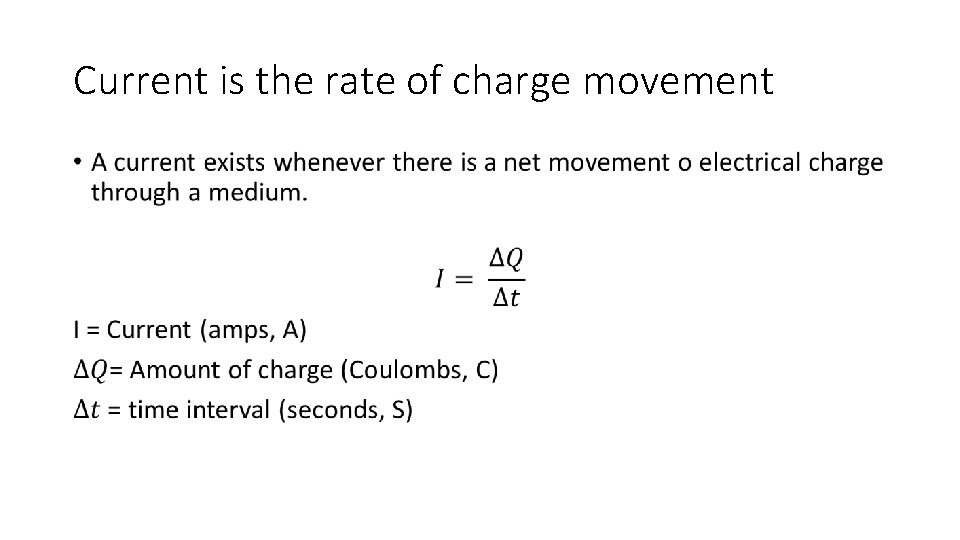
Current is the rate of charge movement •
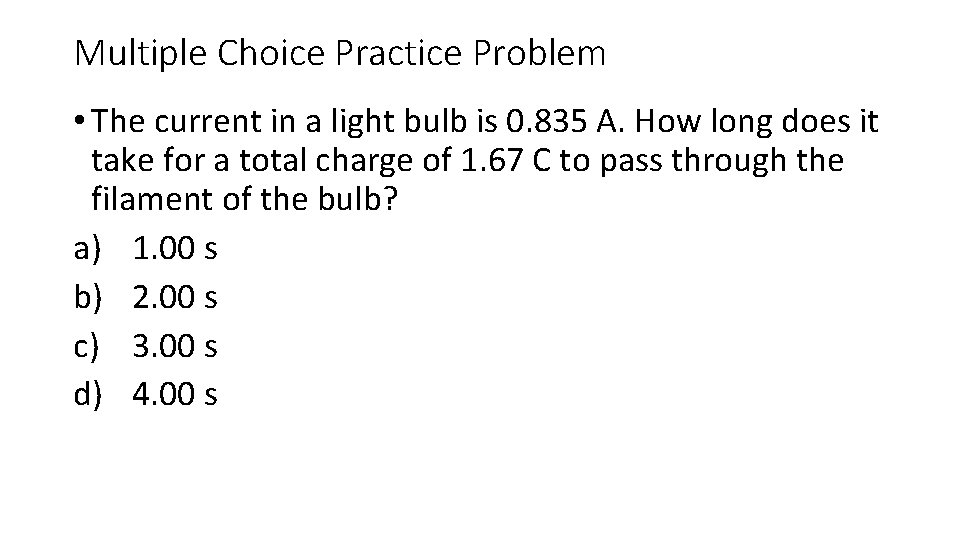
Multiple Choice Practice Problem • The current in a light bulb is 0. 835 A. How long does it take for a total charge of 1. 67 C to pass through the filament of the bulb? a) 1. 00 s b) 2. 00 s c) 3. 00 s d) 4. 00 s
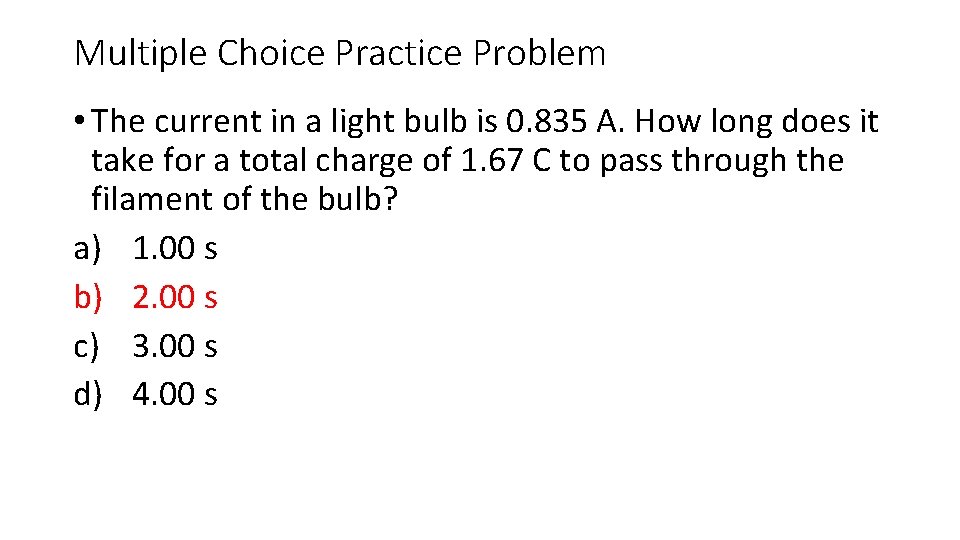
Multiple Choice Practice Problem • The current in a light bulb is 0. 835 A. How long does it take for a total charge of 1. 67 C to pass through the filament of the bulb? a) 1. 00 s b) 2. 00 s c) 3. 00 s d) 4. 00 s
Practice Problems – 10 minutes 1. In a particular television tube, the beam of current is 60 microamps (there are 1, 000 microamps in 1 amp). How long does it take for 3. 75 x 1014 electrons to strike the screen? (Recall an electron has a charge of -1. 60 x 10 -19 C). 2. A total charge of 9. 0 m. C (there are 1000 millicoulombs in 1 Coulomb) passes through a cross-sectional area of nichrome wire in 3. 5 s. a. What is the current in the wire? b. How many electrons pass through the cross-sectional area in 10. 0 s? c. If the number of charges that pass through the cross-sectional area during the given time interval doubles, what is the resulting current?
Practice Problems – 10 minutes 1. In a particular television tube, the beam of current is 60 microamps (there are 1, 000 microamps in 1 amp). How long does it take for 3. 75 x 1014 electrons to strike the screen? (Recall an electron has a charge of -1. 60 x 10 -19 C). (1. 0 second) 1. A total charge of 9. 0 m. C (there are 1000 millicoulombs in 1 Coulomb) passes through a cross-sectional area of nichrome wire in 3. 5 s. a a. What is the current in the wire? (2. 6 x 10 -3 A) b. How many electrons pass through the cross-sectional area in 10. 0 s (1. 6 x 10¹⁷ electrons) c. If the number of charges that pass through the cross-sectional area during the given time interval doubles, what is the resulting current? (5. 1 x 10 -3 A)
Resistance to Current • A 9. 0 V battery is capable of producing more current than a 6. 0 V battery. However, this will not always be the case. • If the 9. 0 V battery is hooked up to a circuit with a lot of resistance, while the 6. 0 V battery is hooked up to a circuit without much resistance, the current could actually be higher in the 6. 0 V battery.
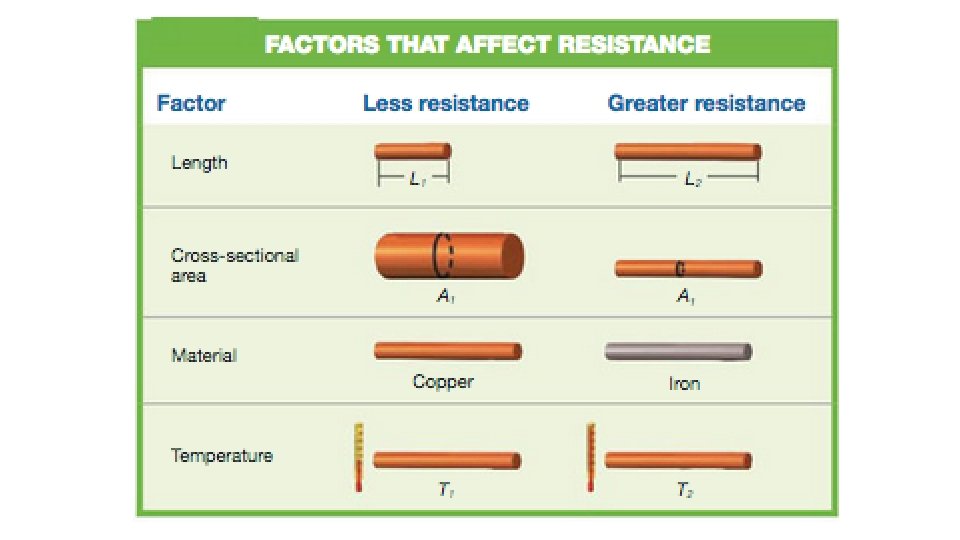
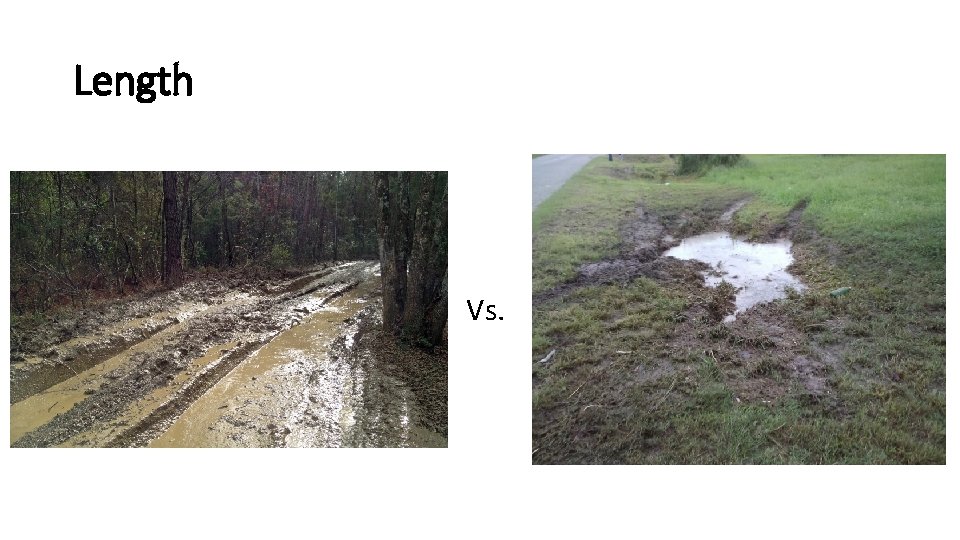
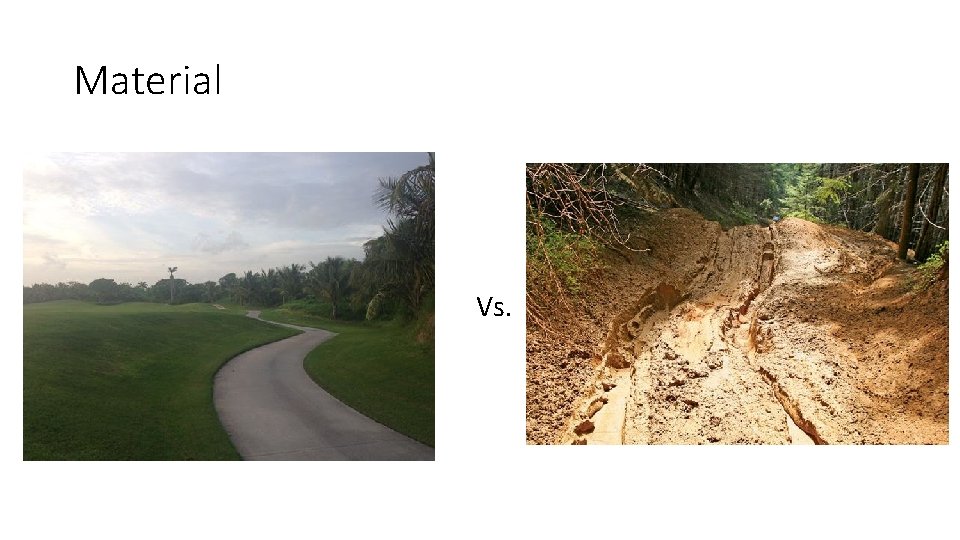
Resistance depends on length, area, material, and temperature. • In order to have as little resistance as possible in a circuit, you would want: • Short cable • Large cross sectional area • Excellent conducting material, such as copper. • Low temperature
Length Vs.
Cross-Sectional Area Vs.
Material Vs.
Temperature • Not entirely sure how to illustrate this/couldn’t find the pictures I needed…. • As temperature increases, electrons crash into the atoms of the conductor far more often, as the atoms are vibrating around much more. Each collision slows the electrons down and therefore creates more resistance.