
Chapter 16 WRITTEN LANGUAGE Writing is the symbolic
Chapter 16 WRITTEN LANGUAGE
Writing is the symbolic representation of language through the use of graphic signs - Writing as a system is not acquired but learned consciously - Not all languages have a writing system - There are large numbers of individuals who cannot use the system in their native languages - Writing is a recent phenomenon: - cave drawings (20, 000 years ago) - clay tokens (10, 000 years ago) - cuneiform writing ( 5, 000 years ago) - ancient writing system (3, 000 years ago) ( found in east Georgia) http: //agenda. ge/news/62578/eng
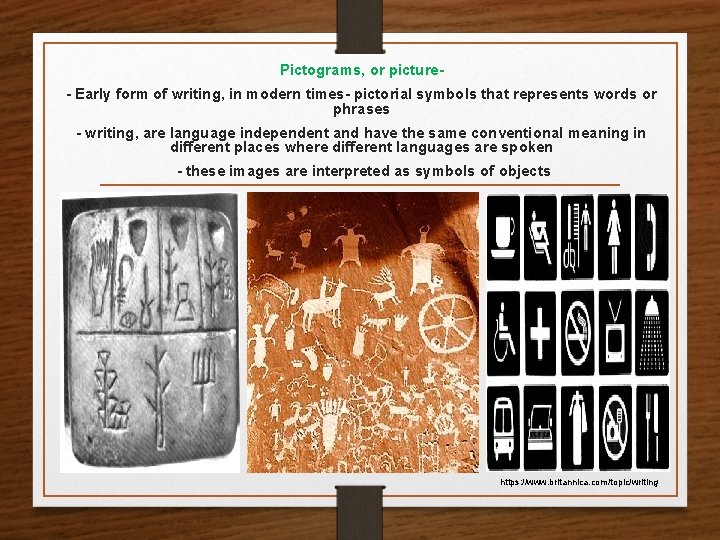
Pictograms, or picture- Early form of writing, in modern times- pictorial symbols that represents words or phrases - writing, are language independent and have the same conventional meaning in different places where different languages are spoken - these images are interpreted as symbols of objects https: //www. britannica. com/topic/writing
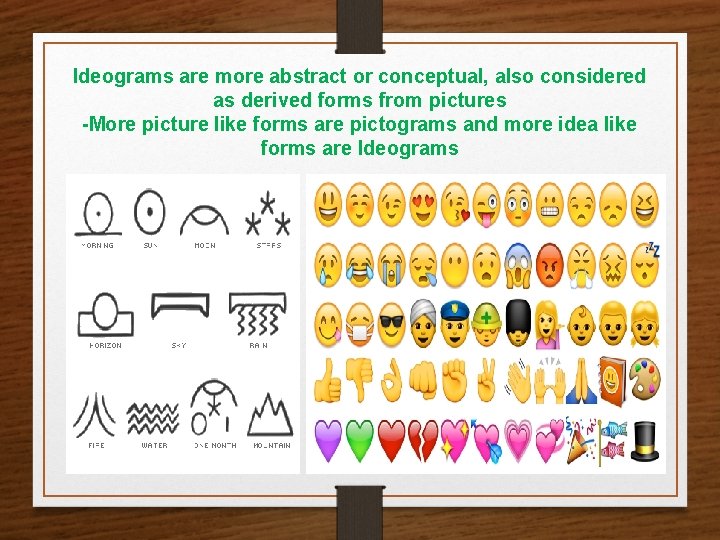
Ideograms are more abstract or conceptual, also considered as derived forms from pictures -More picture like forms are pictograms and more idea like forms are Ideograms
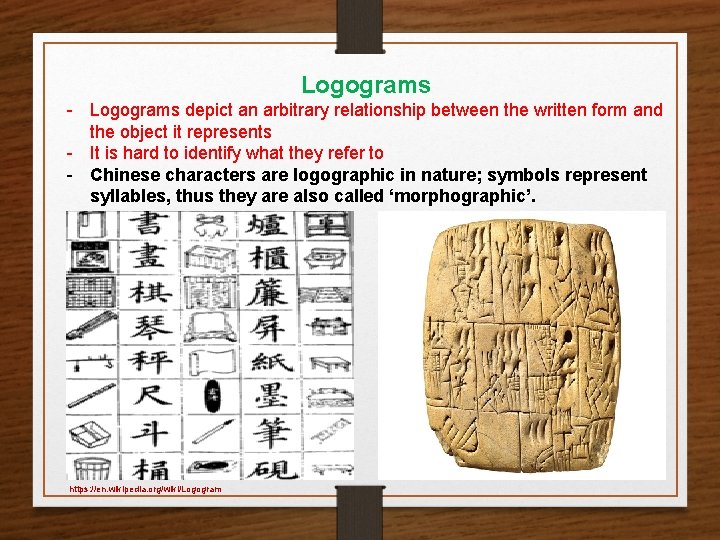
Logograms - Logograms depict an arbitrary relationship between the written form and the object it represents - It is hard to identify what they refer to - Chinese characters are logographic in nature; symbols represent syllables, thus they are also called ‘morphographic’. https: //en. wikipedia. org/wiki/Logogram
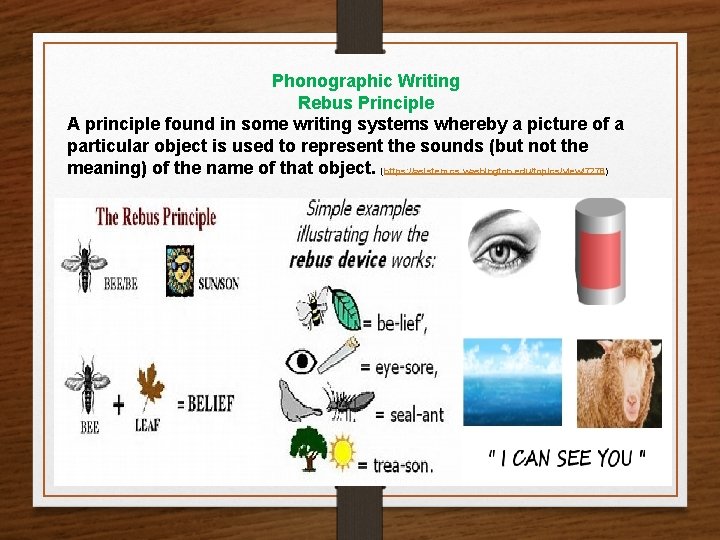
Phonographic Writing Rebus Principle A principle found in some writing systems whereby a picture of a particular object is used to represent the sounds (but not the meaning) of the name of that object. (https: //aslstem. cs. washington. edu/topics/view/7278)
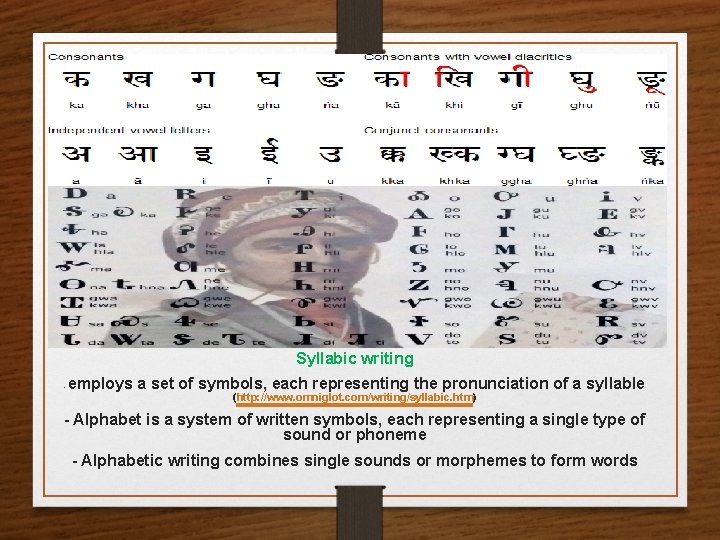
Syllabic writing - employs a set of symbols, each representing the pronunciation of a syllable (http: //www. omniglot. com/writing/syllabic. htm) - Alphabet is a system of written symbols, each representing a single type of sound or phoneme - Alphabetic writing combines single sounds or morphemes to form words
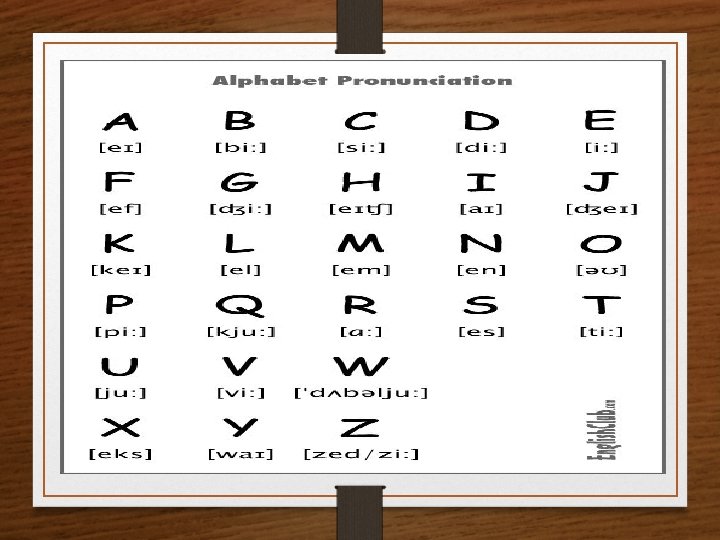
Alphabetic Writing English writing is alphabetic in a loose sense - irregular correspondence between sound and symbolic representation due to historical influences on the form of written English -written conventions in French and Latin (/qu/ instead of /cw/) -influence from Flemish printers (ghost from gheest) -changes in pronunciation but not in written form (knight) -pronunciation of final –e and how it influences previous vowels (hat/hate, not/note) -preserve words’ Latin origin (‘dette’ became ‘debt’. ‘iland’ became ‘island’) http: //www. omniglot. com/writing/english. htm
English Orthography
- Slides: 9