
Chapter 16 Waves and Wave Motion What is
- Slides: 42
Chapter 16 Waves and Wave Motion
What is a Mechanical Wave? A Travelling Mechanical Wave is a disturbance carrying energy through a medium without any overall motion of that medium. Examples of Mechanical Waves: Water waves Waves at sea Waves on a rope Waves on a spring Sound waves Ultrasound waves Seismic waves
What are Electromagnetic Waves? Electromagnetic Waves are energy transmitted from one place to another at the Speed of Light (3 108 m s-1 in a vacuum).
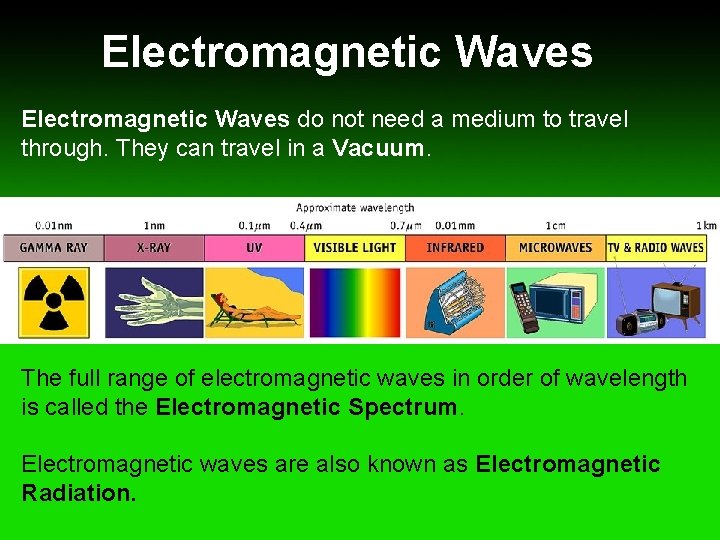
Electromagnetic Waves do not need a medium to travel through. They can travel in a Vacuum. The full range of electromagnetic waves in order of wavelength is called the Electromagnetic Spectrum. Electromagnetic waves are also known as Electromagnetic Radiation.
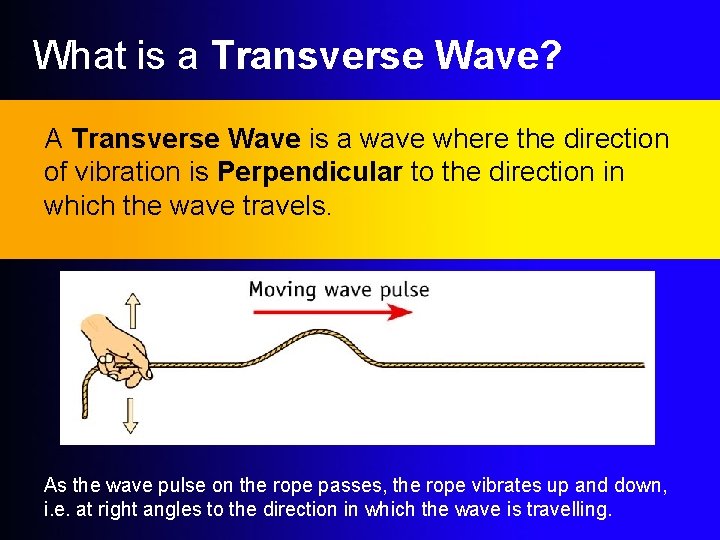
What is a Transverse Wave? A Transverse Wave is a wave where the direction of vibration is Perpendicular to the direction in which the wave travels. As the wave pulse on the rope passes, the rope vibrates up and down, i. e. at right angles to the direction in which the wave is travelling.
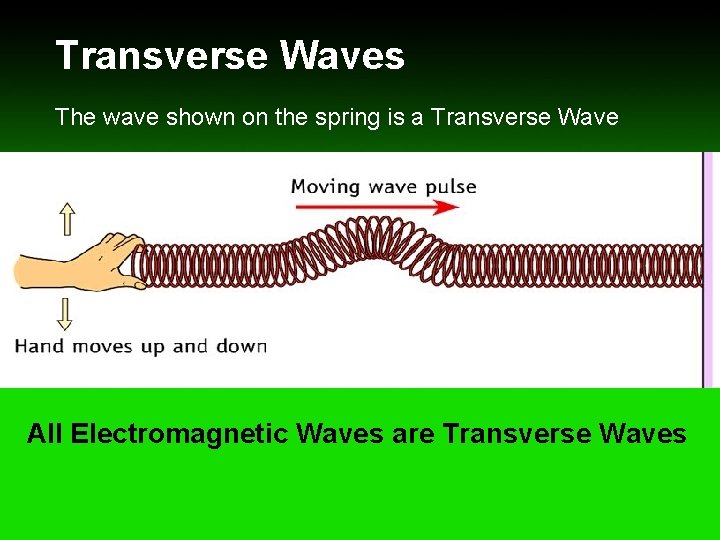
Transverse Waves The wave shown on the spring is a Transverse Wave All Electromagnetic Waves are Transverse Waves
What is a Longitudinal Wave? A Longitudinal Wave is a wave where the direction of vibration is Parallel to the direction in which the wave travels.
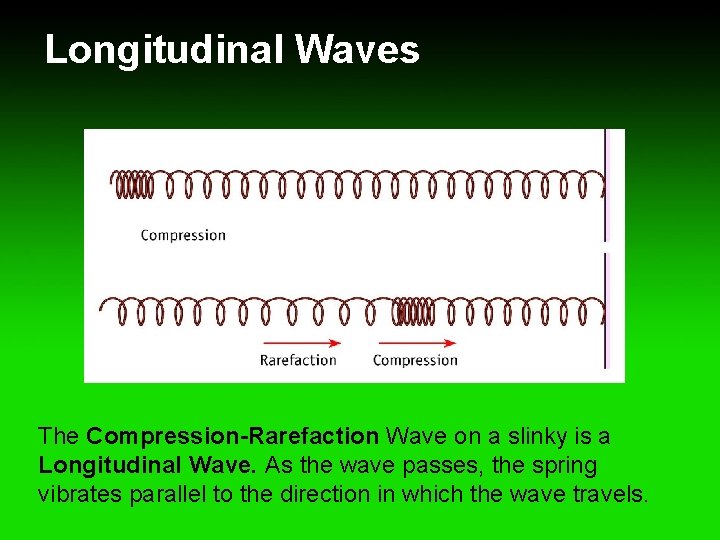
Longitudinal Waves The Compression-Rarefaction Wave on a slinky is a Longitudinal Wave. As the wave passes, the spring vibrates parallel to the direction in which the wave travels.
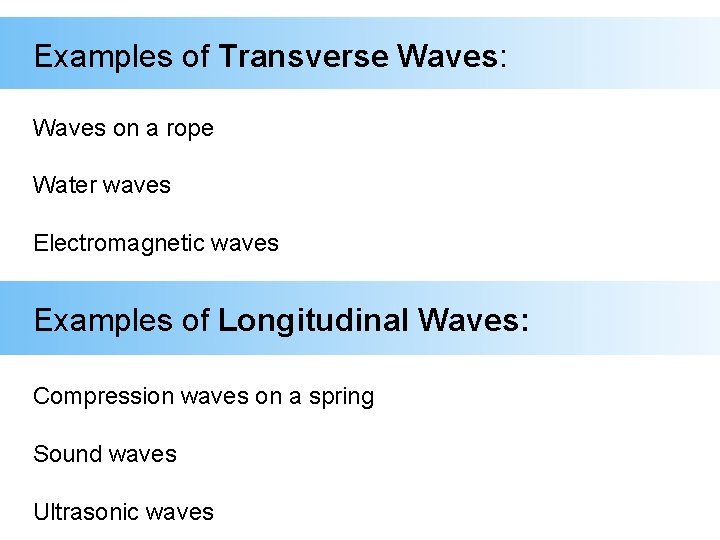
Examples of Transverse Waves: Waves on a rope Water waves Electromagnetic waves Examples of Longitudinal Waves: Compression waves on a spring Sound waves Ultrasonic waves
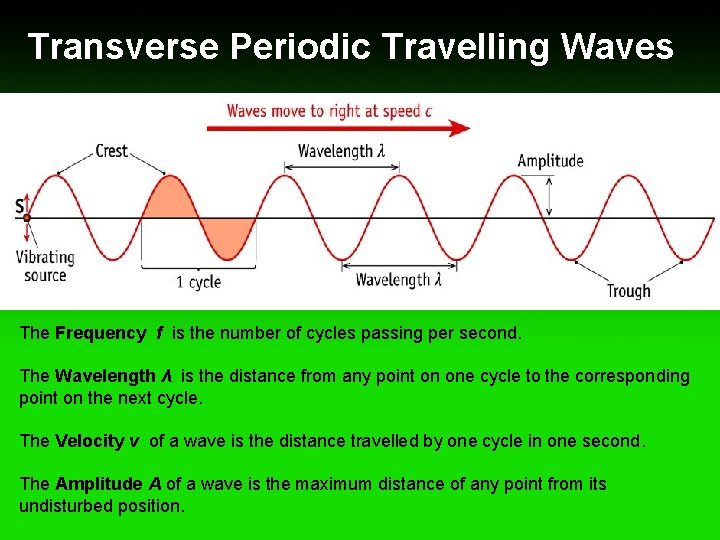
Transverse Periodic Travelling Waves The Frequency f is the number of cycles passing per second. The Wavelength λ is the distance from any point on one cycle to the corresponding point on the next cycle. The Velocity v of a wave is the distance travelled by one cycle in one second. The Amplitude A of a wave is the maximum distance of any point from its undisturbed position.
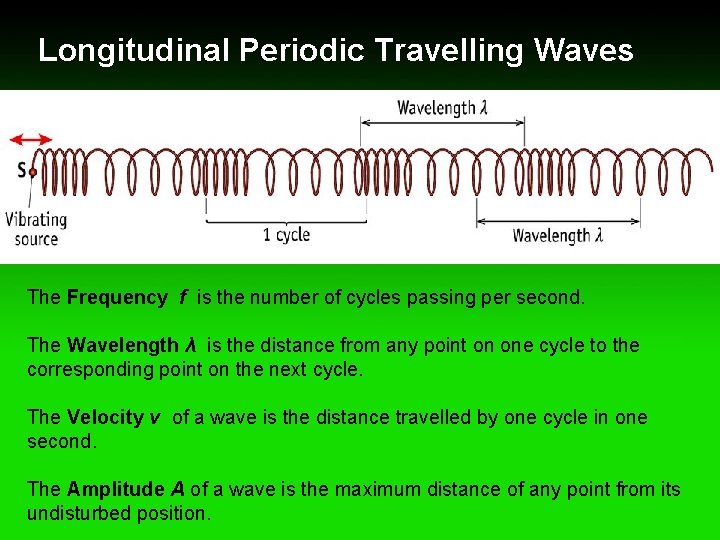
Longitudinal Periodic Travelling Waves The Frequency f is the number of cycles passing per second. The Wavelength λ is the distance from any point on one cycle to the corresponding point on the next cycle. The Velocity v of a wave is the distance travelled by one cycle in one second. The Amplitude A of a wave is the maximum distance of any point from its undisturbed position.
What is meant by the Frequency of a Wave? The Frequency of a Wave is the number of cycles passing per second.
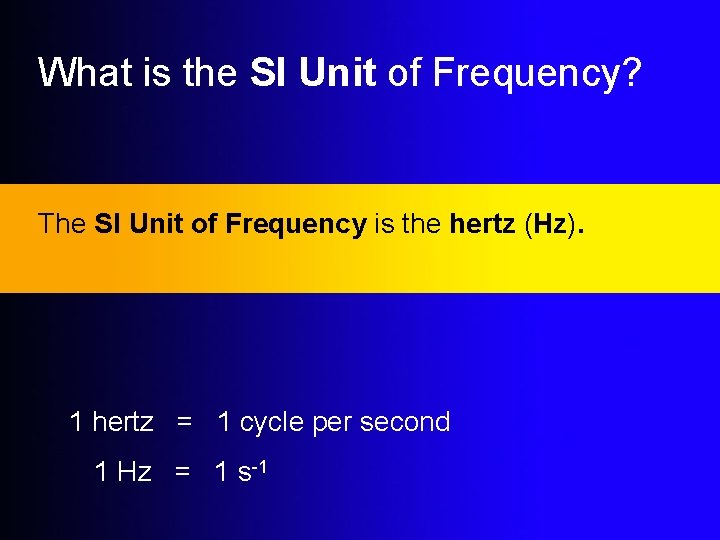
What is the SI Unit of Frequency? The SI Unit of Frequency is the hertz (Hz). 1 hertz = 1 cycle per second 1 Hz = 1 s-1
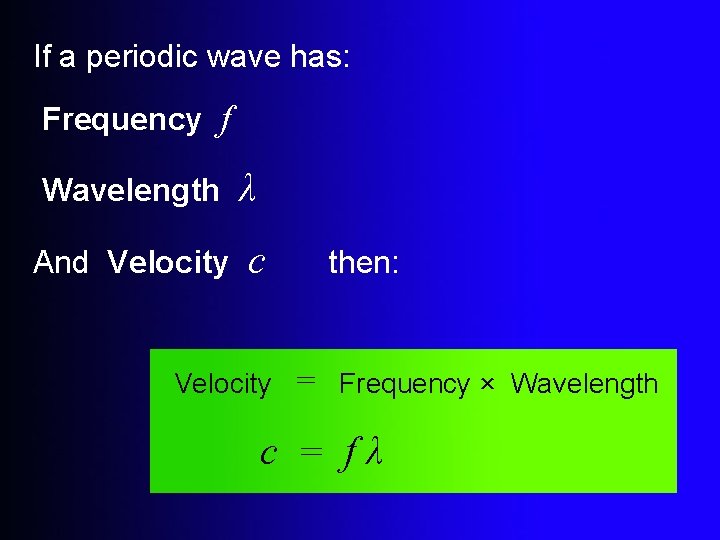
If a periodic wave has: Frequency f Wavelength λ And Velocity c Velocity then: = Frequency × Wavelength c = fλ
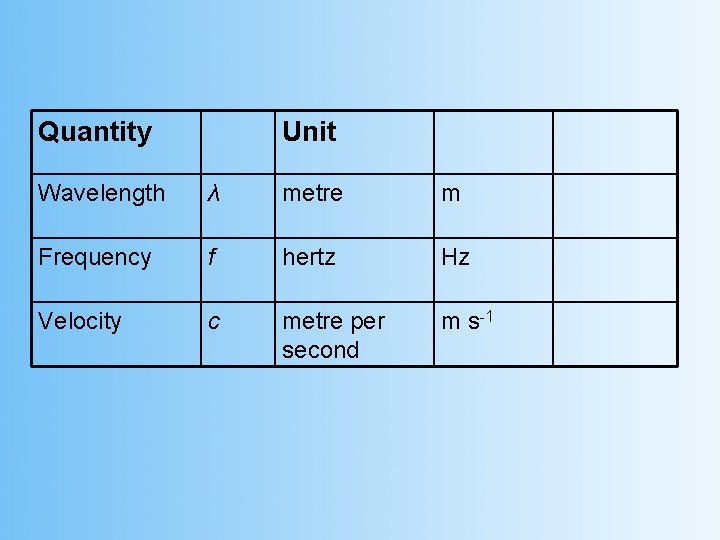
Quantity Unit Wavelength λ metre m Frequency f hertz Hz Velocity c metre per second m s-1
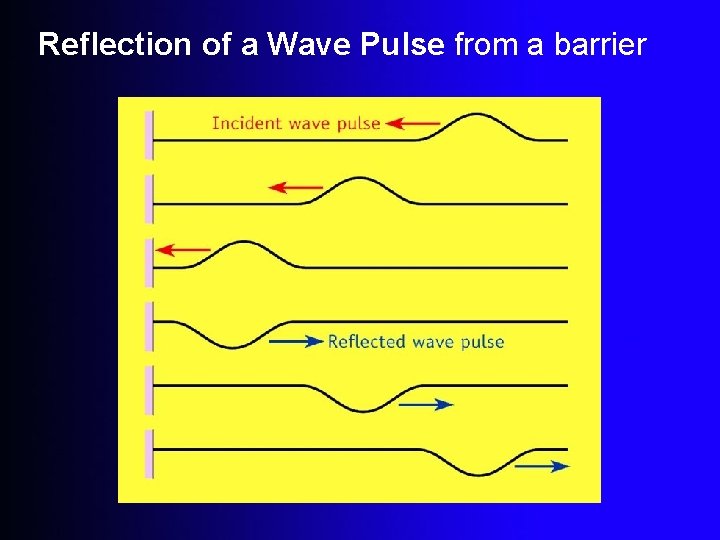
Reflection of a Wave Pulse from a barrier
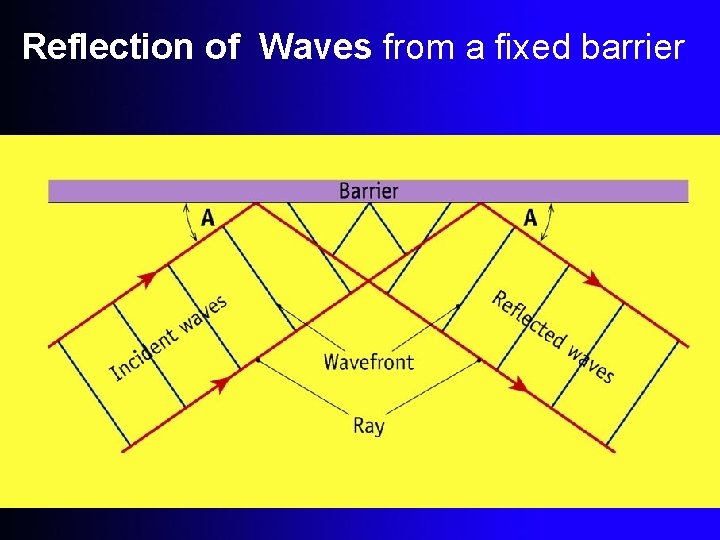
Reflection of Waves from a fixed barrier
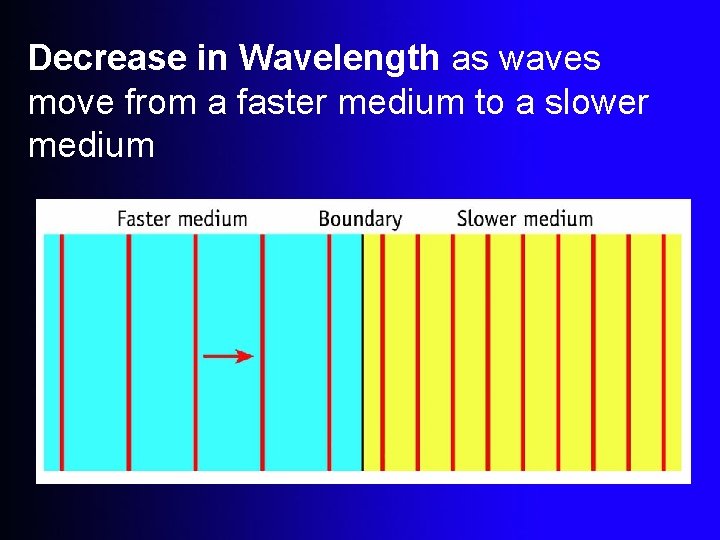
Decrease in Wavelength as waves move from a faster medium to a slower medium
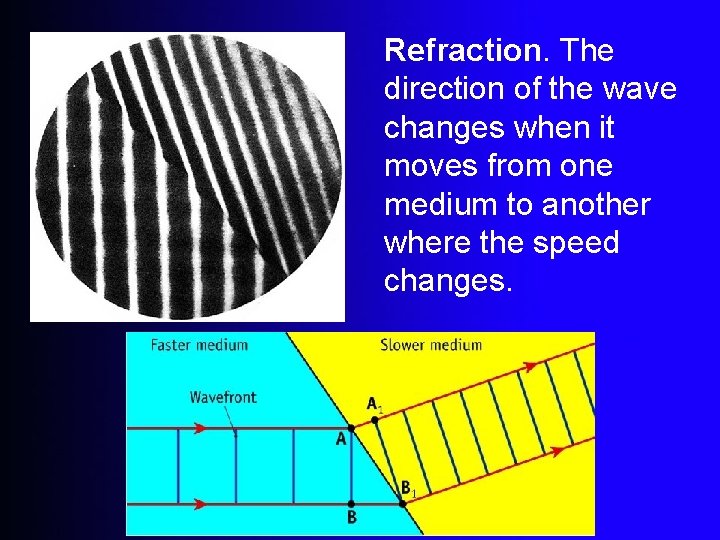
What is Refraction of Waves? The changing of direction of a wave when it enters a region where its speed changes is called Refraction.
Refraction. The direction of the wave changes when it moves from one medium to another where the speed changes.
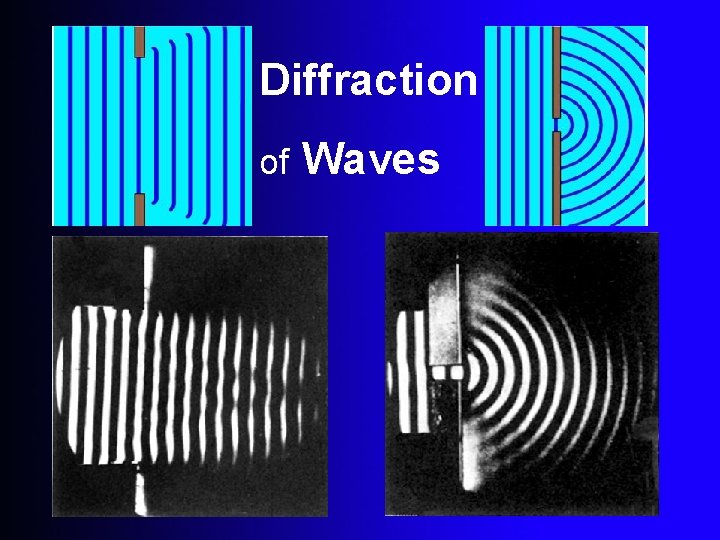
What is Diffraction of Waves? Diffraction is the spreading out of a wave when it passes through a gap or passes by an obstacle. Diffraction is only significant when the width of the gap or obstacle is similar in size to the wavelength of the wave.
Diffraction of Waves
What is Interference of Waves? When waves from two sources meet they combine to form a new wave. The displacement at any point on the new wave is the algebraic sum of the displacements of the two original waves. This is Interference of Waves.
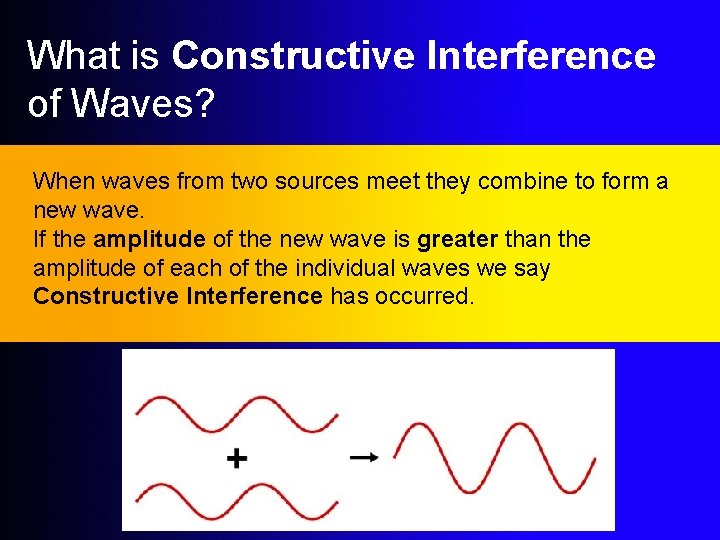
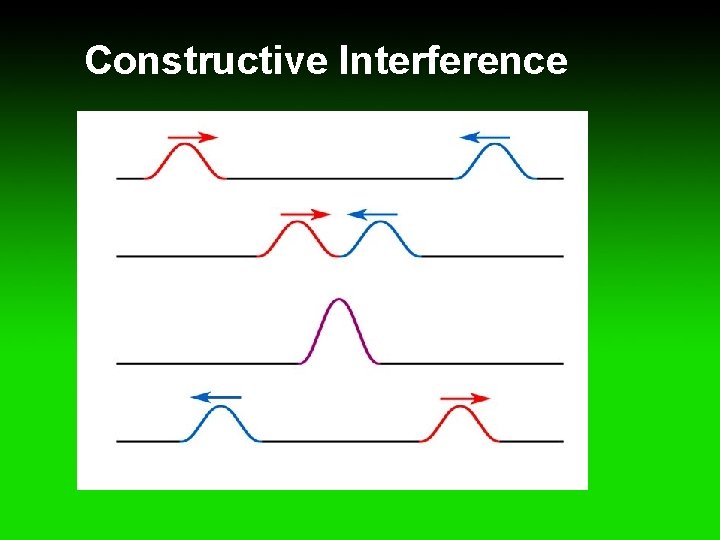
What is Constructive Interference of Waves? When waves from two sources meet they combine to form a new wave. If the amplitude of the new wave is greater than the amplitude of each of the individual waves we say Constructive Interference has occurred.
Constructive Interference
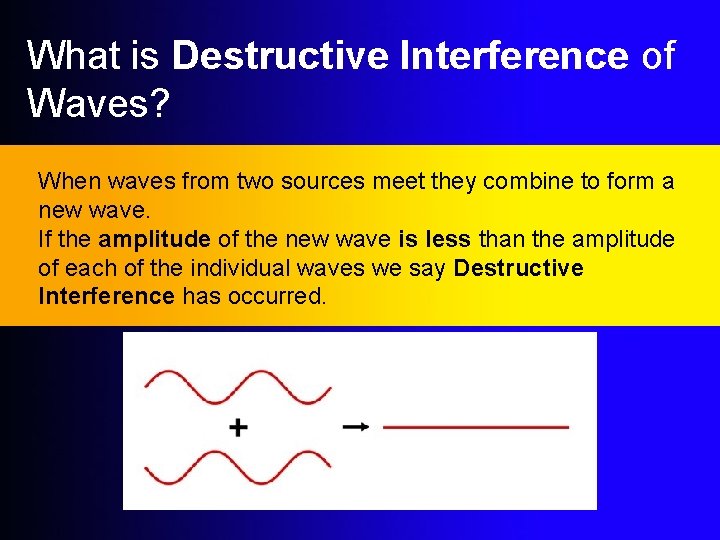
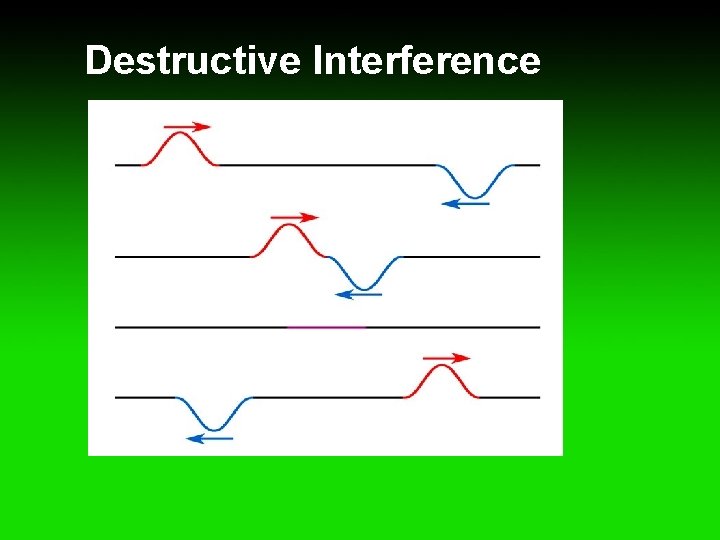
What is Destructive Interference of Waves? When waves from two sources meet they combine to form a new wave. If the amplitude of the new wave is less than the amplitude of each of the individual waves we say Destructive Interference has occurred.
Destructive Interference
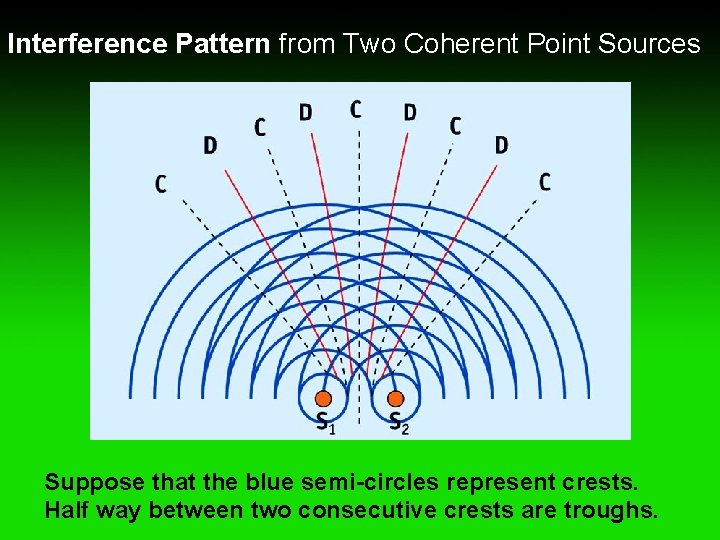
What are Coherent Sources? Two sources are Coherent if the waves from each source are in phase or have a constant phase difference between them. If this is so they must also have the same frequency.
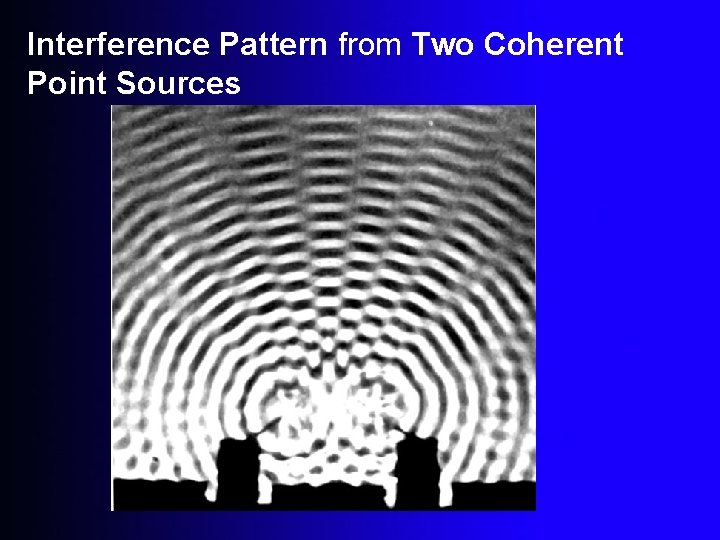
Interference Pattern from Two Coherent Point Sources Suppose that the blue semi-circles represent crests. Half way between two consecutive crests are troughs.
Interference Pattern from Two Coherent Point Sources
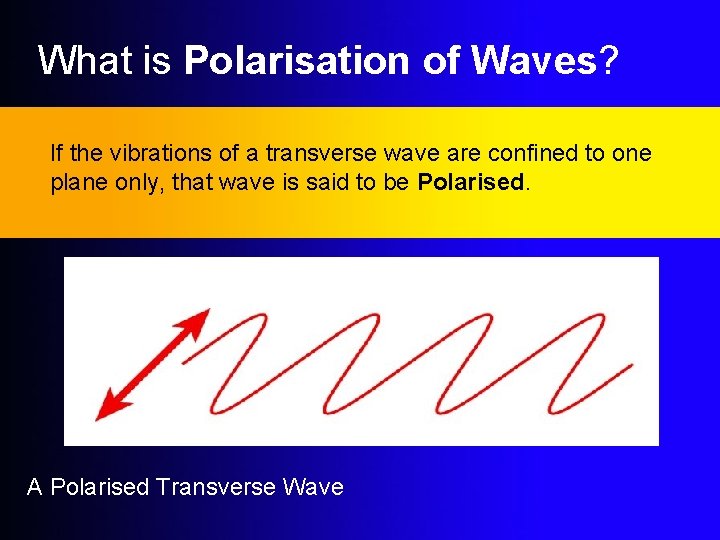
What is Polarisation of Waves? If the vibrations of a transverse wave are confined to one plane only, that wave is said to be Polarised. A Polarised Transverse Wave
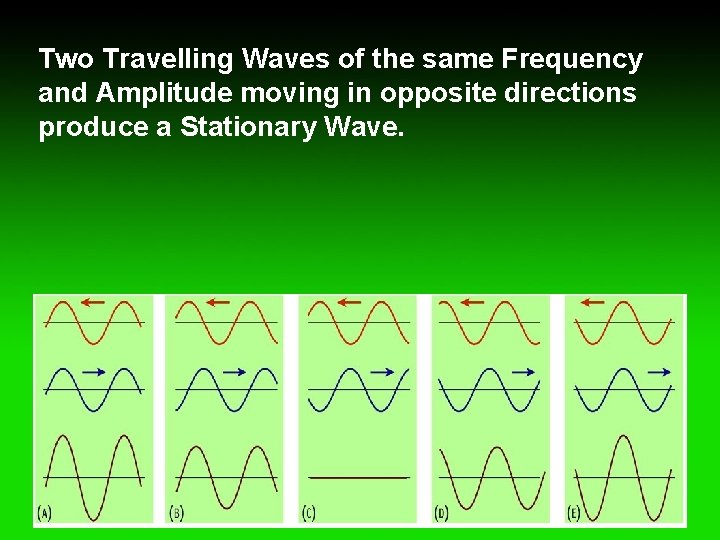
What is a Stationary Wave? When two periodic travelling waves of the same frequency and amplitude moving in opposite directions meet, they interfere with other. The resulting wave formed is called a Stationary Wave (or a Standing wave).
Two Travelling Waves of the same Frequency and Amplitude moving in opposite directions produce a Stationary Wave.
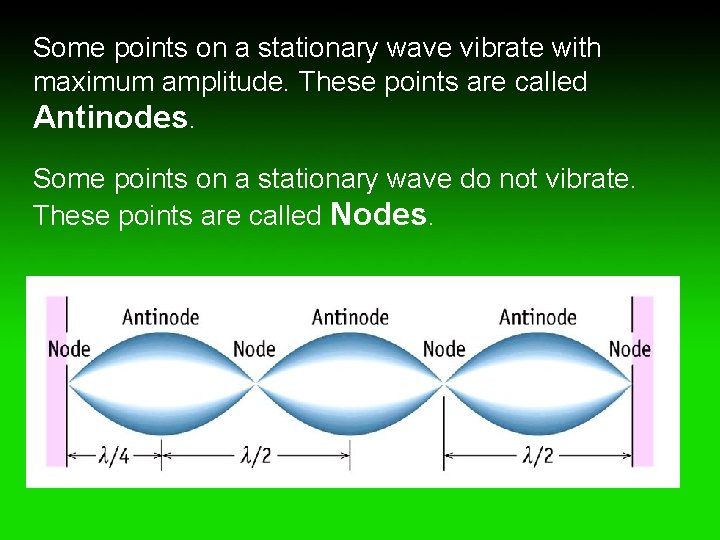
Some points on a stationary wave vibrate with maximum amplitude. These points are called Antinodes. Some points on a stationary wave do not vibrate. These points are called Nodes.
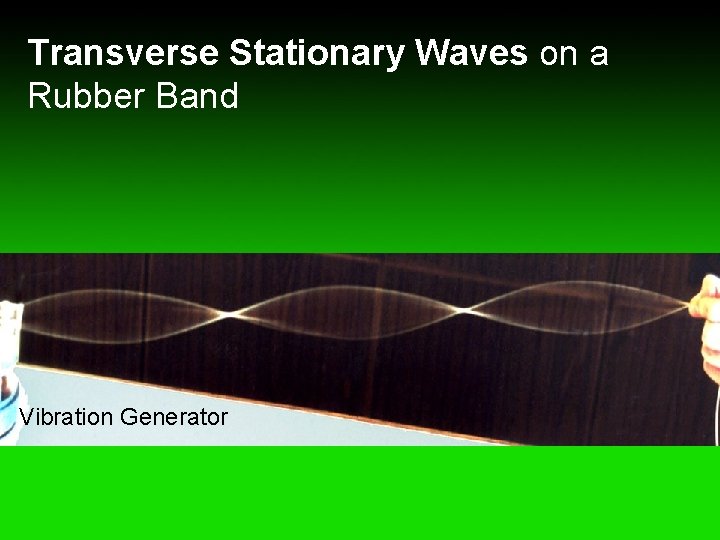
Transverse Stationary Waves on a Rubber Band Vibration Generator
Frequency of Stationary Wave The Frequency of vibration of every vibrating particle on a stationary wave is the same. The Frequency of a stationary wave is the same as the frequency of the travelling wave producing it.
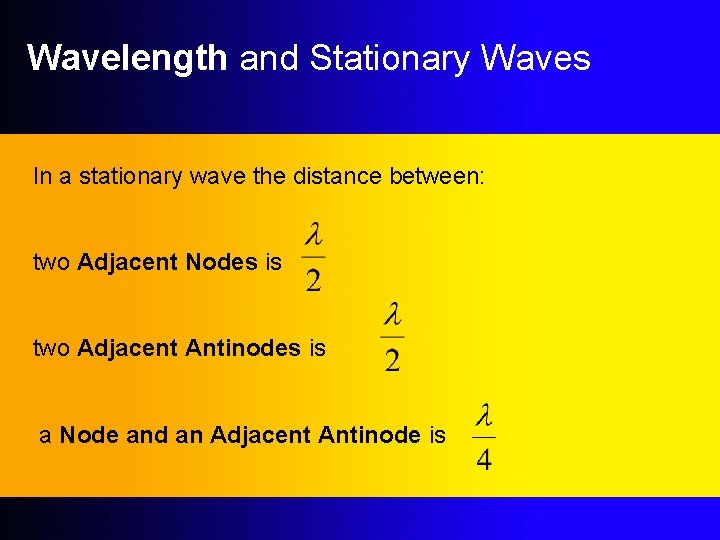
Wavelength and Stationary Waves In a stationary wave the distance between: two Adjacent Nodes is two Adjacent Antinodes is a Node and an Adjacent Antinode is
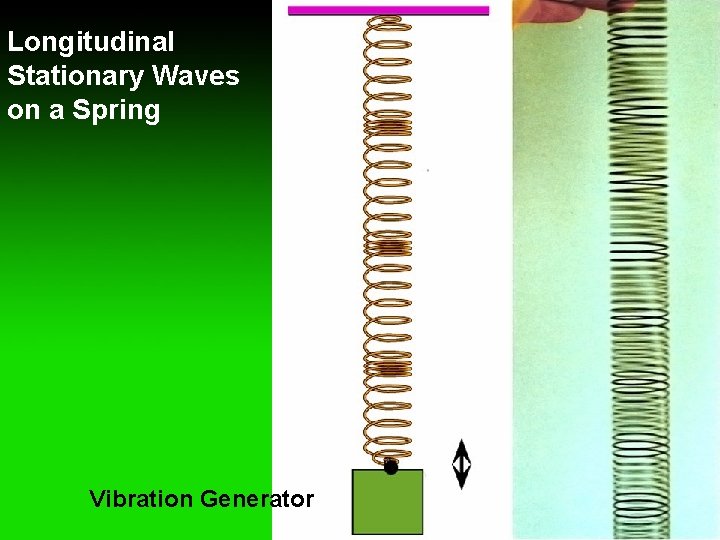
Longitudinal Stationary Waves on a Spring Vibration Generator
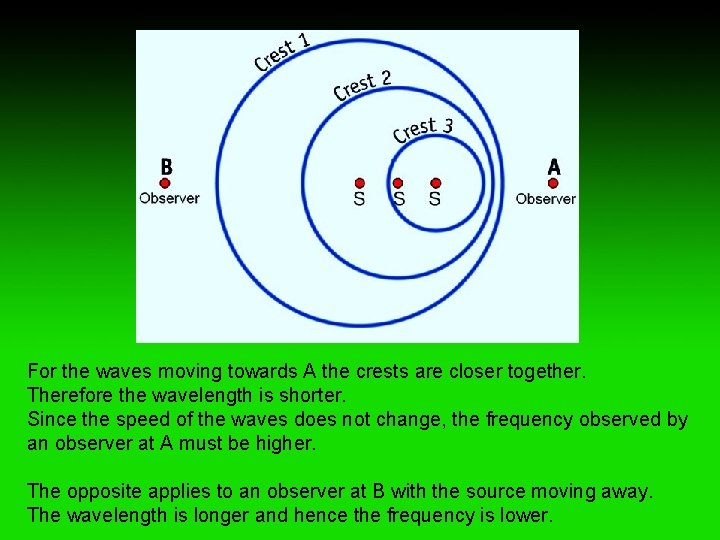
What is the Doppler Effect? The apparent change in the frequency of waves due to the motion of the source or the observer is called the Doppler Effect. If the source moves towards the observer the observed frequency is Higher than the frequency of the source. If the source moves away from the observer the observed frequency is Lower than the frequency of the source.
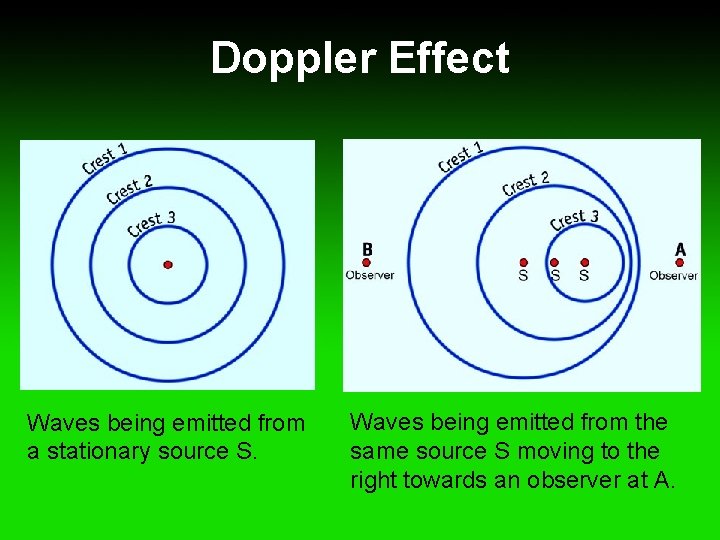
Doppler Effect Waves being emitted from a stationary source S. Waves being emitted from the same source S moving to the right towards an observer at A.
For the waves moving towards A the crests are closer together. Therefore the wavelength is shorter. Since the speed of the waves does not change, the frequency observed by an observer at A must be higher. The opposite applies to an observer at B with the source moving away. The wavelength is longer and hence the frequency is lower.
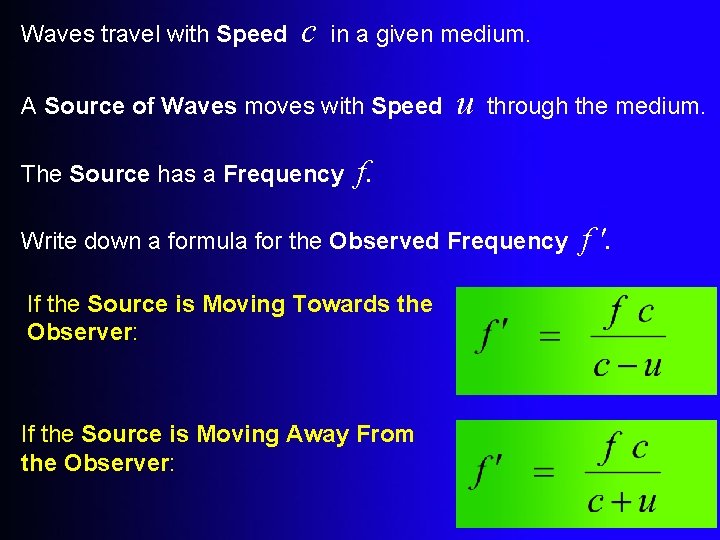
Waves travel with Speed c in a given medium. A Source of Waves moves with Speed The Source has a Frequency u through the medium. f. Write down a formula for the Observed Frequency If the Source is Moving Towards the Observer: If the Source is Moving Away From the Observer: f '.