
Chapter 16 The South and the Slave Controversy
- Slides: 14
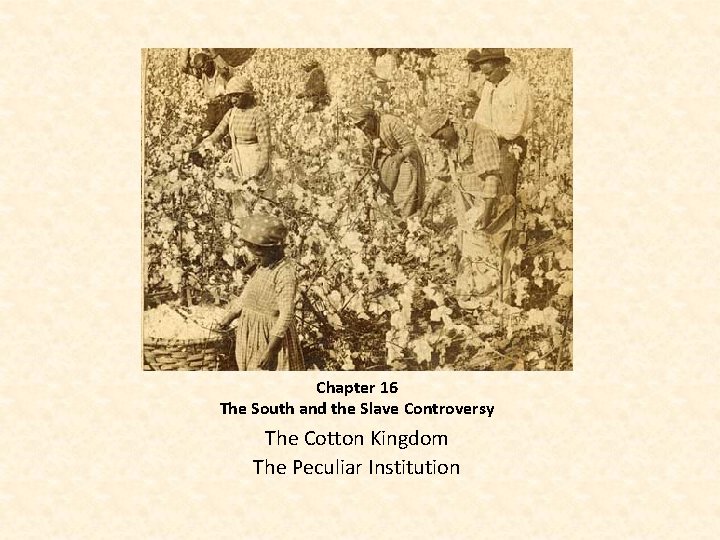
Chapter 16 The South and the Slave Controversy The Cotton Kingdom The Peculiar Institution
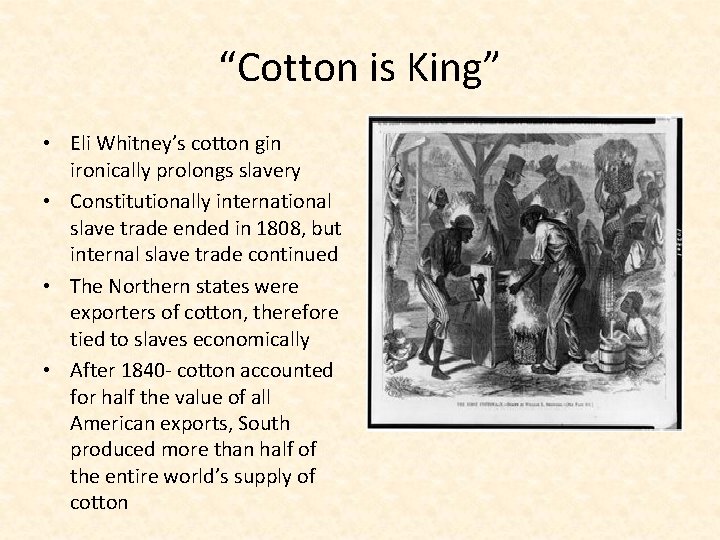
“Cotton is King” • Eli Whitney’s cotton gin ironically prolongs slavery • Constitutionally international slave trade ended in 1808, but internal slave trade continued • The Northern states were exporters of cotton, therefore tied to slaves economically • After 1840 - cotton accounted for half the value of all American exports, South produced more than half of the entire world’s supply of cotton
Southern socio-economic system The pyramid of power • Planter aristocrats 3% • Small slaveholders / farmers • Slaveless whites (75%) of white population self sufficient farmers • Mountain whites lived on frontier, would support Union cause during Civil War Non whites at longer end of pyramid • Freed blacks…despised by southern whites…laws enforced a second class status (in northern states also). • Some (few) freed blacks owned slaves and fought for Confederacy. • Indians below pyramid…forced WEST
Planter aristocracy • In 1850 - only 1, 733 families owned more than 100 slaves • They controlled the political/social leadership of the South • Favored aristocracy widened the gap between rich and poor • Educated children at private schools • Mistress of house ran plantation with overseer and various types of slaves
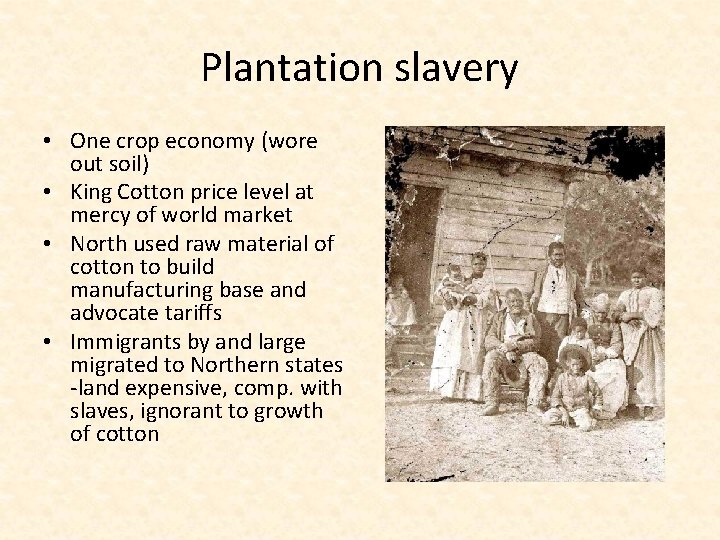
Plantation slavery • One crop economy (wore out soil) • King Cotton price level at mercy of world market • North used raw material of cotton to build manufacturing base and advocate tariffs • Immigrants by and large migrated to Northern states -land expensive, comp. with slaves, ignorant to growth of cotton
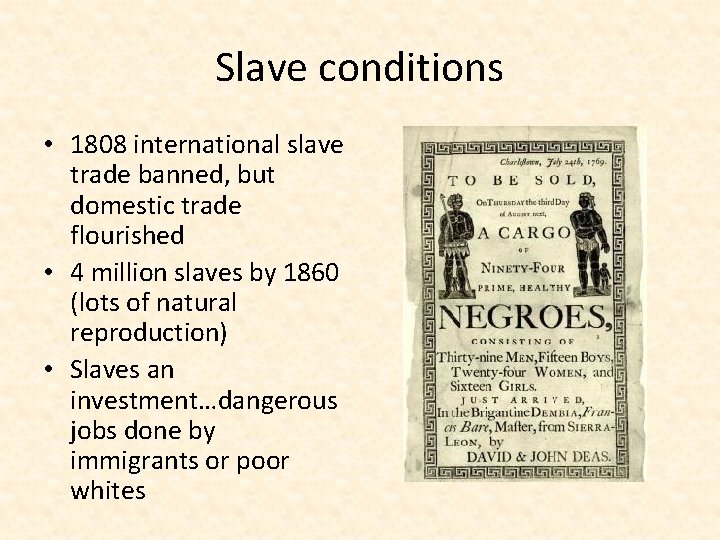
Slave conditions • 1808 international slave trade banned, but domestic trade flourished • 4 million slaves by 1860 (lots of natural reproduction) • Slaves an investment…dangerous jobs done by immigrants or poor whites
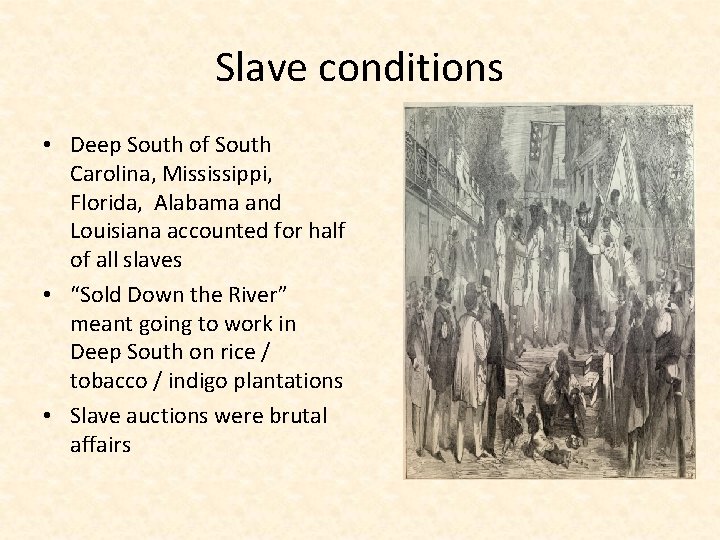
Slave conditions • Deep South of South Carolina, Mississippi, Florida, Alabama and Louisiana accounted for half of all slaves • “Sold Down the River” meant going to work in Deep South on rice / tobacco / indigo plantations • Slave auctions were brutal affairs
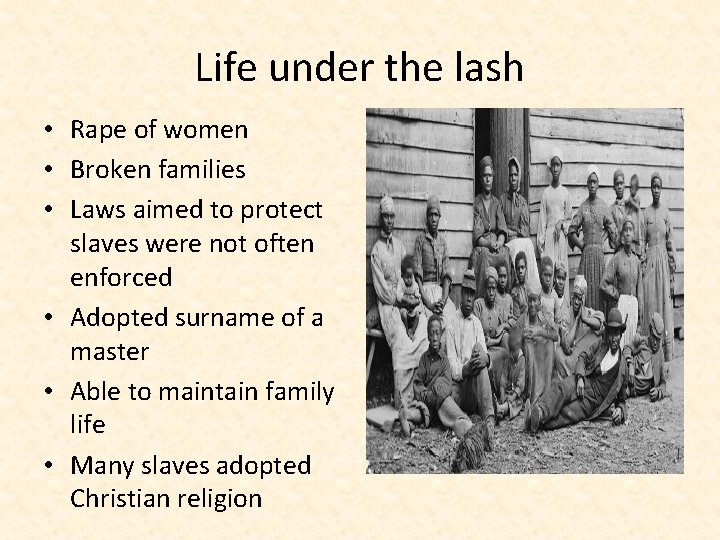
Life under the lash • Rape of women • Broken families • Laws aimed to protect slaves were not often enforced • Adopted surname of a master • Able to maintain family life • Many slaves adopted Christian religion
Slave “rebellions” • Work slower, break equipment, poison food • Gabriel’s Rebellion of 1800 • 1822 rebellion of Denmark Vesey • 1831 Nat Turner’s rebellion • White southerners“lived in a state of imagined siege” • White southerners “lived in a state of imagined siege” • White southerners blamed northern abolitionists for rebellions
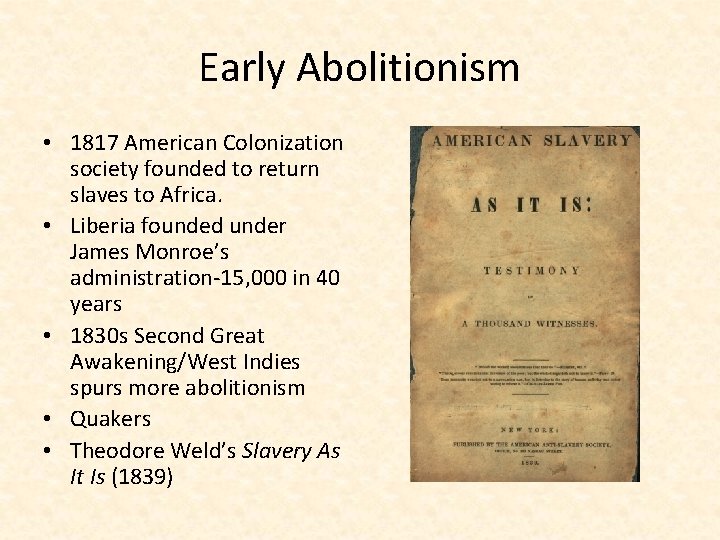
Early Abolitionism • 1817 American Colonization society founded to return slaves to Africa. • Liberia founded under James Monroe’s administration-15, 000 in 40 years • 1830 s Second Great Awakening/West Indies spurs more abolitionism • Quakers • Theodore Weld’s Slavery As It Is (1839)
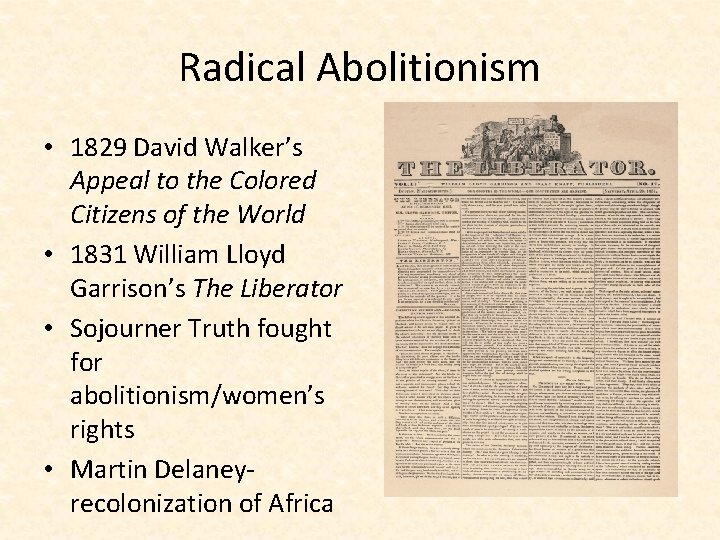
Radical Abolitionism • 1829 David Walker’s Appeal to the Colored Citizens of the World • 1831 William Lloyd Garrison’s The Liberator • Sojourner Truth fought for abolitionism/women’s rights • Martin Delaneyrecolonization of Africa
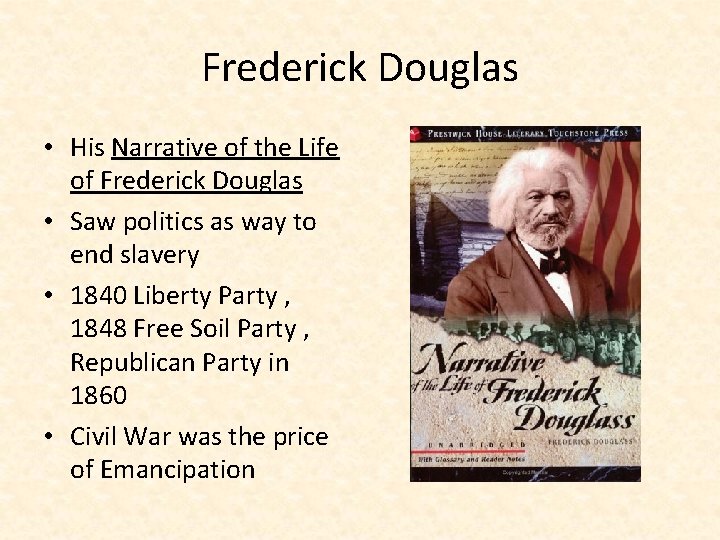
Frederick Douglas • His Narrative of the Life of Frederick Douglas • Saw politics as way to end slavery • 1840 Liberty Party , 1848 Free Soil Party , Republican Party in 1860 • Civil War was the price of Emancipation
How Southerners Supported Slavery • The good of the “peculiar institution” • Supported by the Bible • “Good for Africans” • Northern Wage Slaves = slaves • 1836 Congressional Gag Resolution (violation of Freedom of Speech? ) • Burning of abolitionist materials (violation of Freedom of Press? )
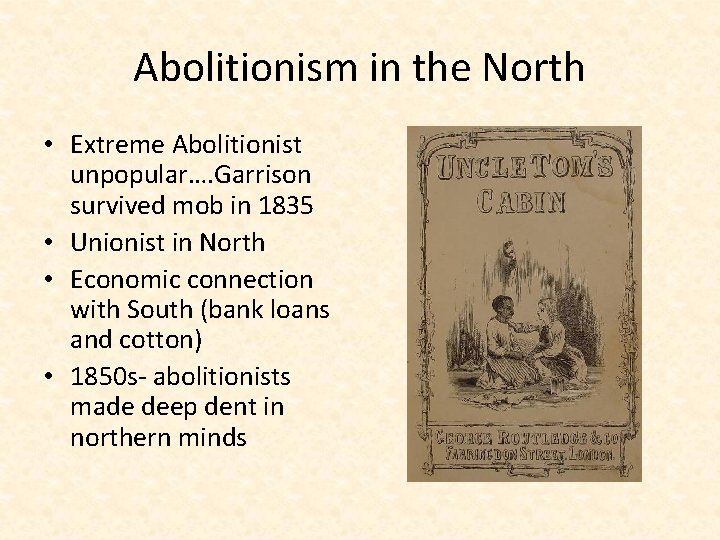
Abolitionism in the North • Extreme Abolitionist unpopular…. Garrison survived mob in 1835 • Unionist in North • Economic connection with South (bank loans and cotton) • 1850 s- abolitionists made deep dent in northern minds