
Chapter 16 The Era of Reconstruction 1865 1877
- Slides: 28
Chapter 16 The Era of Reconstruction, 1865 -1877 © 2016 W. W. Norton & Company, Inc.
The North helps the South Rebuild © 2016 W. W. Norton & Company, Inc.
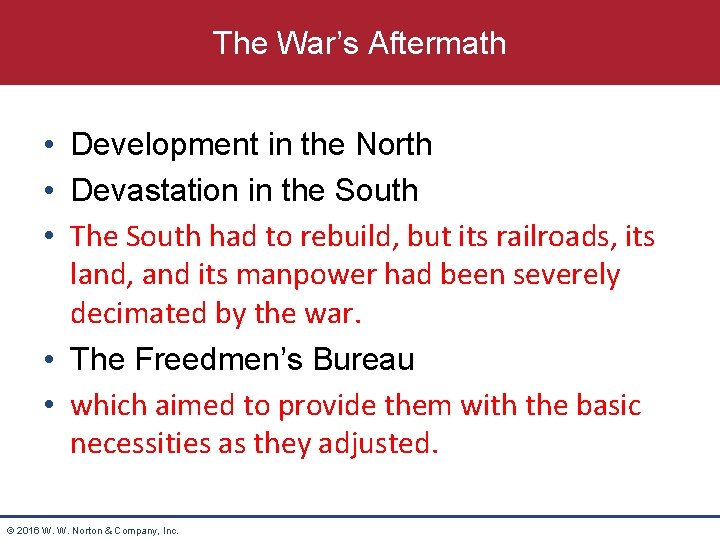
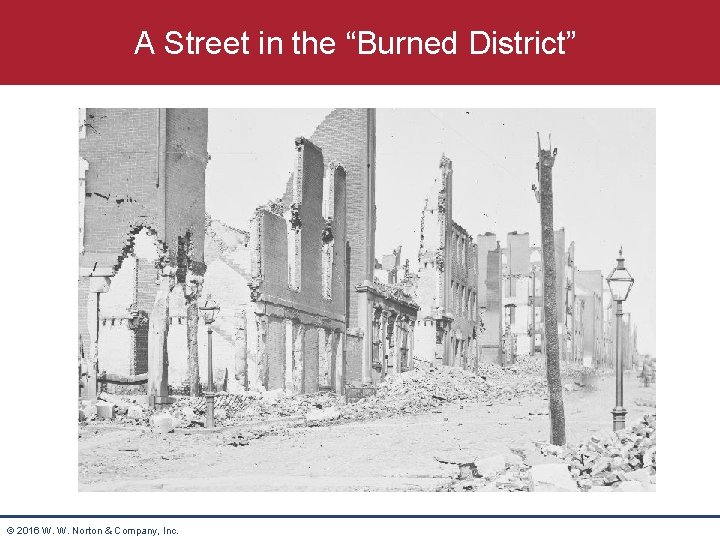
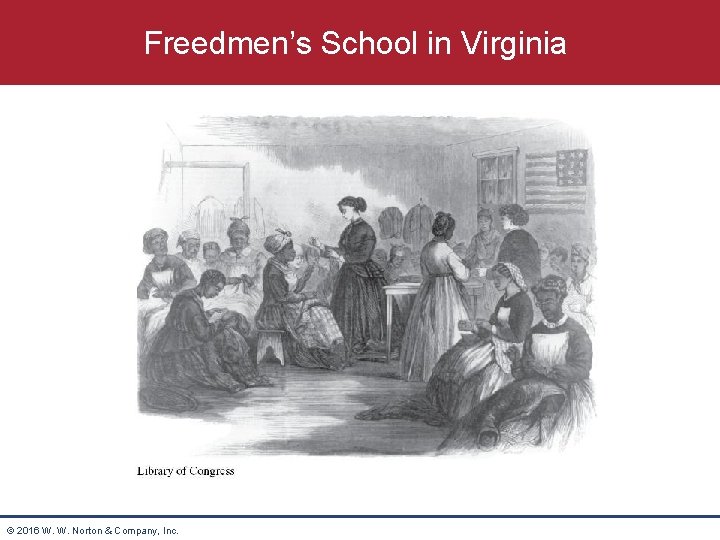
The War’s Aftermath • Development in the North • Devastation in the South • The South had to rebuild, but its railroads, its land, and its manpower had been severely decimated by the war. • The Freedmen’s Bureau • which aimed to provide them with the basic necessities as they adjusted. © 2016 W. W. Norton & Company, Inc.
A Street in the “Burned District” © 2016 W. W. Norton & Company, Inc.
Freedmen’s School in Virginia © 2016 W. W. Norton & Company, Inc.
The War’s Aftermath, continued • A Transformed South • Legally Free, Socially Bound • Although they found themselves freed from slavery, very few northerners were willing to elevate the freedmen to the same status as whites. Many argued that land should be provided for them to work, but nothing came of this plan. © 2016 W. W. Norton & Company, Inc.
The Battle over Reconstruction • Lincoln’s Plan and Congress’s Response • Once 10 percent of those who voted in 1860 took an oath of allegiance to the Constitution, they would be allowed to return to the Union. This plan was viewed by Congress as being too lenient to the Rebels. When Tennessee, Arkansas, and Louisiana met these guidelines, Congress refused to accept them, stating that Reconstruction was a legislative, not an executive, function. The Wade-Davis Bill, which called for even more stringent demands on the South, was vetoed by Lincoln © 2016 W. W. Norton & Company, Inc.
The Assassination of Lincoln • The Assassination of Lincoln • Lincoln was assassinated by John Wilkes Booth, a southerner sympathizer, on April 14, 1865. Other members of Lincoln’s cabinet were targeted, but all escaped without loss of life. Booth and the other conspirators were convicted and hanged © 2016 W. W. Norton & Company, Inc.
Debates over Political Reconstruction • Johnson’s Plan • An addition to Lincoln’s plan made by Johnson was that every state must adopt the Thirteenth Amendment, abolishing slavery, to regain its full rights. • Southern Intransigence • Many southern states had enacted black codes designed to limit African Americans in their new freedom. © 2016 W. W. Norton & Company, Inc.
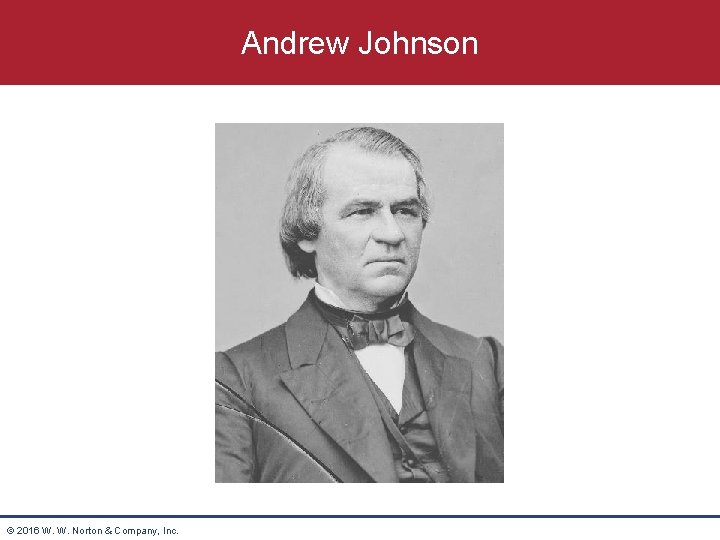
Andrew Johnson © 2016 W. W. Norton & Company, Inc.
Debates over Political Reconstruction, continued • The Radical Republicans • Johnson’s Battle with Congress • Johnson would use the veto to kill an extension of the Freedmen’s Bureau in 1866, stating that it violated the Constitution. In March of that year Congress passed the Civil Rights Act, which would be vetoed as well • The Fourteenth Amendment • the same guarantees that citizens receive from the Bill of Rights as federal citizens, improving their status as state citizens as well. © 2016 W. W. Norton & Company, Inc.
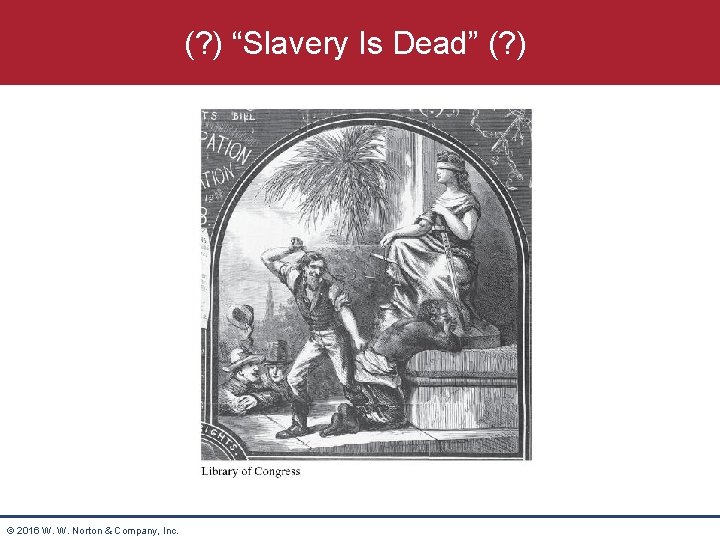
(? ) “Slavery Is Dead” (? ) © 2016 W. W. Norton & Company, Inc.
Reconstructing the South • The Triumph of Congressional Reconstruction • South would be divided into five military districts controlled by governors. • The Impeachment and Trial of Johnson • Radical Republicans impeached Johnson on the grounds that he had violated the Tenure of Office Act, which they had passed in 1866. • Republican Rule in the South • 15 th Amendment- men right to vote © 2016 W. W. Norton & Company, Inc.
Reconstructing the South, continued • The Freed Slaves • African Americans in Southern Politics • Religion and Reconstruction © 2016 W. W. Norton & Company, Inc.
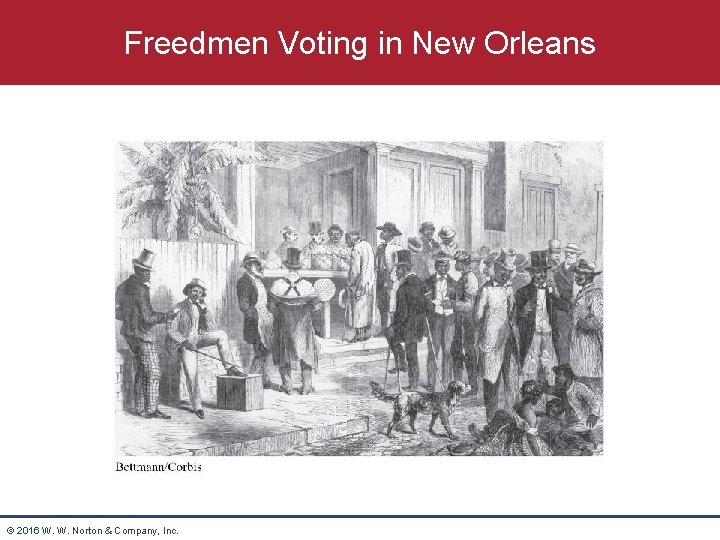
Freedmen Voting in New Orleans © 2016 W. W. Norton & Company, Inc.
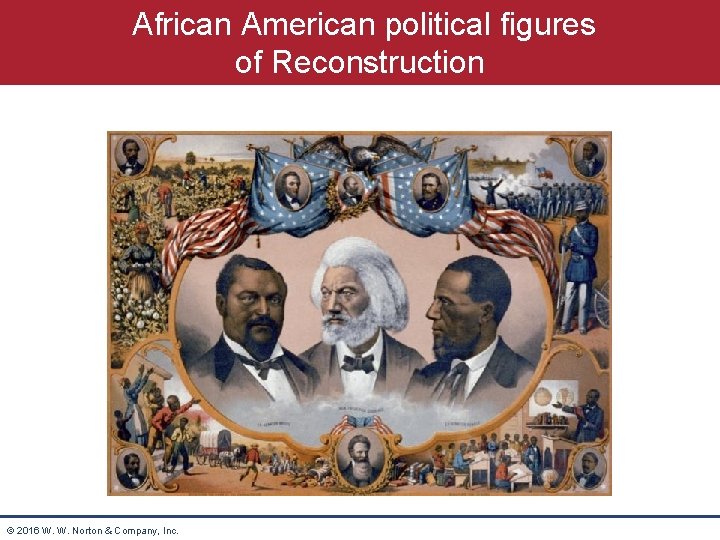
African American political figures of Reconstruction © 2016 W. W. Norton & Company, Inc.
Reconstructing the South • “Carpetbaggers” and “Scalawags” • southerners who “betrayed” their roots and sided with the Union during the war, known as Scalawags, or northerners who immigrated to the South to take a position southerners could not hold, called Carpetbaggers. • The Radical Republican Record © 2016 W. W. Norton & Company, Inc.
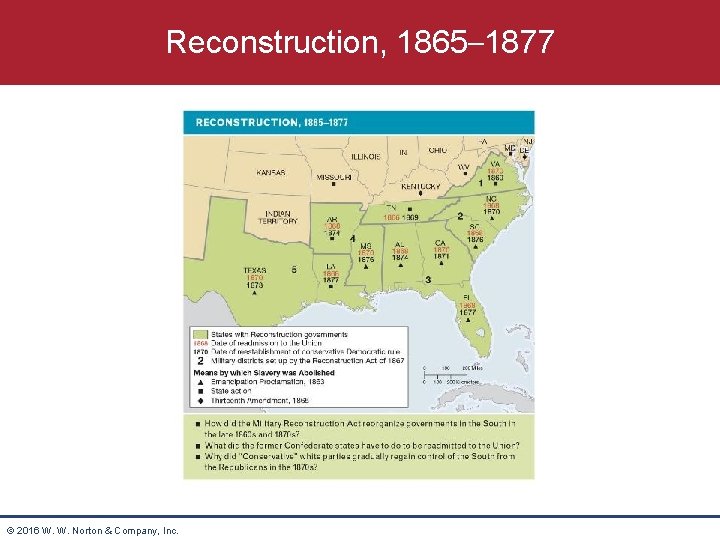
Reconstruction, 1865– 1877 © 2016 W. W. Norton & Company, Inc.
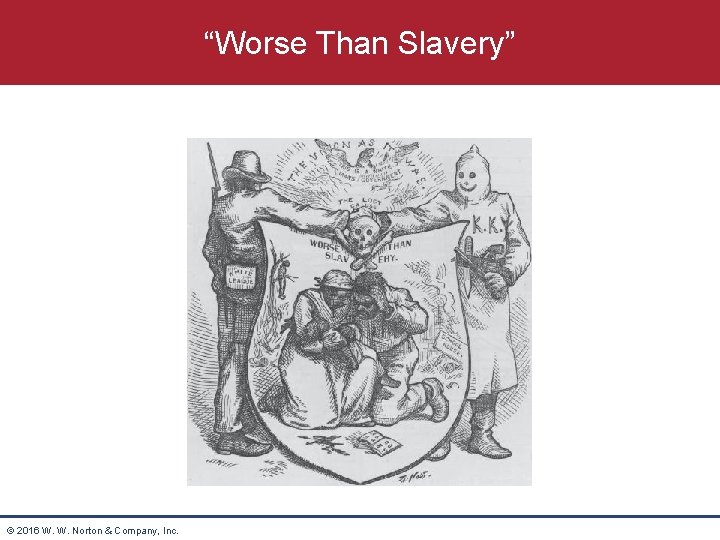
Reconstructing the South, continued • Southern Resistance • White “Redemption” © 2016 W. W. Norton & Company, Inc.
“Worse Than Slavery” © 2016 W. W. Norton & Company, Inc.
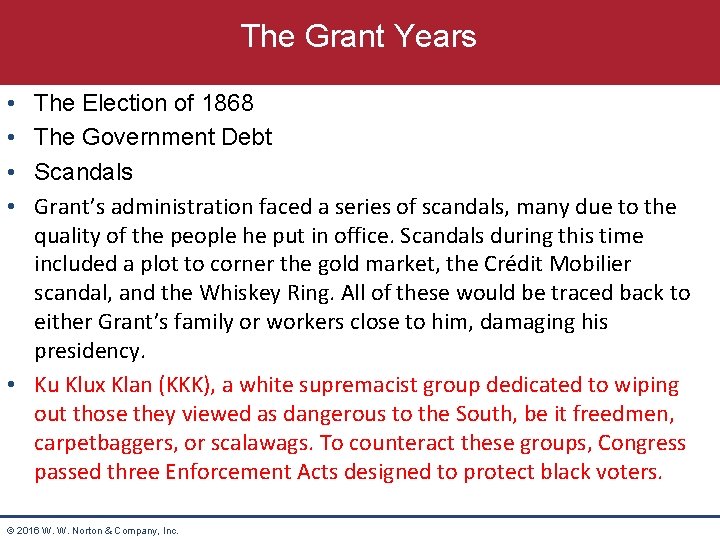
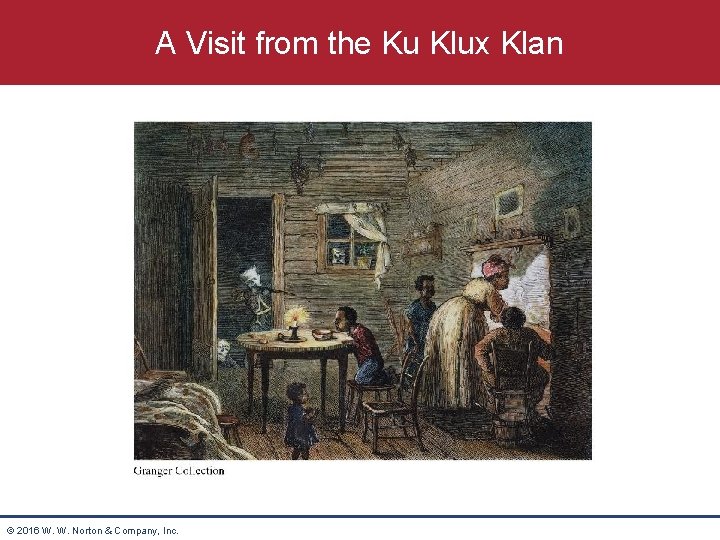
The Grant Years • • The Election of 1868 The Government Debt Scandals Grant’s administration faced a series of scandals, many due to the quality of the people he put in office. Scandals during this time included a plot to corner the gold market, the Crédit Mobilier scandal, and the Whiskey Ring. All of these would be traced back to either Grant’s family or workers close to him, damaging his presidency. • Ku Klux Klan (KKK), a white supremacist group dedicated to wiping out those they viewed as dangerous to the South, be it freedmen, carpetbaggers, or scalawags. To counteract these groups, Congress passed three Enforcement Acts designed to protect black voters. © 2016 W. W. Norton & Company, Inc.
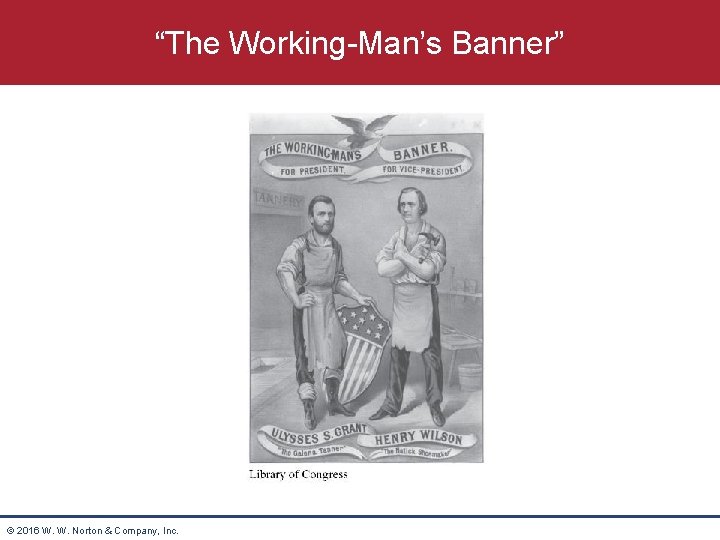
“The Working-Man’s Banner” © 2016 W. W. Norton & Company, Inc.
A Visit from the Ku Klux Klan © 2016 W. W. Norton & Company, Inc.
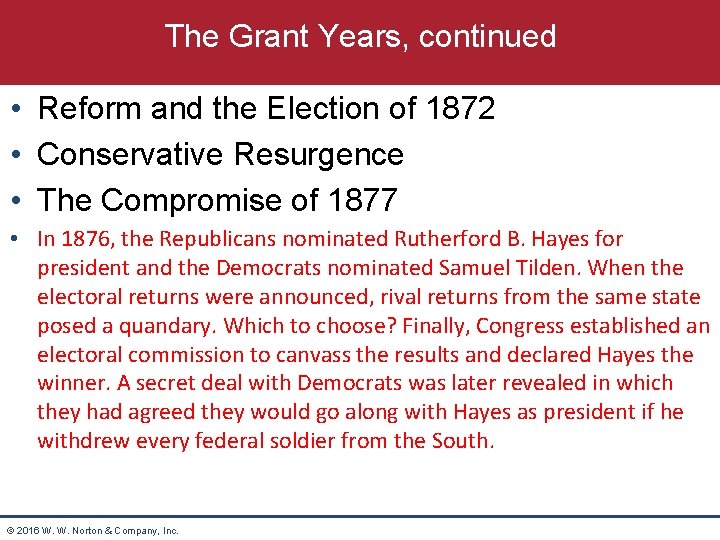
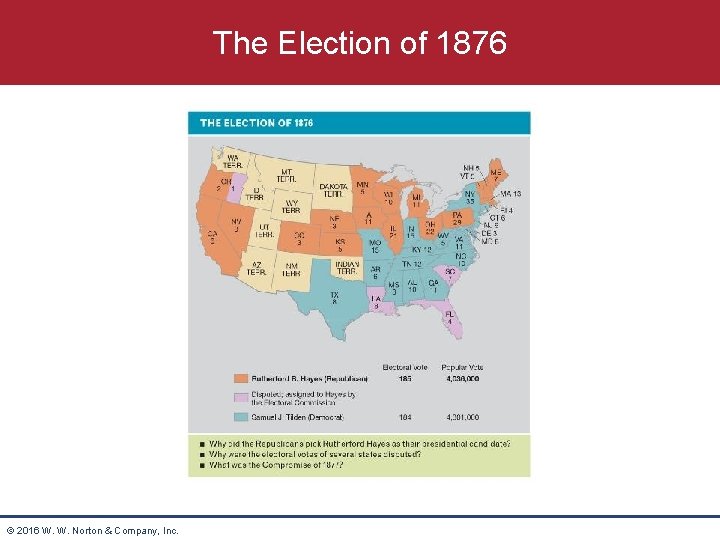
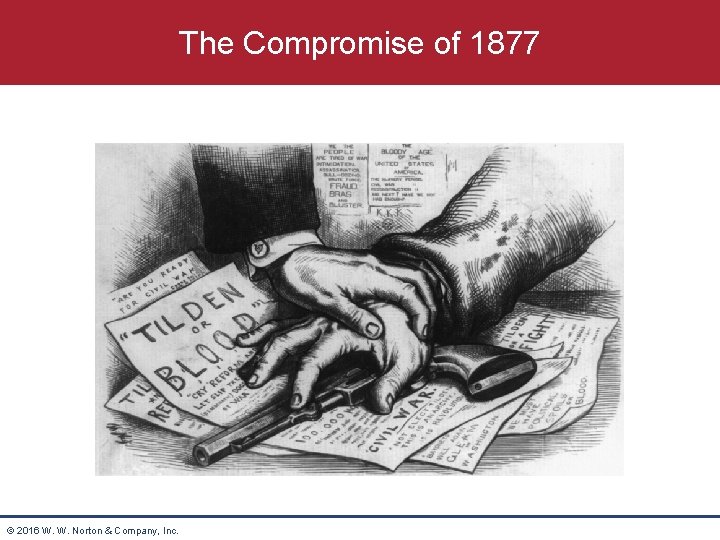
The Grant Years, continued • Reform and the Election of 1872 • Conservative Resurgence • The Compromise of 1877 • In 1876, the Republicans nominated Rutherford B. Hayes for president and the Democrats nominated Samuel Tilden. When the electoral returns were announced, rival returns from the same state posed a quandary. Which to choose? Finally, Congress established an electoral commission to canvass the results and declared Hayes the winner. A secret deal with Democrats was later revealed in which they had agreed they would go along with Hayes as president if he withdrew every federal soldier from the South. © 2016 W. W. Norton & Company, Inc.
The Election of 1876 © 2016 W. W. Norton & Company, Inc.
The Compromise of 1877 © 2016 W. W. Norton & Company, Inc.
Conclusion • The End of Reconstruction • Hayes honored the Compromise of 1877 and removed all remaining federal soldiers from the South. In these areas, the Republican governments that existed would soon fall. © 2016 W. W. Norton & Company, Inc.
This concludes the Lecture Power. Point presentation for Chapter 16 The Era of Reconstruction 18651877 Please visit the Student Site for more resources: http: //wwnorton. com/college/history/america 10/ © 2016 W. W. Norton & Company, Inc.