
Chapter 16 The Endocrine System Copyright 2010 Pearson
- Slides: 39
Chapter 16 The Endocrine System Copyright © 2010 Pearson Education, Inc.
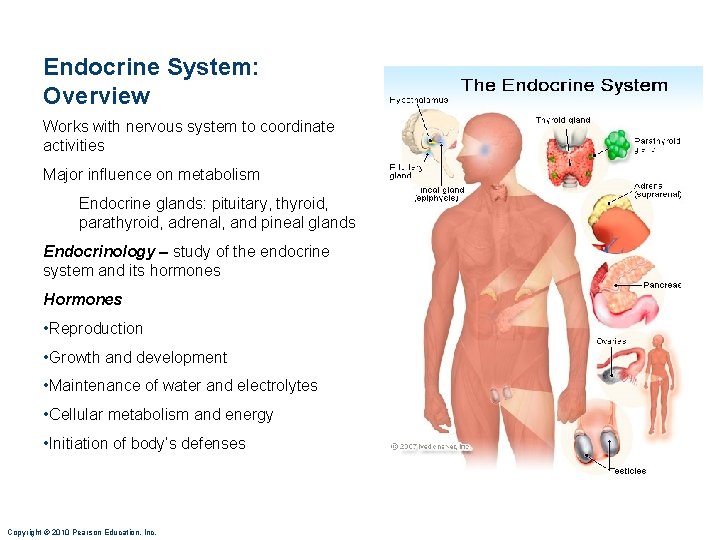
Endocrine System: Overview Works with nervous system to coordinate activities Major influence on metabolism Endocrine glands: pituitary, thyroid, parathyroid, adrenal, and pineal glands Endocrinology – study of the endocrine system and its hormones Hormones • Reproduction • Growth and development • Maintenance of water and electrolytes • Cellular metabolism and energy • Initiation of body’s defenses Copyright © 2010 Pearson Education, Inc.
Chemical Messengers • Hormones: long-distance chemical signals that travel in the blood or lymph • Autocrines: chemicals that exert effects on the same cells that secrete them • Paracrines: locally acting chemicals that affect cells other than those that secrete them • Autocrines and paracrines are local chemical messengers and will not be considered part of the endocrine system Copyright © 2010 Pearson Education, Inc.
Chemistry of Hormones • Two main classes 1. Amino acid-based hormones • Amines, thyroxine, peptides, and proteins 2. Steroids • Synthesized from cholesterol • Gonadal and adrenocortical hormones Copyright © 2010 Pearson Education, Inc.
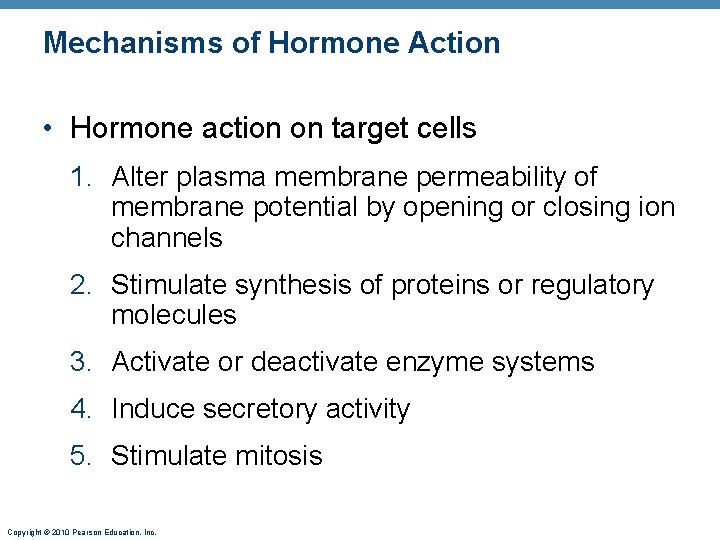
Mechanisms of Hormone Action • Hormone action on target cells 1. Alter plasma membrane permeability of membrane potential by opening or closing ion channels 2. Stimulate synthesis of proteins or regulatory molecules 3. Activate or deactivate enzyme systems 4. Induce secretory activity 5. Stimulate mitosis Copyright © 2010 Pearson Education, Inc.
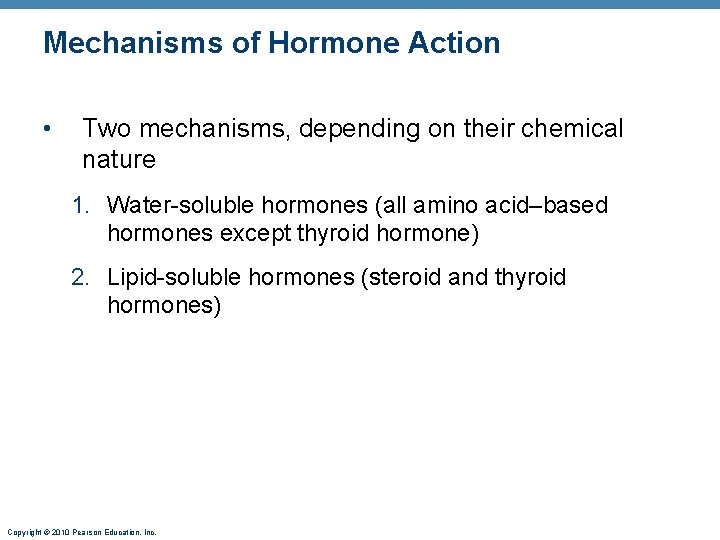
Mechanisms of Hormone Action • Two mechanisms, depending on their chemical nature 1. Water-soluble hormones (all amino acid–based hormones except thyroid hormone) 2. Lipid-soluble hormones (steroid and thyroid hormones) Copyright © 2010 Pearson Education, Inc.
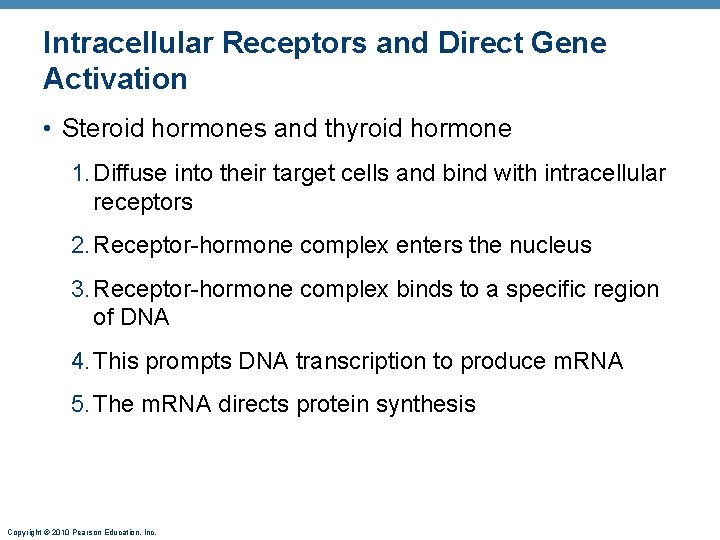
Intracellular Receptors and Direct Gene Activation • Steroid hormones and thyroid hormone 1. Diffuse into their target cells and bind with intracellular receptors 2. Receptor-hormone complex enters the nucleus 3. Receptor-hormone complex binds to a specific region of DNA 4. This prompts DNA transcription to produce m. RNA 5. The m. RNA directs protein synthesis Copyright © 2010 Pearson Education, Inc.
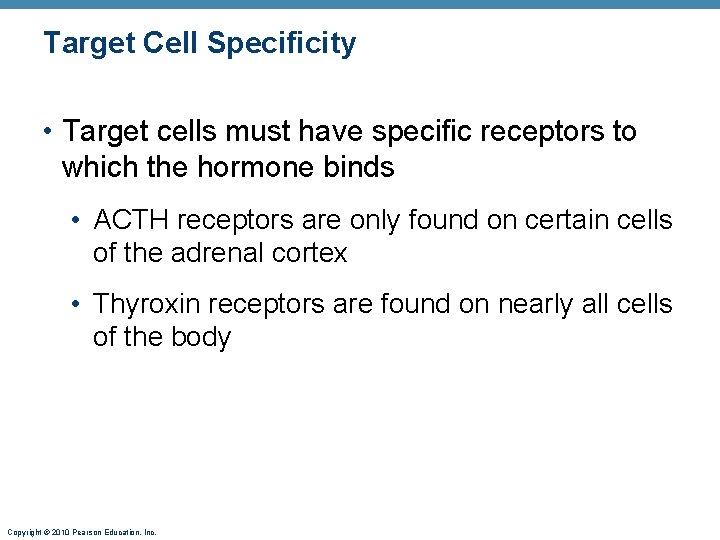
Target Cell Specificity • Target cells must have specific receptors to which the hormone binds • ACTH receptors are only found on certain cells of the adrenal cortex • Thyroxin receptors are found on nearly all cells of the body Copyright © 2010 Pearson Education, Inc.
Target Cell Activation • Target cell activation depends on three factors 1. Blood levels of the hormone 2. Relative number of receptors on or in the target cell 3. Affinity of binding between receptor and hormone Copyright © 2010 Pearson Education, Inc.
Target Cell Activation • Hormones influence the number of their receptors • Up-regulation—target cells form more receptors in response to the hormone • Down-regulation—target cells lose receptors in response to the hormone Copyright © 2010 Pearson Education, Inc.
Hormones in the Blood • Hormones circulate in the blood either free or bound • Steroids and thyroid hormone are attached to plasma proteins • All others circulate without carriers • The concentration of a circulating hormone reflects: • Rate of release • Speed of inactivation and removal from the body Copyright © 2010 Pearson Education, Inc.
Interaction of Hormones at Target Cells • Multiple hormones may interact in several ways • Permissiveness: one hormone cannot exert its effects without another hormone being present • Synergism: more than one hormone produces the same effects on a target cell • Antagonism: one or more hormones opposes the action of another hormone Copyright © 2010 Pearson Education, Inc.
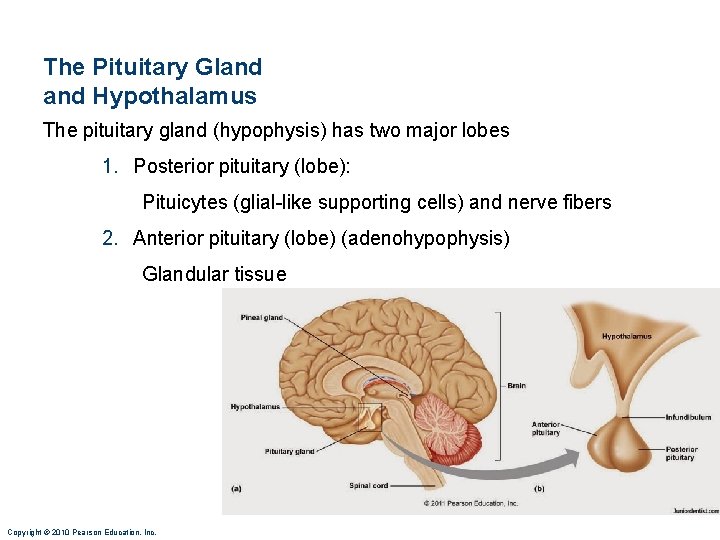
The Pituitary Gland Hypothalamus The pituitary gland (hypophysis) has two major lobes 1. Posterior pituitary (lobe): Pituicytes (glial-like supporting cells) and nerve fibers 2. Anterior pituitary (lobe) (adenohypophysis) Glandular tissue Copyright © 2010 Pearson Education, Inc.
Anterior Pituitary Hormones • Growth hormone (GH) • Thyroid-stimulating hormone (TSH) or thyrotropin • Adrenocorticotropic hormone (ACTH) • Follicle-stimulating hormone (FSH) • Luteinizing hormone (LH) • Prolactin (PRL) Copyright © 2010 Pearson Education, Inc.
Growth Hormone (GH) • Produced by somatotrophs • Stimulates most cells, but targets bone and skeletal muscle • Promotes protein synthesis and encourages use of fats for fuel • Most effects are mediated indirectly by insulinlike growth factors (IGFs) Copyright © 2010 Pearson Education, Inc.
Actions of Growth Hormone • Direct action of GH • Stimulates liver, skeletal muscle, bone, and cartilage to produce insulin-like growth factors • Mobilizes fats, elevates blood glucose by decreasing glucose uptake and encouraging glycogen breakdown (anti-insulin effect of GH) Copyright © 2010 Pearson Education, Inc.
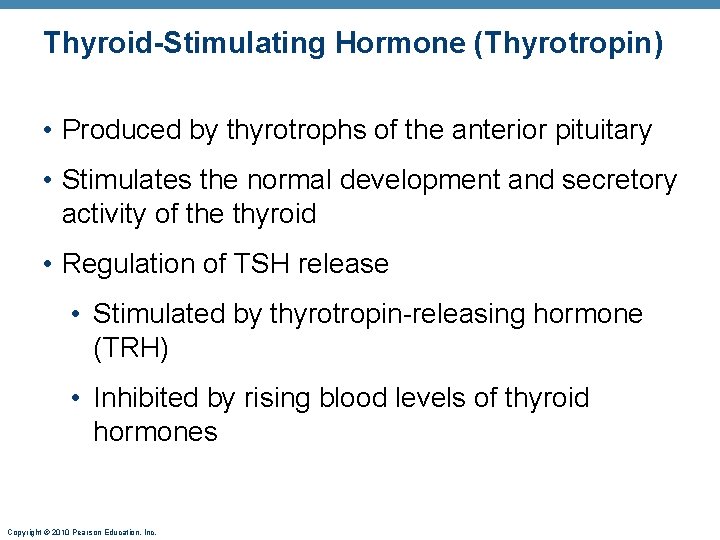
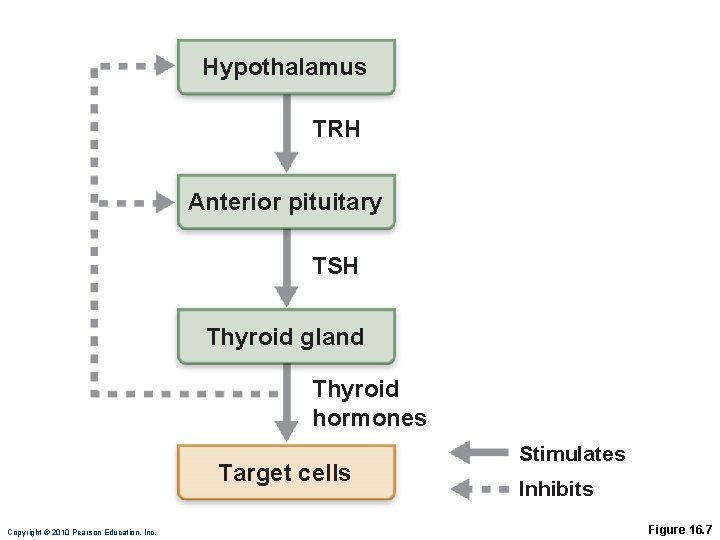
Thyroid-Stimulating Hormone (Thyrotropin) • Produced by thyrotrophs of the anterior pituitary • Stimulates the normal development and secretory activity of the thyroid • Regulation of TSH release • Stimulated by thyrotropin-releasing hormone (TRH) • Inhibited by rising blood levels of thyroid hormones Copyright © 2010 Pearson Education, Inc.
Hypothalamus TRH Anterior pituitary TSH Thyroid gland Thyroid hormones Target cells Copyright © 2010 Pearson Education, Inc. Stimulates Inhibits Figure 16. 7
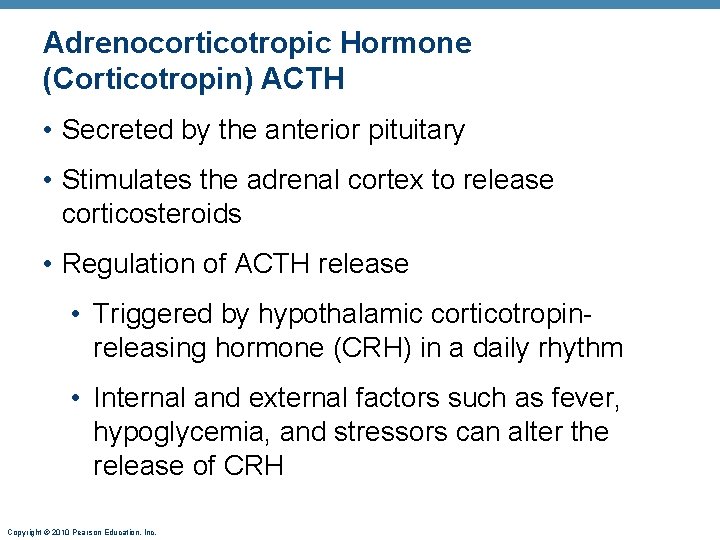
Adrenocorticotropic Hormone (Corticotropin) ACTH • Secreted by the anterior pituitary • Stimulates the adrenal cortex to release corticosteroids • Regulation of ACTH release • Triggered by hypothalamic corticotropinreleasing hormone (CRH) in a daily rhythm • Internal and external factors such as fever, hypoglycemia, and stressors can alter the release of CRH Copyright © 2010 Pearson Education, Inc.
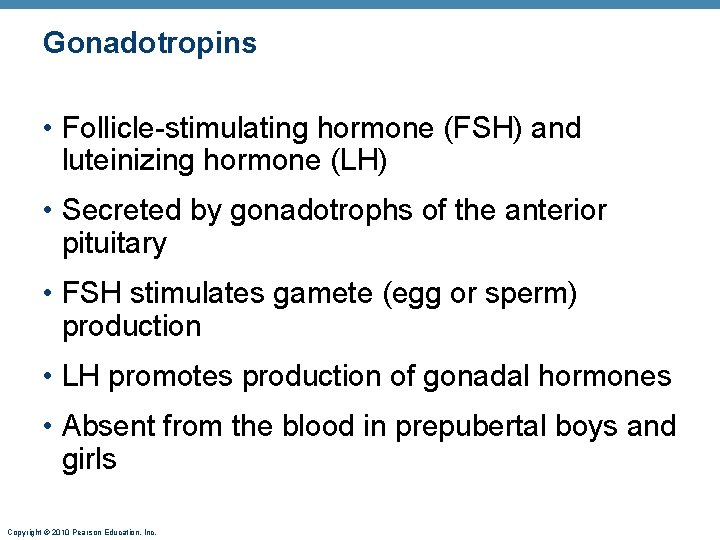
Gonadotropins • Follicle-stimulating hormone (FSH) and luteinizing hormone (LH) • Secreted by gonadotrophs of the anterior pituitary • FSH stimulates gamete (egg or sperm) production • LH promotes production of gonadal hormones • Absent from the blood in prepubertal boys and girls Copyright © 2010 Pearson Education, Inc.
Prolactin (PRL) • Secreted by lactotrophs of the anterior pituitary • Stimulates milk production Copyright © 2010 Pearson Education, Inc.
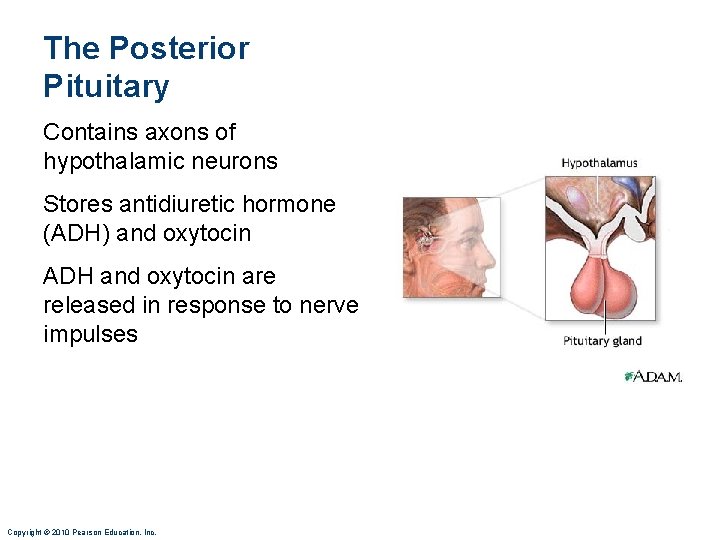
The Posterior Pituitary Contains axons of hypothalamic neurons Stores antidiuretic hormone (ADH) and oxytocin ADH and oxytocin are released in response to nerve impulses Copyright © 2010 Pearson Education, Inc.
Oxytocin • Stimulates uterine contractions during childbirth by mobilizing Ca 2+ • Also triggers milk ejection (“letdown” reflex) in women producing milk • Often works on a positive feedback mechanism Copyright © 2010 Pearson Education, Inc.
Antidiuretic Hormone (ADH) • Hypothalamic osmoreceptors respond to changes in the solute concentration of the blood • If solute concentration is high • Osmoreceptors depolarize and transmit impulses to hypothalamic neurons • ADH is synthesized and released, inhibiting urine formation • If solute concentration is low • ADH is not released, allowing water loss Copyright © 2010 Pearson Education, Inc.
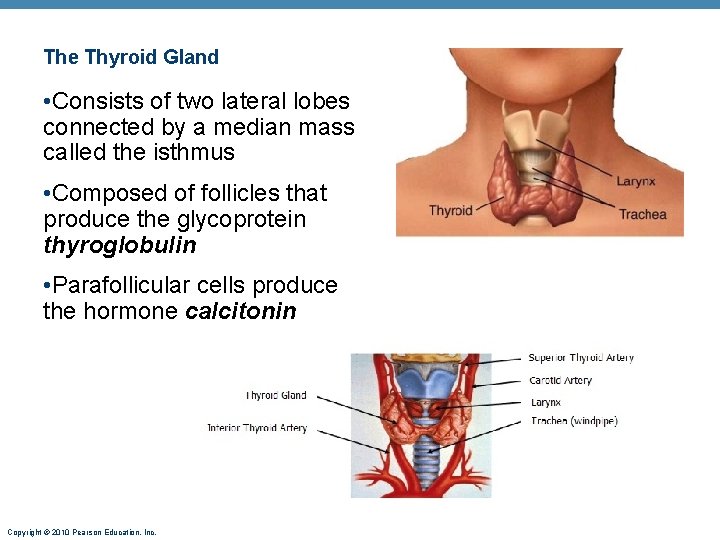
The Thyroid Gland • Consists of two lateral lobes connected by a median mass called the isthmus • Composed of follicles that produce the glycoprotein thyroglobulin • Parafollicular cells produce the hormone calcitonin Copyright © 2010 Pearson Education, Inc.
Thyroid Hormone • Actually two related compounds • T 4 (thyroxine) • T 3 (triiodothyronine) • Major metabolic hormone • Increases metabolic rate and heat production (calorigenic effect) • Plays a role in • Maintenance of blood pressure • Regulation of tissue growth • Development of skeletal and nervous systems • Reproductive capabilities Copyright © 2010 Pearson Education, Inc.
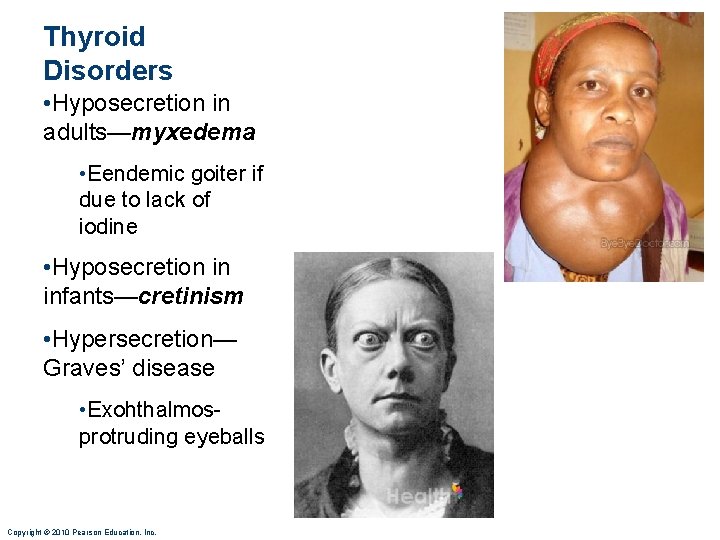
Thyroid Disorders • Hyposecretion in adults—myxedema • Eendemic goiter if due to lack of iodine • Hyposecretion in infants—cretinism • Hypersecretion— Graves’ disease • Exohthalmosprotruding eyeballs Copyright © 2010 Pearson Education, Inc.
Calcitonin • Produced by parafollicular (C) cells • Antagonist to parathyroid hormone (PTH) • Inhibits osteoclast activity and release of Ca 2+ from bone matrix • Stimulates Ca 2+ uptake and incorporation into bone matrix • Regulated by a humoral (Ca 2+ concentration in the blood) negative feedback mechanism Copyright © 2010 Pearson Education, Inc.
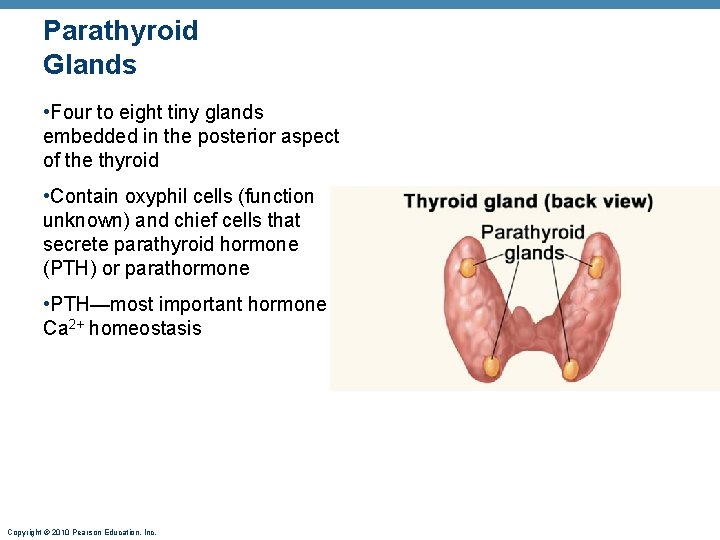
Parathyroid Glands • Four to eight tiny glands embedded in the posterior aspect of the thyroid • Contain oxyphil cells (function unknown) and chief cells that secrete parathyroid hormone (PTH) or parathormone • PTH—most important hormone in Ca 2+ homeostasis Copyright © 2010 Pearson Education, Inc.
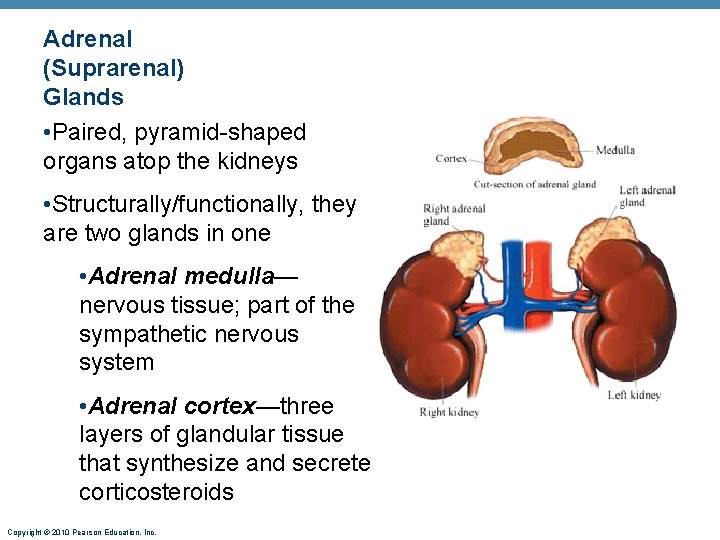
Adrenal (Suprarenal) Glands • Paired, pyramid-shaped organs atop the kidneys • Structurally/functionally, they are two glands in one • Adrenal medulla— nervous tissue; part of the sympathetic nervous system • Adrenal cortex—three layers of glandular tissue that synthesize and secrete corticosteroids Copyright © 2010 Pearson Education, Inc.
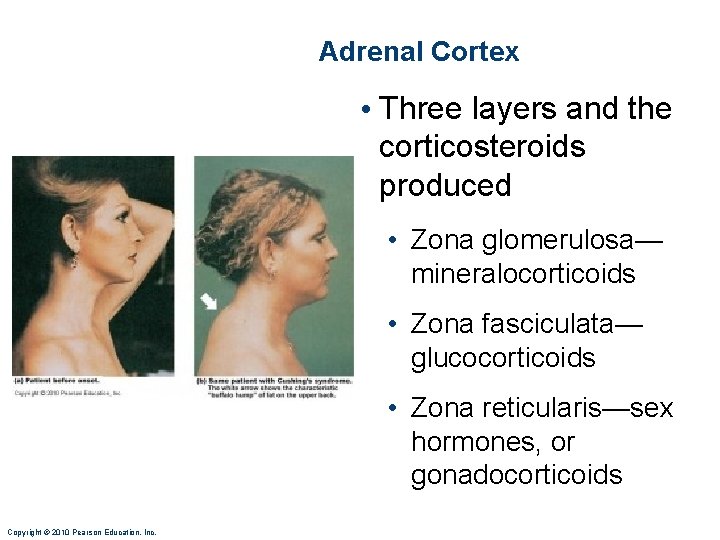
Adrenal Cortex • Three layers and the corticosteroids produced • Zona glomerulosa— mineralocorticoids • Zona fasciculata— glucocorticoids • Zona reticularis—sex hormones, or gonadocorticoids Copyright © 2010 Pearson Education, Inc.
Adrenal Medulla • Chromaffin cells secrete epinephrine (80%) and norepinephrine (20%) • These hormones cause • Blood glucose levels to rise • Blood vessels to constrict • The heart to beat faster • Blood to be diverted to the brain, heart, and skeletal muscle Copyright © 2010 Pearson Education, Inc.
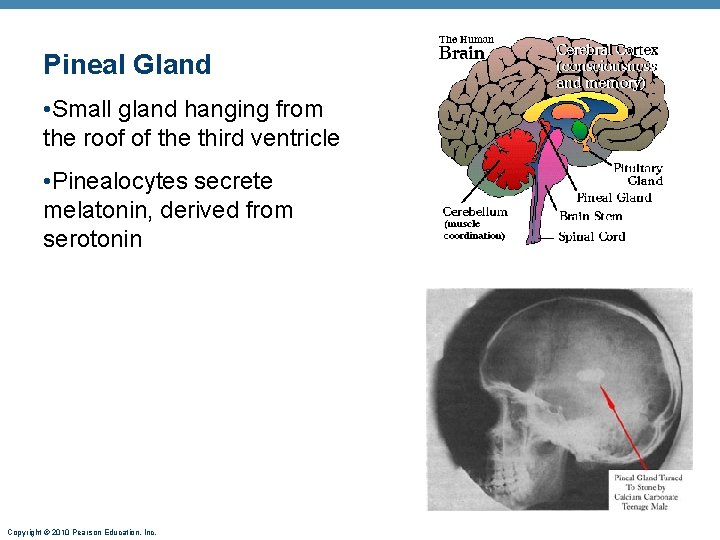
Pineal Gland • Small gland hanging from the roof of the third ventricle • Pinealocytes secrete melatonin, derived from serotonin Copyright © 2010 Pearson Education, Inc.
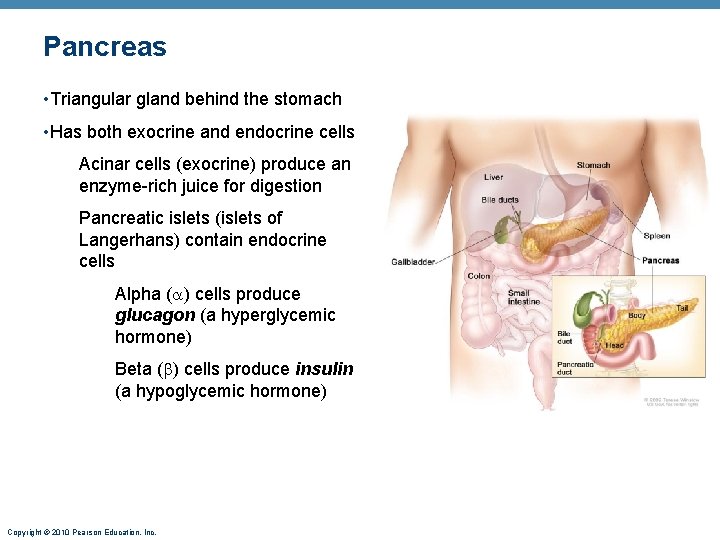
Pancreas • Triangular gland behind the stomach • Has both exocrine and endocrine cells Acinar cells (exocrine) produce an enzyme-rich juice for digestion Pancreatic islets (islets of Langerhans) contain endocrine cells Alpha ( ) cells produce glucagon (a hyperglycemic hormone) Beta ( ) cells produce insulin (a hypoglycemic hormone) Copyright © 2010 Pearson Education, Inc.
Glucagon • Major target is the liver, where it promotes • Glycogenolysis—breakdown of glycogen to glucose • Gluconeogenesis—synthesis of glucose from lactic acid and noncarbohydrates • Release of glucose to the blood Copyright © 2010 Pearson Education, Inc.
Insulin • Effects of insulin • Lowers blood glucose levels • Enhances membrane transport of glucose into fat and muscle cells • Participates in neuronal development and learning and memory • Inhibits glycogenolysis and gluconeogenesis Copyright © 2010 Pearson Education, Inc.
Ovaries and Placenta • Gonads produce steroid sex hormones • Ovaries produce estrogens and progesterone responsible for: • Maturation of female reproductive organs • Appearance of female secondary sexual characteristics • Breast development and cyclic changes in the uterine mucosa • The placenta secretes estrogens, progesterone, and human chorionic gonadotropin (h. CG) Copyright © 2010 Pearson Education, Inc.
Testes • Testes produce testosterone that • Initiates maturation of male reproductive organs • Causes appearance of male secondary sexual characteristics and sex drive • Is necessary for normal sperm production • Maintains reproductive organs in their functional state Copyright © 2010 Pearson Education, Inc.
Other Hormone Producing Structures • Heart • Atrial natriuretic peptide (ANP) • Kidneys • Erythropoiten • Renin • Skin • Cholecaciferol • Adipose Tissue • Leptin Copyright © 2010 Pearson Education, Inc.