
Chapter 16 The Diversity of Life Lectures by
Chapter 16 The Diversity of Life ﺍﻟﺤﻴﺎﺓ ﻋﻠﻰ ﺍﻷﺮﺽ Lectures by Gregory Ahearn University of North Florida Copyright © 2009 Pearson Education, Inc. .
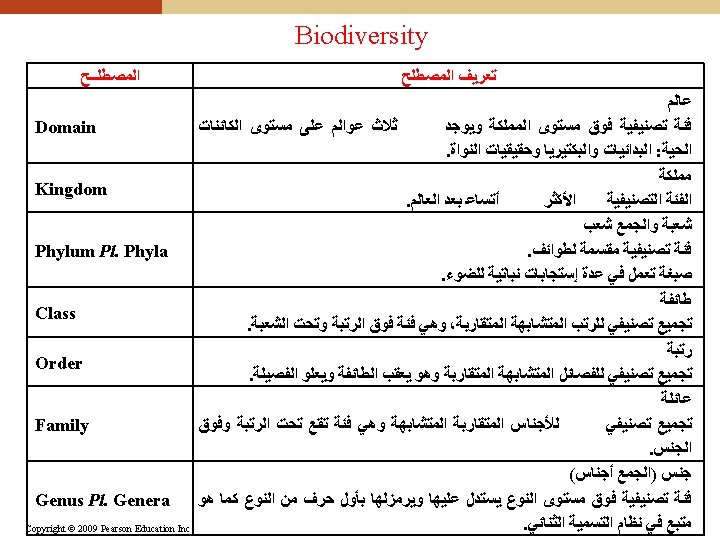
16. 1 How are Organisms Named and Classified? § Organisms are placed into categories on the basis of their evolutionary relationships. § These categories form a nested hierarchy in which each level includes all the ones before it. § There are eight major categories: • Domain, kingdom, phylum, class, order, family, genus, species. Copyright © 2009 Pearson Education Inc.
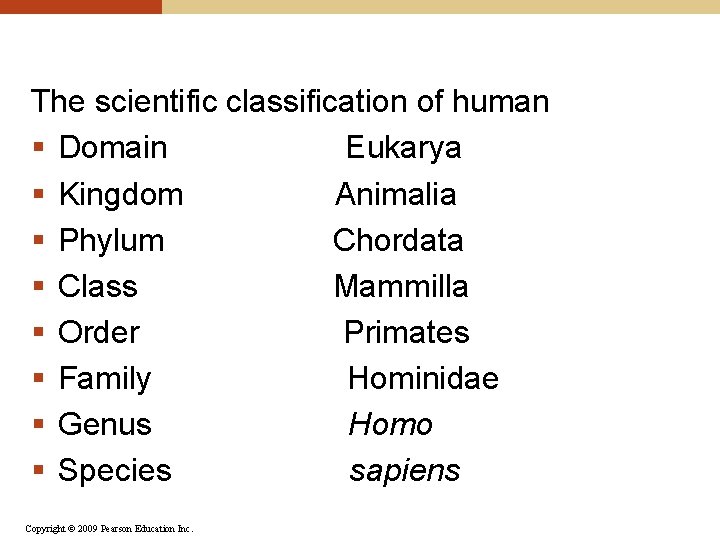
The scientific classification of human § Domain Eukarya § Kingdom Animalia § Phylum Chordata § Class Mammilla § Order Primates § Family Hominidae § Genus Homo § Species sapiens Copyright © 2009 Pearson Education Inc.
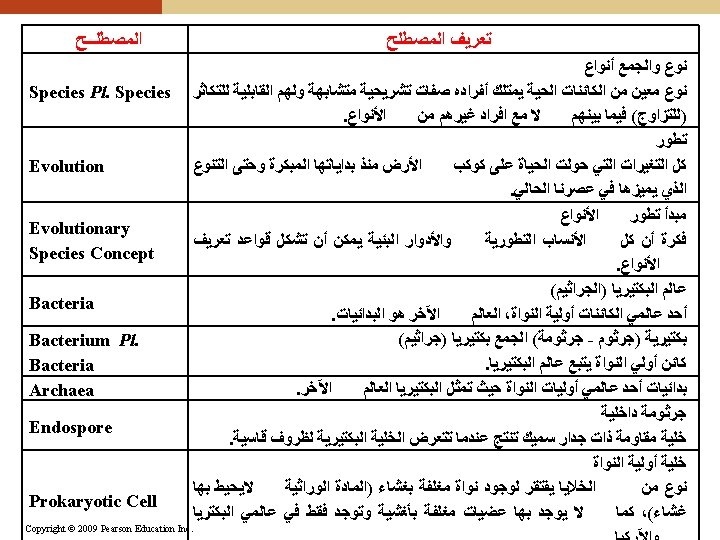
16. 1 How are Organisms Named and Classified? § The scientific name of an organism is a twopart name formed from the genus and species categories. § Each genus includes a group of closely related species, and within each species are individuals that can interbreed. Copyright © 2009 Pearson Education Inc.
16. 1 How are Organisms Named and Classified? § Each two-part scientific name is unique; referring to an organism by its scientific name rules: • Scientific names are underlined or italicized. • The first letter of the genus name is always capitalized, and the first letter of the species name is always lowercase. • Sialia sialis • The species name is never used alone but is always paired with its genus name. Copyright © 2009 Pearson Education Inc.
16. 1 How are Organisms Named and Classified? § Biologists identify features that reveal evolutionary relationships. . • They look at many kinds of characteristics. • Anatomical similarities play a key role in classification. • Molecular similarities are also useful in classification. Copyright © 2009 Pearson Education Inc.
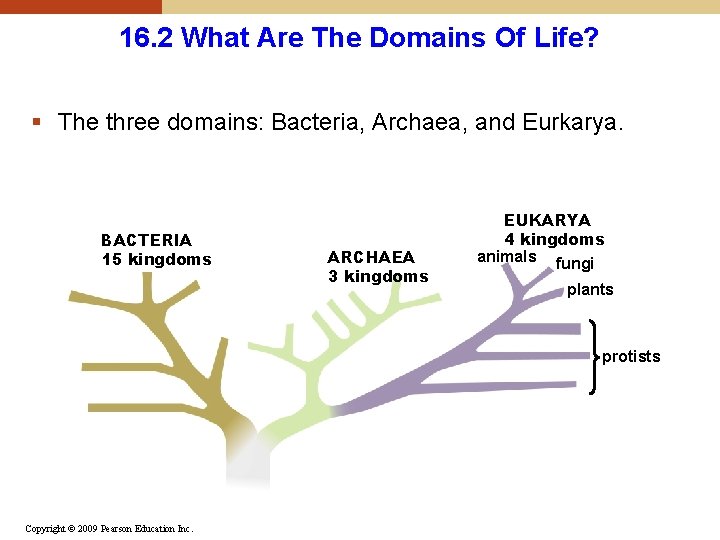
16. 2 What Are The Domains Of Life? § The three domains: Bacteria, Archaea, and Eurkarya. BACTERIA 15 kingdoms ARCHAEA 3 kingdoms EUKARYA 4 kingdoms animals fungi plants protists Copyright © 2009 Pearson Education Inc.
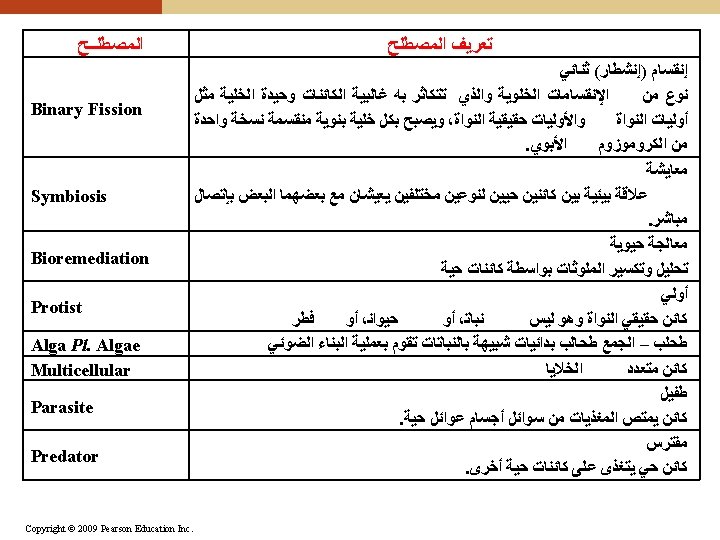
16. 3 Bacteria And Archaea 1 - STRUCTURE § Earth’s first organisms were prokaryotes • In terms of abundance, prokaryotes are Earth’s predominant form of life. • Prokaryotes include Bacteria and Archaea • They are single-celled microbes that lacked organelles such as a nucleus, chloroplasts, and mitochondria. Copyright © 2009 Pearson Education Inc.
16. 3 Bacteria And Archaea § 2 - Bacteria and Archaea are fundamentally different • Bacterial cells contain molecules of the polymer peptidoglycan, peptidoglycan which strengthens the cell wall. • They also differ in the structure and composition of the plasma membrane, membrane ribosomes, and RNA polymerases, as well as in the processes of transcription and translation. Copyright © 2009 Pearson Education Inc.
16. 3 Bacteria And Archaea • The biochemical differences between archaea and bacteria make distinguishing the two domains easy. • Prokaryotes have been classified on the basis of shape, means of locomotion, locomotion pigments, pigments nutrient nutrien requirements, the appearance of colonies, colonies and staining properties. • More recently, the comparisons of DNA and RNA nucleotide sequences have been used in prokaryotic classification. Copyright © 2009 Pearson Education Inc.
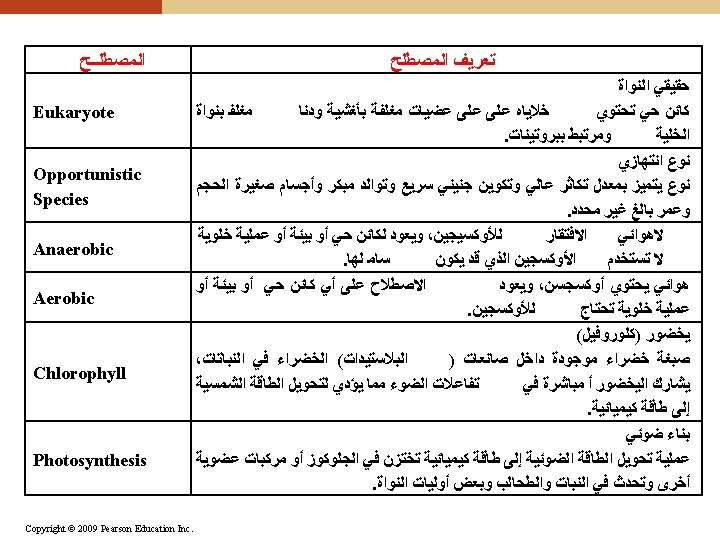
16. 3 Bacteria And Archaea § 3 - Prokaryotes exhibit diverse metabolisms. • Many prokaryotes are anaerobes; their metabolisms do not require oxygen. • Others are opportunistic, using anaerobic respiration when oxygen is absent and switching to aerobic respiration when oxygen is available. Copyright © 2009 Pearson Education Inc.
16. 3 Bacteria And Archaea • Prokaryotes feed on many things, including sugars, proteins, and fats, but also petroleum, methane, benzene, and toluene; some can use hydrogen, sulfur, ammonia, iron, and nitrate. • Some prokaryotes possess chlorophyll and are photosynthetic. Copyright © 2009 Pearson Education Inc.

16. 3 Bacteria And Archaea 4 - REPRODUCTION § Most prokaryotes reproduce asexually by binary fission. • They produce identical copies of the original cell. • They reproduce rapidly and can evolve quickly to adapt to changing conditions. Copyright © 2009 Pearson Education Inc.
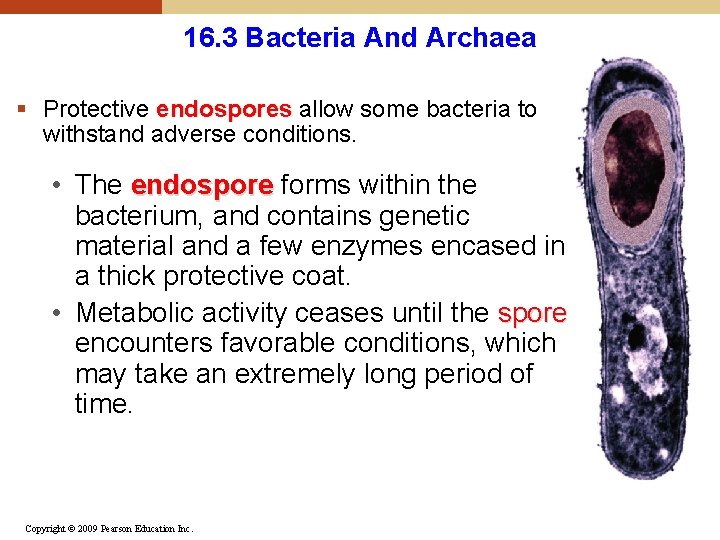
16. 3 Bacteria And Archaea § Protective endospores allow some bacteria to withstand adverse conditions. • The endospore forms within the bacterium, and contains genetic material and a few enzymes encased in a thick protective coat. • Metabolic activity ceases until the spore encounters favorable conditions, which may take an extremely long period of time. Copyright © 2009 Pearson Education Inc.
16. 3 Bacteria And Archaea 5 - Affect humans § Prokaryotes affect humans and other organisms. • Prokaryotes play important roles in animal nutrition. • Many animals that eat plants cannot digest the cellulose in plants themselves and rely on symbiotic bacteria in their digestive tracts, which are able to digest cellulose, to liberate nutrients from this food source. Copyright © 2009 Pearson Education Inc.
16. 3 Bacteria And Archaea • Many foods that humans eat are produced by the actions of bacteria, including cheese, yogurt, and sauerkraut. • Some bacteria in human intestines feed on undigested food and synthesize nutrients, such as vitamin K and vitamin B 12, which the human body absorbs. Copyright © 2009 Pearson Education Inc.
16. 3 Bacteria And Archaea 6 - recyclers § Prokaryotes are nature’s recyclers. • Prokaryotes consume the organic molecules in the dead bodies of plants and animals, decomposing their wastes and recycling them to the environment. • Prokaryotes can clean up pollution. Copyright © 2009 Pearson Education Inc.
16. 3 Bacteria And Archaea • Nearly anything that human beings can synthesize can be broken down by some prokaryote, including detergents, toxic pesticides, and harmful industrial chemicals. • Even oil petroleum can be broken down by prokaryotes. • The breakdown of pollutants by bacteria is called bioremediation Copyright © 2009 Pearson Education Inc.
16. 3 Bacteria And Archaea 7 -Pathogenic §Pathogenic bacteria (disease-causing) synthesize toxic substances that cause diseases in humans. §Some anaerobic bacteria produce dangerous poisons toxins that attack the human systems. §Example Clostridium tetani causes tetanus Copyright © 2009 Pearson Education Inc.
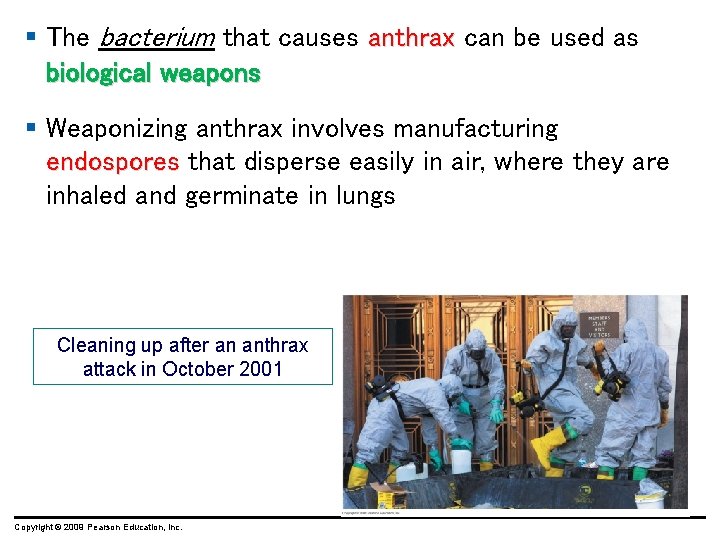
§ The bacterium that causes anthrax can be used as biological weapons § Weaponizing anthrax involves manufacturing endospores that disperse easily in air, where they are inhaled and germinate in lungs Cleaning up after an anthrax attack in October 2001 Copyright © 2009 Pearson Education, Inc.
Domain Eukarya is divided into four kingdoms: 1. Protists (everything that doesn’t fit into the other three kingdoms) 2. - Plants 3. - Fungi 4. - Animals
16. 4 Protists § The protists are eukaryotes that are not a plant, an animal, or a fungus. • Most protists are small and single-celled. • They are incredibly diverse in their modes of reproduction and in their structural and physiological innovations. • Some of the larger protists are colonies of single-celled individuals, while others are multicellular organisms. Copyright © 2009 Pearson Education Inc.
16. 4 Protists § Protists have both positive and negative effects upon humans and other organisms. The primary positive impact comes from the ecological roles of photosynthetic marine protists, e. g Brown algae, Green algae The negative side include many human diseases caused by parasitic protists. Copyright © 2009 Pearson Education Inc.
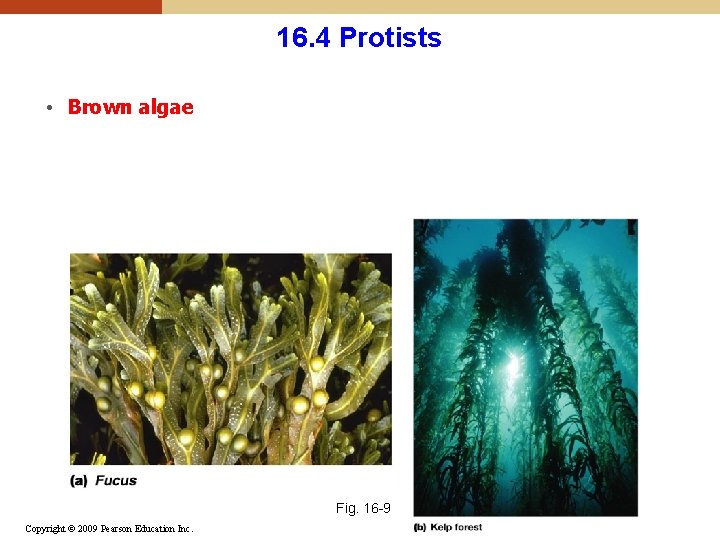
16. 4 Protists • Brown algae Fig. 16 -9 Copyright © 2009 Pearson Education Inc.
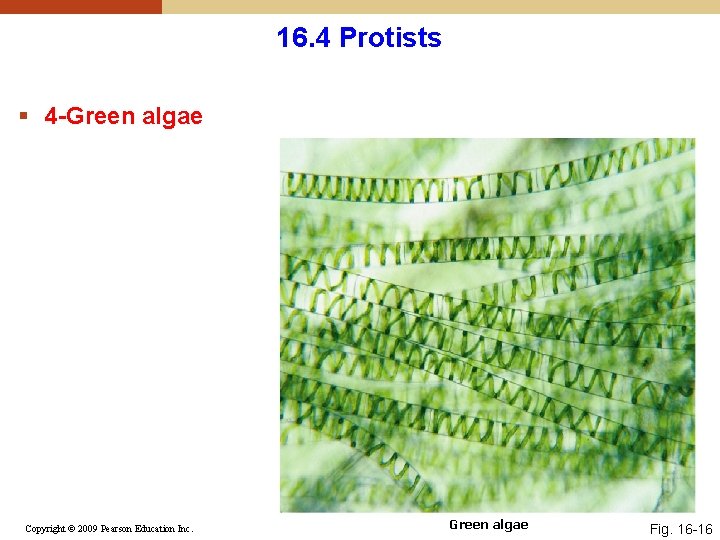
16. 4 Protists § 4 -Green algae Copyright © 2009 Pearson Education Inc. Green algae Fig. 16 -16
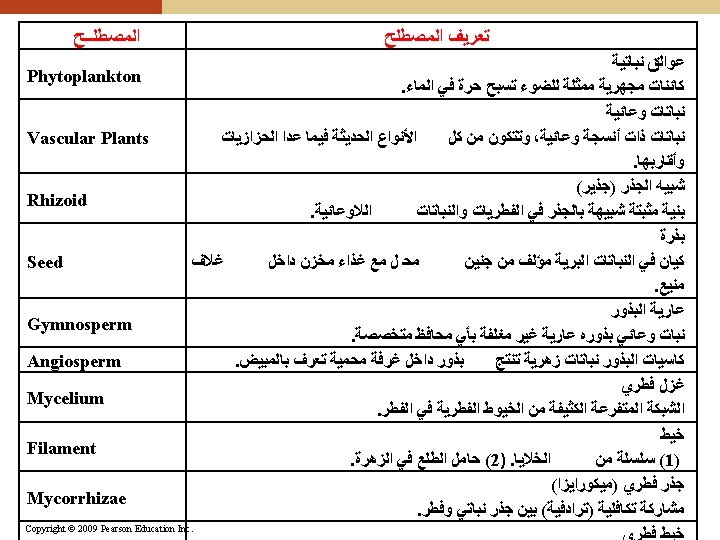
16. 5 Plants § Properties that distinguish plants from other organisms: Plants have chlorophyll for photosynthesis. Plant reproduction features alternation of generations Plants have dependent embryos. Plants have roots or root-like structures that anchor it and absorb water and nutrient from the soil. Plants have a waxy cuticle that covers the surface of leaves and stems, limiting water loss. Copyright © 2009 Pearson Education Inc.
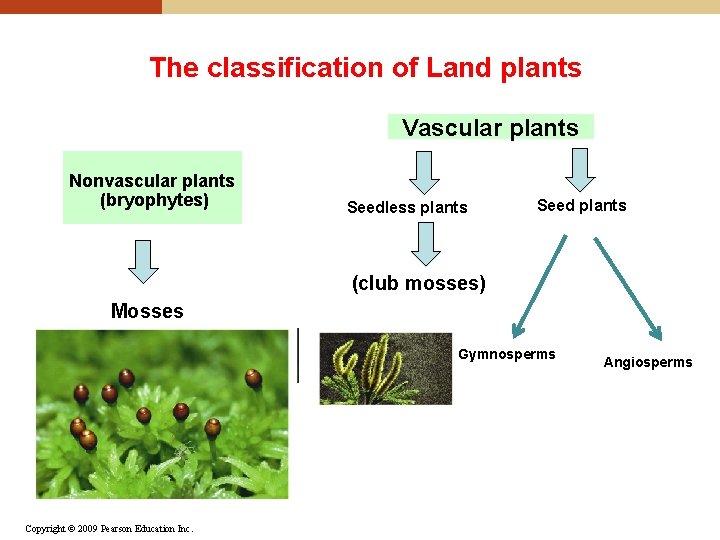
The classification of Land plants Vascular plants Nonvascular plants (bryophytes) Seedless plants Seed plants (club mosses) Mosses Gymnosperms Copyright © 2009 Pearson Education Inc. Angiosperms
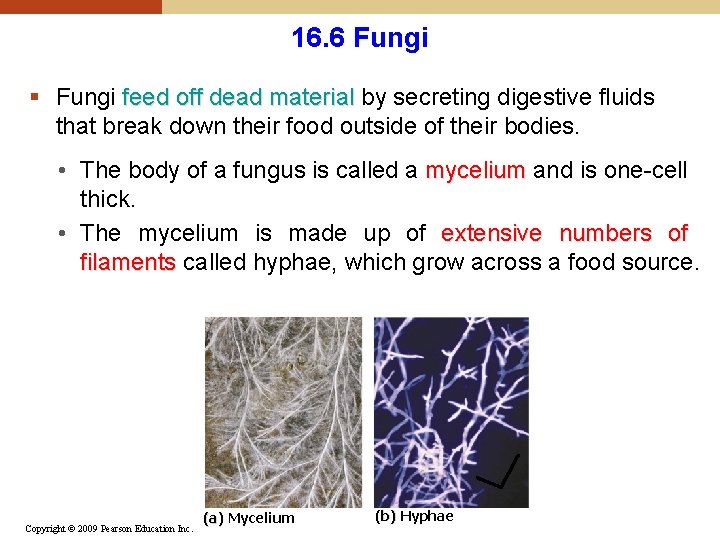
16. 6 Fungi § Fungi feed off dead material by secreting digestive fluids that break down their food outside of their bodies. • The body of a fungus is called a mycelium and is one-cell thick. • The mycelium is made up of extensive numbers of filaments called hyphae, which grow across a food source. Copyright © 2009 Pearson Education Inc. (a) Mycelium (b) Hyphae
16. 6 Fungi § Fungi affect humans and other organisms. v. Fungi play a major role in the destruction of dead plant tissue by being able to digest both lignin and cellulose, the molecules that make up wood. v. Fungi are saprophytes (feeding on dead organisms) organisms and consume the dead of all kingdoms. nutrients and minerals to the environment. v v. Antibiotics (such as penicillin, oleandomycin, and cephalosporin) cephalosporin are made from fungi to combat bacterial diseases. v. Fungi attack both plants and animals causing many diseases. Copyright © 2009 Pearson Education Inc.
16. 7 Animals § Characteristics of animals Animals are multicellular. Animals get their energy by consuming other organisms. Animals reproduce sexually. Animal cells lack a cell wall. Animals are mobile. Animals react rapidly to external stimuli. Copyright © 2009 Pearson Education Inc.
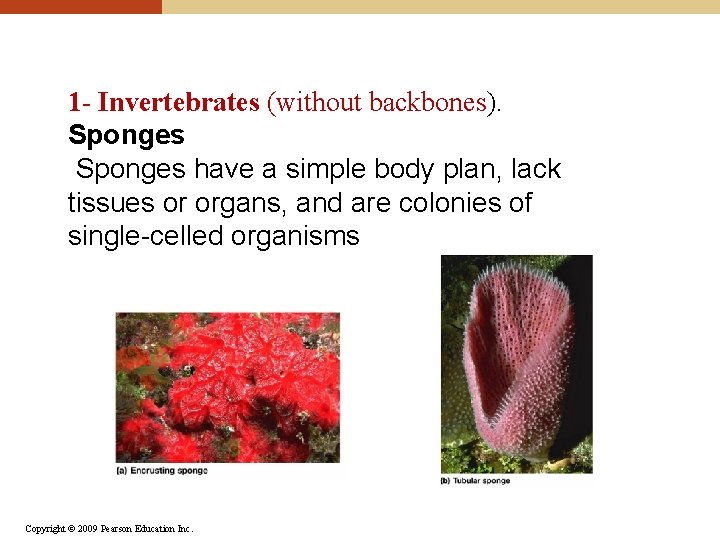
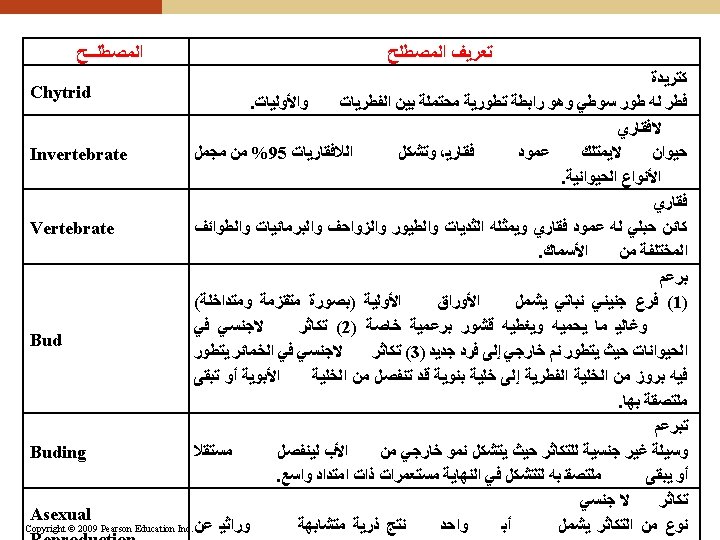
1 - Invertebrates (without backbones). Sponges have a simple body plan, lack tissues or organs, and are colonies of single-celled organisms Copyright © 2009 Pearson Education Inc.
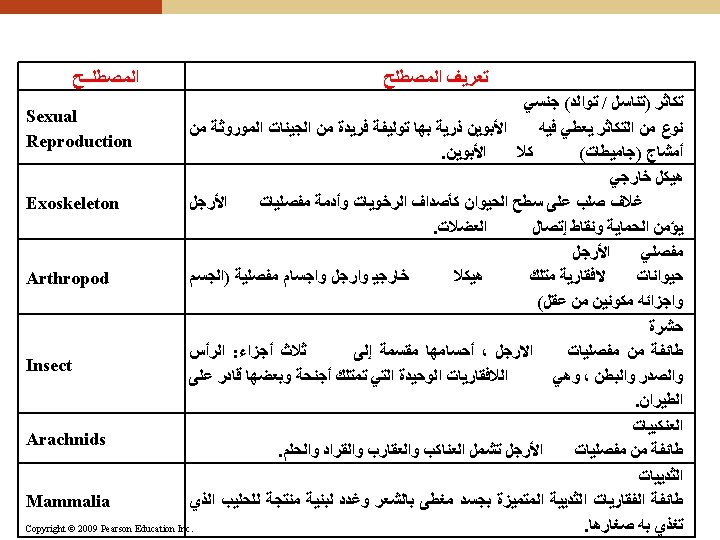
16. 7 Animals § Arthropods are the dominant animals on Earth. • Arthropoda includes: 1 - Insects 2 - Arachnids, 3 - Crustaceans. . • Insects are the only flying invertebrates. Copyright © 2009 Pearson Education Inc.
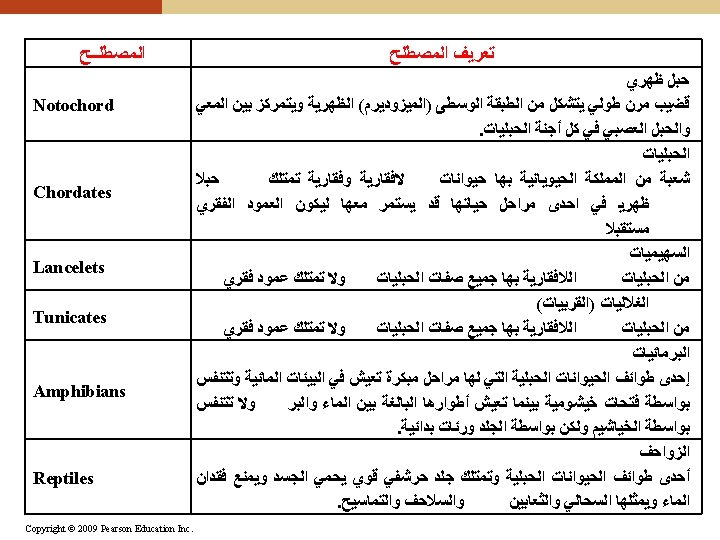
16. 7 Animals § Chordates include both invertebrates and vertebrates. They have the following features: The notochord: The nerve cord: Pharyngeal gill slits: A post-anal tail: Copyright © 2009 Pearson Education Inc.
16. 7 Animals § Vertebrates have a backbone. In vertebrates, the embryonic notochord is normally replaced during development by a backbone, or vertebral column. Vertebrates are represented by fish, amphibians, reptiles, birds, and mammals. Copyright © 2009 Pearson Education Inc.
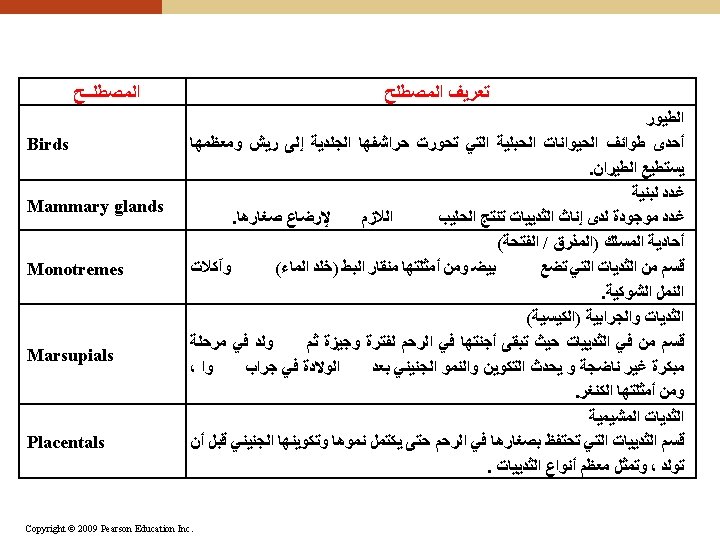
16. 7 Animals § Mammals One branch of reptiles gave rise to a group that evolved hair and diverged to form the mammals. Mammals are named for the milk-producing mammary glands used by female members of the group to suckle their young. In most mammals, fur protects and insulates the warm body. The mammals are divided into three groups: monotremes, marsupials, and placentals. Copyright © 2009 Pearson Education Inc.
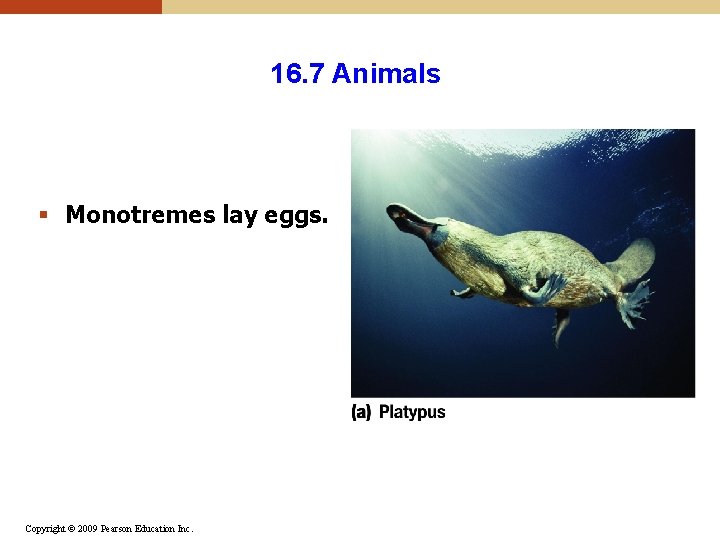
16. 7 Animals § Monotremes lay eggs. Copyright © 2009 Pearson Education Inc.
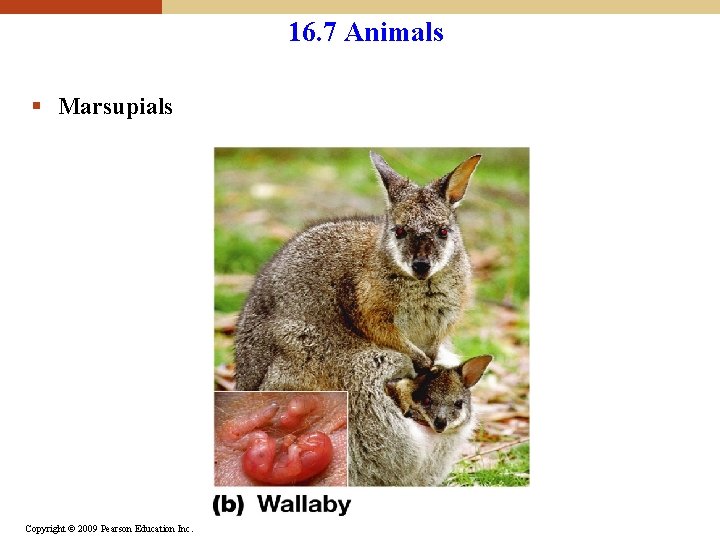
16. 7 Animals § Marsupials Copyright © 2009 Pearson Education Inc.
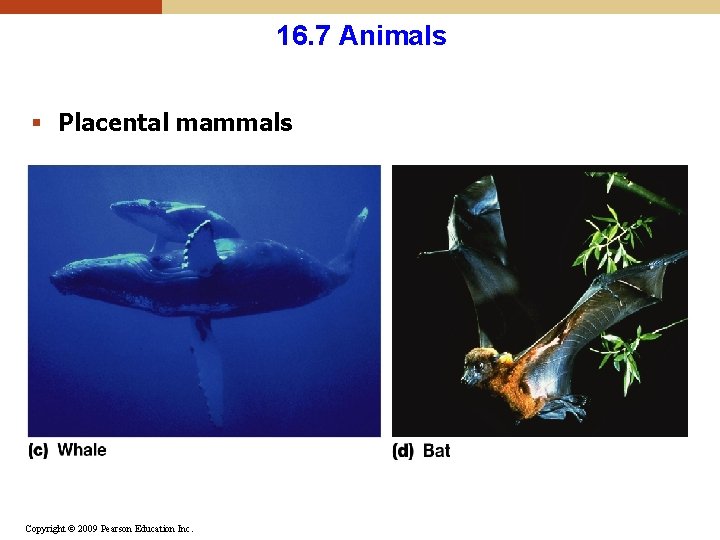
16. 7 Animals § Placental mammals Copyright © 2009 Pearson Education Inc.
- Slides: 47