
Chapter 16 The Child With Altered Respiratory Status

- Slides: 32
Chapter 16 The Child With Altered Respiratory Status Copyright © 2014 Wolters Kluwer Health | Lippincott Williams & Wilkins
Types of Respiratory Conditions Seen During Childhood • Acute or chronic • Life threatening • Primary clinical problem or secondary complication Copyright © 2014 Wolters Kluwer Health | Lippincott Williams & Wilkins
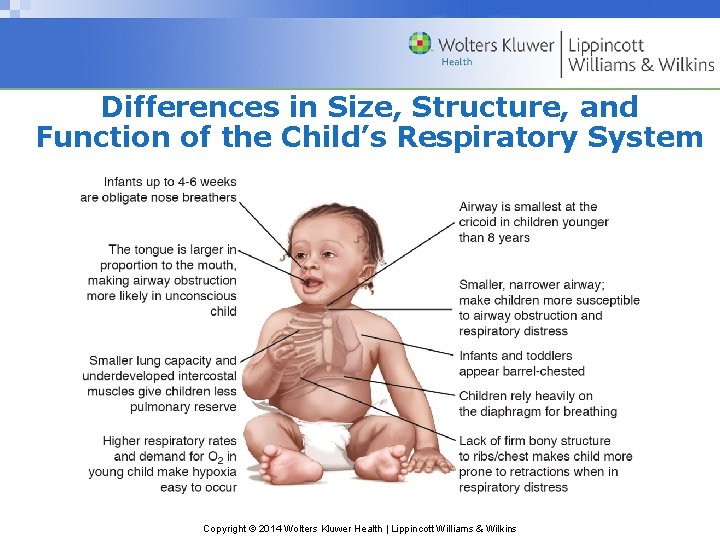
Respiratory System Variances in the Child • System is physically smaller with much less reserve capacity. • Fewer central and peripheral chemoreceptors in the circulatory system • Airway is much smaller in diameter and shorter in length. • Tongue is proportionally larger. • Larynx is funnel shaped. • Cartilaginous chest wall is twice as compliant and flexible. Copyright © 2014 Wolters Kluwer Health | Lippincott Williams & Wilkins
Respiratory System Variances in the Child —(cont. ) • Horizontal orientation of ribs prevents adequate leverage for intercostal muscles. • Diaphragm, intercostal muscles, and the muscles supporting the head and upper/lower airways are underdeveloped. • Lung tissue’s ability to inflate and deflate gradually increases throughout childhood. Copyright © 2014 Wolters Kluwer Health | Lippincott Williams & Wilkins
Differences in Size, Structure, and Function of the Child’s Respiratory System Copyright © 2014 Wolters Kluwer Health | Lippincott Williams & Wilkins
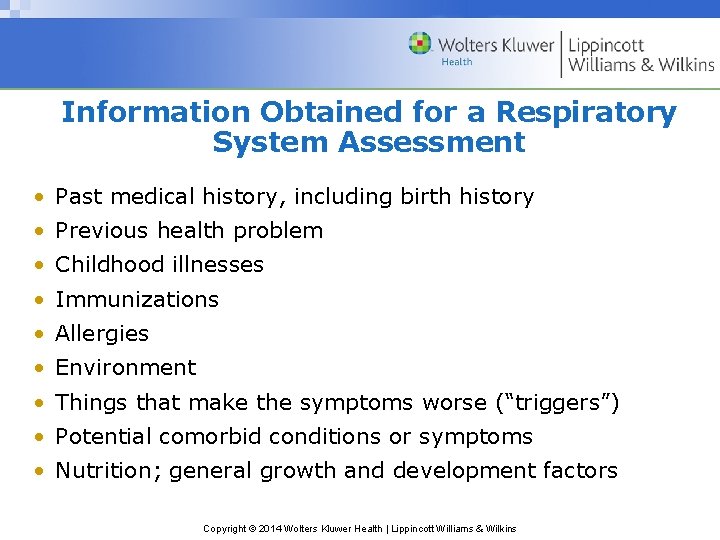
Information Obtained for a Respiratory System Assessment • Past medical history, including birth history • Previous health problem • Childhood illnesses • Immunizations • Allergies • Environment • Things that make the symptoms worse (“triggers”) • Potential comorbid conditions or symptoms • Nutrition; general growth and development factors Copyright © 2014 Wolters Kluwer Health | Lippincott Williams & Wilkins
Question Stridor is a noise the infant may make as he or she attempts to provide a self-induced positive endexpiratory pressure (PEEP), which may signal respiratory distress. A. True B. False Copyright © 2014 Wolters Kluwer Health | Lippincott Williams & Wilkins
Answer B. False Stridor is a harsh, grating, whistling sound heard on inspiration and produced by turbulent airflow through laryngeal or tracheal obstruction. It is usually more pronounced when the child is crying or agitated. Grunting is a noise the infant may make as he or she attempts to provide a self-induced PEEP, which may signal respiratory distress. Copyright © 2014 Wolters Kluwer Health | Lippincott Williams & Wilkins
Diagnostic Tests and Procedures to Evaluate the Respiratory System • Measurement of lung volumes and flow rates (pulmonary function tests and peak flow measurement) • Direct or indirect blood and body fluid analysis (arterial blood gases, fluid cultures, sweat chloride test) • Imaging techniques (radiographs, fluoroscopy, bronchography, CT scan, scintigraphy, MRI) • Direct visualization of the respiratory tree (laryngoscopy, bronchoscopy) Copyright © 2014 Wolters Kluwer Health | Lippincott Williams & Wilkins
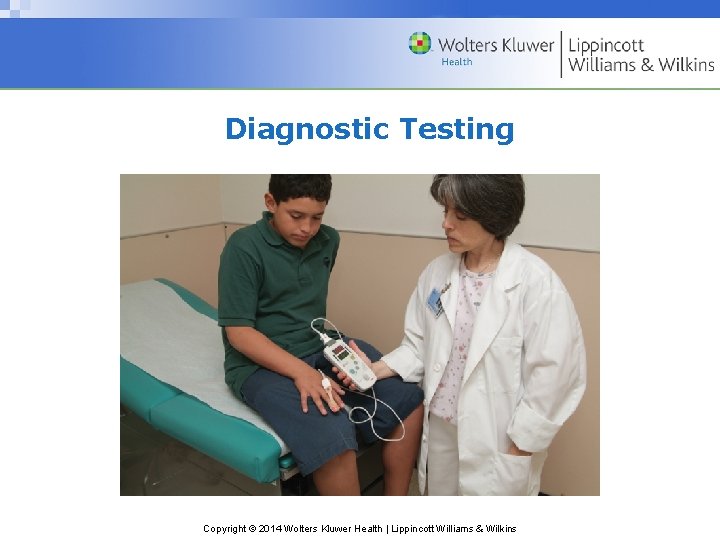
Diagnostic Testing Copyright © 2014 Wolters Kluwer Health | Lippincott Williams & Wilkins
Interventions for Children With Chronic Respiratory Conditions • Oxygen • Medications • Airway clearance techniques • Nutritional support • Artificial airways • Mechanical ventilation • Tracheostomy Copyright © 2014 Wolters Kluwer Health | Lippincott Williams & Wilkins
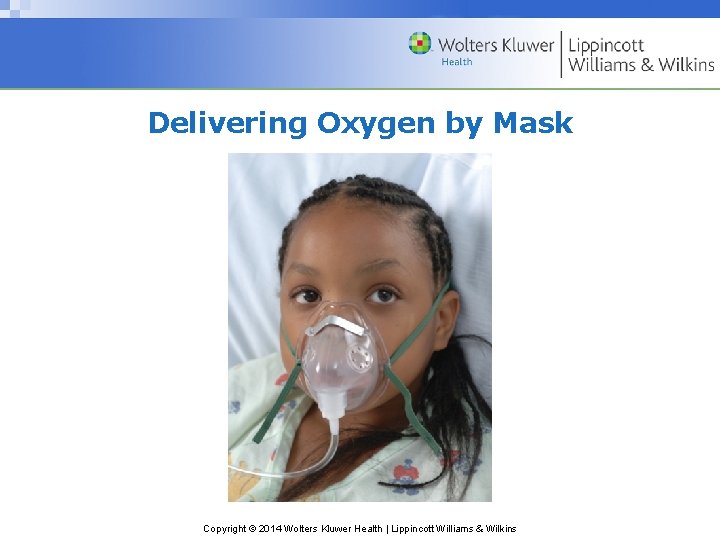
Oxygen Delivery Methods • Mask • Nasal cannula • Oxygen hood • Oxygen tent • Mechanical ventilation Copyright © 2014 Wolters Kluwer Health | Lippincott Williams & Wilkins
Delivering Oxygen by Mask Copyright © 2014 Wolters Kluwer Health | Lippincott Williams & Wilkins
Medication Routes of Administration for Respiratory Conditions • Oral • Inhaled • Intravenous • Injectable (SQ or IM) Copyright © 2014 Wolters Kluwer Health | Lippincott Williams & Wilkins
Question Tell whether the following statement is true or false: Supplemental continuous gastrostomy tube or nasogastric tube feedings must be discontinued for at least 30 minutes before postural drainage and percussion. A. True B. False Copyright © 2014 Wolters Kluwer Health | Lippincott Williams & Wilkins
Answer A. True Traditionally, chest physiotherapy (also called postural drainage and percussion) has been the primary intervention for pulmonary conditions with hypersecretion or retained bronchial secretions. Supplemental continuous gastrostomy tube or nasogastric tube feedings must be discontinued for at least 30 minutes before postural drainage and percussion to avoid vomiting and nausea and to promote comfort. Copyright © 2014 Wolters Kluwer Health | Lippincott Williams & Wilkins
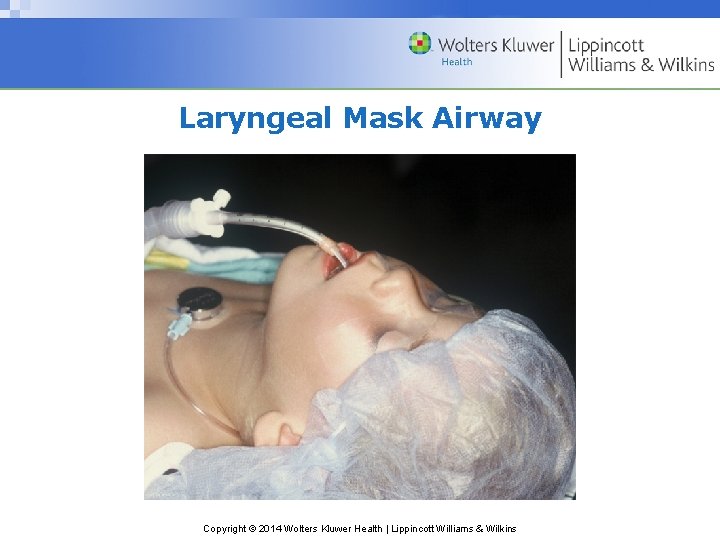
Laryngeal Mask Airway Copyright © 2014 Wolters Kluwer Health | Lippincott Williams & Wilkins
Possible Complications of a Tracheostomy • Hemorrhage • Edema • Subcutaneous emphysema • Pneumothorax • Accidental decannulation Copyright © 2014 Wolters Kluwer Health | Lippincott Williams & Wilkins
Critical Components of Respiratory Care • Preventive care • Monitoring and early detection of symptoms • Adequate management (in home or hospital) • Health education Copyright © 2014 Wolters Kluwer Health | Lippincott Williams & Wilkins
Question Tell whether the following statement is true or false: Congenital abnormalities or malformations of the respiratory systems are common in children. A. True B. False Copyright © 2014 Wolters Kluwer Health | Lippincott Williams & Wilkins
Answer B. False Congenital abnormalities or malformations of the respiratory systems are fortunately rare. Congenital conditions include choanal atresia, Pierre Robin syndrome, cleft palate, laryngomalacia, and tracheomalacia. Copyright © 2014 Wolters Kluwer Health | Lippincott Williams & Wilkins
Upper Respiratory Infections and Obstructions • Allergic rhinitis • Sinusitis • Nasopharyngitis and pharyngitis • Tonsillitis • Croup Copyright © 2014 Wolters Kluwer Health | Lippincott Williams & Wilkins
Upper Respiratory Infections and Obstructions—(cont. ) • Acute epiglottitis • Laryngotracheobronchitis • Bacterial tracheitis • Apnea • Foreign body aspiration Copyright © 2014 Wolters Kluwer Health | Lippincott Williams & Wilkins
Question Tell whether the following statement is true or false: The nurse should routinely attempt direct visualization of the upper airway in a child with symptoms of epiglottitis to confirm the diagnosis. A. True B. False Copyright © 2014 Wolters Kluwer Health | Lippincott Williams & Wilkins
Answer B. False The nurse should never attempt direct visualization of the upper airway in any child with symptoms of epiglottitis because it may precipitate complete airway obstruction and respiratory arrest. It should be attempted only by a person skilled in intubations and with all necessary equipment present at the bedside. Copyright © 2014 Wolters Kluwer Health | Lippincott Williams & Wilkins
Type of Apnea • Central apnea – Impairment of the mechanisms that control breathing • Obstructive apnea – Occurs when nasal air flow is absent despite normal or exaggerated respiratory effort • Mixed apnea – Includes central and obstructive components and may require multiple treatment methods Copyright © 2014 Wolters Kluwer Health | Lippincott Williams & Wilkins
Lower Respiratory Infections and Obstructions • Influenza • Bronchiolitis • Bronchitis • Pneumonia Copyright © 2014 Wolters Kluwer Health | Lippincott Williams & Wilkins
Chronic Conditions of the Respiratory System • Asthma • Bronchopulmonary dysplasia • Cystic fibrosis Copyright © 2014 Wolters Kluwer Health | Lippincott Williams & Wilkins
Asthma Care Components • Assessment and monitoring • Education • Control of environmental factors and comorbid conditions • Medications • Management and treatment of exacerbations Copyright © 2014 Wolters Kluwer Health | Lippincott Williams & Wilkins
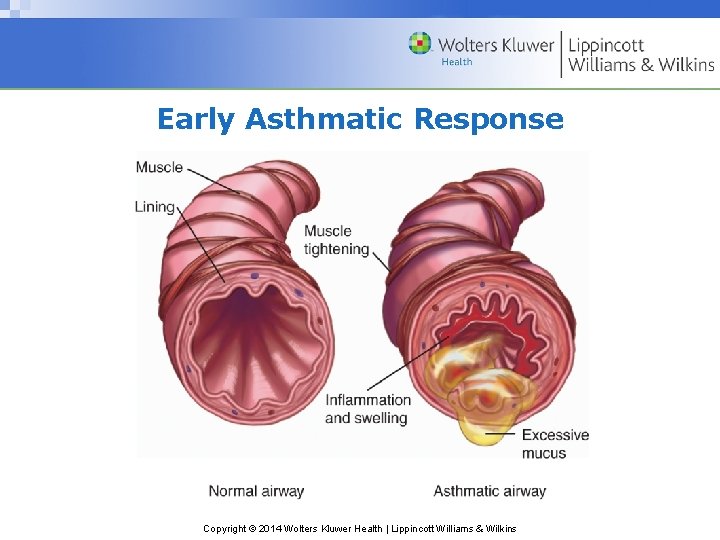
Early Asthmatic Response Copyright © 2014 Wolters Kluwer Health | Lippincott Williams & Wilkins
Risk Factors for Asthma-Related Death • Prior admission to ICU with or without intubation • Two or more hospitalizations, three or more ER visits, or both in the past year • Hospitalization or ER visit in the past month • Current use of or recent withdrawal from systemic corticosteroids • History of psychiatric disease or psychosocial issues • History of nonadherence to asthma treatment plan Copyright © 2014 Wolters Kluwer Health | Lippincott Williams & Wilkins
Focus of Treatment for Cystic Fibrosis • Ensuring optimal care, including treatments, routine monitoring, and general pediatric preventive care • Facilitating access to pertinent health care resources and support • Assisting the family in coordinating care and accessing medications, diet supplements, and medical equipment • Supporting quality of life and independence Copyright © 2014 Wolters Kluwer Health | Lippincott Williams & Wilkins