
CHAPTER 16 PSYCHOLOGICAL DISORDERS SECTION 1 DEFINING ABNORMAL
CHAPTER 16: PSYCHOLOGICAL DISORDERS
SECTION 1: DEFINING ABNORMAL

DEVIATION FROM NORMALITY �Abnormality is when a person deviates from the average or majority �Limitations: cultural norms must be considered and the majority is not always right or best
ADJUSTMENT �Idea that normal people can function in the world physically, socially, and emotionally �Abnormal is a failure to adjust �Limitations: not all psych disorders are violent or destructive
PSYCHOLOGICAL HEALTH �Treats abnormality as a sickness �Uses phrases such as mental illness or mental health �Believe that healthy people should strive for ideal functioning (self-actualization) �Problem: How can you tell?
THOMAS SZASZ �Believed labeling someone as “mentally ill” is damaging �Mentally ill simply have “problems in living” �They are not ill at all
THE PROBLEM OF CLASSIFICATION
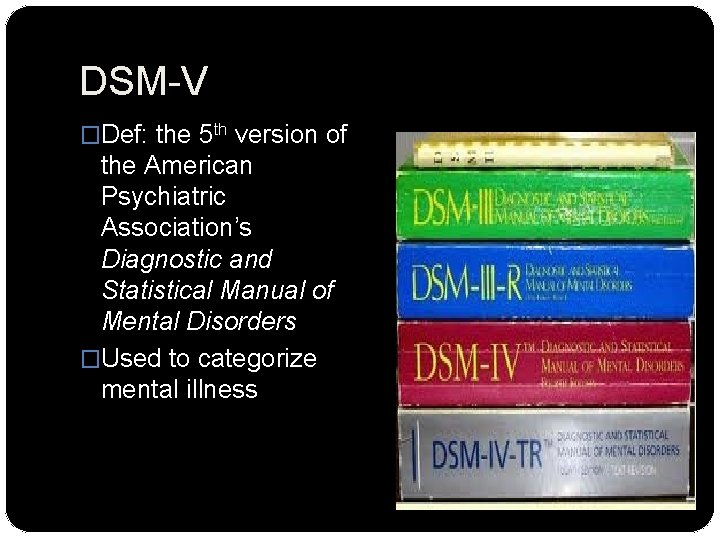
DSM-V �Def: the 5 th version of the American Psychiatric Association’s Diagnostic and Statistical Manual of Mental Disorders �Used to categorize mental illness
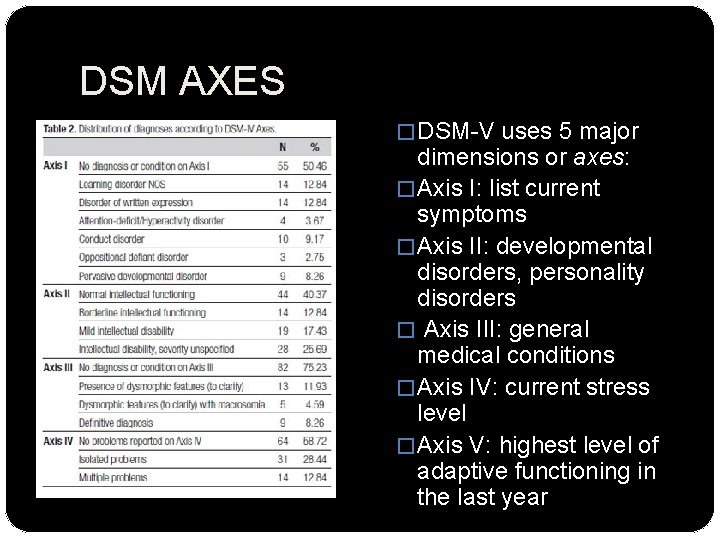
DSM AXES � DSM-V uses 5 major dimensions or axes: � Axis I: list current symptoms � Axis II: developmental disorders, personality disorders � Axis III: general medical conditions � Axis IV: current stress level � Axis V: highest level of adaptive functioning in the last year
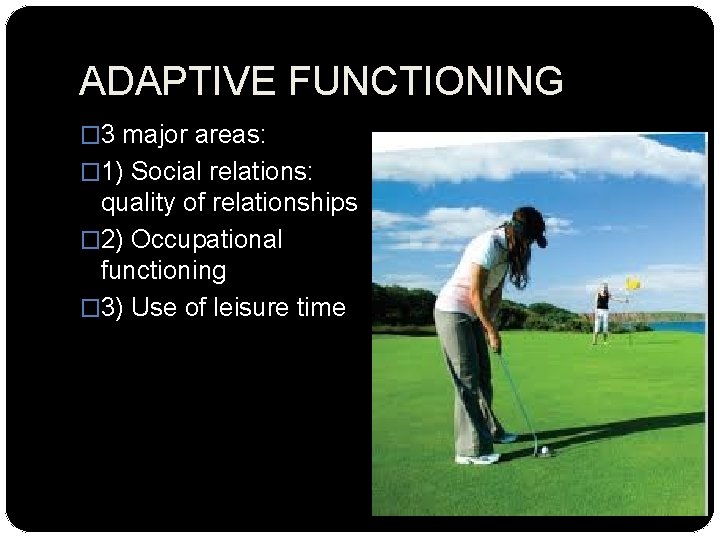
ADAPTIVE FUNCTIONING � 3 major areas: � 1) Social relations: quality of relationships � 2) Occupational functioning � 3) Use of leisure time
SECTION 2: ANXIETY DISORDERS
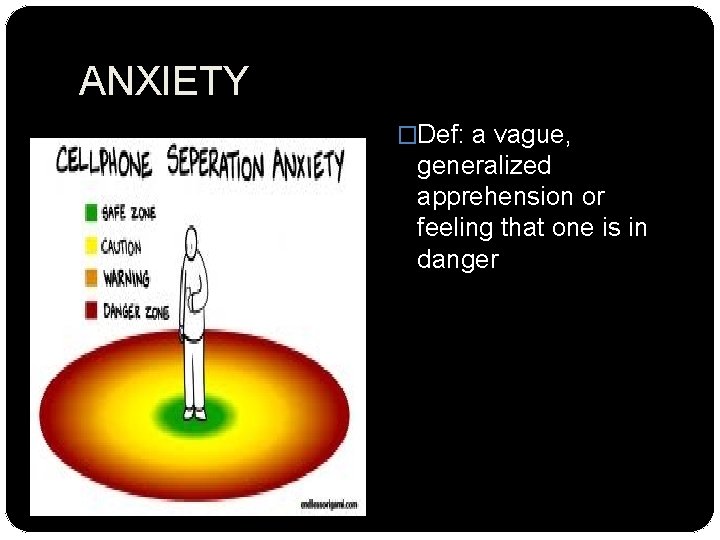
ANXIETY �Def: a vague, generalized apprehension or feeling that one is in danger
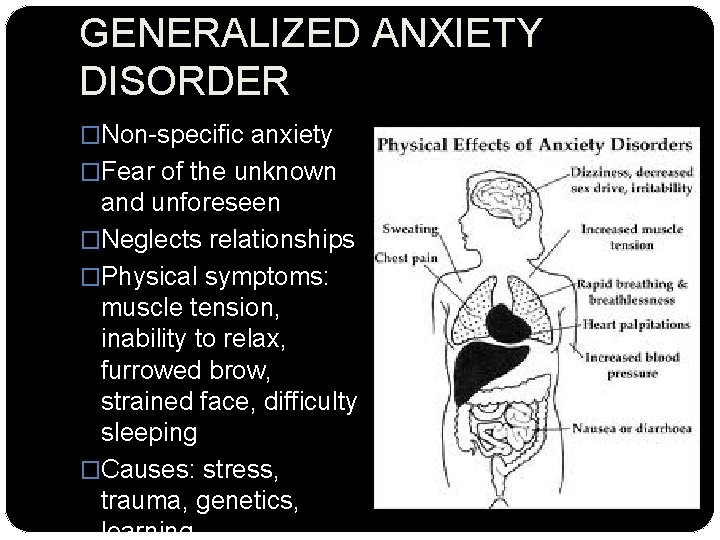
GENERALIZED ANXIETY DISORDER �Non-specific anxiety �Fear of the unknown and unforeseen �Neglects relationships �Physical symptoms: muscle tension, inability to relax, furrowed brow, strained face, difficulty sleeping �Causes: stress, trauma, genetics,
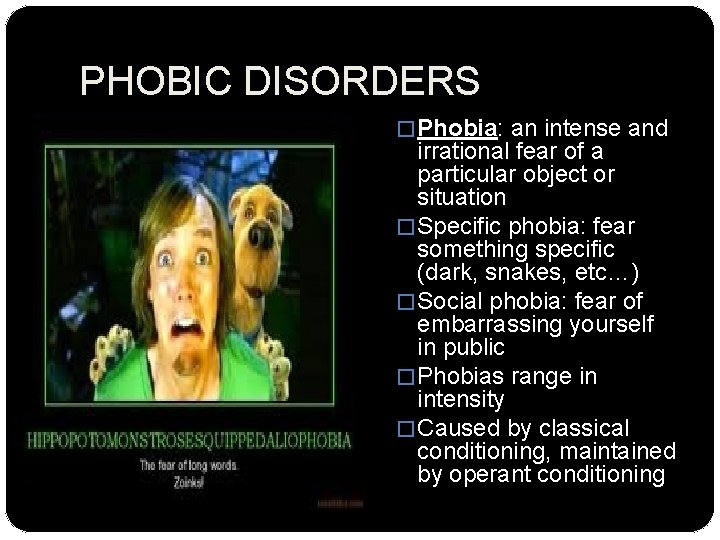
PHOBIC DISORDERS � Phobia: an intense and irrational fear of a particular object or situation � Specific phobia: fear something specific (dark, snakes, etc…) � Social phobia: fear of embarrassing yourself in public � Phobias range in intensity � Caused by classical conditioning, maintained by operant conditioning
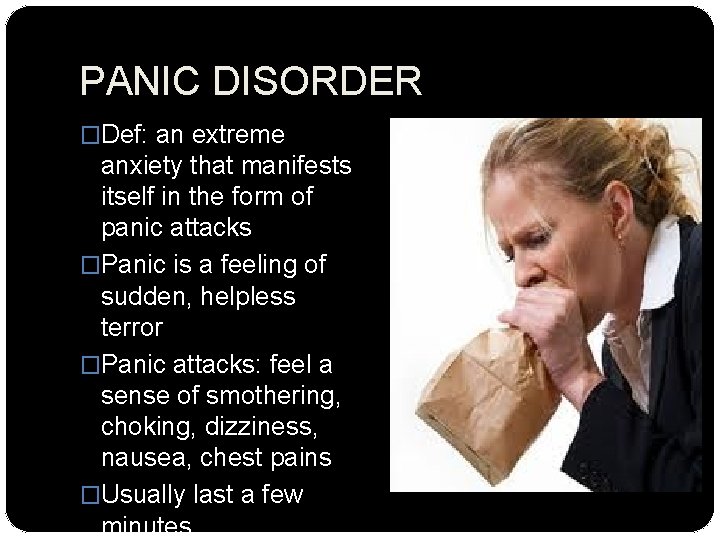
PANIC DISORDER �Def: an extreme anxiety that manifests itself in the form of panic attacks �Panic is a feeling of sudden, helpless terror �Panic attacks: feel a sense of smothering, choking, dizziness, nausea, chest pains �Usually last a few minutes
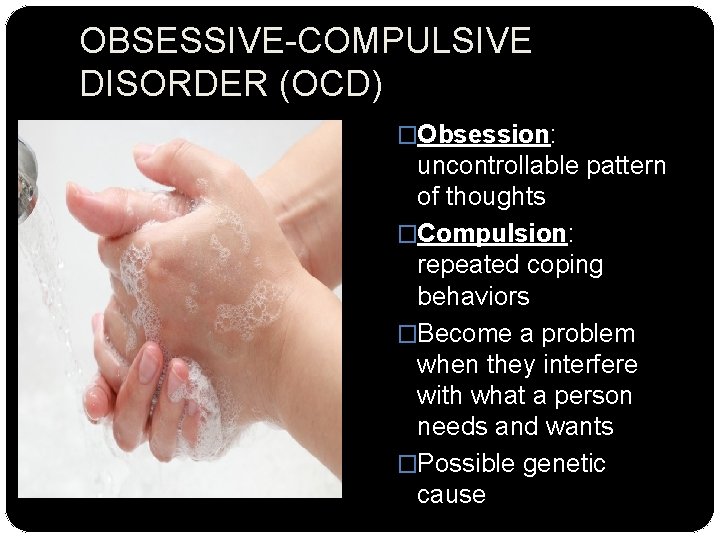
OBSESSIVE-COMPULSIVE DISORDER (OCD) �Obsession: uncontrollable pattern of thoughts �Compulsion: repeated coping behaviors �Become a problem when they interfere with what a person needs and wants �Possible genetic cause
POST-TRAUMATIC STRESS DISORDER (PTSD) �Def: disorder in which victims of traumatic events experience the original event in the form of flashbacks and dreams �Common among war veterans, survivors of: terrorism, natural disasters, and rape
SECTION 3: SOMATOFORM AND DISSOCIATIVE DISORDERS
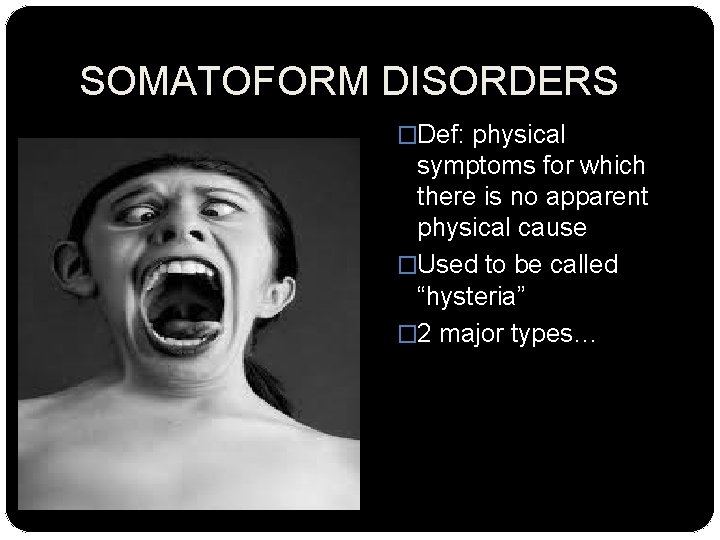
SOMATOFORM DISORDERS �Def: physical symptoms for which there is no apparent physical cause �Used to be called “hysteria” � 2 major types…
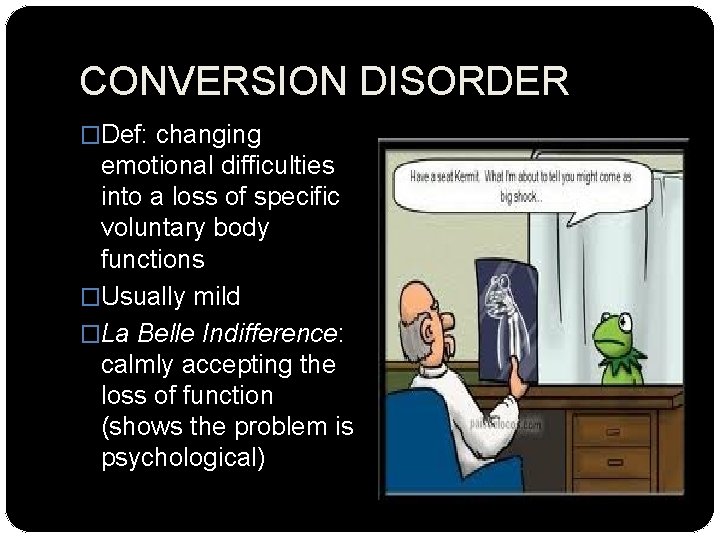
CONVERSION DISORDER �Def: changing emotional difficulties into a loss of specific voluntary body functions �Usually mild �La Belle Indifference: calmly accepting the loss of function (shows the problem is psychological)
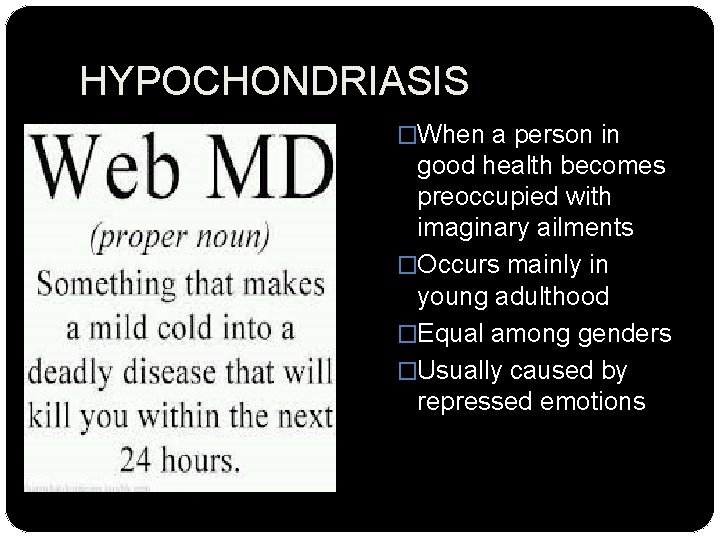
HYPOCHONDRIASIS �When a person in good health becomes preoccupied with imaginary ailments �Occurs mainly in young adulthood �Equal among genders �Usually caused by repressed emotions
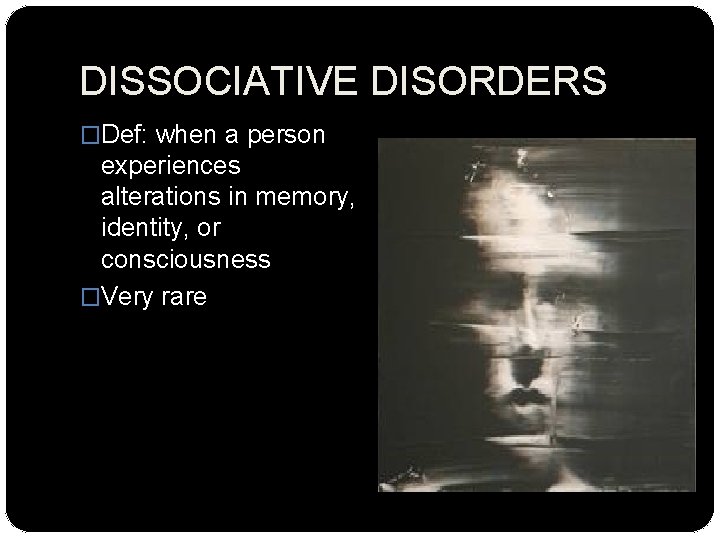
DISSOCIATIVE DISORDERS �Def: when a person experiences alterations in memory, identity, or consciousness �Very rare
DISSOCIATIVE AMNESIA �Def: inability to recall important personal events or info; usually associated with stressful events �Caused by trauma
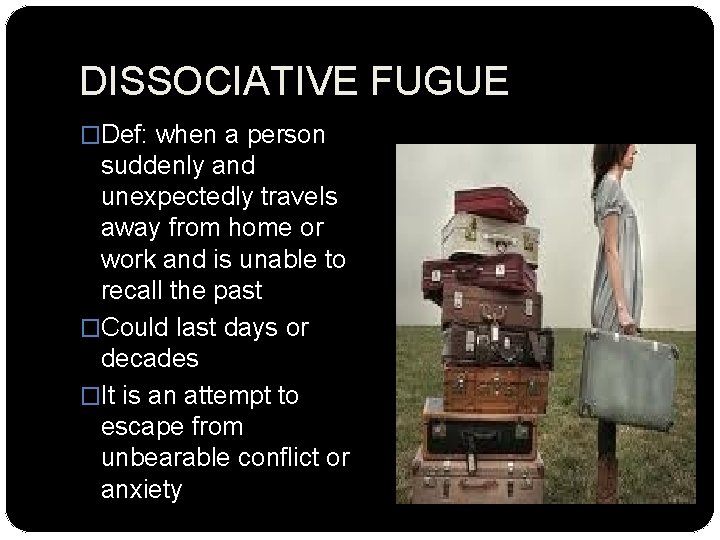
DISSOCIATIVE FUGUE �Def: when a person suddenly and unexpectedly travels away from home or work and is unable to recall the past �Could last days or decades �It is an attempt to escape from unbearable conflict or anxiety
DISSOCIATIVE IDENTITY DISORDER �Multiple personalities �Def: person exhibits 2 or more personality states, each with its own patterns of thinking and behaving �Usually caused by severe physical, psychological, or sexual abuse during childhood
SECTION 4: SCHIZOPHRENIA AND MOOD DISORDERS
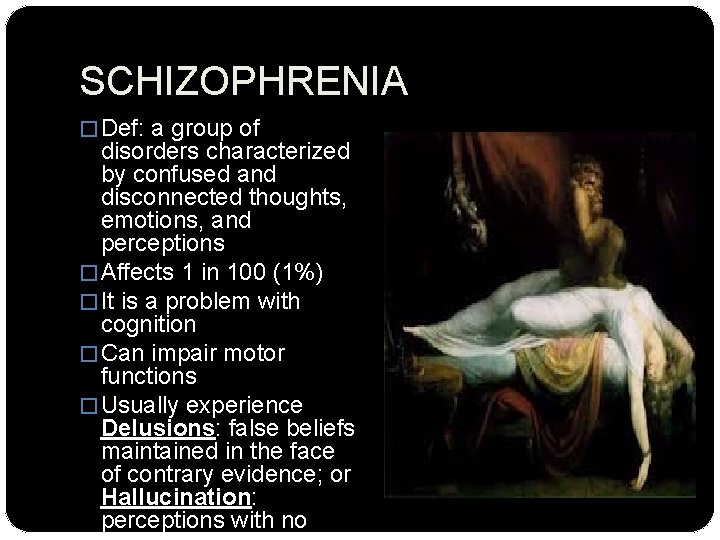
SCHIZOPHRENIA � Def: a group of disorders characterized by confused and disconnected thoughts, emotions, and perceptions � Affects 1 in 100 (1%) � It is a problem with cognition � Can impair motor functions � Usually experience Delusions: false beliefs maintained in the face of contrary evidence; or Hallucination: perceptions with no
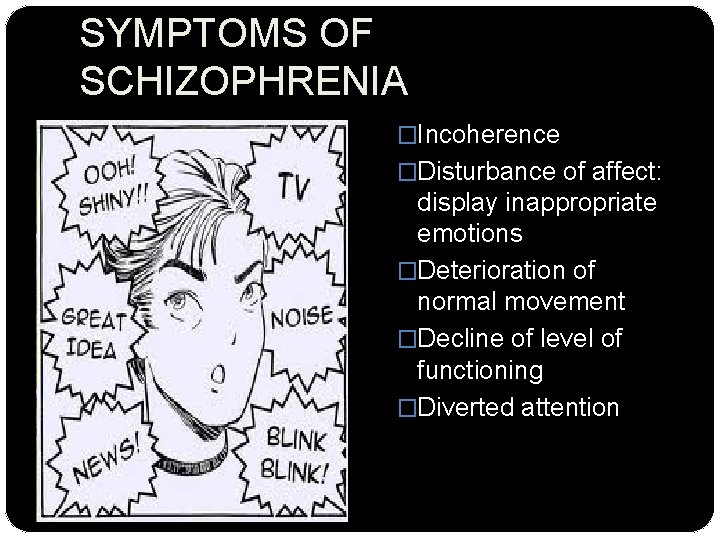
SYMPTOMS OF SCHIZOPHRENIA �Incoherence �Disturbance of affect: display inappropriate emotions �Deterioration of normal movement �Decline of level of functioning �Diverted attention
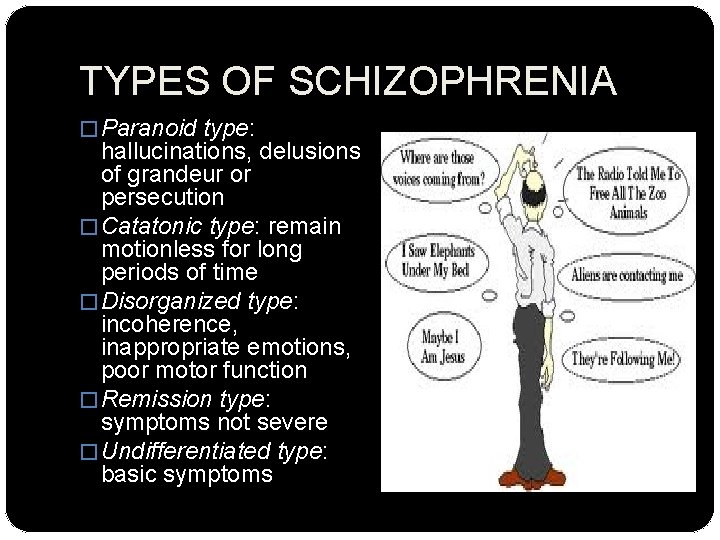
TYPES OF SCHIZOPHRENIA � Paranoid type: hallucinations, delusions of grandeur or persecution � Catatonic type: remain motionless for long periods of time � Disorganized type: incoherence, inappropriate emotions, poor motor function � Remission type: symptoms not severe � Undifferentiated type: basic symptoms
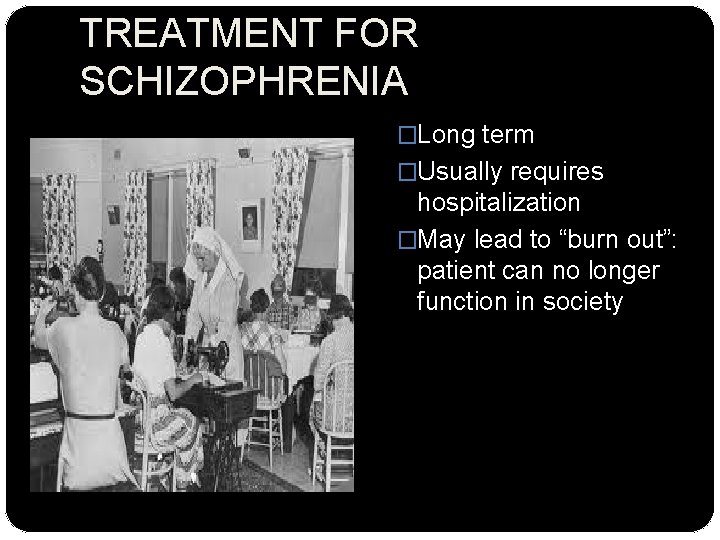
TREATMENT FOR SCHIZOPHRENIA �Long term �Usually requires hospitalization �May lead to “burn out”: patient can no longer function in society
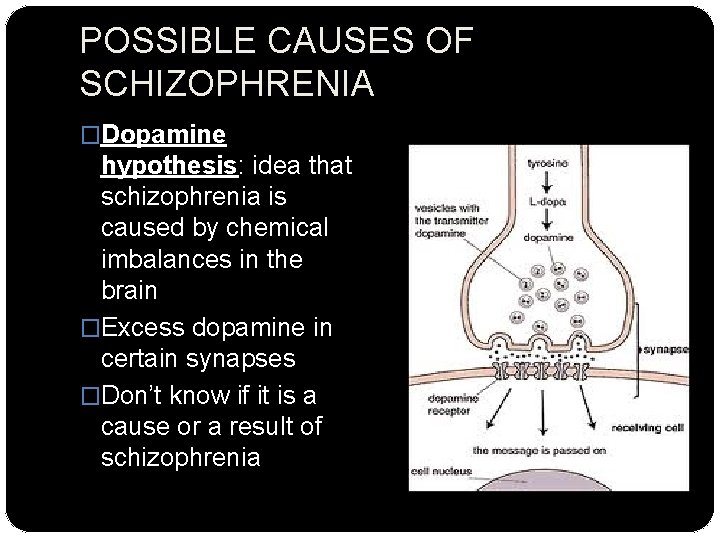
POSSIBLE CAUSES OF SCHIZOPHRENIA �Dopamine hypothesis: idea that schizophrenia is caused by chemical imbalances in the brain �Excess dopamine in certain synapses �Don’t know if it is a cause or a result of schizophrenia
FAMILY AND INTERACTION �Living in a pathogenic (unhealthful) family may add to problems in adult years �Disorganized communication, families on the verge of falling apart
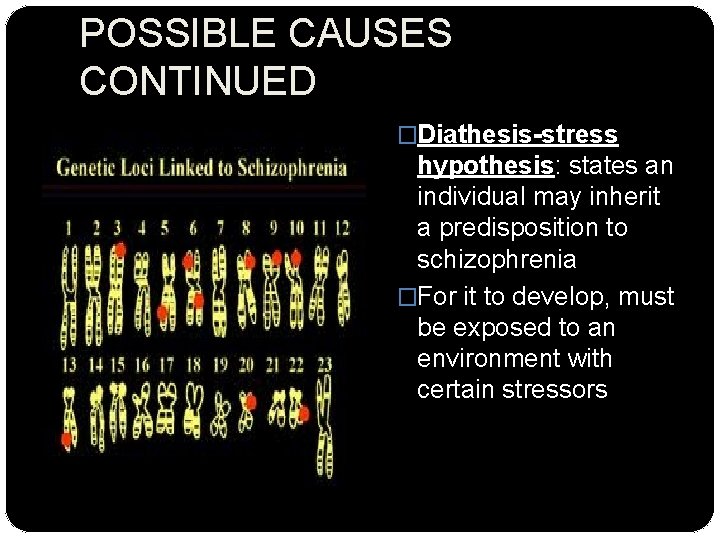
POSSIBLE CAUSES CONTINUED �Diathesis-stress hypothesis: states an individual may inherit a predisposition to schizophrenia �For it to develop, must be exposed to an environment with certain stressors
MOOD DISORDERS
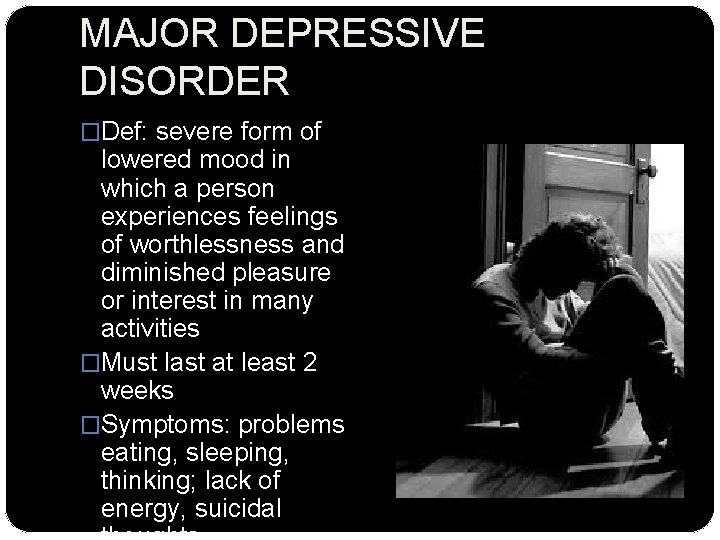
MAJOR DEPRESSIVE DISORDER �Def: severe form of lowered mood in which a person experiences feelings of worthlessness and diminished pleasure or interest in many activities �Must last at least 2 weeks �Symptoms: problems eating, sleeping, thinking; lack of energy, suicidal
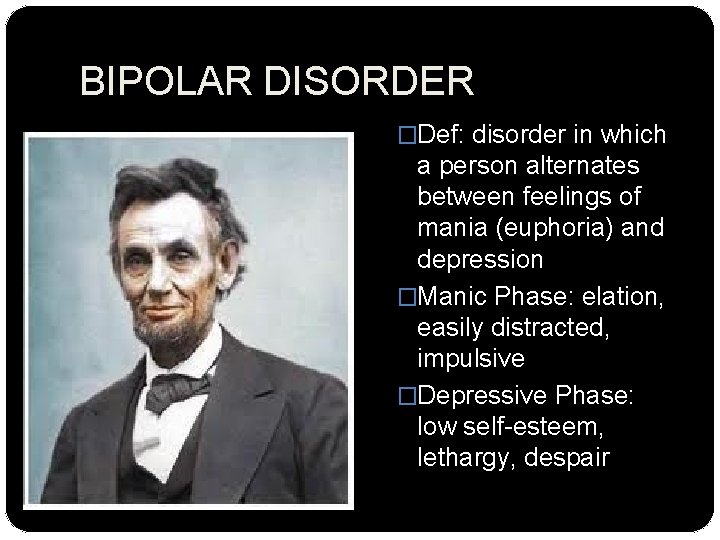
BIPOLAR DISORDER �Def: disorder in which a person alternates between feelings of mania (euphoria) and depression �Manic Phase: elation, easily distracted, impulsive �Depressive Phase: low self-esteem, lethargy, despair
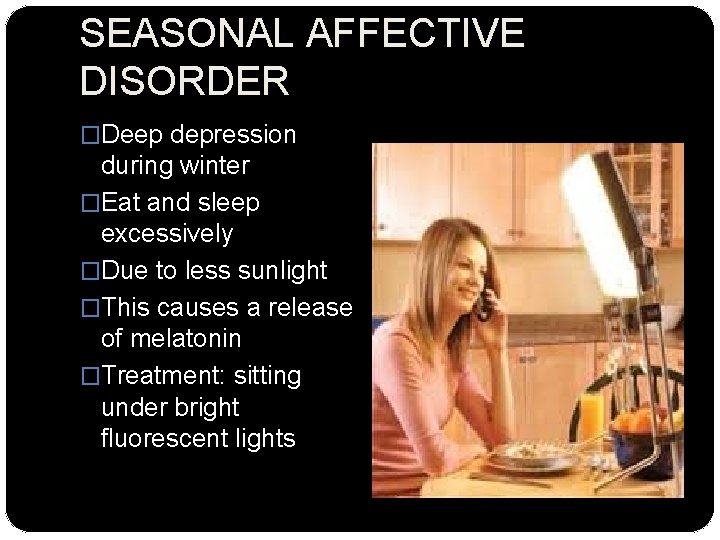
SEASONAL AFFECTIVE DISORDER �Deep depression during winter �Eat and sleep excessively �Due to less sunlight �This causes a release of melatonin �Treatment: sitting under bright fluorescent lights
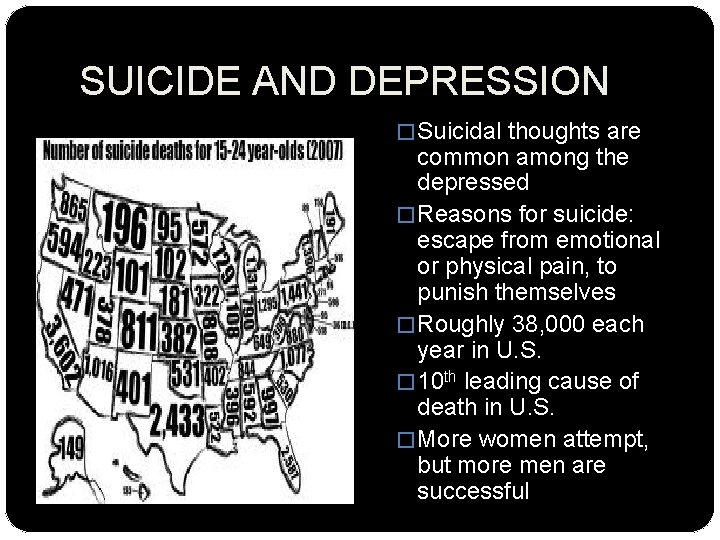
SUICIDE AND DEPRESSION � Suicidal thoughts are common among the depressed � Reasons for suicide: escape from emotional or physical pain, to punish themselves � Roughly 38, 000 each year in U. S. � 10 th leading cause of death in U. S. � More women attempt, but more men are successful
THESE CREATURES NEED HELP!
SECTION 5: PERSONALITY DISORDERS AND DRUG ADDICTION
PERSONALITY DISORDERS � Def: maladaptive or inflexible ways of dealing with others and one’s environment � Antisocial: violate rights of others w/o remorse � Dependent: submissive; need to be taken care of � Histrionic: excessive emotions; seeks attention � Obsessive-Compulsive: controlling; perfectionist � Paranoid: distrusts others � Schizotypal: intense discomfort in close relationships; eccentric behavior

NARCISSISTIC “I’m a genius” “I’m Shakespeare” “I’m Michelangelo” “I feel like I’m too busy making history to read it” “I still think I am the greatest”
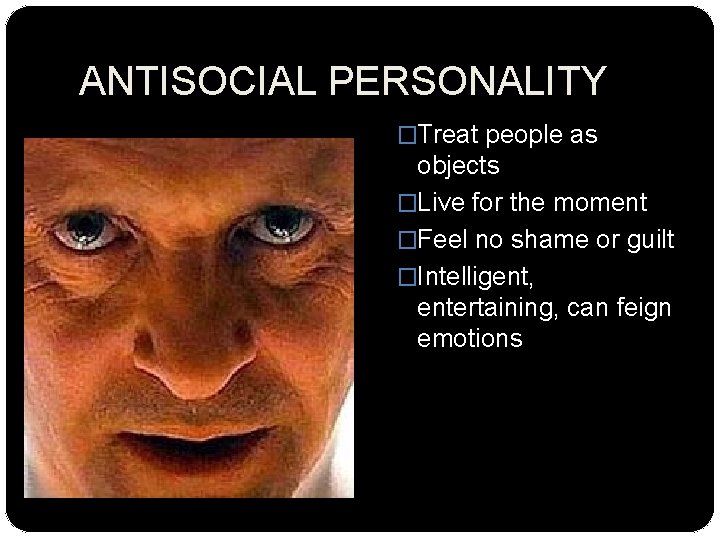
ANTISOCIAL PERSONALITY �Treat people as objects �Live for the moment �Feel no shame or guilt �Intelligent, entertaining, can feign emotions
ORGANIZATION OF PDs �CLUSTER A (Odd Disorders): Paranoid, Schizoid, Schizotypal �CLUSTER B (Dramatic, emotional or erratic): Antisocial, Borderline, Histrionic, Narcissistic �CLUSTER C (Anxious/Fearful): Avoidant, Dependent, Obsessive-Compulsive �OTHERS: change due to medication, other specified PD, Personality disorder not otherwise specified

SMURFS BE MESSED UP TOO!
SERIAL KILLERS
DRUG ADDICTION � Addiction: pattern of drug abuse; an overwhelming and compulsive desire to obtain and used the drug � Tolerance: physical adaptation to a drug so that a person needs an increased amount in order to produce the original effect � Withdrawal: symptoms that occur after a person discontinues the use of a drug to which he/she has become addicted
ALCOHOLISM �Alcohol slows inhibitions �Creates relaxation (it is a depressant) �Perceptions and sensations distort, behavior becomes obnoxious �Violent withdrawal (delirium tremens) �Use of antabuse is common (makes one violently ill if alcohol is imbibed)
- Slides: 48