
CHAPTER 16 Monopolistic Competition and Product Differentiation Principles
- Slides: 10
CHAPTER 16 Monopolistic Competition and Product Differentiation Principles of Microeconomics (Economics 102) UNR, 2 nd Summer Term, 2008 Luis Pires, Ph. D.
Contents of the chapter: 1. The meaning of monopolistic competition 2. Product differentiation 3. How monopolistic competition works: how it determines prices and profits in the short run and the long run 4. Monopolistic competition vs. Perfect competition: Why monopolistic competition poses a trade-off between lower prices and greater product diversity 5. The economic significance of advertising and brand names
1. The Meaning of Monopolistic Competition Monopolistic competition is a market structure in which Øthere are many competing producers in an industry, Øeach producer sells a differentiated product, and Øthere is free entry into and exit from the industry in the long run.
2. Product Differentiation There are three important forms of product differentiation: ØDifferentiation by style or type SUV’s – Sedans vs. ØDifferentiation by location – Dry cleaner near home vs. Cheaper dry-cleaner far away ØDifferentiation by quality – Ordinary ($) vs. gourmet chocolate ($$$)
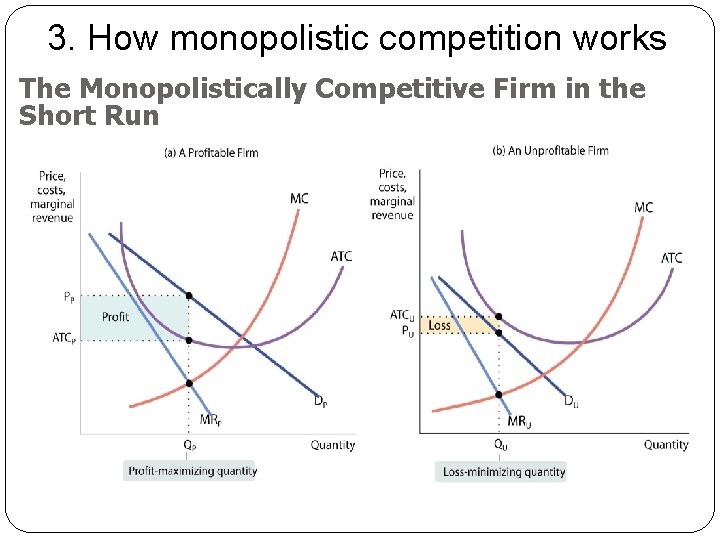
3. How monopolistic competition works The Monopolistically Competitive Firm in the Short Run
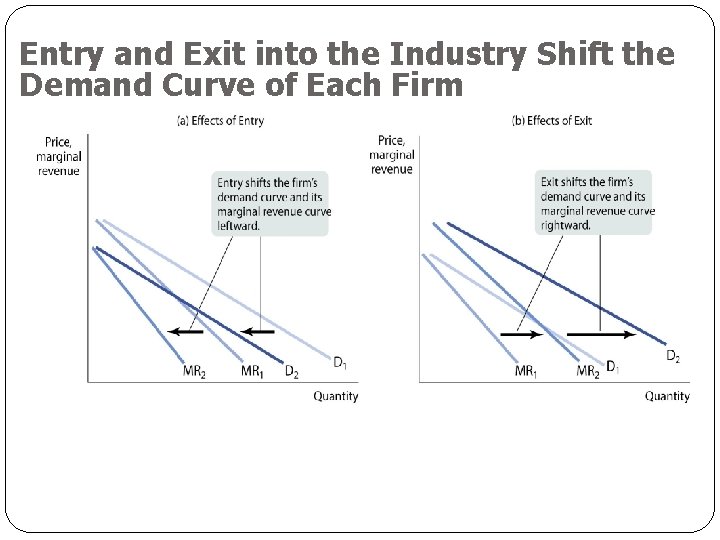
Entry and Exit into the Industry Shift the Demand Curve of Each Firm
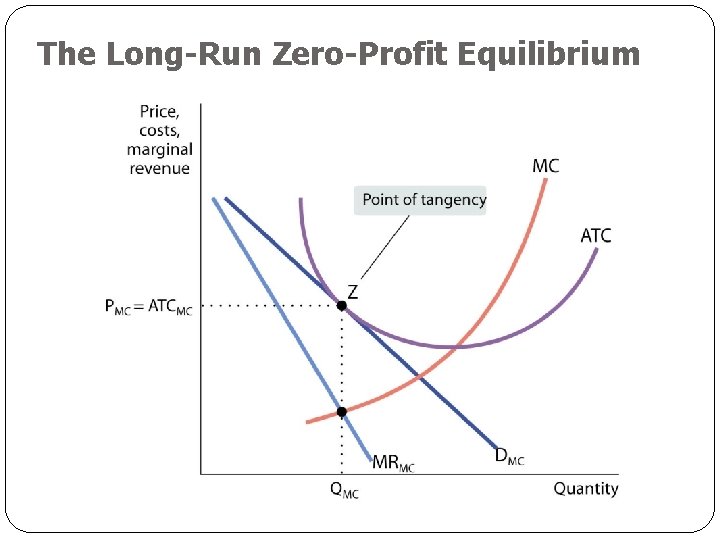
The Long-Run Zero-Profit Equilibrium
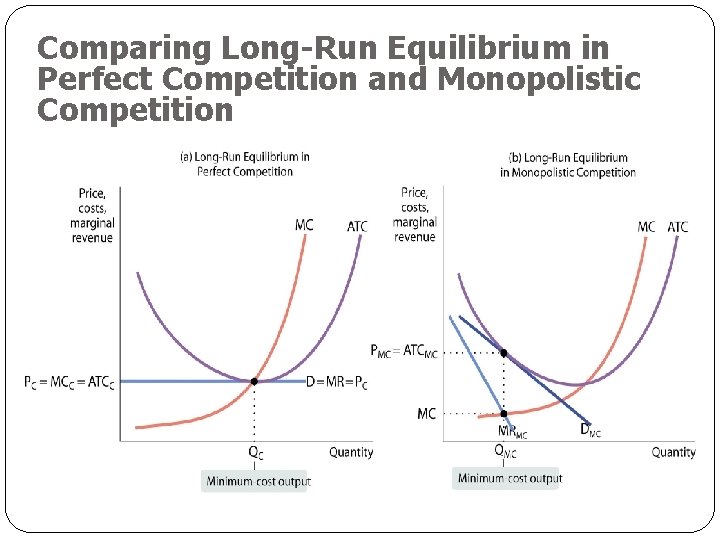
4. Monopolistic Competition vs. Perfect Competition In the long-run equilibrium of a monopolistically competitive industry, there are many firms, all earning zero profit. Price exceeds marginal cost so some mutually beneficial trades are exploited. The following figure compares the long-run equilibrium of a typical firm in a perfectly competitive industry with that of a typical firm in a monopolistically competitive industry.
Comparing Long-Run Equilibrium in Perfect Competition and Monopolistic Competition
5. Controversies about Product Differentiation No discussion of product differentiation is complete without spending at least a bit of time on the two related issues—and puzzles—of: Øadvertising Øbrand names