
Chapter 16 Microbial Insecticides Insecticidal toxin of Bacillus
Chapter 16 -Microbial Insecticides Insecticidal toxin of Bacillus thuringiensis Genetic engineering of Bt toxin genes Baculoviruses as biocontrol agents
Insecticidal toxin of Bacillus thuringiensis • Current market for pesticides is $30 billion/year • B. thuringiensis is a gram positive soil bacterium that produces a toxin or crystal protein (Bt toxin or Cry) that kills certain insects • The Bt toxin or Cry is produced when the bacteria sporulates and is present in the parasporal crystal • Several different strains and subspecies of B. thuringiensis exist and produce different toxins that kill specific insects (Table 16. 1) • Used as alternative to DDT and organophosphates since the 1920 s • Bt toxin is used as specific insecticides under trade names such as Dipel and Thuricide

Target insects for Bt toxin Cry toxins have specific activities against insect species of the orders Lepidoptera (moths and butterflies), Diptera (flies and mosquitoes), Coleoptera (beetles), Hymenoptera (wasps, bees, ants and sawflies) and nematodes.
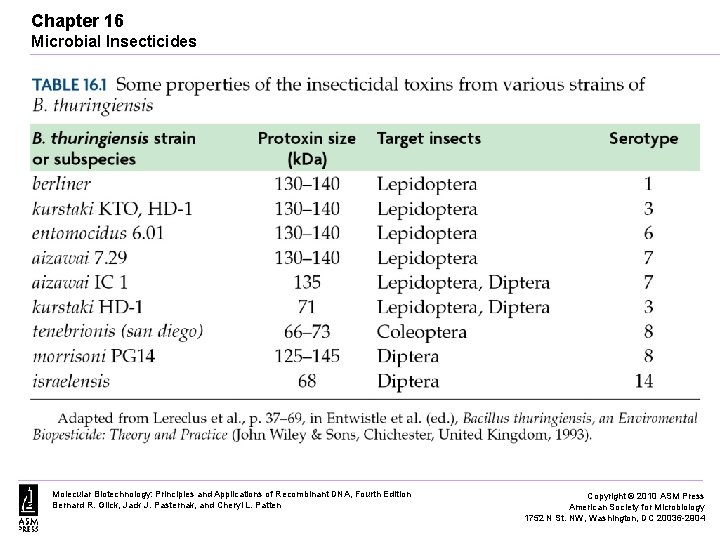
Chapter 16 Microbial Insecticides Table 16. 1 Molecular Biotechnology: Principles and Applications of Recombinant DNA, Fourth Edition Bernard R. Glick, Jack J. Pasternak, and Cheryl L. Patten Copyright © 2010 ASM Press American Society for Microbiology 1752 N St. NW, Washington, DC 20036 -2904
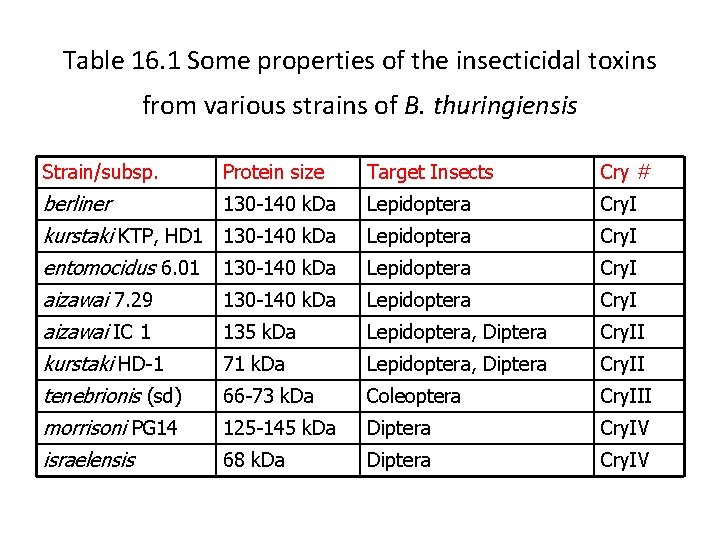
Table 16. 1 Some properties of the insecticidal toxins from various strains of B. thuringiensis Strain/subsp. Protein size Target Insects Cry # berliner 130 -140 k. Da Lepidoptera Cry. I kurstaki KTP, HD 1 130 -140 k. Da Lepidoptera Cry. I entomocidus 6. 01 130 -140 k. Da Lepidoptera Cry. I aizawai 7. 29 130 -140 k. Da Lepidoptera Cry. I aizawai IC 1 135 k. Da Lepidoptera, Diptera Cry. II kurstaki HD-1 71 k. Da Lepidoptera, Diptera Cry. II tenebrionis (sd) 66 -73 k. Da Coleoptera Cry. III morrisoni PG 14 125 -145 k. Da Diptera Cry. IV israelensis 68 k. Da Diptera Cry. IV
The Cry protein: mode of action • The Cry protein is made as an inactive protoxin • Conversion of the protoxin (e. g. , 130 k. Da) into the active toxin (e. g. , 68 k. Da) requires the combination of a slightly alkaline p. H (7. 5 -8) and the action of a specific protease(s) found in the insect gut • The active toxin binds to protein receptors on the insect gut epithelial cell membrane • The toxin forms an ion channel between the cell cytoplasm and the external environment, leading to loss of cellular ATP and insect death

Chapter 16 Microbial Insecticides Figure 16. 1 B. thuringienis parasporal crystal composed of Cry 1 protoxin protein. Conversion of the 130 -k. Da protoxin into an active 68 -k. Ka toxin requires an alkaline environment (p. H 7. 5 to 8) and the action of a specific protease, both of which are found in the insect gut. The activated toxin binds to protein receptors on the insect gut epithelial cells. Molecular Biotechnology: Principles and Applications of Recombinant DNA, Fourth Edition Bernard R. Glick, Jack J. Pasternak, and Cheryl L. Patten Copyright © 2010 ASM Press American Society for Microbiology 1752 N St. NW, Washington, DC 20036 -2904
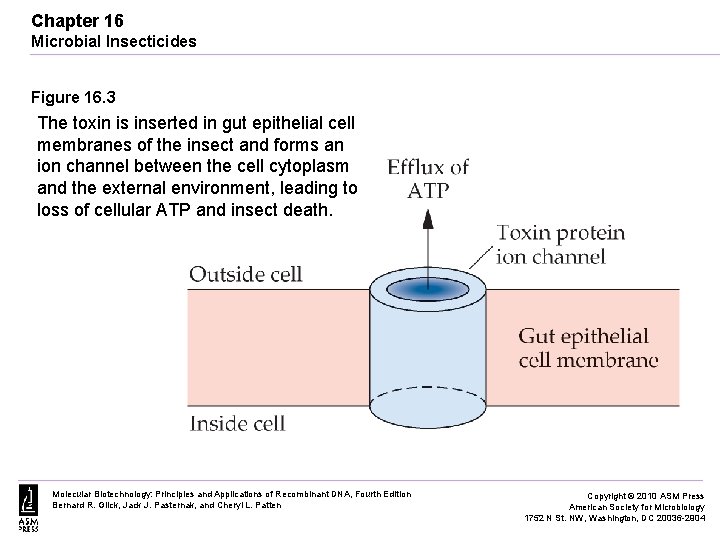
Chapter 16 Microbial Insecticides Figure 16. 3 The toxin is inserted in gut epithelial cell membranes of the insect and forms an ion channel between the cell cytoplasm and the external environment, leading to loss of cellular ATP and insect death. Molecular Biotechnology: Principles and Applications of Recombinant DNA, Fourth Edition Bernard R. Glick, Jack J. Pasternak, and Cheryl L. Patten Copyright © 2010 ASM Press American Society for Microbiology 1752 N St. NW, Washington, DC 20036 -2904
Isolation & genetic engineering of Cry genes • The Cry (or protoxin) genes are encoded by plasmid DNA, not by chromosomal DNA in B. thuringiensis • Cry genes were expressed in B. thuringiensis under the control of the ptet promoter (rather than its sporulation-specific promoter) and provided increase yield • Constructs have also been produced to enhance toxin action and/or expand its specificity
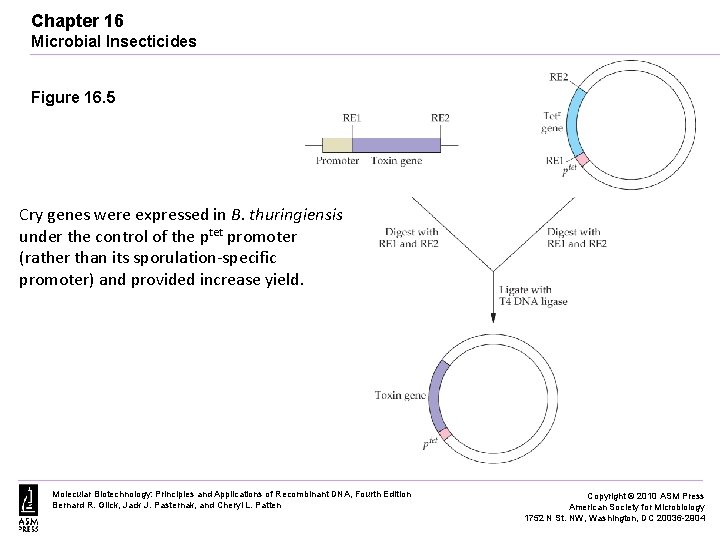
Chapter 16 Microbial Insecticides Figure 16. 5 Cry genes were expressed in B. thuringiensis under the control of the ptet promoter (rather than its sporulation-specific promoter) and provided increase yield. Molecular Biotechnology: Principles and Applications of Recombinant DNA, Fourth Edition Bernard R. Glick, Jack J. Pasternak, and Cheryl L. Patten Copyright © 2010 ASM Press American Society for Microbiology 1752 N St. NW, Washington, DC 20036 -2904
A potential problem with Cry: development of insect resistance (and how to prevent it) • Production of hybrid Bt toxins • Stacking of Bt toxin genes • Use of Bt toxins in combination with other insecticidal proteins such as chitinase and Cyt 1 A • In plants, the planting of crop buffer zones with nongenetically engineered Bt plants to maintain an insect susceptible population
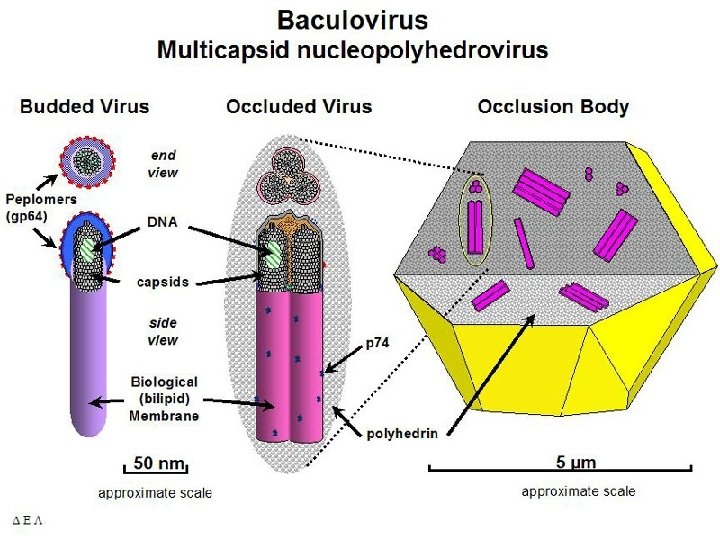
Baculoviruses as Biocontrol Agents • Baculoviruses are rod-shaped, double stranded DNA viruses that can infect and kill a large number of different invertebrate organisms • Immature (larval) forms of moth species are the most common hosts, but these viruses have also been found infecting sawflies, mosquitoes, and shrimp. • Baculoviruses have limited host ranges and generally do not allow for insect resistance to develop • Slow killing of target insects occurs • In order to speed killing (enhance effectiveness), several genes can be expressed in the baculovirus including diuretic hormone, juvenile hormone esterase, Bt toxin, scorpion toxin, mite toxin, wasp toxin, and a neurotoxin (see Table 16. 7)
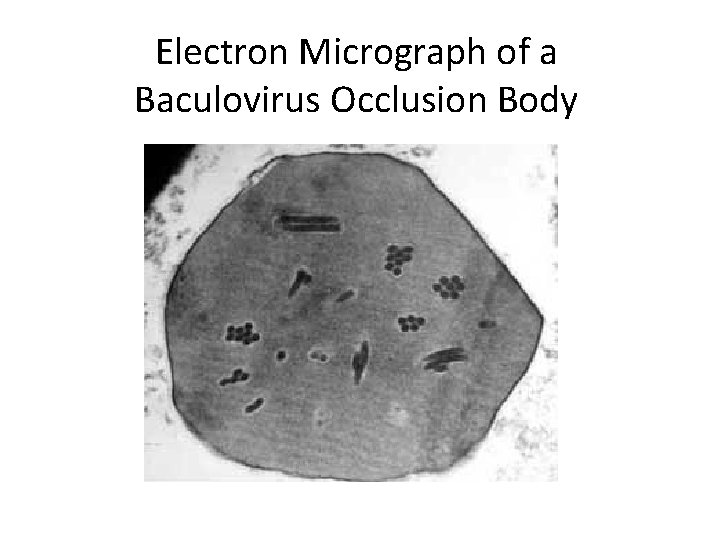
Electron Micrograph of a Baculovirus Occlusion Body
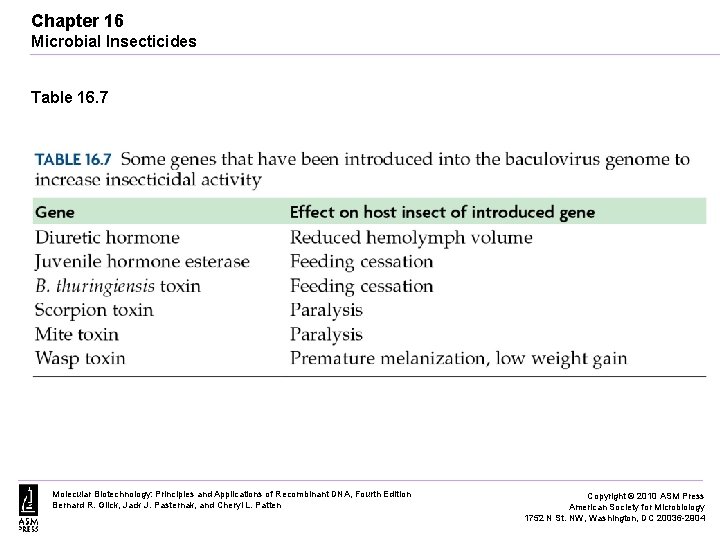
Chapter 16 Microbial Insecticides Table 16. 7 Molecular Biotechnology: Principles and Applications of Recombinant DNA, Fourth Edition Bernard R. Glick, Jack J. Pasternak, and Cheryl L. Patten Copyright © 2010 ASM Press American Society for Microbiology 1752 N St. NW, Washington, DC 20036 -2904
Baculovirus is also used as an expression system foreign proteins • See http: //www. invitrogen. com/site/us/en/home/Productsand-Services/Applications/Protein-Expression-and. Analysis/Protein-Expression/Insect-Expression/Bac-to-Bac. Baculovirus-Expression-System. html • “Our new Bac-to-Bac® Baculovirus Expression Systems deliver quick, robust and proven method to produce recombinant baculovirus, expressing your gene of interest in insect cells. ”
- Slides: 16