
Chapter 16 Inductive AC Circuits Objectives After completing
Chapter 16 Inductive AC Circuits
Objectives • After completing this chapter, you will be able to: – Describe the phase relationship between current and voltage in an inductive AC circuit – Determine the inductive reactance in an AC circuit – Explain impedance and its effect on inductive circuits
Objectives (cont’d. ) – Describe how an inductor-resistor network can be used for filtering and phase shifting – Explain how low-pass and high-pass inductive circuits operate
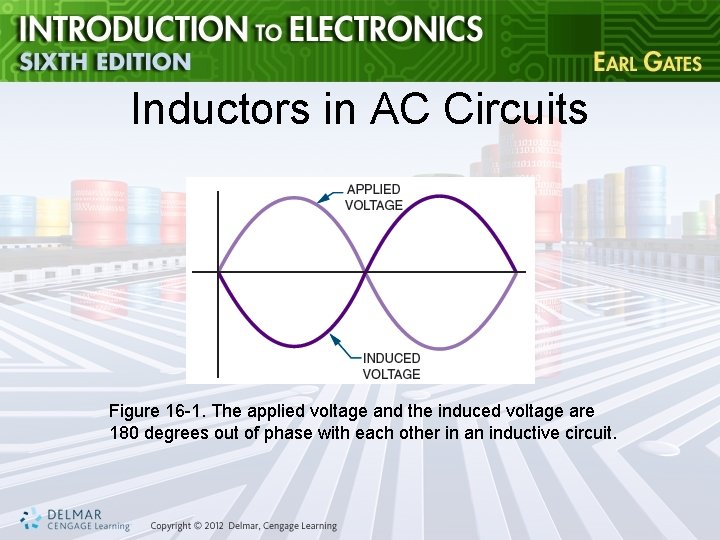
Inductors in AC Circuits Figure 16 -1. The applied voltage and the induced voltage are 180 degrees out of phase with each other in an inductive circuit.
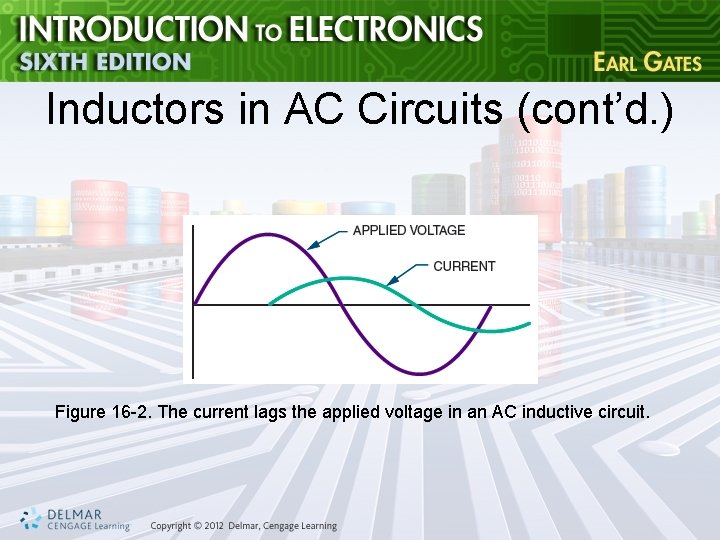
Inductors in AC Circuits (cont’d. ) Figure 16 -2. The current lags the applied voltage in an AC inductive circuit.
Inductors in AC Circuits (cont’d. ) • Inductive reactance – Opposition to current flow offered by an inductor in an AC circuit – Expressed by the symbol XL – Measured in ohms
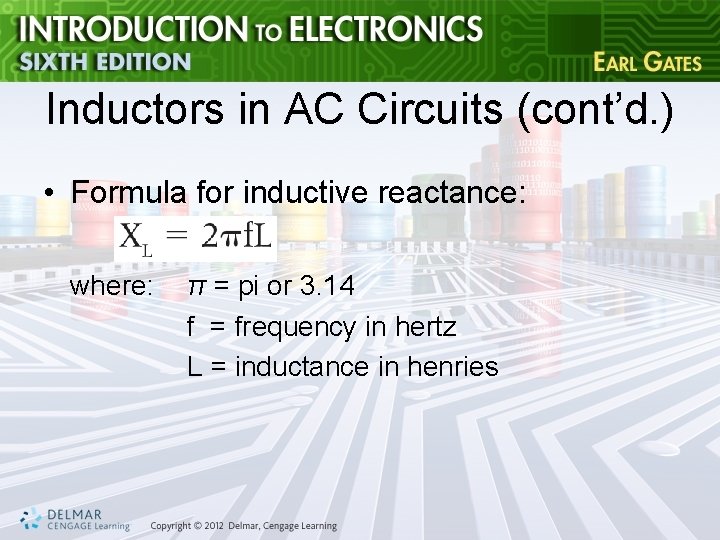
Inductors in AC Circuits (cont’d. ) • Formula for inductive reactance: where: π = pi or 3. 14 f = frequency in hertz L = inductance in henries
Inductors in AC Circuits (cont’d. ) • Impedance – Total opposition to current flow by both inductor and resistor – Vector sum of the inductive reactance and the resistance in the circuit
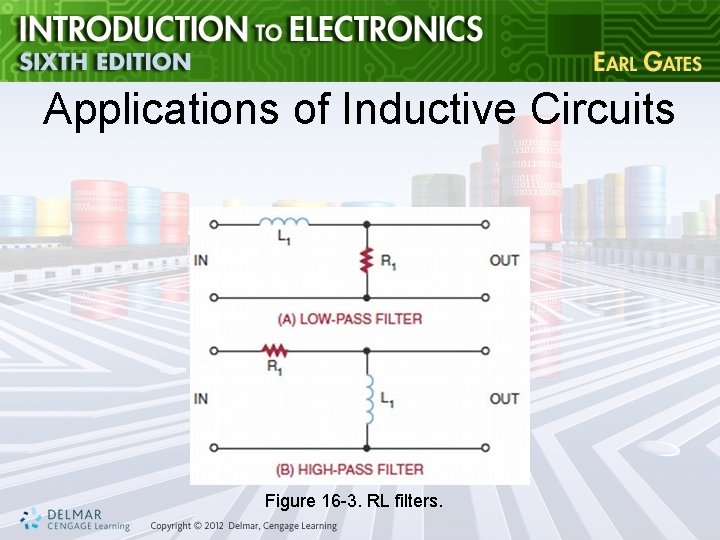
Applications of Inductive Circuits Figure 16 -3. RL filters.
Summary • In a pure inductive circuit, the current lags the applied voltage by 90 degrees • Inductive reactance is the opposition to current flow offered by an inductor in an AC circuit • Inductive reactance can be calculated by the formula:
Summary (cont’d. ) • Impedance is the vector sum of the inductive reactance and the resistance in the circuit • Series RL circuits are used for low- and high-pass filters
- Slides: 11