
Chapter 16 Emotional and Social Development in Middle


- Slides: 36
Chapter 16 Emotional and Social Development in Middle Adulthood
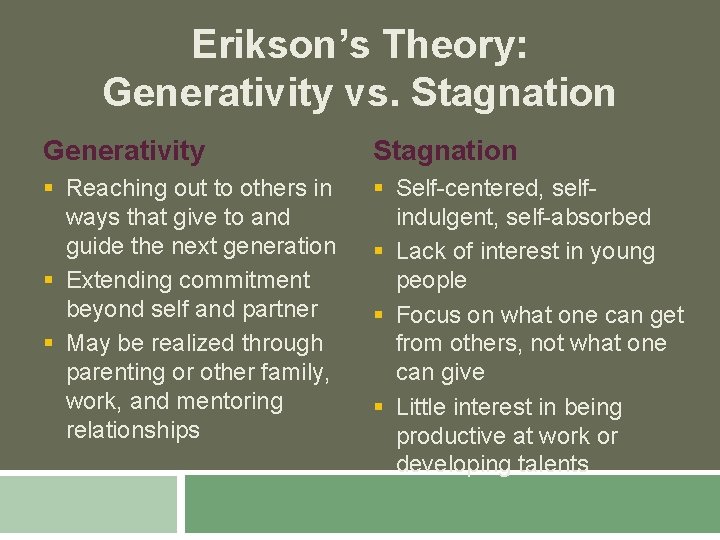
Erikson’s Theory: Generativity vs. Stagnation Generativity Stagnation § Reaching out to others in ways that give to and guide the next generation § Extending commitment beyond self and partner § May be realized through parenting or other family, work, and mentoring relationships § Self-centered, selfindulgent, self-absorbed § Lack of interest in young people § Focus on what one can get from others, not what one can give § Little interest in being productive at work or developing talents
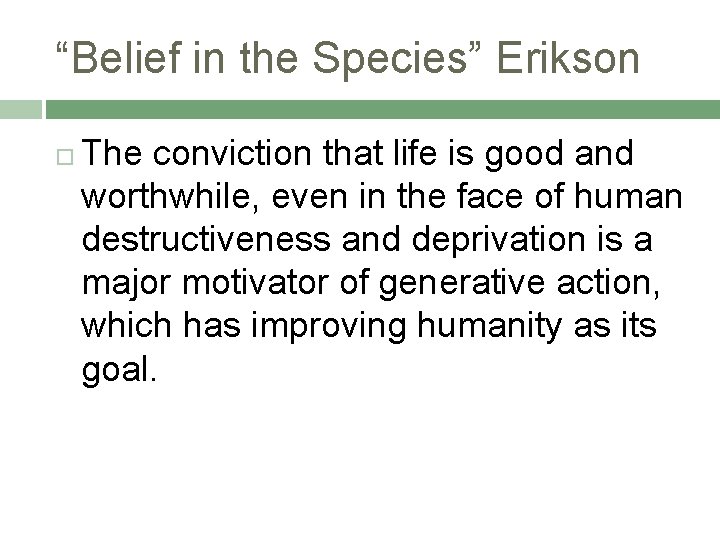
“Belief in the Species” Erikson The conviction that life is good and worthwhile, even in the face of human destructiveness and deprivation is a major motivator of generative action, which has improving humanity as its goal.
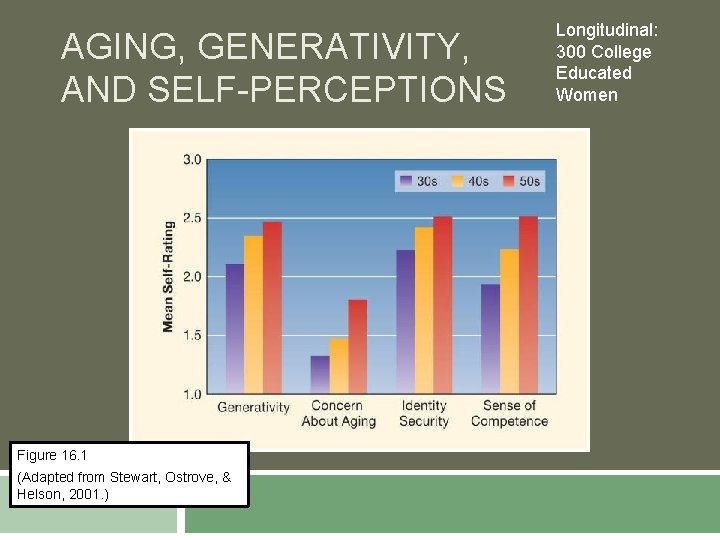
AGING, GENERATIVITY, AND SELF-PERCEPTIONS Figure 16. 1 (Adapted from Stewart, Ostrove, & Helson, 2001. ) Longitudinal: 300 College Educated Women
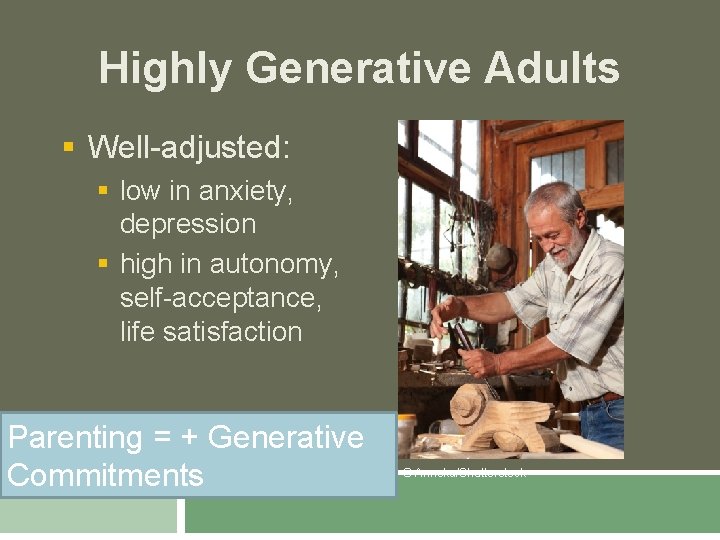
Highly Generative Adults § Well-adjusted: § low in anxiety, depression § high in autonomy, self-acceptance, life satisfaction Parenting = + Generative Commitments © Anneka/Shutterstock
Levinson’s Four Tasks of Middle Adulthood Young–Old Destruction– Creation Masculinity– Femininity Engagement– Separateness Seek new ways of being both young and old Acknowledge past hurtful acts, try to leave legacy for future generations Balance masculine and feminine parts of self Balance engagement with and separateness from external world
Stop and Think
Possible Selves § What one hopes to become or fears becoming § Become fewer in number, more modest and concrete with age § Rely more on temporal than on social comparisons § Can be redefined by the individual, permitting affirmation of the self § Play protective role in self-esteem
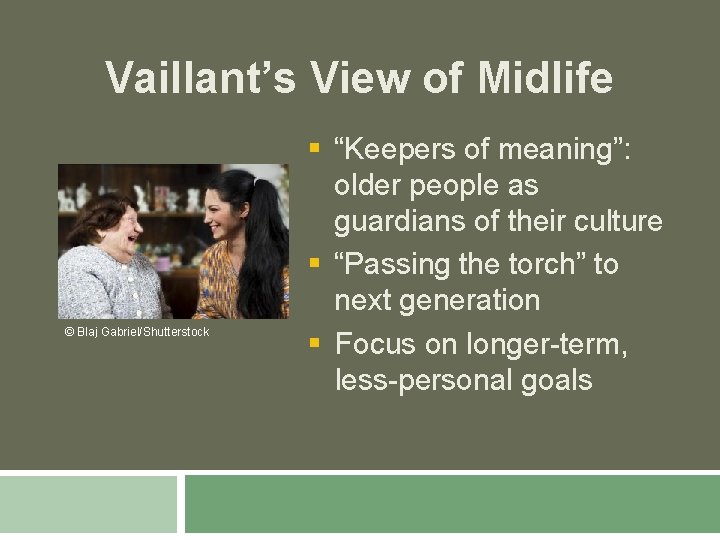
Vaillant’s View of Midlife © Blaj Gabriel/Shutterstock § “Keepers of meaning”: older people as guardians of their culture § “Passing the torch” to next generation § Focus on longer-term, less-personal goals
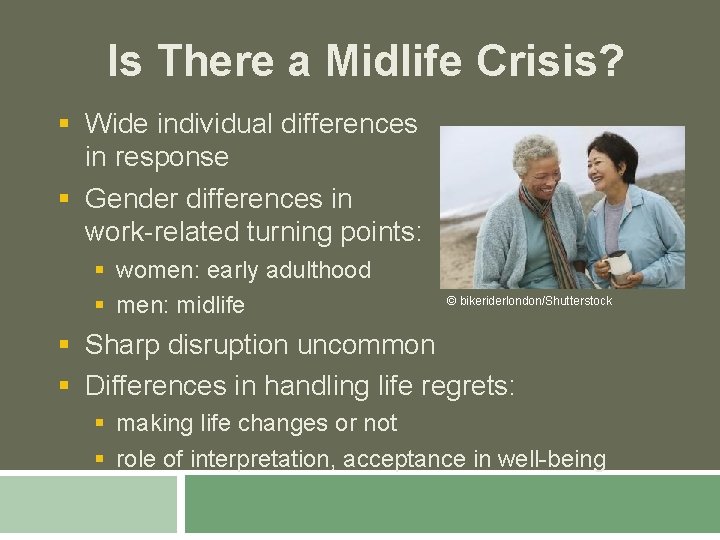
Is There a Midlife Crisis? § Wide individual differences in response § Gender differences in work-related turning points: § women: early adulthood § men: midlife © bikeriderlondon/Shutterstock § Sharp disruption uncommon § Differences in handling life regrets: § making life changes or not § role of interpretation, acceptance in well-being
Self-Acceptance, Autonomy, Environmental Mastery § Gains in expertise, practical problem solving § More complex, integrated self-descriptions § Increase in § self-acceptance § autonomy § environmental mastery § Factors contributing to well-being differ among cohorts © Marie C. Fields/Shutterstock
Factors in Midlife Psychological Well-Being © michaeljung/Shutterstock § Good health and exercise § Sense of control and personal life investment § Positive social relationships § Good marriage § Mastery of multiple roles
Coping Improvements in Middle Adulthood § Effective coping strategies: § identifying positives § postponing action while evaluating alternatives § Personality changes that support coping: § complex, integrated, coherent self-descriptions, blending strengths and weaknesses § gains in emotional stability and confidence
Gender Identity in Middle Adulthood § Women increase in “masculine” traits § Men increase in “feminine” traits § Theories: § parental imperative § cohort effects: women’s career experiences § demands of midlife © Monkey Business Images/Shutterstock
Big Five Personality Traits § Neuroticism § Extroversion § Openness to experience § Agreeableness § Conscientiousness © Christine Langer-Pueschel/Shutterstock
As we go through connect to fictional personalities we see in the media (cartoons, book characters, etc). Big Five Personality Traits § § § Neuroticism: Individuals who are high on this trait are worrying, temperamental, self pitying, self conscious, emotional and vulnerable. Individuals who are low are calm, even tempered, self content, comfortable and unemotional Extroversion: Individuals who are high on this trait are affectionate, talkative, active, fun loving and passionate. Individuals who are low are reserved, quiet, passive, sober and emotionally unreactive Openness to experience: Individuals who are high on this trait are imaginative, creative, original, curious, and liberal. Individuals who are low are down to earth, uncreative, conventional, uncurious, and conservative Agreeableness: Individuals who are high on this trait are softhearted, trusting, generous, lenient, and good natured. Individuals who are low are ruthless, stingy, antagonistic, and irritable Conscientiousness: Individuals who are high on this trait are conscientious, hardworking, well organized, punctual, ambitious, and persevering. Individuals who are low are negligent, lazy, disorganized, late, aimless, and non-persistent Which personality trait do you have and
CHANGES IN BIG FIVE PERSONALITY TRAITS WITH AGE § Basic, enduring individual dispositions persist § Changes occur in overall organization and integration of personality: § agreeableness and conscientiousness increase § neuroticism declines § extroversion and openness to experience remain the same or decrease slightly
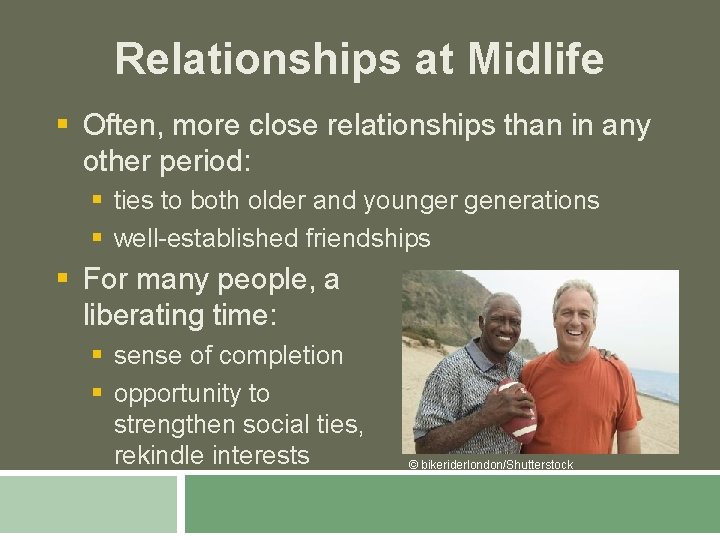
Relationships at Midlife § Often, more close relationships than in any other period: § ties to both older and younger generations § well-established friendships § For many people, a liberating time: § sense of completion § opportunity to strengthen social ties, rekindle interests © bikeriderlondon/Shutterstock
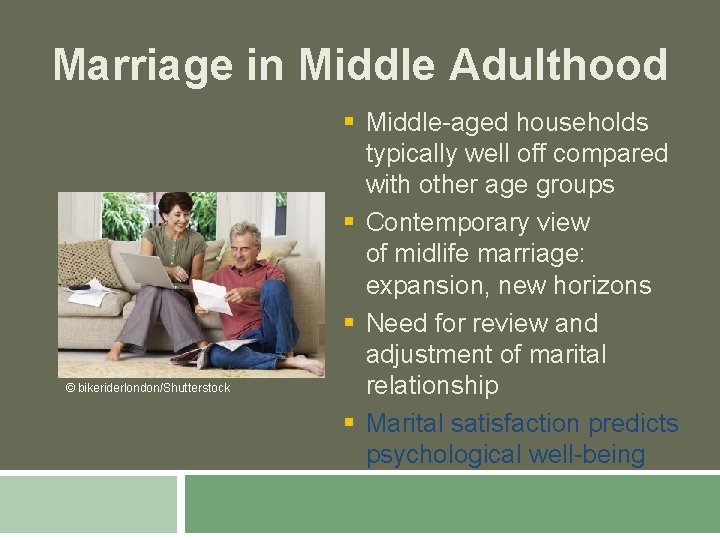
Marriage in Middle Adulthood © bikeriderlondon/Shutterstock § Middle-aged households typically well off compared with other age groups § Contemporary view of midlife marriage: expansion, new horizons § Need for review and adjustment of marital relationship § Marital satisfaction predicts psychological well-being
Divorce in Midlife § Rate for U. S. 50 - to 65 -year-olds has doubled over past 20 years § Midlifers adjust more easily than young adults: § practical problem solving § effective coping strategies § Contributes to feminization of poverty
Parenting in Middle Adulthood § Launching: culmination of “letting go” process: § § decline in parental authority continued contact, affection, support to children adjusting to in-laws kinkeeper role, especially for mothers § Affected by § investment in nonparental roles, especially work § children’s characteristics: “off-time” children stress parents § cultural variations in social clock
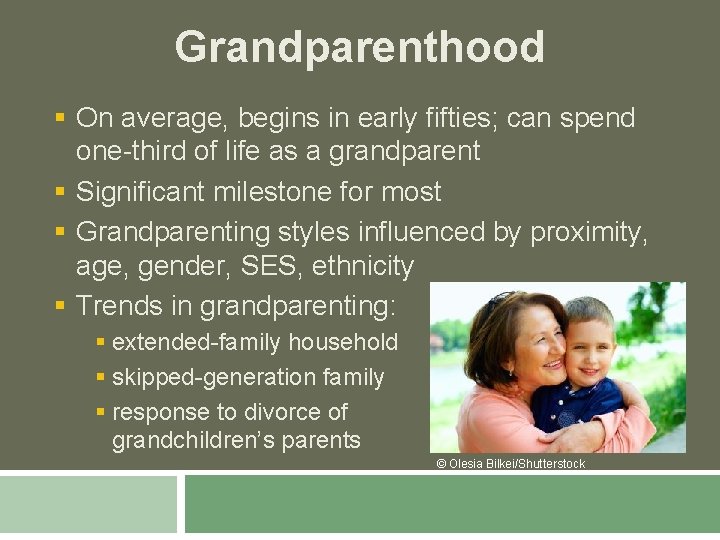
Grandparenthood § On average, begins in early fifties; can spend one-third of life as a grandparent § Significant milestone for most § Grandparenting styles influenced by proximity, age, gender, SES, ethnicity § Trends in grandparenting: § extended-family household § skipped-generation family § response to divorce of grandchildren’s parents © Olesia Bilkei/Shutterstock
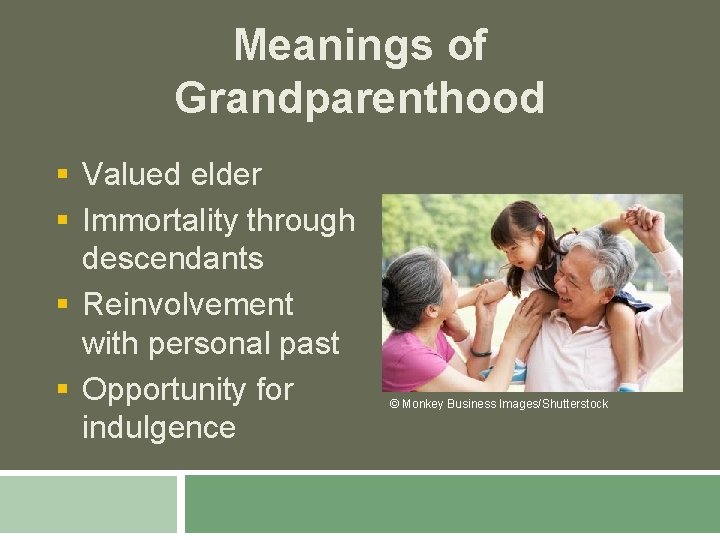
Meanings of Grandparenthood § Valued elder § Immortality through descendants § Reinvolvement with personal past § Opportunity for indulgence © Monkey Business Images/Shutterstock
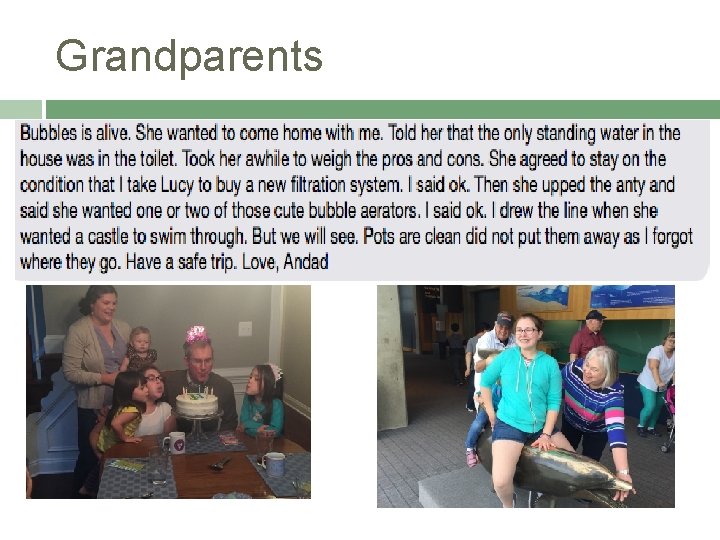
Grandparents
Middle-Aged Children and Their Aging Parents § Increasingly likely to have living parents § Reassess relationships with parents § In collectivist cultures, parents typically live with married children § Children provide more help to parents: § financial and household aid § caregiving as parental health problems increase § helping based on quality of earlier relationships
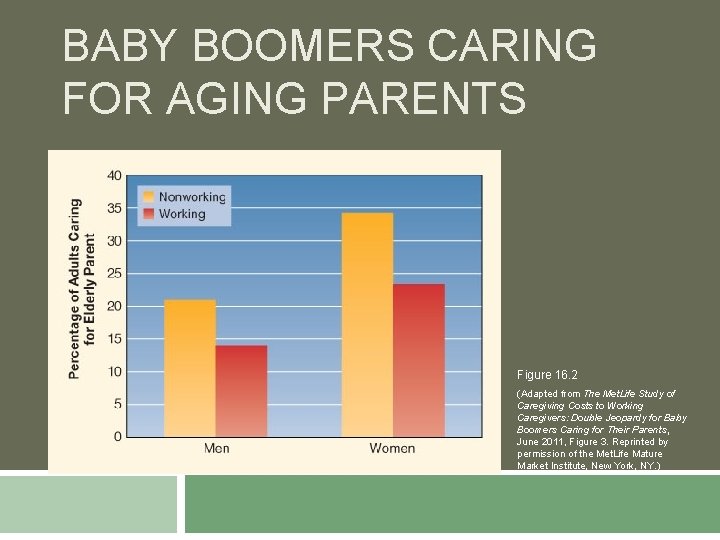
Caring for Aging Parents § “Sandwich generation” § Factors include finances, location, gender, culture § Highly stressful: § time devoted to care averages 10 to 20 hours per week, more for women § emotional strain of witnessing parent’s decline § greatest stress for those sharing a household with ill parent
BABY BOOMERS CARING FOR AGING PARENTS Figure 16. 2 (Adapted from The Met. Life Study of Caregiving Costs to Working Caregivers: Double Jeopardy for Baby Boomers Caring for Their Parents, June 2011, Figure 3. Reprinted by permission of the Met. Life Mature Market Institute, New York, NY. )
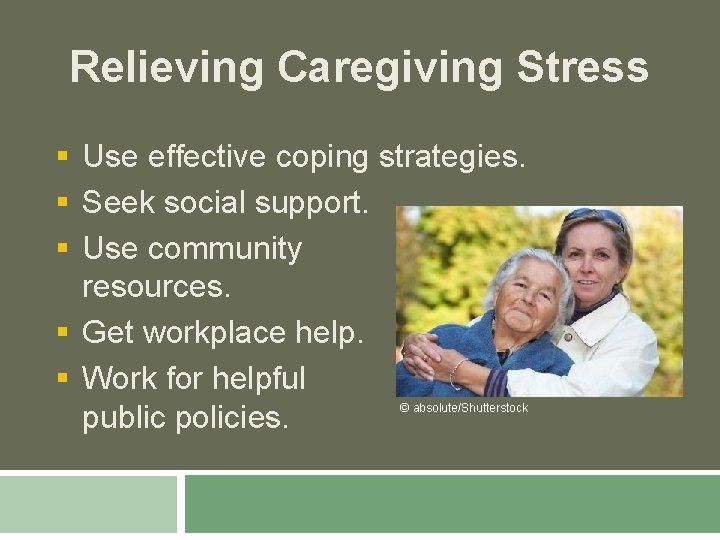
Relieving Caregiving Stress § Use effective coping strategies. § Seek social support. § Use community resources. § Get workplace help. § Work for helpful public policies. © absolute/Shutterstock
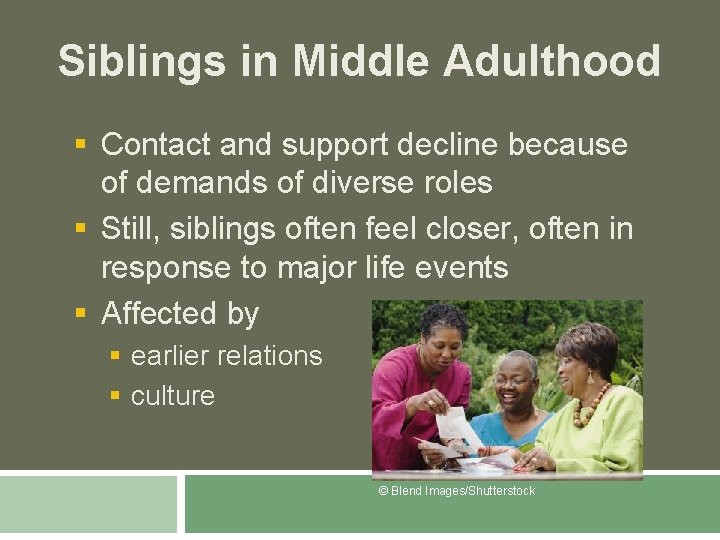
Siblings in Middle Adulthood § Contact and support decline because of demands of diverse roles § Still, siblings often feel closer, often in response to major life events § Affected by § earlier relations § culture © Blend Images/Shutterstock
Friendships in Middle Adulthood § Gender trends continue: men are less expressive than women § Fewer friends: become more selective, try harder to get along with friends § Rely on friends more for pleasure, family for support and security
Vocational Life § Important component of satisfaction and self-esteem: § attempt to increase personal meaning of vocational lives § increased job satisfaction § Negative stereotypes of aging may hinder advancement
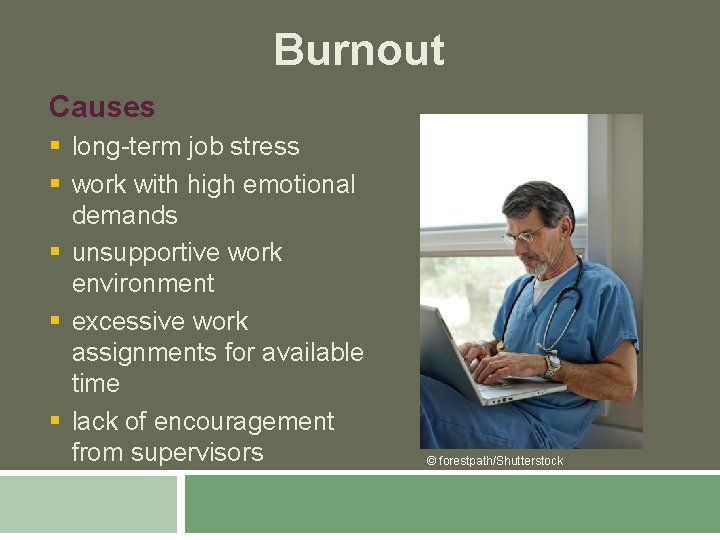
Burnout Causes § long-term job stress § work with high emotional demands § unsupportive work environment § excessive work assignments for available time § lack of encouragement from supervisors © forestpath/Shutterstock
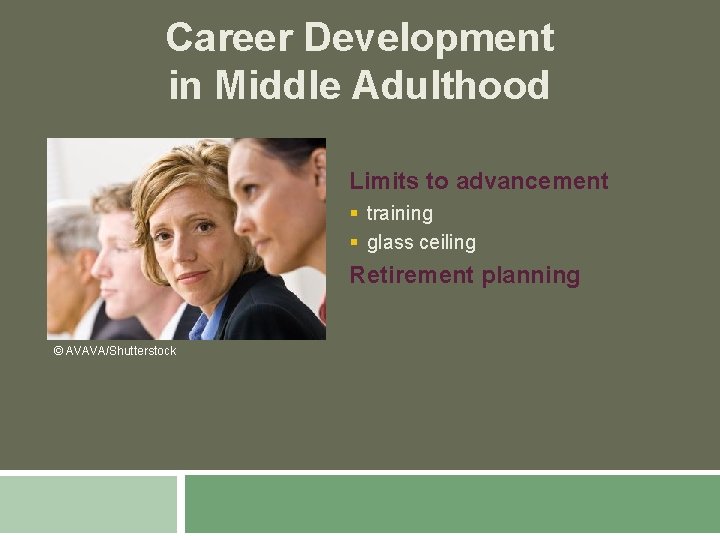
Career Development in Middle Adulthood Limits to advancement § training § glass ceiling Retirement planning © AVAVA/Shutterstock
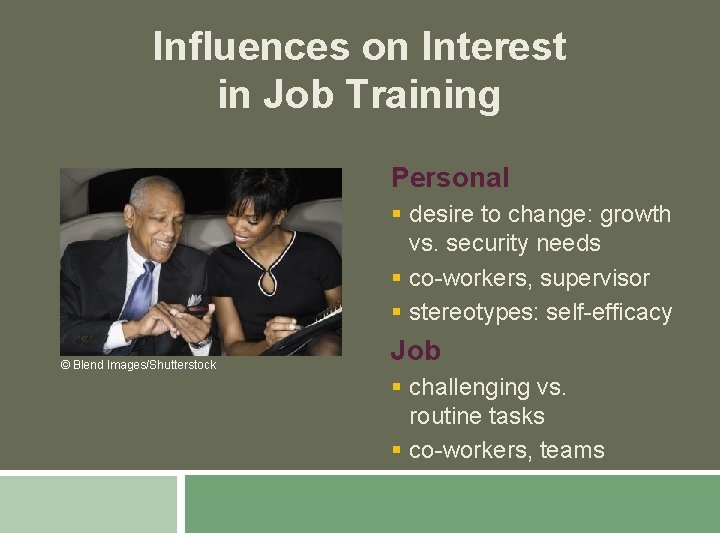
Influences on Interest in Job Training Personal § desire to change: growth vs. security needs § co-workers, supervisor § stereotypes: self-efficacy © Blend Images/Shutterstock Job § challenging vs. routine tasks § co-workers, teams
The Glass Ceiling § Invisible barrier to career advancement for women and minorities § Results from § lack of mentors, training opportunities § stereotypes about career commitment, managerial ability § prejudices toward gender role deviation (for women) § Many women deal with glass ceiling by leaving corporate environment
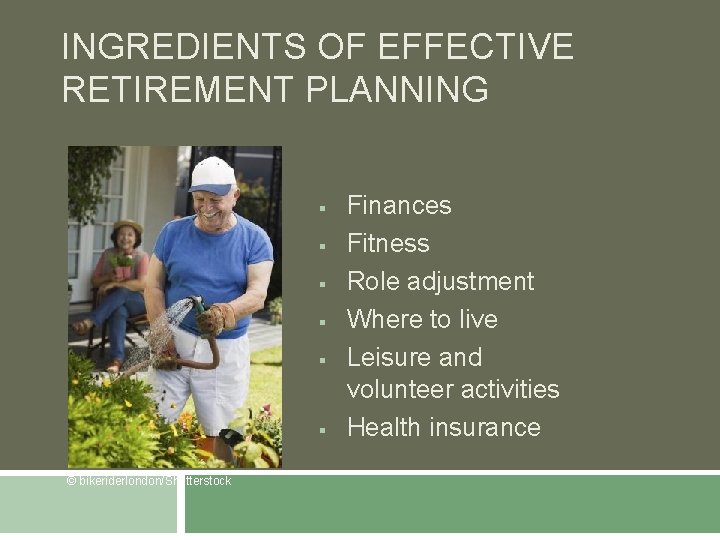
INGREDIENTS OF EFFECTIVE RETIREMENT PLANNING § § § © bikeriderlondon/Shutterstock Finances Fitness Role adjustment Where to live Leisure and volunteer activities Health insurance