
Chapter 16 Adult Nutrition Introduction Topics include nutritional
- Slides: 54
Chapter 16 Adult Nutrition
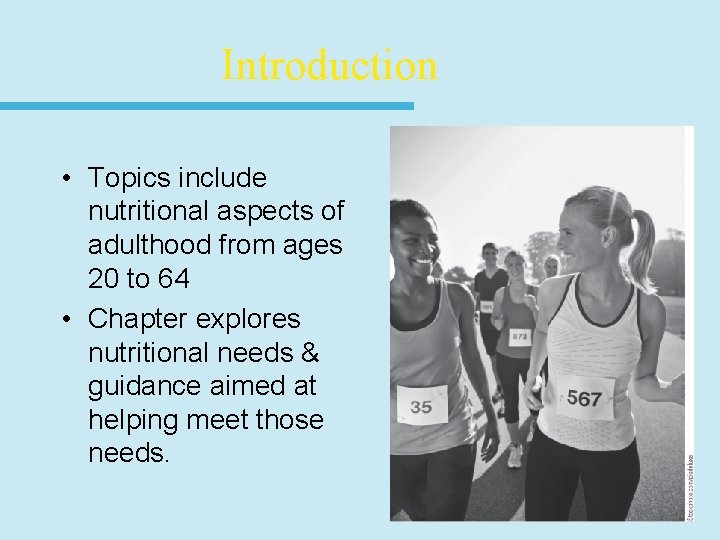
Introduction • Topics include nutritional aspects of adulthood from ages 20 to 64 • Chapter explores nutritional needs & guidance aimed at helping meet those needs.
Definition of Adulthood in the Life Cycle • Early adulthood—ages 20 -39 yrs – Involve becoming independent & leaving the parental home – In the 20 s, planning, buying and preparing food are newly developing skills – In the 30 s, renewed interest in nutrition “for the kids’ sake”
Definition of Adulthood in the Life Cycle • Midlife—ages 40 to 64 yrs – Period of active family responsibilities – Managing schedules and meals becomes a challenge – Time of reviewing life’s accomplishments & recognition of mortality
Definition of Adulthood in the Life Cycle • “Sandwich” generation – the 50’s – Many are multigenerational caregivers • Juggle roles of caring for children and aging parents, while maintaining a career – Health concerns frequently are added • Chronic disease • Managing identified risk factors to prevent diseases
Definition of Adulthood in the Life Cycle • Later adulthood—age 65+ – Transition to retirement – More leisure time – greater attention to physical activity and nutrition – Food choices and lifestyle factor, especially for those with chronic disease •
Importance of Nutrition • The span of years between ages 20 and 64 is a time when the future course of health & wellness are influenced by: – Diet – Physical activity – Smoking – Body weight
Importance of Nutrition • How do food & nutrition enhance life? – Nutrition & exercise are among the main lifestyle factors that reduce risk of the onset and severity of 5 of the 10 leading causes of death (See Table 16. 1) • • • Cancer Heart disease Stroke Diabetes Liver disease
Health Objectives for the Nation • The Health Objectives for the Nation – Address multiple goals for adult health improvement – Data on dietary goals for disease prevention and health promotion for adults are shown on Table 16. 3 – A priority of national public health goals is overweight/obesity
Health Disparities Among Groups of Adults • Some population groups have a higher prevalence of chronic diseases than others • Some groups have a genetic disposition for certain diseases • Genetics and environment interact
Physiological Changes of Adulthood • Growing stops by the 20’s • Bone density continues until 30 • Muscular strength peaks around 25 to 30 years of age • Decline in size and mass of muscle and increase in body fat • Dexterity and flexibility decline
Physiological Changes of Adulthood • Hormonal and Climacteric Changes – Women • Decline of estrogen menopause • Increase in abdominal fat • Increase in risk of cardiovascular disease & accelerated loss of bone mass – Men • Gradual decline in testosterone level & muscle mass
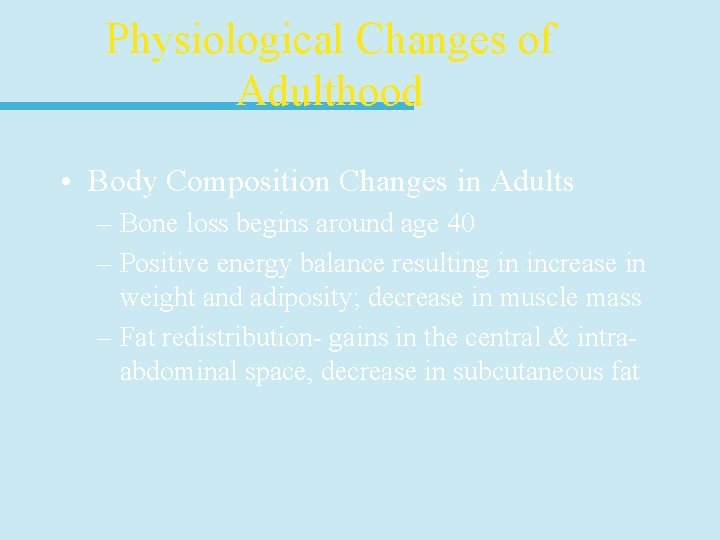
Physiological Changes of Adulthood • Body Composition Changes in Adults – Bone loss begins around age 40 – Positive energy balance resulting in increase in weight and adiposity; decrease in muscle mass – Fat redistribution- gains in the central & intraabdominal space, decrease in subcutaneous fat
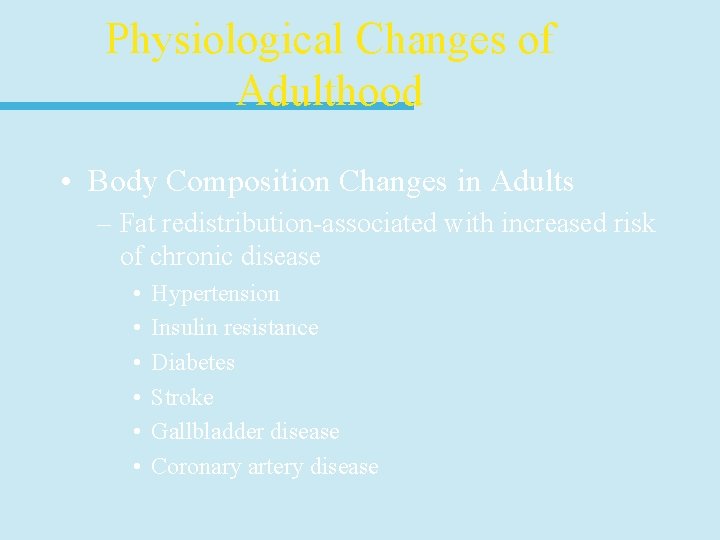
Physiological Changes of Adulthood • Body Composition Changes in Adults – Fat redistribution-associated with increased risk of chronic disease • • • Hypertension Insulin resistance Diabetes Stroke Gallbladder disease Coronary artery disease
Continuum of Nutritional Status • Nutritional health can be viewed as a continuum from: – “Healthy” and resilient state • To: – Terminal state –body system shut down and life ceases
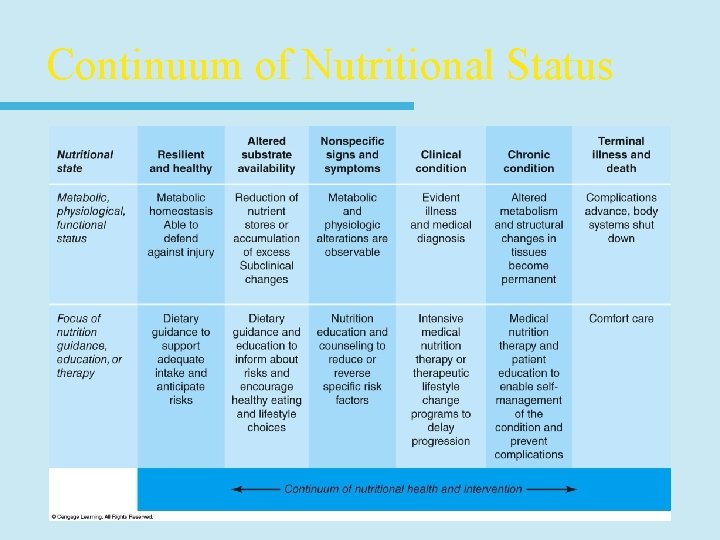
Continuum of Nutritional Status
States of Nutritional Health • Resilient and “Healthy” – Metabolic systems in homeostasis – Organs are functioning at optimal level – Nutritional guidance • Encourage adequate intake • Not too much, Not too little • Mantra: – “Moderation, variety, and balance”
States of Nutritional Health • Altered Substrate Availability – Early, subclinical state of nutritional harm when intake doesn’t meet needs – Loss of reserves and/or accumulation of excesslead to buildup of by-products – Dietary guidelines • Inform people of common risks • Encourage healthful diets & lifestyle choices
States of Nutritional Health • Nonspecific Signs and Symptoms – Visible changes to insufficient or excessive intakes – Recognized risk factors for chronic disease – Dietary guidance: • Target specific risk factors and observable signs and symptoms • Measure and monitor for progress to halt or reverse risk factors for disease
States of Nutritional Health • Clinical condition – Definite signs and symptoms of illness present medical diagnosis – Examples: atherosclerosis, cancer, osteoporosis, type 2 diabetes, depression – Dietary Guidance • Change is difficult • Intensive intervention needed (medical nutrition therapy or therapeutic behavior-change programs)
States of Nutritional Health • Chronic condition – Altered metabolism and structural changes in tissues become permanent & irreversible • Examples: structural damage to coronary arteries, invasive & metastatic cancer, loss of kidney function or blindness – Dietary guidance: • Aimed at managing the condition • Preventing further complication • Reduce degree of disability optimize quality of life
States of Nutritional Health • Terminal Illness and Death – Final stage in the continuum – Complications advance – Body systems shut down – Life ceases
Estimating Energy Needs in Adults • Estimating Energy Needs Based on BMR+TEF+Activity – Basil Metabolic Rate (BMR) • Daily BMR expenditure- 60 to 75% for involuntary processes – Thermic Effect of Food (TEF) • TEF (metabolism of food) ~10% – Activity thermogenesis • Activity- most variable component is which accounts for 2040% of total energy needs
Estimating Energy Needs in Adults • Doubly labeled water (DLW) – Subjects are given a dose of “tagged” water – Excretion of isotopes in saliva and urine is used to calculate average energy utilization over several days – Used to determine estimated energy requirements (EER)
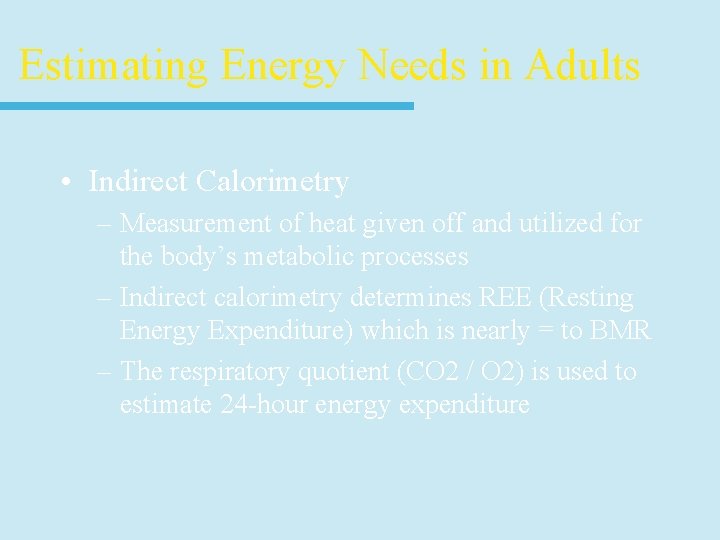
Estimating Energy Needs in Adults • Indirect Calorimetry – Measurement of heat given off and utilized for the body’s metabolic processes – Indirect calorimetry determines REE (Resting Energy Expenditure) which is nearly = to BMR – The respiratory quotient (CO 2 / O 2) is used to estimate 24 -hour energy expenditure
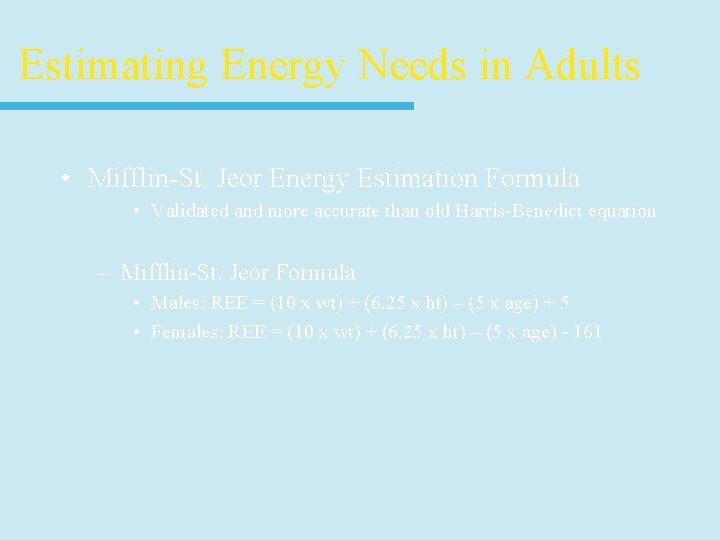
Estimating Energy Needs in Adults • Mifflin-St. Jeor Energy Estimation Formula • Validated and more accurate than old Harris-Benedict equation – Mifflin-St. Jeor Formula • Males: REE = (10 x wt) + (6. 25 x ht) – (5 x age) + 5 • Females: REE = (10 x wt) + (6. 25 x ht) – (5 x age) - 161
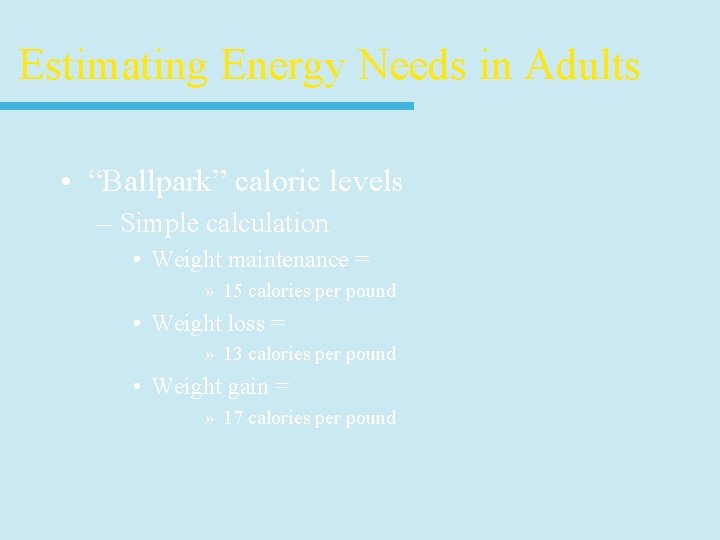
Estimating Energy Needs in Adults • “Ballpark” caloric levels – Simple calculation • Weight maintenance = » 15 calories per pound • Weight loss = » 13 calories per pound • Weight gain = » 17 calories per pound
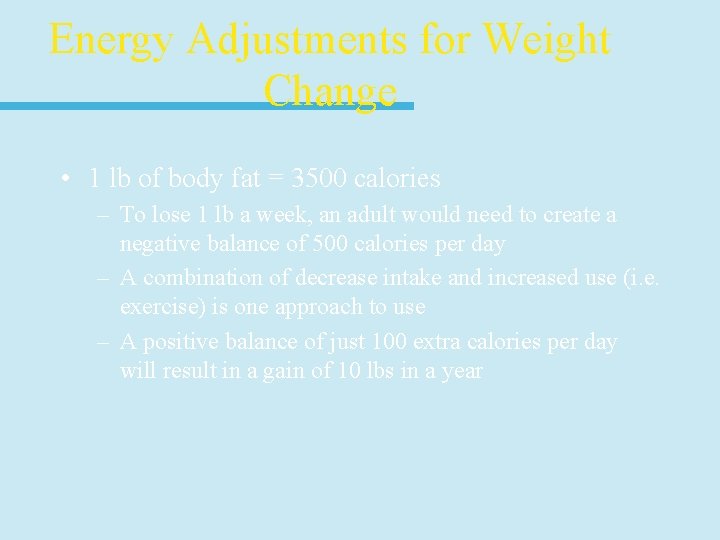
Energy Adjustments for Weight Change • 1 lb of body fat = 3500 calories – To lose 1 lb a week, an adult would need to create a negative balance of 500 calories per day – A combination of decrease intake and increased use (i. e. exercise) is one approach to use – A positive balance of just 100 extra calories per day will result in a gain of 10 lbs in a year
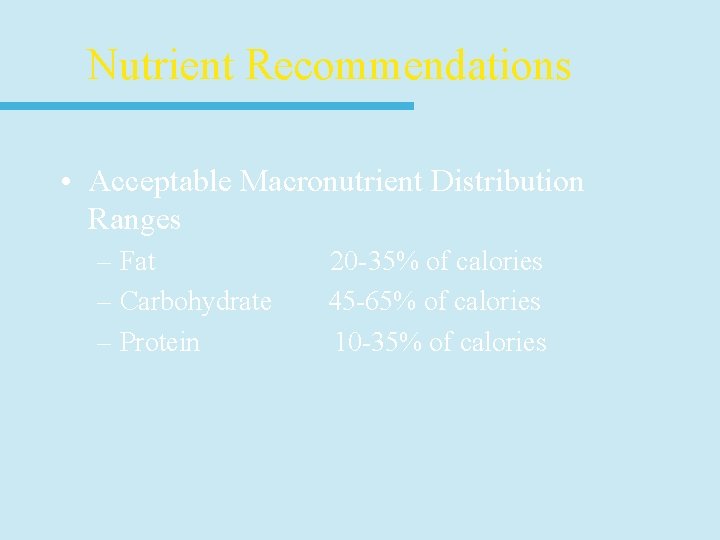
Nutrient Recommendations • Acceptable Macronutrient Distribution Ranges – Fat – Carbohydrate – Protein 20 -35% of calories 45 -65% of calories 10 -35% of calories
Nutrient Recommendations • Dietary Reference Intakes (DRIs) • Daily Values (DV) used on nutrition labels • Tolerable Upper Intake Levels (ULs) – Table 16. 5 lists recommended nutrient intakes for adults and shows average intakes based on NHANES data
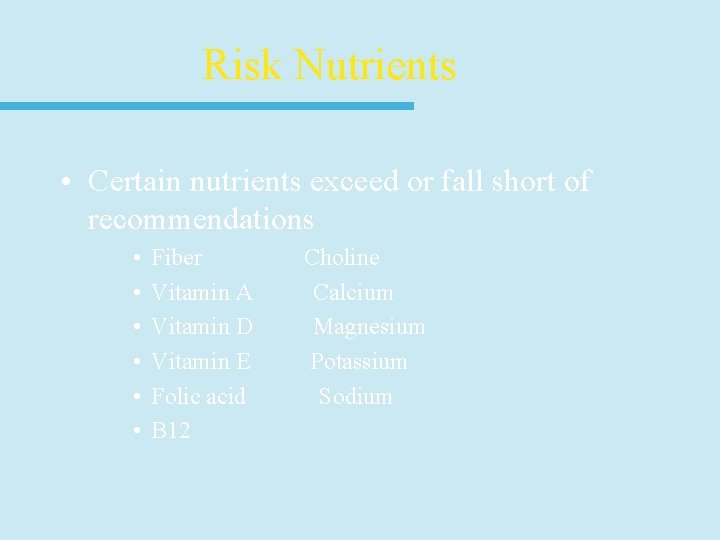
Risk Nutrients • Certain nutrients exceed or fall short of recommendations • • • Fiber Vitamin A Vitamin D Vitamin E Folic acid B 12 Choline Calcium Magnesium Potassium Sodium
Dietary Recommendations • Dietary guidance systems – Sets of dietary and lifestyle recommendations – Based on latest scientific information – Developed to promote health and prevent disease – Key components of the U. S. system are the Dietary Guidelines for Americans and My. Plate
Dietary Recommendations • Dietary guidance systems – Voluntary health organizations make additional science-based dietary recommendations – American Cancer Society • Nutrition and Physical Activity Guidelines – American Heart Association • Diet and Lifestyle Recommendations
Dietary Recommendations • Dietary guidance systems focus on – – – – Consuming greater amounts of Fruits, vegetables, fiber, and low-fat dairy products Limiting saturated fat intake, trans fats More nutrient rich foods, less sugar Keeping sodium low Regular physical activity Energy intake balanced with energy expenditure healthy weight
Dietary Recommendations • Total Diet Approach: • Use 2010 Dietary Guidelines and My. Plate – Enjoy food but choose wisely and eat less – Select a variety of foods – Get the most nutrition out of their calories – Stay within daily calorie needs – Consider shifting to a plant based diet
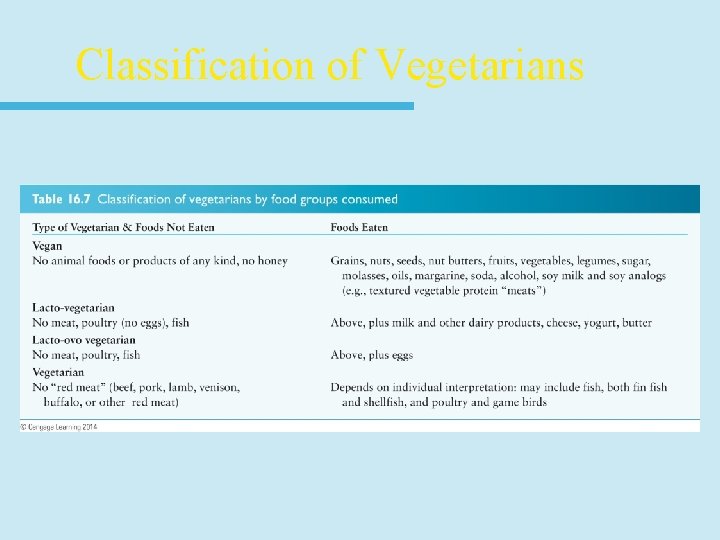
Classification of Vegetarians
Beverage Intake Recommendations • Recommendations in dietary guidance systems: – Consume fewer or smaller portions of beverages containing fats and added sugar – Plan beverage intake as part of total calorie intake – Make beverage choices that fit into the dairy, vegetable, and fruit groups
Alcohol: Food, Drug and Nutrient • ~61% if U. S. adults drink alcohol – Highest rate is among those ages 25 -44 • Nations vary on alcohol consumption guidelines – U. S. guidelines are “If you drink, do so in moderation”
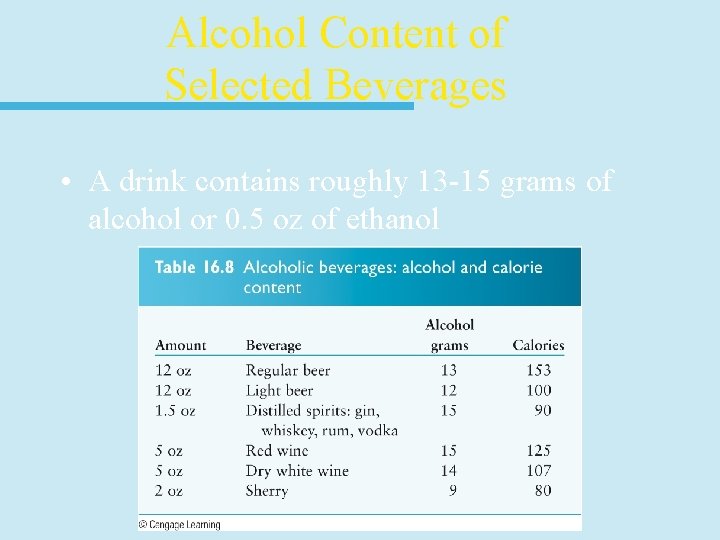
Alcohol Content of Selected Beverages • A drink contains roughly 13 -15 grams of alcohol or 0. 5 oz of ethanol
Water Intake Recommendations • AI (Adequate Intake) level for water based on median total water intake • Upper level for water intake not set but toxicity can occur – Total Water AI for Adults – Men 3. 7 liters (125 oz) – Women 2. 7 liters (91 oz)
Other Fluids • Diuretic effects of caffeine – While caffeine does act as a diuretic, the DRI committee concluded caffeine-containing beverages contribute to the total daily water intake
Dietary Supplements and Functional Foods • Dietary supplements indicated: – Pregnancy – Certain illness – Low calorie or nutrient restricted diets
Dietary Supplements and Functional Foods • Survey data indicate that 44% of adult males and 53% of adult females take vitamin or mineral supplement nearly every day • Herbals and botanicals are grouped with dietary supplements
Dietary Supplements and Functional Foods • See Table 16. 9 - Definition and examples of supplements and functional food categories • Functional foods - term used for food products that have a physiological benefit or reduce the risk of chronic disease beyond basic nutritional functions
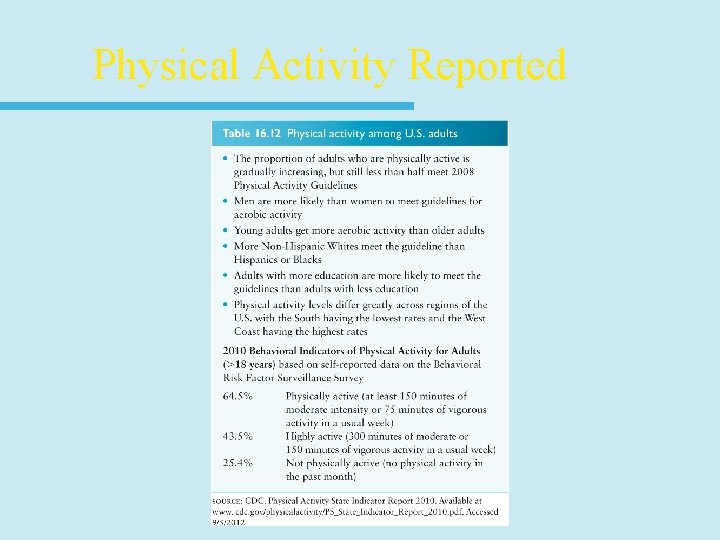
Physical Activity Recommendations • Healthy eating & increased physical activity are the featured duo for combating obesity • Any physical activity is better than none • Physical activity helps to manage weight and reduce disease risk factors
Physical Activity Recommendations • At least 150 minutes/week of moderateintensity physical activity • Table 16. 11 lists current U. S. recommendations • Muscle strengthening activities 2 times a week
Physical Activity, Body Composition, and Metabolic Function • Regular physical activity leads to changes in body composition with reduced fat mass and increased lean mass • Even without caloric restriction, aerobic physical activity results in decrease of adiposity
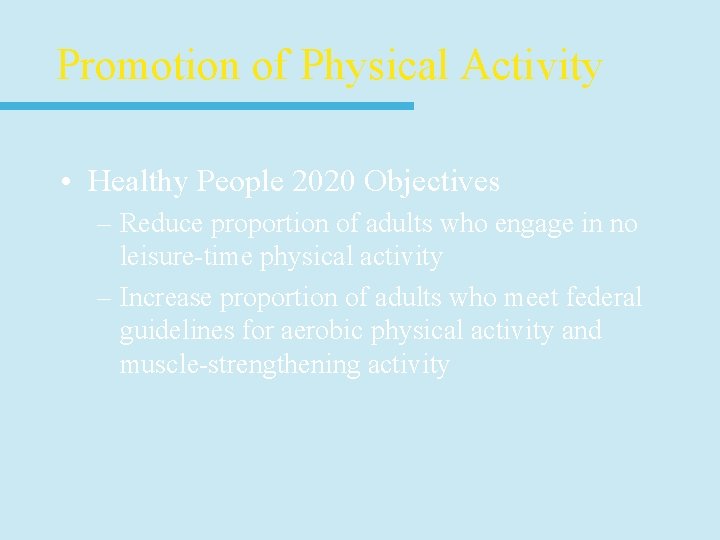
Promotion of Physical Activity • Healthy People 2020 Objectives – Reduce proportion of adults who engage in no leisure-time physical activity – Increase proportion of adults who meet federal guidelines for aerobic physical activity and muscle-strengthening activity
Physical Activity Reported
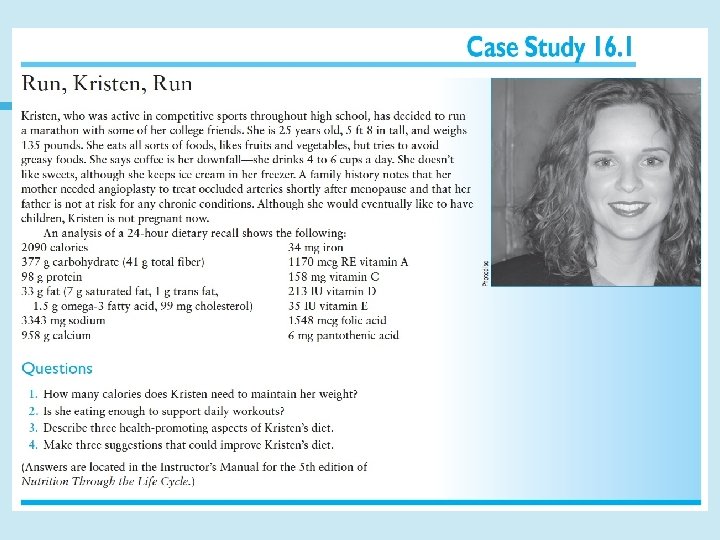
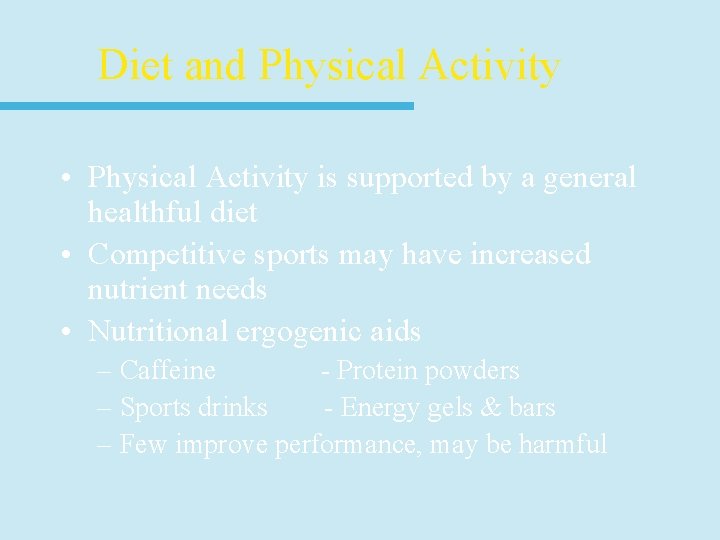
Diet and Physical Activity • Physical Activity is supported by a general healthful diet • Competitive sports may have increased nutrient needs • Nutritional ergogenic aids – Caffeine - Protein powders – Sports drinks - Energy gels & bars – Few improve performance, may be harmful
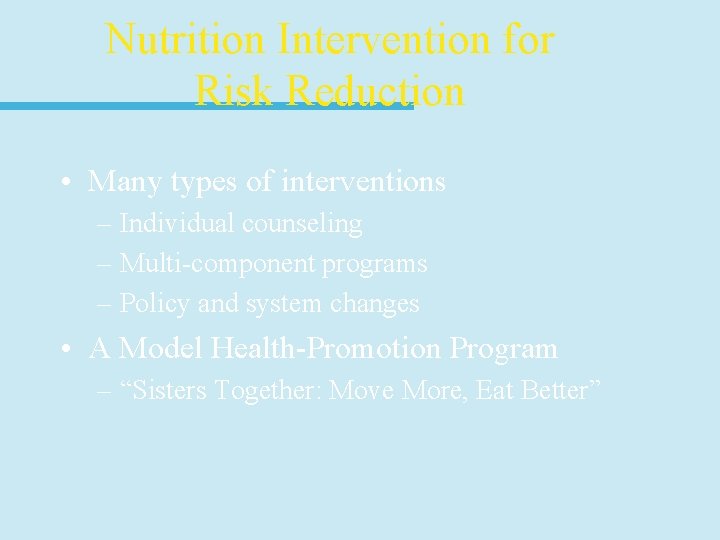
Nutrition Intervention for Risk Reduction • Many types of interventions – Individual counseling – Multi-component programs – Policy and system changes • A Model Health-Promotion Program – “Sisters Together: Move More, Eat Better”
Public Food and Nutrition Programs • • SNAP Government extension programs Meals on Wheels Soup kitchens and shelters for homeless
Putting It All Together • Adults need: – Variety of healthful foods – Knowledge to guide food choices – Positive attitudes about food and eating – Balance with discipline • The message is to follow the principles of variety, moderation, and balance in choosing a diet